Review · JAPAN
Tokyo Tsukiji Fish Market Food and Culture Walking Tour
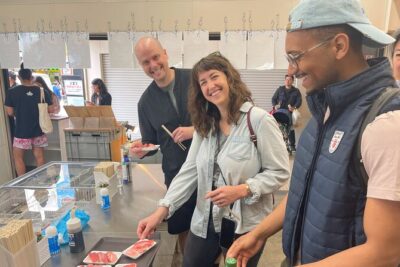
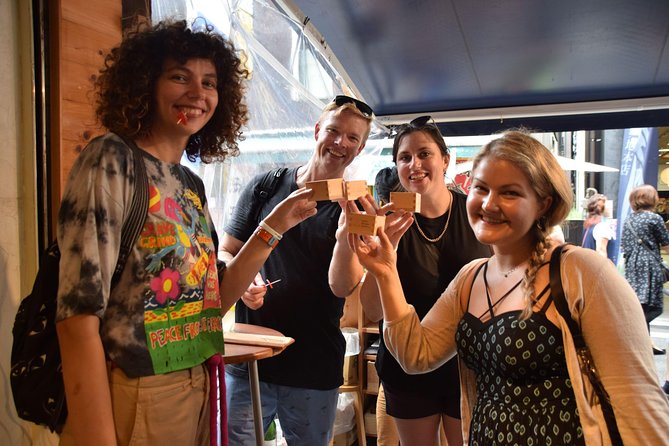
Come hungry, wear good shoes, and expect surprises. This three-hour walk through Tokyo’s Tsukiji outer market gives you a practical introduction to Japanese food culture, with stops for sushi or a seafood bowl, Wagyu beef, fish cakes, omelette, fruit, tea, and other small tastings. I especially like the guide-led route through crowded market lanes and the chance to see ingredients that are easy to miss on your own.
I also like the cultural layer: the tour begins at Tsukiji Hongan-ji Temple, explains why chefs shop here, and may include kitchen tools, local customs, and food preparation. The main drawback is that the name can create false expectations. The famous wholesale tuna market moved to Toyosu, so this is an outer-market food walk, not a visit to the old wholesale auction floor. Food portions can also feel light for the price, especially if you arrive hungry.
Key Points Before You Book
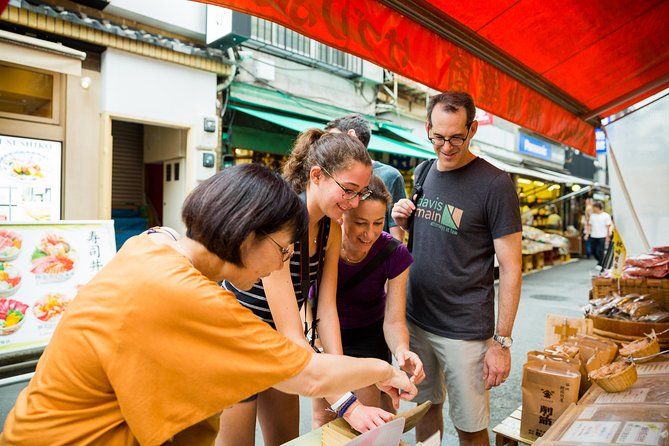
- The route begins at Tsukiji Hongan-ji Temple, then moves through the outer market and Tsukiji Uogashi area.
- Food samples can include Wagyu beef, tuna, fish cakes, Japanese omelette, seasonal fruit, dashi soup, green tea, and sushi or a seafood bowl.
- The old wholesale market is no longer at Tsukiji, and Tsukiji Uogashi is closed on Wednesdays, Sundays, and other market holidays.
- The guide is the main value of the tour, helping you navigate hundreds of stalls and explaining unfamiliar ingredients.
- Groups can reach 20 people, though some departures are much smaller and offer more room for questions and shopping.
- The tour costs $99.49 per person, with lunch and snacks included, but extra food, drinks, transport, and personal purchases cost more.
Starting at Tsukiji Hongan-ji Temple
Meet your guide at the main gate of Tsukiji Hongan-ji Temple, not the back entrance. This detail matters because map directions can send you around the wrong side. The group leaves sharply at the scheduled start time, and a late arrival cannot be added to the end of the tour.
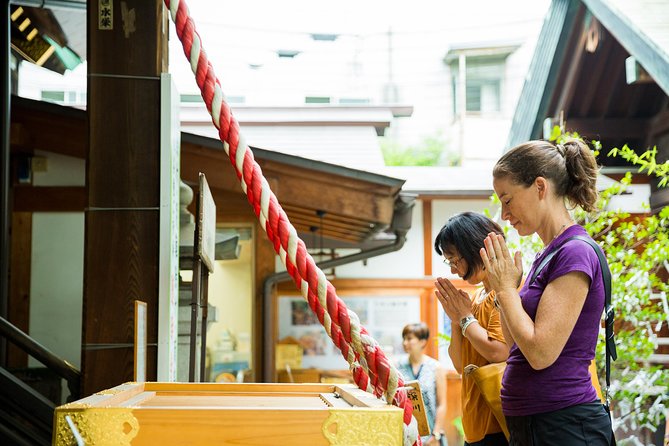
The temple makes a useful meeting point. Before the food begins, you get a look at one of Tsukiji’s most distinctive landmarks. Some guides explain its unusual design and the influences behind the building, giving the morning a cultural start instead of sending you straight into the market crowds.
From here, you walk toward Tsukiji Jogai Market, the outer market. The area is made up of narrow lanes, food stalls, shops, restaurants, and small wholesalers. It is not a single enclosed market hall. You will move through a working shopping district where people buy seafood, cooking ingredients, kitchen goods, and ready-to-eat food.
That layout is part of the appeal. It also means you should not expect a neat, orderly attraction with a fixed display route. The guide needs to adjust to crowds, shop hours, and what is available that day.
More Fish Market Tours in Japan
- Tokyo: Tsukiji Fish Market Food and Walking tour
★ 5.0 · 1,724 reviews - Tokyo: Tsukiji Fish Market Guided Walking Tour
★ 4.9 · 1,397 reviews - Tokyo Sushi Making Class in Tsukiji with Professional Chef
★ 5.0 · 1,177 reviews
Tsukiji Jogai Market: An Hour and a Half of Tastes and Stories
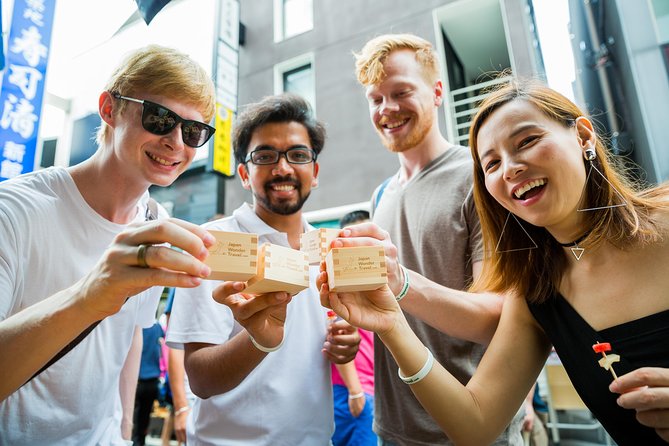
The longest portion of the tour takes place in Tsukiji Jogai Market. Your guide explains the market’s long role in Tokyo’s food trade and points out the stalls that supply restaurants and home cooks.
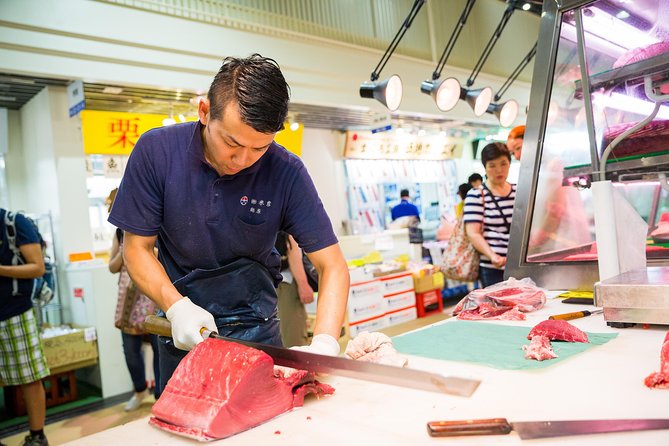
You might see boxes of sea urchin, tanks holding pufferfish, large tuna being cut, piles of shellfish, dried goods, seasonings, and seafood you have never encountered. The point is not simply to photograph strange ingredients. A good guide explains how they fit into Japanese cooking and why freshness matters so much here.
This is where guides make the biggest difference. The market can be intimidating if you do not know which stalls welcome casual shoppers, what a food is called, or how to order it. Guides such as Kiyo, Naz, Shoko, Mari, and Take received especially warm praise for explaining ingredients, local customs, and food traditions in clear, friendly ways.
The tastings usually form a steady series of small bites rather than one large meal. You may try dashi soup, green tea, seaweed, fish cakes, Japanese omelette, seasonal fruit, tuna, or other items selected along the route. The exact mix depends on the day, the shops open, and the market schedule.
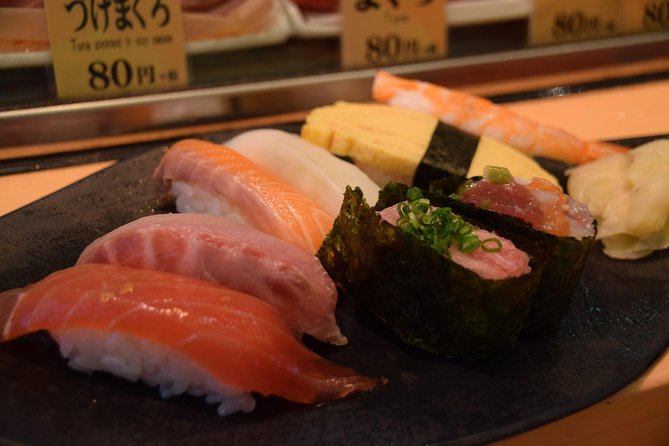
Several food stops are especially appealing because they show different sides of Japanese eating. A fish cake or omelette gives you a taste of everyday market food. A Wagyu skewer offers something far richer. Fresh tuna or another seafood sample shows why Tsukiji remains such a useful place for food shopping.
The tour can also help cautious eaters take a small step outside their usual habits. One participant who had never eaten sushi found eel and squid especially enjoyable after giving them a try. You are not forced to become an expert in raw fish, but you do get a chance to taste foods in a setting where the ingredients and preparation are explained.
The Old Tsukiji Market and Kitchen Shops
The itinerary includes time around the old Tsukiji market area, with roughly 30 minutes devoted to food and nearby shops. This portion is less about a single landmark and more about seeing how the district works as a place to buy ingredients and cooking equipment.
If you need a kitchen tool, the guide may stop at a shop selling cooking goods. This is useful if you want a practical souvenir rather than another decorative item. Shoko, one guide praised in the feedback, helped a small group choose ingredients and understand how she uses Japanese foods and seasonings at home.
Small groups have an advantage here. You can ask how to use a particular spice, what a dried ingredient is for, or how to carry food home. On a full departure of up to 20 people, that kind of personal help may be harder to get.
The shopping time is not a guaranteed free-shopping session. The group follows the food route, and the guide must keep everyone moving. Still, the guide can often point out useful shops and answer questions that a solo walk would leave unresolved.
Tsukiji Uogashi and the Wholesale Market Confusion
Another 30-minute section takes you through Tsukiji Uogashi, a smaller wholesale market area where you may see many kinds of fresh fish. This is an important part of the description, but it comes with a scheduling warning.
Tsukiji Uogashi is closed on Wednesdays, Sundays, and other market holidays. When it is closed, some planned tastings, including Japanese omelette, fish cake, and fruit, cannot be served. The tour may provide alternatives, but you should not assume that every listed item will appear on every departure.
You should also understand the difference between Tsukiji and Toyosu. Tokyo’s main wholesale fish market, including the famous auction operation, moved to Toyosu. This tour does not take you to that wholesale auction site. It focuses on Tsukiji’s outer market and related shopping streets.
That distinction has caused disappointment for people expecting to see the old wholesale floor. If your main goal is tuna auctions or the central wholesale operation, this is the wrong tour. If your goal is food stalls, local ingredients, prepared bites, and help making sense of Tsukiji, the route fits much better.
More Fish Market Tours in Tokyo
- Tsukiji Fish Market Guided Tour and Sushi Making with Pro Chef
★ 5.0 · 775 reviews - Tokyo: Tsukiji Fish Market Food and Culture Walking Tour
★ 4.7 · 757 reviews - Tsukiji Fish Market: Street Food & Culture Walking Tour
★ 5.0 · 669 reviews - Tsukiji Fish Market Small-Group Food Walking Tour
★ 5.0 · 621 reviews
The Final Sushi or Seafood Bowl
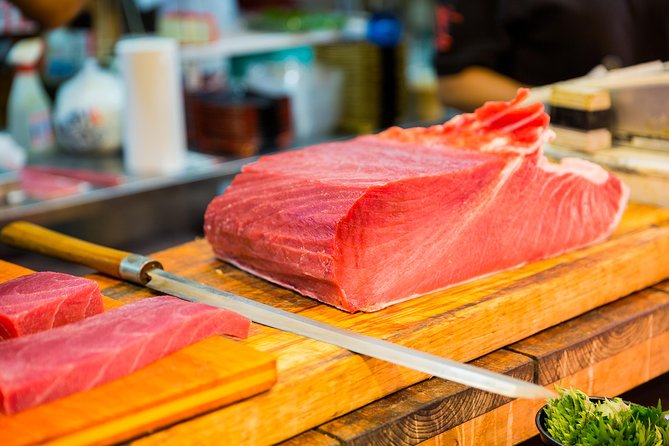
The tour generally ends with a serving of sushi or a seafood bowl, with the exact choice depending on the day. This is the most substantial food stop and gives the morning a proper finish after all the samples.
A few particularly memorable departures included a sushi-cutting demonstration and the chance to watch fish being prepared before eating it. One guide brought a group to Moritaya for a sashimi lunch, which became the highlight of that outing. These details show what a strong guide can add, though you should not assume that the same restaurant or demonstration will be included every time.
The meal is included, but expectations still matter. Some people find the total food amount satisfying, while others feel the tour offers more looking and talking than eating. I would not book this as an all-you-can-eat food crawl. Think of it as a guided market lesson with enough tastings to keep you interested, plus a final sushi or seafood bowl.
If you have a large breakfast, you may find the food adequate. If you arrive very hungry, you may want to plan another meal afterward. The tour description confirms that lunch and snacks are included, but it does not promise unlimited portions or a fixed menu.
What the Guides Add to the Price
At $99.49 per person, this is not the cheapest way to visit Tsukiji. You can walk around the outer market without paying an admission fee, buy individual snacks, and choose your own lunch.
The fee makes more sense if you value guidance. A good guide helps you avoid wandering past the best stalls, translates the purpose of unfamiliar foods, explains etiquette, and keeps the route moving. Several departures were praised for friendly guides who knew where to find good food and could answer questions about ingredients and cooking.
The individual guide matters a lot. Kiyo, Naz, Miky, Kayoko, Joy, Hanako, Mari, Hedeki, Shibuya, Yuki, KK, Shoko, Sean, Take, Mike, Masa, Nick, and Yuko were all praised in different accounts for qualities such as patience, humor, local insight, clear explanations, and care with the group.
The feedback is not uniformly glowing. A few people found a guide too young or too quiet, with long waits and little energy. Another felt the final restaurant was too tourist-oriented and disliked having limited choice. That variation is worth noting because the basic route may be similar, but the tone depends heavily on who leads your group.
Group Size, Walking, and Timing
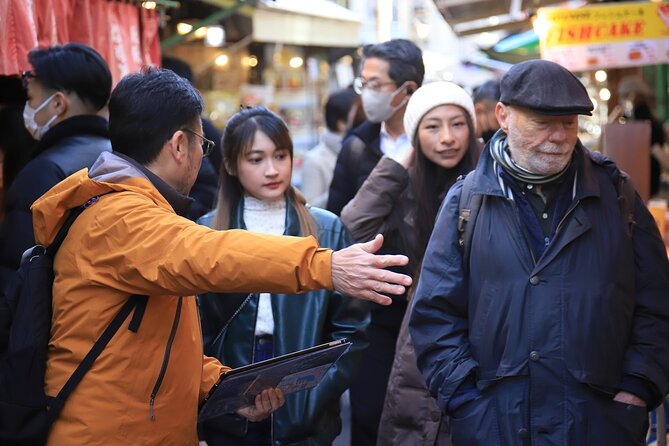
The tour lasts about three hours and involves steady walking through crowded market lanes. Comfortable walking shoes are a must. You should have a moderate level of physical fitness, though one guide was praised for keeping a comfortable pace for an older parent.
The maximum group size is 20 people. That is manageable, but it is not always intimate. A smaller group is better for hearing explanations, asking questions, entering compact shops, and making a brief personal purchase.
Some departures have been as small as four people, and a few have felt almost private during quieter periods. You cannot count on that, but it is useful to know why experiences can vary so much from one date to another.
Public transportation is nearby, but hotel pickup and drop-off are not included. You must make your own way to the temple and allow enough time to find the correct gate. Because late arrivals cannot be accommodated and same-day late arrivals receive no refund, arriving early is the sensible choice.
The minimum drinking age is 20. If you are under 20, the tour offers another drink instead. Alcohol is not the central feature, so this is a small detail, but it prevents confusion during a tasting stop.
Who Should Book This Tsukiji Walk?
I would recommend this tour to first-time visitors who want a guided introduction to Tokyo food culture without planning every stall themselves. It is especially useful if you are unsure how to approach raw fish, unfamiliar seafood, Japanese seasonings, or the market’s crowded lanes.
Food-focused visitors will get the most from it, particularly those who enjoy learning what they are eating. The route also suits couples, families with older children who can manage the walking, and anyone who wants a local guide to suggest foods and shops.
It is less suitable if you need vegetarian, halal, or gluten-free food. The tour does not accommodate those requests or allergy-related requests. It is also not suitable if you cannot eat fish.
You should also skip it if you want a large meal, a private itinerary, or a visit to the Toyosu wholesale auction. Solo exploration may offer better value if you are happy to choose your own stalls and do not need explanations.
Cancellation is flexible up to 24 hours before the start time for a full refund. Changes or cancellations inside that window are not accepted, so check your schedule before booking.
Should You Book the Tsukiji Food and Culture Tour?
Book it if you want context, guidance, and a tasting route through a market that can feel confusing at first. The strongest part is the human help: a good guide turns fish names, cooking tools, temple details, and food customs into something you can understand and remember.
Do not book it expecting the old wholesale market or a giant breakfast. This is a three-hour outer-market walk with small tastings and a final sushi or seafood bowl. At $99.49, the value depends on how much you want the guide’s local knowledge and access to a planned food route.
For many first visits to Tsukiji, that help is worth paying for. Just confirm the market-day schedule, wear walking shoes, arrive at the temple’s main gate early, and leave room in your appetite for whatever the stalls are serving that day.
FAQ
Where does the tour meet?
The meeting point is the main gate of Tsukiji Hongan-ji Temple at 3-chōme-15-1 Tsukiji, Chuo City, Tokyo. Do not use the back entrance, since map directions may lead you there.
Where does the tour finish?
The activity ends back at the meeting point near Tsukiji Hongan-ji Temple.
How long does the tour last?
The tour lasts approximately three hours.
Is lunch included?
Yes. Lunch and snacks are included. Depending on the day, the final meal is sushi or a seafood bowl.
What foods might be included?
Possible tastings include Wagyu beef skewers, tuna, fish cakes, Japanese omelette, seasonal fruit, dashi soup, green tea, seaweed, sushi, and seafood.
Is this a visit to the Toyosu wholesale fish market?
No. The tour visits Tsukiji’s outer market and Tsukiji Uogashi. Tokyo’s main wholesale fish market moved to Toyosu.
Is Tsukiji Uogashi open every day?
No. Tsukiji Uogashi is closed on Wednesdays, Sundays, and other market holidays. Some listed tastings may not be available on those days.
Do I need comfortable shoes?
Yes. The tour is mainly a walking tour, and comfortable walking shoes are recommended.
Can the tour accommodate vegetarian, halal, gluten-free, or allergy-related requests?
No. The tour does not accommodate vegetarian, halal, gluten-free, or allergy-related requests. You also cannot join if you cannot eat fish.
What is the cancellation policy?
You can cancel at least 24 hours before the start time for a full refund. Cancellations or changes made less than 24 hours before the start time are not accepted, and late arrivals cannot receive a refund.
More Market Walking Tours in Tokyo
- Bangkok: City Highlights Temple and Market Walking Tour
★ 4.5 · 3,990 reviews - Marrakech: Ben Youssef, Secret Garden, & Souks Walking Tour
★ 4.6 · 2,802 reviews - Marrakech: Colorful Medina Souks Guided Walking Tour
★ 4.7 · 2,470 reviews - Air Raid Shelter + St. Nicholas Market Walking Tour
★ 5.0 · 1,950 reviews
More Market Walking Tours in Japan
- Tsukiji Fish Market: Street Food & Culture Walking Tour
★ 4.8 · 259 reviews - Tokyo: Guided Walking Tour of Tsukiji Market with Breakfast
★ 4.4 · 134 reviews - Tokyo: Tsukiji Market Walking Tour & Sushi Cooking Class
★ 4.6 · 122 reviews - Tokyo: Guided Walking Tour of Tsukiji Market with Lunch
★ 4.4 · 24 reviews
Just added around Tokyo
- Tokyo: Private Tsukiji Street Food & Sake with Local Guide★ 5.0 · 3 reviews
- Tokyo: Tsukiji Market Guided Tour & Sushi-Making Experience★ 4.4 · 11 reviews
- Tokyo: Tsukiji Market and Hama-rikyu Gardens Guided Tour★ 4.8 · 73 reviews
- Tokyo: Tsukiji Fish Market Culture Tour with Sashimi Tasting★ 4.6 · 54 reviews
- Tokyo’s Kitchen: Tsukiji Market Food & Culture Walk★ 4.7 · 74 reviews
- Tokyo: Tsukiji Fish Market Foodie and Educational Tour★ 5.0 · 4 reviews
- Tokyo : Tsukiji Fish Market Food Walking & Shrine Visit Tour★ 5.0 · 3 reviews
- Tokyo Morning Tour: Meiji Shrine, Asakusa & Fish Market★ 4.9 · 44 reviews
Fish Market Tours, compared.
Tokyo Sushi Making Class in Tsukiji with Professional Chef
Read our review →
Tsukiji Fish Market Guided Tour and Sushi Making with Pro Chef
Read our review →
Tsukiji Fish Market Food and Culture Walking Tour
Read our review →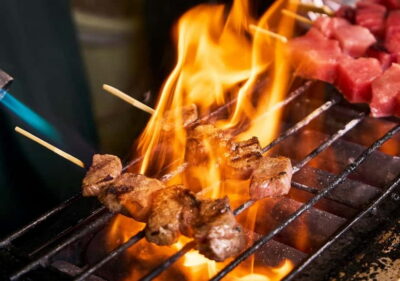
Tsukiji Fish Market: Street Food & Culture Walking Tour
Read our review →
Tsukiji Fish Market Small-Group Food Walking Tour
Read our review →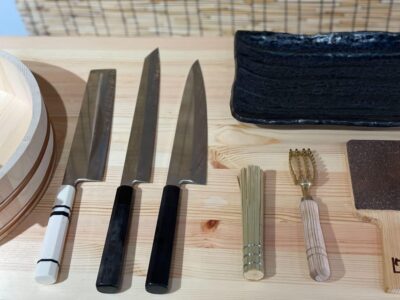
Tsukiji Fish Market Sushi Making Class with Pro Chef
Read our review →