
Review · JAPAN
Tsukiji Fish Market: Street Food & Culture Walking Tour
Come hungry, leave better informed. This two-hour walk pairs Tsukiji’s famous food stalls with a visit to Tsukiji Hongwanji Temple, giving you both a cultural introduction and plenty to taste. I especially like the fresh wasabi set supplied by the guide, and the chance to try tuna, wagyu, seafood, and traditional snacks without guessing which stalls are worth your time.
I also like the way the tour explains the craft behind Japanese food, including preservation methods that build umami and the careful work of Tsukiji’s vendors. The main consideration is the market calendar: on Wednesdays, Sundays, and national holidays, roughly half of the outer-market shops may be closed, so the food selection can be narrower.
Key points at a glance
- Fresh wasabi adds a special touch: The guide provides a wasabi set that sharpens the flavor of seafood and other tastings.
- Tsukiji Hongwanji Temple comes first: A 20-minute guided visit gives you useful cultural context before the food stops begin.
- You choose what to eat: Tastings may include tuna, sushi, grilled scallops, eel, wagyu, fish cake, dumplings, omelet, and skewered octopus.
- Guides make the market easier: George, Kawa, Mao, Tomo, Kenny, Chihiro, and other guides have been praised for clear English, food advice, and local insight.
- Bring cash: Food purchases are not described as included, and cash is specifically listed as something to bring.
- Market days matter: Wednesdays, Sundays, and national holidays can feel much quieter because many shops close.
Why Tsukiji still matters after the wholesale market moved
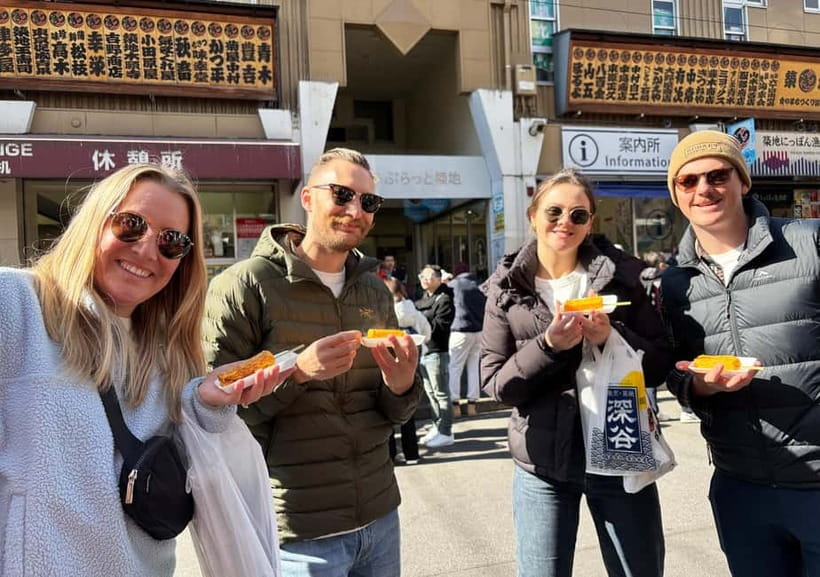
Tsukiji is no longer Tokyo’s main wholesale fish market. That role moved elsewhere, but the outer market remains a busy food district with seafood sellers, specialty ingredient shops, kitchen goods, and ready-to-eat food.
That distinction matters. You are not signing up for a behind-the-scenes tour of the current wholesale auction floor. Instead, you explore the public-facing Tsukiji Outer Market, where food culture is easier to enjoy at street level.
The area has more than 80 years of market history and remains closely tied to Japanese cooking. Your guide explains how seafood, spices, preserved ingredients, and prepared foods fit into daily meals. I find that context useful because Tsukiji can otherwise feel like a maze of appealing smells and unfamiliar dishes.
At $22 per person, the tour is priced more like a guided introduction than an expensive tasting menu. You pay for two hours of direction, explanation, and help choosing food. You should still bring cash for anything you want to buy, but the format gives you control over your spending.
More Fish Market Tours in Japan
- Tokyo Tsukiji Fish Market Food and Culture Walking Tour
★ 5.0 · 3,184 reviews - Tokyo: Tsukiji Fish Market Food and Walking tour
★ 5.0 · 1,724 reviews - Tokyo: Tsukiji Fish Market Guided Walking Tour
★ 4.9 · 1,397 reviews
Beginning at Tsukiji Hongwanji Temple
The meeting point is at Tsukiji Hongwanji Temple, with the exact starting option shown when you book. The temple visit lasts about 20 minutes and gives the tour a calmer opening than starting among food stalls.
The building is known for its striking architecture, detailed carvings, and quiet interior. Your guide also explains the proper purification procedure before entering, according to one detailed account of the visit. That small lesson helps you understand the respectful habits connected with Japanese religious sites.
This stop is not just decoration before lunch. It connects Tsukiji’s food culture with the neighborhood’s wider identity. You begin with place and custom, then move toward ingredients and cooking.
The temple portion may be less appealing if you want nothing but food from the first minute. Still, it is short, and the cultural setting gives the market walk more shape. It also helps you get oriented before entering the narrow streets of the outer market.
Eighty minutes among Tsukiji’s food stalls
The main part of the tour takes about 80 minutes. Your guide leads you through the outer market, explains what you are seeing, and points out places for tastings and shopping.
This is where a guide can save you time. Tsukiji offers far more choices than you can reasonably sample in one visit. Some stalls focus on fresh seafood, while others offer cooked snacks, meat, traditional ingredients, ceramics, and packaged foods to take home.
The food may vary, but the tour has featured:
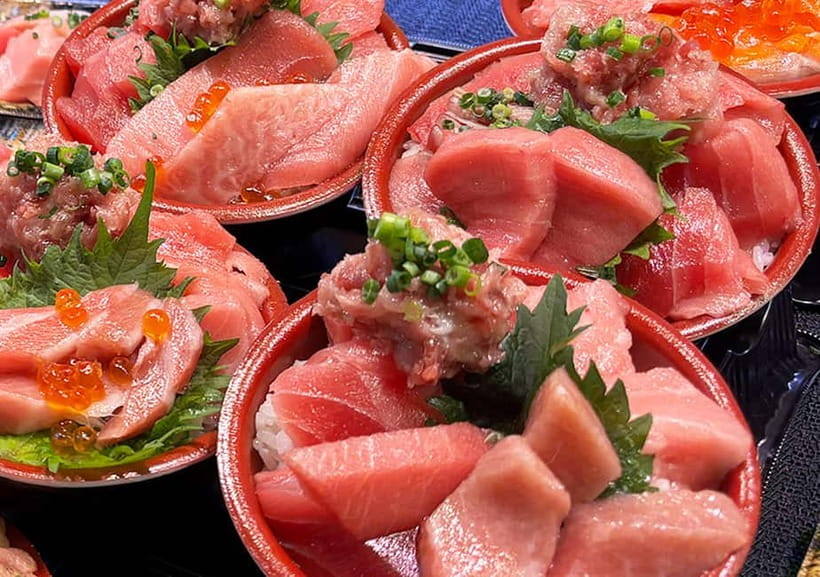
- Fresh tuna and sushi
- Sashimi bowls
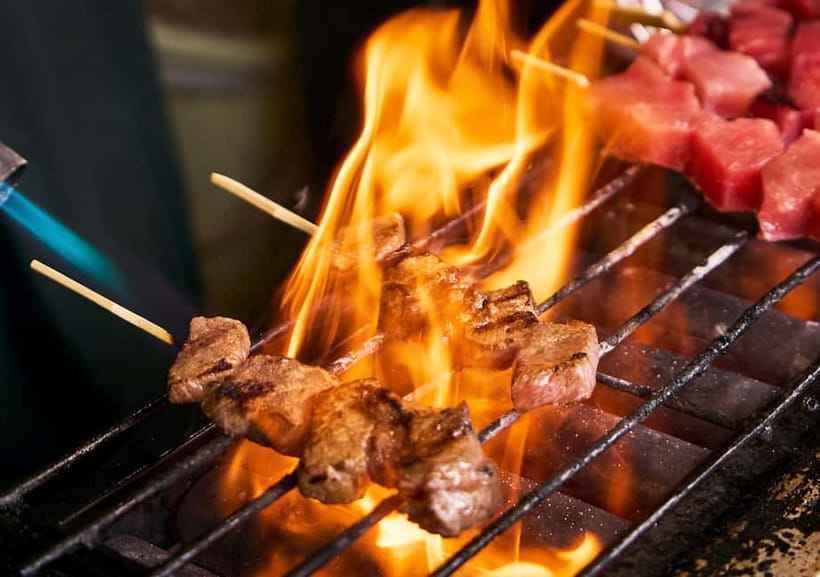
- Wagyu sirloin skewers
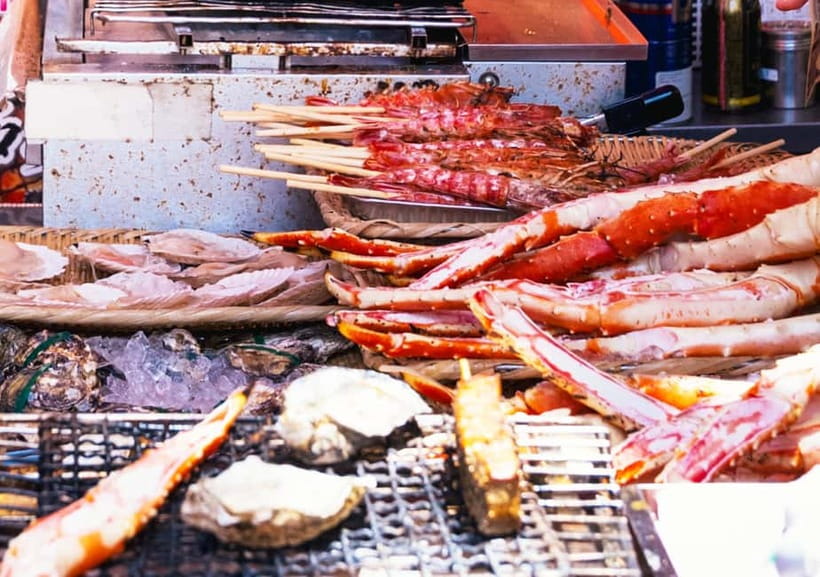
- Grilled scallops
- Eel
- Fish cake
- Japanese omelet
- Dumplings
- Skewered octopus
- Rice snacks and other traditional treats
You are not locked into a fixed tasting menu in the information provided. Several guides have helped people choose what suited them, including food they had never tried before. That makes the experience useful for cautious eaters as well as adventurous ones.
I like this flexible approach. You can ask what an ingredient is, how it is prepared, and whether it is likely to suit your taste. You can also spend more or less on food rather than paying for a large package of predetermined samples.
The guide may also help you avoid touristy prices and less worthwhile stops. George, Kawa, Mao, Tomo, Kenny, and Chihiro are among the guides praised for directing people toward good-value choices. Several people finished feeling full, so pace yourself at the beginning. Two hours of small bites can add up quickly.
Fresh wasabi and the craft behind Japanese food

The fresh wasabi is one of the tour’s most distinctive details. It is grated or served as part of a special set by the guide, and it is intended to improve the flavor of the food rather than simply add heat.
That matters because wasabi is easy to treat as a generic green paste. Here, it becomes part of the lesson. You can compare its flavor with seafood and notice how a condiment changes the taste of a dish.
The tour also touches on preservation methods that increase umami. You may hear how traditional Japanese techniques bring out flavor in ingredients over time. The point is not a full cooking class, but you do get a better sense of why Japanese food can taste so layered even when the ingredients look simple.
Food craftsmanship is another recurring theme. The market is not only about buying fish. It is about cutting, preparing, seasoning, preserving, grilling, and presenting ingredients with care. A fish preparation or cutting demonstration may be included, although the exact presentation can depend on the day and which shops are open.
One important limitation appears on Wednesdays, Sundays, and national holidays. About half of the outer-market shops may be closed, and a cutting demonstration or particular food stop may not be available. The tour still operates, but I would choose another day if the market’s full range is a major reason for booking.
More Fish Market Tours in Tokyo
- Tokyo Sushi Making Class in Tsukiji with Professional Chef
★ 5.0 · 1,177 reviews - Tsukiji Fish Market Guided Tour and Sushi Making with Pro Chef
★ 5.0 · 775 reviews - Tokyo: Tsukiji Fish Market Food and Culture Walking Tour
★ 4.7 · 757 reviews - Tsukiji Fish Market: Street Food & Culture Walking Tour
★ 5.0 · 669 reviews
What the guides add to the experience
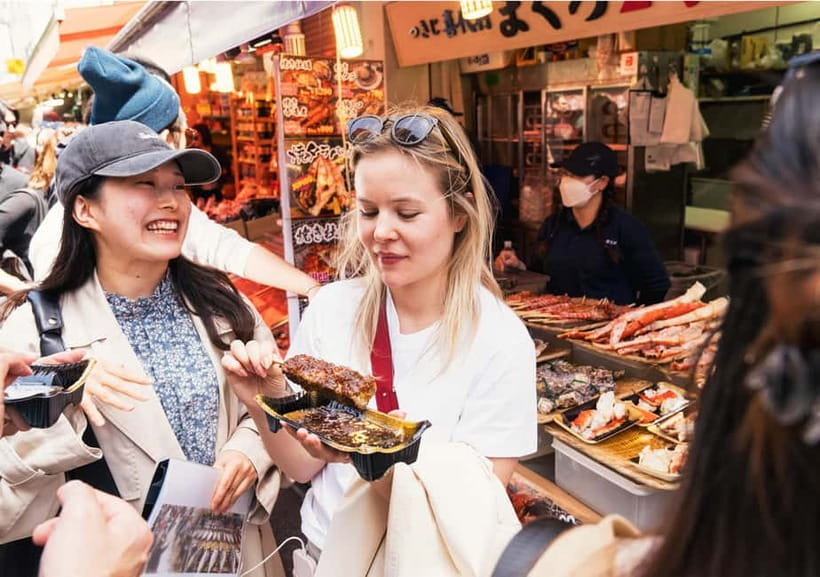
The strongest part of this tour is the human guidance. The guides have been praised for clear English, patience, humor, and the ability to adjust food choices to the group.
George is noted for explaining the area’s history in very clear English and for finding good food at fair prices. Kawa has been praised for answering questions, adapting to preferences, and giving detailed explanations. Mao, Tomo, Kenny, Chihiro, Daichi, Naoto, Kaana, Ayaka, and others have also received warm comments for making people feel comfortable.
That range of names matters because this is not a scripted audio walk. Your experience depends partly on the guide assigned that day. Some guides may focus more on history, while others may be especially good at finding food or helping with unfamiliar ingredients.
A small group is available, and some departures may be particularly intimate. One person described having a guide almost entirely to themselves. Smaller groups make it easier to ask questions and avoid losing sight of the guide in crowded lanes.
The guide may also provide practical help. One account mentions napkins, wipes, and wasabi. Another describes the guide handling lines for popular bites while the group explored nearby stalls. These are small services, but they make a food walk easier, especially when your hands are full and the market is busy.
A market visit that leaves room for your own choices
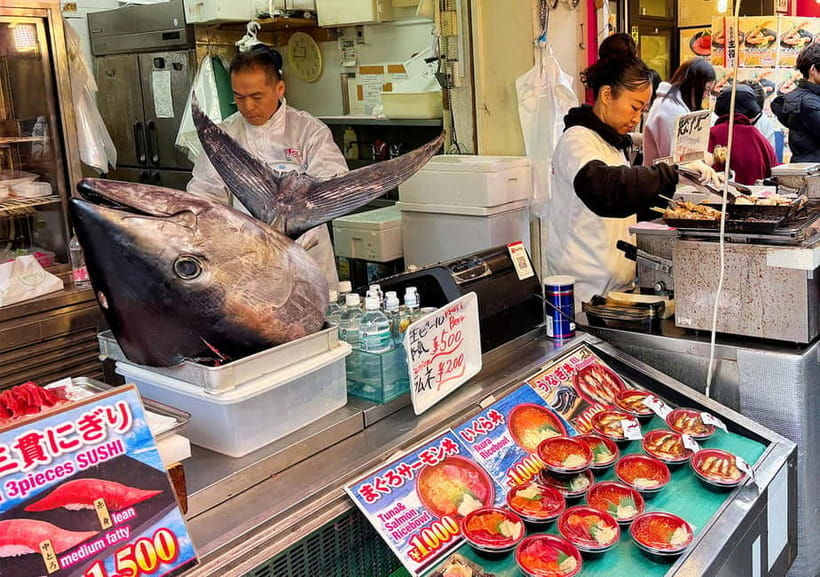
The tour lasts two hours, but it does not try to show you every corner of Tsukiji. That is a strength. You receive an introduction, sample several foods, and get advice you can use after the tour.
At the end, you return to Tsukiji Hongwanji Temple. This makes the temple a simple reference point for continuing on your own. Several guides also offer suggestions for later browsing, shopping, and food stops in the area.
You should expect walking and time spent standing near stalls. The activity is listed as wheelchair accessible, but market conditions can change from one shop area to another. If you need specific assistance, confirm the details before booking.
Cash is essential. Some food purchases may be small, and you will have more freedom if you can pay directly rather than limiting yourself to places that accept cards. Bring enough for tastings and any packaged ingredients, snacks, or kitchen items you want to take away.
The meeting point can vary by booking option, so check your confirmation carefully. The listed coordinates point to the temple area, but the exact meeting instructions matter more than relying on a map pin alone.
Who will get the most from this tour
This experience suits first-time visitors to Tokyo who want a clear introduction to Tsukiji rather than a self-guided wander. You get enough food to understand the area, but also enough explanation to see why the market matters.
It is especially useful if you feel uncertain about ordering unfamiliar seafood or traditional snacks. Your guide can identify ingredients, explain cooking methods, and suggest dishes based on your preferences.
Food-focused visitors will appreciate the range, from tuna and sashimi to wagyu, eel, scallops, dumplings, and omelet. People interested in Japanese customs also get the temple visit, purification guidance, and background on the market’s role in local cuisine.
You may prefer to explore alone if you have already researched Tsukiji and feel comfortable choosing stalls yourself. One person noted that independent exploration is possible with preparation. The tour’s value comes from saving research time, adding cultural explanation, and helping you make better choices in a short visit.
Timing, closures, and value for money
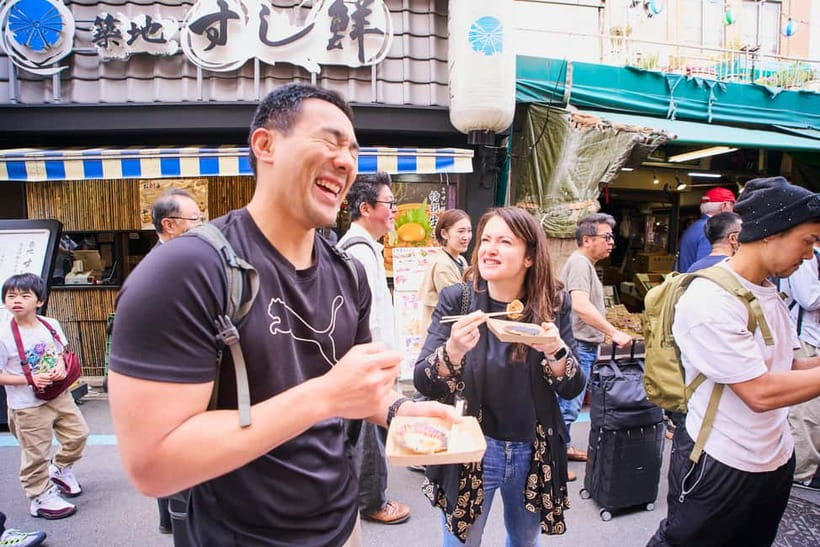
The $22 price is reasonable for a two-hour guided walk, particularly if you want help selecting food and understanding what you are eating. It is not a prepaid feast, so think of the price as covering the guide and tour structure, with extra cash needed for food purchases.
The best value comes when you use the guide actively. Ask about ingredients, preservation, preparation, and prices. Tell the guide what you like or avoid. If you simply follow the group without asking questions, you may get less from the cultural side.
The schedule matters more than the price. Avoid Wednesdays, Sundays, and national holidays if you want the greatest number of open stalls. On those days, the experience remains possible, but the market may feel quieter and some demonstrations or food choices may be missing.
Free cancellation up to 24 hours before the activity and reserve-now-pay-later booking add flexibility. Those terms are useful if your Tokyo plans are still moving, but you should still check the exact conditions shown for your selected departure.
Final verdict: book it for guidance, not just food
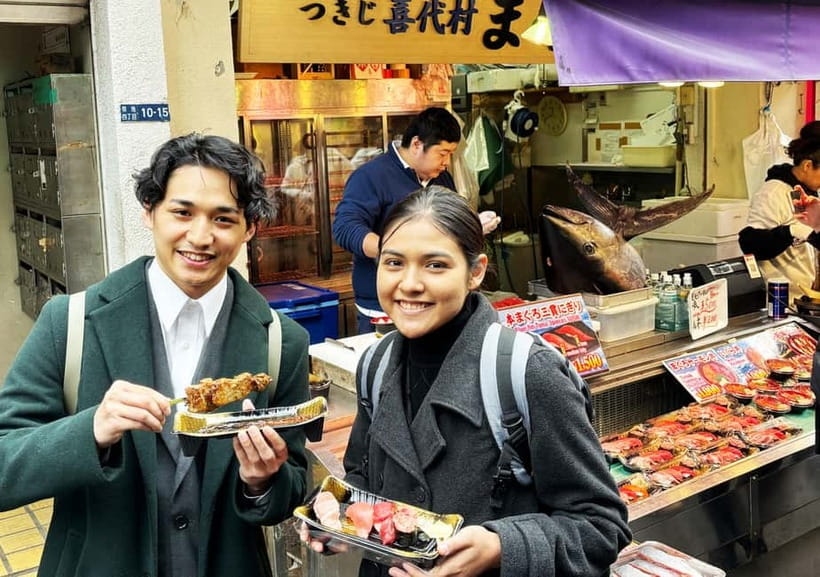
I would book this tour if you want a friendly introduction to Tsukiji, prefer having local advice, or feel unsure about trying unfamiliar Japanese food. The temple, market explanations, flexible tastings, and fresh wasabi make it more than a quick snack crawl.
Choose your date carefully, bring cash, and arrive ready to taste several small dishes. If you want the full range of stalls and the best chance of seeing fish preparation, avoid Wednesdays, Sundays, and national holidays.
If you have already explored Tsukiji on your own, the tour may feel less essential. For a first visit, though, $22 is a fair trade for two hours of direction, useful food advice, and a better understanding of what makes this market special.
FAQ
How long does the Tsukiji Fish Market tour last?
The tour lasts two hours. The schedule includes about 20 minutes at Tsukiji Hongwanji Temple, about 80 minutes in the outer market with food tasting, and another 20 minutes of guided market time.
What food might I taste?
Possible foods include fresh tuna, sushi, sashimi bowls, wagyu, grilled scallops, eel, fish cake, Japanese omelet, dumplings, skewered octopus, and rice snacks. The exact choices can vary.
Is fresh wasabi included?
The guide provides a special wasabi set, and fresh grated wasabi has been included on some tours. Bring cash for additional food purchases.
Is the tour offered in English?
Yes. The activity includes a live English-speaking guide.
Where does the tour start and finish?
The tour starts and finishes at Tsukiji Hongwanji Temple. The meeting point may vary depending on the option booked, so check the booking instructions.
Are the food purchases included in the $22 price?
The provided information includes the guided tour, temple visit, outer-market exploration, and food tasting, but it also specifically tells you to bring cash. Plan to carry money for food you choose to buy.
Can I take the tour on a Wednesday, Sunday, or national holiday?
Yes, tours are still possible on those days. However, about half of the outer-market shops may be closed, so the experience can differ from a normal market day.
Is the tour wheelchair accessible?
Yes, the activity is listed as wheelchair accessible.
Can I cancel for a refund?
You can cancel up to 24 hours in advance for a full refund. Reserve-now-pay-later booking is also available, subject to the conditions shown when you book.
More Street Food Market Tours in Japan
- Tokyo Food Tour Taste Fresh Delights at Tsukiji Market
★ 5.0 · 429 reviews - Toyosu Market Morning Tuna Auction and Tsukiji Food Tour with Licensed Guide
★ 4.5 · 146 reviews - Tokyo Tsukiji Fish Market Food Tour: 15 Stops & Walk Local Street
★ 5.0 · 139 reviews - Tsukiji Fish Market Private Food Tour in Tokyo
★ 5.0 · 18 reviews
More Market Walking Tours in Japan
- Tsukiji Fish Market Small-Group Food Walking Tour
★ 5.0 · 621 reviews - Tokyo: Guided Walking Tour of Tsukiji Market with Breakfast
★ 4.4 · 134 reviews - Tokyo: Tsukiji Market Walking Tour & Sushi Cooking Class
★ 4.6 · 122 reviews - Tokyo: Guided Walking Tour of Tsukiji Market with Lunch
★ 4.4 · 24 reviews
Just added around Tokyo
- Tokyo: Private Tsukiji Street Food & Sake with Local Guide★ 5.0 · 3 reviews
- Tokyo: Tsukiji Market Guided Tour & Sushi-Making Experience★ 4.4 · 11 reviews
- Tokyo: Tsukiji Market and Hama-rikyu Gardens Guided Tour★ 4.8 · 73 reviews
- Tokyo: Tsukiji Fish Market Culture Tour with Sashimi Tasting★ 4.6 · 54 reviews
- Tokyo’s Kitchen: Tsukiji Market Food & Culture Walk★ 4.7 · 74 reviews
- Tokyo: Tsukiji Fish Market Foodie and Educational Tour★ 5.0 · 4 reviews
- Tokyo : Tsukiji Fish Market Food Walking & Shrine Visit Tour★ 5.0 · 3 reviews
- Tokyo: Guided Walking Tour of Tsukiji Market with Lunch★ 4.4 · 24 reviews
Street Food Market Tours, compared.

Old Town, Creek, Museums, Souks, & Street Food Tour
Read our review →
Old Town, Souks, Street Food, Guided Tour & Abra Ride
Read our review →

London Bridge & Borough Market Food Tour with 7 Authentic Dishes
Read our review →
Old Town, Souks, Street Food, Guided Tour & Abra Ride
Read our review →
Small Group Cooking Class & Market Food Tour in Florence
Read our review →
Browse the lists this tour appears in