
Review · THAILAND
Bangkok: City Highlights Temple and Market Walking Tour
Bangkok’s grandest sights reward a good guide. This tour links the Grand Palace and Emerald Buddha Temple with markets, local transport, and optional visits to Wat Pho and Wat Arun. I like the small group size, capped at 10, and the way the route adds everyday Bangkok through the amulet market, Tha Thien Market, ferries, and tuk-tuks when available. The guides, including Mina, Kiwi, Johnny, Air, Tan, and Peter, are praised for clear explanations, friendly care, and good help after the tour.
The main thing to consider is the heat and the amount of walking on hard surfaces. Palace dress rules are strict, temple interiors require bare feet, and the full route can feel long if you need a slower pace. The $42 price is fair for the main admissions, guide, water, and local transport elements, but check which option you select because Wat Pho and Wat Arun admission may vary.
Key points to know before you book
- The Grand Palace and Emerald Buddha are the core visit: You see Thailand’s most important royal and religious buildings with a guide to explain the symbols and ceremonies.
- The route includes real city life: The amulet market and Tha Thien Market add local commerce beyond the polished temple courtyards.
- Small groups make a difference: With no more than 10 participants, it is easier to hear the guide and ask questions.
- Wat Pho adds more than a giant statue: You learn about Thai massage, public medical education, royal history, and the temple’s marble teaching panels.
- Wat Arun completes the riverfront picture: Its tall porcelain-covered tower gives the tour a memorable final landmark.
- Dress and footwear matter: Cover your shoulders and knees, avoid sleeveless shirts, and expect to remove shoes inside temple buildings.
Starting at River City Bangkok
The tour begins at the Big Country Experience office inside River City Bangkok, with the meeting time listed as 9:00 AM. River City sits beside the Chao Phraya River, making it a sensible starting point for a day centered on Bangkok’s old royal district.
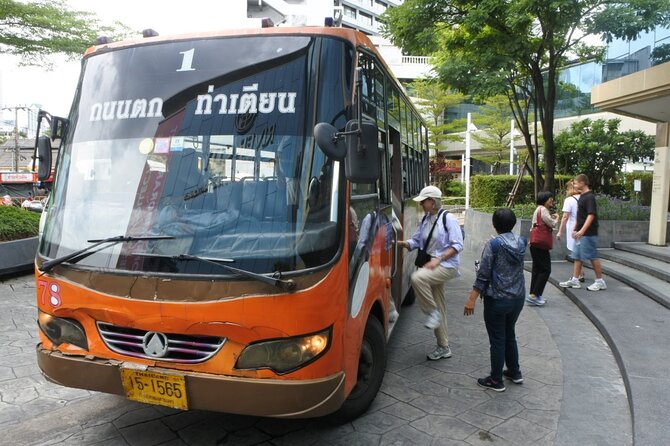
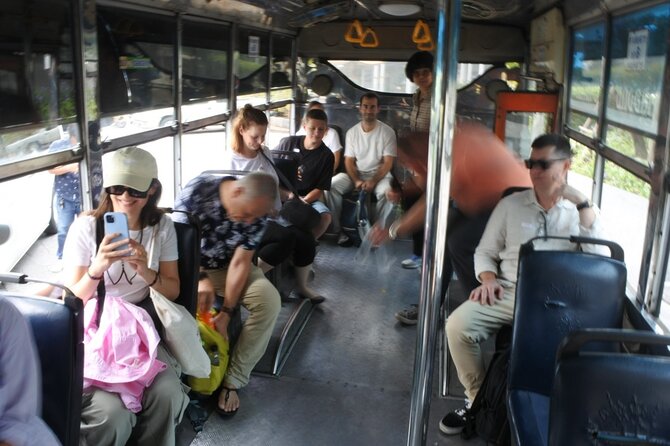
From there, you travel by local transport toward the Emerald Buddha Temple. The journey is not just a transfer. It gives you a first look at how Bangkok moves, and some departures include a river boat or tuk-tuk as part of the route. The exact mix can depend on the day and operating conditions, so treat the transport as part of the character of the tour rather than a guaranteed sightseeing sequence.
The group size is limited to 10 people. That is a useful middle ground. You get the social feel of a shared tour without being swallowed by a large crowd, and a guide can usually keep track of everyone at street crossings, piers, and temple entrances.
Several guides receive especially warm praise for combining facts with practical help. Mina is described as energetic and engaging, Kiwi as friendly and attentive, and Johnny as both entertaining and reassuring. Peter is praised for explaining the figures and stories around the palace in a way that makes the buildings easier to understand. These details matter because Bangkok’s temples can become a blur of gold, tile, statues, and crowds without a guide to sort out what you are seeing.
More Market Walking Tours in Bangkok:
- Bangkok Wat Pho and Flower Market Historical Walking Tour
★ 5.0 · 28 reviews - Bangkok: City Highlights Temple and Market Walking Tour
★ 5.0 · 4 reviews - Tokyo Tsukiji Fish Market Food and Culture Walking Tour
★ 5.0 · 3,184 reviews
Passing the amulet market on Rattanakosin Island
One of the tour’s better touches comes before the first major monument. The route passes the amulet market, a long-standing community market on Rattanakosin Island.
This is a useful contrast with the Grand Palace. Royal Bangkok can feel formal and ceremonial, while the amulet market shows a more personal side of religious life. Small protective images and devotional objects are part of the visual culture around Thai Buddhism, and the market gives your guide a chance to explain that context.
Do not expect a long shopping stop unless the guide adjusts the timing. It is mainly a passing look on the way to the palace. Still, that short glimpse helps connect the temples to daily life instead of treating them as isolated monuments.
Entering the Grand Palace and Emerald Buddha Temple
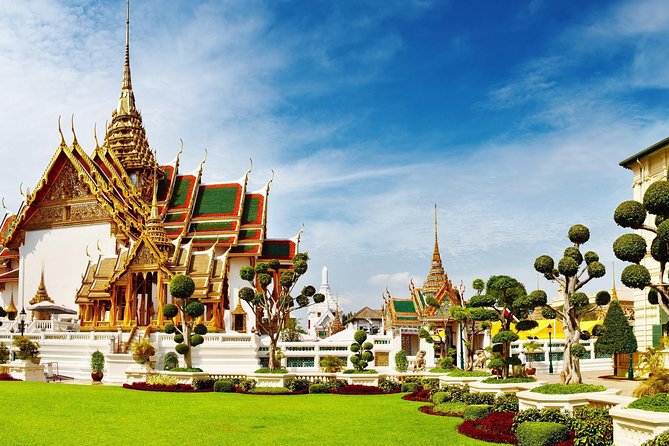
The Grand Palace is the main event. It served as the official residence of Thailand’s kings and remains a site for royal ceremonies and state functions. Even when no ceremony is taking place, the scale and decoration make the compound feel like the center of royal Bangkok.
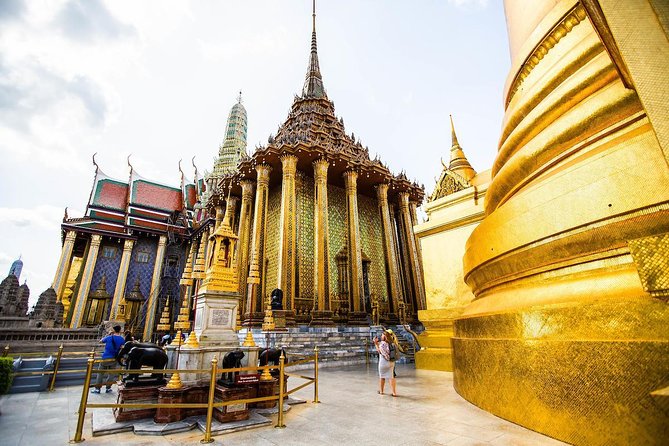
The Emerald Buddha Temple, officially Wat Phra Si Rattana Satsadaram and commonly called Wat Phra Kaew, is located within the palace grounds. It is regarded as Thailand’s most sacred Buddhist temple, so the visit carries both political and religious weight.
Your guide helps you read the complex rather than simply photograph it. Expect brightly colored buildings, golden spires, glittering mosaics, guardian figures, and detailed rooflines. The decorations can seem overwhelming at first, but stories and small details give your eyes somewhere to land.
One useful point raised during tours is that the Emerald Buddha is made from jade, despite its familiar name. The figure wears different outfits according to the season, and the changing of those garments is a royal ritual. You cannot photograph inside the temple building, so a guide who can show you images or explain the ceremony is especially helpful.
Photography is allowed in the Royal Palace grounds and in the Emerald Buddha Temple compounds, but not inside the buildings. Keep your camera ready outdoors, then put it away at the entrances.
The palace visit lasts about an hour and a half, including guided sightseeing and walking. That is enough time for a solid introduction, though not enough to inspect every corner at a leisurely pace. You should expect sun, stone paving, and plenty of standing. Guides on this route are praised for adding water stops and shade breaks when the weather turns hot.
Dress properly before you reach the shrine
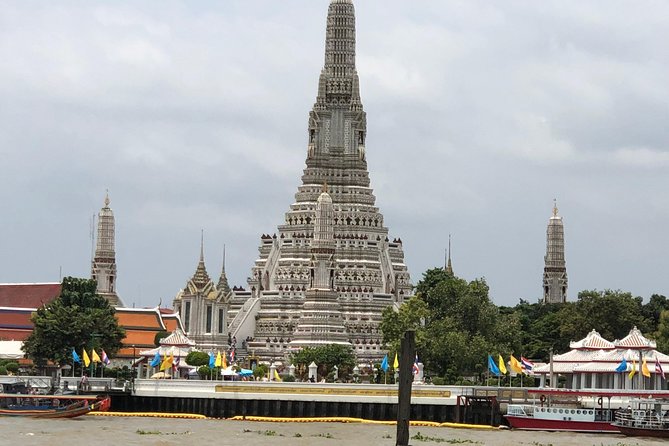
Do not treat temple clothing as a minor detail. Bare shoulders and knees are not allowed at the national shrine, and sleeveless shirts are specifically prohibited. Strapless shoes with heels are also not accepted.
Wear light clothing that covers your shoulders and knees. A thin long-sleeved top and loose trousers or a longer skirt are practical choices. You will also remove your shoes before entering temple buildings, so shoes that slip on and off easily will save time.
These rules apply to everyone in the group, and an unsuitable outfit can slow down or interrupt the visit. Pack a cover-up if you are unsure. Water is provided, but you should still dress for heat and walking.
More City Tours in Bangkok:
- Bangkok’s Best: City Highlights & Floating Market Private Tour
★ 5.0 · 22 reviews - Private Tour: Damnoen Saduak Floating Market and Bangkok City Temples
★ 5.0 · 12 reviews - Bangkok: City Highlights & Floating Markets Private Tour
★ 5.0 · 11 reviews - Dubai: Half-Day City Tour with Blue Mosque, Creek, and Souks
★ 4.8 · 3,059 reviews
Wat Pho and the Reclining Buddha
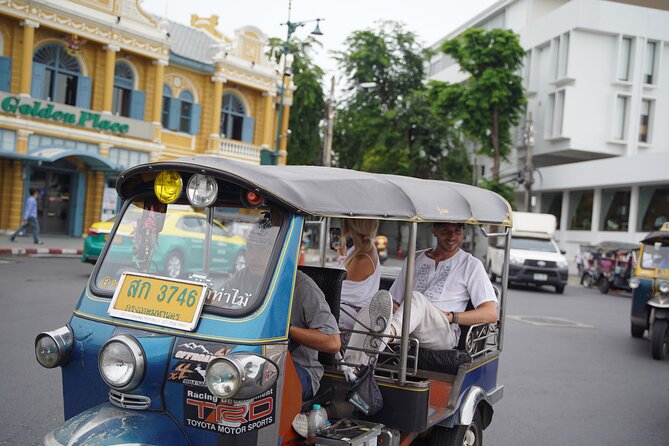
After the Grand Palace, the route can continue to Wat Pho if you select that option. This is the temple complex best known for the Reclining Buddha, but the statue is only one part of its importance.
Wat Pho is one of Bangkok’s oldest and largest temple complexes and is classed among Thailand’s highest-grade first-class royal temples. King Rama I rebuilt the complex on an earlier temple site, and it became his main temple. Some of his ashes are enshrined there.
The Reclining Buddha is the visual highlight. Its scale is impressive, but your guide can help you look beyond the famous pose and understand the temple as a center of learning. Wat Pho is linked to early public medical education, with marble illustrations and inscriptions placed around the complex as teaching material.
The temple is also known as the birthplace of traditional Thai massage. Massage is still taught and practiced at Wat Pho, giving the site a living connection to Thai culture rather than a purely historical one. Its educational material has also been recognized through UNESCO’s Memory of the World Programme.
On the way to Wat Pho, you pass Tha Thien Market. This is a cultural food market known for dried and salted seafood and wholesale products. It may not be the prettiest stop, but that is exactly its value. It shows the working river district behind the ceremonial buildings.
The Wat Pho option adds more walking and more history. If you want only a quick introduction to Bangkok’s royal quarter, the shorter version may be enough. If you want a fuller temple day, Wat Pho is worth the extra time.
Wat Arun beside the Chao Phraya River
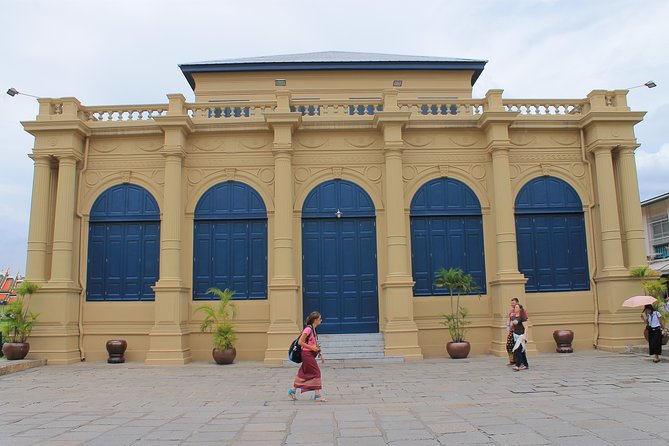
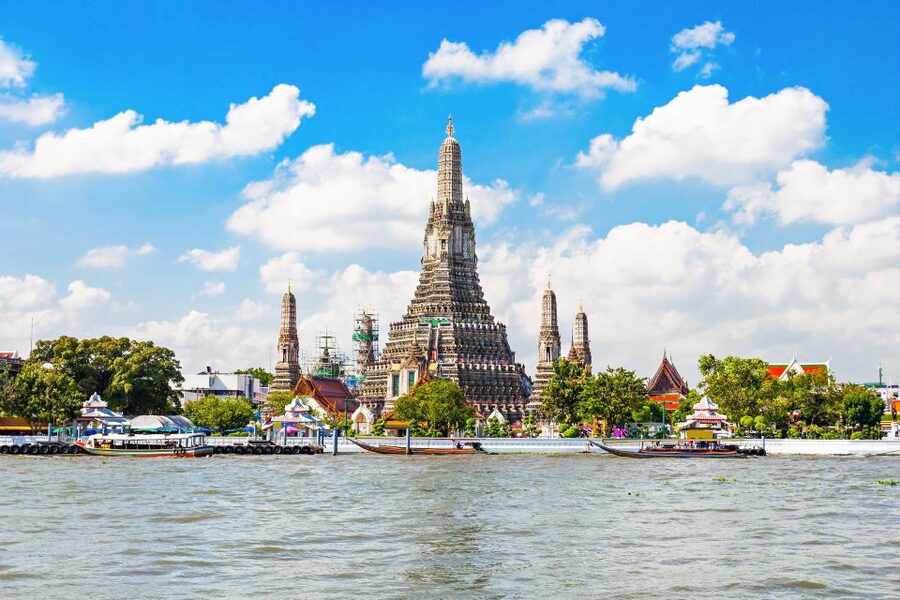
The final major temple is Wat Arun, or the Temple of Dawn. It is one of Bangkok’s most recognizable landmarks, with a tall central tower beside the Chao Phraya River.
The main pagoda rises about 70 meters and is covered with tiny pieces of colored glass and Chinese porcelain. In bright daylight, the decoration rewards a close look. From a distance, the tower creates the classic riverfront view. Up close, the surface becomes a patchwork of small tiles and patterns.
Wat Arun also has a bell tower and giant statues, adding more to the visit than the central pagoda alone. The river setting changes the mood after the enclosed palace grounds. You get open views, water, boats, and a clearer sense of how Bangkok’s old districts developed along the Chao Phraya.
The route may include a river boat, and several guides are praised for helping people find the correct ferry or onward connection after the tour. That practical assistance is valuable if you plan to continue to Iconsiam, return to your hotel, or connect with another river service.
Keep in mind that the basic inclusions clearly cover the Grand Palace and Emerald Buddha admission. Wat Pho and Wat Arun admission are included if the relevant option is selected. Check your chosen booking before you go so you know which temples are part of your price.
What the $42 price really covers
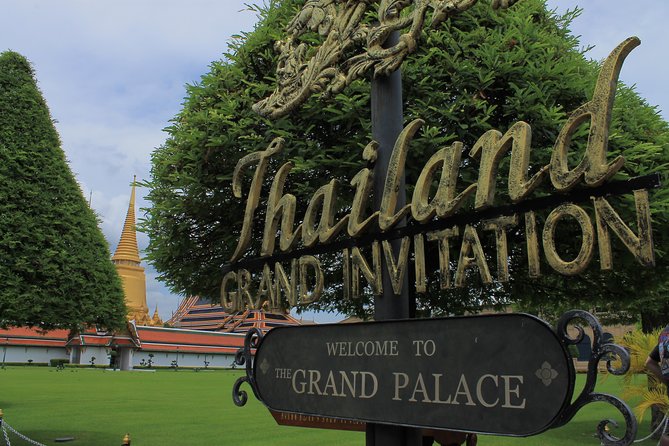
At $42 per person, this is not the cheapest way to see Bangkok’s old city. You can reach the temples independently for less, especially if you already understand local transport, entrance procedures, and temple etiquette.
The value comes from reducing the friction. A licensed guide handles the route, explains the religious and royal context, provides drinking water, and helps the group move between public transport stops and busy sights. Admission to the Grand Palace and Emerald Buddha Temple is included, while Wat Pho and Wat Arun depend on the selected option.
That makes the price reasonable for a first Bangkok visit, particularly if you want the major sights in one organized morning or afternoon. It is less compelling for confident repeat visitors who prefer to linger alone, shop, or set their own pace.
The full experience runs from about two to four hours, depending on the option and timing. That range is important. A short version may focus on the palace and Emerald Buddha, while the longer route adds Wat Pho and Wat Arun. Check the available start time and inclusions before paying.
Personal expenses are not included. Bring money for anything you buy at markets or elsewhere after the tour.
The guides are the strongest part
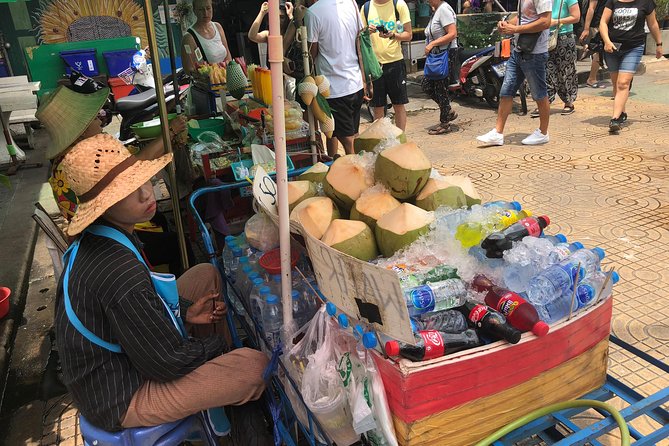
The sites are famous, but the guide determines how much you take away. The strongest praise goes to guides who balance information with care for the group.
Air is described as well prepared and willing to give people time to enjoy each stop. Tan receives praise for clear explanations. Johnny is repeatedly described as friendly, entertaining, and attentive. Kiwi is singled out for practical help, strong energy, cultural explanations, and even food advice at the end.
Mina is praised for making the tour interactive and answering questions. Peter is especially good at putting palace figures and stories into historical context. One guide helped a participant get to a Khon show afterward, while another helped with a boat connection to Iconsiam.
Those small acts tell you what this tour does well. It is not only a script delivered at the monuments. Guides may help with shade breaks, toilets, river boats, onward directions, and changes caused by heavy rain. One account even describes a guide keeping the group dry during thunderstorms.
Guide quality can vary from departure to departure, as it does on any shared tour. Still, the repeated pattern is clear: friendly communication, useful historical detail, and close attention to the group.
Heat, pace, and the practical drawbacks
Bangkok’s temple district is rewarding, but it is not a cool indoor museum. You will walk on stone and paved surfaces, stand in open courtyards, and move through busy public areas. The morning start helps, but you should still expect heat.
The tour’s pace is efficient rather than leisurely. That is helpful if you have limited time, but less ideal if you want long periods for photography or quiet reflection. The guide needs to keep the group together and reach each site during the available window.
Rain can also affect the route. The positive side is that guides appear willing to adapt and help people through wet conditions. The less positive side is that transport connections and outdoor sightseeing are naturally less predictable during storms.
To make the day easier:
- Wear covered, breathable clothing that meets temple rules.
- Use comfortable shoes that are easy to remove.
- Carry a small bag for footwear during temple visits if needed.
- Bring sun protection and water beyond the bottle provided.
- Keep some flexibility after the tour if you plan another timed activity.
Who should book this Bangkok temple tour?
I would choose this tour for a first visit to Bangkok, a short stay, or anyone who wants the main royal and religious sights explained in one organized route. It is also a good fit if you want to try local transport without having to work out every ferry, market, and entrance on your own.
Families and older visitors may appreciate the small group and the guides’ attention to toilet, shade, and water breaks. The tour can also suit solo visitors who want company without joining a huge bus group.
You may prefer an independent visit if you want to spend half a day inside one temple, avoid fixed timing, or return repeatedly to the best photo spots. The heat and walking also make this less suitable for anyone who needs a very slow or fully seated itinerary.
Should you book it?
Book it if you want Bangkok’s essential temples, a little market life, and practical help with local transport in two to four hours. The small group, included palace admission, and consistently praised guides give the $42 price solid value, especially for first-time visitors.
Choose the longer option if Wat Pho and Wat Arun matter to you, and confirm that both admissions are included before you go. Wear the right clothes, expect a warm walking tour, and leave the experience with enough time to continue along the river afterward.
FAQ
Where does the Bangkok temple tour begin?
You meet the guide at the Big Country Experience office at River City Bangkok. The listed meeting time is 9:00 AM.
How long does the tour last?
The activity lasts between two and four hours. The exact duration depends on the selected option and the available starting time.
Which languages are available?
Live guiding is available in English and German.
What is included in the price?
The tour includes admission to the Grand Palace and Emerald Buddha Temple, a professional licensed guide, and drinking water. Wat Pho and Wat Arun admission are included when you select the relevant option.
Is the group large?
No. The tour is limited to 10 participants.
What clothing is required?
You must cover your shoulders and knees. Sleeveless shirts and strapless-heel shoes are not allowed at the national shrine.
Can you take photographs inside the temples?
Photography is allowed in the Royal Palace grounds and the compounds of the Emerald Buddha Temple, but not inside the buildings. Shoes must be removed before entering temple buildings.
Just added around Bangkok
- Morning Buddhist Almsgiving, Grand Palace and Flower Market Tour in Bangkok★ 3.5 · 9 reviews
- Private 4 days : Bangkok, Floating market and Ayutthaya★ 5.0 · 2 reviews
- Floating & Railway Markets and Erawan Waterfall [Optional Luxury]★ 5.0 · 43 reviews
- Bangkok Udomsuk Thai Cooking Class with local market tour★ 5.0 · 5 reviews
- Floating Market & Railway Market near Bangkok★ 4.0 · 5 reviews
- Train & Floating Market Food Adventure + Scenic train ride★ 5.0 · 102 reviews
- Discover Ayutthaya at Sunset: Historic Temples & River Cruise★ 4.5 · 29 reviews
- Hands On Thai Cooking Class & Market Tour in Sathon, Bangkok★ 5.0 · 87 reviews
Walking Tours, compared.
Tokyo Tsukiji Fish Market Food and Culture Walking Tour
Read our review →
Ben Youssef, Secret Garden, & Souks Walking Tour
Read our review →
Air Raid Shelter + St. Nicholas Market Walking Tour
Read our review →
Nishiki Market Brunch Walking Tour (7 Tastings + Brunch)
Read our review →Tsukiji Fish Market Food and Culture Walking Tour
Read our review →
Tsukiji Fish Market: Street Food & Culture Walking Tour
Read our review →Browse the lists this tour appears in