
Review · JAPAN
Tokyo: Tsukiji Market Guided Tour & Sushi-Making Experience
Tsukiji is still worth tasting. This 225-minute outing pairs Tsukiji Outer Market with a hands-on sushi class, giving you both Tokyo street life and time at the counter. I like the small group, capped at 10 people, and the chance to make nigiri, hosomaki, and gunkanmaki under an instructor’s eye. The main caution is value: at $177 per person, this is costly if your main goal is simply eating excellent sushi.
You begin at Tsukiji Hongwanji Temple, then walk through the market before taking public transportation to a kitchen near Tokyo Tower. I like that the tour explains where professional chefs shop instead of treating Tsukiji as a quick photo stop. Still, you should know that the market portion is a guided walk, not a shopping trip to choose and buy tuna for the class, and one participant found the fish quality disappointing.
Key points at a glance
- Three sushi styles in one class: Learn nigiri, thin hosomaki rolls, and soft-topped gunkanmaki wrapped in nori.
- A close look at Tsukiji: Walk narrow market lanes lined with sashimi, tuna, seaweed, produce, and cooking supplies.
- Small-group guidance: The group is limited to 10, which should give you more room to ask questions and get help with technique.
- Public transport included: The guide accompanies you from Tsukiji to the sushi kitchen, so you do not need to arrange that connection yourself.
- A practical souvenir: The included sushi souvenir kit lets you take home more than photos and a full stomach.
- A premium price: At $177, you are paying for the guide, transport, instruction, ingredients, and a structured cultural lesson, not just lunch.
Starting at Tsukiji Hongwanji Temple
The meeting point is easy to identify: the entrance to Tsukiji Hongwanji Temple, about 30 seconds from Exit 1 of Tsukiji Station on the Hibiya Line. That is useful in a city where a tour meeting point can otherwise mean hunting through a station maze.
The temple makes a good starting marker. From there, your guide leads you into Tsukiji Outer Market, the part of the old market district that remains open to the public. The former wholesale market moved to Toyosu, but Tsukiji Outer Market continues to serve shoppers, cooks, restaurant professionals, and curious visitors.
I would arrive with comfortable shoes and an appetite, but not with a firm expectation of a full meal during the first part. The tour description emphasizes ingredients and food culture, while the actual sit-down eating comes later at the sushi kitchen. You will also be walking through narrow lanes, so this is not the place for bulky luggage or shoes that punish your feet.
More Fish Market Tours in Japan
- Tokyo Tsukiji Fish Market Food and Culture Walking Tour
★ 5.0 · 3,184 reviews - Tokyo: Tsukiji Fish Market Food and Walking tour
★ 5.0 · 1,724 reviews - Tokyo: Tsukiji Fish Market Guided Walking Tour
★ 4.9 · 1,397 reviews
Reading Tsukiji through its food stalls
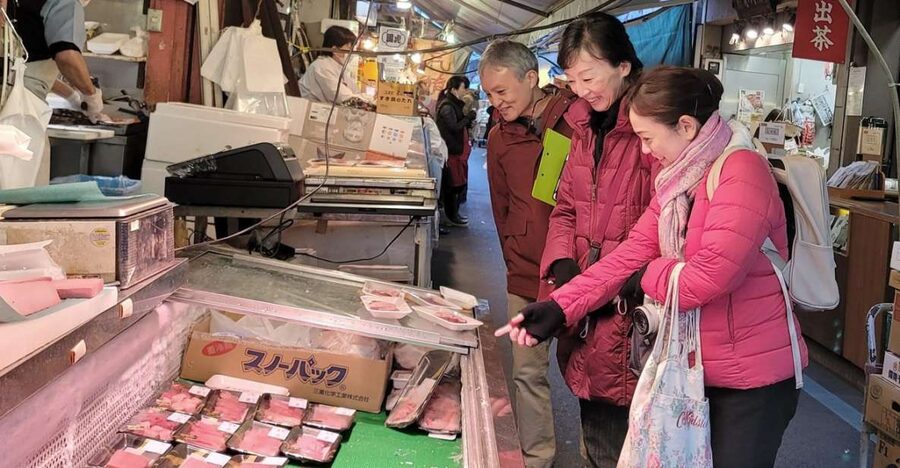
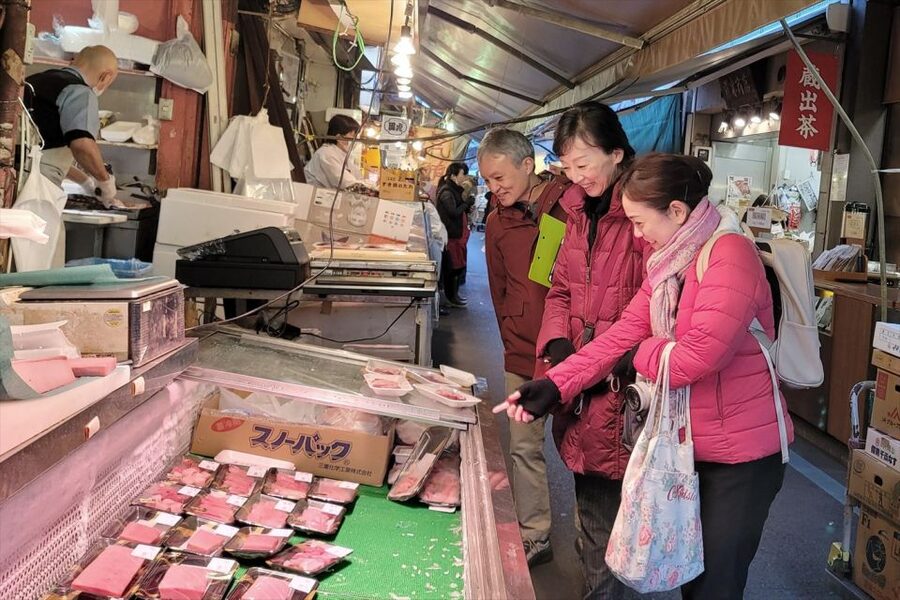
The market walk is the tour’s most atmospheric section. You pass counters and shops displaying freshly sliced sashimi, dried seaweed, tuna, vegetables, fruit, and other cooking supplies. The appeal is not one grand sight. It is the close range view of how ingredients are handled, sold, and selected in a working food district.
Your guide explains the area’s past as a major wholesale center and points out stores used by top chefs, including Michelin-starred restaurants. That detail gives the walk a useful purpose. Instead of only hearing that Tsukiji is famous, you get a sense of why the district still matters to Japanese cooking.
The narrow lanes can also be busy and crowded, and merchants are working rather than performing for a tour. You should expect to keep moving, listen carefully, and avoid blocking shop entrances. This is a market tour first, not a private tasting crawl.
One point deserves clear attention. Earlier promotional wording apparently led at least one participant to expect instruction on selecting tuna or buying fresh fish for the class. That did not happen. The group walked through the market, but the sushi ingredients for the class were included separately. If choosing fish at the market is your main aim, this tour may not match what you want.
What you actually learn about sushi
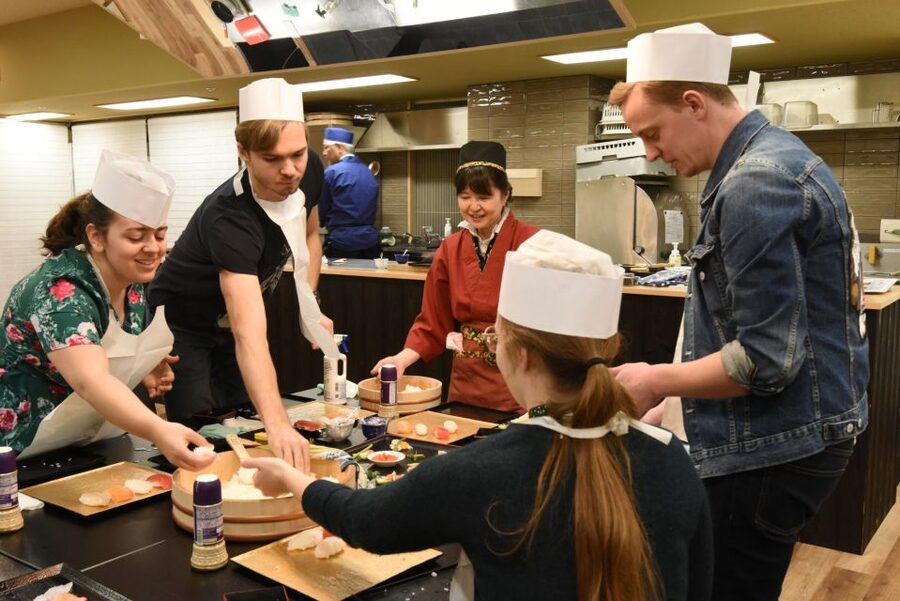
After Tsukiji, you use public transportation to reach a state-of-the-art kitchen near Tokyo Tower. The included transfer is a practical touch. You are not left to find a second location alone, and the change from market lanes to a dedicated teaching space gives the afternoon a clear rhythm.
The class covers three familiar but different forms of sushi:
- Nigiri: Hand-shaped rice topped with fish or another ingredient.
- Hosomaki: A thin sushi roll wrapped in nori.
- Gunkanmaki: A rice base wrapped with nori and finished with a soft topping of your choice.
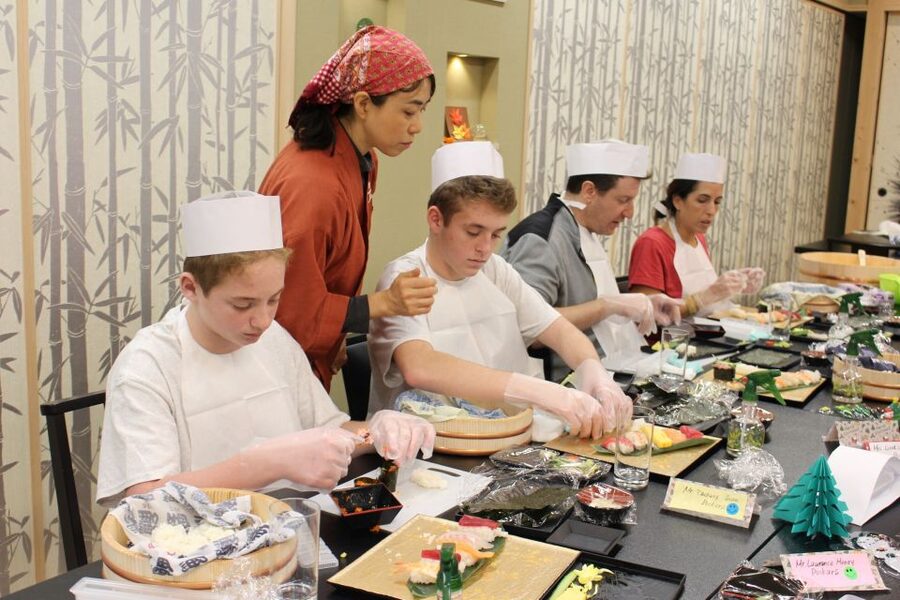
The lesson begins with background on sushi and food hygiene before you start handling ingredients. That matters more than it may sound. Sushi can look simple, but rice temperature, hand position, pressure, and portion size all affect the result. A good instructor can help you avoid turning the rice into a tight brick or letting the roll fall apart.
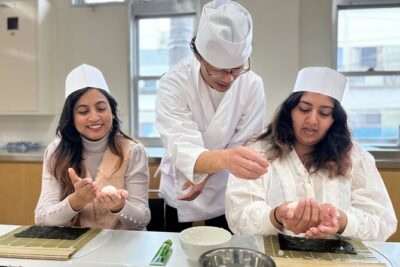
You make the sushi yourself under supervision. That makes the class more engaging than a demonstration where you simply watch a chef work. It also means your final plate will reflect your technique. If your nigiri looks a little lopsided, you have earned the right to blame your hands, not the kitchen.
The instructor also introduces Japanese dining etiquette before you sit down to eat. This gives the class a cultural side without turning it into a lecture. You learn not only how the food is assembled, but also how it fits into a Japanese meal.
The sushi quality question
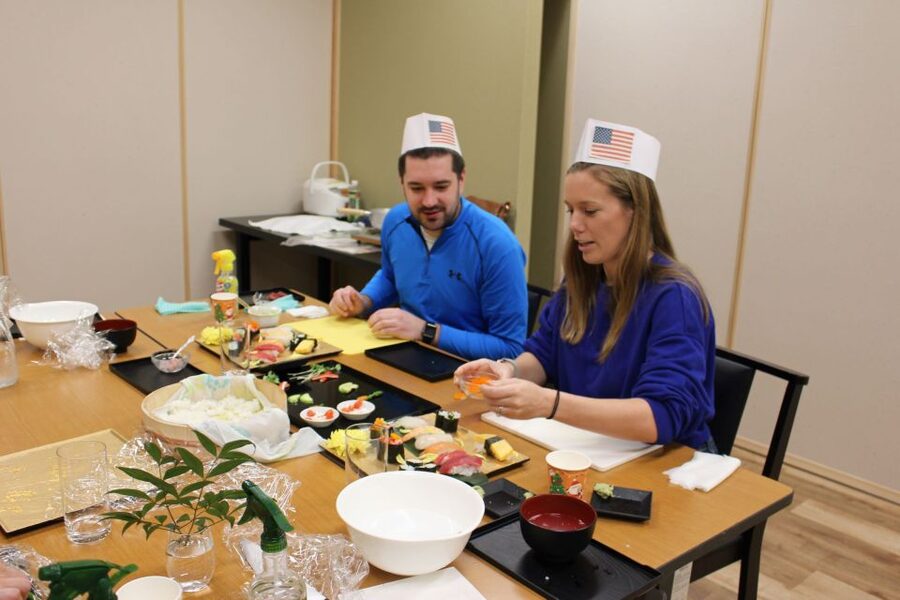
This is where you need a realistic expectation. The class is designed to teach preparation, not to deliver the best sushi meal of your life. One participant, who had eaten sushi at many price levels, found the fish quality poor and considered the meal the weakest part of the experience.
That criticism matters because $177 is a substantial price in Tokyo. You can spend less for a good market meal, and you can spend a similar amount at a respected sushi restaurant for a meal focused almost entirely on the fish. Here, your payment also covers the market guide, licensed instruction, public transportation, ingredients, small-group format, and souvenir kit.
Your handmade sushi may also taste better to you because you prepared it. But you should not book this expecting an omakase-style meal. The point is participation, food knowledge, and a chance to practice three forms of sushi. If premium fish is your top concern, a dedicated sushi restaurant may be a better use of your money.
The food preparation experience received much warmer praise than the fish itself. The guides were described as friendly, and the sushi chef was singled out as fun. That combination is important for a hands-on class. A patient instructor can turn a basic recipe into a memorable activity, especially if you are new to Japanese cooking.
More Fish Market Tours in Tokyo
- Tokyo Sushi Making Class in Tsukiji with Professional Chef
★ 5.0 · 1,177 reviews - Tsukiji Fish Market Guided Tour and Sushi Making with Pro Chef
★ 5.0 · 775 reviews - Tokyo: Tsukiji Fish Market Food and Culture Walking Tour
★ 4.7 · 757 reviews - Tsukiji Fish Market: Street Food & Culture Walking Tour
★ 5.0 · 669 reviews
Why the small group helps
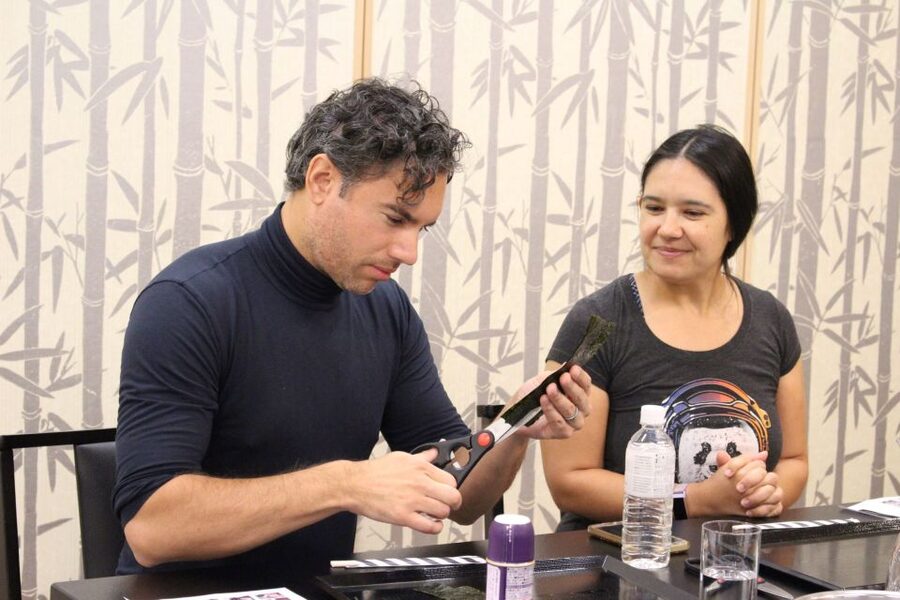
The group is limited to 10 participants, which is a sensible size for a market walk and a cooking lesson. In Tsukiji, a small group is easier to move through tight passages without creating a human traffic jam. In the kitchen, it should also make it easier to see demonstrations and receive corrections.
A large group can reduce a sushi class to watching someone else work. This format gives you a better chance to shape your own rice, roll your own hosomaki, and ask about ingredients or technique. The value of the group limit depends on the number of people who actually attend, but the cap is still a positive feature.
The English-speaking guide and licensed instructor make the class accessible to visitors who do not speak Japanese. The information provided does not name the individual guides, so you should not book expecting a particular host. The strongest praise is directed at the friendliness and energy of the staff as a whole.
Price, timing, and practical value
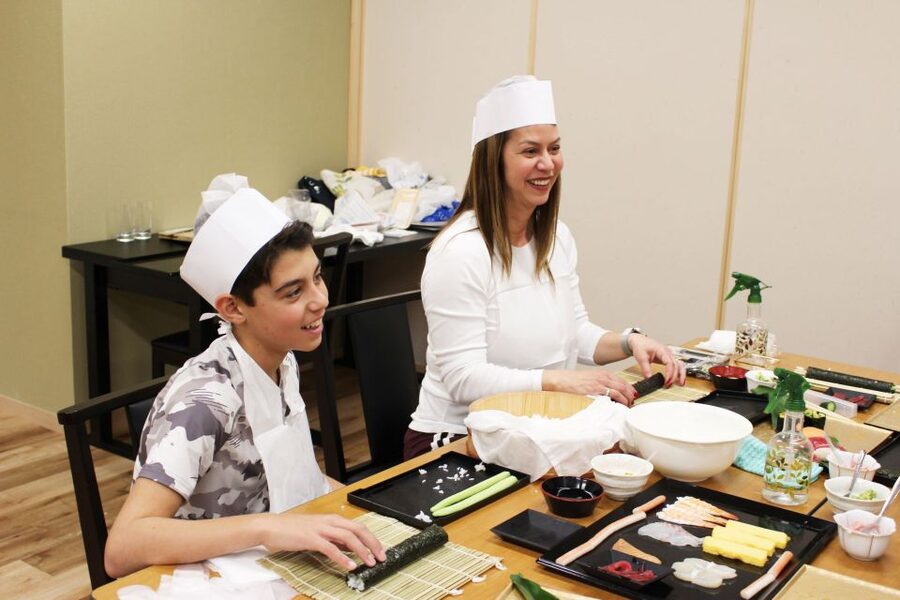
The listed price is $177 per person for 225 minutes, or about three hours and 45 minutes. That is a half-day commitment, so place it on a day when you can give the market and class your full attention.
The price is high for a food activity, but the package includes several separate services:
- A guided Tsukiji market tour
- A nationally licensed English-speaking guide
- Public transportation from Tsukiji to the kitchen
- A supervised sushi-making lesson
- A licensed cooking instructor
- All sushi ingredients
- A sushi souvenir kit
I see the value most clearly for first-time visitors who want a planned introduction to Japanese food culture. You do not need to research the market, find the kitchen, gather ingredients, or book a separate cooking class. The tour connects those pieces for you.
I see less value for an experienced Tokyo food enthusiast. If you already know Tsukiji, can navigate public transportation, and mainly want to eat high-quality sushi, the cost is harder to justify. A self-guided market visit followed by a carefully chosen meal could offer more food for less money, though it would not provide the same instruction.
The duration is approximate and may change with group size. That is worth remembering if you have a tight booking later in the day. Bad weather can also lead to cancellation, since the market walk is an essential part of the experience.
Dietary needs and physical demands
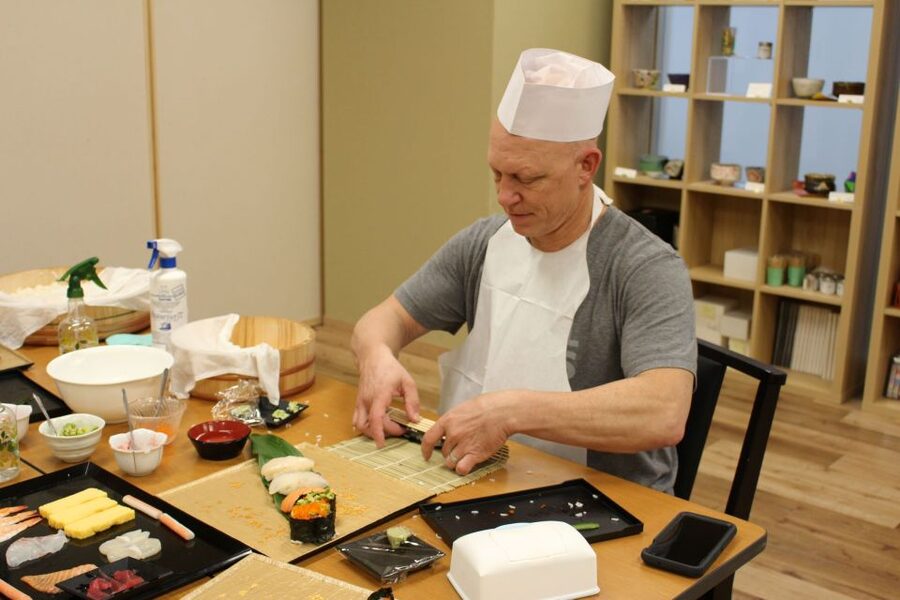
Most dietary restrictions and requirements can be accommodated, but you should communicate them when booking rather than waiting until the class begins. The supplied information does not list specific substitutions, so do not assume every ingredient can be replaced.
The activity is described as wheelchair accessible, yet it is also marked as unsuitable for people with mobility impairments. That is a conflicting pair of details, and you should confirm the current arrangements directly before reserving if you use a wheelchair, walker, or need assistance with long walks and public transportation.
Babies under one year old are not suitable for this activity. Comfortable shoes are essential. You will walk through market streets, travel by public transport, and spend time standing or working in the kitchen.
Who will enjoy this most?
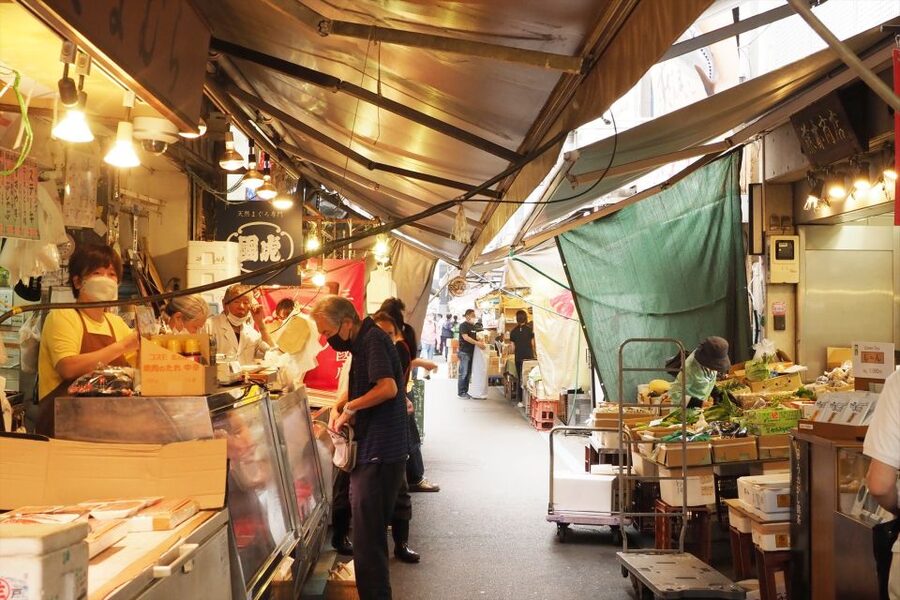
I would recommend this experience to you if you want more than a meal. It suits first-time visitors who enjoy learning by doing, couples looking for a shared activity, and families with older children who can manage the walking and cooking session.
It is also a good fit if you are curious about the supply side of Japanese food. Seeing tuna, sashimi, seaweed, produce, and cooking goods in their market setting adds context that a restaurant meal cannot provide.
I would hesitate if you are a serious sushi diner judging the experience by fish quality alone. The negative food assessment is specific and should not be brushed aside. You may leave pleased with the class but unimpressed by the plate you eat afterward.
I would also skip it if you want to browse Tsukiji independently or shop for ingredients at your own pace. A guide is useful here, but the fixed route limits your time to wander and does not include purchasing fish for the class.
Should you book this Tsukiji and sushi tour?
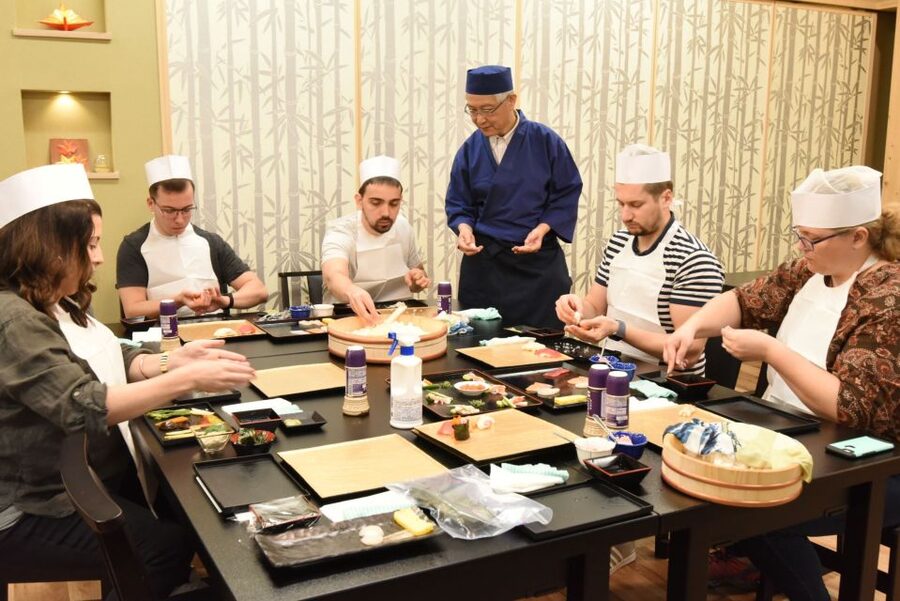
Book it if you value instruction, an English-speaking guide, and a tidy half-day plan that combines Tsukiji with hands-on cooking. The strongest reasons to go are the small group, the friendly teaching style, the three sushi forms, and the chance to understand the market beyond its reputation.
Think twice if your priority is the finest sushi possible for $177. This is a cultural cooking activity with food included, not a high-end sushi tasting. I would choose it for participation and context, not for the meal alone.
The flexible cancellation window of 24 hours and reserve-now, pay-later option reduce some booking risk. Still, make the decision based on what you want from Tokyo: if you want to make sushi and understand where ingredients enter the food system, this is a useful choice. If you want to eat exceptional sushi, spend the money at the counter instead.
FAQ
Where does the tour meet?
Meet your guide at the entrance of Tsukiji Hongwanji Temple. It is about a 30-second walk from Exit 1 of Tsukiji Metro Station on the Hibiya Line.
How long does the experience last?
The stated duration is 225 minutes, or three hours and 45 minutes. The actual length may change depending on the number of participants.
What languages are available?
The tour is conducted in English.
How many people are in the group?
The group is limited to 10 participants.
What types of sushi will I make?
You will learn to make nigiri, hosomaki, and gunkanmaki sushi.
Is transportation between the market and kitchen included?
Yes. Public transportation from Tsukiji to the sushi kitchen is included.
Are sushi ingredients included?
Yes. The sushi ingredients are included in the experience.
Is hotel pickup provided?
No. Hotel pickup and drop-off are not included.
Can dietary restrictions be accommodated?
Most dietary restrictions and requirements can be accommodated. You should provide the details when booking.
What should I bring?
Bring comfortable shoes. You will walk through the market and use public transportation before the cooking class.
Can I cancel for a refund?
You can cancel up to 24 hours in advance for a full refund. The activity also offers a reserve-now, pay-later option.
Can the activity be canceled?
Yes. The activity may be canceled in the event of bad weather.
Just added around Tokyo
- Tokyo: Private Tsukiji Street Food & Sake with Local Guide★ 5.0 · 3 reviews
- Tokyo: Tsukiji Market and Hama-rikyu Gardens Guided Tour★ 4.8 · 73 reviews
- Tokyo: Tsukiji Fish Market Culture Tour with Sashimi Tasting★ 4.6 · 54 reviews
- Tokyo’s Kitchen: Tsukiji Market Food & Culture Walk★ 4.7 · 74 reviews
- Tokyo: Tsukiji Fish Market Foodie and Educational Tour★ 5.0 · 4 reviews
- Tokyo : Tsukiji Fish Market Food Walking & Shrine Visit Tour★ 5.0 · 3 reviews
- Tokyo: Guided Walking Tour of Tsukiji Market with Lunch★ 4.4 · 24 reviews
- Tokyo Morning Tour: Meiji Shrine, Asakusa & Fish Market★ 4.9 · 44 reviews
Fish Market Tours, compared.
Tokyo Tsukiji Fish Market Food and Culture Walking Tour
Read our review →
Tokyo Sushi Making Class in Tsukiji with Professional Chef
Read our review →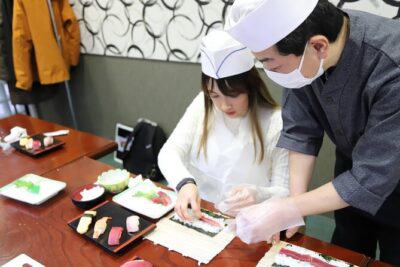
Tsukiji Fish Market Guided Tour and Sushi Making with Pro Chef
Read our review →Tsukiji Fish Market Food and Culture Walking Tour
Read our review →
Tsukiji Fish Market: Street Food & Culture Walking Tour
Read our review →
Tsukiji Fish Market Small-Group Food Walking Tour
Read our review →
Tsukiji Fish Market Sushi Making Class with Pro Chef
Read our review →Browse the lists this tour appears in