Review · JAPAN
Tokyo: Tsukiji Fish Market Guided Walking Tour
Follow your appetite through Tokyo. This two-hour walk combines Tsukiji Outer Market, Japanese food traditions, and a short visit to Tsukiji Hongwanji Temple, giving you a friendly introduction to one of the city’s best-known food districts. I especially like the small groups, limited to 10 people, and the freedom to choose your own food instead of paying for a fixed tasting menu.
The English-speaking guides, including Jim, Rie, Yayoi, Haydn, Sayaka, and Minori, have earned praise for helping people handle the market’s maze of stalls. I also like the $22 price, which is fair for two hours of guidance and local context. The main catch is that food and drinks cost extra, and a few tempting bites, such as wagyu, sea urchin, or fatty tuna, can push up your budget quickly.
Key points to know before you book
- Start at Starbucks by Tsukiji Station: Your guide waits by the bench outside the Starbucks in front of the station.
- Begin with Tsukiji Hongwanji: A 15-minute stop adds religious and cultural context before the food tasting begins.
- Spend about 100 minutes in the market: The main part of the tour covers food stalls, shopping, ingredients, and Japanese cooking.
- Bring cash: You pay each stall directly for anything you choose to eat.
- Small groups make a difference: A maximum of 10 people helps the guide keep the group together in tight lanes.
- Food choices remain flexible: You can skip seafood, choose sweets, or order only the items that suit your appetite and diet.
Why Tsukiji still matters after the wholesale market moved
Many people hear Tsukiji and picture the famous wholesale tuna auctions. Those auctions moved to Toyosu in 2018, but Tsukiji remains an active food district with its outer market, shops, restaurants, and ingredient stalls.
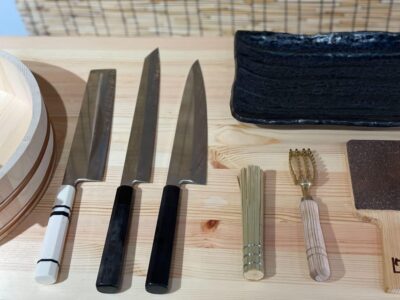
That distinction matters. This tour focuses on the Tsukiji Outer Market, not the early-morning wholesale auction floor. You will see sellers offering seafood, vegetables, dried goods, sweets, meat, and cooking supplies. The appeal is less about watching a single dramatic event and more about seeing how ingredients connect to everyday Japanese food.
The market can feel confusing at first. Narrow lanes, many signs, crowded counters, and unfamiliar foods make it hard to know where to begin. A guide gives you a map in human form, explaining what you are seeing and steering you toward selected stalls.
The market is also a working food area, not simply an attraction. You should expect people to be shopping, eating, and moving around with purpose. Stay close to the guide, keep your bag under control, and be ready to pause rather than block a passage.
More Fish Market Tours in Japan
- Tokyo Tsukiji Fish Market Food and Culture Walking Tour
★ 5.0 · 3,184 reviews - Tokyo: Tsukiji Fish Market Food and Walking tour
★ 5.0 · 1,724 reviews - Tokyo Sushi Making Class in Tsukiji with Professional Chef
★ 5.0 · 1,177 reviews
Meeting your guide beside Tsukiji Station
You meet at the Starbucks Coffee Tsukiji Station store, written locally as スターバックスコーヒー築地駅前店. The guide waits in front of the bench outside the café.
This is a practical meeting point because it is easy to identify and close to the first stop. Arrive with cash already prepared if possible. You may also want water before entering the market, especially if you plan to sample several foods. One guide has helped people stop at a convenience store for water before starting, but that should not be treated as a guaranteed part of every tour.
The group size is limited to 10. That is small enough for questions and personal suggestions, though the market itself may still be crowded. A guide can help you order, explain unfamiliar ingredients, and keep the group moving, but you should not expect a private tour at this price.
The activity lasts two hours, and starting times vary. Check the available times when booking. Morning is a sensible choice if you want to see the market at an active time, but the supplied information does not promise a particular stall schedule or exact food selection.
Tsukiji Hongwanji Temple sets the cultural scene
The walk begins with about five minutes on foot to Tsukiji Hongwanji Temple. The temple stop lasts roughly 15 minutes.
Hongwanji is known for its carved details and calm interior. It gives the tour a useful change of pace before you enter the food market. Instead of treating Tsukiji as a place to grab sushi and leave, the guide introduces the area through both religion and food culture.
Guides have explained temple details, local beliefs, and customs here, making this short stop more than a photo break. The visit is brief, so do not expect a full temple lecture or a long historical tour. Its value is as an introduction to the setting and to the connection between Japanese daily life, ceremony, and food.
You should dress and behave respectfully inside. Keep your voice low, follow the guide’s instructions, and remember that this is an active religious site, not just a sightseeing stop.
Entering Tsukiji Outer Market with a local guide
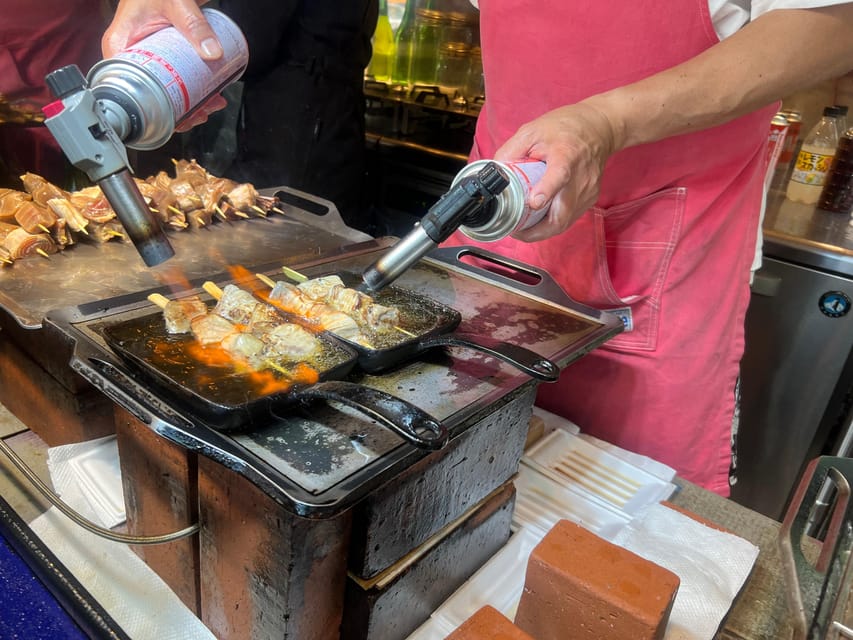
After the temple, the tour moves into the outer market. The listed route gives about 50 minutes for a guided walk and shopping, followed by another 50-minute market segment. In practice, this is where most of the tour’s value lies.
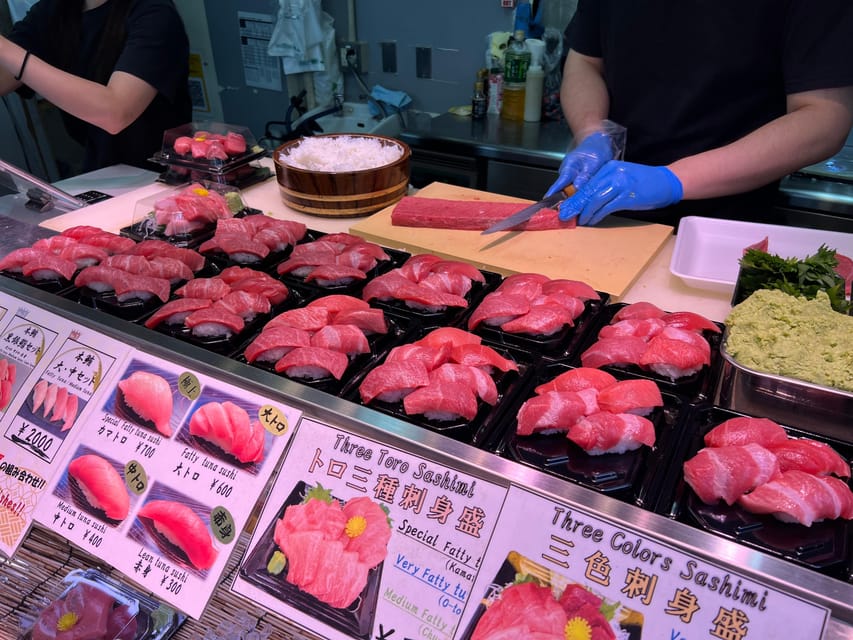
Your guide can point out types of fish, dried seafood, vegetables, spices, sweets, meat, and other ingredients used in Japanese cooking. You may see foods you recognize beside products that are completely unfamiliar. The guide explains how ingredients are used and why certain items matter in Japanese cuisine.
This is especially helpful if you cannot read Japanese labels. A guide can tell you what a product is, how it is commonly eaten, and whether it is better suited to cooking at home or eating immediately. Several guides have also shared recommendations for sushi, Kobe beef, matcha, unagi eel, and other local specialties.
The market is not arranged as a neat food hall. Some stalls sell one focused product, while others offer prepared bites. You might move from seafood to fruit, dried goods, sweets, or wagyu within a short distance. That variety is part of the fun, but it also means you need to stay alert and make quick choices.
More Fish Market Tours in Tokyo
- Tsukiji Fish Market Guided Tour and Sushi Making with Pro Chef
★ 5.0 · 775 reviews - Tokyo: Tsukiji Fish Market Food and Culture Walking Tour
★ 4.7 · 757 reviews - Tsukiji Fish Market: Street Food & Culture Walking Tour
★ 5.0 · 669 reviews - Tsukiji Fish Market Small-Group Food Walking Tour
★ 5.0 · 621 reviews
The best part: choosing your own tastings
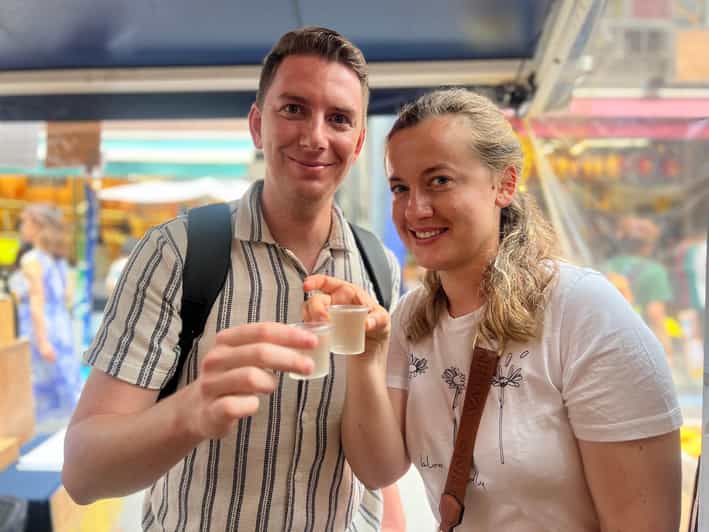
Food is not included in the $22 tour price. That may sound like a disadvantage, but I see it as one of the better design choices.
You are not locked into a set menu. At each stop, you decide what you want to buy. You can spend very little, order several small bites, or save room for one special item. This also helps if you dislike seafood, have food allergies, or simply prefer sweets and meat.
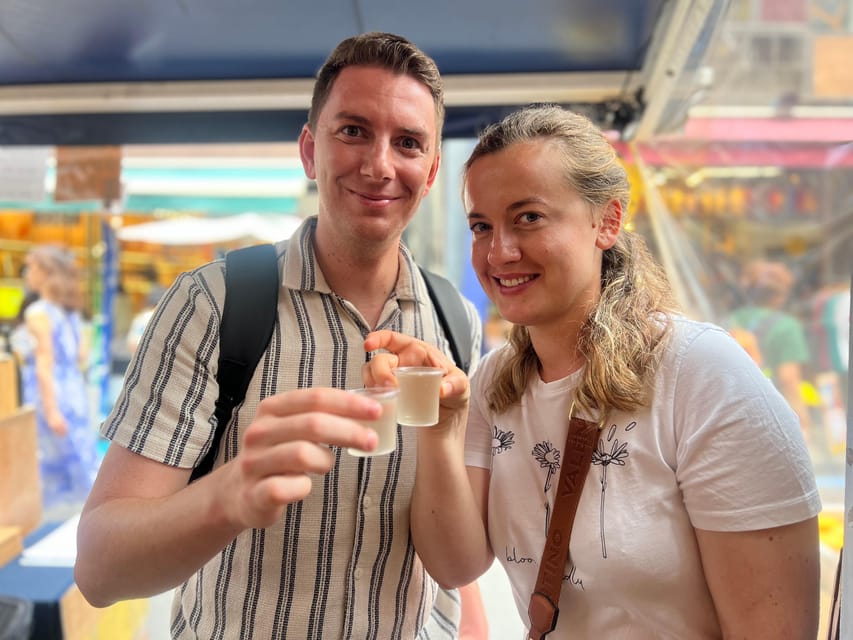
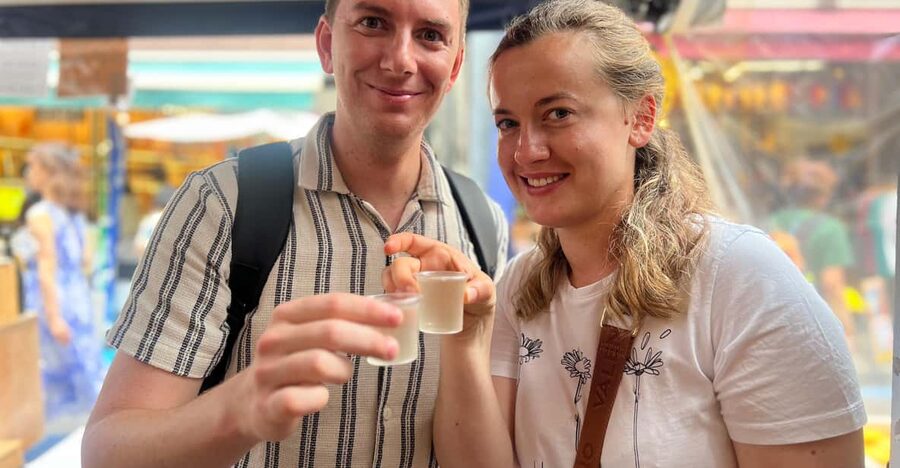
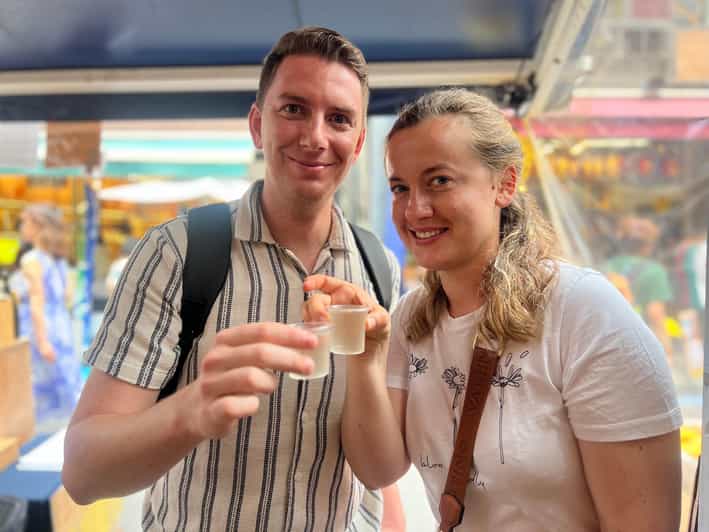
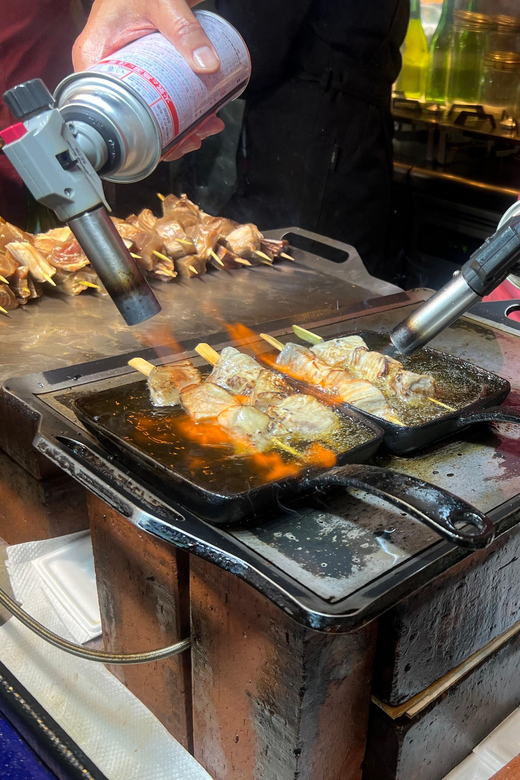
Past groups have sampled tamago, oysters, sushi, wagyu beef, fatty tuna, sashimi, eel, sea urchin, nuts, desserts, sake, and other snacks. Free samples may also appear along the way, but they are not guaranteed. The guide may take you to favorite stalls and help with ordering or payment.
The flexible system works well for mixed groups. One person can try raw seafood while another chooses a sweet or a cooked item. If you are cautious about unfamiliar food, start with a small portion and ask the guide what it contains.
Bring enough cash. Some individual items can be expensive, particularly premium beef and seafood. The tour price is only the entry point to the food experience, so set a tasting budget before you begin. You should also make your food preferences clear at the start rather than waiting until the group reaches a stall.
Why a guide is useful in a crowded market
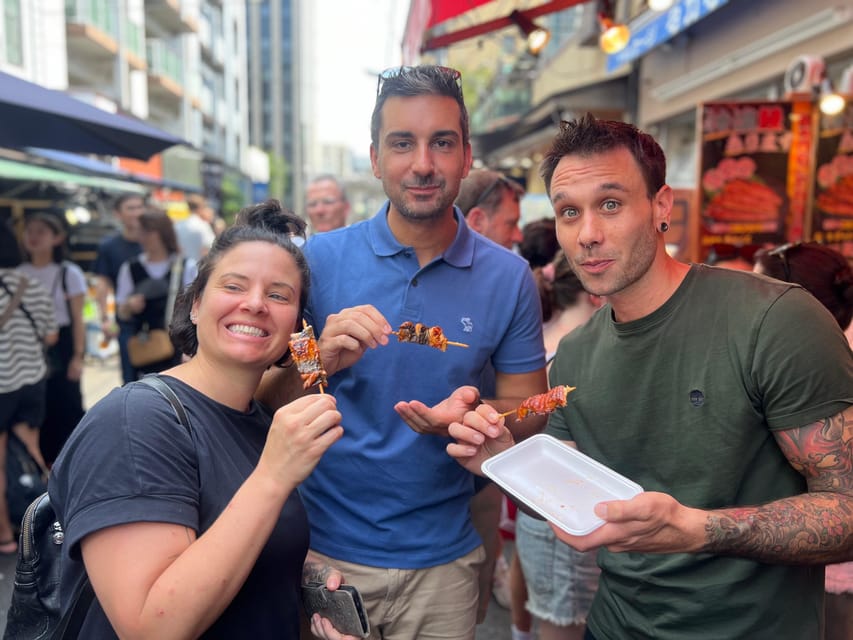
You can walk through Tsukiji on your own, but the guide solves three real problems: orientation, selection, and communication.
First, the lanes can be difficult to read. The guide helps you move from one useful stop to the next instead of wandering past stalls without knowing what they sell.
Second, a local guide can help you judge what is worth trying. This does not mean every stop will suit your taste, but you receive a reason for stopping rather than choosing at random. Guides have led people to food they would not have noticed alone, including special cuts of fish, unusual seafood, wagyu, and regional snacks.
Third, ordering can be awkward when you do not know the language or local customs. Several people have appreciated help with stall payments and food choices. This can make a major difference when the market is crowded and you want to avoid holding up the line.
The strongest guide praise has gone to people who combine food knowledge with warmth and humor. Jim has been singled out for explanations of Japanese culture and for leading people to good food. Rie has been praised for her market knowledge, patience, and easygoing manner. Yayoi and Minori have received similar praise for energetic tours and carefully chosen stops. Individual guide assignments can change, so you should not book solely for a particular person.
How much the $22 price is worth

At $22 per person, this is a modestly priced way to get orientation in one of Tokyo’s most famous food districts. The price includes the English walking guide, photos taken during the tour, and entry to the market area and Hongwanji Temple, where entry is free.
The strongest value comes from the time saved. You are paying someone to explain ingredients, lead you through the market, and reduce the guesswork. If you would otherwise spend an hour wandering and still miss the foods you wanted to try, the price is easy to justify.
The total cost depends on your appetite. Because food and drinks are not included, you might spend only a small amount or add a substantial sum to the base price. Premium seafood, wagyu, and other specialties can cost more than ordinary snacks.
I like the fact that you control the bill. A fixed tasting tour would force everyone into the same menu and price. Here, you can treat the tour as a guided orientation and buy only what interests you.
Who will enjoy this Tsukiji experience most
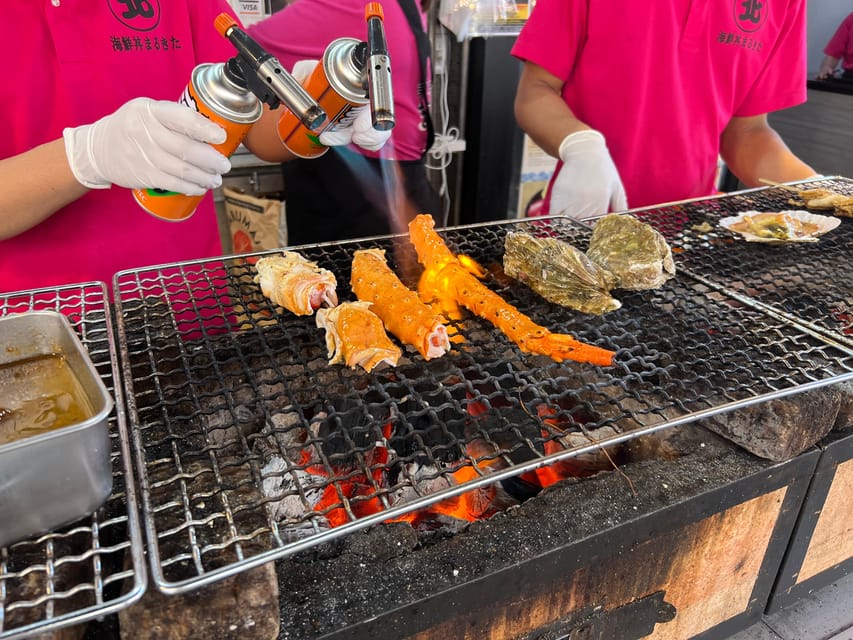
This tour suits a first visit to Tokyo, especially if Tsukiji is high on your list but you do not know how to approach it. The guide gives you a clear starting point and useful food vocabulary for the rest of your trip.
It is also a good choice for curious eaters. You do not need to love seafood. One person on a recent tour disliked seafood but still found a few things worth trying, while other groups enjoyed beef, sweets, eggs, and cooked eel.
Families and mixed-age groups may appreciate the flexible ordering, though the market’s tight lanes require attention. It can also suit solo visitors who want company without committing to a large coach tour.
You may prefer to skip it if you want a quiet, slow meal or a detailed visit to the wholesale fish auction. This is a walking tour in an active market, with brief stops and optional food purchases. It is not a sit-down culinary class, and the exact stalls and tastings can change.
Practical advice for getting the most from the walk
Wear comfortable shoes. You will walk for two hours, with much of the time spent standing near stalls and moving through tight lanes.
Bring cash and keep it accessible but secure. You will pay for food directly at the stalls, and the guide may help you understand the ordering process.
Tell the guide about allergies, dislikes, and dietary limits early. The optional ordering system makes adjustments easier, but the market centers heavily on seafood and other animal products.
Do not arrive expecting every famous food item. The guide chooses stops based on the day, the group, availability, and the pace of the market. Stay open to smaller tastings and explanations of ingredients you may not recognize.
Take advantage of the photos if offered. The guide includes photos taken during the tour, which is useful when your hands are full or you are focused on navigating the crowd.
The tour allows cancellation up to 24 hours before the start for a full refund, and you can reserve now and pay later. Those terms are useful if your Tokyo schedule is still shifting.
Should you book the Tsukiji market walk?
Book it if you want a friendly introduction to Tsukiji without guessing which stalls to visit. The combination of Hongwanji Temple, food explanations, optional tastings, and a maximum group of 10 makes this more useful than simply wandering through the market alone.
The tour is particularly good for first-time visitors, curious eaters, and anyone nervous about ordering unfamiliar food. Keep extra cash in reserve, remember that tastings are not included, and accept that the market may be crowded and noisy.
Skip it if you want the wholesale auction experience, a guaranteed menu, or a long temple visit. For $22, though, this is a practical and flexible way to get your bearings, try a few Japanese specialties, and leave Tsukiji with a better understanding of what you just ate.
FAQ
Where does the Tsukiji Fish Market tour meet?
You meet your English-speaking guide at the Starbucks in front of Tsukiji Station. The guide waits in front of the bench outside the café.
How long does the tour last?
The walking tour lasts two hours. Check the available start times when booking.
What language is the tour offered in?
The live tour guide speaks English.
How large is the tour group?
The tour is a small-group experience limited to 10 participants.
Is food included in the tour price?
No. Food and drinks are not included. You choose and pay for any items you want directly at the market stalls.
Should I bring cash?
Yes. Cash is specifically listed as something to bring, and you will need to pay for optional food purchases.
Does the tour visit Tsukiji Hongwanji Temple?
Yes. The route includes a guided visit of Tsukiji Hongwanji Temple for about 15 minutes. Entry is free.
Can I cancel the tour for a refund?
You can cancel up to 24 hours in advance for a full refund. The tour also offers a reserve-now, pay-later option.
More Market Walking Tours in Tokyo
- Bangkok: City Highlights Temple and Market Walking Tour
★ 4.5 · 3,990 reviews - Marrakech: Ben Youssef, Secret Garden, & Souks Walking Tour
★ 4.6 · 2,802 reviews - Marrakech: Colorful Medina Souks Guided Walking Tour
★ 4.7 · 2,470 reviews - Air Raid Shelter + St. Nicholas Market Walking Tour
★ 5.0 · 1,950 reviews
More Market Walking Tours in Japan
- Tsukiji Fish Market: Street Food & Culture Walking Tour
★ 4.8 · 259 reviews - Tokyo: Guided Walking Tour of Tsukiji Market with Breakfast
★ 4.4 · 134 reviews - Tokyo: Tsukiji Market Walking Tour & Sushi Cooking Class
★ 4.6 · 122 reviews - Tokyo: Guided Walking Tour of Tsukiji Market with Lunch
★ 4.4 · 24 reviews
Just added around Tokyo
- Tokyo: Private Tsukiji Street Food & Sake with Local Guide★ 5.0 · 3 reviews
- Tokyo: Tsukiji Market Guided Tour & Sushi-Making Experience★ 4.4 · 11 reviews
- Tokyo: Tsukiji Market and Hama-rikyu Gardens Guided Tour★ 4.8 · 73 reviews
- Tokyo: Tsukiji Fish Market Culture Tour with Sashimi Tasting★ 4.6 · 54 reviews
- Tokyo’s Kitchen: Tsukiji Market Food & Culture Walk★ 4.7 · 74 reviews
- Tokyo: Tsukiji Fish Market Foodie and Educational Tour★ 5.0 · 4 reviews
- Tokyo : Tsukiji Fish Market Food Walking & Shrine Visit Tour★ 5.0 · 3 reviews
- Tokyo: Guided Walking Tour of Tsukiji Market with Lunch★ 4.4 · 24 reviews
Fish Market Tours, compared.
Tokyo Tsukiji Fish Market Food and Culture Walking Tour
Read our review →

Tokyo Sushi Making Class in Tsukiji with Professional Chef
Read our review →
Tsukiji Fish Market Guided Tour and Sushi Making with Pro Chef
Read our review →Tsukiji Fish Market Food and Culture Walking Tour
Read our review →
Tsukiji Fish Market: Street Food & Culture Walking Tour
Read our review →
Tsukiji Fish Market Small-Group Food Walking Tour
Read our review →