Review · JAPAN
Tokyo: Guided Walking Tour of Tsukiji Market with Lunch
Tsukiji rewards the hungry and the curious. This 165-minute walk pairs nine Japanese tastings with a close look at Tokyo’s famous fish market, and I like the way it connects food to religion and daily life. I also like the small group size, capped at 10 people, which makes it easier to follow a guide through narrow market lanes. The main drawback is value: at $113 per person, the food is more of a guided sampling than a full, high-end lunch.
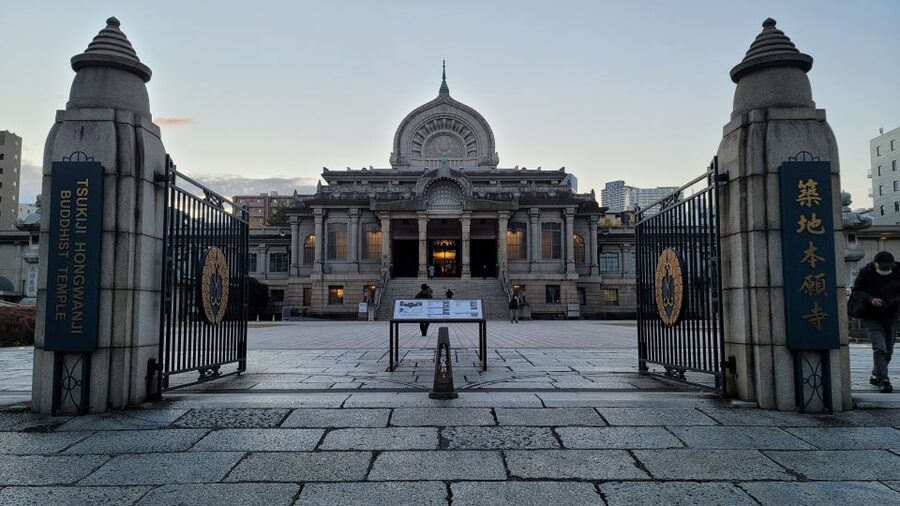
You’ll meet at Tsukiji Hongwanji Temple, see its unusual Indian-inspired exterior, then enter the Outer Market with an English-speaking guide. Guides such as Hide, Tomoko, Yumiko, and Sachiko have helped make this tour especially friendly and organized, but the experience can feel limited if you expect several hours of open-ended eating or a large restaurant meal.
Key details before you book
- Nine tastings replace a traditional sit-down lunch: Expect small portions of sushi, grilled food, a Japanese omelette, rice, dessert, tea, a drink, and dashi soup.
- The temple is part of the food story: You begin outside Tsukiji Hongwanji, where the architecture offers a useful introduction to the area’s religious and cultural background.
- The market walk covers a compact area: You’ll see shops, stalls, restaurants, and working wholesalers, but the route is not a long city walk.
- Guides are a major strength: Hide, Tomoko, Yumiko, and Sachiko have been praised for friendly explanations, practical help, and smooth movement through the market.
- The group is limited to 10 people: That matters in crowded lanes, where a large tour would be harder to manage.
- Wear comfortable shoes: You’ll be on your feet for nearly three hours, often moving through busy market streets.
Starting at Tsukiji Hongwanji Temple
The meeting point is in front of Tsukiji Hongwanji Temple, an easy place to find. From Tsukiji Station on the Hibiya Line, take Exit A1, turn left, and walk about 50 meters to the temple entrance.
The tour begins with the temple’s exterior rather than an indoor visit. That is worth knowing before you arrive. You are not booking a temple tour, but the building gives the walk a strong opening. Its ancient Indian-inspired design looks very different from the more familiar wooden Buddhist temples you may have seen elsewhere in Japan.
Your guide uses the temple to explain the connection between Japanese religion and food. That context helps the market feel like more than a row of snack counters. Offerings, seasonal ingredients, ritual meals, and respect for food all sit close to everyday Japanese culture.
I like this opening because it gives the tasting portion a reason and a setting. You are not simply being led from one food stall to another. You first get a sense of the neighborhood’s spiritual identity, then see how food operates within that community.
The temple stop is brief and exterior-only, so visitors hoping to spend time inside should adjust their expectations. Still, as a meeting point and cultural introduction, it works well.
More Fish Market Tours in Japan
- Tokyo Tsukiji Fish Market Food and Culture Walking Tour
★ 5.0 · 3,184 reviews - Tokyo: Tsukiji Fish Market Food and Walking tour
★ 5.0 · 1,724 reviews - Tokyo: Tsukiji Fish Market Guided Walking Tour
★ 4.9 · 1,397 reviews
Entering the narrow lanes of Tsukiji Outer Market
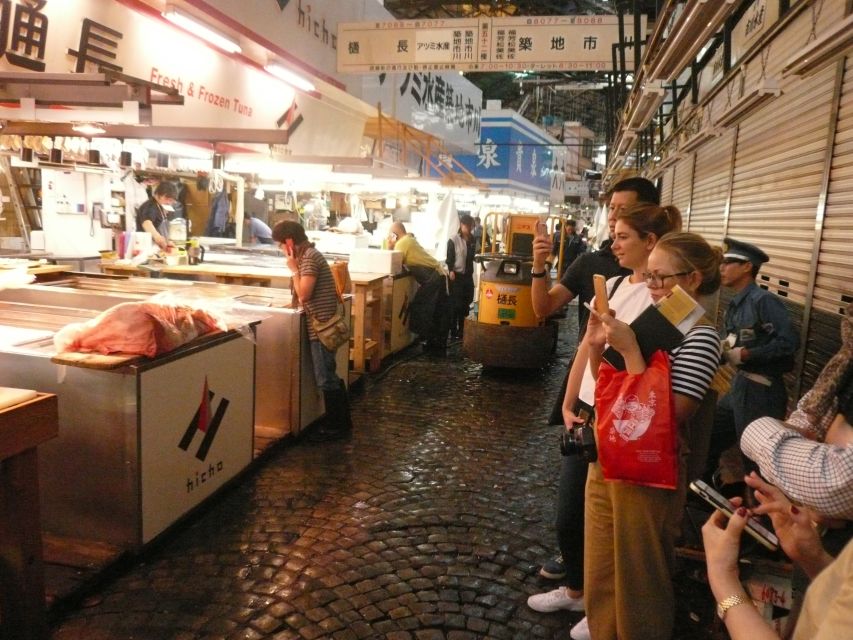
From the temple, you walk into Tsukiji Outer Market. The former inner fish market moved to Toyosu, but Tsukiji’s Outer Market remains a major food district, with shops, stalls, restaurants, and businesses selling ingredients used in Japanese cooking.
A guide is useful here because the market can feel like a maze. The streets are busy, the stalls are close together, and the products can be unfamiliar. You may pass seafood, prepared foods, meat, tea, cooking ingredients, and unusual items without knowing what you are looking at or how it is used.
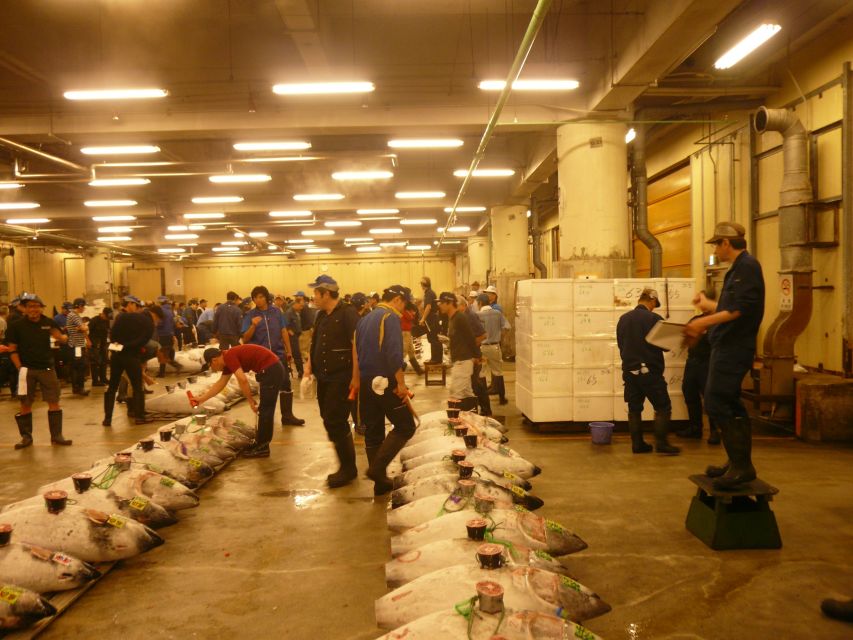
The tour also gives you a closer look at the people working behind the food. Expert wholesalers are busy with their own trade, and the best approach is to observe without blocking entrances or stopping in the middle of a lane. This is not a staged food park. It is a working market, and that gives the walk its most genuine quality.
The route itself is fairly compact. You should not expect to cover every part of Tsukiji or spend the whole afternoon wandering through distant sections. One three-star assessment specifically found the area covered to be small and felt that the guide and assistant were filling the scheduled time. That is a fair caution for independent visitors who already know the market.
For first-time visitors, the compact route can be an advantage. You spend less time getting lost and more time learning what you are seeing. For repeat visitors, the tour’s value depends more heavily on the guide’s explanations and the tasting choices.
Nine tastings, from sushi to dashi

The food is served as a series of samples rather than one large meal. The exact selection may vary, but the planned lineup includes nine local specialties:
- Grilled seafood or beef skewers
- Japanese-style omelette
- Tuna sushi
- Fried fish paste skewers
- Filled rice balls
- Dessert
- A drink
- Japanese tea
- Dashi soup stock
This is a broad introduction to everyday Japanese flavors. You get grilled, fried, raw, sweet, savory, hot, and liquid elements in one walk. It is a useful format if you want to taste several things but do not want to choose every item yourself.
The grilled skewers may include seafood or beef, with wagyu beef among the promised specialties. Yakitori-style skewers are also highlighted, giving the meal a familiar street-food feel. The appeal is variety, not portion size. You are trying many small bites, so do not arrive expecting a full course meal at a restaurant.
The tuna sushi offers a direct taste of Tsukiji’s seafood identity. The Japanese omelette adds a softer and slightly sweeter note, while the fried fish paste skewer shows how seafood appears in prepared market foods, not only as raw fish.
The filled rice balls are practical, portable Japanese food. The dashi sample is especially useful for anyone interested in how Japanese cooking builds flavor. Dashi is a basic soup stock, and tasting it on its own helps you notice the savory base behind soups, sauces, and many home-style dishes.
Tea and dessert provide a simple finish. The drink and dessert prevent the tasting from feeling like an unbroken run of seafood, which may be welcome if your group has mixed tastes.
The weak point is consistency with expectations. One visitor expected a more substantial food tour and found the tuna mayonnaise rice balls, average tuna sushi, greasy grilled fish, and strawberry dessert underwhelming. That criticism matters. The menu is varied, but a $113 experience should not be judged as though it were only a collection of free market samples. You are paying for the guide, explanations, organization, and access to a structured tasting route as much as for the food itself.
What the guides add to the market
The strongest part of this experience is the human guidance. Hide received particular praise for directing a group toward foods worth trying and making the market easy to understand.
Tomoko was also praised for a relaxed, practical approach. She helped queue for food while the group explored, and she brought food boxes and cleaning wipes so people could stay organized. That kind of small assistance matters in Tsukiji, where you may be standing, carrying several samples, and trying not to spill anything in a crowded lane.
Yumiko and Sachiko were noted for working well together. Their friendly explanations and coordinated movement helped a family manage the market without having to work out every stop on its own.
These details show what you are really buying. You are not simply paying for someone to point at stalls. You are paying for a person who can help you move through the market, explain the setting, manage food stops, and answer questions in English.
The experience does depend on the guide assigned to your departure. A good guide can turn a short route into a useful lesson in Japanese food culture. A less polished presentation may make the compact route feel stretched. There was also mention of a language barrier at the start of one tour, so listen carefully during the initial briefing and ask questions early if anything is unclear.
More Fish Market Tours in Tokyo
- Tokyo Sushi Making Class in Tsukiji with Professional Chef
★ 5.0 · 1,177 reviews - Tsukiji Fish Market Guided Tour and Sushi Making with Pro Chef
★ 5.0 · 775 reviews - Tokyo: Tsukiji Fish Market Food and Culture Walking Tour
★ 4.7 · 757 reviews - Tsukiji Fish Market: Street Food & Culture Walking Tour
★ 5.0 · 669 reviews
Why the small group size matters
The tour accepts no more than 10 people. That is a sensible limit for Tsukiji, where stalls sit along narrow passages and groups must avoid getting in the way of workers.
In a small group, you have a better chance of hearing the guide explain an ingredient or preparation. You can also ask about food preferences, though the supplied information does not promise substitutions or special dietary arrangements. If you have allergies or strict dietary needs, confirm what can be accommodated before booking.
The small group also makes the food stops easier to manage. Several samples may arrive at different times, and a guide can help keep the group together while orders are collected. Tomoko’s use of boxes and wipes shows how much practical value this can add.
Still, small does not mean private. The market itself remains busy, and you will share the streets with shoppers, workers, and other groups. The tour cannot remove the noise, crowds, or tight corners that make Tsukiji a working market.
Is $113 a fair price?
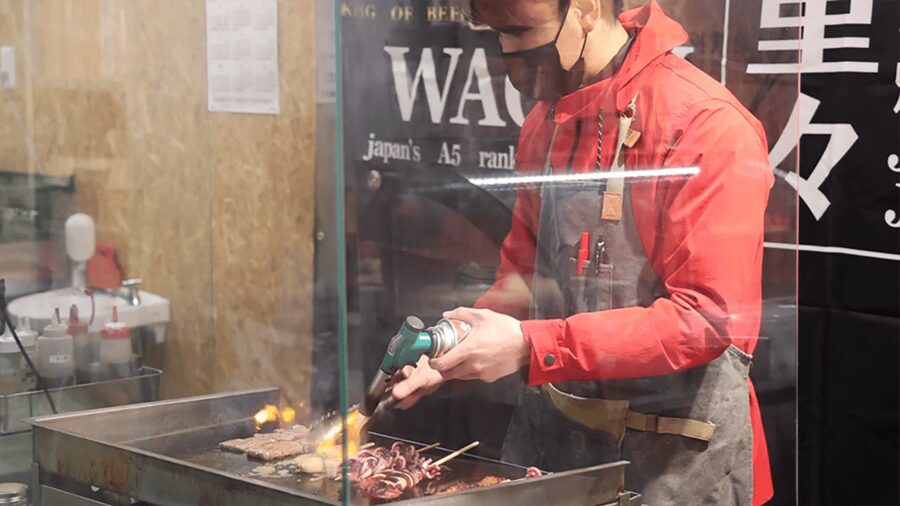
At $113 per person, this is not a bargain food crawl. The price makes more sense if you value the guide and cultural explanation as much as the tastings.
You are paying for 165 minutes, an English-speaking guide, a small group, nine samples, and a planned route through one of Tokyo’s best-known food districts. You also avoid the uncertainty of choosing stalls on your own, especially if you cannot read menus or do not know which foods are ready to eat.
The price is harder to justify if your main goal is simply to eat as much as possible. The portions are tastings, and one critical assessment found the food ordinary for the cost. You could likely spend less by choosing a few market snacks independently, although you would lose the explanations and the help with navigating the area.
I would think of this as a guided cultural food walk, not a luxury lunch. It is a good fit for a first visit, families, and people who want an organized introduction. It is less appealing for confident food explorers who already know Tsukiji and prefer choosing their own restaurants and stalls.
Timing, comfort, and access

The activity lasts 165 minutes, or two hours and 45 minutes. That is long enough to see the temple, walk through the market, sample the foods, and hear context without taking up a full day in Tokyo.
Comfortable shoes are important. You will be standing and walking through market streets for most of the experience. The compact route may be easier than a long city walk, but the duration still calls for footwear you trust.
The activity is listed as wheelchair accessible. Since the market includes narrow and busy streets, you should still confirm any specific mobility requirements when booking. The available information does not provide details about individual stall access or seating.
The guide language is English. The group type is small group, with up to 10 participants. Cancellation is free up to 24 hours before the start time, and you can reserve now while paying later, which helps if your Tokyo schedule is still shifting.
Who should book this Tsukiji walk?
I would recommend it most strongly to first-time visitors who want structure. You can see the market, taste a wide range of foods, and learn why the area matters without spending your first visit guessing where to go.
Families may also like the format. The food arrives in manageable portions, and a guide can help keep everyone together. The family experience led by Henrik’s guide was described as special, while Yumiko and Sachiko were praised for making a family outing easy to handle.
This tour also suits curious eaters who want more than sushi. The combination of grilled meat, fish paste, omelette, rice, tea, dashi, and dessert gives you a wider picture of Japanese food than a sushi-only stop.
I would hesitate if you want a long market walk, a large lunch, or premium food at every stop. The route is compact, the portions are small, and the food quality may feel uneven. Repeat visitors should book mainly for the guide’s interpretation and organization, not because the market itself is difficult to enter.
Should you book it?
Book this tour if you want an easy, guided introduction to Tsukiji with nine small tastings and a useful cultural frame. The best guides add real value by helping you move through tight lanes, explaining the market, and handling the practical work of collecting food.
Skip it if you are mainly chasing a big meal or the lowest possible food cost. At $113, the experience needs to be judged as a guided market lesson with lunch samples, not as an all-you-can-eat feast. For a first visit, that tradeoff can be worthwhile. For an experienced Tsukiji visitor, independent browsing may offer better value.
FAQ
Where does the Tsukiji walking tour meet?
The meeting point is in front of Tsukiji Hongwanji Temple. From Tsukiji Station on the Hibiya Line, take Exit A1, turn left, and walk about 50 meters to the temple entrance.
How long does the experience last?
The tour lasts 165 minutes, or two hours and 45 minutes.
What food is included?
The nine tastings include grilled seafood or beef skewers, a Japanese-style omelette, tuna sushi, fried fish paste skewers, filled rice balls, dessert, a drink, Japanese tea, and dashi soup stock.
Is the tour conducted in English?
Yes. The tour includes a live English-speaking guide.
How large is the group?
The experience is a small-group tour limited to 10 participants.
Is the tour wheelchair accessible?
Yes, the activity is listed as wheelchair accessible.
Can I cancel or pay later?
You can cancel up to 24 hours in advance for a full refund. The reserve-now, pay-later option lets you book without paying immediately.
More Market Walking Tours in Tokyo
- Bangkok: City Highlights Temple and Market Walking Tour
★ 4.5 · 3,990 reviews - Marrakech: Ben Youssef, Secret Garden, & Souks Walking Tour
★ 4.6 · 2,802 reviews - Marrakech: Colorful Medina Souks Guided Walking Tour
★ 4.7 · 2,470 reviews - Air Raid Shelter + St. Nicholas Market Walking Tour
★ 5.0 · 1,950 reviews
More Market Walking Tours in Japan
- Tsukiji Fish Market Small-Group Food Walking Tour
★ 5.0 · 621 reviews - Tsukiji Fish Market: Street Food & Culture Walking Tour
★ 4.8 · 259 reviews - Tokyo: Guided Walking Tour of Tsukiji Market with Breakfast
★ 4.4 · 134 reviews - Tokyo: Tsukiji Market Walking Tour & Sushi Cooking Class
★ 4.6 · 122 reviews
Just added around Tokyo
- Tokyo: Private Tsukiji Street Food & Sake with Local Guide★ 5.0 · 3 reviews
- Tokyo: Tsukiji Market Guided Tour & Sushi-Making Experience★ 4.4 · 11 reviews
- Tokyo: Tsukiji Market and Hama-rikyu Gardens Guided Tour★ 4.8 · 73 reviews
- Tokyo: Tsukiji Fish Market Culture Tour with Sashimi Tasting★ 4.6 · 54 reviews
- Tokyo : Tsukiji Fish Market Food Walking & Shrine Visit Tour★ 5.0 · 3 reviews
- Tokyo’s Kitchen: Tsukiji Market Food & Culture Walk★ 4.7 · 74 reviews
- Tokyo: Tsukiji Fish Market Foodie and Educational Tour★ 5.0 · 4 reviews
- Tokyo Morning Tour: Meiji Shrine, Asakusa & Fish Market★ 4.9 · 44 reviews
Fish Market Tours, compared.
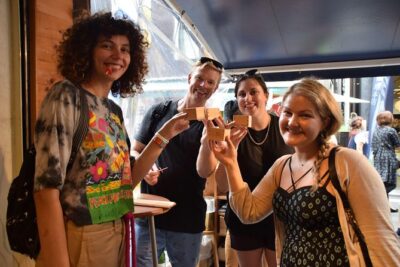
Tokyo Tsukiji Fish Market Food and Culture Walking Tour
Read our review →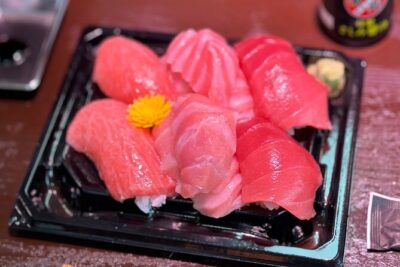
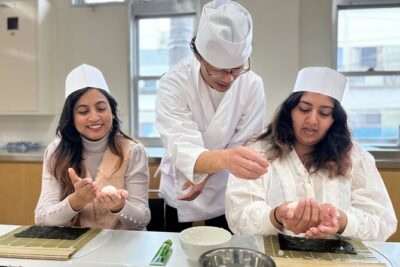
Tokyo Sushi Making Class in Tsukiji with Professional Chef
Read our review →
Tsukiji Fish Market Guided Tour and Sushi Making with Pro Chef
Read our review →Tsukiji Fish Market Food and Culture Walking Tour
Read our review →
Tsukiji Fish Market: Street Food & Culture Walking Tour
Read our review →
Tsukiji Fish Market Small-Group Food Walking Tour
Read our review →