Review · JAPAN
Tokyo Tsukiji Fish Market Food Tour: 15 Stops & Walk Local Street
Tsukiji rewards a hungry morning. This small-group walking tour combines temple visits, market browsing, food culture, and Japanese dining etiquette in about two to three hours. I like the easy meeting point at Tsukiji Hongwanji Temple and the chance to explore with a Japanese guide instead of guessing your way through the market’s many lanes.
I also like the included photos and the capped group size of 15, which should make it easier to hear explanations and ask questions. The main concern is important: the tour information is unclear about food. It promotes tastings, yet the inclusions say food is not included, so you should confirm exactly what you will pay for before booking.
Key points to know before you book
- The route begins at Tsukiji Hongwanji Temple, a useful landmark near public transportation and an interesting first stop.
- Tsukiji Jogai Market gets the most time, about 90 minutes for food, shopping, and explanations.
- The food arrangement needs clarification, since the tour description mentions tastings while the inclusions exclude food.
- Sakura may be your guide, and her explanations of sushi etiquette and Japanese food customs received especially warm praise.
- The group is limited to 15 people, a practical size for narrow market streets and guide-led tastings.
- The tour costs $80 per person, which can be fair if food purchases or tastings are substantial, but less attractive if you pay separately for everything.
Why Tsukiji still makes sense after the wholesale move
Tsukiji is no longer the main wholesale tuna auction site it once was, but its outer market remains a useful place to encounter Japanese food culture. The shopping streets hold hundreds of small businesses, and the tour takes you through the area rather than leaving you to work out the layout alone.
I like that this experience adds context to what you see. A market visit can otherwise become a parade of unfamiliar seafood, cooking tools, sushi counters, and sweets. A guide can explain food customs, local etiquette, and the role of the market, turning a quick snack stop into something easier to understand.
The tour is also a good fit if you want a gentle introduction to Japanese food. You do not need to arrive as a sushi expert. The guide explains how to approach dishes and may help you decide what to try. That support matters in a market where signs and menus may not always be easy to read.
The advertised title refers to 15 stops, while the detailed route names four main places: Tsukiji Hongwanji Temple, Tsukiji Jogai Market, the fish market area, and Namiyoke Inari Shrine. Treat the 15-stop wording as a reference to the food or smaller points along the walk, not necessarily 15 major landmarks. If you want a precise stop-by-stop food list, ask before you commit.
More Fish Market Tours in Japan
- Tokyo Tsukiji Fish Market Food and Culture Walking Tour
★ 5.0 · 3,184 reviews - Tokyo: Tsukiji Fish Market Food and Walking tour
★ 5.0 · 1,724 reviews - Tokyo: Tsukiji Fish Market Guided Walking Tour
★ 4.9 · 1,397 reviews
Starting at Tsukiji Hongwanji Temple
The meeting point is in front of Tsukiji Hongwanji Temple at 3-chōme-15-1 Tsukiji, Chuo City. The temple visit takes about 15 minutes and has no admission charge.
This is a smart starting point. It gives you a fixed, recognizable place to meet before entering the market streets. It also places the food walk in a wider cultural setting. You begin with a religious site, then move into seafood stalls and shopping lanes. That contrast helps explain how food and tradition sit side by side in Tokyo.
The temple stop is brief, so do not expect a long architectural tour. Its value is in orientation and cultural context. I would arrive with enough time to find the entrance, especially if you are carrying luggage or navigating Tokyo for the first time.
The tour ends back at the meeting point, which makes planning easier. You can leave your afternoon open for another part of Tokyo without arranging a separate return transfer.
Spending 90 minutes in Tsukiji Jogai Market
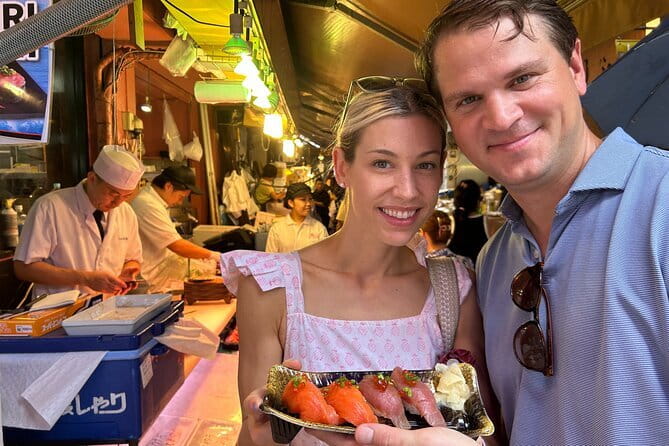
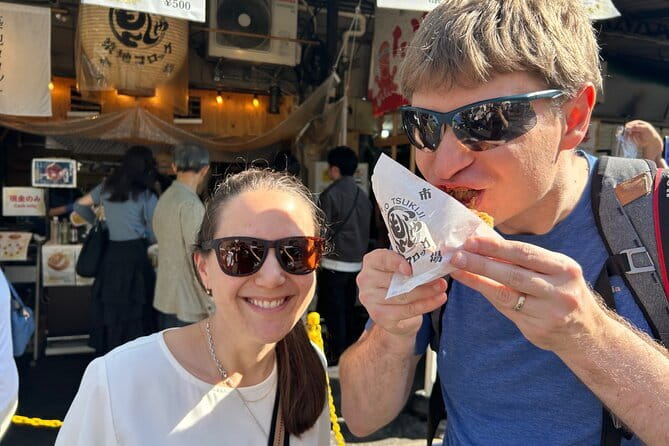
The main portion of the walk takes about one hour and 30 minutes at Tsukiji Jogai Market. This is where you will spend the most time eating, looking, asking questions, and moving through a shopping street with more than 400 shops.
That length feels useful. A shorter stop might only show you the most obvious stalls, while 90 minutes gives you room to compare foods and hear explanations. The guide can point out what is worth trying and explain customs that are easy to miss when you walk alone.
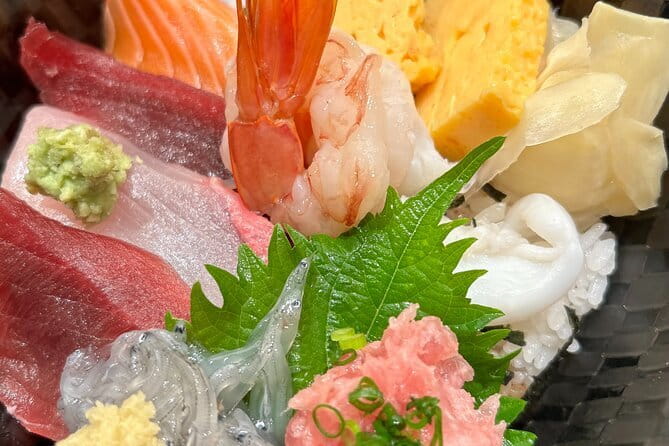
The food experience is the tour’s central selling point, but this is where the unclear pricing matters most. The overview says food tastings are included and refers to choices such as sushi or Japanese oysters. The included services, however, list explanations, a Japanese guide, and photos, while specifically excluding food.
Do not assume the $80 covers every bite. Ask Fuji Tour whether the price includes set tastings, selected samples, or only the guide’s assistance while you buy your own food. If you must pay for each item, set a food budget before you arrive. That single question can determine whether this feels like good value or an expensive guided walk.
The market can also have closures. A holiday closure affected part of one visit, but the guide adjusted the plan and the outing still included enjoyable food and conversation. That is a useful sign for anyone visiting around a public holiday. It is also a reminder that a market tour cannot control every open stall.
Seeing the fish market area
The route spends about 30 minutes passing a smaller wholesale market area where you can see many kinds of fresh fish. This is a quick look rather than a long behind-the-scenes wholesale visit.
I would set your expectations correctly. The experience gives you a chance to see the market’s seafood trade and learn about the products, but the supplied details do not promise access to auction floors, private kitchens, or working wholesale facilities. You are observing the public market area with a guide.
That short stop works well after the longer shopping section. By then, you have had time to taste or browse, and the fish displays add a clearer picture of where much of the food culture begins. If seafood is your main interest, pay close attention here and ask questions, since the stop itself is limited to roughly half an hour.
More Fish Market Tours in Tokyo
- Tokyo Sushi Making Class in Tsukiji with Professional Chef
★ 5.0 · 1,177 reviews - Tsukiji Fish Market Guided Tour and Sushi Making with Pro Chef
★ 5.0 · 775 reviews - Tokyo: Tsukiji Fish Market Food and Culture Walking Tour
★ 4.7 · 757 reviews - Tsukiji Fish Market: Street Food & Culture Walking Tour
★ 5.0 · 669 reviews
Visiting Namiyoke Inari Shrine
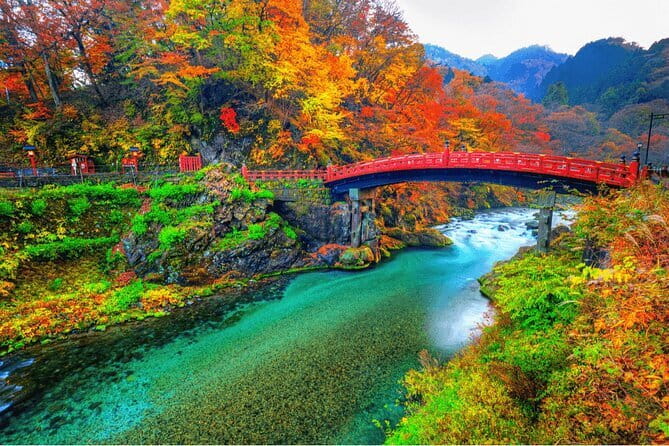
The final named stop is Namiyoke Inari Shrine, with about 15 minutes set aside for the visit. Namiyoke Inari is associated with protection from disasters and rough waves, a fitting connection for a district shaped by the sea and the fishing trade.
This short shrine stop gives the walk a quieter ending. After the market’s food stalls and narrow shopping lanes, the shrine offers a moment to consider the spiritual side of the district. It also adds meaning to the seafood setting without turning the whole tour into a formal history lesson.
Admission is free. As with the temple, the time is brief, so you should expect an introduction and a visit rather than an extended religious or architectural tour.
What the guide adds to the food
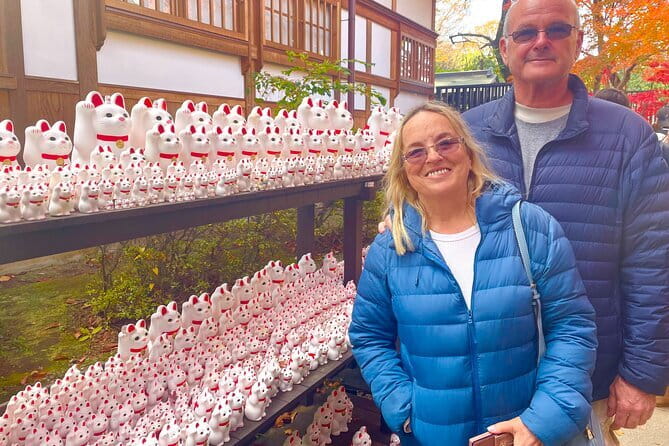
The strongest part of this experience may be the human guidance. The tour includes explanations of food, etiquette, culture, and history. That is more useful than simply being led from stall to stall.
Sakura is one guide named in the feedback, and her instruction on sushi eating and Japanese dining etiquette was warmly received. If you are unsure about chopsticks, sauces, ordering, or the proper way to approach a dish, a guide like Sakura can make the meal less awkward and more enjoyable.
The pace can also change with the group. One scheduled outing became a one-to-one experience after cancellations, which allowed for a more personal conversation. You cannot count on having a private tour, but a maximum of 15 people keeps the usual group from becoming unwieldy.
The guide also has to manage conditions on the day. Cold weather and market closures can affect the mood and the route. The tour’s strongest practical advantage is that someone can adjust rather than leaving you to make every decision alone.
Is $80 a fair price?
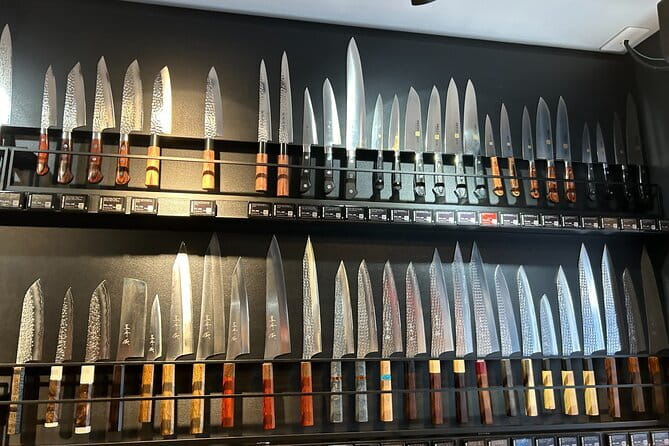
At $80 per person, this is not a bargain market stroll. A basic walking tour can cost far less, especially if it only provides orientation and local history.
The price becomes easier to justify if several tastings are included, the guide spends time explaining etiquette, and the photos are a useful record of the morning. A small group also adds value, particularly in a crowded market where a large party would be harder to manage.
The price is harder to defend if food is excluded and you must purchase every sample separately. In that case, you are paying mainly for the guide, cultural explanations, route planning, and photos. Those services may still suit you, but you should compare them with a less expensive market walk plus your own food budget.
My advice is simple: get written clarification about food before booking. Ask what the 15 stops mean, how many tastings are included, and whether sushi or oysters are examples or guaranteed items. The answers will tell you whether this is a food tour or a guided market visit with optional eating.
Timing, meeting point, and group size
The tour lasts approximately two to three hours, though the named stops add up to about two hours. The extra time may allow for walking, questions, food purchases, or small points along the route.
You meet and finish at Tsukiji Hongwanji Temple. Hotel pickup and drop-off are not included, and transportation to the meeting point is your responsibility. The location is near public transportation, but the exact train or subway route is not provided here, so check your route before the morning begins.
A mobile ticket makes entry simple. The operator also asks you to download WhatsApp for same-day communication. Do that before the tour, especially if you need to receive meeting updates or contact the guide.
The group maximum is 15 people. That is small enough for a personal feel, though it is not the same as a private tour. If you want the most direct conversation possible, ask whether a private option exists, but no private upgrade is stated here.
Who will enjoy this experience most?
I would recommend this tour to you if you want a guided first look at Tsukiji and prefer learning what to eat rather than making every choice alone. It also suits visitors who value cultural explanations, want help with Japanese dining manners, and like the security of a planned route.
It is a good match for solo visitors, couples, and small groups who want a social walk without joining a very large party. The included photos are a pleasant extra for anyone who likes having a record of the day.
You may want another option if your top priority is a guaranteed, substantial meal. The food policy is too unclear to assume that $80 buys lunch. You may also prefer a self-guided visit if you are comfortable navigating markets, choosing dishes, and learning etiquette on your own.
Weather and holiday closures are worth considering too. The route can adapt, but the exact stalls and food choices may change. Keep some flexibility in your expectations.
Should you book the Tsukiji food tour?
Book it if you want a friendly guide, a clear route through Tsukiji, cultural background, and help choosing food. The temple and shrine stops add welcome context, while the market section gives you enough time to browse instead of rushing through.
I would not book until Fuji Tour confirms the food arrangement in writing. That is the deciding issue. With meaningful tastings included, $80 can be reasonable for a small-group food and culture walk. With food entirely extra, the same price may feel high unless personal guidance and etiquette lessons are your main priorities.
The free cancellation policy allows a full refund when you cancel at least 24 hours before the start time. Use that window to settle your food questions and check your route to the temple.
FAQ
How long does the Tokyo Tsukiji food tour last?
The experience lasts approximately two to three hours. The named stops account for about two hours, with the remaining time likely used for walking, food, and explanations.
Where does the tour begin and end?
It begins in front of Tsukiji Hongwanji Temple at 3-chōme-15-1 Tsukiji, Chuo City, Tokyo 104-8435. The tour ends back at the same meeting point.
Is food included in the $80 price?
The tour information is not fully consistent. It promotes food tastings, including examples such as sushi or Japanese oysters, but the included services also state that food is not included. Confirm the exact arrangement with Fuji Tour before booking.
How large is the group?
The tour accepts a maximum of 15 people. A smaller group may be possible if other bookings cancel, but that is not guaranteed.
What is included besides the guide?
The listed inclusions are a Japanese guide, explanations about food, etiquette, culture, and history, plus photos taken during the tour and sent afterward.
Is transportation to the tour included?
No. Hotel pickup, hotel drop-off, and transportation to the meeting point are not included. The meeting point is near public transportation.
What communication app is needed on the day?
You should download WhatsApp because the operator uses it for communication on the day of the tour.
More Street Food Market Tours in Tokyo
- Tsukiji Fish Market Private Food Tour in Tokyo
★ 5.0 · 18 reviews - Tokyo: Tsukiji Fish Market Foodie and Educational Tour
★ 5.0 · 4 reviews - Tokyo: Private Tsukiji Street Food & Sake with Local Guide
★ 5.0 · 3 reviews - Tokyo : Tsukiji Fish Market Food Walking & Shrine Visit Tour
★ 5.0 · 3 reviews
More Street Food Market Tours in Japan
- Tsukiji Fish Market Small-Group Food Walking Tour
★ 5.0 · 621 reviews - Tokyo Food Tour Taste Fresh Delights at Tsukiji Market
★ 5.0 · 429 reviews - Tsukiji Fish Market: Street Food & Culture Walking Tour
★ 4.8 · 259 reviews - Toyosu Market Morning Tuna Auction and Tsukiji Food Tour with Licensed Guide
★ 4.5 · 146 reviews
Just added around Tokyo
- Tokyo: Private Tsukiji Street Food & Sake with Local Guide★ 5.0 · 3 reviews
- Tokyo: Tsukiji Market Guided Tour & Sushi-Making Experience★ 4.4 · 11 reviews
- Tokyo: Tsukiji Market and Hama-rikyu Gardens Guided Tour★ 4.8 · 73 reviews
- Tokyo: Tsukiji Fish Market Culture Tour with Sashimi Tasting★ 4.6 · 54 reviews
- Tokyo: Tsukiji Fish Market Foodie and Educational Tour★ 5.0 · 4 reviews
- Tokyo : Tsukiji Fish Market Food Walking & Shrine Visit Tour★ 5.0 · 3 reviews
- Tokyo’s Kitchen: Tsukiji Market Food & Culture Walk★ 4.7 · 74 reviews
- Tokyo: Guided Walking Tour of Tsukiji Market with Lunch★ 4.4 · 24 reviews
Street Food Market Tours, compared.
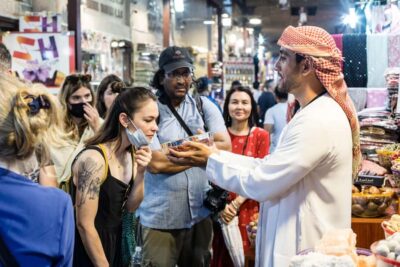
Old Town, Creek, Museums, Souks, & Street Food Tour
Read our review →
Old Town, Souks, Street Food, Guided Tour & Abra Ride
Read our review →

London Bridge & Borough Market Food Tour with 7 Authentic Dishes
Read our review →
Old Town, Souks, Street Food, Guided Tour & Abra Ride
Read our review →
Small Group Cooking Class & Market Food Tour in Florence
Read our review →