
Review · JAPAN
Tokyo: Explore Authentic Japanese Food Culture at Tsukiji
Tsukiji rewards curious eaters. This three-hour tour makes the Outer Market easier to understand, pairing an English-speaking guide with tastings such as seasoned seaweed, dried fish, roast beef sushi, oysters or sashimi, and bean snacks. I like the small group limit of six, and I like that the route includes both food and two important religious sites. The main drawback is clear: the tour is not suitable for vegans, people with food allergies, or wheelchair users.
I also like the way the experience handles lunch. You buy your own meal after the guided tastings, so you can choose what appeals to you, but you must budget extra for it. The $99 price is fair if you value guidance and a broad set of tastings, though it will feel less attractive if you mainly want to browse and pay for food on your own.
Key points at a glance
- A small group of six or fewer: You get a better chance to follow the guide through Tsukiji’s maze of shops and food counters.
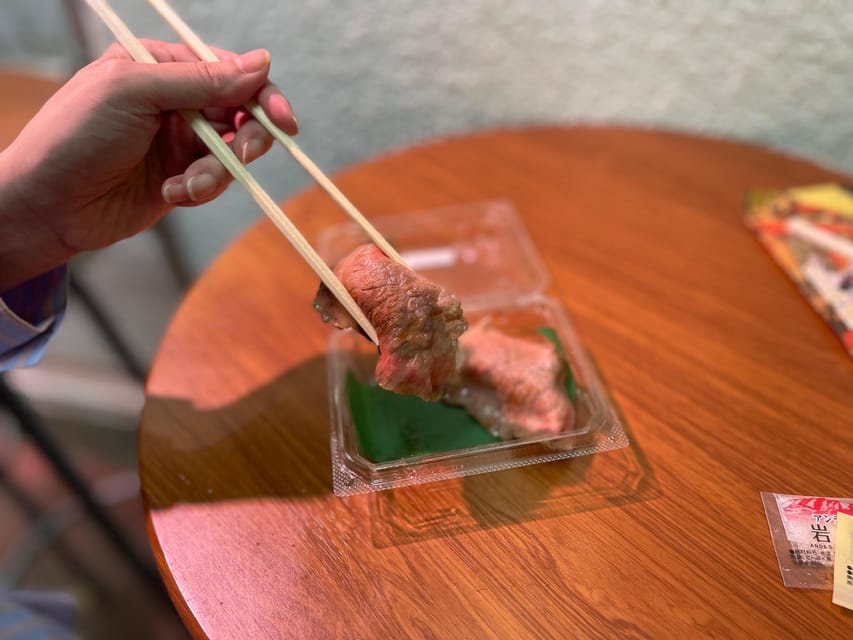
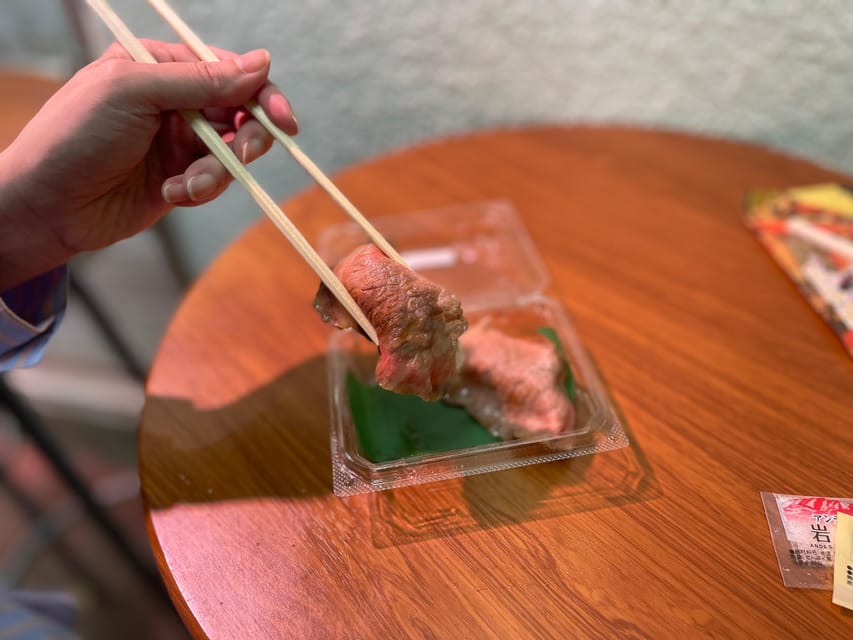
- Five types of included snacks: The tasting list includes seasoned seaweed, dried fish, roast beef sushi, oysters or sashimi, and bean snacks.
- Two important cultural stops: The route visits Tsukiji Honganji Temple and ends at Namiyoke Shrine, which supports market workers.
- Lunch is your choice: Lunch is not included, but you can buy a favorite meal and eat it with the snacks purchased during the tour.
- Haruka earned special praise: One particularly positive account singled out Haruka for her friendly manner and ability to guide the group through Tsukiji.
- Dietary limits matter: Seafood and meat are part of the tasting, and the tour is not wheelchair accessible.
Why Tsukiji still matters after the wholesale market moved
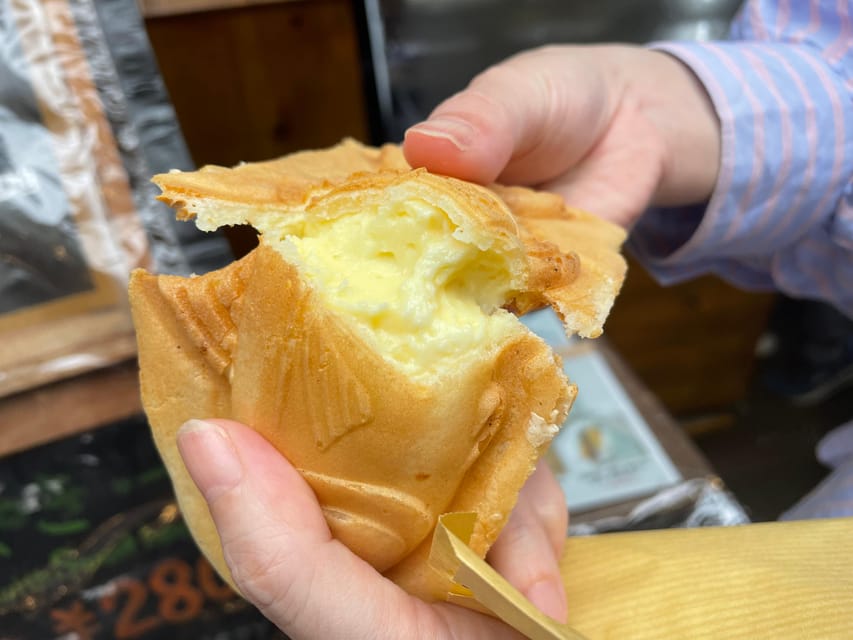
Tsukiji is often called a fish market, but that label is too narrow for this experience. The Outer Market is a shopping and dining district where many Japanese food products come together. Fish is part of the picture, but so are dried foods, seaweed, prepared bites, sweets, meat, and other ingredients.
The former central wholesale market once sat next to the area. It has since closed, yet the Outer Market remains a popular place to eat and shop. That change is important because you are not touring the old wholesale operation. You are exploring the public-facing market that continues to serve as a food destination.
I like this distinction. It keeps expectations realistic. You are not signing up for an early-morning auction or a behind-the-scenes visit to an active wholesale floor. Instead, you are learning how the market works as a place where Japanese food culture is bought, tasted, and shared.
The guide’s role matters here. Tsukiji can feel confusing because its food shops and eating places sit close together, with many tempting choices competing for your attention. A guide can help you spend your time on recommended stops instead of simply wandering from one counter to the next.
More Fish Market Tours in Japan
- Tokyo Tsukiji Fish Market Food and Culture Walking Tour
★ 5.0 · 3,184 reviews - Tokyo: Tsukiji Fish Market Food and Walking tour
★ 5.0 · 1,724 reviews - Tokyo: Tsukiji Fish Market Guided Walking Tour
★ 4.9 · 1,397 reviews
Starting at Tsukiji Honganji Temple
The meeting point is outside the main gate of Tsukiji Honganji Temple. This is a practical starting place because the temple gives the tour a calm cultural opening before you enter the food market.
You spend about 20 minutes at the temple with a guided visit and time for photos. The temple is not treated as a quick landmark to pass on the way to lunch. It is one of the two sites included to help explain Tsukiji itself.
That balance is useful. Food tours can easily become a series of bites with little sense of place. Beginning at Tsukiji Honganji gives you a chance to consider the area beyond its menus and shopping stalls. You also know exactly where to meet: outside the main gate, not inside the market.
Keep the meeting instruction in mind. The tour begins at 3-chōme-15-1 Tsukiji, and the stated meeting point is outside the temple’s main gate. Arriving at the correct entrance matters in an area with many nearby streets and destinations.
Two hours among Tsukiji’s food shops
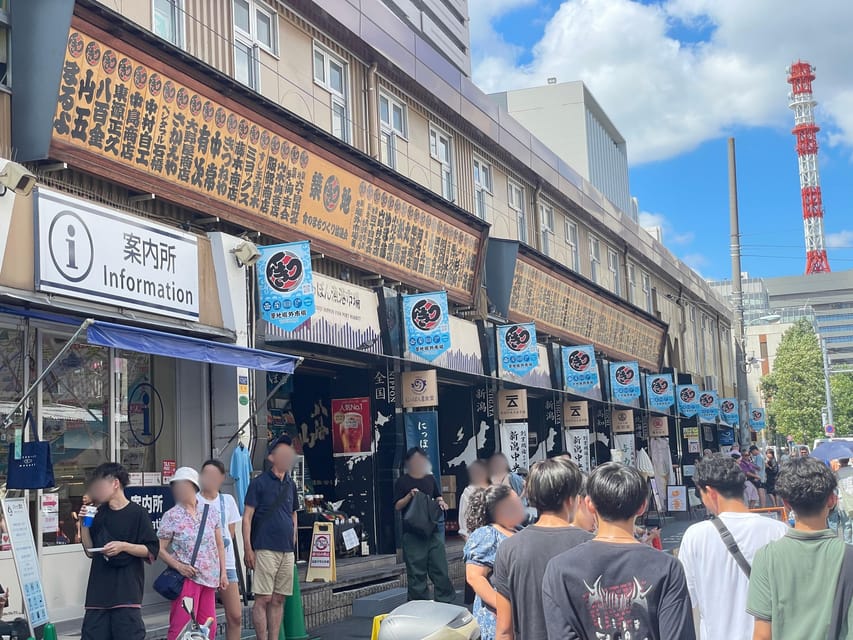
The longest part of the experience is a two-hour walk through the Tsukiji Outer Market. This section combines guided sightseeing, shopping, local snacks, food tasting, and time for breakfast, brunch, dessert, or lunch-style eating.
The tour is not only a tasting route. You can buy snacks at recommended stores while the guide explains what you are seeing and helps you move through the market. That makes the experience useful for first-time visitors who want help choosing food rather than facing every option alone.
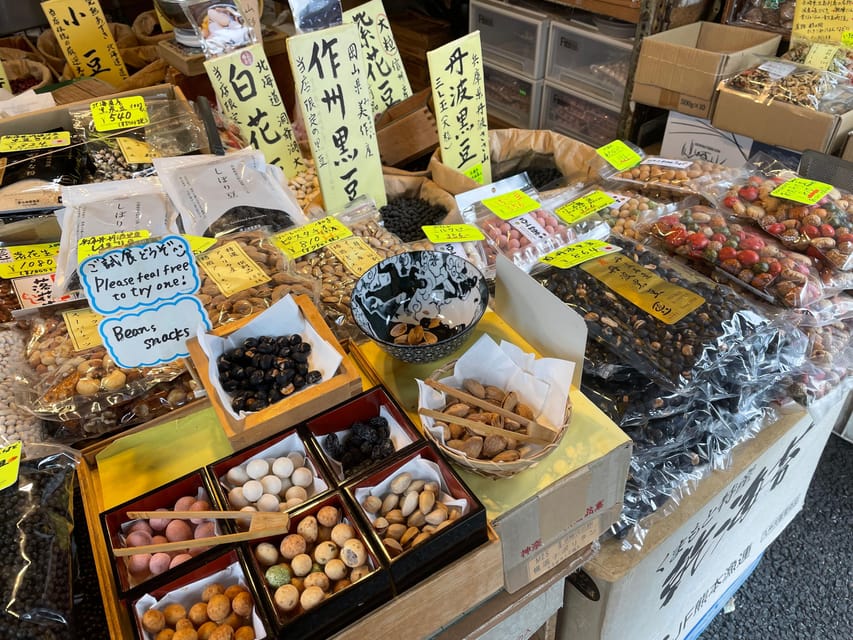
The included snacks give the tour its shape. You can expect a mixture of:
- Seasoned seaweed
- Dried fish
- Roast beef sushi
- Oysters or sashimi
- Bean snacks
This is a notably broad tasting list. Some items are light and packaged, while others are seafood or meat that can feel more like a proper bite. The range lets you sample several parts of Japanese food culture without putting the full cost of every purchase on your shoulders.
The wording around the seafood is important. The included selection lists oysters or sashimi, so the exact item may depend on what is available or how the tour is arranged. If raw seafood is not for you, ask the guide before the tasting begins. The tour specifically warns that the snacks include seafood and meat.
I appreciate that shopping costs are separate. It keeps the base price from pretending that every participant wants the same meal. You can buy additional items at the stores, but those purchases depend on your appetite and budget.
What the guide adds to the market visit
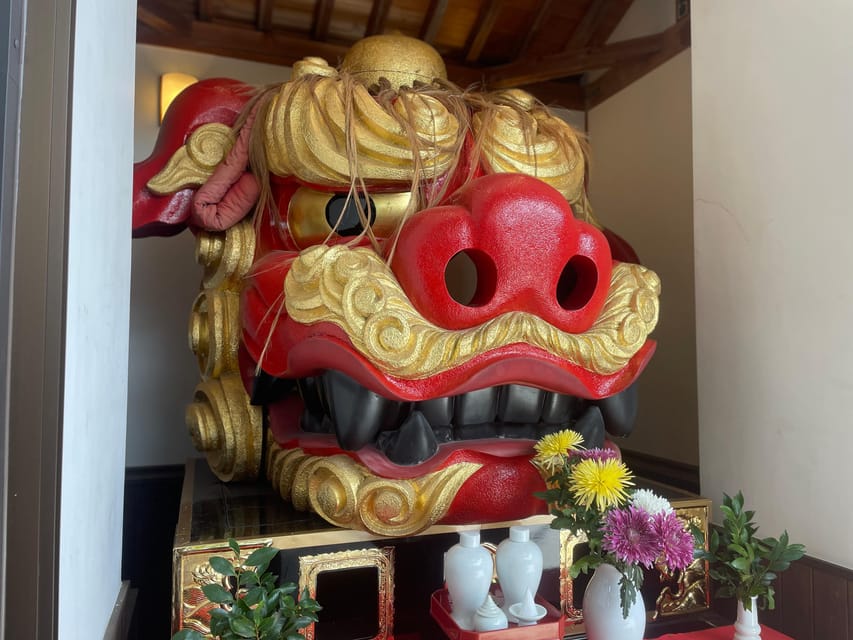
A guided route is especially helpful here because the market is described as a maze. One highly praised guide, Haruka, was credited with leading the group to the best spots and making the experience feel personal. Her friendly manner and strong knowledge were also singled out, which is exactly the kind of guide quality that can change a market visit.
The group size supports that style of tour. With no more than six participants, the guide has a better chance of keeping everyone together and explaining each tasting. A large group can make small food counters awkward, while a small group should make it easier to hear the guide and ask questions.
The experience also has assistants, according to the feedback provided. That may be useful when the group is buying food or moving between stops, though the exact role of the assistants is not specified.
You should still treat the route as an active food walk, not a seated meal. There is shopping, tasting, and movement across the market. If you prefer a long restaurant lunch or dislike eating while exploring, this format may not suit you.
More Fish Market Tours in Tokyo
- Tokyo Sushi Making Class in Tsukiji with Professional Chef
★ 5.0 · 1,177 reviews - Tsukiji Fish Market Guided Tour and Sushi Making with Pro Chef
★ 5.0 · 775 reviews - Tokyo: Tsukiji Fish Market Food and Culture Walking Tour
★ 4.7 · 757 reviews - Tsukiji Fish Market: Street Food & Culture Walking Tour
★ 5.0 · 669 reviews
The included tastings and the extra cost of lunch
At $99 per person, the price needs to be judged against what is included. You receive an English-speaking guide, a three-hour small-group experience, and the listed snacks. You do not receive lunch, and you pay separately for shopping at each store.
For someone who wants context and help making choices, that can be a reasonable price. The guide is not just escorting you from one famous stall to another. The route brings together food tasting, market orientation, and visits to Honganji Temple and Namiyoke Shrine.
The value is weaker if your main goal is simply to buy a few snacks. In that case, you may prefer to explore independently and put the full $99 toward food. The best reason to book is the combination of access to recommended stores, explanations in English, and the chance to try several different foods during one organized visit.
Lunch gives you some flexibility. After buying the recommended snacks, you can purchase your favorite lunch and enjoy it with them. Because the lunch fee is not included, you can keep the meal modest or spend more on something special. The tour does not prescribe a restaurant or a set menu in the supplied details, so you should think of this as guided choice rather than a prepaid lunch.
Visiting Namiyoke Shrine at the end
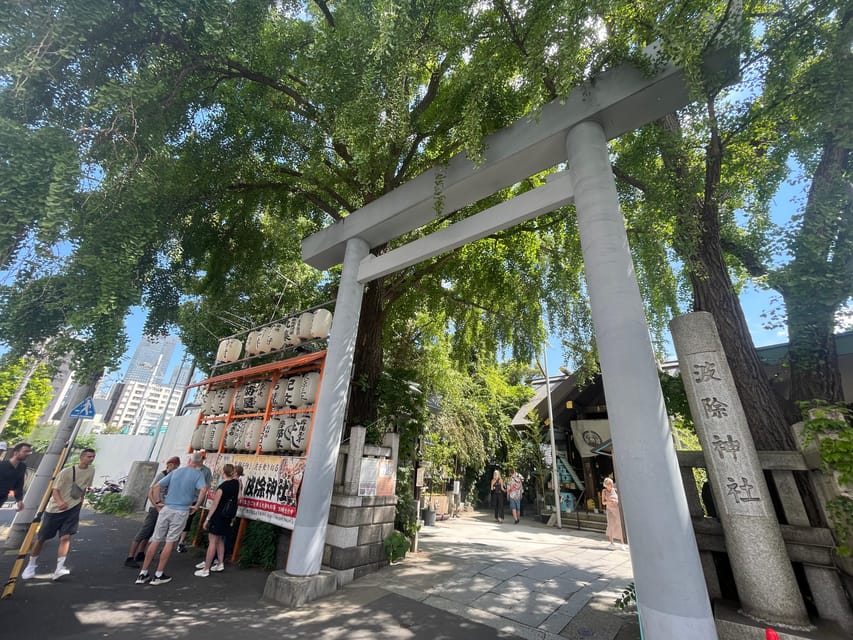
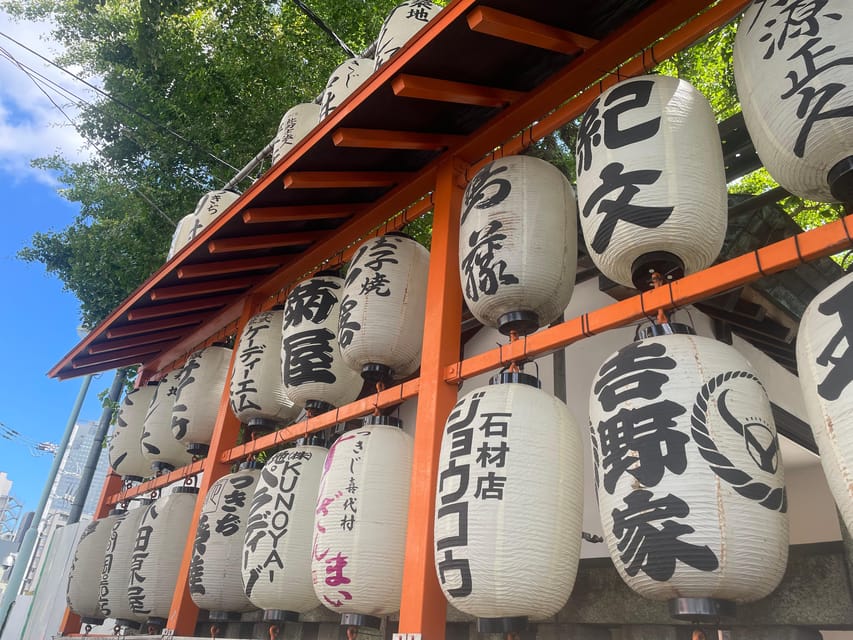
The tour finishes at Namiyoke Shrine, also written as Tsukiji Namiyoke Shrine. The shrine supports workers in Tsukiji and is described as essential for understanding the area.
Ending here gives the walk a clear local connection. You have spent time tasting food and seeing the market’s commercial side, then arrive at a place linked to the people who work there. That makes the shrine more than a decorative final stop.
The finish point is not the same as the starting point. You begin at the main gate of Tsukiji Honganji Temple and end at 波除神社, Namiyoke Shrine. Plan your next step from the shrine rather than assuming you will return to the temple.
The available details do not specify how long the shrine visit lasts, so you should expect it as part of the overall route rather than as a separate extended temple tour. Its importance is cultural and local, especially for anyone who wants more than food samples.
Who should book this Tsukiji experience?
I would recommend this tour to first-time visitors who want help finding good food in Tsukiji without turning the visit into a private research project. It also suits people who enjoy tasting several small items and want a little cultural context along the way.
The experience should work well for English-speaking visitors who want a small group instead of a large tour. The maximum of six participants is a real advantage in a market setting. It should also appeal to anyone who wants to combine food with temple and shrine visits in one three-hour plan.
It is less suitable for independent food experts who already know Tsukiji well. If you are comfortable choosing shops, reading menus, and navigating the market alone, the guided portion may not add enough value for $99.
It is also a poor match for vegans. The tour specifically says it is not suitable for vegans, and the tasting includes meat and seafood. People with food allergies should not assume that substitutions are available. The tour asks you to tell the guide about allergies, but the additional information still lists people with food allergies among those for whom it is not suitable.
Wheelchair users should skip this experience because it is not wheelchair accessible. The supplied information does not provide details about the exact surfaces or steps, so you should not rely on the guide being able to adapt the route.
Small details that affect your decision
The tour lasts three hours, and starting times vary. Check availability for the date you want rather than assuming a fixed departure. Since the market portion includes food and shopping, allow yourself room to make purchases beyond the included snacks if something catches your eye.
The English-speaking guide is central to the experience. If clear explanations are important to you, the small group format should help. The strongest feedback focused on the guide’s ability to find good food, keep the group moving through the maze, and create a friendly atmosphere.
The experience has a top rating from three provided bookings, all dated December 21, 2024. That is encouraging, especially because the praise repeatedly focuses on the food, the atmosphere, the small group, and the guide. Still, three ratings are a small sample, so I would treat them as a positive sign rather than a guarantee of the exact same guide or route on every date.
Free cancellation is available up to 24 hours in advance for a full refund. You can also reserve now and pay later, which helps if your Tokyo plans are still changing. These policies are useful, but the food restrictions and accessibility limits should carry more weight in your decision.
Final call: is the $99 price worth it?
Book this tour if you want an organized introduction to Tsukiji, enjoy seafood and meat, and value a guide who can lead you to recommended food stops. The combination of five snack types, a small group, Honganji Temple, and Namiyoke Shrine gives you more than a simple market snack crawl.
Skip it if you are vegan, have food allergies, use a wheelchair, or mainly want to explore independently. Also remember to add money for lunch and any extra shopping.
For the right person, the strongest feature is not one particular oyster or piece of sushi. It is the help you receive in making sense of Tsukiji. Haruka’s praised guidance shows what this tour can offer at its best: a friendly local escort through a maze of food, with enough cultural context to make the meal more memorable.
FAQ
Where does the Tsukiji food tour start?
It starts outside the main gate of Tsukiji Honganji Temple at 3-chōme-15-1 Tsukiji.
Where does the tour finish?
The tour finishes at Namiyoke Shrine, written as 波除神社.
How long does the experience last?
The tour lasts three hours.
Is the tour conducted in English?
Yes. It includes an English-speaking live guide.
How large is the group?
The tour is limited to six participants.
What snacks are included?
Included snacks are seasoned seaweed, dried fish, roast beef sushi, oysters or sashimi, and bean snacks.
Is lunch included in the price?
No. Lunch is not included. You can buy your preferred lunch during the tour, and shopping costs are also separate.
Is the tour suitable for vegans or people with food allergies?
No. The experience is listed as unsuitable for vegans and people with food allergies. The snacks include seafood and meat, and you should inform the guide about any allergies.
Is the tour wheelchair accessible?
No. The tour is not wheelchair accessible.
More Food Trips in Tokyo
- Tsukiji Food and Toyosu Market with Government-Licensed Guide
★ 5.0 · 158 reviews - Toyosu Market Morning Tuna Auction and Tsukiji Food Tour with Licensed Guide
★ 4.5 · 146 reviews - Tokyo Tsukiji Fish Market Food Tour: 15 Stops & Walk Local Street
★ 5.0 · 139 reviews - Tokyo’s Kitchen: Tsukiji Market Food & Culture Walk
★ 4.7 · 74 reviews
More Food and Drink Trips in Tokyo
- Tsukiji Fish Market Small-Group Food Walking Tour
★ 5.0 · 621 reviews - Tokyo Food Tour Taste Fresh Delights at Tsukiji Market
★ 5.0 · 429 reviews - Tsukiji Fish Market: Street Food & Culture Walking Tour
★ 4.8 · 259 reviews - Inside Tokyo’s Kitchen: Tsukiji Market, Food & Culture Tour
★ 5.0 · 162 reviews
Just added around Tokyo
- Tokyo: Tsukiji Market Guided Tour & Sushi-Making Experience★ 4.4 · 11 reviews
- Tokyo: Private Tsukiji Street Food & Sake with Local Guide★ 5.0 · 3 reviews
- Tokyo: Tsukiji Market and Hama-rikyu Gardens Guided Tour★ 4.8 · 73 reviews
- Tokyo: Tsukiji Fish Market Culture Tour with Sashimi Tasting★ 4.6 · 54 reviews
- Tokyo’s Kitchen: Tsukiji Market Food & Culture Walk★ 4.7 · 74 reviews
- Tokyo: Tsukiji Fish Market Foodie and Educational Tour★ 5.0 · 4 reviews
- Tokyo : Tsukiji Fish Market Food Walking & Shrine Visit Tour★ 5.0 · 3 reviews
- Tokyo: Guided Walking Tour of Tsukiji Market with Lunch★ 4.4 · 24 reviews
Fish Market Tours, compared.
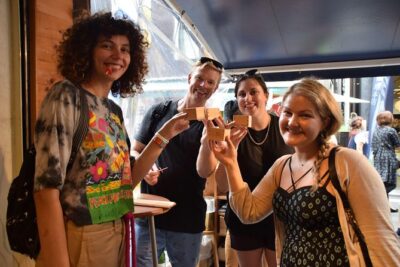
Tokyo Tsukiji Fish Market Food and Culture Walking Tour
Read our review →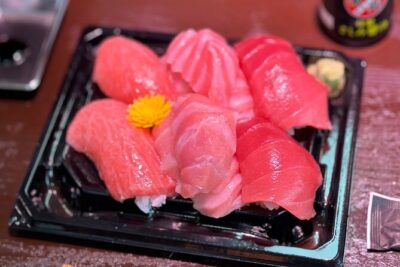
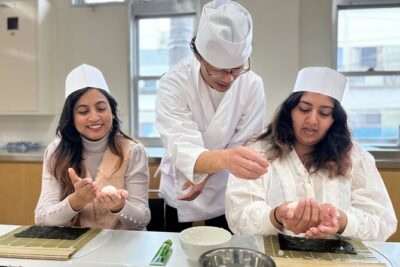
Tokyo Sushi Making Class in Tsukiji with Professional Chef
Read our review →
Tsukiji Fish Market Guided Tour and Sushi Making with Pro Chef
Read our review →Tsukiji Fish Market Food and Culture Walking Tour
Read our review →
Tsukiji Fish Market: Street Food & Culture Walking Tour
Read our review →
Tsukiji Fish Market Small-Group Food Walking Tour
Read our review →
Tsukiji Fish Market Sushi Making Class with Pro Chef
Read our review →Browse the lists this tour appears in