
Review · INDONESIA
Seminyak: Balinese Cooking Class & Market Tour
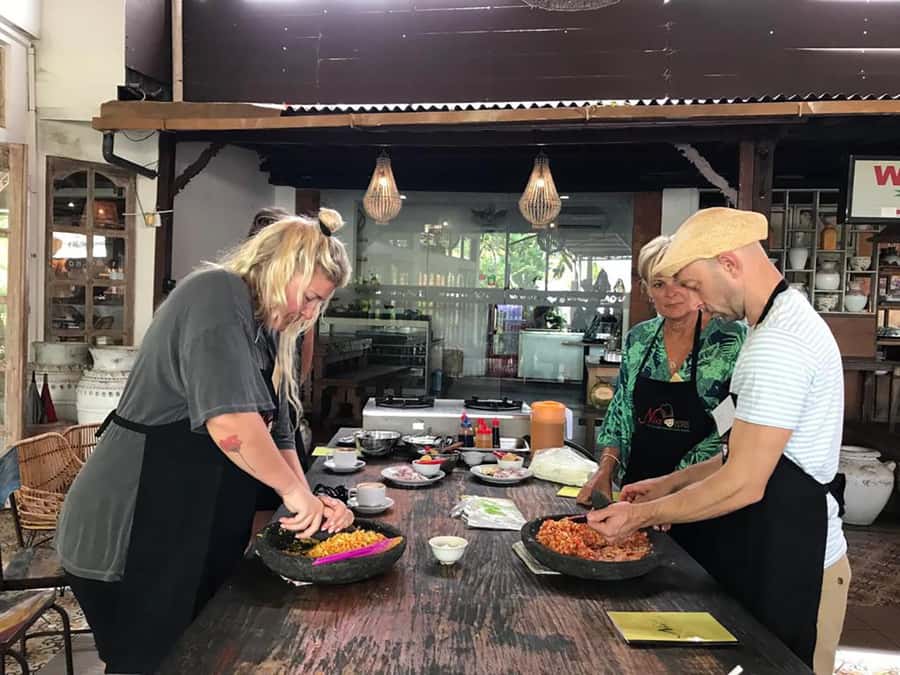
Come hungry and ready to cook. This four-hour Seminyak class combines a local market visit with hands-on instruction at Warung Nia, where you prepare a large spread of Balinese and Indonesian dishes with help from an English-speaking chef. I especially like the market stop, which gives the recipes a real local setting, and the small-group format, which makes it easier to get help at your own work station.
The food is another major draw. Several sessions have included six to twelve dishes, along with curry pastes, satays, fish, meat, vegetables, and banana-leaf presentation. The main drawback is that the market visit can feel brief, and the shared pickup vehicle may be crowded. If you want a long, leisurely market tour, this is not quite that. If you want a well-organized morning of cooking and eating, it offers excellent value at $45.
Key points to know before booking
- The 8:00 AM start matters: Hotel pickup is available from Seminyak, Legian, and Kuta, with the market visit taking place early in the day.
- You cook a banquet, not just one dish: Depending on the session, you may prepare six, eight, ten, or even twelve different items.
- The market visit adds practical value: Your chef identifies spices, herbs, produce, meat, and fish, then explains which ingredients you can find at home.
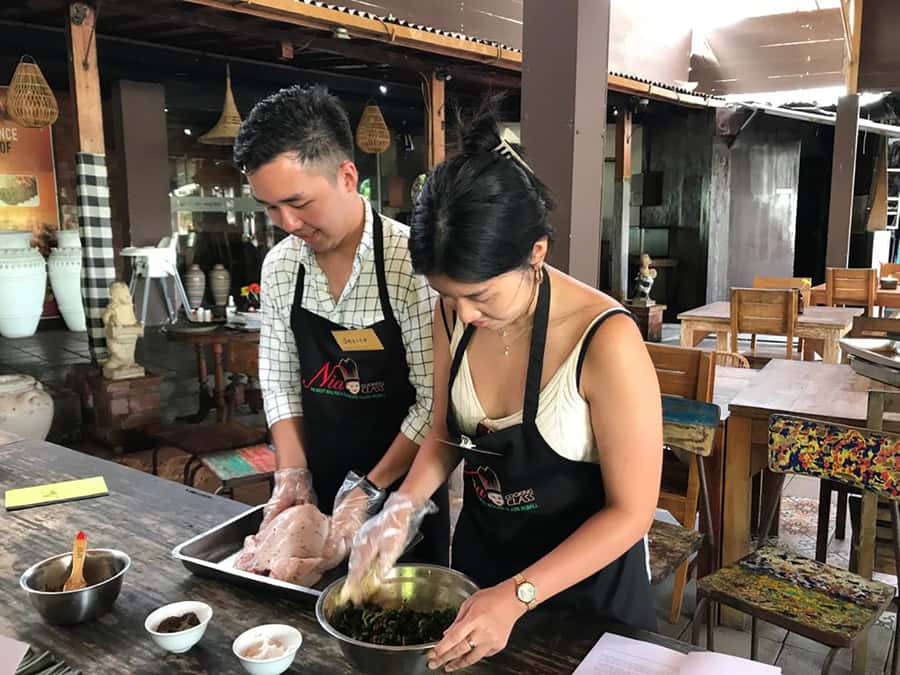
- Small work stations keep the class hands-on: You are not simply watching a demonstration from the back of a room.
- Chef quality is a major strength: Chefs such as Komang, Made, Tommy, Jim, Teddy, and others are praised for clear instruction, humor, and personal help.
- You leave with useful takeaways: A recipe book and certificate are included, and the recipes are designed around ingredients that are generally possible to find outside Bali.
Why this Seminyak cooking class works so well
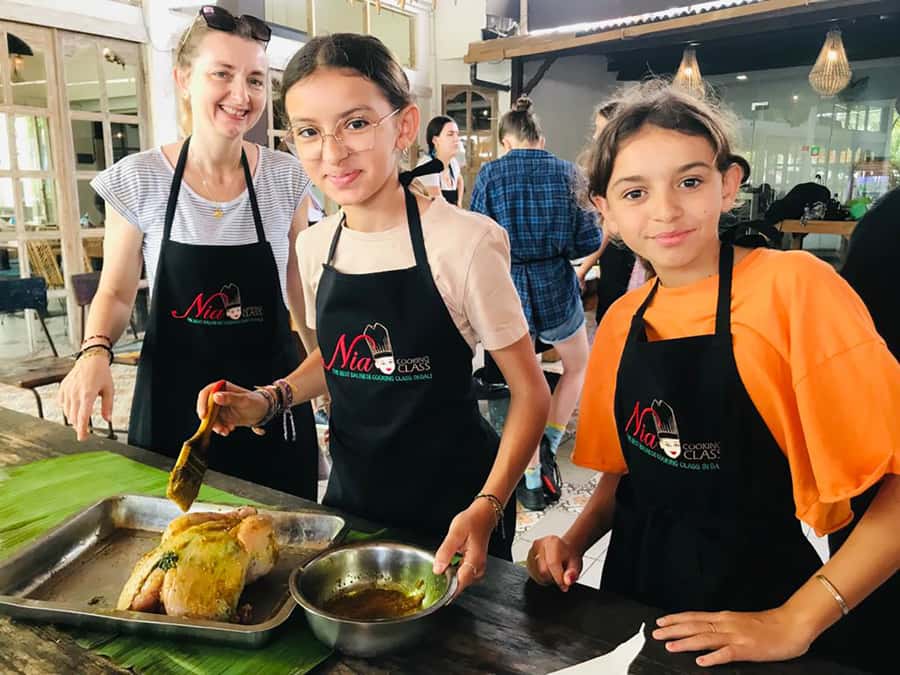
Cooking classes can be hit or miss. Some give you a recipe card, let you chop one onion, and then serve you lunch that was prepared before you arrived. This class takes a different approach. You help prepare a broad menu, learn how Balinese flavor pastes work, and then sit down to eat what your group has made.
That structure gives the morning a clear rhythm. First comes the market. Then you return to the venue, prepare ingredients and dishes, and finish with a shared meal. The four-hour length is long enough to feel substantial without taking over your entire day in Bali.
I also like that the class teaches more than recipes. You learn how local spices smell, how different herbs are used, how ingredients are selected, and how Balinese cooks build flavor. One chef even explained medicinal uses for some ingredients and the small differences between spices used for different purposes.
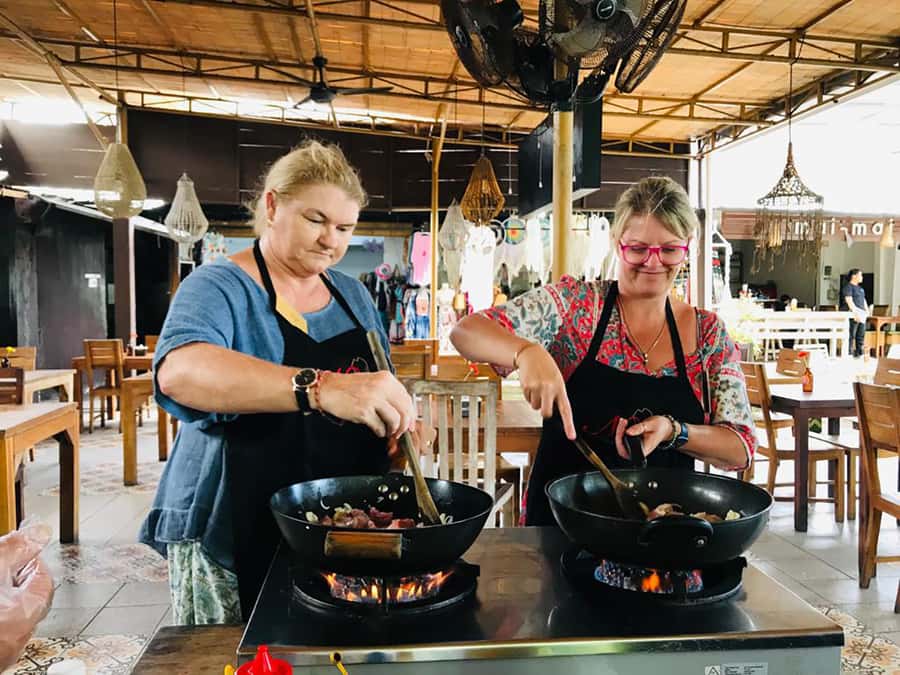
The format suits people who want to take part. You should expect to chop, mix, pound, season, shape, and prepare food rather than simply watch. Assistants help with each stage, clean between tasks, and keep the work moving.
More Cooking Classes in Indonesia
- Ubud: Cooking Class with Transfers and Optional Market Visit
★ 4.9 · 824 reviews - Balinese Ubud cooking school (9 Dish Cooking and Market Tour)
★ 5.0 · 540 reviews - Ubud: Balinese Cooking Class and Market Tour
★ 4.8 · 531 reviews
The morning market: short, useful, and very local
The class begins at a nearby morning market. Pickup from hotels in Seminyak, Legian, and Kuta is scheduled for 8:00 AM. If your accommodation is outside those areas, you meet at Warung Nia on Jalan Kayu Aya in Seminyak.
At the market, your chef guides you from stall to stall. The point is not to spend a full morning shopping. It is to connect the dishes you will cook with the ingredients used in local kitchens.
You can expect explanations of fresh herbs, spices, vegetables, fruits, meat, fish, and ingredients used to make Balinese curry pastes. This is where the class earns extra value. It is much easier to remember a spice after seeing it, smelling it, and hearing how it is used than after reading its name in a recipe book.
The market also gives you a quick look at ordinary local food shopping. You see where the raw ingredients begin before they are turned into the polished dishes served at restaurants. That connection is useful, especially if you have eaten Balinese food but never understood how the flavors are built.
The chef can also point out which ingredients are realistic to find at home. Asian grocery stores may carry many of them, while others can be replaced with more common alternatives. Chef Komang, in particular, is praised for explaining substitutions and the purpose of individual spices.
There is one fair limitation. The market visit is fairly short, and you will not have unlimited time to browse every stall. A few people would prefer a longer stop with more time to shop or ask questions. Think of it as an ingredient orientation rather than a full market tour.
If it is raining heavily, the market portion may be shortened or skipped. Comfortable shoes are important because you will walk a little, and the market may be wet or uneven. Leave large bags and luggage behind, since they are not permitted.
The cooking room and the small-group setup
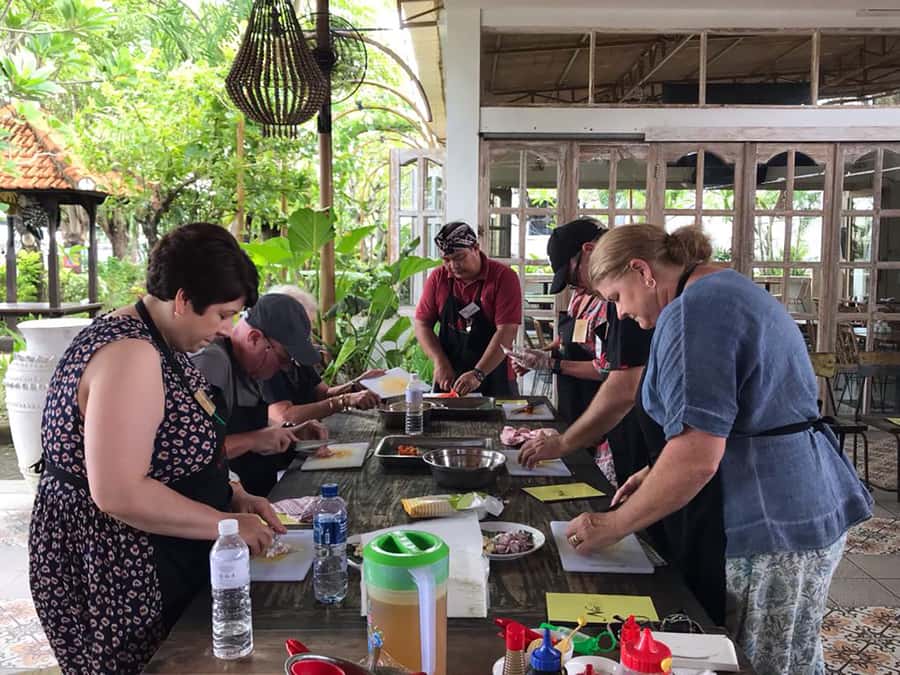
Back at the cooking venue, you receive morning tea and a small snack before getting started. The work stations are prepared in advance, with ingredients and equipment ready for each part of the class.
The small-group setup is one of the strongest features. You have a better chance to ask questions, follow the chef’s instructions, and get personal help when you are unsure about a technique. It also works well for solo participants, couples, families, and groups of friends.
The chef demonstrates each stage before you try it. Assistants then move around the room to help with chopping, mixing, shaping, and seasoning. This matters because Balinese cooking often involves several steps at once. You are less likely to lose track of the recipe while the staff prepares the next ingredient or clears away the previous one.
The operation is carefully organized. Staff clean work areas as the class moves from one dish to the next, and you are reminded to wash your hands between stages. That attention to hygiene is reassuring, especially when you are working with meat, fish, spices, and fresh produce in the same session.
The chefs also keep the mood light. Komang is praised for humor and for making sure each person takes part. Made is noted for clear explanations, while Tommy and Jim are both described as entertaining and easy to follow. The exact instructor can vary, but the pattern is consistent: friendly guidance rather than a stiff lecture.
Do not worry if you are not a confident cook. The instructions are designed to be followed by beginners, and the staff offers one-to-one help. At the same time, experienced home cooks should still pick up useful details, especially around spice combinations, knife handling, and curry paste preparation.
What you actually cook
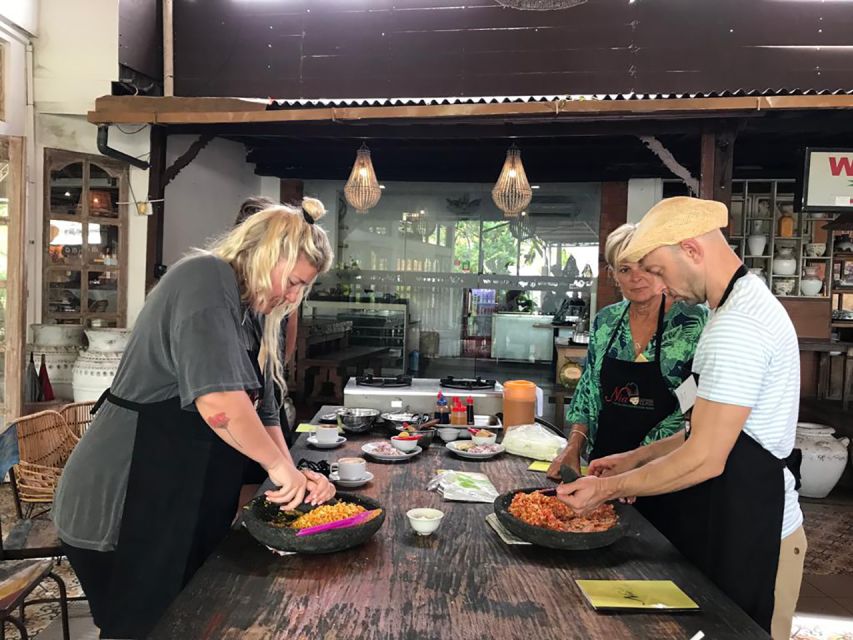
The menu can vary, but the class covers a wide range of Balinese and Indonesian food. Sessions have included four different curry pastes, chicken, fish, pork, satays, vegetables, sauces, condiments, and dishes served with banana leaves.
The number of dishes is unusually generous. Some classes prepare about six dishes, while others produce eight, ten, or twelve separate items. The exact count is less important than the variety. You are not repeating one recipe in several forms. You are building a broad meal with different textures, cooking methods, and spice levels.
Curry pastes are a key part of the lesson. You learn how a paste forms the base of several dishes and how herbs and spices work together. This is more useful than memorizing a single recipe because you can later adapt the method to ingredients available at home.
Satays add a hands-on element that is easy to understand, while fish, meat, and vegetable dishes show how the same basic flavor ideas change from one ingredient to another. Banana-leaf presentation also adds a clear Balinese touch and helps connect the food to local cooking traditions.
The class is generous with food. You should not eat a large breakfast beforehand. By the end, you will have tasted a full spread, and there may be more food than your table can finish.
That abundance is a benefit, but it can also make the morning feel busy. You are moving from one preparation to the next, and the amount of food can be hard to appreciate until you sit down. If you prefer a slow, focused lesson on one or two dishes, this class may feel more like a cooking workshop and feast than a traditional culinary course.
Same place, a different set of stalls:
- Active Volcano, Rice Field, Hot Spring, Fruit market, Tea Plantation with Lunch
★ 5.0 · 513 reviews - Balinese Cooking class with traditional morning market visit
★ 5.0 · 161 reviews - PRIVATE Ubud Market Tour & Balinese Cooking Class with Putu
★ 5.0 · 125 reviews - Ubud Traditional Night Market Food Tour-All Inclusive
★ 4.4 · 95 reviews
The final meal is part of the lesson
After the preparation is complete, you sit down and eat the dishes made by your group. This is not just a reward at the end. It lets you taste the result of each technique and compare the different pastes, sauces, meats, fish, and vegetables.
The shared meal also gives the class a social finish. You can talk with the other cooks and compare which dishes you liked best. Solo participants generally have an easy time joining the group because everyone has worked through the same recipes.
The food is consistently praised for its flavor and quantity. The most common reaction is that there is simply too much to finish. That is a good sign for value, though it also means the class is not designed around a restrained tasting menu.
The setting is connected to Warung Nia, a Seminyak restaurant and cooking venue. That makes the meal feel practical rather than staged in a formal culinary school. You learn food that is actually served in a local restaurant setting, then sit down to eat it in the same place.
You receive a recipe book at the end, which is one of the most useful inclusions. The recipes are not presented as impossible projects requiring a suitcase full of rare spices. The chefs explain alternatives for ingredients that may be difficult to find at home, giving you a better chance of cooking the dishes again.
A certificate of completion is included too. It is a small touch, but children and families may enjoy having a physical reminder of the activity.
Transport, timing, and small practical issues
The advertised duration is four hours, with pickup included from hotels in Seminyak, Legian, and Kuta. The early start is sensible because morning markets are active early, and you finish with much of the day still available.
Pickup is not perfect for everyone. One report describes the vehicle as overcrowded, although other accounts describe punctual pickup, air conditioning, and a short journey. If you are staying close to the venue, you may find it simpler to meet at Warung Nia rather than use the shared transfer.
Hotel drop-off is not included. Plan to arrange your own return after the class. That is easy enough if you are staying nearby, but it is worth remembering when working out your schedule.
Wear comfortable clothing and shoes. You will walk during the market visit and spend time standing and working in the cooking area. Do not bring luggage or large bags.
English is the teaching language. The chef leads the demonstrations, while assistants provide help around the work stations. If you need a slower explanation, ask during the preparation stage rather than waiting until the class has moved on.
The activity allows cancellation up to 24 hours before the start for a full refund, and you can reserve before paying. Starting times should be checked when booking, though the included pickup from the main hotel areas is scheduled for 8:00 AM.
Is $45 good value?
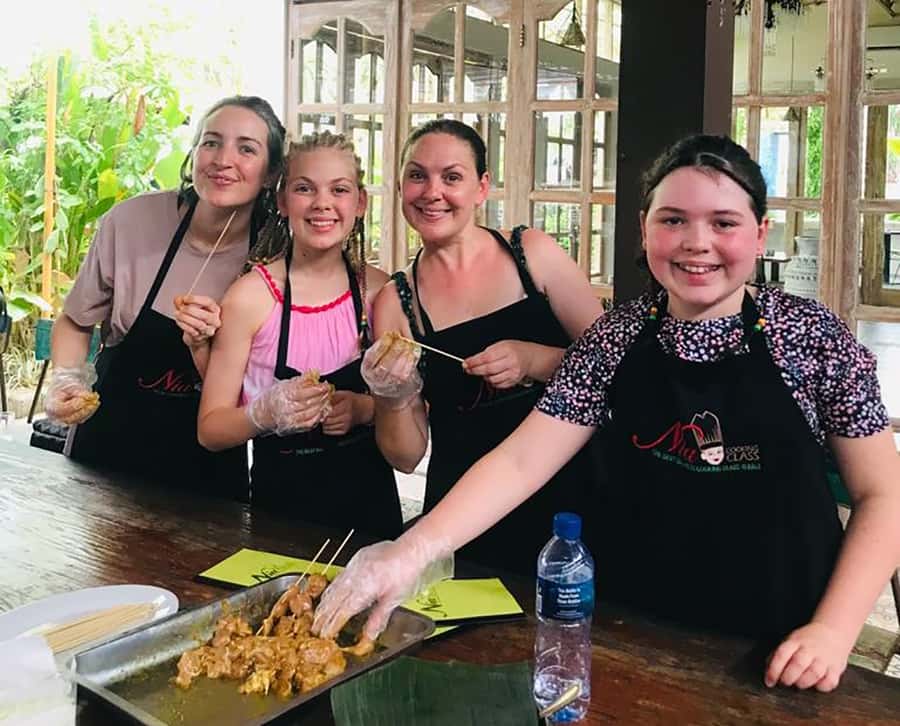
At $45 per person, this is strong value if you enjoy both food and participation. You receive hotel pickup in the main areas, a market visit, morning tea, ingredients, instruction, a large meal, a recipe book, and a certificate.
The amount of food alone makes the price appealing, but the real value is the teaching. You are not paying only for lunch. You are learning how to identify ingredients, prepare spice pastes, organize a multi-dish meal, and adapt recipes for cooking at home.
The small-group format adds to that value because you have more access to the chef than you would in a large demonstration class. The assistants also keep the class moving and help prevent beginners from falling behind.
I would not choose this class solely for the market. The market visit is brief, and the transfer may be shared with other participants. Choose it because the market gives context to a hands-on cooking session that ends with a substantial meal.
Who should book this class?
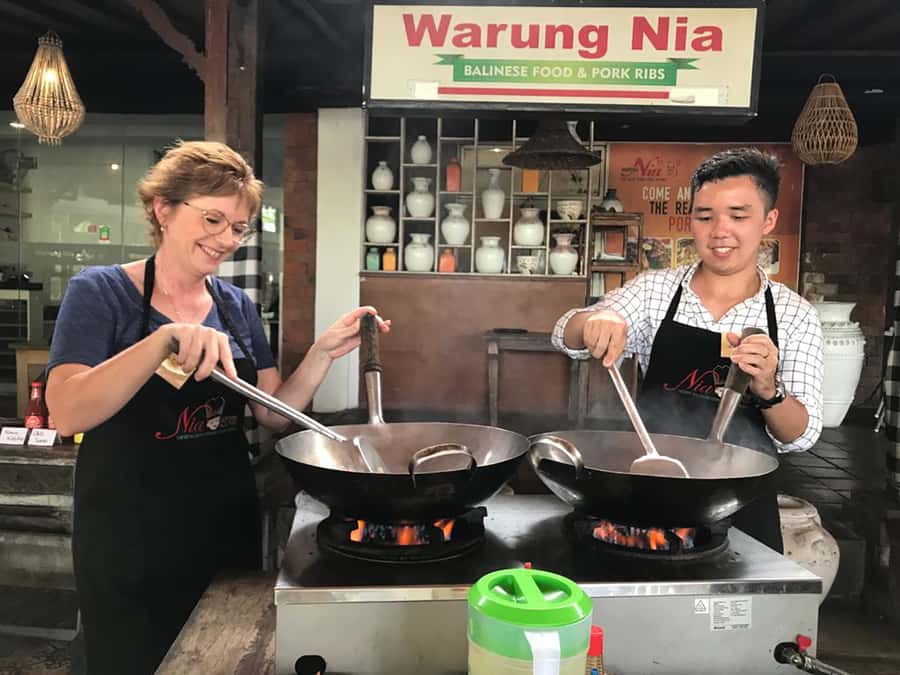
This is a good pick for couples, families, solo visitors, and groups of friends who want a social activity with a useful result. It works particularly well if you enjoy eating local food but want to understand how it is made.
Families can take part because the staff provides close guidance, and the certificate adds a fun finishing touch. Solo participants should also feel comfortable joining, since the shared work stations naturally create conversation.
The class is less suitable if you dislike standing, walking, group activities, or strong spices. It is also not ideal if you want a slow market photography session or a highly specialized lesson focused on one dish.
For most people, the balance is right. You get local ingredients, practical cooking skills, a generous meal, and enough personal help to make the session feel active rather than passive.
Should you book the Seminyak cooking class?
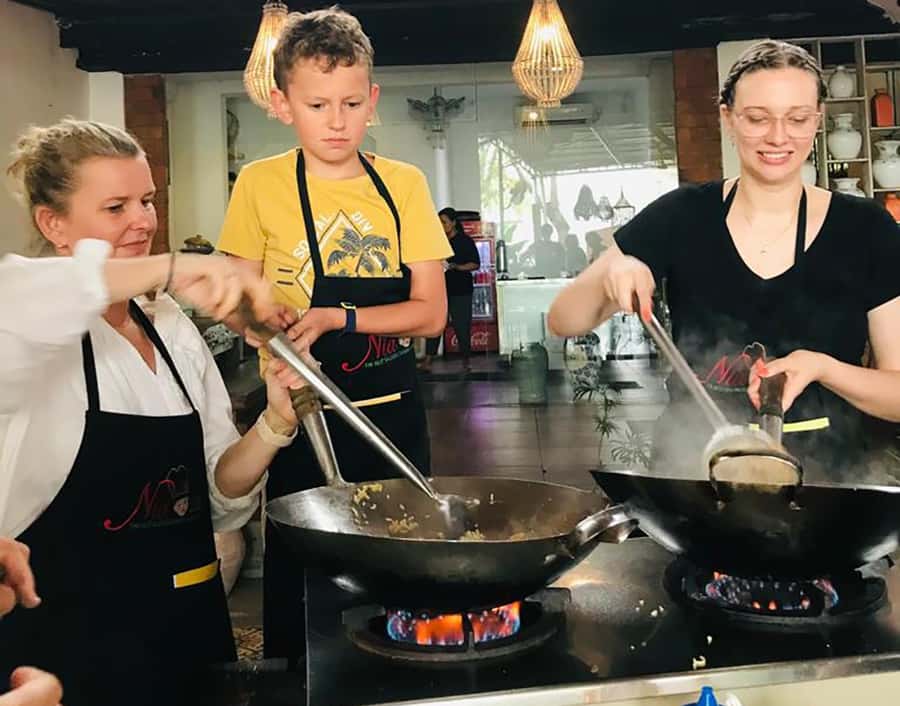
I would book this if you want a hands-on Balinese food lesson rather than a simple meal out. The strongest reasons are the small-group teaching, the friendly chefs, the useful market introduction, and the large final feast.
Keep your expectations realistic about the market. It is a short guided stop, not a full morning market expedition, and shared transport may be cramped. With that understood, the $45 price is easy to justify.
Bring comfortable shoes, skip the big breakfast, and leave your large bag at the hotel. If you want to return home with recipes you can actually try, this is one of the more practical food activities in Seminyak.
FAQ
How long does the Seminyak cooking class last?
The activity lasts four hours, including the market visit, cooking instruction, and final meal.
What time does hotel pickup begin?
Pickup from hotels in Seminyak, Legian, and Kuta is scheduled for 8:00 AM.
Where do I meet if my hotel is outside Seminyak, Legian, or Kuta?
The meeting point is Warung Nia, Jl. Kayu Aya Square, No. 19-21, Jl. Kayu Aya, Seminyak.
Is the market tour included?
Yes. The guided market tour is included, along with the cooking class and all ingredients used during the session.
What do I receive after the class?
You receive a recipe book and a certificate of completion. Morning tea is also included.
What should I bring?
Wear comfortable clothes and shoes. Do not bring luggage or large bags, as they are not allowed.
Just added around Indonesia
- Nusa Dua: Balinese Cooking Class with Market Tour★ 5.0 · 4 reviews
- Bali: Balinese Cooking Class and Market Tour★ 4.8 · 19 reviews
- Jambangan bali cooking class with morning market tour★ 5.0 · 35 reviews
- Balinese cooking class/Go shopping at the market, cook, eat★ 5.0 · 12 reviews
- Bali: Penglipuran Village, Waterfall, and Night Market Tour★ 4.2 · 4 reviews
- Bali: Safari Zoo and Ubud Palace and Market Day Tour★ 4.7 · 6 reviews
- Bali: Turtle Conservation and Education Tour & Local Market★ 4.8 · 20 reviews
- Bali: Ubud Monkey Forest, Coffee Plantation, and Market Tour★ 5.0 · 5 reviews
Cooking Classes, compared.
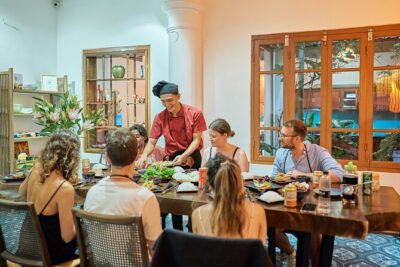
Hanoi Cooking Class: Culture, Local Market & Meaning CSR Impact
Read our review →
5 Traditional Dishes Hanoi Cooking Class with Market Trip
Read our review →
Cooking Class and Lunch at a Tuscan Farmhouse with Local Market Tour from Florence
Read our review →
Cooking Class, Market & Thai Herbs Garden Tour
Read our review →
Authentic Cooking Class with Market & Farm Visit
Read our review →
Paella Cooking Experience & Boqueria Market Tour
Read our review →
Cooking Class Hoi An:Local Market, Basket Boat, Fishing & Cooking
Read our review →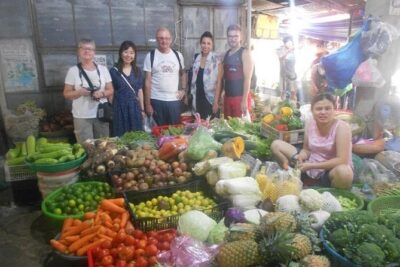
Hoi An Cooking Class(Market,BasketBoat Crabfishing&Cooking Class)
Read our review →Browse the lists this tour appears in