
Review · INDONESIA
Balinese Cooking class with traditional morning market visit
Start with the market, then cook your way through Bali. This six-hour Ubud experience combines a morning food market, a lesson in making canang offerings, and a hands-on cooking class in the village of Laplapan. You shop for ingredients with a local guide, learn how Balinese dishes are prepared, then sit down to eat what you made.
I like the small maximum group of eight, which gives the chef time to answer questions and help with knife work, seasoning, and cooking. I also like the cultural side of the morning: this is not only a recipe lesson, but a chance to learn why offerings matter in daily Balinese life. The main drawback is the early market visit and long overall schedule, which may feel tiring if you are not a morning person.
The class costs $35 per person, including hotel pickup, transport, cooking equipment, class fees, and taxes. That is strong value if you want a meal, a market visit, cultural instruction, and recipes in one outing. Personal expenses are extra, and cancellation is free up to 24 hours before the start time.
Key points to know before booking
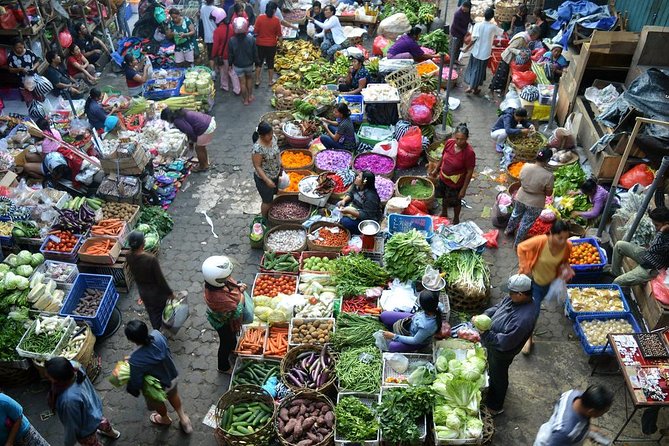
- The morning market comes first: You see local produce, herbs, spices, meat, fruit, and sweets before cooking with similar ingredients.
- Laplapan adds a village setting: The class takes place in traditional village surroundings near Ubud, rather than in a city restaurant.
- You make Balinese offerings: Instruction in making a canang gives the food lesson a useful cultural context.
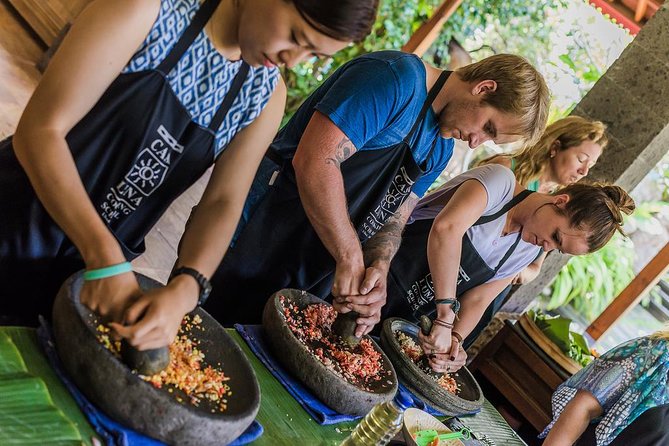
- The format is genuinely hands-on: You prepare several dishes, with some advance preparation used to keep the class moving.
- The food is your lunch: After cooking, you sit down and eat the dishes prepared during the class.
- Hotel pickup reduces hassle: An air-conditioned vehicle is included, and groups are limited to eight people.
Why this Ubud class offers more than recipes
Cooking classes can sometimes feel like a staged meal with a few token facts added on. This one has a broader plan. You begin with the ingredients and customs, then move into preparation, cooking, and finally eating.
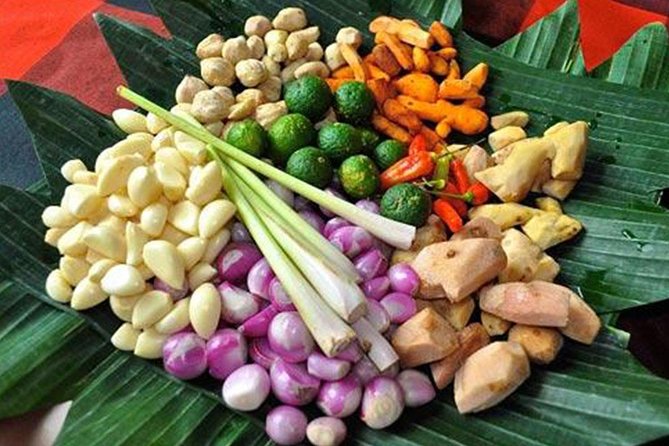
That order matters. At the market, you see what Balinese cooking looks like before it has been cleaned, chopped, or arranged for a class. You can ask about unfamiliar vegetables, herbs, spices, fruits, and meats. Some sessions include chances to smell or taste ingredients, which makes the visit more useful than simply walking past market stalls.
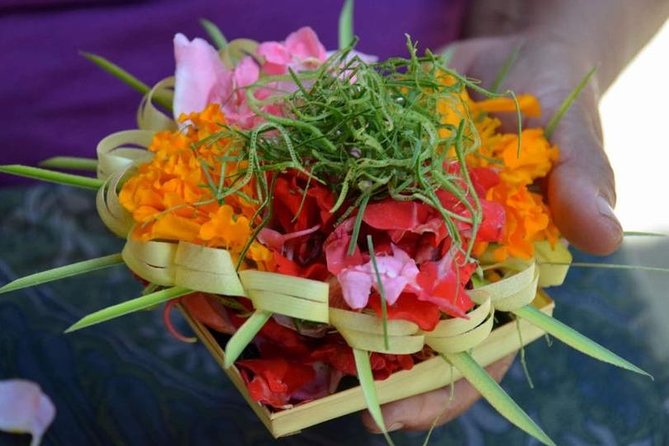
The cultural focus continues with canang, the small offering baskets used in Bali. Learning to make one gives you a better sense of how religion and household routines meet in everyday life. You are not just memorizing a dish. You are seeing the food and customs as part of the same local culture.
The cooking itself is led by local chefs and hosts, including Wayan, Dewa, and Putu in different sessions. Their teaching style comes through as warm, funny, patient, and practical. That combination matters in a kitchen class. You want enough direction to avoid confusion, but also enough room to handle the ingredients yourself.
More Cooking Classes in Indonesia
- Ubud: Cooking Class with Transfers and Optional Market Visit
★ 4.9 · 824 reviews - Balinese Ubud cooking school (9 Dish Cooking and Market Tour)
★ 5.0 · 540 reviews - Ubud: Balinese Cooking Class and Market Tour
★ 4.8 · 531 reviews
The early market visit in Ubud
Hotel pickup begins the experience. The air-conditioned vehicle is a useful touch in Bali, especially if you are staying outside central Ubud. One account describes pickup from as far away as Sanur, but exact pickup coverage should be confirmed when booking.
The market visit is not designed as a long historical tour. It is a focused introduction to the ingredients you will use later. You can expect to see fresh vegetables, herbs, spices, fruit, meat, and other foods sold for local kitchens.
This is one of the best parts for first-time visitors to Bali because a local guide can explain what you are looking at. A fruit or spice that seems unfamiliar may suddenly make sense once you know how it is used. You may also get to taste small samples or local sweets, depending on what is available that morning.
Keep your expectations sensible. The market visit can be brief, and it is mainly there to prepare you for the class. If you want an extended photography session or a detailed survey of every market stall, this is not that kind of outing. Think of it as a practical shopping trip with cultural explanation.
The early timing is important. Morning markets are at their most useful before the day gets hot, but you will need to start early enough to catch that activity. Wear comfortable shoes and clothing you do not mind cooking in. The market and kitchen are working environments, not polished dining rooms.
Welcoming village life in Laplapan
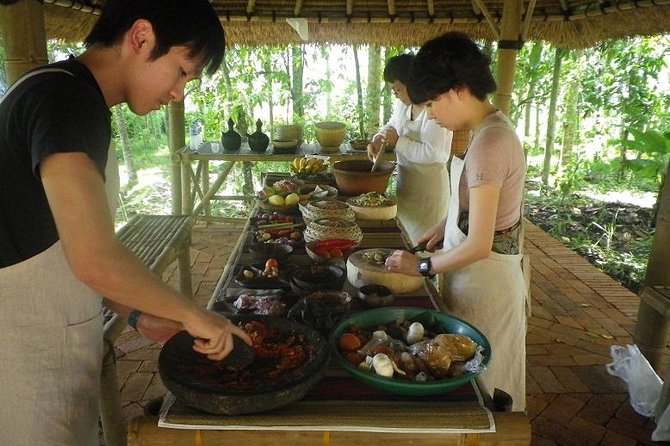
After the market, you continue to Laplapan, a traditional village near Ubud. The move from market to village gives the day a change of pace. Instead of looking at ingredients in a commercial setting, you arrive at a local cooking space surrounded by rural scenery.
The welcome is part of the experience. A drink and snack may be offered before the cooking begins, giving you a moment to settle in and meet the other people in your group.
The setting is one reason this class feels more personal than a demonstration in a hotel kitchen. You cook in a clean, pleasant space with local hosts and staff nearby. It is still a structured activity, but the village location gives it a stronger connection to daily Balinese life.
The small-group limit is especially helpful here. With no more than eight people, you have a better chance to take part rather than simply watch. One solo participant found the format a good way to meet other people, while families also found it suitable for children. The class has received positive feedback from families with children aged six, eight, and nine, though parents should still expect a full morning of active instruction.
Making canang before the cooking starts
Before the recipes, you learn about Balinese offerings and make a canang. This is a small but valuable part of the day because it explains a custom you will see all over Bali.
The activity is hands-on. You are shown how the offering basket is made and what goes into it. The lesson is not presented as a museum display. You handle the materials and create one yourself.
I consider this one of the strongest reasons to choose this class over a basic cooking lesson. Food in Bali does not exist apart from ceremony. The offering activity gives you context for the small daily rituals you will notice near homes, shops, temples, and restaurants.
It also provides a calmer start before the knives and cooking fires come out. If you are traveling with children, it offers a craft-style activity that breaks up the food preparation. If you are mainly interested in recipes, it adds time to the schedule, but the cultural value is clear.
More Cooking Classes in Ubud
- PRIVATE Ubud Market Tour & Balinese Cooking Class with Putu
★ 5.0 · 125 reviews - Jambangan bali cooking class with morning market tour
★ 5.0 · 35 reviews - Balinese cooking class/Go shopping at the market, cook, eat
★ 5.0 · 12 reviews
Preparing several Balinese dishes by hand
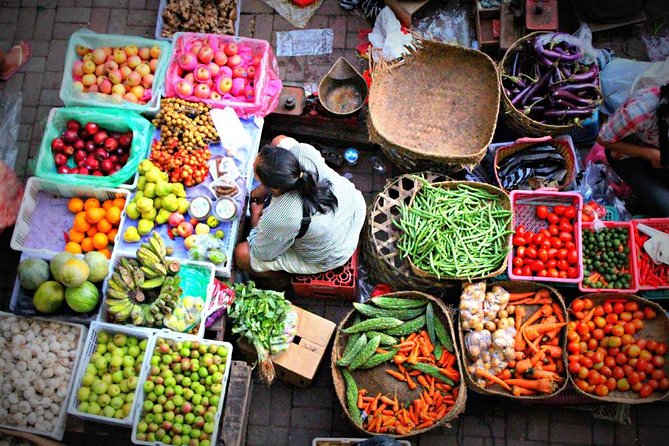
The kitchen portion is the heart of the experience. You work through starters, main dishes, and dessert with help from the chef and assistants. The exact menu can vary, but the class may include as many as nine dishes or a five-course-style set.
That is a lot of food for one morning. Some ingredients are prepared in advance so the group can finish within the six-hour schedule. That does not mean you only watch. You still take part in chopping, mixing, seasoning, and cooking, while the staff handles tasks that would otherwise slow the class down.
This balance is sensible. A class that makes you prepare every single ingredient from the beginning can become rushed or run far into the afternoon. Here, advance preparation helps keep the activity moving while leaving you with plenty to do.
The chef’s help is another strong point. Wayan has been praised for being patient and easy to understand, especially in smaller sessions. Other hosts, including Putu, have been noted for humor, friendly instruction, and care with children. You can expect guidance rather than a lecture, with time to ask about methods and ingredients.
Vegetarian options are available, and dietary requirements can be accommodated according to the experience information. You should still provide those details when booking so the kitchen can plan properly.
Do not expect to leave with professional knife skills after one lesson. The real benefit is learning a set of methods you can repeat at home: how ingredients are combined, how local flavors are built, and how several dishes can come together as one meal.
Eating the meal you prepared
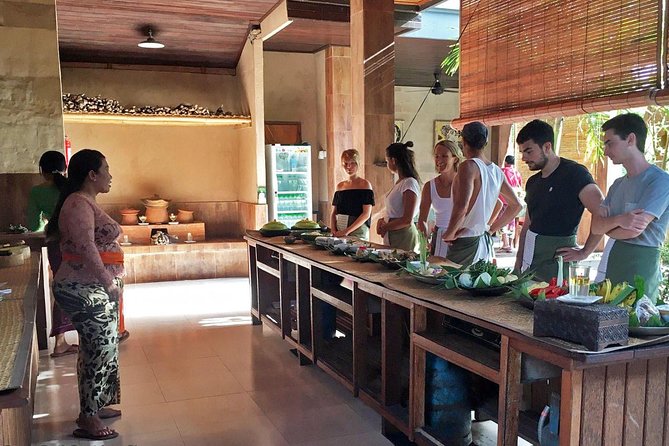
Once the cooking is finished, you sit down and eat the results. This is more satisfying than being served a meal you had no role in making. You can see how the market ingredients changed through each stage of preparation.
The portions appear generous, with several dishes shared around the table. The meal also gives you a chance to compare how different ingredients work together. A recipe can seem simple while you are preparing it, then become much more interesting once everything is served at once.
The sit-down meal is also a good time to talk with the chef and other people in the group. Cooking creates an easy social setting, even if you arrive alone. Some sessions finish with recipes to take home, and a recipe booklet is provided in at least some versions of the class. Confirm what will be supplied if written recipes are important to you.
The food is the central reward, but the lesson is not aimed at restaurant-level presentation. The focus is on local methods, fresh ingredients, and a meal you can understand and recreate.
What the $35 price really includes
At $35 per person, this is a good-value day if you make use of all its parts. The price includes hotel pickup, an air-conditioned vehicle, the market and village visits, cooking equipment, cooking class fees, taxes, and the meal you prepare.
You are effectively paying for several connected experiences:
- Transport from your hotel
- A guided market visit
- Ingredient explanations and tastings where available
- Instruction in making a canang offering
- A hands-on cooking lesson
- A substantial meal
- A small-group setting
Personal spending is not included. That may mean snacks, drinks, souvenirs, or other purchases during the outing. The market visit is for choosing class ingredients, not necessarily a shopping stop for your own pantry.
The strongest value comes if you want both food and culture. If you only want a quick cooking lesson, six hours may feel like too much. If you want an easy morning with transport, local contact, and a meal built into the activity, the price is quite reasonable.
The 99 percent recommendation rate and 5.0 rating from 161 reviews point to unusually consistent satisfaction. Still, ratings do not remove the need to match the format to your interests. You should enjoy group activities, early starts, and eating the food you prepare.
Who will enjoy this most
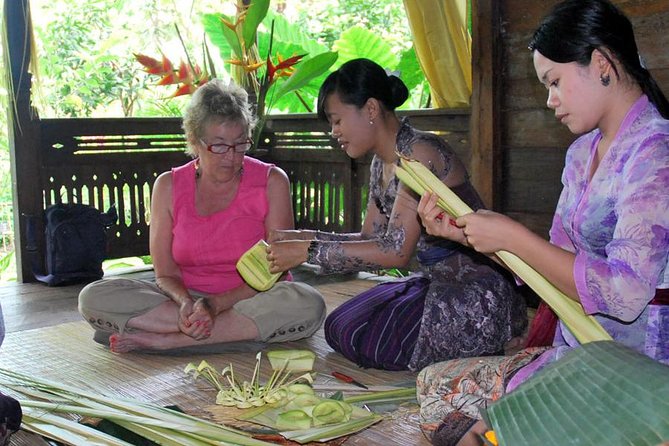
I would recommend this class to food-focused visitors who want more than a restaurant meal. It suits solo visitors, couples, families, and small groups because the cooking gives everyone a role.
It is also a good choice if you are staying in Ubud and want a structured half-day away from temples, shops, and traffic. The village setting offers a quieter change of scene, while the included transport keeps the morning simple.
Families should find the mix of market, craft, cooking, and shared meal engaging. Younger children may need help with sharp tools and hot cooking surfaces, but the class has worked well for families with primary-school-aged children.
Vegetarians can also consider it, since vegetarian options are available. Tell the provider about dietary needs in advance rather than waiting until the morning of the class.
You may want to skip it if you dislike group activities, prefer a late breakfast, or want a highly technical chef’s course. The class is friendly and practical, not formal culinary training.
Practical tips for a smoother morning
Wear light, comfortable clothing and shoes suitable for walking through a market and moving around a kitchen. Bali can be warm, although the vehicle is air-conditioned.
Keep the early start in mind when choosing your hotel the night before. If your lodging is outside Ubud, pickup may add driving time, even though the transport makes the journey easier.
Ask about the menu and dietary arrangements before departure. Vegetarian cooking is supported, but specific allergies and restrictions should be made clear in advance.
Bring a little extra money for personal purchases, but do not assume you need to buy ingredients at the market. The class covers the cooking supplies.
Finally, leave room in your day after the class. Six hours is the approximate duration, and pickup routes can affect the finish time. The activity is relaxed, but it is not a quick two-hour demonstration.
Should you book this Balinese cooking class?
Book it if you want a practical introduction to Balinese food tied to local customs. The market visit, canang lesson, village setting, patient chefs, and generous meal give the class more substance than a standard recipe workshop.
I would especially choose it early in a Bali trip. You will learn ingredients and flavors that can help you understand later meals, and the market visit gives you a useful first look at everyday food culture.
Skip it only if the six-hour schedule, early start, or shared format does not suit you. For most food lovers, families, and curious first-time visitors, $35 is a fair price for a morning that combines transport, culture, cooking, and lunch in one well-organized experience.
FAQ
How long is the Balinese cooking class?
The experience lasts approximately six hours. The schedule includes hotel pickup, a morning market visit, the village visit, the offering activity, cooking, and the final meal.
Is hotel pickup included?
Yes. Pickup is offered from your hotel, and transport is provided in an air-conditioned vehicle.
How large is the cooking class?
The maximum group size is eight travelers. Smaller sessions may provide even more individual attention from the chef.
Are vegetarian options available?
Yes. Vegetarian options are available, and dietary requirements can be accommodated. Share your needs when booking.
What is included in the price?
The $35 price includes cooking equipment, the air-conditioned vehicle, cooking class fees, and taxes. Personal expenses are not included.
Can I cancel for a full refund?
Yes. You can cancel for a full refund if you do so at least 24 hours before the experience begins. Cancellations or changes made less than 24 hours in advance are not accepted for a refund.
More Morning Departures in Ubud
- Tingly Thai Cooking Class with Morning Market Tour
★ 5.0 · 589 reviews - Hamburg: Reeperbahn, Port, & Fish Market Morning Tour
★ 4.7 · 270 reviews - Cooking Morning Class Chiang Mai Visit Organic Garden and Market
★ 5.0 · 211 reviews - Valencia: Morning Food Tour with Central Market Visit
★ 4.9 · 196 reviews
Just added around Ubud
- Jambangan bali cooking class with morning market tour★ 5.0 · 35 reviews
- Balinese cooking class/Go shopping at the market, cook, eat★ 5.0 · 12 reviews
- Bali: Safari Zoo and Ubud Palace and Market Day Tour★ 4.7 · 6 reviews
- Bali: Ubud Monkey Forest, Coffee Plantation, and Market Tour★ 5.0 · 5 reviews
- Bali – Ubud Night Market Food Tour★ 3.8 · 14 reviews
- Bali Food Tour: Savor Street Food and Night Market Adventures★ 5.0 · 46 reviews
- Ubud Traditional Night Market Food Tour-All Inclusive★ 4.4 · 95 reviews
- Bali Night Market Experience and Ubud Highlights tour★ 5.0 · 16 reviews
Cooking Classes, compared.
Hanoi Cooking Class: Culture, Local Market & Meaning CSR Impact
Read our review →
5 Traditional Dishes Hanoi Cooking Class with Market Trip
Read our review →
Cooking Class and Lunch at a Tuscan Farmhouse with Local Market Tour from Florence
Read our review →
Cooking Class, Market & Thai Herbs Garden Tour
Read our review →
Authentic Cooking Class with Market & Farm Visit
Read our review →
Paella Cooking Experience & Boqueria Market Tour
Read our review →
Cooking Class Hoi An:Local Market, Basket Boat, Fishing & Cooking
Read our review →
Hoi An Cooking Class(Market,BasketBoat Crabfishing&Cooking Class)
Read our review →Browse the lists this tour appears in