
Review · INDONESIA
Balinese Ubud cooking school (9 Dish Cooking and Market Tour)
Come hungry, leave with recipes. This five-hour Ubud experience gives you a generous taste of Balinese food, with a morning market visit, a rice-paddy stop, and a cooking class built around nine traditional dishes. I especially like the local market outing and the chance to cook with a Balinese chef rather than simply watch a demonstration. The main consideration is transport: the class takes place outside central Ubud, and the drive can take about 50 minutes from the meeting point.
I also like the friendly, family-run feel and the choice between regular and vegetarian menus. The class is priced at $58, which is fair if you value the market, rice fields, transport within Ubud, meal, recipes, and a full afternoon of instruction. Still, you should know that some preparation is done before you arrive, and one unhappy participant found the cooking less hands-on than expected.
Key points to know before booking
- Nine dishes in one class: Prepare Balinese vegetable soup, chicken or tofu dishes, tempe, satay, banana-leaf parcels, lawar, sambal matah, base gede spice paste, and klepon.
- Morning means market and rice fields: Choose the morning session if you want to visit a local market and see how rice is grown in Bali.
- Afternoon adds a cultural activity: The afternoon option includes making a Balinese offering, but not the traditional market visit.
- A real meal follows the lesson: You eat the food you prepare, with white rice, and may be able to pack leftovers for later.
- Small groups help: The maximum group size is 14, with cooking stations arranged so you can work with a partner.
- Pickup has limits: Transport is included from Ubud, but pickup outside Ubud costs extra and must be arranged in advance.
Why this class gives you more than a recipe lesson
Many cooking classes give you two or three dishes, then send you home with a full stomach and a short recipe sheet. This one aims higher. You work through a full Balinese meal, including sauces, spice paste, vegetables, meat or tofu, dessert, and the staple rice that ties it together.
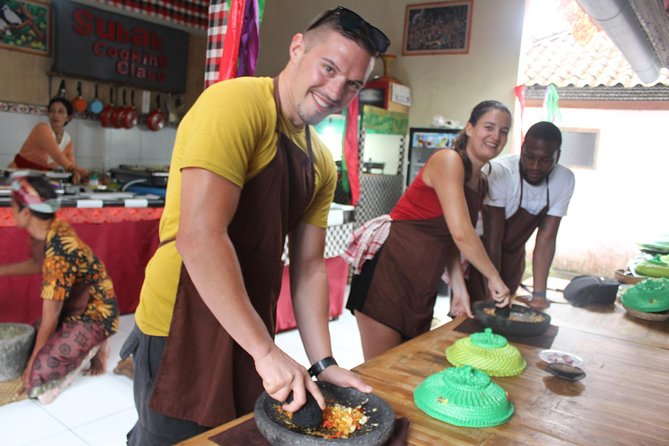
That matters because Balinese cooking is built in layers. Base gede, the basic spice paste, is one of the foundations. Sambal matah adds fresh heat and fragrance. Lawar brings together vegetables and Balinese seasoning. By preparing these parts yourself, you get a better sense of how one meal is assembled instead of treating each dish as an isolated recipe.
The class also uses ingredients and kitchen tools that may not be familiar from home cooking. Your chef guides you through the process step by step, and the recipes are provided to take away. You will not need previous cooking experience.
The tone appears to be relaxed and social. Chefs and guides use humor, teach a few Balinese words, and explain local food customs along the way. Names that come up in the experience include Yogi, Putu, Gus, Wayan, Tata, and driver Harry. Which guide or chef you meet depends on the day, but the teaching team is described as warm, clear, and easy to follow.
More Cooking Classes in Indonesia
- Ubud: Cooking Class with Transfers and Optional Market Visit
★ 4.9 · 824 reviews - Ubud: Balinese Cooking Class and Market Tour
★ 4.8 · 531 reviews - Balinese Cooking class with traditional morning market visit
★ 5.0 · 161 reviews
Choosing the morning or afternoon schedule
The morning option is the better choice for most first-time visitors. It includes the traditional market, a visit to rice paddies, and the cooking class. You see ingredients before they reach the kitchen, which makes the later cooking lesson more meaningful.
At the market, your local guide explains fruits, vegetables, spices, sweets, and other cooking ingredients. You may taste unfamiliar fruits and pastries, and you can watch local buying and selling. One especially useful part is learning how ingredients are selected and used rather than simply being shown a row of colorful produce.
You may also see flower offerings being assembled near the market. That gives the food tour a wider cultural setting, since Balinese daily life connects cooking, family customs, religion, and ceremonies.
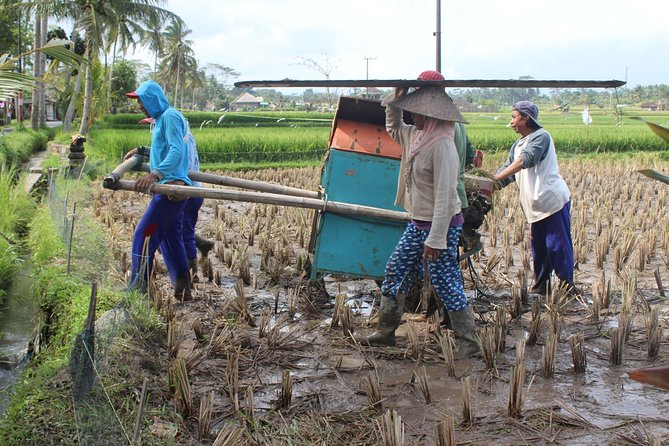
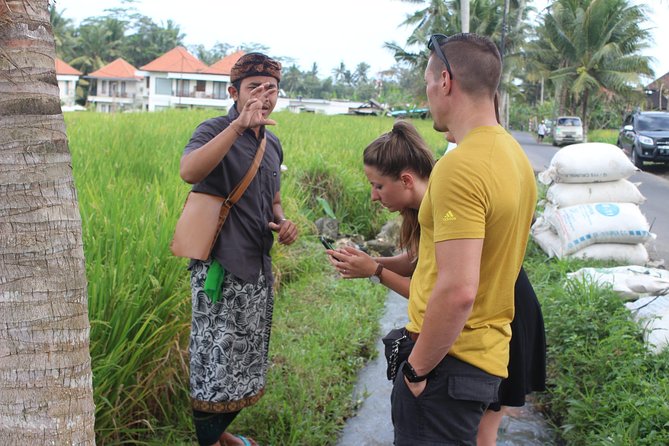
The rice-field stop adds another layer. You learn about rice growing, the different types of rice found in Bali, and the length of the harvest cycle. The stop is also useful for photographs, with one account noting views toward a volcano. It is not a long agricultural workshop, but it helps explain why rice is more than a side dish in Bali.
The afternoon option includes making a Balinese offering instead of the traditional market visit. Pick this time if the offering activity appeals to you or if your schedule makes a morning start difficult. Do not choose the afternoon session expecting a market tour, since that feature is reserved for the morning class.
The ride from Ubud is part of the calculation
The stated meeting point is Ubud Palace, on Jalan Raya Ubud. The activity ends back there. Pickup and drop-off are offered within the Ubud area, but the cooking school itself is outside central Ubud.
That distance is not a minor detail. A participant reported a drive of around 50 minutes from the pickup point. Other accounts describe the trip as a pleasant move into a more local area, but you should allow for road time and possible traffic.
If you stay outside Ubud, such as in another resort area, extra transport charges apply. You must request this in advance. Do not assume that hotel pickup is included simply because pickup is advertised.
One transport account raised concerns about a driver and an unexpected toll charge. That seems to have been an isolated complaint rather than the main pattern, but it is sensible to keep some cash with you for additional transport costs. The instructions also ask you to show your booking confirmation and wear normal, comfortable clothing.
What happens at the local market
The market visit is not just a quick photo stop. Your guide explains what people buy, sell, and cook with, then helps you connect those ingredients to the dishes you will later prepare.
You may encounter fruits you have never tried, local sweets, vegetables, herbs, and spices. The food tasting makes this part more active than a simple walk behind a guide. It also gives you a chance to ask questions before the class begins.
The market can be busy and informal. That is part of its value, but it may not feel polished or carefully arranged for tourists. You are seeing a working local market, not a staged food display.
The guide’s explanations are important here. Guides such as Wayan and Tata have been praised for discussing food, cooking, local customs, religion, and daily life in clear English. If you are curious about ingredients, ask questions early. The market is probably the best place to learn what an item is called and how it is used.
More Cooking Classes in Ubud
- PRIVATE Ubud Market Tour & Balinese Cooking Class with Putu
★ 5.0 · 125 reviews - Jambangan bali cooking class with morning market tour
★ 5.0 · 35 reviews - Balinese cooking class/Go shopping at the market, cook, eat
★ 5.0 · 12 reviews
Rice paddies and the view beyond the kitchen
After the market, the morning program includes a rice-paddy visit. You learn how rice is grown in Bali, how many types are found there, and how long the harvest takes.
This stop helps put the cooking lesson in context. When you later sit down to eat white rice with your dishes, you have a better idea of the work behind that familiar bowl.
The paddy visit also breaks up the food portion of the tour. If you have spent several days in Ubud’s streets and shops, the open fields provide a welcome change. The stop is brief enough that you should not expect a full farming tour, but it offers a useful look at rural Bali and a chance to take photographs.
Cooking nine Balinese dishes step by step
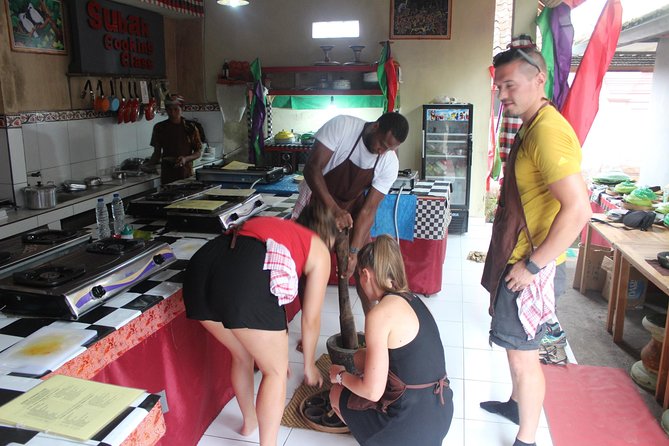
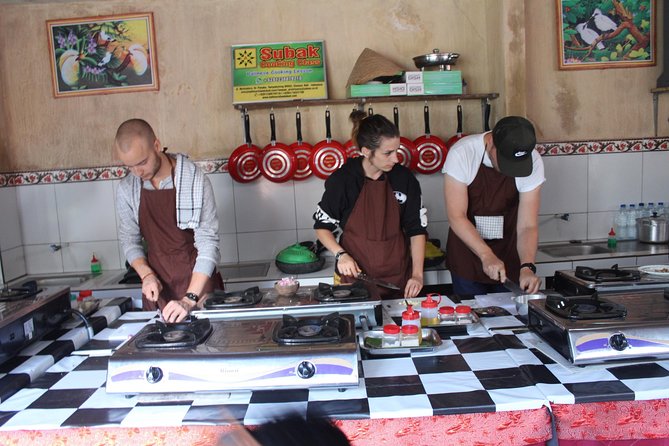
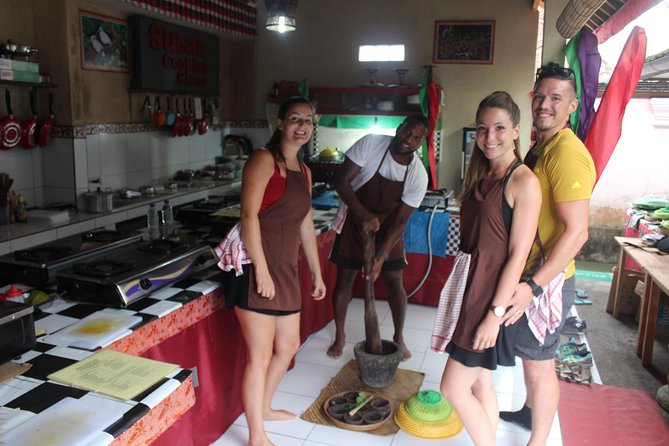
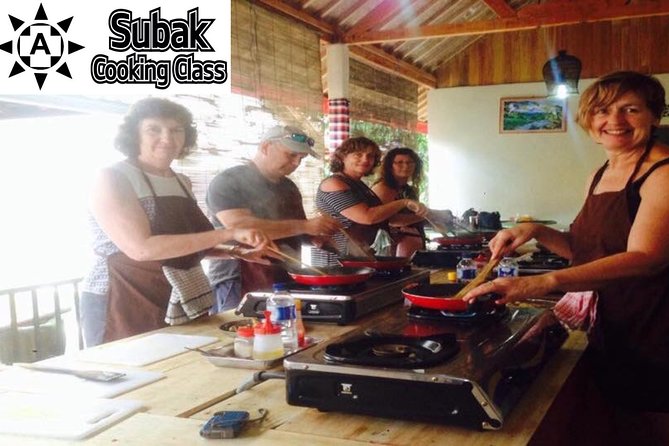
The class takes place in a Balinese home setting that has been arranged for cooking instruction. You cook with a partner, and each station has its own stove. The maximum group size is 14, so the room can still feel social without being enormous.
The regular menu includes:
- Balinese vegetable soup
- Fried chicken with Balinese coconut milk sauce
- Sweet fried tempe
- Balinese chicken satay, known as sate lilit
- Chicken cooked or grilled in banana leaf, known as pepes ayam
- Lawar, a vegetable mixture with Balinese spices
- Sambal matah, a fresh raw-spice relish with coconut oil
- Base gede, the basic Balinese spice paste
- Klepon, a sticky rice-flour cake filled with palm sugar
The main dishes are served with white rice. This is a lot of food for one class, so arrive with an appetite. One useful benefit is that you may be offered the chance to pack food you cannot finish and take it back to your hotel.
The class is not a silent demonstration. You take part in the enjoyable parts of preparation and cooking, with the chef directing the pace. The kitchen team helps with setup and support, which means you can focus on technique instead of washing a mountain of dishes.
There is one point to keep in mind. Some preparation is done before the class begins. That is practical because nine dishes would otherwise take far longer, but it means you may not handle every ingredient from start to finish. If you want a slow, highly technical lesson in knife work and prep, this may feel a little streamlined.
The best part is the range. You make a spice paste, prepare fresh sambal, shape satay, work with banana leaves, cook vegetables, and finish with dessert. You get a useful introduction to several basic methods in one sitting.
The vegetarian menu is a proper alternative
Vegetarians are not given a token plate of rice and vegetables. The vegetarian menu replaces the meat dishes with tofu and tempe preparations while keeping the overall structure of the meal.
You prepare:
- Balinese vegetable soup
- Tofu with Balinese spice sauce
- Sweet fried tempe
- Tempe satay with peanut sauce
- Tofu cooked or grilled in banana leaf
- Lawar
- Sambal matah
- Base gede
- Klepon
The vegetarian class still includes nine dishes and white rice. You should select the vegetarian option when booking, rather than expecting to change menus casually at the kitchen.
Spice levels may be adjusted. One participant prepared a milder version while others in the group preferred more heat. Tell the instructor what you can handle at the beginning. Balinese food can be fragrant and spicy, and the chef can guide you toward a version you will actually enjoy eating.
Eating the meal you prepared
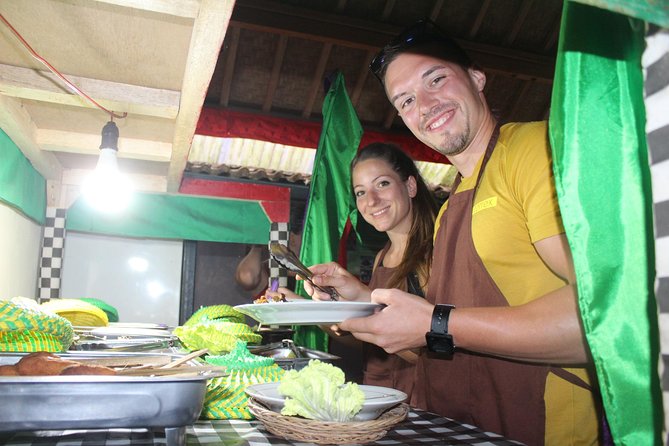
The final meal is served buffet-style, with the food made during the class. This is where the many-dish format pays off. You can compare the soup, satay, banana-leaf parcel, lawar, sambal, and dessert in one sitting.
I like this format because the meal feels social rather than like a series of samples. You eat with the other participants, talk about what worked, and see how the dishes fit together.
The strongest praise goes to the food itself. The dishes are described as fresh, generous, and similar to food found in Balinese restaurants or local food stalls. That does not mean every dish will suit every palate. Sambal and spice levels vary, and the coconut-based chicken is quite different from a Western curry.
The class includes bottled water, food tasting, and lunch or dinner, depending on the schedule. Alcohol is not included. You can also take away a copy of the recipes, though one person reported a delay in receiving them. Keep your booking contact details available if the recipe copy does not arrive promptly.
Price, value, and group size
At $58, the price is reasonable if you use most of what is included. You receive transport within Ubud, a local guide, the market and rice-field visits on the morning schedule, kitchen equipment, instruction, a substantial meal, bottled water, and recipes.
The value is strongest for people who want a full half-day activity rather than a short cooking demonstration. You are paying for the cultural stops and transport as well as the food lesson.
The price is less attractive if you only care about learning a couple of recipes. It is also worth checking the final amount at booking, since transport from outside Ubud costs extra and advertised prices can change.
The group limit of 14 is sensible. The cooking setup is shared, but each pair has a station and the staff provide help. Couples, families, and friends can work together, while solo participants may be paired with someone else.
Who will enjoy this most
I would recommend this experience to:
- Food lovers who want to learn several dishes in one class
- Families looking for a hands-on cultural activity
- Couples who enjoy cooking together
- Vegetarians who want a full local menu
- Visitors staying in Ubud who do not mind a drive outside the center
- Anyone who wants recipes to try at home
It may be less suitable if you want a quiet, private lesson or if you dislike group cooking. It is also not the best fit for someone who wants every ingredient prepared from scratch in front of them.
Bring your camera, some cash, and a healthy appetite. Wear normal clothing that is comfortable for a kitchen. Confirm the meeting details, especially if you are staying outside Ubud.
Should you book this Ubud cooking class?
Yes, if you want a generous, social introduction to Balinese food and culture. The morning program is the strongest choice because the market and rice-field stops give the cooking class a clear sense of place.
Book it with realistic expectations. You may spend a long time in the car, some ingredients are prepared ahead of time, and a group class is not the same as private chef training. But for nine dishes, a full meal, local guidance, and a look at the food system beyond the restaurant table, this is a good-value Ubud experience.
FAQ
Where does the experience start and end?
It starts at Ubud Palace, at F7V7+72R, Jalan Raya Ubud No. 8. The activity ends back at the meeting point.
Is pickup included?
Pickup and drop-off are included within the Ubud area. Transport from outside Ubud costs extra and must be requested in advance.
How long does the cooking experience last?
The full experience lasts approximately five hours.
Does every tour include a traditional market visit?
No. The traditional market visit is available only with the morning class.
What does the afternoon option include?
The afternoon option includes making a Balinese offering. It does not include the traditional market visit.
Are vegetarian dishes available?
Yes. You can choose a vegetarian menu with tofu and tempe dishes, along with soup, lawar, sambal matah, base gede, klepon, and white rice.
Can I cancel for a full refund?
Yes. You can cancel at least 24 hours before the local start time for a full refund. Changes or cancellations made less than 24 hours before the start time are not accepted.
Just added around Ubud
- Jambangan bali cooking class with morning market tour★ 5.0 · 35 reviews
- Balinese cooking class/Go shopping at the market, cook, eat★ 5.0 · 12 reviews
- Bali: Safari Zoo and Ubud Palace and Market Day Tour★ 4.7 · 6 reviews
- Bali: Ubud Monkey Forest, Coffee Plantation, and Market Tour★ 5.0 · 5 reviews
- Bali – Ubud Night Market Food Tour★ 3.8 · 14 reviews
- Ubud Traditional Night Market Food Tour-All Inclusive★ 4.4 · 95 reviews
- Bali Night Market Experience and Ubud Highlights tour★ 5.0 · 16 reviews
- Ubud Day Tour : Waterfall, Temple and Local Night Market Tour★ 5.0 · 17 reviews
Cooking Classes, compared.
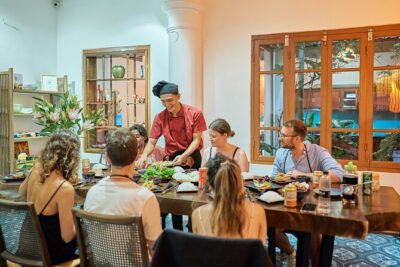
Hanoi Cooking Class: Culture, Local Market & Meaning CSR Impact
Read our review →
5 Traditional Dishes Hanoi Cooking Class with Market Trip
Read our review →
Cooking Class and Lunch at a Tuscan Farmhouse with Local Market Tour from Florence
Read our review →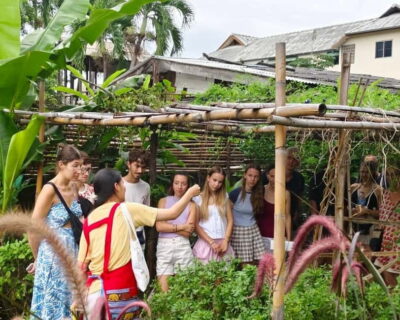
Cooking Class, Market & Thai Herbs Garden Tour
Read our review →
Authentic Cooking Class with Market & Farm Visit
Read our review →
Paella Cooking Experience & Boqueria Market Tour
Read our review →
Cooking Class Hoi An:Local Market, Basket Boat, Fishing & Cooking
Read our review →
Hoi An Cooking Class(Market,BasketBoat Crabfishing&Cooking Class)
Read our review →Browse the lists this tour appears in