
Review · INDONESIA
Nusa Dua: Balinese Cooking Class with Market Tour
Balinese food is built one spice paste at a time. This Nusa Dua class combines a morning market visit with hands-on cooking, ocean views, live music, and a meal made by you. I like the small group of up to 10 and the chance to learn from Teddy, a friendly guide and chef praised for making the class fun. The main drawback is the long menu: cooking 12 dishes in three to four hours may feel brisk for anyone hoping to master every recipe.
I also like that you leave with a recipe book and certificate, not just a full stomach. Choose the morning class for the market tour and lunch, or the afternoon class for dinner without the market visit. At $86 per person, it is not Bali’s cheapest meal, but the food, instruction, market stop, and keepsakes make the price easier to justify.
Key points at a glance
- Morning market tour: Only the 10:00 a.m. class includes a visit to a local market before cooking begins.
- Twelve Balinese dishes: You prepare spice pastes, curries, satay, salads, fried rice, noodles, and coconut pancakes.
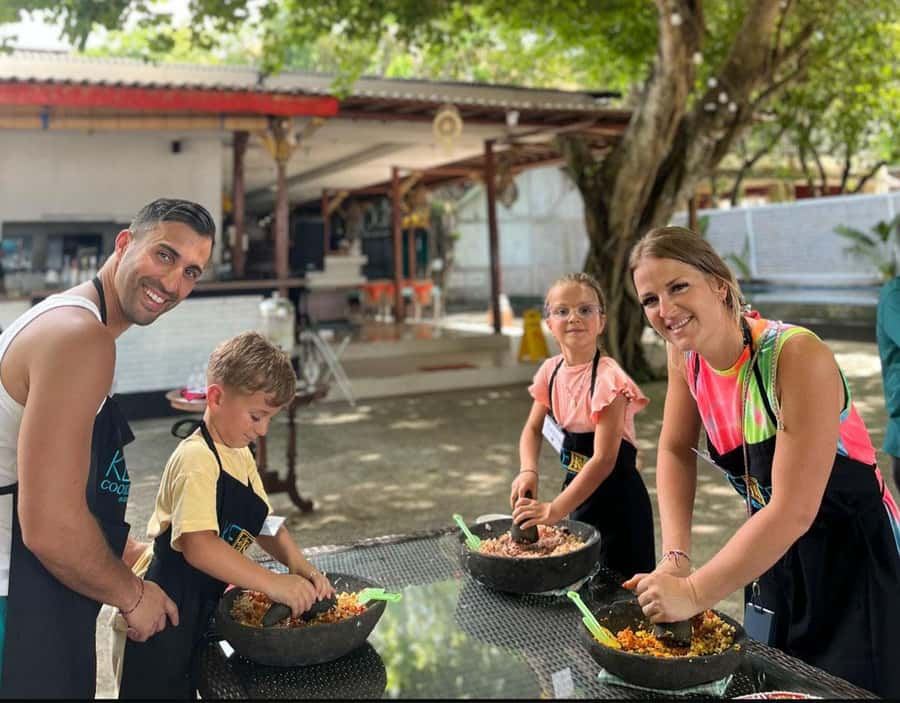
- Ocean-view setting: Cooking takes place beside the sea, with live music adding a pleasant backdrop.
- Personal guidance: Teddy is specifically praised for being friendly and for keeping the class enjoyable.
- Lunch or dinner included: The morning class ends with lunch, while the afternoon class includes dinner.
- Small group format: With no more than 10 participants, you should have a better chance to follow the chef’s instructions.
Why this Nusa Dua cooking class works
A cooking class can be a useful break from Bali’s usual sightseeing rhythm. Instead of simply ordering nasi goreng or satay, you learn what goes into the food and how several dishes fit together in a traditional meal.
This experience is especially appealing because it is not limited to one recipe. You work through a full spread of Balinese food, from the foundational spice paste to seafood, chicken, vegetables, rice, noodles, and dessert. That gives you a better sense of how Balinese cooking is built.
I would choose this class for two reasons. First, food lovers get a wide sample of local flavors in one sitting. Second, the recipe book gives you something practical to take home. You may not remember every measurement, but you will have a guide to help recreate the dishes later.
The setting also matters. Cooking with ocean views and live music feels more special than standing in a plain classroom. The sea does not change the recipes, of course, but it gives the afternoon or morning a holiday feel.
The class is taught in English, and the group is limited to 10 people. That is a useful size for a hands-on activity. A large group can turn cooking into a demonstration where you watch someone else chop and stir. Here, you should have a more direct role, though the number of dishes means the pace may still be fairly quick.
More Cooking Classes in Indonesia
- Ubud: Cooking Class with Transfers and Optional Market Visit
★ 4.9 · 824 reviews - Balinese Ubud cooking school (9 Dish Cooking and Market Tour)
★ 5.0 · 540 reviews - Ubud: Balinese Cooking Class and Market Tour
★ 4.8 · 531 reviews
The 10:00 a.m. market tour
The morning class begins at 10:00 a.m. and runs until about 2:00 p.m. Its main extra feature is a market tour, which is not part of the afternoon option.
This is valuable because ingredients make more sense when you see them before they are prepared. A spice paste is easier to understand when you have seen the raw ingredients, rather than meeting it only as a finished mixture in a bowl.
The market visit also gives the class a local food context. You are not just handed a recipe and told to follow it. You first get a look at the kind of produce and cooking ingredients used in Balinese food.
Keep your expectations sensible. The information provided does not specify the market’s name, exact location, or how long you spend there. It is best to think of it as an introduction to local ingredients, not a major sightseeing stop.
Bring cash. It is listed as something to have with you, and it may also be useful if you want to buy anything during the market visit, though purchases are not stated as part of the class.
If you want the fullest version of the experience, I would select the morning class. You get the market tour, welcome tea and a snack, the cooking session, and lunch. The day has a clear rhythm: see the ingredients, prepare them, then sit down to eat.
Building the Balinese spice pastes
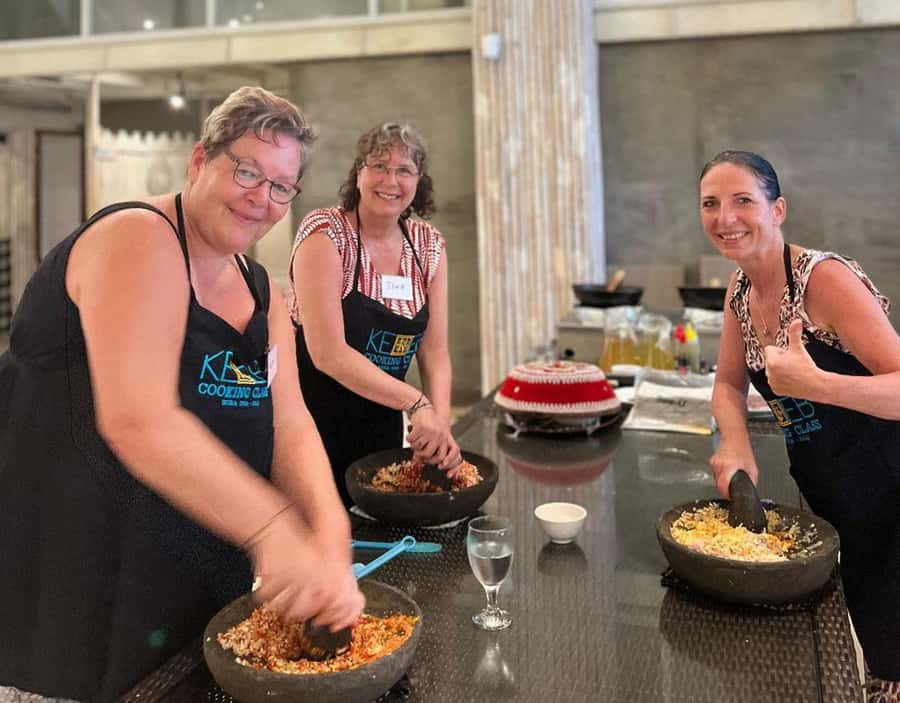
The class includes the complete spice paste, called base genep or base gede, along with a separate seafood paste known as base be pasih. These pastes are central to the menu.
This is one of the most useful parts of the class. Balinese food can look complicated on the plate, but spice pastes help explain how the flavor is formed. Once you understand the base, dishes such as curry, roasted chicken, and seafood feel less like unrelated recipes.
The seafood paste is orange in appearance, giving you a clear visual difference from the main spice mixture. You will use the pastes across several preparations, so the lesson is not just about making a single sauce and moving on.
The list of dishes includes plenty of variety:
- Beef rendang
- Whole roasted chicken, or ayam betutu
- Assorted seafood curry
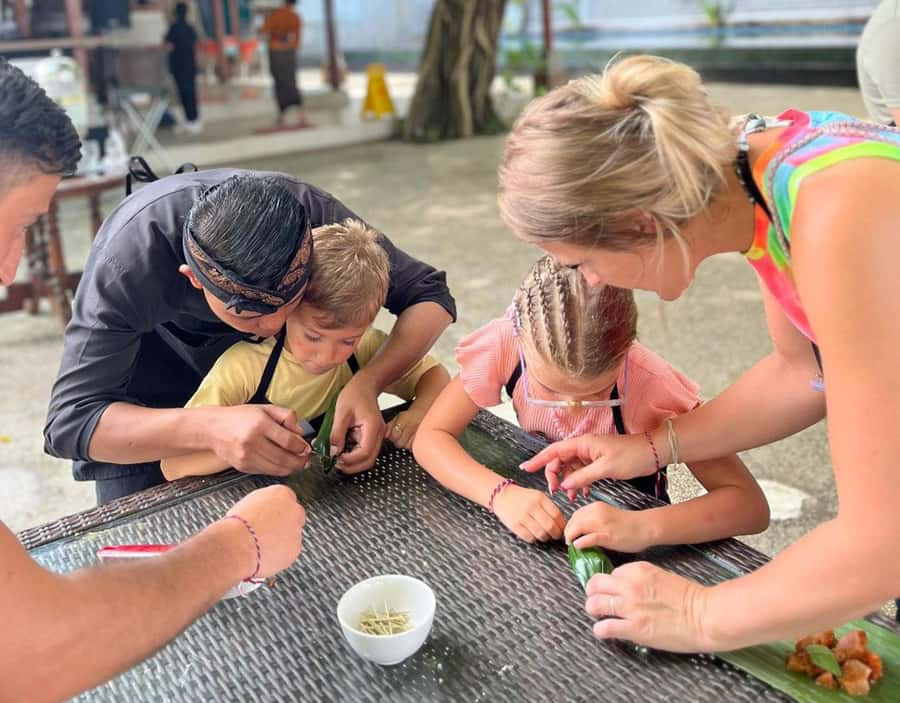
- Grilled fish in banana leaf, or pesan be pasih
- Minced chicken satay, or sate lilit ayam
- Green bean salad with chicken, or lawar kacang
- Vegetable salad with peanut sauce, or pecelan
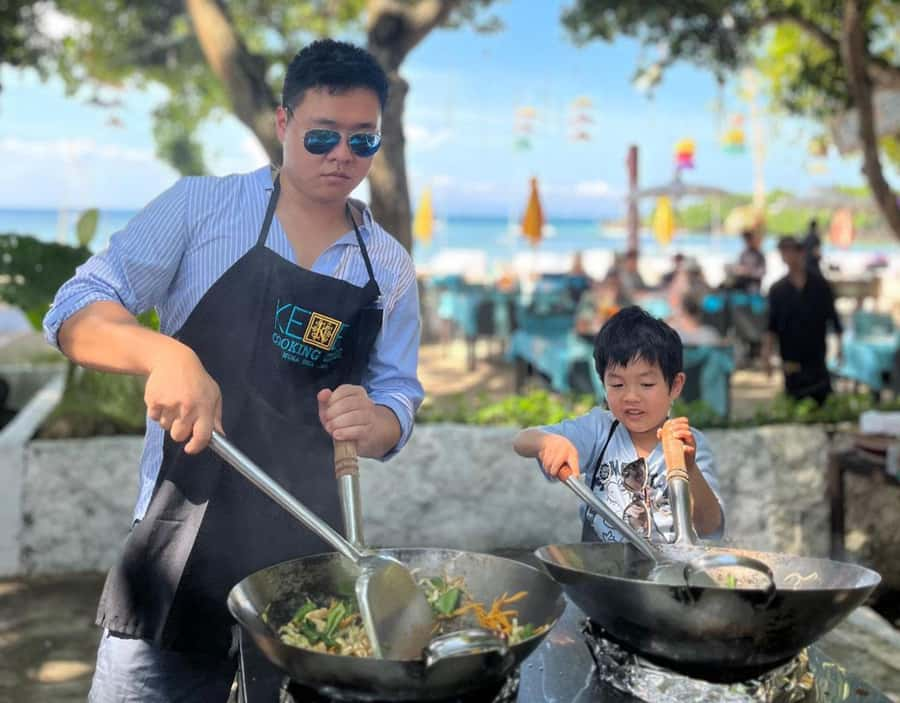
- Fried noodles, or mie goreng
- Fried rice, or nasi goreng
- Coconut pancake, or dadar unti
Along with the two spice pastes, that makes 12 preparations. Some are likely to require more attention than others, but the class gives you a broad look at Balinese home-style cooking rather than focusing on one restaurant-style dish.
Twelve dishes, one busy kitchen
The menu is the class’s biggest strength and its main limitation.
I like the range. You get meat, seafood, vegetables, rice, noodles, and dessert. The menu also includes familiar Indonesian favorites, such as fried rice and fried noodles, alongside dishes that may be less familiar, such as lawar kacang, pecelan, and ayam betutu.
Ayam betutu, the whole roasted chicken, gives you a look at a more elaborate Balinese preparation. Sate lilit is different from the usual skewer you may know from other cuisines because the seasoned minced chicken is shaped around the skewer.
The banana-leaf fish adds another useful lesson. Banana leaves are part of the cooking and presentation tradition in many Southeast Asian dishes, and the leaf gives the fish a distinctive appearance when it reaches the table.
The salads keep the menu from becoming one long parade of meat and starch. Lawar kacang combines green beans with chicken, while pecelan brings vegetables together with a peanut sauce. The coconut pancake, dadar unti, provides a sweet finish.
You should not expect to become an expert in all 12 dishes during one session. The class lasts three to four hours, and that time includes instruction, cooking, and eating. The practical benefit is exposure: you learn the main ingredients and methods, then use the recipe book to work on the dishes again at home.
If you prefer a slow lesson focused on one or two recipes, this may feel rushed. If you want a wide introduction to Balinese cuisine, the full menu is a strong feature.
Same place, a different set of stalls:
- Active Volcano, Rice Field, Hot Spring, Fruit market, Tea Plantation with Lunch
★ 5.0 · 513 reviews - Seminyak: Balinese Cooking Class & Market Tour
★ 4.9 · 458 reviews - Balinese Cooking class with traditional morning market visit
★ 5.0 · 161 reviews - PRIVATE Ubud Market Tour & Balinese Cooking Class with Putu
★ 5.0 · 125 reviews
Ocean views, live music, and the meal
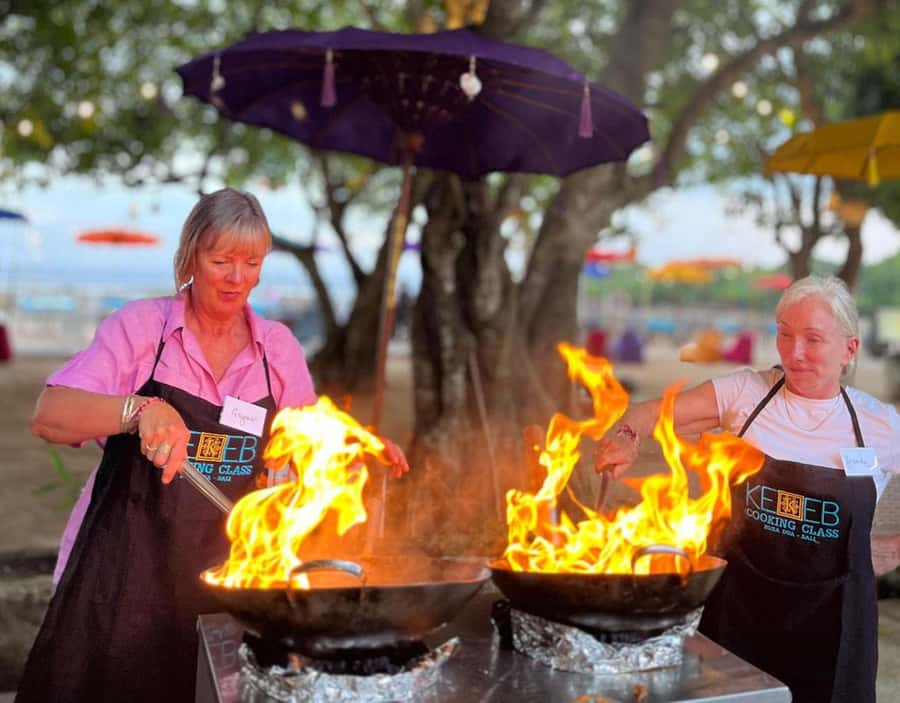
The cooking takes place in a setting with ocean views and live music. That combination gives the class a relaxed holiday atmosphere, even while you are working through a long menu.
Welcome tea and a snack are included. They provide a gentle start before the main cooking begins. You will also eat what you prepare, with lunch included in the morning class and dinner included in the afternoon class.
That final meal is more than a simple inclusion. It lets you see how the separate components work together. A spice paste, salad, rice dish, fish preparation, and dessert can taste very different on their own. Put them on one table, and you get a better feel for the balance of a Balinese meal.
Drinks beyond the included welcome tea cost extra. Beer and other drinks are specifically listed as additional purchases, so bring cash and keep that in mind when judging the total cost.
The ocean setting may also affect your choice of class time. The morning option offers lunch, while the 3:00 p.m. to 6:00 p.m. option ends with dinner. Choose based on the meal that fits your day, not just the clock.
The afternoon class from 3:00 to 6:00 p.m.
The afternoon class runs from 3:00 p.m. to 6:00 p.m. It includes the same cooking program, welcome tea and snack, dinner, certificate, and recipe book.
The clear difference is the missing market tour. If you have already visited a market in Bali, or if you mainly want to cook and eat, the afternoon schedule may suit you better.
This option also leaves your morning open. You can use it for another activity, rest, or time at your hotel before heading to the class. The shorter stated duration, about three hours, means the session should have a focused pace.
I would not choose the afternoon class if the market is the part that interests you most. The market visit is available only in the morning, so there is no way to add it later in the day.
What Teddy adds to the class
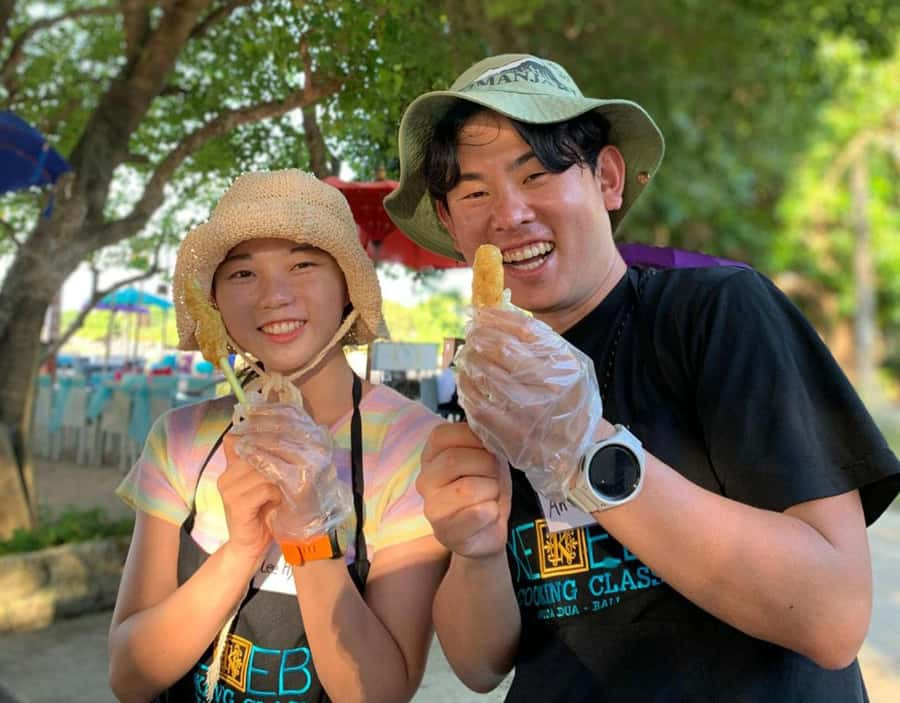
Teddy is the guide and chef named most clearly in the feedback. Anne from Australia described him as an amazing guide and chef who made the day fun. Julie from the United States also found him friendly and well informed, especially during the market visit and cooking session.
Those details matter because the instructor can make or break a cooking class. Food preparation is more enjoyable when the chef explains the reason behind a step instead of simply giving orders.
The class is advertised in English, and Teddy’s role appears to include both cooking instruction and guiding. That is helpful for first-time visitors who want more than a printed recipe.
The small group limit of 10 should also help. It does not guarantee that every participant gets equal time with every ingredient, but it is more personal than a large workshop.
One note of balance: the available feedback is very positive, but it comes from only a small number of bookings. The overall rating is 5 out of 5 from four reviews, including praise for Teddy, the market, the setting, and the professional organization. That is encouraging, though you should still choose the class because the format suits you, not only because of the rating.
Is $86 a fair price?
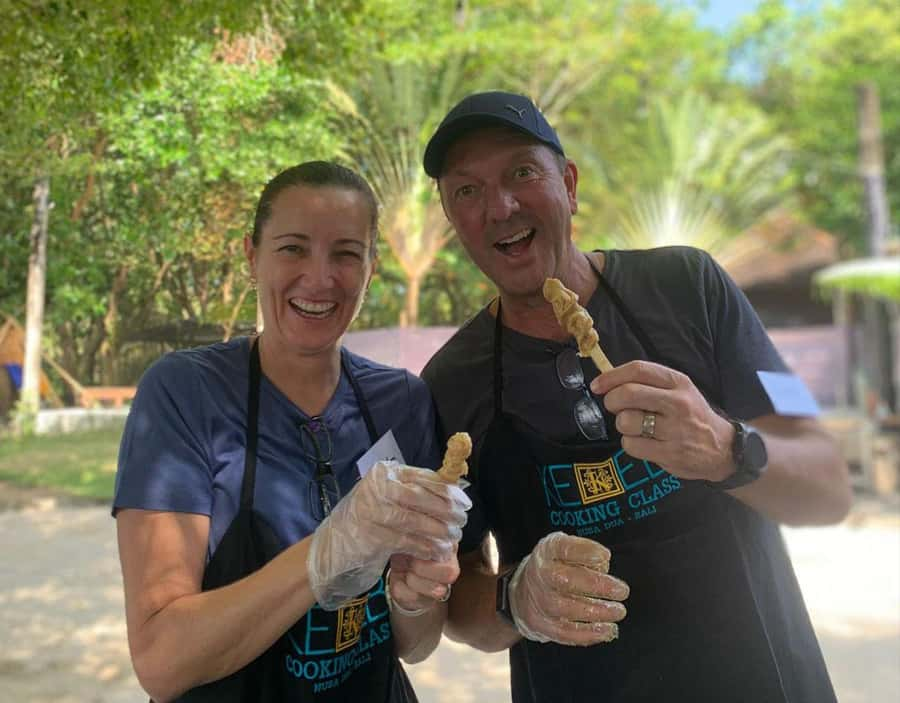
At $86 per person, this is a premium cooking activity for Bali. The value depends on what you want from it.
You are paying for a three to four-hour experience, instruction in English, a market tour if you choose the morning session, welcome tea and a snack, 12 dishes, lunch or dinner, a certificate, and a recipe book. You also get a small group capped at 10 people and an ocean-view setting.
If you only want a cheap meal, this is not the right purchase. A local restaurant will cost less. The price makes more sense if you want an activity that teaches you something, fills much of a half-day, and gives you a meal plus take-home material.
The morning class offers the strongest value because it adds the market tour. If the morning schedule works, I would choose it over the afternoon option unless you have a clear reason to prefer dinner.
Remember that alcoholic drinks and other paid beverages are not included. The activity also asks you to book at least one day before it starts, so do not leave it until the last minute.
Free cancellation is available up to 24 hours before the activity for a full refund, and you can reserve now and pay later. The team contacts you through WhatsApp after your booking is confirmed, so make sure the phone number connected to your booking can receive messages.
Who should book this experience?
I would recommend it to food lovers, couples, solo visitors, and small groups who want a practical cultural activity in Nusa Dua.
It is a good fit if you want to learn several recipes rather than spend the whole class on one dish. It also suits you if you like the idea of eating your own work and bringing home a recipe book.
The class is not suitable for children under 10. It may also be less appealing if you dislike a busy schedule, do not want to cook, or expect detailed mastery of every recipe.
Choose the morning session if the market matters to you. Choose the afternoon session if you want a cooking-and-dinner experience and prefer to keep your morning free.
Should you book it?
Book this class if you want more than a meal and like the idea of learning Balinese cooking in a scenic setting. The strongest reasons are the 12-dish menu, the morning market tour, the small group size, and Teddy’s friendly style.
I would pick the 10:00 a.m. session for the best overall value. It adds the market visit and ends with lunch. If you prefer dinner or need a free morning, the afternoon class still includes the main cooking lesson, meal, certificate, and recipe book.
Skip it if your main goal is a low-cost meal or a slow, highly detailed lesson on one recipe. For everyone else, this looks like a lively and useful half-day introduction to Balinese food.
FAQ
How long does the Balinese cooking class last?
The activity lasts about three to four hours. The morning class runs from 10:00 a.m. to 2:00 p.m., and the afternoon class runs from 3:00 p.m. to 6:00 p.m.
Is the market tour included in every class?
No. The market tour is included only with the morning class.
What meal is included?
The morning class includes lunch. The afternoon class includes dinner.
How many dishes will I cook?
You will cook 12 Balinese dishes, including spice pastes, chicken, beef, seafood, salads, fried rice, fried noodles, and coconut pancake.
Is the class taught in English?
Yes. English is the stated language for the instructor and activity.
How many people can join the class?
The class is limited to 10 participants.
Are drinks included?
Welcome tea and a snack are included. Beer and other drinks cost extra.
What should I bring?
Bring cash. Alcohol and drugs are not allowed.
Can children join the class?
Children under 10 are not suitable for this activity.
Just added around Indonesia
- Bali: Balinese Cooking Class and Market Tour★ 4.8 · 19 reviews
- Jambangan bali cooking class with morning market tour★ 5.0 · 35 reviews
- Balinese cooking class/Go shopping at the market, cook, eat★ 5.0 · 12 reviews
- Bali: Penglipuran Village, Waterfall, and Night Market Tour★ 4.2 · 4 reviews
- Bali: Safari Zoo and Ubud Palace and Market Day Tour★ 4.7 · 6 reviews
- Bali: Turtle Conservation and Education Tour & Local Market★ 4.8 · 20 reviews
- Bali: Ubud Monkey Forest, Coffee Plantation, and Market Tour★ 5.0 · 5 reviews
- Bali: Jimbaran Seafood Market Tour with Sunset Dinner★ 4.0 · 7 reviews
Cooking Classes, compared.
Hanoi Cooking Class: Culture, Local Market & Meaning CSR Impact
Read our review →
5 Traditional Dishes Hanoi Cooking Class with Market Trip
Read our review →
Cooking Class and Lunch at a Tuscan Farmhouse with Local Market Tour from Florence
Read our review →
Cooking Class, Market & Thai Herbs Garden Tour
Read our review →
Authentic Cooking Class with Market & Farm Visit
Read our review →
Paella Cooking Experience & Boqueria Market Tour
Read our review →
Cooking Class Hoi An:Local Market, Basket Boat, Fishing & Cooking
Read our review →
Hoi An Cooking Class(Market,BasketBoat Crabfishing&Cooking Class)
Read our review →Browse the lists this tour appears in