
Review · JAPAN
Kuromon Market Food Walking Tour in Osaka (6 stops, 6 tastes)
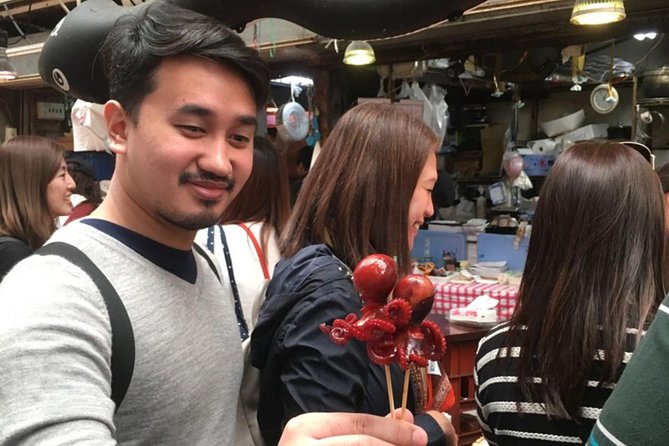
Come hungry, but ask what is included. This two-hour Osaka walk combines six market tastings with local food stories, kitchenware shops, and a look at Namba’s famous streets. I like the small maximum of seven people, which gives your guide room to answer questions and adjust the pace. I also like the chance to use the tour early in your Osaka stay, since guides can point you toward places to eat later. The main caution is food value: some people found the portions satisfying, while others felt the included food was too limited for the price.
The tour costs $50.41 per person, and its 4.9 rating from 551 reviews shows that the guide often makes the difference. Nina, Niko, Rie, Yuto, Aina, Taku, and other guides have been praised for their warmth, clear English, food suggestions, and help with ordering. Still, Kuromon Market is easy to visit on your own, so this experience is best for you if you want interpretation, translation help, and a planned tasting route rather than simple market access.
- Six tastes in about two hours: Expect a short, food-focused introduction to Osaka specialties such as takoyaki, sushi, yakitori, dumplings, sweets, and other market foods.
- A group capped at seven people: The small size can make ordering, asking questions, and changing the pace easier.
- Doguyasuji kitchenware street: Browse knives, tableware, cooking tools, restaurant signs, and other food-related goods near the market.
- A useful first-day orientation: You pass through Namba and near Dotonbori, gaining ideas for where to eat during the rest of your stay.
- A local guide who helps with language: Your guide can explain foods and assist when ordering at shops where English may be limited.
- A few important limitations: Food substitutions are not guaranteed, allergy-free meals cannot be promised, and late arrivals cannot join or receive a refund.
Why Kuromon Market Makes a Good First Food Stop
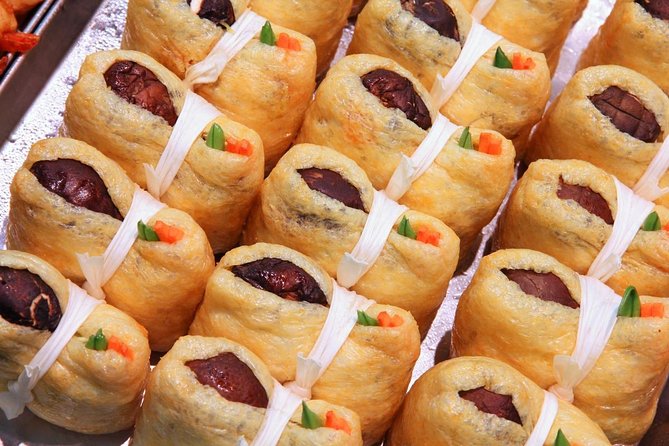
Kuromon Market is a shopping street in Minami, the central part of Osaka. It is known for fresh food, prepared snacks, sweets, and shops aimed at everyday cooking. The market’s name comes from the black gate of Enmyoji Temple, a small historical detail that gives the street more meaning than a simple row of food stalls.
You will not just sit in one restaurant for two hours. You walk, stop, taste, and keep moving. That format lets you compare different kinds of Osaka food and see how the market works as a place for shopping as well as eating.
The market can be confusing at first. Menus may be in Japanese, portions vary, and some foods are better understood when someone explains how to eat them. A guide can help you avoid ordering something you do not want, ask questions for you, and point out choices you might pass without noticing.
I especially like this format for a first or second day in Osaka. You can use the guide’s suggestions later, then return to Kuromon or explore Namba with a better sense of what you are seeing. If you have already spent hours eating your way through the market, the tour may feel less necessary.
Meeting at Nippon-bashi Station
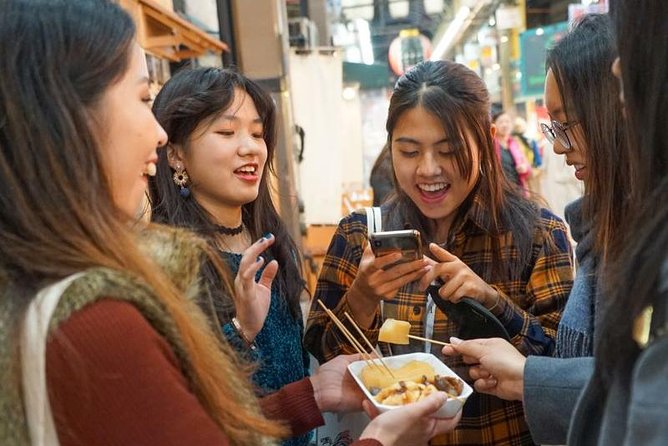
The meeting point is in front of the SMBC ATM at Nippon-bashi 1chome, near Kintetsu Nippon-bashi Station. The directions specify Exit 10 from Kintetsu Nippon-bashi Station, with the address listed as 1-chōme 17, Nipponbashi, Chuo Ward.
Give yourself extra time to find the correct exit and ATM. This is not a tour where arriving two minutes late is harmless. The group starts on time, and anyone who misses the departure cannot join, reschedule, or receive a refund.
The area is close to public transportation, which is useful if you are coming from another part of Osaka. You return to the same meeting point at the end, so you do not need to work out a new route while thinking about your next meal.
The tour lasts about two hours. That is long enough for a sample of the market without taking over your day, but short enough to fit before an afternoon visit to Osaka Castle, the Umeda area, or another part of the city.
More Market Walking Tours in Japan
- Tokyo Tsukiji Fish Market Food and Culture Walking Tour
★ 5.0 · 3,184 reviews - Tokyo: Tsukiji Fish Market Food and Walking tour
★ 5.0 · 1,724 reviews - Tokyo: Tsukiji Fish Market Guided Walking Tour
★ 4.9 · 1,397 reviews
Six Tastes Along Kuromon Market
The exact food selection can vary, so you should not assume that every departure serves the same six items. Foods named in the tour material and guest feedback include takoyaki, fresh sushi, yakitori, dumplings, gyoza, oden, mushrooms, sweets, and other Osaka specialties.
Takoyaki is the obvious Osaka classic. These round batter snacks contain octopus and are cooked in a special pan, then usually finished with sauce and other toppings. A guide can help you handle the heat and explain why this simple snack matters so much to Osaka’s food identity.
Fresh sushi may appear as another stop. In a market setting, this can give you a quick taste of seafood culture without committing to a full meal. Yakitori offers a different experience, with grilled items served in small portions. One particularly praised choice was a mushroom skewer, a reminder that the best stop is not always the most famous one.
Dumplings and gyoza add something hearty to the route. Oden, a simmered dish with items such as vegetables and fish-based ingredients, can be especially appealing in cool weather. Sweets may round out the walk, giving you a break from savory food.
The important point is variety. You are not paying simply for six bites of the same kind of snack. You are getting a quick tour through different textures, cooking methods, and local habits. Still, the word tastes matters. This is a sampling walk, not a large lunch.
That distinction is important because the food value has not been identical for every person. One account described a budget of 1,200 yen for the food, which allowed two people to eat only two items. Other accounts felt they received a good amount for the price. Before booking, ask the operator exactly how the food budget works, what the six tastings include, and whether additional food costs extra.
You do not need to pay for the guide’s food or drinks. Bring cash if you want extra snacks, drinks, or a larger portion than the included plan provides.
Doguyasuji, Osaka’s Street of Cooking Supplies
The tour also includes Doguyasuji, a shopping street filled with kitchenware, tableware, and cooking equipment. This is a useful change of pace after the food stops. Instead of only eating Japanese food, you see the tools and objects used to prepare and serve it.
You might find knives, dishes, restaurant supplies, cooking tools, and other items connected with Osaka’s food trade. The tour description specifically encourages browsing, so leave a little room in your luggage if you are interested in buying souvenirs.
Doguyasuji is also helpful for understanding Osaka as a food city. A plate, knife, sign, or cooking utensil may seem ordinary on its own, but the shops show how much work goes into the restaurants and markets you see elsewhere in the city.
This part may appeal most to cooks, food photographers, and anyone looking for a souvenir with a practical use. If you only want to eat, it may feel like a pause in the main event. I would treat it as a bonus rather than the central reason to book.
From Namba Grand Kagetsu to Dotonbori
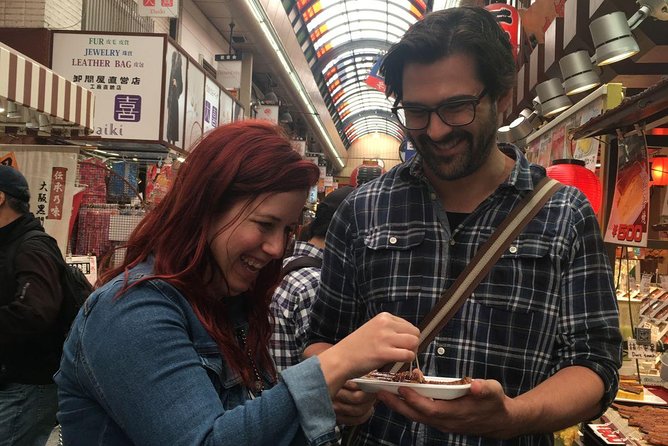
The route passes near Namba Grand Kagetsu, a comedy theater operated by Yoshimoto Kogyo. Osaka has a strong comedy culture, and this brief look adds a local entertainment note to the food walk.
You also pass through the Namba area, one of Osaka’s major entertainment and shopping districts. Namba Parks, restaurants, shops, and transport connections make this a useful part of the city to understand early in your stay.
The tour continues toward the Dotonbori area, known for its giant three-dimensional signs, including the famous Glico running man and the Kani Douraku crab sign. Dotonbori is flashy and crowded, while Kuromon has a more market-centered feel. Seeing both areas close together helps you understand the difference between Osaka’s famous food-showcase district and its traditional market street.
The tour does not appear to spend the full two hours sampling every part of Dotonbori. It is better to think of this section as an orientation walk. Your guide may point out places worth returning to, explain what you are seeing, and help you connect the market with the larger Namba district.
More Street Food Market Tours in Japan
- Tsukiji Fish Market: Street Food & Culture Walking Tour
★ 5.0 · 669 reviews - Tsukiji Fish Market Small-Group Food Walking Tour
★ 5.0 · 621 reviews - Tokyo Food Tour Taste Fresh Delights at Tsukiji Market
★ 5.0 · 429 reviews - Osaka: Kuromon Market Food Walking Tour (6 stops, 6 tastes)
★ 4.6 · 272 reviews
The Guides Matter More Than the Route
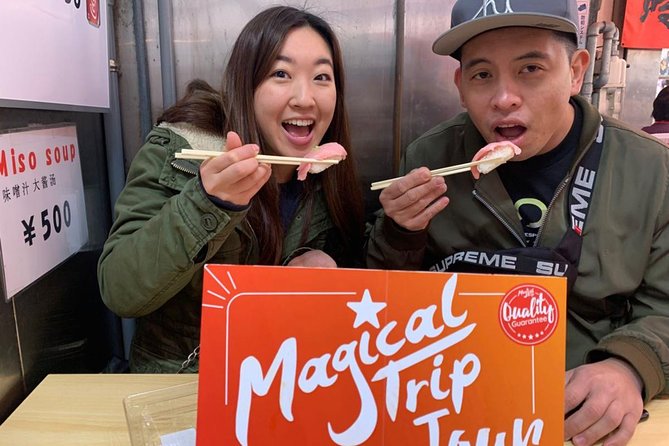
The strongest part of this experience is often the person leading it. Nina has been praised for being funny, patient, and especially good with children. She answered family questions kindly and helped make cultural information easy to follow.
Niko has been praised for energy and flexibility, including adjusting the route around group interests. During heavy rain, she reportedly kept much of the walk under cover, showed unusual shops and narrow lanes, and even helped with the correct train afterward.
Other guides have been praised for taking photos, explaining local food traditions, speaking clear English, and helping solo participants feel comfortable. Taku was especially appreciated for helping with communication at food shops and finding good gyoza and oden.
That range matters because this is not a self-guided tasting card. The quality depends on whether your guide explains what you are eating and makes useful choices for the group. The best guides ask about your preferences, keep the pace comfortable, and offer context without turning the walk into a lecture.
Guide assignments can change, so you cannot count on a particular person. But the repeated praise for several guides suggests that the operator has a solid pool of local hosts.
Is $50.41 a Fair Price?
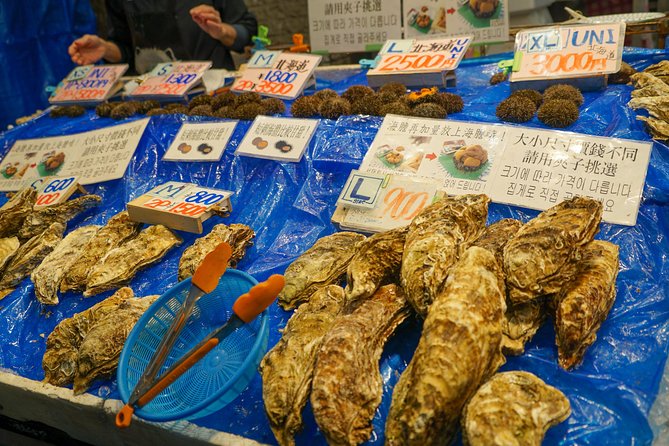
At $50.41, this is not the cheapest way to eat in Kuromon Market. You can walk through the area without paying an admission fee and buy individual snacks as you go.
The price makes more sense if you value the guide’s time, food explanations, ordering help, route planning, and cultural context. A small group of no more than seven can also feel more personal than a large food walk. If you are nervous about Japanese menus or want to ask many questions, that assistance may be worth paying for.
The price is harder to justify if you mainly want a full meal. The tour lasts only two hours, and the included food may be tasting-size. You may need to buy extra food afterward, especially if you have a large appetite.
I would compare the cost with what you want from the morning. For a first introduction to Osaka food, the structure is useful. For a serious lunch, spend the money directly at the market and choose your own portions.
Families, Solo Walkers, and Dietary Needs
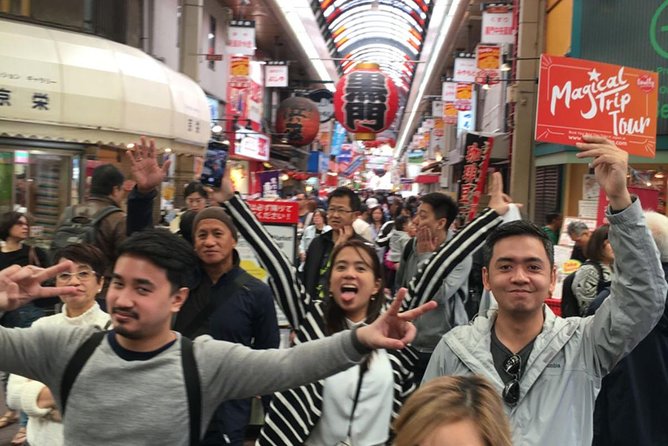
Families can do well on this tour. Children have enjoyed the food, and guides such as Nina and Aina have been praised for patience, kindness, and a good pace. A stroller may be awkward in the market, while one account specifically found a sling more practical for an 18-month-old child.
Solo visitors can also benefit. A guide can take photos, help with ordering, and make a small group feel less awkward than eating alone at several unfamiliar stalls.
Dietary restrictions need careful planning. The information provided is inconsistent: one section says gluten-free requests cannot be accommodated, while another says vegetarian, vegan, and gluten-free requests may be possible with advance notice. The safer interpretation is that options are limited and never guaranteed.
Tell the operator about allergies or dietary needs at least one day before the tour. Requests made on the day cannot be handled. Food comes from kitchens the operator does not control, so allergy-free meals, substitutions, and complete avoidance of cross-contact cannot be promised.
If you have a severe allergy, this may not be the right food experience. If you are vegetarian or vegan, ask for a clear explanation of the available choices before you pay.
Weather, Clothing, and Walking Pace
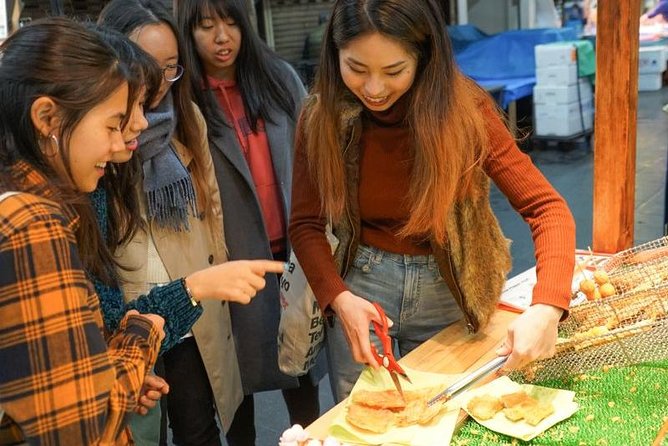
Osaka can be very hot in summer, with temperatures reaching about 40°C, and cold in winter, with lows near -5°C. The market route includes outdoor walking, so dress for the season and wear comfortable shoes.
Rain may not ruin the experience. The route can include covered market areas and narrow streets, but you should still bring suitable rain protection. The walk is not described as strenuous, yet standing, walking, and eating over two hours can be tiring for some people.
Keep your hands free when possible. You may want to carry cash, take photos, and hold food, while crowded market lanes leave little room for large bags.
Who Should Book This Osaka Food Walk?
I would recommend this tour if you want a friendly introduction to Osaka food, especially on your first days in the city. It is also a good choice if you want help ordering, prefer a small group, or enjoy learning the story behind ordinary snacks and shops.
Families, solo visitors, and people who like a planned route are likely to get the most from it. The added walk through Doguyasuji is useful for anyone interested in Japanese cooking tools or food-related souvenirs.
I would skip it if you are comfortable ordering on your own, have a strict allergy, or want a large meal. Kuromon Market is easy to explore independently, and some people may find better value by spending $50.41 directly on food and shopping.
If you do book, schedule it early in your Osaka stay, arrive well before the meeting time, bring cash, and ask in advance about the exact food allowance and dietary options. Those simple steps make it easier to enjoy what this tour does best: giving you a friendly, guided start in one of Osaka’s most food-focused districts.
FAQ
How long does the Kuromon Market Food Walking Tour last?
The experience lasts approximately two hours.
Where does the tour begin?
It begins in front of the SMBC ATM at Nippon-bashi 1chome, near Kintetsu Nippon-bashi Station Exit 10. The listed address is Japan, 542-0073 Osaka, Chuo Ward, Nipponbashi, 1-chōme 17.
Where does the tour finish?
The tour ends back at the meeting point.
How many people can join the tour?
The group has a maximum of seven participants.
Are food and drinks for the guide included?
You do not need to pay for the guide’s food or drinks. Bring cash if you want to purchase additional snacks or drinks for yourself.
Can dietary requests be accommodated?
You must provide dietary requests or allergy information at least one day before the tour. Options may be limited, gluten-free accommodation is not guaranteed, and the operator cannot promise allergy-free meals or substitutions.
More Food Trips in Japan
- Tsukiji Food and Toyosu Market with Government-Licensed Guide
★ 5.0 · 158 reviews - Toyosu Market Morning Tuna Auction and Tsukiji Food Tour with Licensed Guide
★ 4.5 · 146 reviews - Tokyo Tsukiji Fish Market Food Tour: 15 Stops & Walk Local Street
★ 5.0 · 139 reviews - Kyoto: Local Food Tasting Tour at the Nishiki Market
★ 4.7 · 135 reviews
More Food and Drink Trips in Japan
- Tokyo: Tsukiji Fish Market Food and Culture Walking Tour
★ 4.7 · 757 reviews - Kyoto Nishiki Market Food and Culture Walking Tour
★ 5.0 · 412 reviews - Tsukiji Fish Market: Street Food & Culture Walking Tour
★ 4.8 · 259 reviews - Inside Tokyo’s Kitchen: Tsukiji Market, Food & Culture Tour
★ 5.0 · 162 reviews
Just added around Japan
- Nagoya Super Market Tour & Home Cooking Class with a Local, Akiko★ 5.0 · 10 reviews
- Tokyo: Private Tsukiji Street Food & Sake with Local Guide★ 5.0 · 3 reviews
- Tokyo: Tsukiji Market Guided Tour & Sushi-Making Experience★ 4.4 · 11 reviews
- 【Family pack】Tokyo: Tsukiji fish market food tour★ 5.0 · 3 reviews
- Tokyo: Tsukiji Market and Hama-rikyu Gardens Guided Tour★ 4.8 · 73 reviews
- Tokyo: Tsukiji Fish Market Culture Tour with Sashimi Tasting★ 4.6 · 54 reviews
- Tokyo: Tsukiji Fish Market Foodie and Educational Tour★ 5.0 · 4 reviews
- Tokyo : Tsukiji Fish Market Food Walking & Shrine Visit Tour★ 5.0 · 3 reviews
Street Food Market Tours, compared.
Old Town, Creek, Museums, Souks, & Street Food Tour
Read our review →
Old Town, Souks, Street Food, Guided Tour & Abra Ride
Read our review →

London Bridge & Borough Market Food Tour with 7 Authentic Dishes
Read our review →
Old Town, Souks, Street Food, Guided Tour & Abra Ride
Read our review →
Small Group Cooking Class & Market Food Tour in Florence
Read our review →
Browse the lists this tour appears in