
Review · JAPAN
Tokyo Morning Tour: Meiji Shrine, Asakusa & Fish Market
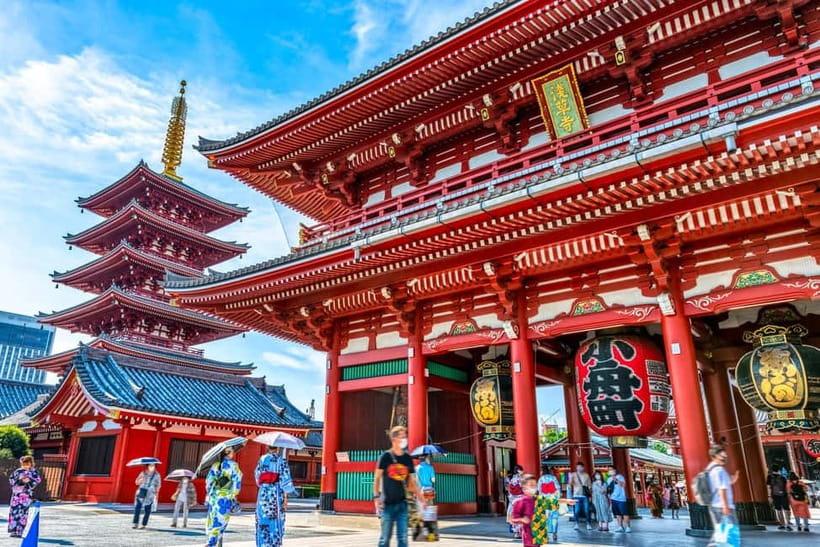
Tokyo wakes early for a reason. This four-and-a-half-hour tour links Meiji Shrine, Tsukiji Outer Market, and Asakusa in one lively morning, giving you a quick but meaningful introduction to Tokyo’s religion, food, and old neighborhoods. I especially like the calm forest setting at Meiji Shrine and the chance to taste sushi, sashimi, croquettes, and Japanese sweets along the way. The main trade-off is the pace: with three major stops and public transport between them, you will see a lot, but you will not have unlimited time in any one place.
I also like that the tour finishes in Asakusa, rather than returning you to the starting point. That leaves you near Senso-ji Temple, shopping streets, and plenty of lunch options. The guide makes a real difference here. Guides such as Yosuke, Lex, Yo Yo, Remu, Ken, and Lax have been praised for clear English, cultural insight, patience, and friendly care.
What makes this morning useful
- A rare three-part Tokyo sampler: Move from Shinto worship at Meiji Shrine to seafood stalls at Tsukiji and Buddhist sights in Asakusa.
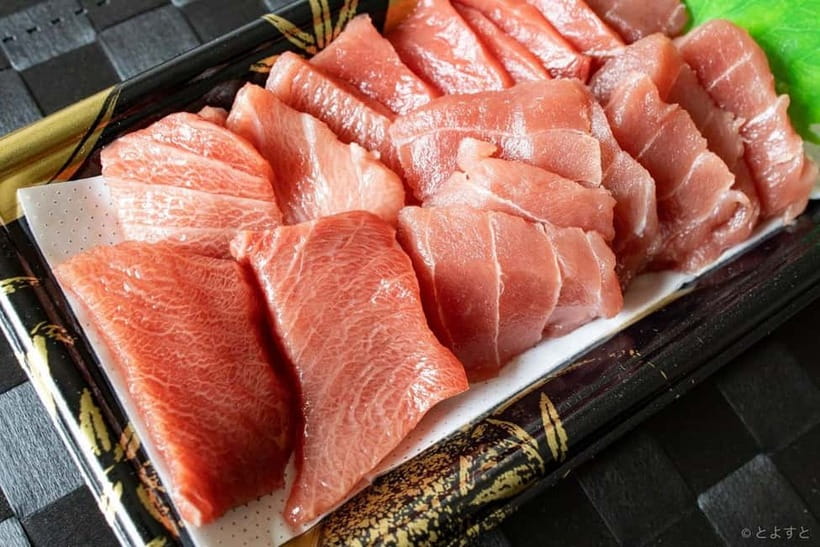
- Food is part of the walking route: Fresh sushi and sashimi at Tsukiji are joined by croquettes and traditional sweets in Asakusa.
- Strong cultural explanation: Guides explain Shinto and Buddhism, including the differences between the two traditions.
- A practical finish: The tour ends in Asakusa, so you can continue sightseeing or stop for lunch without crossing the city again.
- A calm start to a busy city: The morning timing brings quieter shrine grounds before the day gathers speed.
- Small-group quality can vary: Some people have received a highly personal tour, while the exact group size is not specified.
From IKEA Harajuku to the Meiji Shrine grounds
The meeting point is in front of IKEA Harajuku. That is a clear landmark, but you should allow enough time to find it and meet the guide before the scheduled start. The tour begins on foot and then uses public transportation, with fares costing about 550 yen in total.
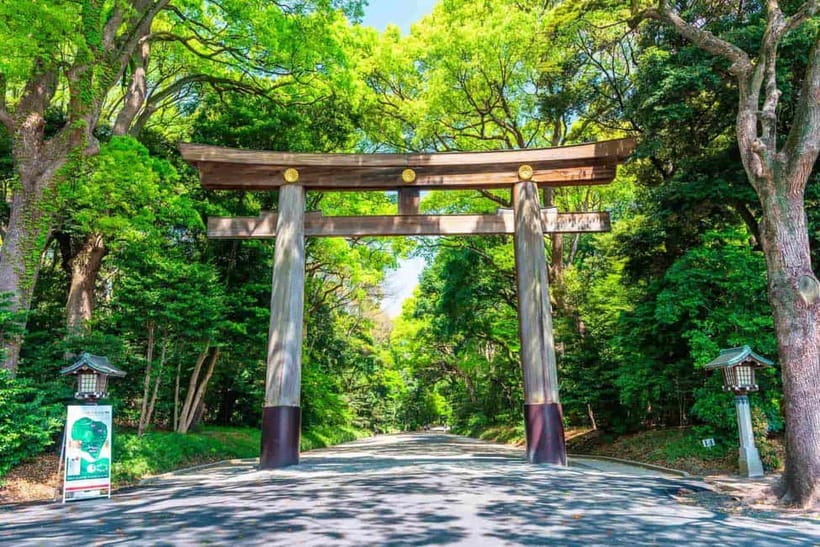
The first stop is Meiji Shrine, where you spend about one hour. This is a good opening chapter because the mood changes quickly from urban Harajuku to a quiet Shinto setting. The shrine is dedicated to Emperor Meiji and Empress Shoken, and the visit gives your guide a natural chance to explain Shinto customs, shrine etiquette, and the role of sacred spaces in Japanese life.
Expect a walk through wooded grounds toward the main shrine area. The appeal is not just the building itself. You get a chance to slow down, observe how people approach the shrine, and learn what the gates, purification process, offerings, and prayers mean.
Several guide reports point to this as one of the strongest parts of the morning. Lex has been praised for explaining shrine customs in an approachable way, while Remu was singled out for discussing Shinto and Buddhism with care. One particularly memorable experience included a fire ceremony, although you should not assume that every departure will include one. The exact ceremony or event may depend on the day.
That uncertainty is worth noting. The tour promises entry to Meiji Jingu Shrine and historical explanation, but special religious events are not listed as a fixed part of every outing. Think of the fire ceremony as a possible bonus, not a guarantee.
More Fish Market Tours in Japan
- Tokyo Tsukiji Fish Market Food and Culture Walking Tour
★ 5.0 · 3,184 reviews - Tokyo: Tsukiji Fish Market Food and Walking tour
★ 5.0 · 1,724 reviews - Tokyo: Tsukiji Fish Market Guided Walking Tour
★ 4.9 · 1,397 reviews
Tsukiji Outer Market: Tokyo through food
The tour then spends about 110 minutes at Tsukiji Outer Market. This is the longest stop, and that makes sense. Tsukiji is less about one single sight and more about wandering, tasting, and asking questions.
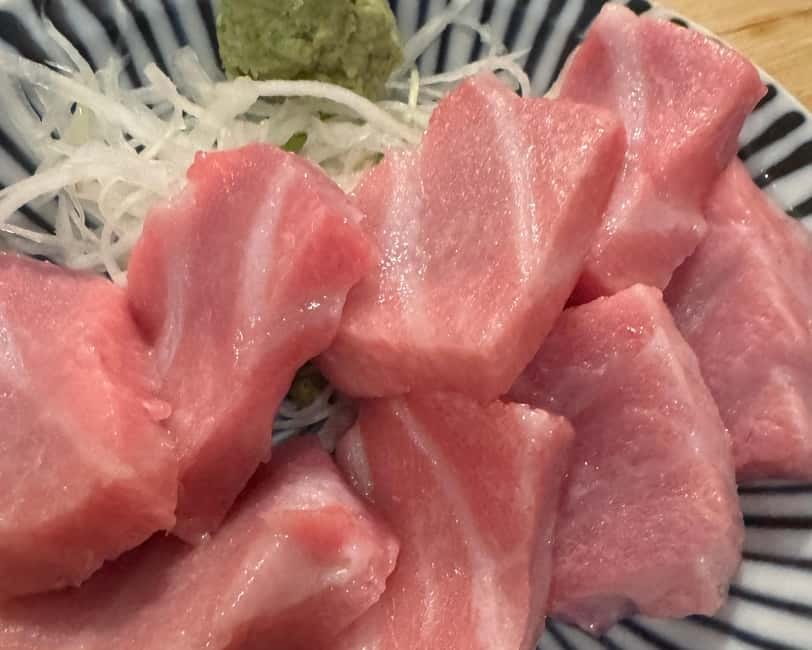
Your guide helps you make sense of the market’s many food counters and small shops. Fresh sushi and sashimi are central to the experience, giving you a direct taste of Tokyo’s seafood culture. You may also find other market foods as you walk, but the stated food focus is sushi and sashimi, so do not expect a full meal with every dish included.
This is where the tour offers good value for first-time visitors. Tsukiji can feel confusing if you arrive without a plan. The guide can point out useful stalls, explain ingredients, and add context about Japanese food customs. Yosuke received particular praise for explaining not only the market but also Japanese culture, religion, and history. That wider context helps turn a series of snacks into a clearer picture of daily life.
The market stop also has practical limits. Tsukiji is a working food district, not a formal museum. Crowds, narrow paths, and changing stall activity can affect your route. You will need to stay with the group and pay attention while carrying food. The 110-minute allocation gives you time to look around, but you may still need to choose between lingering over one tasting and seeing more of the market.
Food costs are not listed separately in the supplied details, so you should clarify with the provider what tastings are included before booking. The tour description specifically highlights sushi, sashimi, croquettes, and sweets, but it does not state that every food purchase is covered by the $83 price.
Asakusa and Senso-ji after the market
The final major stop is Asakusa, where you spend about one hour walking, sightseeing, shopping, and eating. This district offers a different side of Tokyo from Harajuku and Tsukiji. The focus is on older streets, traditional shops, temple culture, and snack foods.
Senso-ji Temple is included, with admission listed as part of the tour. The temple gives your guide another chance to explain Buddhism and to compare Buddhist practice with Shinto customs introduced earlier at Meiji Shrine. That contrast is one of the best reasons to take the tour as a complete morning rather than visiting the three areas separately.
You can expect time for croquettes and traditional Japanese sweets as you walk through the district. These small bites keep the stop informal. Instead of sitting down for a long restaurant meal, you taste your way through the neighborhood while seeing its main sights.
Asakusa is also the tour’s finishing point. This is convenient if you want to continue exploring Senso-ji, shop for souvenirs, or find lunch nearby. It does mean you should plan the rest of your day from Asakusa rather than from Harajuku. If you have a timed reservation elsewhere, leave a generous buffer after the tour ends.
The one-hour visit is enough for an introduction, but not a full exploration of Asakusa. You may want to return later if you wish to browse more shops or spend extra time at the temple. I see that as a benefit: the morning tour shows you where to return instead of trying to cover every corner in one rushed visit.
Guides are the heart of the experience
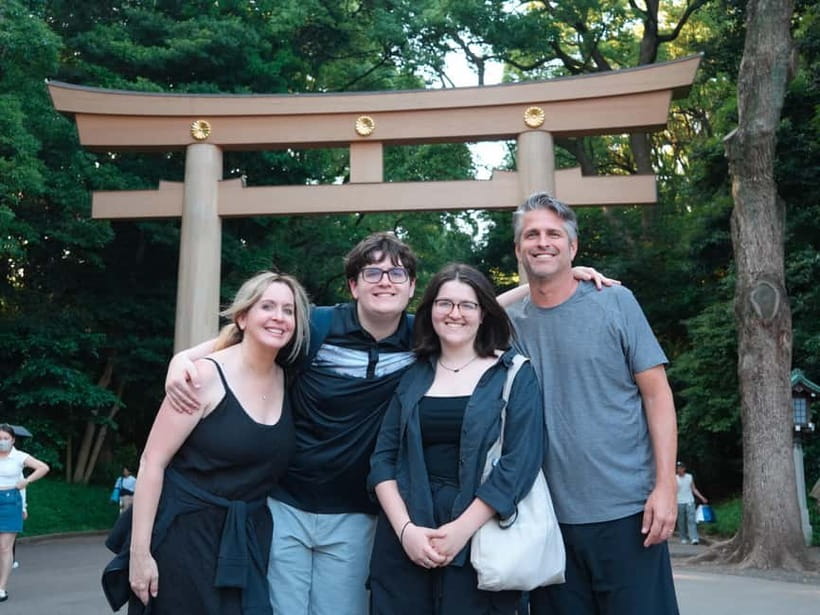
The guide quality appears to be the tour’s strongest feature. The most praised qualities are clear English, cultural knowledge, positive energy, and attention to the group’s comfort.
Yosuke has been praised for answering questions, speaking fluent English, and taking care of families during the walk. Lax has been described as thoughtful, professional, patient, and well read about Japan. Yo Yo is noted for warmth, enthusiasm, and a passion for sharing Japanese culture. Ken, Lex, and Remu have also received praise for making the morning both informative and enjoyable.
You should not assume you will receive a particular guide unless the provider confirms it. Still, the repeated pattern is encouraging. This is not simply a route between three famous places. The best version of the tour depends on a guide who can explain why a shrine ritual differs from a Buddhist practice, or how a market snack fits into Japanese food culture.
The guide also helps with the social side of the outing. One person described receiving what felt like a private tour because they were the only participant that day. Group size is not provided, so the level of personal attention may vary. If you prefer a quiet, private experience, ask about the expected group size before booking.
More Fish Market Tours in Tokyo
- Tokyo Sushi Making Class in Tsukiji with Professional Chef
★ 5.0 · 1,177 reviews - Tsukiji Fish Market Guided Tour and Sushi Making with Pro Chef
★ 5.0 · 775 reviews - Tokyo: Tsukiji Fish Market Food and Culture Walking Tour
★ 4.7 · 757 reviews - Tsukiji Fish Market: Street Food & Culture Walking Tour
★ 5.0 · 669 reviews
Is $83 a fair price?
At $83 per person, this is not the cheapest way to visit Meiji Shrine, Tsukiji, and Asakusa. You can reach all three areas independently for less, especially if you skip paid tastings and already understand Tokyo’s trains and subway system.
The value comes from the guide and the structure. In less than five hours, you receive English explanations, shrine and temple admission, a planned route, food-focused stops, photographs taken during the tour, and transport guidance between districts. For a first morning in Tokyo, that can save time and reduce the stress of working out where to go next.
The price looks strongest for people who want context rather than simple sightseeing. If you already know Tokyo well, speak Japanese, and enjoy planning food stops yourself, the cost may feel high. If you are new to Japan and want a friendly introduction to religion, food, and neighborhoods in one outing, the price is easier to justify.
Public transportation is not included. The expected fare is about 550 yen, a modest extra cost, but you should have a transit card or payment method ready. Food expenses also need clarification, since the description names tastings but does not state a fixed food allowance.
Who will enjoy this tour most?
I would recommend this morning to first-time visitors who want a broad introduction without spending an entire day on a single district. Families may also appreciate the guide’s attention and the variety of short activities. You are walking, tasting, looking at temples, and listening to stories, so the pace has more variety than a museum visit.
It suits anyone curious about the difference between Shinto and Buddhism. Meiji Shrine and Senso-ji provide a useful side-by-side comparison, while the guide adds the explanation that you might miss on your own.
Food lovers will also get good use from the Tsukiji stop. The market is a practical place to sample fresh seafood, but you should come ready for a food walk, not a formal breakfast. If you have dietary restrictions, ask the provider ahead of time, since no dietary information is supplied.
This may be less suitable if you want long, unhurried time at each site. You will spend around one hour at Meiji Shrine, 110 minutes at Tsukiji, and one hour in Asakusa, with travel between them. The route is efficient, but it is still a schedule.
Practical tips for a smoother morning
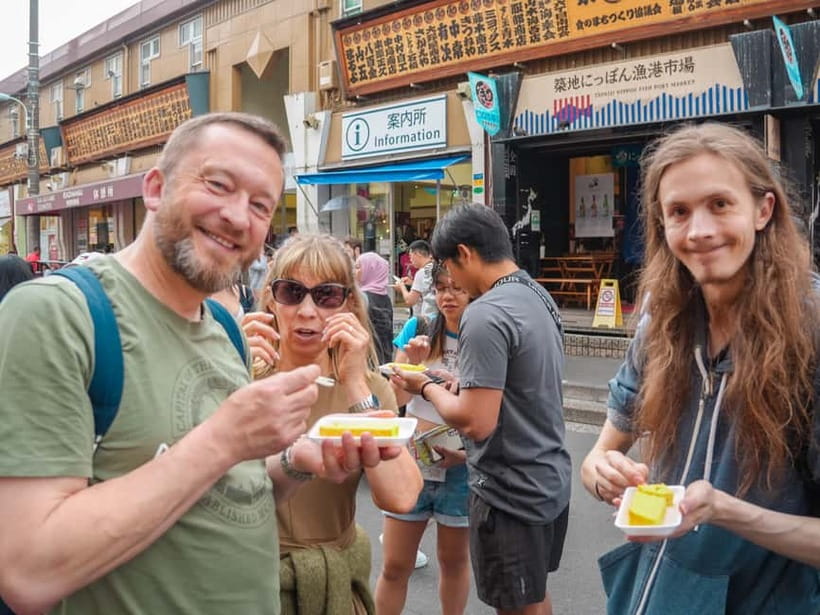
Meet in front of IKEA Harajuku and arrive early enough to find the exact meeting spot. Wear comfortable shoes, since the tour includes walking through shrine grounds, market streets, and Asakusa.
Bring about 550 yen for public transportation, along with a payment method for any food purchases not covered by the tour. Since the tour includes sushi, sashimi, croquettes, and sweets, a light breakfast may be sensible.
Keep your schedule after the tour flexible. You finish in Asakusa, and the end time may be affected by walking pace, market conditions, and group needs. The good news is that Asakusa is a useful place to continue your day.
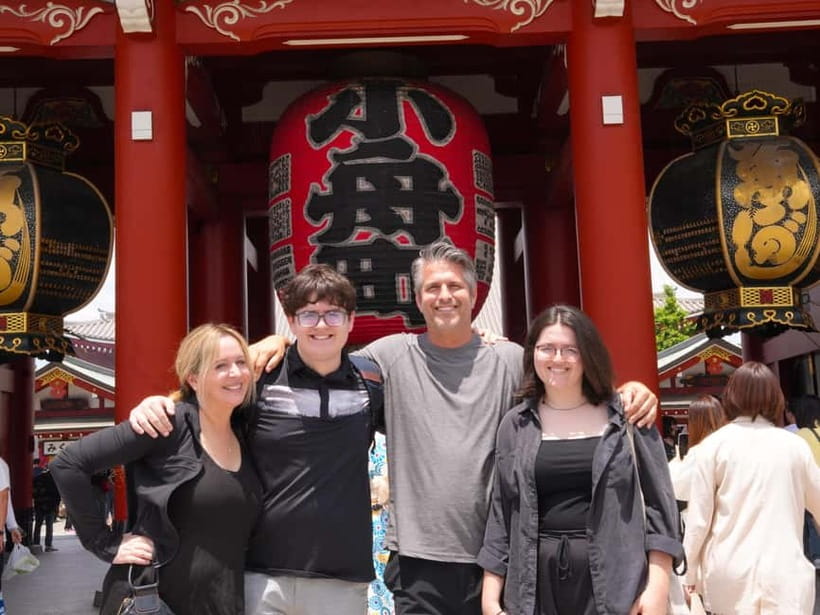
The tour includes photographs taken during the experience. That is a pleasant extra, especially if you are traveling alone or want a few group images without constantly stopping to take your own.
Free cancellation is available up to 24 hours before the start, and you can reserve now while paying later. Those terms are useful if your Tokyo plans are still shifting, but check the booking details for the exact starting time before you commit.
Should you book this Tokyo morning tour?
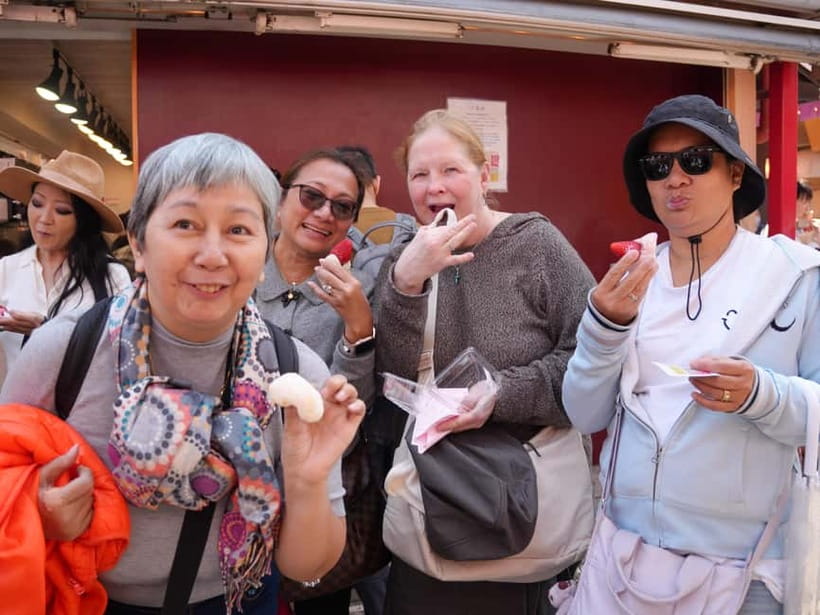
Book it if you want culture, food, and clear English guidance in one compact morning. The route is well chosen, the finish in Asakusa is practical, and the strongest guide reports describe thoughtful explanations, careful attention, and plenty of useful local context.
Skip it if you prefer to explore slowly, shop at your own pace, or keep food choices entirely under your control. You can visit these districts independently and spend less, but you will need to plan the route and supply the cultural explanation yourself.
For a first Tokyo morning, I think the tour offers a smart orientation. You begin with the calm of Meiji Shrine, taste your way through Tsukiji, and finish among the temples and old streets of Asakusa. It gives you enough structure to get your bearings, while leaving the rest of the day open for places you want to explore more deeply.
FAQ
Where does the Tokyo morning tour start?
The meeting point is in front of IKEA Harajuku.
Where does the tour finish?
The tour finishes in Asakusa.
How long does the tour last?
The total duration is 270 minutes, or about four and a half hours.
Which places are included?
The tour visits Meiji Shrine, Tsukiji Outer Market, and Asakusa, including Senso-ji Temple.
Is an English-speaking guide provided?
Yes. The tour includes a live English-speaking guide.
Is public transportation included?
No. Public transportation is not included. The expected fare is around 550 yen.
Are shrine and temple admissions included?
Yes. Admission to Meiji Jingu Shrine, Tsukiji Fish Market, and Senso-ji Temple is listed as included.
Can I cancel for a full refund?
Yes. You can cancel up to 24 hours in advance for a full refund.
More Morning Departures in Tokyo
- Toyosu Market Morning Tuna Auction and Tsukiji Food Tour with Licensed Guide
★ 4.5 · 146 reviews - Tokyo Morning Tour: Asakusa, Meiji Shrine and Tsukiji Fish Market
★ 5.0 · 128 reviews - Tokyo Early Morning Tour Asakusa Meiji Shrine (Private Opt)
★ 5.0 · 69 reviews - Tingly Thai Cooking Class with Morning Market Tour
★ 5.0 · 589 reviews
Just added around Tokyo
- Tokyo: Private Tsukiji Street Food & Sake with Local Guide★ 5.0 · 3 reviews
- Tokyo: Tsukiji Market Guided Tour & Sushi-Making Experience★ 4.4 · 11 reviews
- Tokyo: Tsukiji Market and Hama-rikyu Gardens Guided Tour★ 4.8 · 73 reviews
- Tokyo: Tsukiji Fish Market Culture Tour with Sashimi Tasting★ 4.6 · 54 reviews
- Tokyo’s Kitchen: Tsukiji Market Food & Culture Walk★ 4.7 · 74 reviews
- Tokyo: Tsukiji Fish Market Foodie and Educational Tour★ 5.0 · 4 reviews
- Tokyo : Tsukiji Fish Market Food Walking & Shrine Visit Tour★ 5.0 · 3 reviews
- Tokyo: Guided Walking Tour of Tsukiji Market with Lunch★ 4.4 · 24 reviews
Fish Market Tours, compared.
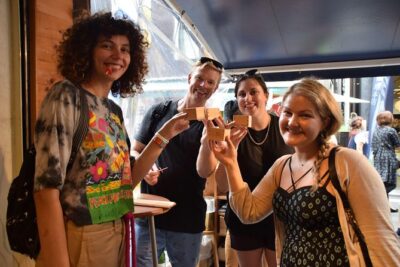
Tokyo Tsukiji Fish Market Food and Culture Walking Tour
Read our review →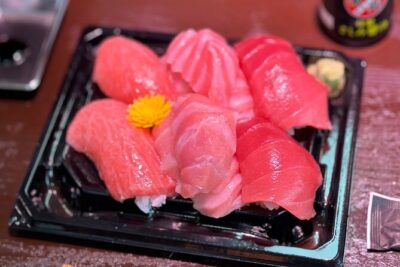
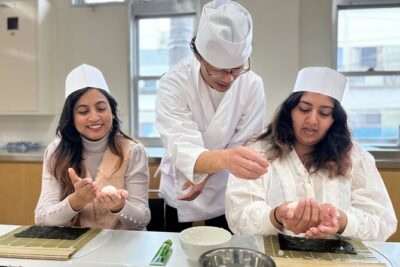
Tokyo Sushi Making Class in Tsukiji with Professional Chef
Read our review →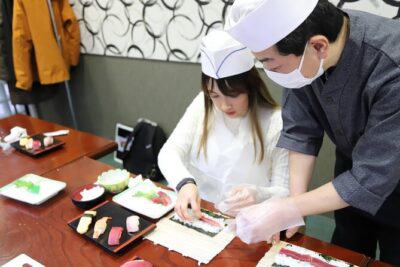
Tsukiji Fish Market Guided Tour and Sushi Making with Pro Chef
Read our review →Tsukiji Fish Market Food and Culture Walking Tour
Read our review →
Tsukiji Fish Market: Street Food & Culture Walking Tour
Read our review →
Tsukiji Fish Market Small-Group Food Walking Tour
Read our review →
Tsukiji Fish Market Sushi Making Class with Pro Chef
Read our review →Browse the lists this tour appears in