
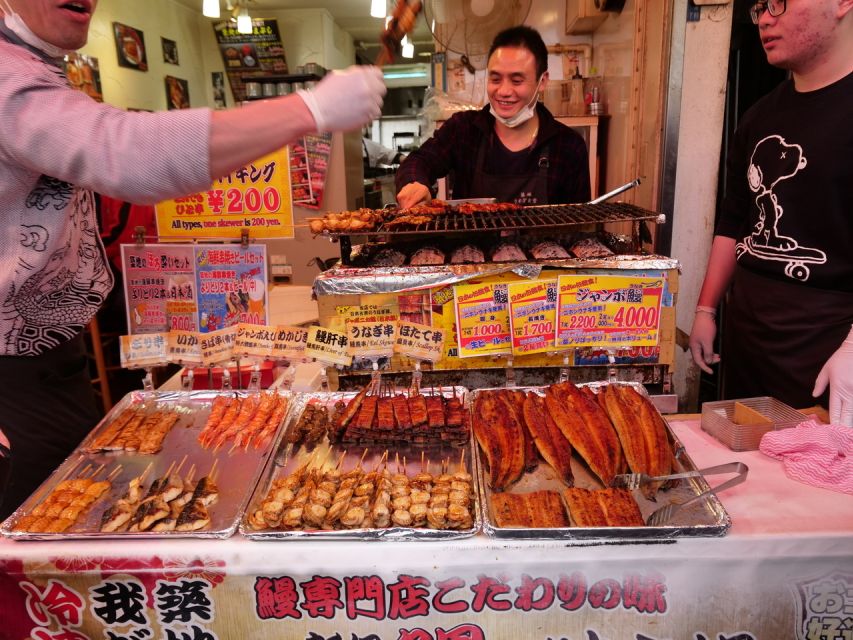
Review · JAPAN
Tokyo: Tsukiji Fish Market Tour with 6 Stops & Seafood Lunch
Tokyo eats early. This tour shows you why. In three hours, you visit a Buddhist temple, sample more than five market foods, learn how Tsukiji fits into Tokyo’s seafood culture, and finish with a donburi lunch. I especially like the small groups of up to seven and the way guides such as Mai, Meg, Kiyo, and Ken help you make sense of foods you might skip on your own. The final view from Shiodome adds a fine citywide finish.
The main catch is simple: this is a tour of the Tsukiji Outer Market, not Toyosu’s wholesale fish market or the old inner market. Tsukiji can also become very crowded, making browsing and photography tricky. At $94, the price is fair if you value guidance, tastings, lunch, and cultural context, but independent eaters may find it more than they need.
Key points at a glance
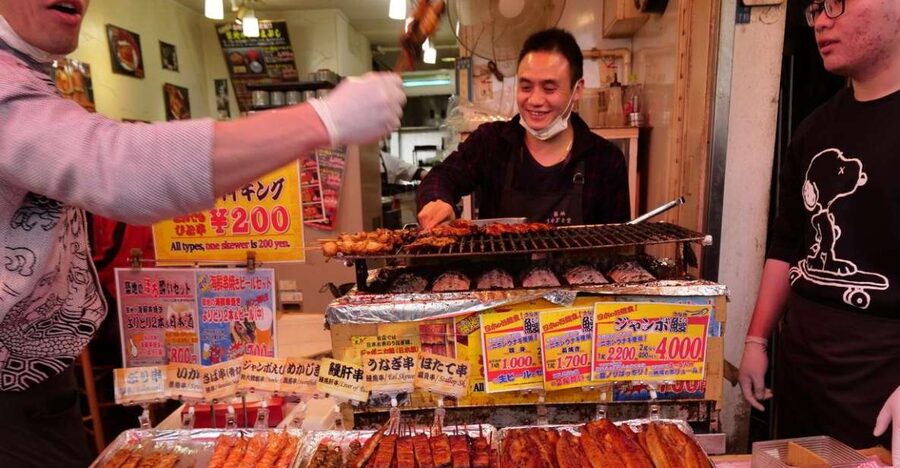
- The market is Tsukiji Outer Market: You explore the public streets of food shops and stalls, not the relocated wholesale market at Toyosu.
- Five or more tastings are included: Seafood and traditional snacks may include tuna sushi, oysters, grilled eel, rolled omelet, yakitori, and taiyaki-style sweets, depending on the day.
- The tour begins with religion: Tsukiji Hongan-ji introduces Buddhist customs before the food stops begin.
- Lunch is a seafood donburi bowl: The included meal is capped at 1,500 yen, with drinks costing extra.
- A high viewpoint closes the morning: Shiodome Media Tower offers a look over Tsukiji, Tokyo Bay, and the city from above.
- The guide makes the difference: Small groups, English commentary, shopping help, and local food advice are the strongest reasons to book.
Why Tsukiji still matters after the fish market moved
Many visitors hear Tsukiji fish market and picture the old wholesale auction hall. That is no longer what you see here. The wholesale operation moved to Toyosu, but Tsukiji’s Outer Market remains a lively food district filled with seafood sellers, kitchen shops, prepared foods, and small places to eat.
That distinction matters. You will not be touring the wholesale market or watching the famous tuna auctions. You will be walking through the public market area where Tokyo’s food culture is easier to experience at street level.
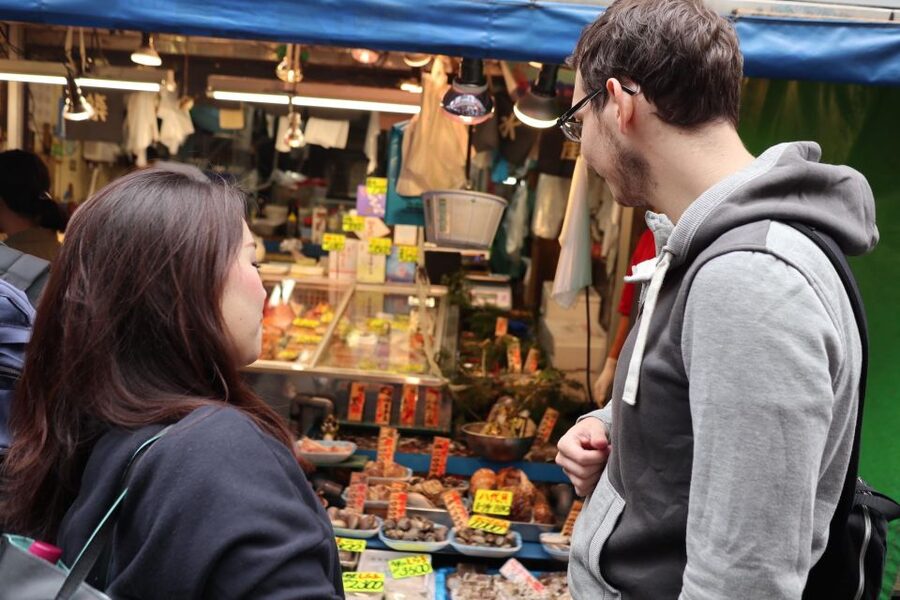
I think that is the appeal of this tour. Tsukiji is less about one grand sight and more about small discoveries: a display of fresh seafood, a snack you do not recognize, a shop selling seasonings, or a vendor preparing something in front of you. A guide helps you move through it without spending half the morning wondering what to order.
The market can be very crowded, especially on a Saturday or during busy periods. You should expect a slow walking pace in places. Keep your group in sight, carry cash for extra purchases, and avoid bringing a large bag if you can.
More Fish Market Tours in Japan
- Tokyo Tsukiji Fish Market Food and Culture Walking Tour
★ 5.0 · 3,184 reviews - Tokyo: Tsukiji Fish Market Food and Walking tour
★ 5.0 · 1,724 reviews - Tokyo: Tsukiji Fish Market Guided Walking Tour
★ 4.9 · 1,397 reviews
Starting at Tsukiji Hongan-ji
The meeting point is outside the main gate of Tsukiji Hongan-ji, near Tsukiji Station. Look for the guide holding a red or orange MagicalTrip sign. Take care with the station name: Tsukiji Station is the correct stop, not Tsukijishijo Station.
The first stop lasts about 20 minutes. This gives the tour a useful change of pace before you enter the food market. Rather than rushing straight toward seafood, you begin with Japanese religious customs and an introduction to worship at this 300-year-old Buddhist temple.
Guides explain basic etiquette and Japanese views on religion. That can be particularly helpful if this is your first visit to a Buddhist temple and you are unsure how to behave around the worship area. The stop is not a full religious study, but it gives context to customs you will see elsewhere in Japan.
The temple also helps frame Tsukiji as more than a place to eat. Food, work, worship, and neighborhood life have long shared this part of Tokyo. The transition from temple to market feels natural, and families can enjoy the cultural side without needing a separate museum visit.
Eating your way through Tsukiji Outer Market
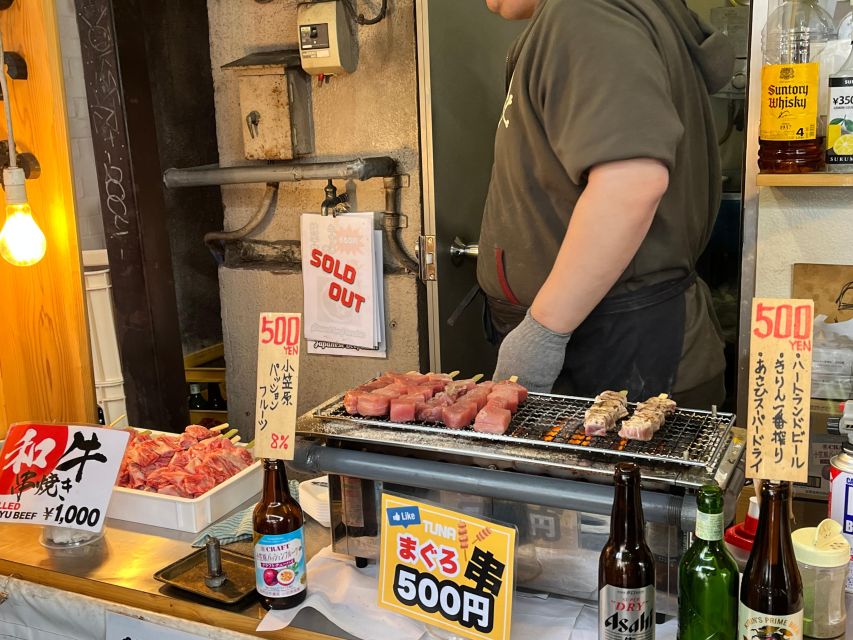
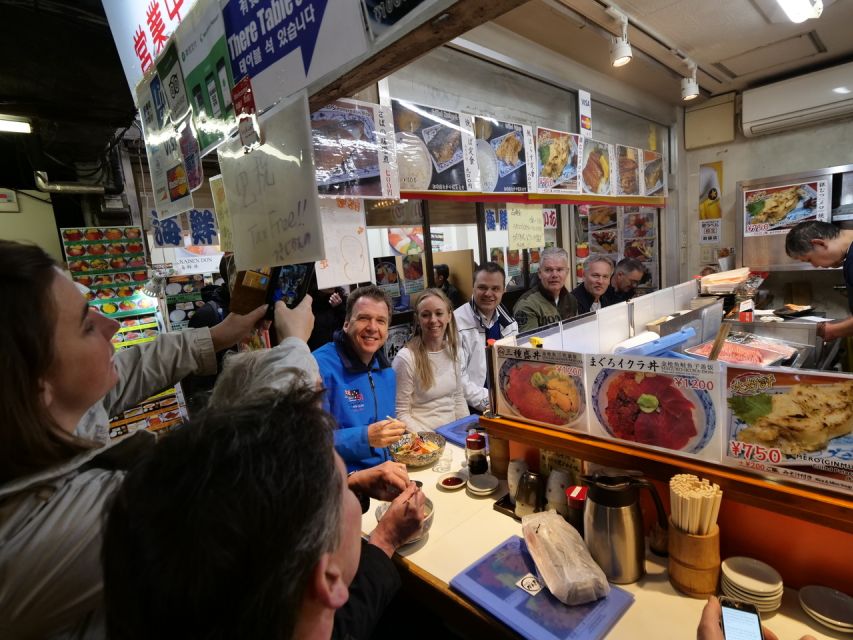
The main market walk takes about an hour. Your guide leads you through the streets, points out useful stalls, and arranges the included tastings. At least five food samples are included, although the exact selection can change.
Past tastings have included:
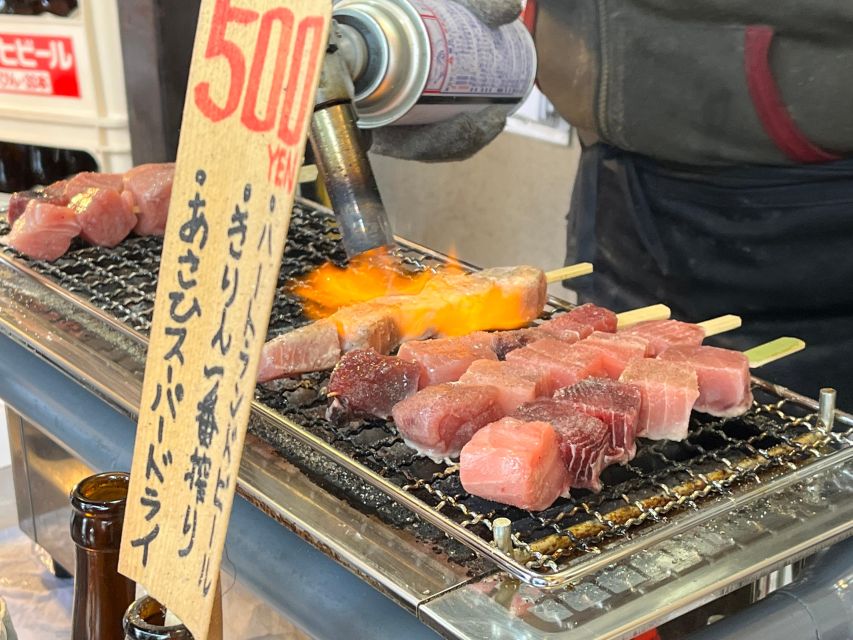
- Tuna sushi and other seafood
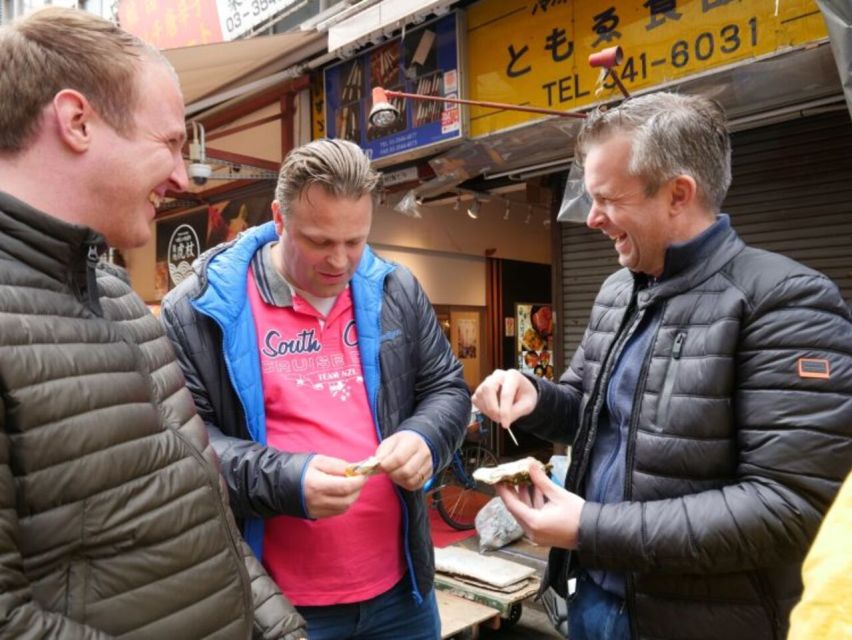
- Fresh oysters
- Grilled eel
- Rolled Japanese omelet
- Yakitori
- Custard-filled mochi
- Tuna-shaped taiyaki
That range is one of the tour’s best features. You are not simply eating several versions of the same fish. You get a quick lesson in the variety of Japanese market food, from raw seafood to grilled items and sweets.
The oysters and fresh fish are likely to be the highlight for seafood fans. The grilled eel offers a cooked option with a different texture, while tamagoyaki, or rolled omelet, gives you a mild and familiar break from seafood. A sweet snack such as custard-filled mochi or tuna-shaped taiyaki helps keep the tasting route friendly for children and less adventurous eaters.
Your guide can also explain what you are seeing and help with purchases. Kiyo, for example, was praised for helping with food choices and explaining traditional foods. Meg arranged lunch at a place locals use and helped with ideas for where to eat later in Tokyo. This kind of help is valuable because the market can feel like a maze of tempting stalls, especially when signs and menus are unfamiliar.
Do not expect a formal cooking class or long conversations with every vendor. One piece of feedback found the market portion rushed and hoped for more time to take photos and browse. That is a fair concern. The tour has many stops packed into three hours, so the guide has to keep the group moving.
You may also want to buy seasonings, flavorings, seafood, or other food products. The guide can point out good places, but purchases are not included. Bring cash for street foods and shopping, and tell the guide early if you have something specific in mind.
Namiyoke Inari Shrine and the working side of Tsukiji
The itinerary includes about 20 minutes at Namiyoke Inari Jinja, a shrine associated with the Tsukiji area. This stop adds another layer to the neighborhood’s religious life and gives you a chance to see a Shinto site after the Buddhist temple.
The contrast is useful. At the temple, the guide discusses Buddhist worship traditions. At the shrine, you learn about a different part of Japanese religious culture. You do not need to be religious to appreciate the stop. It helps explain why shrines and temples remain part of ordinary city life, even beside a busy food district.
The shrine visit also breaks up the market walk. Tsukiji is crowded, noisy, and full of smells. A short stop in a religious setting gives you a quieter moment before lunch.
The tour is not built around long sightseeing visits, so do not expect extensive time at either religious site. If your priority is architecture or religious history, you may want to return to the temple or shrine on your own. Here, they work as concise cultural stops within a food-focused morning.
More Fish Market Tours in Tokyo
- Tokyo Sushi Making Class in Tsukiji with Professional Chef
★ 5.0 · 1,177 reviews - Tsukiji Fish Market Guided Tour and Sushi Making with Pro Chef
★ 5.0 · 775 reviews - Tokyo: Tsukiji Fish Market Food and Culture Walking Tour
★ 4.7 · 757 reviews - Tsukiji Fish Market: Street Food & Culture Walking Tour
★ 5.0 · 669 reviews
The donburi lunch at Tsukiji
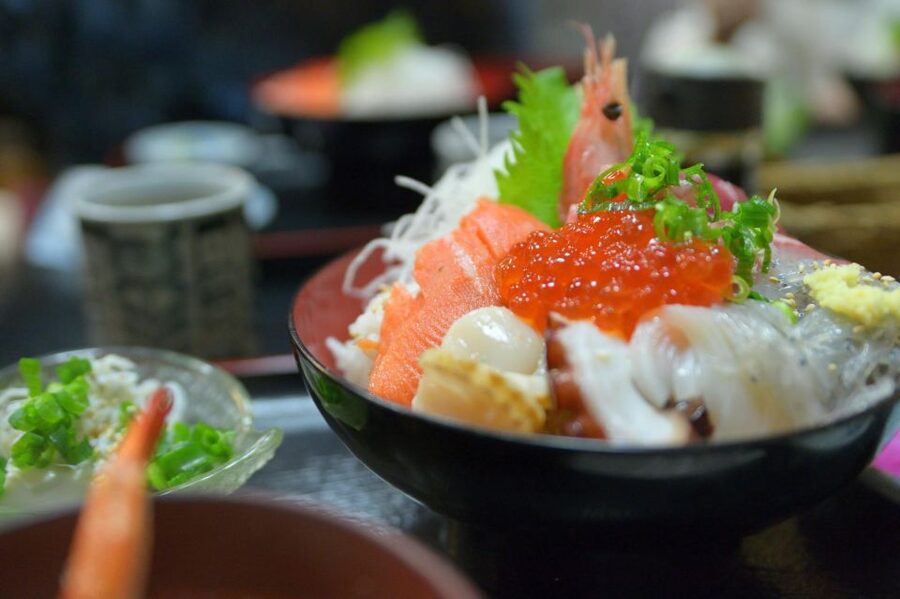
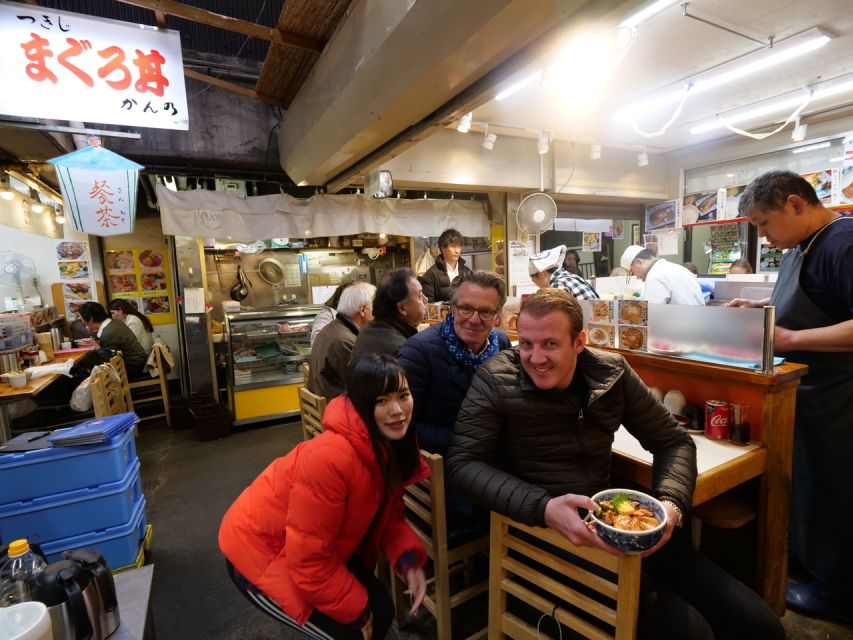
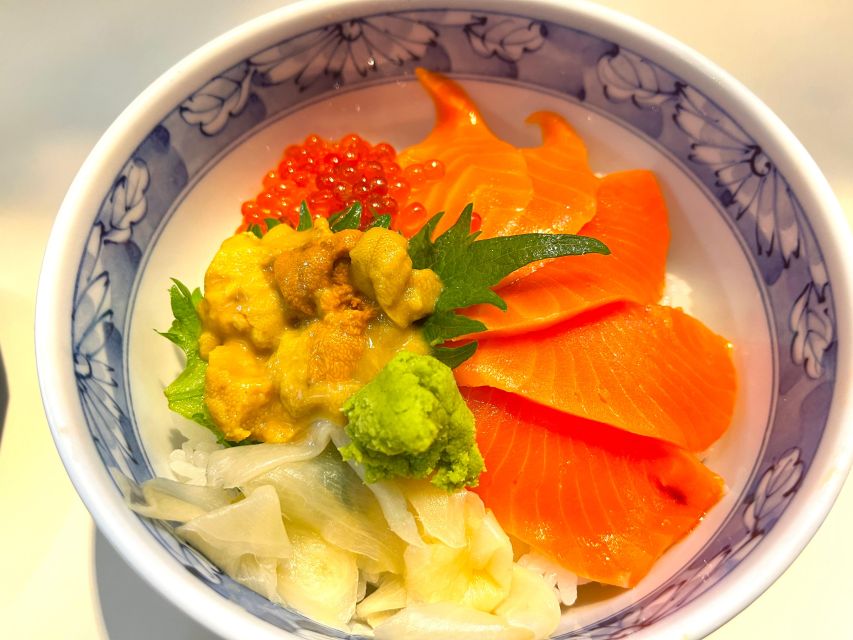
After the tastings and sightseeing, you sit down for a seafood donburi bowl. Donburi means a bowl of rice topped with ingredients, and at Tsukiji that usually means seafood. The lunch is included up to a maximum value of 1,500 yen.
This seated meal is welcome after an hour of standing and weaving through market streets. It also gives you a more complete taste of Tsukiji than scattered bites alone. Several people particularly enjoyed the fresh raw fish, and one meal was described as the best raw fish the diner had eaten.
The exact bowl and restaurant may vary, so you should not book this expecting one fixed menu. The included amount is sensible for a market lunch, but it does not cover every possible upgrade or drink. Japanese beer and sake are available for purchase, yet they are not included in the tour price. The wording about drinks can be easy to misunderstand, so budget extra if you want to pair your bowl with alcohol.
There is conflicting information about dietary choices. The description says vegetarian meals can be available, but the important information states that vegan and vegetarian options are not available. It also warns that allergy-free meals cannot be guaranteed, since the food comes from independent kitchens and substitutions may not be possible at every stop.
For that reason, this tour is best for people who eat seafood and have no serious food restrictions. If you have an allergy or follow a vegetarian or vegan diet, contact the operator before booking, but do not assume a suitable meal will be available.
Shiodome Media Tower and the final city view
The last sightseeing stop is Shiodome Media Tower, where the group visits a high observation area for about 20 minutes. The view gives you a different understanding of the neighborhood after walking at street level.
From above, you can look over Tsukiji, the harbor area, and Tokyo’s dense city blocks. Several guides have used the view to point out the market and surrounding parts of the city. It is a smart ending because the market streets can feel crowded and confusing when you are inside them. From the tower, the area finally makes sense as part of a much larger city.
This is not a dedicated Tokyo observation deck experience, and the stop is fairly short. Still, it adds value that many food walks lack. You get a cultural introduction, market tastings, lunch, and a city view instead of three hours spent only inside food stalls.
The tour returns to Tsukiji Hongan-ji. Some guides have gone beyond the formal route by helping people find the correct train or continue toward their next destination. You should not count on an escort after every tour, but the guides appear willing to offer practical local help when time allows.
What the guides add to the experience
The guide is the tour’s biggest variable, and the feedback gives plenty of strong examples. Mai has been praised for clear English, market history, food suggestions, and personal attention. Meg helped with lunch arrangements and later dining ideas. Kiyo kept a good pace while explaining food and assisting with train directions.
Other guides, including Ken, Taka, Nao, Max, Momo, Hina, Maiko, and Yoichi, have been singled out for friendly explanations and cultural insight. Ken was especially helpful to families and to people continuing by train after the tour. Maiko made the food and cultural material accessible for children.
The group is limited to seven people, which is a useful size in a narrow market. A large tour would be harder to keep together and less practical at food stalls. On some dates, the group may be even smaller, and one couple received a private experience when no other participants joined.
English is the tour language. You should arrive early because the group leaves on time. If you miss it, you cannot join later, receive a refund, or reschedule. That rule matters in Tokyo, where a wrong station exit or a delayed train can quickly cost you 20 minutes.
Is $94 a fair price?
At $94 per person, the tour is not the cheapest way to visit Tsukiji. You can walk through the Outer Market independently, buy your own snacks, and choose a restaurant. If you are comfortable reading menus, navigating crowded streets, and deciding what to try, self-guided exploration may cost less.
The price becomes more reasonable when you add up what you receive:
- A certified English-speaking guide for three hours
- More than five food tastings
- A seafood donburi lunch up to 1,500 yen
- Visits to a Buddhist temple and Shinto shrine
- A high city view from Shiodome
- Tour photos
- A small group capped at seven people
For a first morning in Tokyo, that combination has real value. You get orientation, food advice, and a guide who can explain customs while helping you avoid ordering blindly. The tour can also work well on a short visit or a layover, as one person used it as an introduction to Tokyo.
The value is weaker if you want a relaxed shopping session. One hour is not much time for a market this busy, especially if you want photographs or plan to buy several things. The tour is designed to sample and learn, not to give you an unhurried day at Tsukiji.
Who should book this Tsukiji tour?
I would choose this experience for first-time visitors who want food and culture together. It suits couples, families, solo visitors, and anyone who prefers a guide during a crowded market visit.
It is also a good first-day activity. You learn basic food customs, get a sense of Japanese religious etiquette, receive restaurant ideas, and see a useful city view. Families may appreciate the mix of sweets, seafood, history, and a manageable three-hour length.
Seafood lovers should find the most to enjoy, especially if you like raw fish, oysters, eel, and market snacks. You should think twice if you are vegetarian, vegan, managing a serious allergy, or mainly interested in the former wholesale fish market.
The tour runs for three hours, but the pace can feel full. Wear comfortable shoes, keep your hands free, and bring cash. The market is not an easy place for wheelchairs or strollers at every stop, so check carefully if that affects your plans.
My final verdict
Book this tour if you want a friendly introduction to Tsukiji without having to choose every bite or find every stop yourself. The strongest parts are the excellent local guides, the wide mix of tastings, and the combination of Buddhist, Shinto, food, and city-view stops.
Skip it if you want the old wholesale market, a long photography session, or complete control over your lunch and shopping time. For most first-time visitors who eat seafood, though, the $94 fee buys a useful morning with plenty of flavor and a much clearer sense of what Tsukiji is today.
FAQ
Where does the Tsukiji tour meet?
The meeting point is at Tsukiji Station, near the main gate of Tsukiji Hongan-ji. Look for a guide holding a red or orange MagicalTrip sign. Do not go to Tsukijishijo Station by mistake.
How long does the tour last?
The tour lasts three hours. Starting times vary, so you need to check availability when booking.
Is the old wholesale fish market included?
No. The tour visits Tsukiji Outer Market. The wholesale fish market moved to Toyosu, while Tsukiji continues as a public market area with food stalls and shops.
What food is included?
More than five food tastings are included in the market, along with a seafood donburi lunch. Past tastings have included sushi, oysters, eel, rolled omelet, yakitori, mochi, and taiyaki, but the exact foods can vary.
Are drinks included with lunch?
No. Japanese beer and sake may be available, but you must pay for them separately. Bring extra money if you want a drink.
Can vegetarians or vegans join?
The supplied information is inconsistent, but the important guidance says vegan and vegetarian options are not available. Allergy-free meals also cannot be guaranteed, so contact the operator before booking if you have dietary restrictions.
What happens if I arrive late?
The tour starts on time. If you miss the group, you cannot join later, receive a refund, or reschedule.
More Lunch Trips in Tokyo
- Tokyo: Guided Walking Tour of Tsukiji Market with Lunch
★ 4.4 · 24 reviews - Cooking Class and Lunch at a Tuscan Farmhouse with Local Market Tour from Florence
★ 5.0 · 4,831 reviews - Paris Cooking Class and Lunch with Wine plus Market Visit Option
★ 5.0 · 1,024 reviews - Cairo: Private Pyramids, Museum & Bazaar Tour with Lunch
★ 4.6 · 744 reviews
Just added around Tokyo
- Tokyo: Private Tsukiji Street Food & Sake with Local Guide★ 5.0 · 3 reviews
- Tokyo: Tsukiji Market Guided Tour & Sushi-Making Experience★ 4.4 · 11 reviews
- Tokyo: Tsukiji Market and Hama-rikyu Gardens Guided Tour★ 4.8 · 73 reviews
- Tokyo: Tsukiji Fish Market Culture Tour with Sashimi Tasting★ 4.6 · 54 reviews
- Tokyo: Tsukiji Fish Market Foodie and Educational Tour★ 5.0 · 4 reviews
- Tokyo : Tsukiji Fish Market Food Walking & Shrine Visit Tour★ 5.0 · 3 reviews
- Tokyo’s Kitchen: Tsukiji Market Food & Culture Walk★ 4.7 · 74 reviews
- Tokyo: Guided Walking Tour of Tsukiji Market with Lunch★ 4.4 · 24 reviews
Fish Market Tours, compared.
Tokyo Tsukiji Fish Market Food and Culture Walking Tour
Read our review →
Tokyo Sushi Making Class in Tsukiji with Professional Chef
Read our review →
Tsukiji Fish Market Guided Tour and Sushi Making with Pro Chef
Read our review →Tsukiji Fish Market Food and Culture Walking Tour
Read our review →
Tsukiji Fish Market: Street Food & Culture Walking Tour
Read our review →
Tsukiji Fish Market Small-Group Food Walking Tour
Read our review →
Tsukiji Fish Market Sushi Making Class with Pro Chef
Read our review →Browse the lists this tour appears in