
Review · JAPAN
Nishiki Market Food Tour with Cooking Class
Kyoto tastes better with a local guide. This 150-minute private experience pairs a walk through Nishiki Market with a hands-on cooking class. I like the way you first learn what you are seeing, then use market ingredients to prepare your own meal. I also like the choice of three donburi dishes: seafood, tempura, or chicken and egg. The main drawback is that the market portion may feel brief if you want lots of time to stop, shop, and sample food on your own.
The tour costs $109 per person, including ingredients, tastings, a recipe, and the taxi ride from the market to the cooking studio. That is a fair price for a private guide and a full meal, though it is less attractive if you mainly want to wander Nishiki Market independently. The cooking class has earned a 4.9 out of 5 rating from 42 ratings, with especially strong praise for the guides, clear instruction, and family-friendly format.
Key things to know before booking
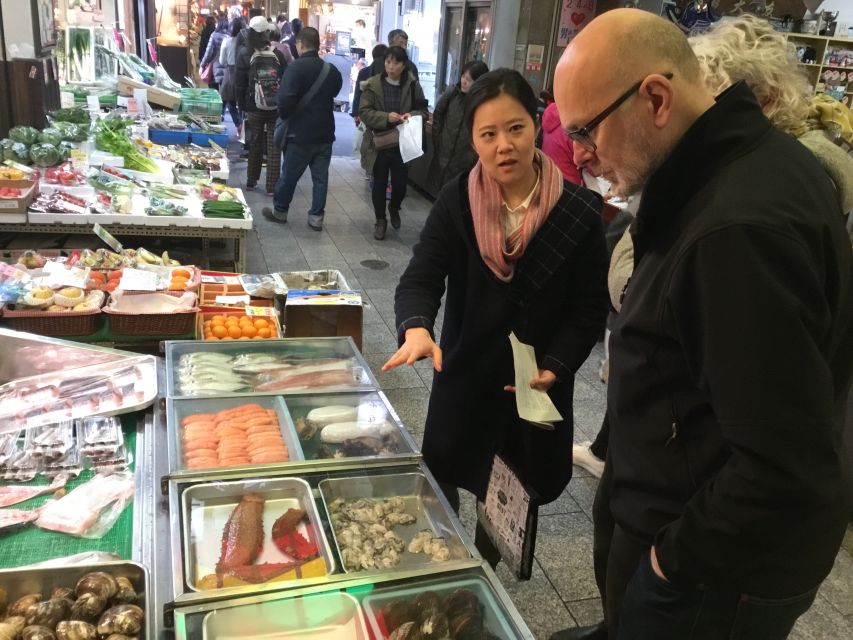
- Nishiki Market is much more than a quick food walk: A guide explains shop specialties, market etiquette, local foods, and the history behind some stalls.
- You cook with ingredients chosen during the tour: Pick from kaisen-don, ten-don, or oyako-don, with ingredients included in the price.
- The tour is private: You can ask questions freely, request some substitutions, and move at a pace that suits your group.
- Pickles and other samples add flavor to the walk: Free Japanese pickle tastings are included, along with other sample foods.
- The cooking studio is a major part of the value: You do not simply watch a demonstration. You prepare and eat your own bowl meal.
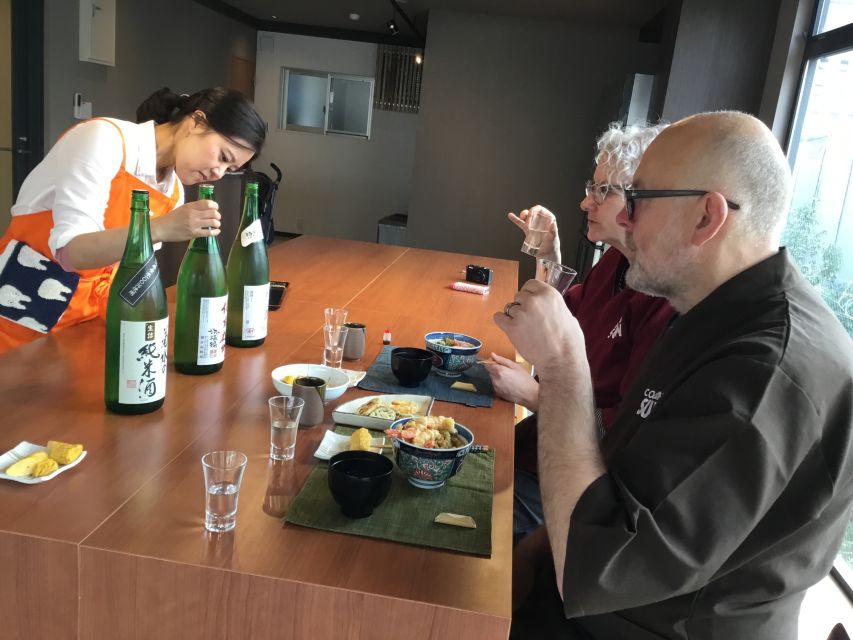
- Optional sake tasting is available: You can taste three different types of sake if you choose.
Meeting Nishiki Market at the western entrance
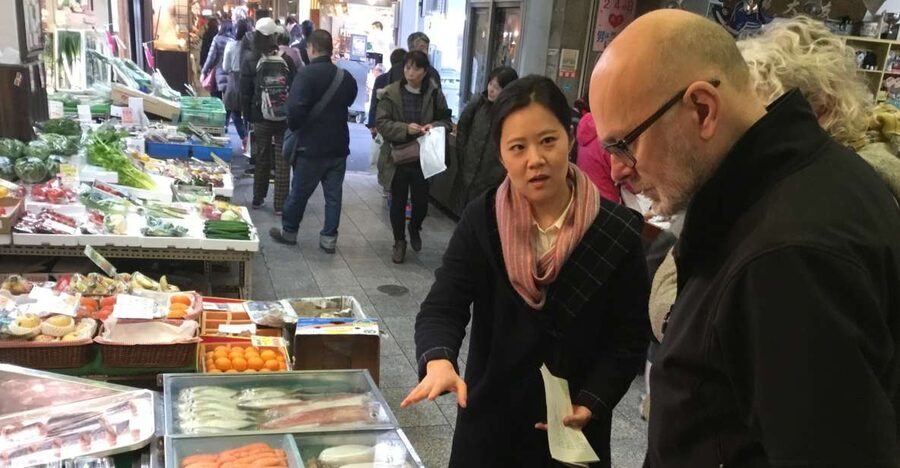
You meet your English-speaking guide at the western entrance of Nishiki Market. The tour begins with a short briefing, then you head into the market for roughly an hour.
Nishiki is easy to cross in about 15 minutes if you are only trying to get from one end to the other. That is not the best way to experience it. The covered arcade is packed with food stalls, shops, samples, and ingredients that can be unfamiliar even if you already know Japanese food. A guide gives the market some order.
The useful part is not simply learning the names of foods. You can ask why a product matters, how it is normally eaten, and how to use it at home. If a shopkeeper has something you want to understand, your guide can help with translation.
That language help makes a real difference. You are not limited to reading signs or guessing from appearance. You can ask about sauces, spices, pickles, seafood, and other foods you may not have seen before.
The guide also helps you separate older, well-known market stalls from newer tourist-oriented businesses. That distinction is useful because Nishiki now serves both local food traditions and visitors looking for quick snacks. If you plan to return later for shopping, pay attention to the places your guide recommends.
More Cooking Classes in Japan
- Tokyo: Tsukiji Market Walking Tour & Sushi Cooking Class
★ 4.6 · 122 reviews - Osaka: Cooking Class & Sake Tasting with Local Market Visit
★ 4.8 · 31 reviews - Private Market Tour and Cooking Class with Kanae, a Sapporo Local
★ 5.0 · 29 reviews
A one-hour walk through Kyoto’s food traditions
The market visit is designed to be active rather than rushed. You may stop for samples, ask questions, and choose ingredients for the cooking class.
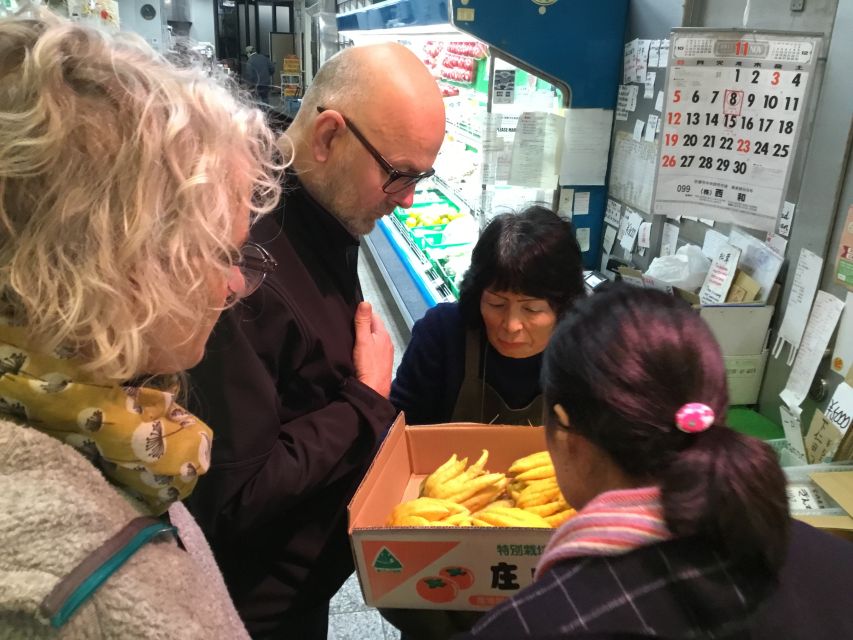
Japanese pickles are one of the included tastings. They are a small detail, but a good one. Pickles appear often in Japanese meals, and tasting several types gives you a better sense of how they balance rice, soup, and richer dishes.
You may also have other sample foods during the walk. The exact selection can vary, but the purpose is clear: to let you try foods in their market setting before you sit down to cook.
Your guide can explain which ingredients are associated with Kyoto and how different products are used. One guide, Chie, has been praised for explaining sauces, brands, cooking methods, and presentation. That kind of instruction suits curious cooks who want more than a quick snack stop.
The market can be crowded. One previous participant felt that the tour provided a good basic introduction despite the crowds, while another wanted more explanation and more time to try foods. I would treat the market walk as an informed orientation, not as a relaxed shopping afternoon.
If you want to buy gifts or ingredients for yourself, ask your guide how the timing works. The tour focuses on the shared experience and the meal preparation, so you may prefer to return to the market afterward for private shopping.
Choosing your donburi meal
After the market tour, you travel by taxi to the cooking studio. The taxi cost is included, which keeps the transition simple and avoids making you navigate to a second location on your own.
At the studio, you choose one of three donburi options:
- Kaisen-don: A seafood bowl
- Ten-don: A tempura bowl
- Oyako-don: Chicken and egg over rice
The menu gives different kinds of cooks something to enjoy. Kaisen-don suits anyone who wants a seafood-focused meal. Ten-don provides the most hands-on cooking appeal for people interested in batter and frying. Oyako-don is likely the most approachable option for home cooks, since chicken and egg are easy ingredients to find outside Japan.
Each person in a private group can choose a different dish. That is a useful feature for families or friends who want to compare meals. Past groups have prepared all three choices at the same time, so you can see how the recipes differ.
The ingredients are included, but foods you decide to buy for yourself are not. Some substitutions may be possible. A request for tofu instead of chicken has been accommodated in the past, but you should raise dietary preferences before or during the tour rather than assume every change is available.
Cooking in a private studio
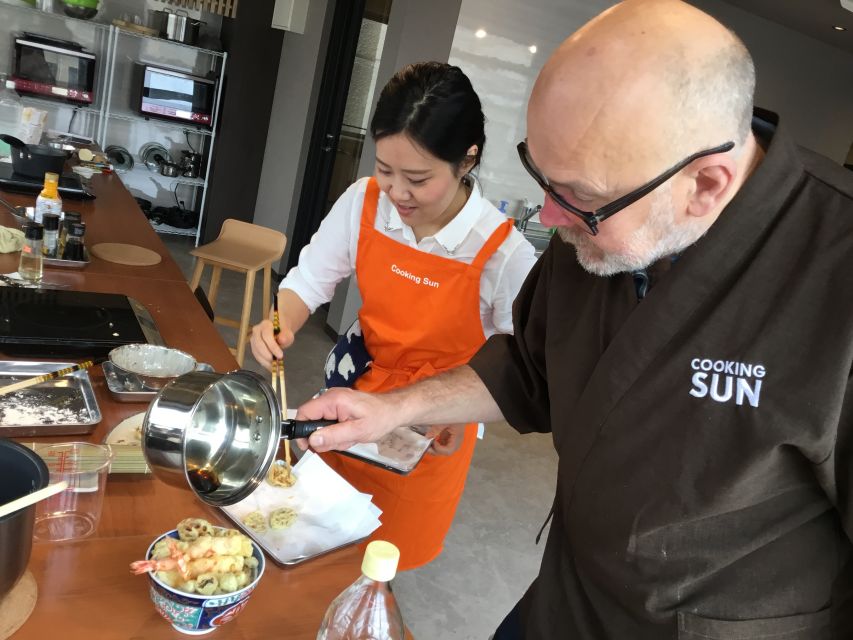
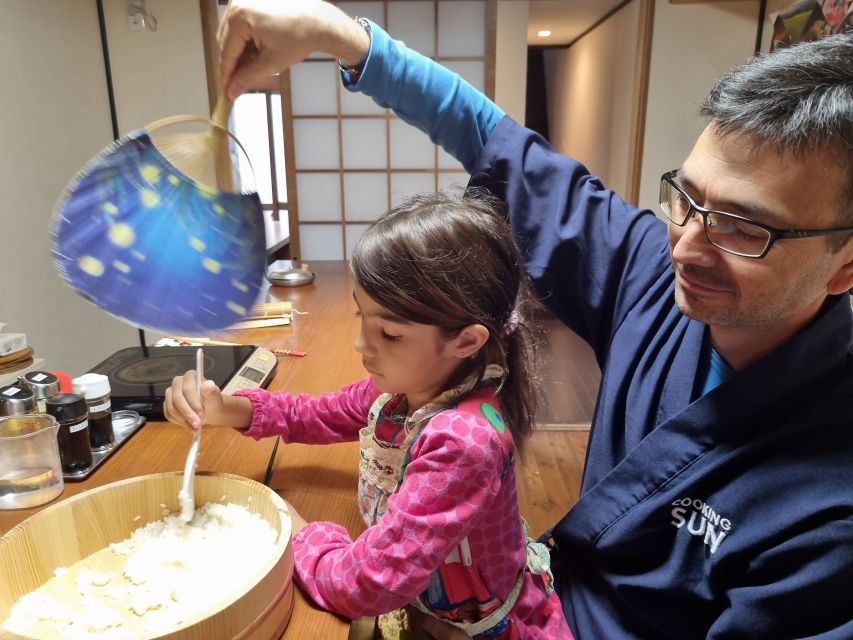
The cooking portion lasts about an hour, including preparation and eating. You work through the recipe with your instructor instead of simply watching someone else cook.
The class covers more than the basic steps. You can expect guidance on sauces, brands, seasoning, presentation, and ways to make the finished dish look attractive. That is especially helpful if you enjoy cooking and want skills you can repeat at home.
Dashi, the Japanese soup stock used in many dishes, is another useful takeaway. One participant was keen to make dashi and several of the dishes again after returning home. The recipe is included, so the class gives you a practical reference rather than just a pleasant meal that ends when you leave.
The setting has been described as clean, well stocked, cozy, and welcoming. The class is private, which lets you ask questions without competing with a large group. You can also spend more time on a step if your group needs it.
The guides have received steady praise for clear English and patient instruction. Names mentioned in past bookings include Chie, Momo, Mio, Mae, and instructors from Cooking Sun. The guide assigned to your date may differ, but the repeated strength is the teaching style: friendly, attentive, and willing to adjust the class to the group.
Families should find the format workable. Children can take part in different cooking steps, and the menu keeps everyone involved. The private setting also helps if your group has different food preferences or cooking experience.
More Street Food Market Tours in Japan
- Kyoto: Local Food Tasting Tour at the Nishiki Market
★ 4.7 · 135 reviews - Kyoto: Nishiki Market and Depachika Food Tour with a Local
★ 4.7 · 76 reviews - Kyoto: Nishiki Market Tour with a Local Foodie & Tastings
★ 4.5 · 67 reviews - Kyoto: Nishiki Market Food Tour
★ 4.9 · 21 reviews
What makes the meal worthwhile
The best part of the class is the connection between the market and the plate. You first see the ingredients in their selling environment, then learn how they become a finished Japanese meal.
That link gives the tour more purpose than a standard cooking lesson. You are not simply handed a recipe and a shopping list. You have already seen the products, asked questions, and tasted some of the foods that accompany the meal.
Eating the donburi you prepared also makes the final hour feel substantial. At $109, you are paying for a private guide, market interpretation, samples, ingredients, transportation to the studio, instruction, and lunch. That is reasonable if you value personal attention and want an activity that combines food, culture, and a meal.
The price is harder to justify if you only want to visit Nishiki Market or only want a quick cooking demonstration. You could explore the arcade on your own for little or no cost, then eat at a nearby restaurant. This experience earns its price through the private format and the teaching.
Optional sake and extra tastings
Three different types of sake are available as an optional tasting. This is a pleasant addition for adults interested in Japanese drinks, but it is not the central reason to book the tour.
The main food tastings are part of the market walk, and Japanese pickles are specifically included. You may also have chances to try other market foods while your guide explains them.
Remember that personal snacks or purchases are not included. If you see something you want to eat later, keep track of the stall and return after the scheduled activity. This is one reason the guide’s recommendations can be valuable: the market is large enough that it is easy to forget where you saw something appealing.
Practical timing and group experience
The total duration is 150 minutes. About one hour is normally spent in Nishiki Market, followed by about one hour of cooking and eating. The remaining time covers the briefing and transfer to the studio.
The private format gives you more control than a fixed large-group tour. You can ask as many questions as you like, and the guide can respond to your interests. If your group cares more about pickles, seafood, sauces, or cooking technique, say so early.
The pace still has limits. Nishiki Market may be crowded, and one hour does not allow you to stop at every stall. You also need to leave the market for the studio, so this is not designed as an open-ended food crawl.
Wear something comfortable for walking and cooking, though the provided information does not specify a dress code. Plan your appetite sensibly. The market includes samples, and you will later prepare and eat a full bowl meal.
Who will enjoy this Nishiki Market experience?
I would recommend this tour most strongly to:
- First-time visitors who want help understanding Nishiki Market
- Home cooks who want Japanese recipes they can repeat
- Families looking for a hands-on activity
- Private groups with different food preferences
- Visitors who enjoy asking detailed questions
- Anyone who wants a meal as part of the activity rather than another restaurant stop
It is also a good fit if you feel uncertain about Japanese food etiquette. One guide explained that eating while walking through the market is not acceptable, a detail many visitors would not know without help.
You may want a different plan if your priority is free time for shopping, a long list of tastings, or a very slow market visit. The tour gives you a useful introduction, but the cooking class takes up half the experience.
Cancellation and booking flexibility
You can cancel up to 24 hours in advance for a full refund. Reserve-now, pay-later booking is available, so you do not have to pay at the time of booking.
The meeting point is the western side entrance of Nishiki Market. The activity is offered in English and operates as a private group, with starting times available according to the date you choose.
Final verdict: book it for the connection between market and meal
Book this experience if you want to understand what you are seeing at Nishiki Market and then turn those ingredients into lunch. The strongest features are the private English-language guidance, the three donburi choices, the included ingredients, and the chance to leave with a recipe you can use at home.
I would not book it solely for market shopping. The walk is informative but limited to about an hour, and the crowds can make tasting and conversation harder at times. For most people, though, the combination works well: learn the food, cook the food, then eat it while the lesson is still fresh.
FAQ
Where does the Nishiki Market tour begin?
The tour begins at the western side entrance of Nishiki Market.
How long does the experience last?
The experience lasts 150 minutes. The schedule typically includes about one hour in the market and one hour cooking and eating at the studio, along with the briefing and transfer.
Is the tour conducted in English?
Yes. The guide and cooking instruction are provided in English.
Is this a private tour?
Yes. It is offered as a private group, allowing you to ask questions and move at your group’s pace.
Which donburi dishes can I choose?
You can choose kaisen-don with seafood, ten-don with tempura, or oyako-don with chicken and egg.
Are the cooking ingredients included?
Yes. The ingredients for the donburi cooking class are included, as well as the recipe and sample foods from the tour. Personal foods or purchases are not included.
Is transportation to the cooking studio included?
Yes. The taxi cost from Nishiki Market to the cooking studio is included.
More Cooking Classes in Kyoto
- Hanoi Cooking Class: Culture, Local Market & Meaning CSR Impact
★ 5.0 · 5,147 reviews - 5 Traditional Dishes Hanoi Cooking Class with Market Trip
★ 5.0 · 4,890 reviews - Cooking Class and Lunch at a Tuscan Farmhouse with Local Market Tour from Florence
★ 5.0 · 4,831 reviews - Chiang Mai: Cooking Class, Market & Thai Herbs Garden Tour
★ 4.9 · 4,824 reviews
More Street Food Market Tours in Kyoto
- Taste of Nishiki Market Walking Food Tour with Local guide
★ 5.0 · 17 reviews - Kyoto: Nishiki Market Food Tour with Local Guide
★ 4.6 · 5 reviews - Dubai: Old Town, Creek, Museums, Souks, & Street Food Tour
★ 4.8 · 10,816 reviews - Dubai: Old Town, Souks, Street Food, Guided Tour & Abra Ride
★ 4.9 · 7,170 reviews
Just added around Kyoto
- Taste of Nishiki Market Walking Food Tour with Local guide★ 5.0 · 17 reviews
- Kyoto: Wholesale Fish Market Walking Tour★ 5.0 · 2 reviews
- Kyoto: Nishiki Market Tour with a Local Foodie & Tastings★ 4.5 · 67 reviews
- Golden Pavilion, Nijo Castle, & Nishiki Market Half day tour★ 5.0 · 29 reviews
- Kyoto: Nishiki Market Food Tour with Local Guide★ 4.6 · 5 reviews
- Kyoto: Nishiki Market Food Tour★ 4.9 · 21 reviews
- Kyoto: Enjoy Sushi & Market Tour! Best for Family & Couple!★ 4.8 · 20 reviews
- Kyoto: Nishiki Market and Depachika Food Tour with a Local★ 4.7 · 76 reviews
Street Food Market Tours, compared.

Old Town, Creek, Museums, Souks, & Street Food Tour
Read our review →
Old Town, Souks, Street Food, Guided Tour & Abra Ride
Read our review →

London Bridge & Borough Market Food Tour with 7 Authentic Dishes
Read our review →
Old Town, Souks, Street Food, Guided Tour & Abra Ride
Read our review →
Small Group Cooking Class & Market Food Tour in Florence
Read our review →
Browse the lists this tour appears in