
Review · JAPAN
Osaka: Cooking Class & Sake Tasting with Local Market Visit
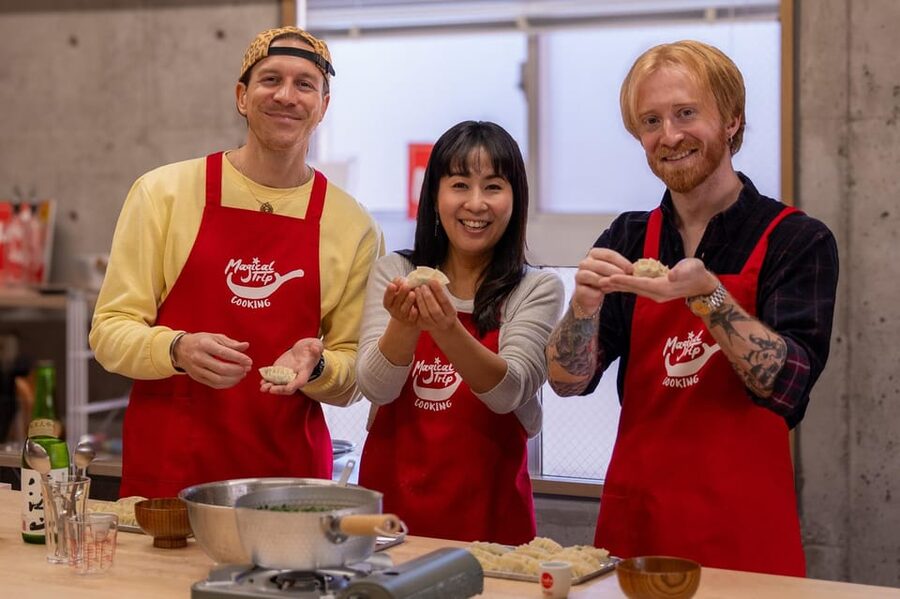
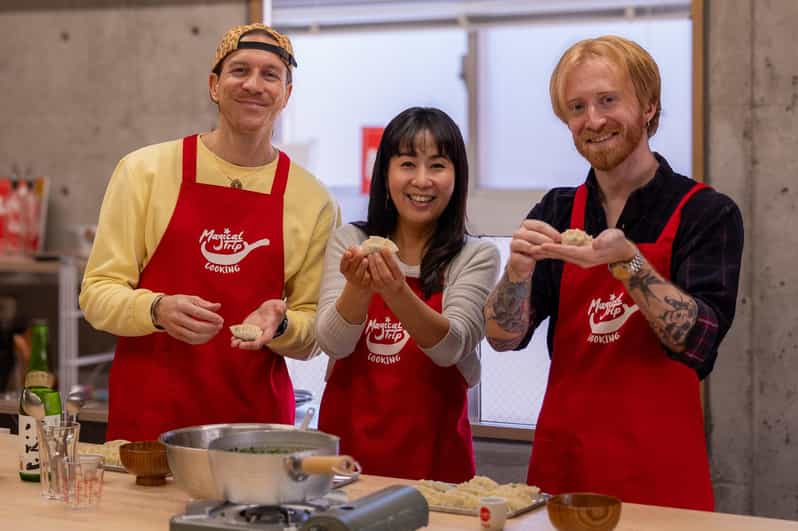
Food can explain a city fast. This four-hour Osaka cooking class takes you from a neighborhood supermarket to a small studio kitchen, where you prepare niku-sui, okonomiyaki, and gyoza with an English-speaking local guide. I like the small group of seven or fewer, which keeps the cooking social without turning the class into a crowded production line. I also like that the recipes are simple enough to repeat at home, rather than being restaurant tricks that require a special kitchen.
The market visit gives the class a useful local angle, and the included three canned drinks make the cooking feel relaxed rather than formal. The main consideration is dietary flexibility: gluten-free meals are not available, and allergies cannot be guaranteed away, so you need to share dietary needs at least one day before the class.
Key points at a glance
- Three Osaka staples in one class: Make beefy niku-sui, savory okonomiyaki, and folded gyoza.
- A supermarket before the stove: See the ingredients as Osaka residents buy them for home cooking.
- A genuinely social format: The class is limited to seven people, with time to chat, ask questions, and choose background music.
- Drinks are part of the meal: Three canned alcoholic or non-alcoholic drinks are included, along with tea.
- Guides shape the experience: Chie, Eri, Emi, Akko, Ayu, and Linda have each been praised for friendly teaching and cultural explanations.
- Useful souvenir: Recipes are provided after the class, and guide-taken photos are sent by email.
Starting Near Minami Morimachi Station
The meeting point is in front of FamilyMart, about one minute from Exit 4B of Minami Morimachi Station. That is a practical start, especially if you are still finding your way around Osaka. You are not asked to navigate a large shopping complex or search for a hidden storefront.
Arrive early. The class starts on time, and a late arrival cannot join, reschedule, or receive a refund. This is worth taking seriously because the experience begins with the supermarket visit, and the guide cannot simply pause the group while someone catches up.
The four-hour duration gives the class enough room to feel like a proper activity rather than a quick demonstration. You have time to shop, cook several dishes, eat lunch, drink, and talk. If you have a packed Osaka schedule, set aside most of a half-day. This is not a quick stop between attractions.
More Cooking Classes in Japan
- Tokyo: Tsukiji Market Walking Tour & Sushi Cooking Class
★ 4.6 · 122 reviews - Nishiki Market Food Tour with Cooking Class
★ 4.9 · 42 reviews - Private Market Tour and Cooking Class with Kanae, a Sapporo Local
★ 5.0 · 29 reviews
The Supermarket Visit Shows Everyday Osaka
The first useful move is shopping for the meal. Your guide takes you to a local supermarket and selects the ingredients needed for the dishes. This may sound simple, but it gives you a look at the food Osaka residents buy for ordinary home meals.
A supermarket also helps explain ingredients that can seem mysterious on a restaurant menu. Your guide can point out products, answer questions about Japanese cooking, and explain how the items fit into the recipes. The experience is not just about eating Japanese food. It shows you how the meal begins, with a basket and a shopping list.
The supermarket portion is short compared with the cooking, but it adds context that a studio-only class would miss. You see the food before it has been chopped, mixed, folded, or covered in sauce. Several people have especially enjoyed this part because it made the class feel closer to cooking at home.
There is one practical point to remember: Osaka summers can reach 40°C, while winter temperatures can fall to -5°C. Dress for the weather because you will spend part of the activity walking outside before returning to the studio.
Niku-Sui Brings a Local Comfort Dish to the Table
Niku-sui is a beef soup associated with Osaka home cooking. It is less internationally famous than okonomiyaki, which makes it a useful dish to learn here. The soup is hearty, direct, and built from familiar ingredients, making it a good example of how Japanese cooking can be both comforting and uncomplicated.
Your guide walks you through the preparation step by step. That matters if you have little kitchen experience, since the class is designed for beginners. You do not need to arrive with knife skills or a long list of Japanese cooking terms.
The soup also gives the meal balance. Okonomiyaki and gyoza are more substantial, while niku-sui adds a warm, savory element. You prepare all three dishes as part of one lunch, so expect a generous amount of food.
Okonomiyaki Explains Osaka’s Food Personality
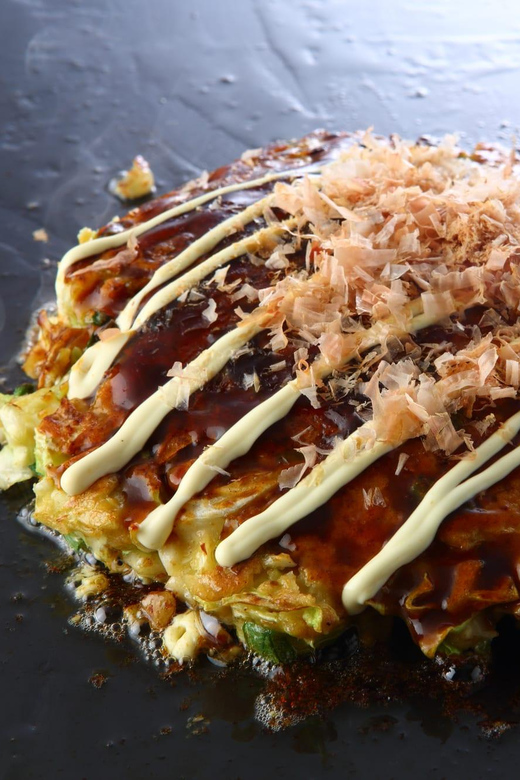
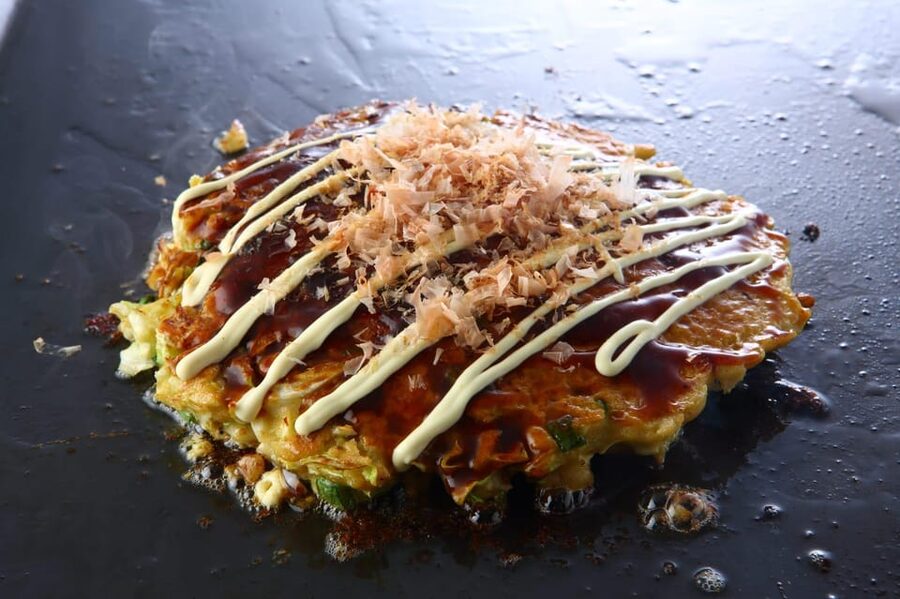
Okonomiyaki is Osaka’s famous savory pancake, and it is the dish most closely tied to the city’s casual food culture. The name suggests cooking according to what you like, and that flexibility is part of the fun. Your guide explains the method, then helps you understand how small choices can change the result.
The class presents okonomiyaki as a dish you can make at home with simple ingredients. That is important for a cooking class priced at $90 per person. You are not paying only for lunch. You are learning a repeatable recipe, getting the ingredients included, and leaving with instructions for making it again.
I like this home-cooking angle because it gives the class a longer life after Osaka. You can use the recipe for a casual dinner party or a relaxed weekend meal. The dish also suits groups well, since preparing it together naturally creates conversation and a few laughs.
More Farmers Market Tours in Japan:
- Hanoi Cooking Class: Culture, Local Market & Meaning CSR Impact
★ 5.0 · 5,147 reviews - Cooking Class and Lunch at a Tuscan Farmhouse with Local Market Tour from Florence
★ 5.0 · 4,831 reviews - Chef Guided Food Tour of Pike Place Market
★ 5.0 · 3,733 reviews - Cooking Class Hoi An:Local Market, Basket Boat, Fishing & Cooking
★ 5.0 · 3,660 reviews
Folding Gyoza Turns Cooking Into a Group Activity
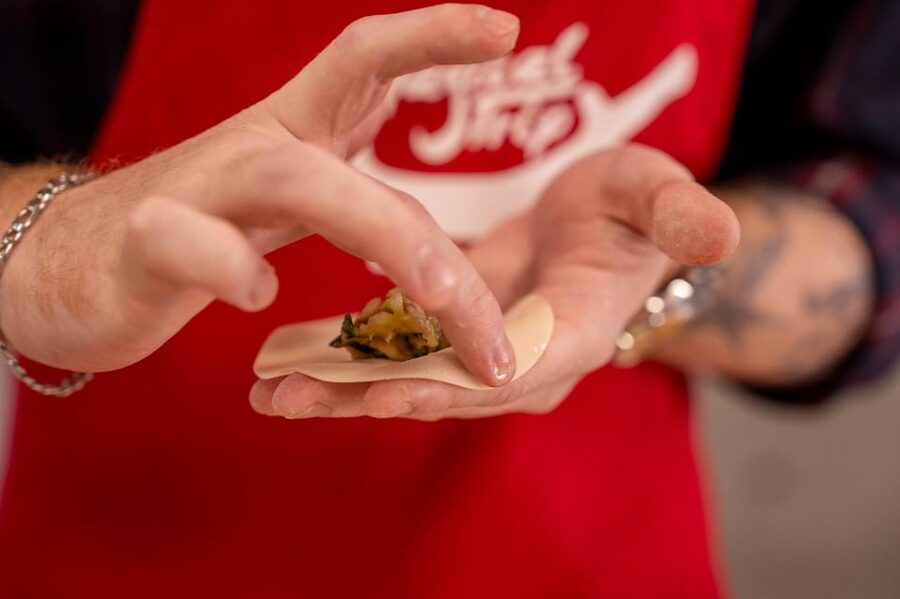
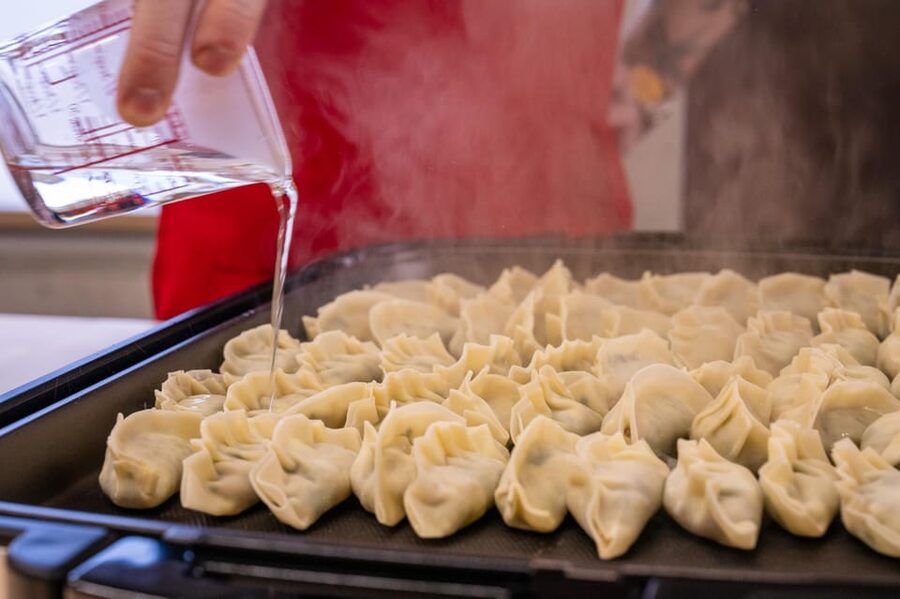
Gyoza is the most hands-on part of the class. You fold the dumplings yourself, which means the final shapes may vary from one person to the next. That is part of the appeal. The activity is easy to understand, but it leaves room for practice and a little friendly competition.
The cooking process lets you see how the dumplings change from soft wrappers to crisp, juicy bites. Your guide helps with each step, so you do not need previous experience. If you are cooking with friends or family, this is likely to be the most playful part of the session.
It also works well for solo participants. A group of up to seven gives you a natural chance to talk with other people while your hands are busy. The class has a relaxed tone, and one account described choosing the background music while preparing the recipes. That detail tells you what kind of setting to expect: informal, participatory, and more like cooking with a friendly local than sitting through a stiff lesson.
Guides Make the Difference
The guide is central to this experience. The class is offered in English, and past sessions have been led by Chie, Eri, Emi, Akko, Ayu, and Linda. Their roles go beyond measuring ingredients. They explain Japanese products, local customs, Osaka and Kobe, and wider aspects of Japanese history and regional food.
Chie has been praised for making the recipes easy and fun while adding useful explanations about products and different parts of Japan. Eri has helped with city and culture questions and kept the class calm and friendly. Emi has been especially good at explaining the correct method for all three dishes, while Akko has been praised for making the meal feel warm and personal.
Ayu has provided restaurant and sightseeing suggestions around Osaka, which can be handy if you take the class early in your stay. Linda even decorated the room for a Christmas session and helped arrange an extra sake purchase. That kind of personal attention cannot be guaranteed on every date, but it shows how much the host can shape the mood.
The guides are not simply there to keep you on schedule. They are the bridge between the supermarket, the recipes, and the culture behind the food. If you enjoy asking questions, this class gives you room to do it.
Sake, Beer, and Conversation at the Table
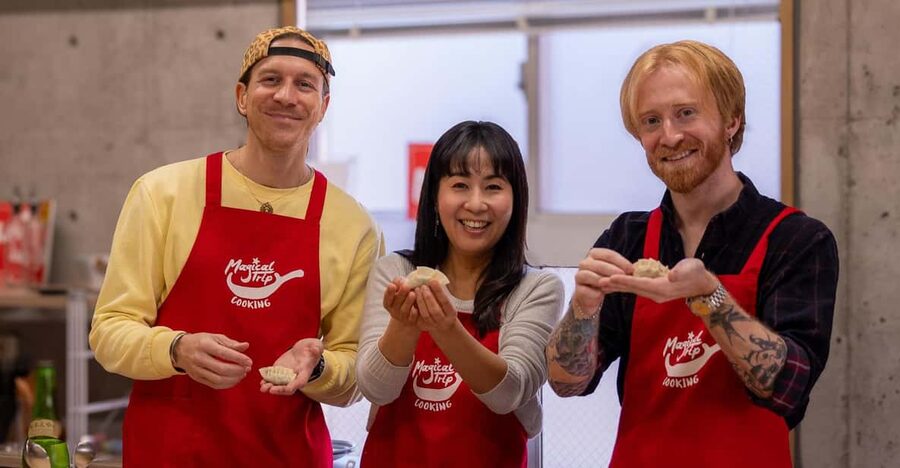
Three canned drinks are included, and you can choose alcoholic or non-alcoholic options. Sake and beer are available, along with soft drinks, and tea is served during the experience.
The drink service adds a social layer to the cooking. You can chat while chopping, folding, and waiting for food to cook. It also lets you sample familiar Japanese beverages without committing to a separate tasting tour.
This is not presented as a formal sake seminar. If you want detailed instruction on brewing methods, regional classifications, or a large tasting flight, this is not the right activity. Here, drinks support the meal and conversation. That makes the format more approachable, especially for couples, families with older children, and solo participants who want an easy way to meet people.
Anyone over 12 can join because the class involves cutting and heating. Alcoholic drinks are optional, so the experience can work for people who do not drink.
What You Get for $90
At $90 per person, the price is fair if you value participation and local guidance. The fee covers four hours, all ingredients, lunch, tea, three canned drinks, recipe downloads, guide-taken photos, and an English-speaking local host.
The lunch alone is not the reason to book. You could spend less on a restaurant meal in Osaka. The value comes from learning three dishes, visiting a supermarket, asking questions about food and culture, and taking the recipes home.
The small group also matters. With a maximum of seven participants, the guide can watch your folding technique, clarify instructions, and keep the session moving without rushing. A larger cooking class might cost less, but it can leave you standing at the back while someone else handles the important steps.
You should book this for the experience, not just the food. If your main goal is eating as cheaply as possible, spend the money at a neighborhood restaurant instead. If you want a practical memory that continues after your trip, the class makes stronger sense.
Dietary Needs and Mobility Considerations
Vegans and vegetarians are welcome, but you must report dietary needs or allergies at least one day ahead. Same-day requests cannot be accommodated. Gluten-free options are unavailable.
The cooking takes place in external kitchens, and allergy-free meals cannot be guaranteed. Substitutions may not always be possible, though the team will try to compensate at other stops. Anyone with a serious allergy should consider this limitation carefully before booking.
The route may include places that are not accessible to wheelchairs or strollers. The experience is not recommended for people with mobility problems, and a private tour is suggested if walking is difficult. This is useful information to know before paying, since the supermarket visit is an active part of the class rather than a purely seated lesson.
Who Will Enjoy This Class Most
I would recommend this experience to anyone who wants a friendly introduction to Osaka cooking without needing advanced skills. It suits couples, families with children over 12, groups of friends, and solo visitors who like conversation.
It is also a good choice for your first or last day in Osaka. Early in your visit, the guide can offer tips about the city. On your final day, the class gives you a practical souvenir and a final meal that feels connected to local daily life.
The class is less suitable if you need gluten-free food, require strict allergy control, use a wheelchair or stroller, or want a serious technical cooking course. It is also not ideal if you dislike group activities or prefer a quiet restaurant meal.
Practical Details Before You Book
Plan on four hours from the meeting point near Minami Morimachi Station. Wear comfortable clothes suited to the season, and do not arrive hungry enough to become impatient, since you will first shop and then prepare the meal.
Cancellation is free up to 24 hours in advance for a full refund. You can also reserve now and pay later, which helps if your Osaka schedule is still changing.
The class is offered in English with a live local guide. Photos taken during the activity are sent afterward by email, and the recipes are available for you to download. Those extras are small, but they make it easier to remember the class and repeat the dishes at home.
Should You Book It?
Book this class if you want to cook, talk, and learn how Osaka food fits into ordinary home life. The supermarket visit, three approachable recipes, included drinks, and small group make the $90 price reasonable for a four-hour experience.
I would be especially happy to recommend it to first-time visitors, curious home cooks, and anyone who wants more than another restaurant meal. Skip it if gluten-free food, strict allergy protection, or full mobility access is essential. For everyone else, this is a warm, practical way to spend half a day and bring a little Osaka back to your own kitchen.
FAQ
Where does the Osaka cooking class meet?
The meeting point is in front of FamilyMart, about one minute from Exit 4B of Minami Morimachi Station.
How long does the experience last?
The cooking class, supermarket visit, meal, and tasting last four hours.
What dishes will I make?
You will prepare niku-sui, okonomiyaki, and gyoza.
Is lunch included?
Yes. The cooking experience includes the lunch you prepare during the class.
Are drinks included?
Yes. Three canned drinks are included, and you can choose alcoholic or non-alcoholic options. Tea is also served.
Is the class suitable for beginners?
Yes. The guide explains each recipe step by step, and no cooking experience is required.
Can vegetarians or vegans join?
Yes. Vegans and vegetarians are welcome, but you must report dietary needs at least one day in advance.
Are gluten-free options available?
No. Gluten-free options are not available.
What is the maximum group size?
The class is limited to seven participants.
Can I cancel for a refund?
Yes. You can cancel up to 24 hours in advance for a full refund. Late arrivals cannot join, reschedule, or receive a refund.
More Food and Drink Trips in Japan
- Tokyo Tsukiji Fish Market Food and Culture Walking Tour
★ 5.0 · 3,184 reviews - Tokyo: Tsukiji Fish Market Food and Walking tour
★ 5.0 · 1,724 reviews - Tokyo: Tsukiji Fish Market Food and Culture Walking Tour
★ 4.7 · 757 reviews - Tsukiji Fish Market: Street Food & Culture Walking Tour
★ 5.0 · 669 reviews
More Drinks Tours in Japan
- Hokkaido Sapporo :Hill of Buddha, Beer Museum & Fish Market
★ 4.6 · 9 reviews - Tokyo: Private Tsukiji Street Food & Sake with Local Guide
★ 5.0 · 3 reviews - Cancun Taco Tour, Local Beer and Night Market with Transportation
★ 5.0 · 816 reviews - Self-Guided Craft Beer Tour (Explore Old Market)
★ 4.5 · 19 reviews
Just added around Japan
- Nagoya Super Market Tour & Home Cooking Class with a Local, Akiko★ 5.0 · 10 reviews
- Tokyo: Private Tsukiji Street Food & Sake with Local Guide★ 5.0 · 3 reviews
- Tokyo: Tsukiji Market Guided Tour & Sushi-Making Experience★ 4.4 · 11 reviews
- 【Family pack】Tokyo: Tsukiji fish market food tour★ 5.0 · 3 reviews
- Tokyo: Tsukiji Market and Hama-rikyu Gardens Guided Tour★ 4.8 · 73 reviews
- Tokyo: Tsukiji Fish Market Culture Tour with Sashimi Tasting★ 4.6 · 54 reviews
- Tokyo: Tsukiji Fish Market Foodie and Educational Tour★ 5.0 · 4 reviews
- Tokyo : Tsukiji Fish Market Food Walking & Shrine Visit Tour★ 5.0 · 3 reviews
Local & Farmers Market Tours, compared.
Hanoi Cooking Class: Culture, Local Market & Meaning CSR Impact
Read our review →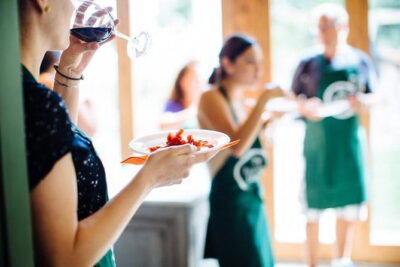
Cooking Class and Lunch at a Tuscan Farmhouse with Local Market Tour from Florence
Read our review →
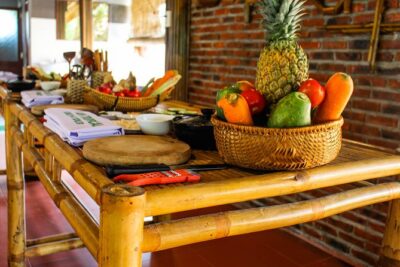
Cooking Class Hoi An:Local Market, Basket Boat, Fishing & Cooking
Read our review →
London Bridge & Borough Market Food Tour with 7 Authentic Dishes
Read our review →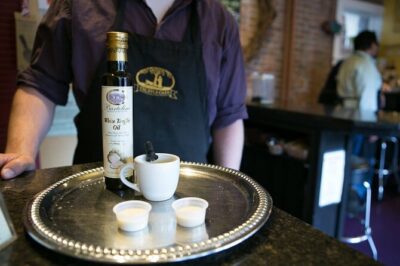
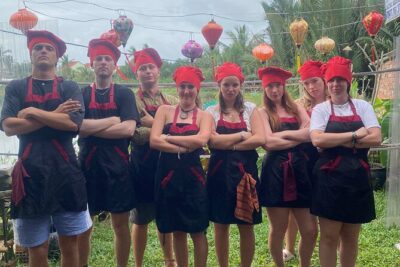
Hoi An Cooking Class(Local market,Basket Boat,Fishing & Cooking)
Read our review →
Browse the lists this tour appears in