
Review · INDONESIA
Ubud: Cooking Class with Transfers and Optional Market Visit
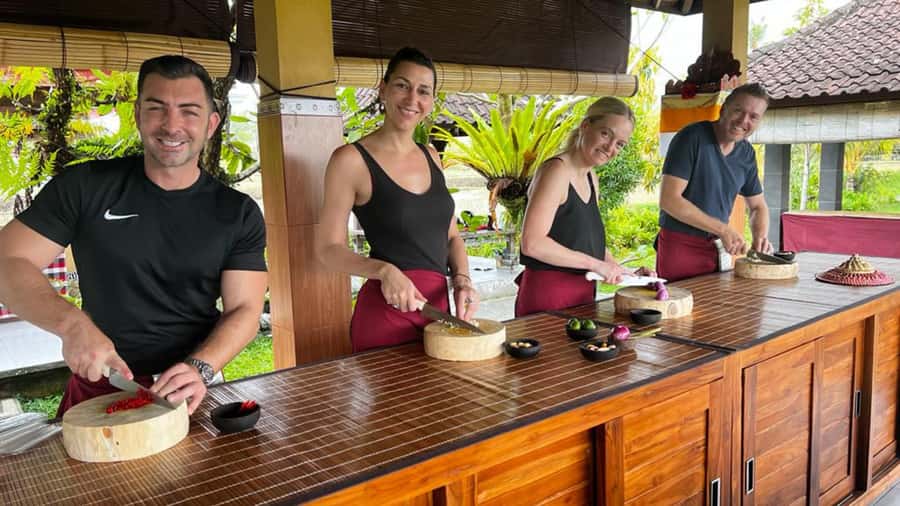
Come hungry, leave with new recipes. This Ubud cooking class is much more than a meal-preparation lesson: you visit a local market on the morning option, learn about Balinese customs, cook with local chefs, and eat what you make. I especially like the small groups of up to 10 and the way the class brings food, family life, architecture, and Hindu traditions together. The price is also hard to fault at $21 per person, though the evening class does not include the market visit.
The best part is the practical format. You chop, grind, mix, season, and cook rather than simply watch a demonstration. A possible drawback is that the menu and exact setting can vary, so you should not expect the same dishes or host at every session. Still, the consistently strong 4.9 rating and warm feedback about chefs such as Eri, Made, and Madi point to a very dependable experience.
Key points to know before booking
- Morning classes include the Ubud market visit: You explore produce stalls with your guide before heading to the cooking school.
- The class is genuinely hands-on: You help prepare dishes rather than sitting back while someone else cooks.
- Expect a cultural lesson as well as a food lesson: Balinese religion, family life, offerings, architecture, and rice farming may all enter the conversation.
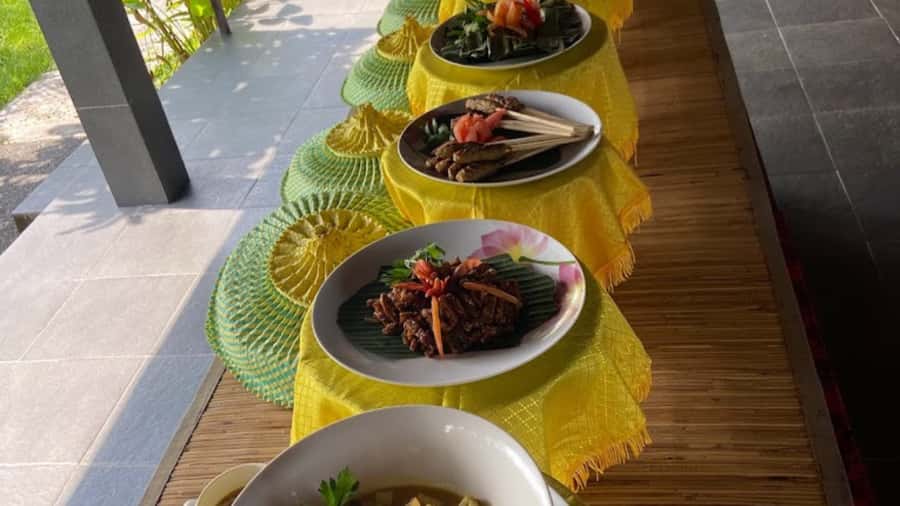
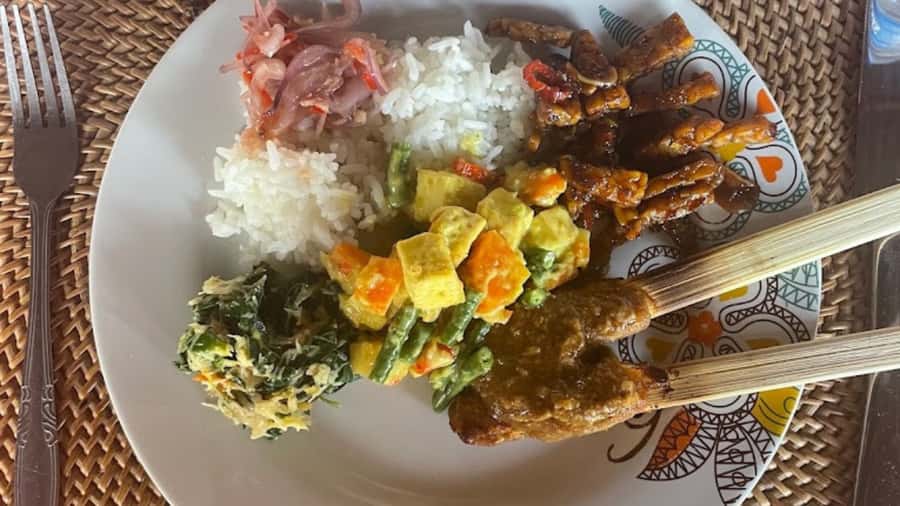
- The final meal is generous: Past menus have included curries, satays, soup, sambal, tempeh, pancakes, desserts, and as many as 10 dishes.
- Small groups make a difference: With no more than 10 people, the chef can give you a task and answer questions.
- Transfers are limited by area and option: Hotel pickup and drop-off apply in Ubud Center when selected. Sebali and Keliki pickups cost an extra 50,000 Indonesian rupiah per person.
Why this Ubud class feels different
Ubud has no shortage of cooking classes, but this one works because food is only part of the lesson. You are not simply shown how to make a curry and sent on your way. The local hosts explain why ingredients matter, how food fits into daily life, and how Balinese traditions appear in the kitchen.
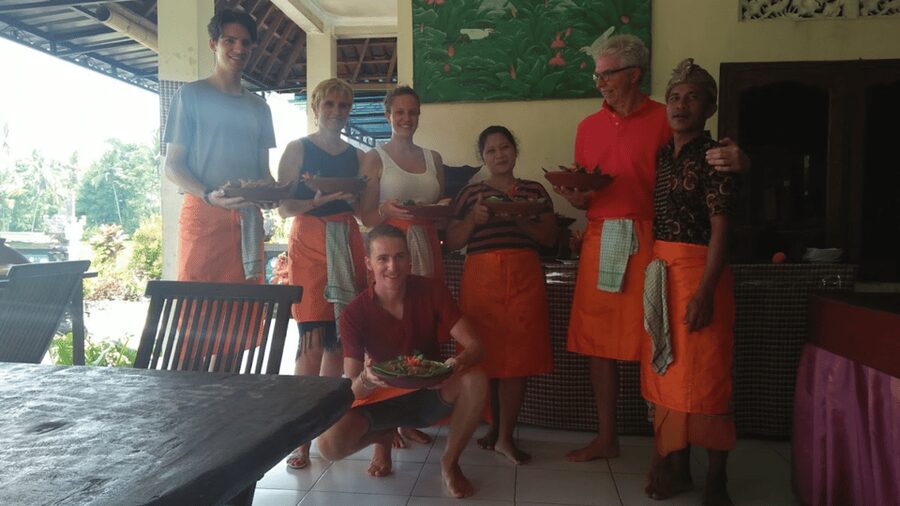
Several sessions include time in a family compound or a rural outdoor kitchen. That setting gives the class a more personal feel than a polished restaurant kitchen. You might hear about Balinese house design, meet members of the host family, or learn how a small Hindu offering is made. One session included a canang offering, the small arrangement of flowers and leaves used in daily religious practice.
I like this cultural layer because it helps you understand what you are eating. Sambal, rice, spices, tempeh, and satay stop being items on a menu and become part of a living food culture. The class also suits first-time cooks because the instructions are described as clear and patient, with every member of the group given something to do.
More Cooking Classes in Indonesia
- Balinese Ubud cooking school (9 Dish Cooking and Market Tour)
★ 5.0 · 540 reviews - Ubud: Balinese Cooking Class and Market Tour
★ 4.8 · 531 reviews - Balinese Cooking class with traditional morning market visit
★ 5.0 · 161 reviews
The morning market visit adds real value
Choose the morning option if you want the fullest experience. After pickup, you meet your guide at the local market and walk among stalls filled with fruit, vegetables, herbs, spices, and other cooking ingredients.
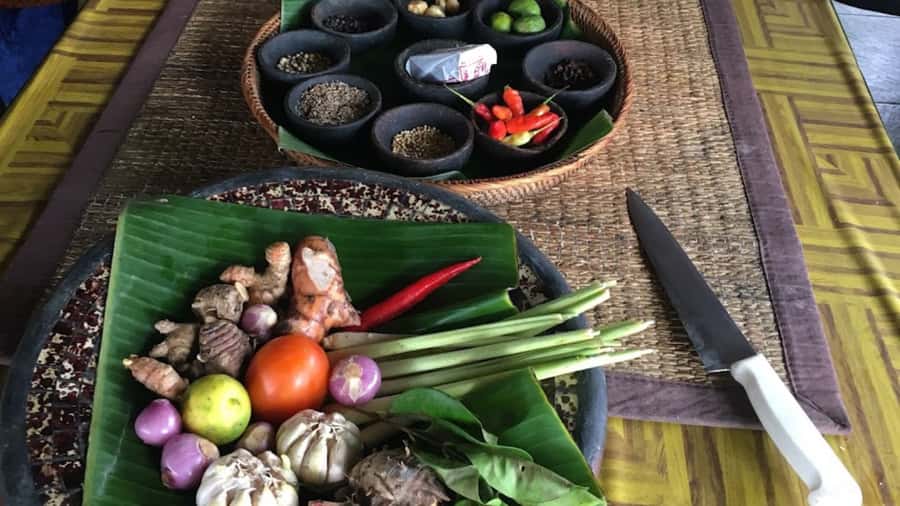
This is not just shopping for show. Your guide explains what the produce is, how it is used, and why certain ingredients appear so often in Balinese cooking. A market visit also gives you a chance to ask practical questions that are easy to miss in a kitchen, such as how local cooks choose fresh produce or which spices create a particular aroma.
The market can be crowded and sensory, so keep your expectations realistic. It is a working local market, not a calm food museum. That is part of its appeal, but you may find the noise, heat, and movement tiring if you prefer a slower morning.
The visit is available only with the morning class. If you choose the afternoon or evening option, you go directly to the cooking venue. That shorter format may suit you if you have already visited a market, prefer a later start, or want to keep your morning free.
Cooking in a family setting
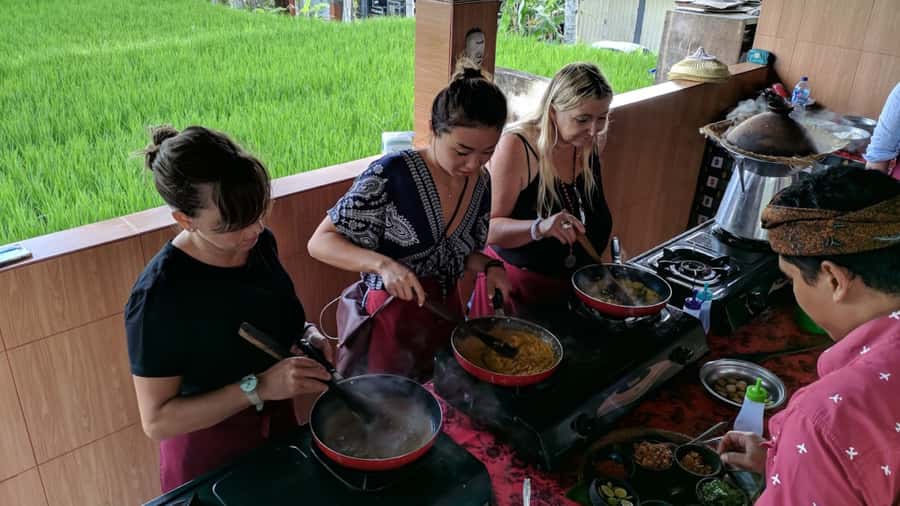
After the market, or after pickup for the later class, you travel to the cooking location. The setting has been described as a rural outdoor kitchen surrounded by greenery, with views of rice fields in some sessions. Other participants have found it easy to reach by scooter, with parking available.
The surroundings matter. Cooking in a local compound or open-air kitchen gives you a glimpse of everyday Bali that a hotel-based lesson cannot provide. You may learn about family compounds, traditional architecture, rice cultivation, or village life before the chopping boards come out.
The setting is not presented as a luxury culinary studio, and that is worth knowing. The appeal is local character, not sleek design. Equipment has been described as clean, and the cooking area is well equipped, but you should come for the people and the food rather than a polished professional-kitchen look.
The hosts often begin with a welcome drink or local fruit. Some classes also include a short explanation of Balinese culture before cooking starts. That opening helps set the tone and gives you context for the ingredients and customs you will encounter.
What you actually cook
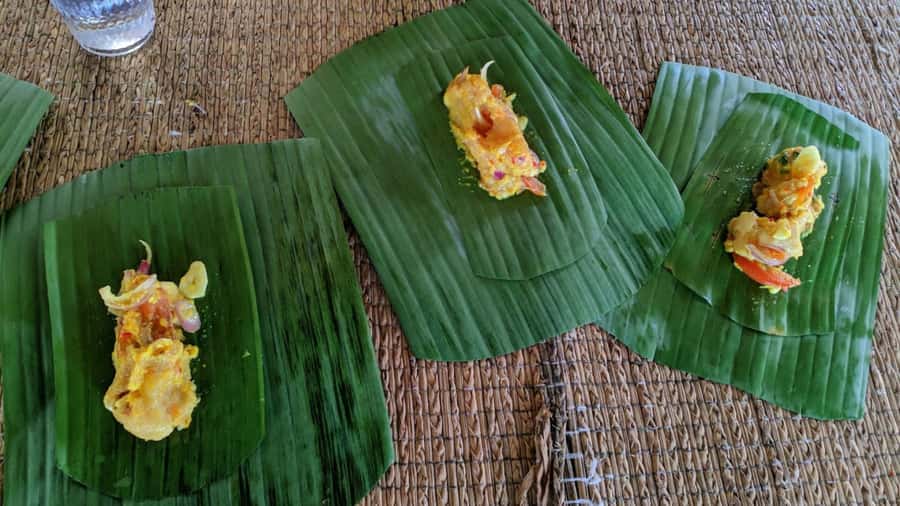
The exact menu is not specified in advance, but the class focuses on traditional Balinese food. Depending on the session, you may prepare fragrant curry, satay, soup, sambal, vegetables, tempeh, rice-based dishes, pancakes, and dessert.
The range is one of the strongest parts of the activity. You get to work with many herbs, spices, vegetables, and sauces rather than learning one recipe in isolation. One group prepared 10 dishes, while another described a buffet-style meal with about 10 separate items. That is a lot of food for a $21 class.
Do not expect every person to cook every dish alone. The work is generally shared across the group, with the chef explaining each step while participants prepare different components. This team format keeps the class moving and lets you taste a broad menu, but it means you may not personally handle every single recipe from start to finish.
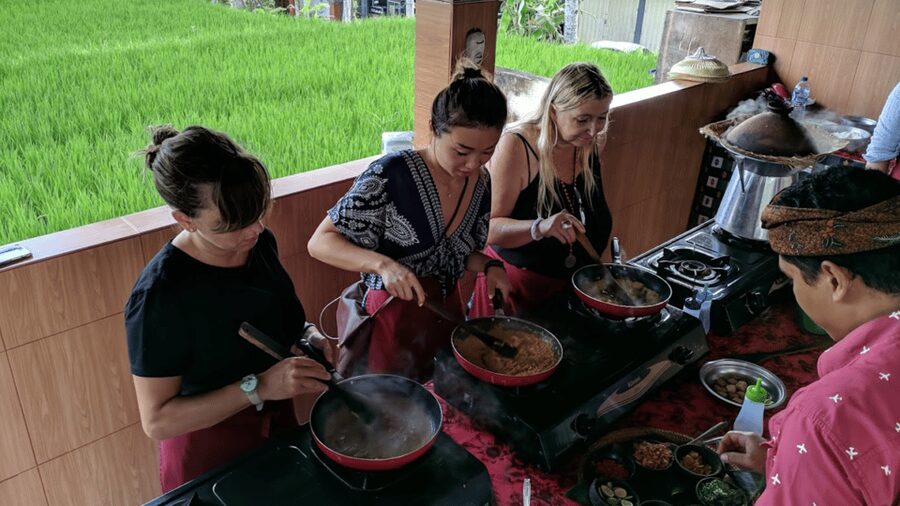
The cooking techniques are approachable. You may chop vegetables, grind spices, mix ingredients, assemble satay, prepare sambal, or help with pancakes. The instructors focus on practical methods you can repeat at home, rather than complicated restaurant tricks.
I particularly like that the class explains the logic behind the food. You learn how spice mixtures are built and how preparation affects the final dish. That makes the recipes easier to remember once you are back home with a kitchen that probably lacks a tropical garden and a full team of helpers.
More Cooking Classes in Ubud
- PRIVATE Ubud Market Tour & Balinese Cooking Class with Putu
★ 5.0 · 125 reviews - Jambangan bali cooking class with morning market tour
★ 5.0 · 35 reviews - Balinese cooking class/Go shopping at the market, cook, eat
★ 5.0 · 12 reviews
The chefs make or break the experience
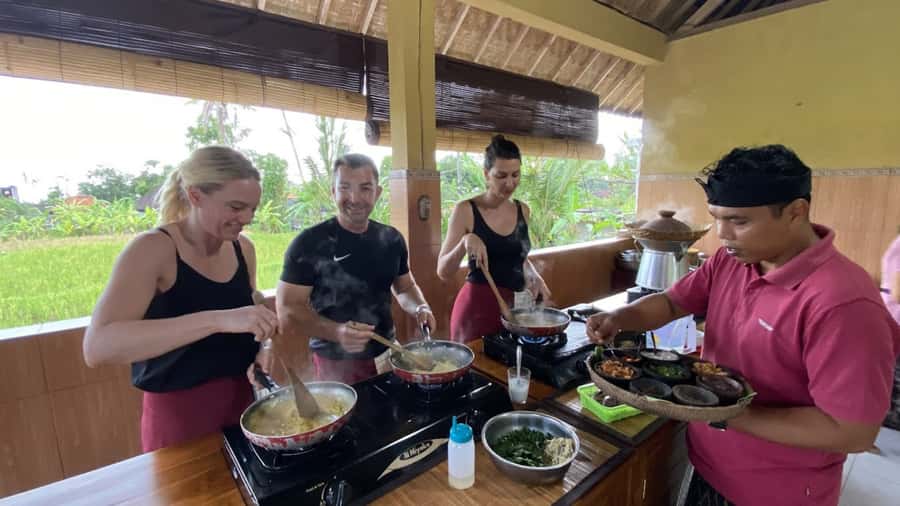
The strongest praise centers on the local hosts. Eri is singled out for her warmth, calm teaching style, and cultural explanations. Made is praised for clear instructions and an easy manner, while Madi has led market walks and explained ingredients in detail.
The names may vary by date, but the pattern is consistent: the class depends heavily on friendly instructors who involve the whole group. That is important in a shared cooking lesson. A rushed chef could leave you standing around, while an overbearing one could turn the class into a lecture.
Here, the teaching style appears patient and inclusive. Participants describe every person receiving a task, from cutting and mixing spices to cooking. The small group size helps, especially if you want to ask how an ingredient could be replaced at home.
English is the stated language, and an English-speaking live guide leads the activity. An English audio guide is also listed. If you have detailed food questions, ask them as you go rather than waiting until the final meal, when the group may be busy eating.
Culture, offerings, and daily life
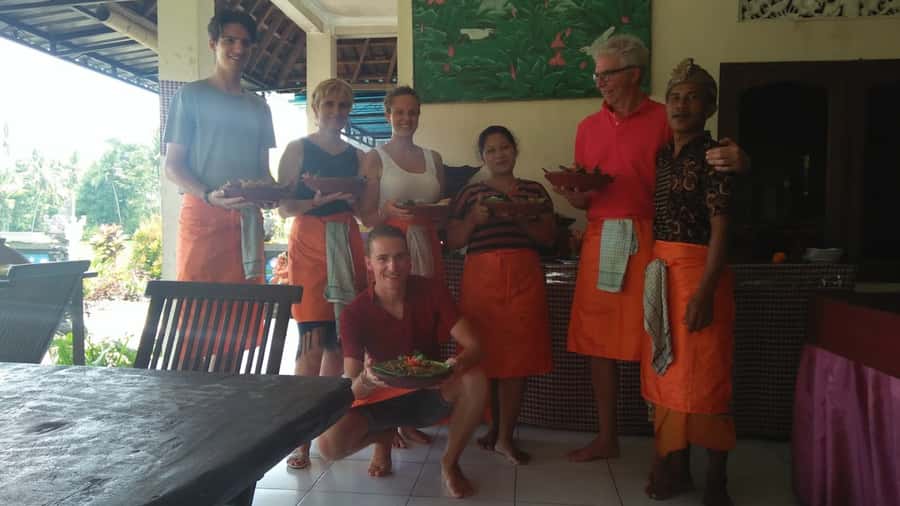
The cultural material is not a token introduction. Sessions have covered Balinese religion, family life, traditional architecture, Hindu offerings, and the way rice is grown. One class included a visit to nearby rice fields, where the chef explained the growing process.
You may also learn how to make a canang offering. This small ritual object gives you a direct link between the cooking lesson and Balinese spiritual life. Some participants were able to take their offering back to their accommodation, and one session connected the activity with the Galungan festival.
This part of the experience is valuable because it avoids treating Balinese food as an isolated product. Meals, offerings, farming, family compounds, and religious practice are connected here. If you want a quick recipe lesson with no cultural discussion, you may find this class more involved than necessary. If you want to understand the place as well as eat well, it adds a lot.
The final feast is the reward
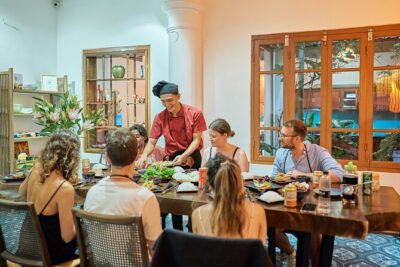
Once the cooking is finished, everyone sits down together to eat. The meal is usually served as a shared or buffet-style spread, which lets you sample the full range of dishes prepared by the group.
This is where the teamwork pays off. The food is described as fresh, generous, and delicious, with particular praise for tempeh, soup, satay, sambal, pancakes, and dessert. You do not simply receive a snack at the end. You sit down to a proper meal made from the ingredients you have just prepared.
The shared table also gives the class a social side. You meet people from different countries, compare cooking habits, and share the results of your work. That can be especially enjoyable if you are travelling alone or want an easy way to meet others without committing to a full evening tour.
Come hungry. The meal can be substantial, and some groups prepare a large number of dishes. The food is the main reward, but the atmosphere matters too. A relaxed meal with the chef and other participants makes the experience feel more like a visit to a local home than a standard paid activity.
Dietary needs and family suitability
The class has accommodated vegetarians, people who do not eat fish, allergies, and other food intolerances. Alternatives have included rice flour for pancakes, and the hosts have been described as willing to adjust dishes.
You should still state your dietary requirements when booking and remind the chef at the start. The available alternatives may depend on the menu and the ingredients that day. The experience is not presented as a fully separate allergy-certified kitchen, so people with severe allergies should ask careful questions before participating.
Families can enjoy this class, including families with teenagers. The hands-on format gives children and older students a clear role, while the cultural explanations add something beyond a simple meal. Very young children may find the chopping, heat, and length of the class less suitable, but no specific minimum age is provided.
Price, timing, and pickup details
At $21 per person, this is excellent value if the class includes a substantial meal, transport, cultural instruction, and, for the morning option, a market tour. You are also receiving a certificate of completion, and some sessions provide a small recipe book so you can recreate the dishes at home.
The activity lasts about two to three hours. The morning option takes longer if the market visit and transfers are included, while the later class offers a more direct route to the cooking session. Check the start time carefully because availability varies by date.
Hotel pickup and drop-off are included for selected morning and afternoon options within Ubud Center. You are asked to wait in your hotel lobby. Pickup from Sebali or Keliki costs an additional 50,000 rupiah per person.
For evening sessions, the meeting point is at the parking field. This arrangement is used because traffic can be difficult at night. Confirm the exact meeting instructions before setting out, especially if you are travelling independently by scooter.
Cancellation is free up to 24 hours before the activity for a full refund, and you can reserve now and pay later. Those terms are useful if your Bali plans may shift, but the main practical issue remains choosing the right session: morning for the market, later in the day for a shorter cooking-focused visit.
Who should book this class?
I would recommend it to you if you want three things in one outing: food, local contact, and cultural explanation. It works well for couples, solo visitors, families with teenagers, and anyone who enjoys learning by doing.
It is also a good choice if you have never tried Balinese food beyond restaurant menus. You will learn what goes into the sauces, how spices are combined, and why the dishes taste different from the Indonesian food often served abroad.
You may want to skip it if you dislike group activities, cannot eat shared food, or want a highly formal chef-led course. The class is collaborative, and the menu is set by the local program rather than designed around your personal preferences.
Should you book it?
Yes, especially if you choose the morning option and want the market visit. The combination of local ingredients, hands-on cooking, a family-style setting, cultural lessons, and a large final meal offers unusually good value at $21.
For the best experience, tell the host about dietary needs ahead of time, wear comfortable clothes, arrive hungry, and allow extra time for Ubud traffic. Choose the evening class if you mainly want the cooking and meal. Choose the morning class if you want the broader picture of Balinese food, farming, markets, and tradition.
FAQ
How much does the Ubud cooking class cost?
The listed price is $21 per person.
How long does the activity last?
The cooking class and related activities take about two to three hours.
Is hotel pickup included?
Hotel pickup and drop-off are included at Ubud Center when you select an option that includes transfers. Pickup from Sebali or Keliki costs an extra 50,000 rupiah per person.
Does every class include a market visit?
No. The market visit is included with the morning tour only. Afternoon and evening options do not include it.
What language is the class conducted in?
The live guide and class language are English. An English audio guide is also included.
How many people are in the group?
The class is a small-group experience limited to 10 participants.
Is a meal included?
Yes. You eat the dishes prepared during the class as part of the experience.
Can the class accommodate dietary requirements?
The hosts have provided alternatives for vegetarians, people who do not eat fish, and people with allergies or intolerances. Tell the provider about your needs before the class.
What happens if I need to cancel?
You can cancel up to 24 hours in advance for a full refund. The activity also offers a reserve-now, pay-later option.
Just added around Ubud
- Jambangan bali cooking class with morning market tour★ 5.0 · 35 reviews
- Balinese cooking class/Go shopping at the market, cook, eat★ 5.0 · 12 reviews
- Bali: Safari Zoo and Ubud Palace and Market Day Tour★ 4.7 · 6 reviews
- Bali: Ubud Monkey Forest, Coffee Plantation, and Market Tour★ 5.0 · 5 reviews
- Bali – Ubud Night Market Food Tour★ 3.8 · 14 reviews
- Bali Night Market Experience and Ubud Highlights tour★ 5.0 · 16 reviews
- Ubud Day Tour : Waterfall, Temple and Local Night Market Tour★ 5.0 · 17 reviews
- Bali Food Tour: Savor Street Food and Night Market Adventures★ 5.0 · 46 reviews
Cooking Classes, compared.
Hanoi Cooking Class: Culture, Local Market & Meaning CSR Impact
Read our review →
5 Traditional Dishes Hanoi Cooking Class with Market Trip
Read our review →
Cooking Class and Lunch at a Tuscan Farmhouse with Local Market Tour from Florence
Read our review →
Cooking Class, Market & Thai Herbs Garden Tour
Read our review →
Authentic Cooking Class with Market & Farm Visit
Read our review →
Paella Cooking Experience & Boqueria Market Tour
Read our review →
Cooking Class Hoi An:Local Market, Basket Boat, Fishing & Cooking
Read our review →
Hoi An Cooking Class(Market,BasketBoat Crabfishing&Cooking Class)
Read our review →Browse the lists this tour appears in