
Review · INDONESIA
Ubud: Balinese Cooking Class and Market Tour
Start with a market, finish with lunch. I like the hands-on cooking and the chance to see ingredients where local families buy them, followed by a generous meal you prepare yourself. I also like the small-group format, limited to 14 people, which keeps the class social without making it feel like a cooking factory. The main drawback is simple: only the morning class includes the market and rice-paddy visits.
The four-hour experience costs $23 per person, a strong value if you want food, culture, and transport in one outing. Pickup is included around Ubud, but the class is not suitable for children under six or wheelchair users, and the market can be muddy, cramped, and quite raw.
Key points to know before you book
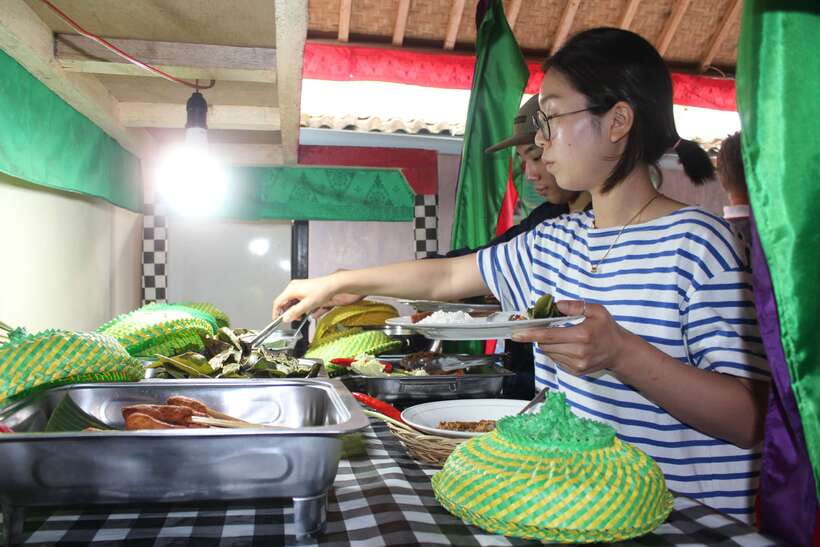
- Nine Balinese dishes: You prepare a full spread by hand, then sit down and eat what you made.
- Morning market access: The morning option visits a genuine local market, with fruit tasting and an explanation of how people buy and sell food.
- Rice-paddy stop: Morning groups also visit local rice fields and learn why rice matters so much in Balinese life.
- Family-run setting: The cooking class takes place in a family compound, giving the day a personal, local feel.
- Afternoon alternative: The later class skips the market and paddies but includes making a traditional canang offering before dinner.
- Practical value: Hotel pickup in the Ubud area, an English-speaking guide, recipes by PDF, and a meal are all included.
A market morning before the cooking begins
The best version of this experience is the morning class. Your day starts with pickup in the Ubud area, then a visit to a local market before you reach the cooking school.
This is not a polished food hall designed for sightseeing. It is a working market, with tight spaces, dirt floors, flies, strong smells, and the occasional sight of meat being prepared. That may sound unappealing, but it is also what gives the visit its value. You see the setting where everyday ingredients are bought, rather than only seeing neatly arranged produce for visitors.
Your guide explains how people buy and sell food and points out ingredients used in Balinese cooking. You also get to taste local fruit and other small treats. Guides such as Putu and Tata have been praised for clear English and for making unfamiliar fruit easier to understand by comparing it with produce from home.
I suggest wearing shoes that can handle wet or uneven ground. Bring cash if you want to buy anything, though purchases are not part of the activity. A camera is useful, but keep it discreet. This is a place where people are shopping and working, not posing for a staged cultural display.
The market stop will not suit everyone. If you dislike raw food stalls, cramped quarters, or strong smells, you may find it uncomfortable. If you want to see ordinary food shopping in Bali, though, this is one of the more useful parts of the morning.
More Cooking Classes in Indonesia
- Ubud: Cooking Class with Transfers and Optional Market Visit
★ 4.9 · 824 reviews - Balinese Ubud cooking school (9 Dish Cooking and Market Tour)
★ 5.0 · 540 reviews - Balinese Cooking class with traditional morning market visit
★ 5.0 · 161 reviews
Rice paddies and the importance of rice
After the market, the morning route includes a visit to local rice paddies. The timing matters here. This is not an extended countryside walk, but it gives you a short look at the fields and a better sense of how central rice is to Balinese daily life.
A guide may explain the work connected with growing rice and why the crop appears so often in Balinese meals and ceremonies. One guide, Putu, was praised for her personal understanding of farming because she has a rice field herself.
I like this stop because it connects the food on your plate with the land around Ubud. It also gives the morning some breathing room between the market and the cooking session. Still, you should not book this experience expecting a long agricultural tour. The rice-field visit is a supporting part of the day, not the main event.
Choose the morning schedule specifically for this combination: market, paddies, then cooking. If you book the afternoon session, these stops are not included.
Arriving at a family compound in Ubud
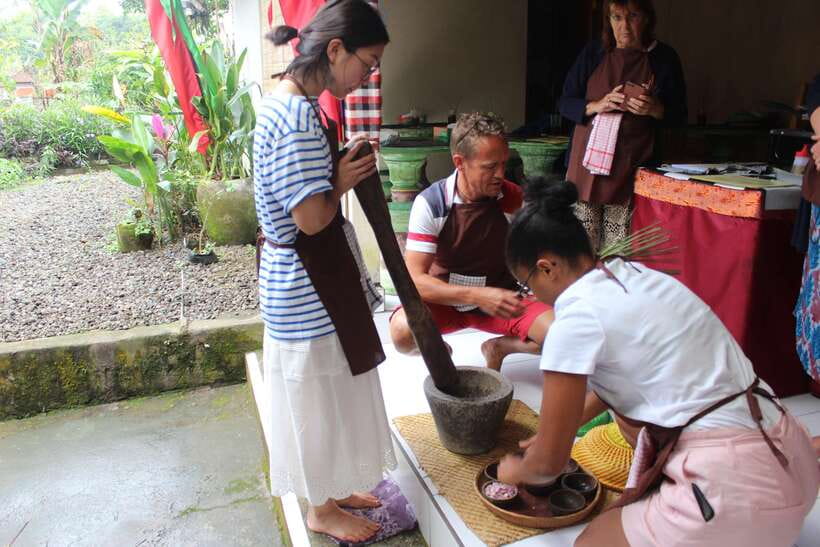
The cooking class takes place inside a family compound. That setting is more meaningful than a standard restaurant kitchen because the class feels connected to everyday Balinese family life.
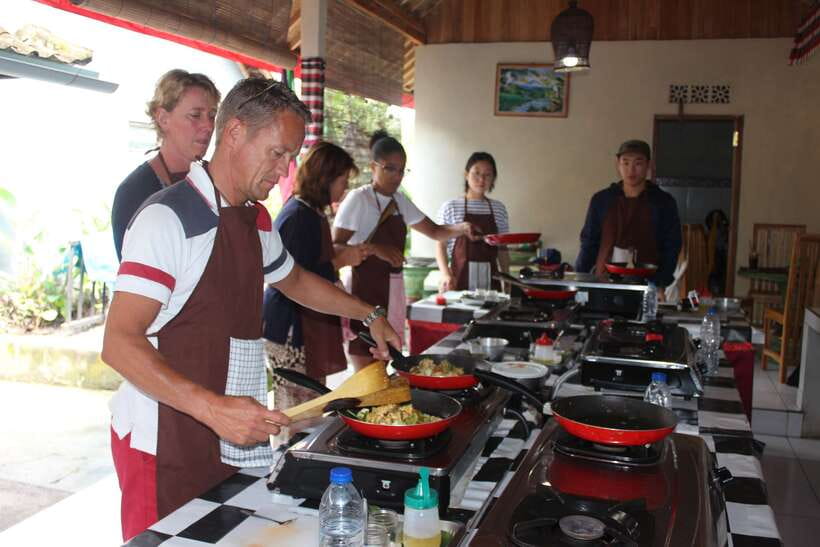
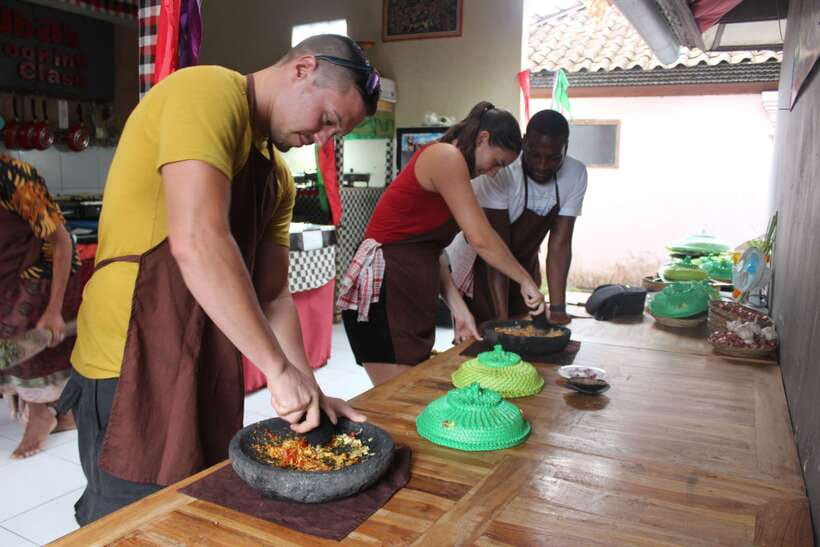
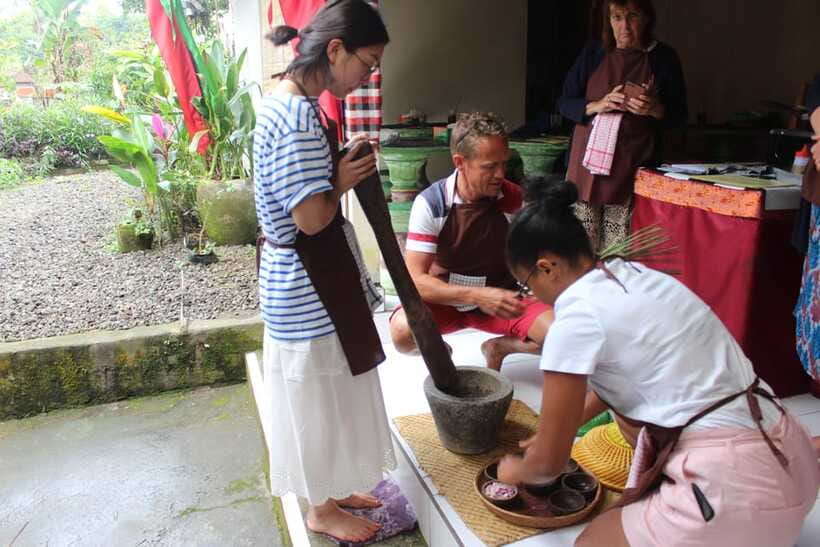
The staff first introduce the ingredients and explain the dishes you will prepare. English is used throughout, and the class is designed for participation. You are not simply watching a chef work while standing behind a counter. You chop, mix, pound, prepare, and help bring the dishes together, with assistance when you need it.
The teaching style sounds well judged. It gives you enough guidance to avoid confusion, but it does not make you nervous about making a mistake. That is important in a group class, especially when some people cook often and others rarely touch a knife.
Groups can reach 14 participants, though some sessions are much smaller. A four-person afternoon class, for example, allows more personal attention and more time with the chef. Larger groups should still work well, but you may share tasks more often.
The staff are frequently praised for being friendly, funny, and patient. Instructors named Wayan, Puta, and Butu have each been singled out for helping the class run smoothly. Names and staff may vary by date, but the format remains the same: an English-speaking chef leads you through the preparation while assistants help around the cooking area.
Nine dishes, one very full lunch
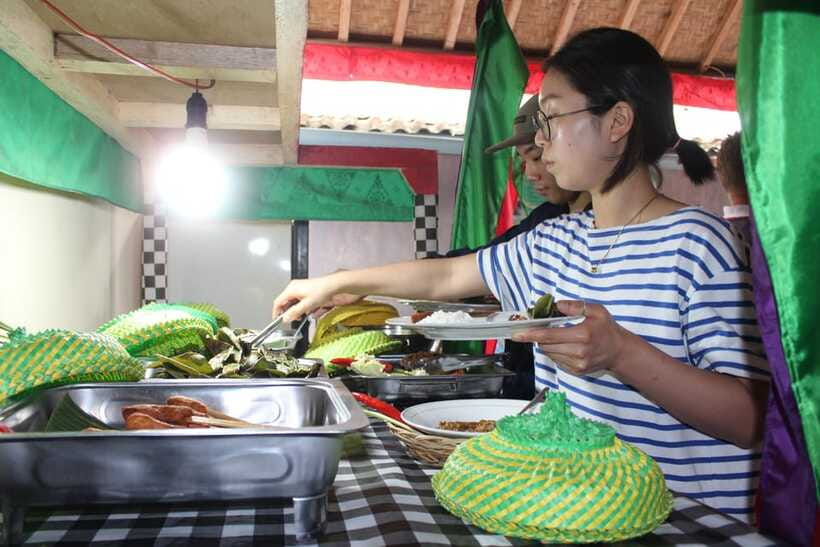
The central promise is a nine-dish Balinese menu. You make the food yourself, then eat it together at the end of the class.
The exact dishes are not listed in the available details, so you should not expect to choose from a menu in advance. What is clear is that the spread includes several kinds of preparation, from sauces to main dishes and dessert. The range gives you a better introduction to Balinese cooking than a single recipe would.
The amount of food is another strong point. Because the group prepares nine dishes, the final meal is substantial. You get to taste the results while they are fresh, and the shared meal turns the class into a social occasion rather than a lesson that ends with everyone rushing away.
I like the practical side, too. You receive the recipes as a PDF, so you can try the dishes at home. That makes the class more useful than a one-time meal. You can revisit the method later for lunch or dinner with family and friends.
There is also flexibility for different diets. Vegetarian and vegan options are available, and one participant with allergies was given a non-spicy menu. You should still tell the provider about dietary needs when booking or before the class. The information confirms that adjustments are possible, but it does not promise that every allergy can be accommodated.
Do not expect a formal chef-training course. You will learn the basic preparation and cooking process for a wide selection of dishes, but the emphasis is on shared participation and enjoyment. The class is best for people who want a friendly introduction, not a technical culinary qualification.
More Cooking Classes in Ubud
- PRIVATE Ubud Market Tour & Balinese Cooking Class with Putu
★ 5.0 · 125 reviews - Jambangan bali cooking class with morning market tour
★ 5.0 · 35 reviews - Balinese cooking class/Go shopping at the market, cook, eat
★ 5.0 · 12 reviews
The afternoon class has a different character
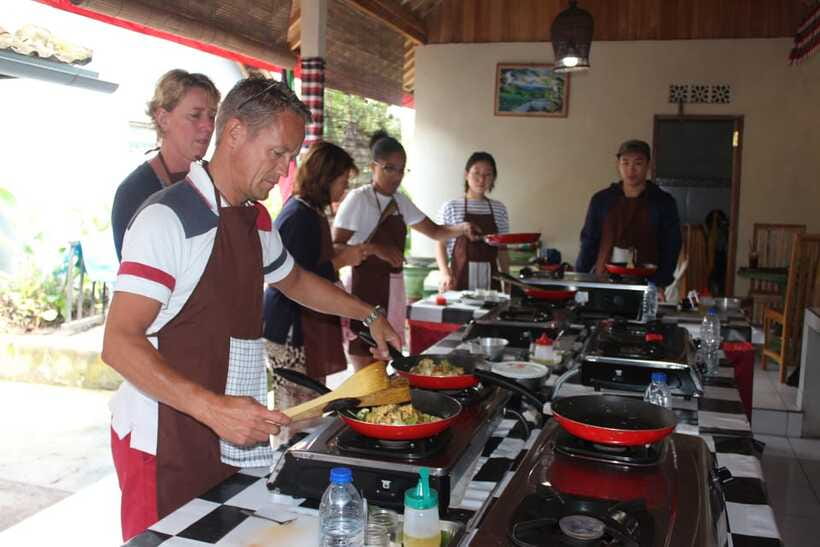
If the morning schedule does not fit your plans, the afternoon class offers a separate version of the experience. It includes the cooking lesson and a meal together, but not the traditional market or rice-paddy visits.
The afternoon program includes making a canang offering. These small Hindu offerings are part of everyday Balinese religious practice, and preparing one gives the activity a cultural element beyond food. After cooking, you eat dinner together.
This option works well if you have already visited a market or want to keep the day shorter and more focused. It is also a good fit for anyone who prefers a later start. Just be clear about what you are giving up: the market and rice fields are available only with the morning class.
The afternoon session may feel more relaxed when the group is small. You spend less time moving between stops and more time preparing food. On the other hand, the morning program offers more variety and a stronger sense of place.
How the transport works around Ubud
Pickup and drop-off are included for accommodations in the Ubud area. Communication about pickup has generally been good, and drivers have been praised for arriving on time and helping people reach the class without trouble.
The free shuttle does not cover locations outside Ubud. If you are staying elsewhere, you can meet the shuttle near Ubud Palace or go directly to the cooking class. Confirm the meeting point before the day of the activity, especially if you are not staying within the included pickup zone.
Transport matters here because the experience combines several stops. Having a driver take you from the market to the rice fields and then to the class is far easier than trying to arrange separate rides. Some drivers also help explain what you are seeing along the way, although the formal guiding is handled by the local guide and cooking staff.
Allow some flexibility around the four-hour duration. The advertised length is clear, but pickup routes and group movement can affect the exact finish time. Avoid scheduling a tight appointment immediately afterward.
Who will get the most from this class
I would recommend this to first-time visitors who want a simple introduction to Balinese food and local life in one morning. It also works well for couples, families with older children, solo participants, and friends who enjoy eating together.
Teenagers can take part, and a family with a 16-year-old found the activity suitable and enjoyable. Children under six are not accepted. The class is not suitable for wheelchair users, so check the physical setup before booking if access is a concern.
The experience is especially useful if you are staying in Ubud for only a few days. Rather than spending a separate morning arranging a market visit, a rice-field stop, and a cooking lesson, you get all three in one organized outing.
It may not be right for you if you want a quiet, private lesson, a high-end kitchen, or a carefully tailored gourmet menu. The group can include strangers, the market is basic, and the cooking is designed to be approachable rather than luxurious.
What to bring and what to expect
Bring a camera, headphones, and cash. The headphones may be useful during transport or if you want to listen carefully in a busy setting, while cash is practical for personal purchases.
Wear comfortable clothing and footwear that can cope with a market visit. The supplied information does not list a dress code, but respectful clothing is sensible for a cultural activity that includes a family compound and, in the afternoon, a Hindu offering.
You receive a welcome drink, an English-speaking guide, the nine-dish class, transport within Ubud, and a PDF copy of the recipes. The meal you prepare is included. Drinks such as beer may be available for purchase, but they are not included in the price.
The activity has a rating of 4.8 from 531 ratings, which fits the strongest parts of the experience: warm staff, smooth organization, plenty of food, and a hands-on format. The praise is not only about the meal. The driver, market guide, chef, and assistants all contribute to the day, and that teamwork makes a difference.
Is $23 a good value?
At $23 per person, this is a very good deal for a four-hour activity that combines transport, guiding, a market visit, a rice-field stop, nine dishes, a full meal, and recipes to take home.
The value is strongest in the morning because the market and paddies add more stops without a major increase in price. The afternoon class is still worthwhile if you mainly want to cook and eat, but it offers fewer sightseeing elements.
The price also keeps the experience accessible for solo participants. You do not need to arrange a private group to take part, and a small class can still feel personal.
Cheap activities can sometimes feel rushed or thin. That does not appear to be the case here, but you should keep your expectations realistic. You are paying for a friendly local cooking experience, not a luxury culinary retreat.
Should you book this Ubud cooking class?
Yes, I would book it if you want an active, good-value morning that links Balinese ingredients with the people and places behind them. Choose the morning class for the full package: local market, fruit tasting, rice paddies, cooking, and lunch.
Choose the afternoon option if cooking is your priority or if you want to make a canang offering before dinner. Just do not assume it includes the market.
The biggest question is your comfort with the market. It is a real working market, not a tidy tourist attraction. If that sounds interesting, this family-run class offers a warm and practical way to understand Bali through food.
FAQ
How long does the Ubud cooking class and market tour last?
The activity lasts four hours. Starting times vary, so check availability when booking.
Does the tour include hotel pickup and drop-off?
Pickup and drop-off are included for hotels and accommodations in the Ubud area. If you stay outside Ubud, you can meet the shuttle at the front of Ubud Palace or travel directly to the class.
Is the market visit included with every class?
No. The local market and rice-paddy visits are included only with the morning class. The afternoon class includes cooking, dinner, and making a canang offering instead.
How many dishes will I prepare?
You will prepare nine Balinese signature dishes and eat the food together at the end of the class. A PDF copy of the recipes is included.
Is the cooking class suitable for vegetarians, vegans, or people who cannot eat spicy food?
Vegetarian and vegan options are available. A non-spicy menu can also be prepared for some dietary needs. Tell the provider about your requirements before the class.
Can children or wheelchair users join?
Children under six are not permitted, and the activity is not suitable for wheelchair users.
Just added around Ubud
- Jambangan bali cooking class with morning market tour★ 5.0 · 35 reviews
- Balinese cooking class/Go shopping at the market, cook, eat★ 5.0 · 12 reviews
- Bali: Safari Zoo and Ubud Palace and Market Day Tour★ 4.7 · 6 reviews
- Bali: Ubud Monkey Forest, Coffee Plantation, and Market Tour★ 5.0 · 5 reviews
- Bali – Ubud Night Market Food Tour★ 3.8 · 14 reviews
- Bali Night Market Experience and Ubud Highlights tour★ 5.0 · 16 reviews
- Ubud Day Tour : Waterfall, Temple and Local Night Market Tour★ 5.0 · 17 reviews
- Bali Food Tour: Savor Street Food and Night Market Adventures★ 5.0 · 46 reviews
Cooking Classes, compared.
Hanoi Cooking Class: Culture, Local Market & Meaning CSR Impact
Read our review →
5 Traditional Dishes Hanoi Cooking Class with Market Trip
Read our review →
Cooking Class and Lunch at a Tuscan Farmhouse with Local Market Tour from Florence
Read our review →
Cooking Class, Market & Thai Herbs Garden Tour
Read our review →
Authentic Cooking Class with Market & Farm Visit
Read our review →
Paella Cooking Experience & Boqueria Market Tour
Read our review →
Cooking Class Hoi An:Local Market, Basket Boat, Fishing & Cooking
Read our review →
Hoi An Cooking Class(Market,BasketBoat Crabfishing&Cooking Class)
Read our review →Browse the lists this tour appears in