
Review · CHINA
Half-Day Xi’an Biang Biang Noodles Cooking with a Market Visit
Follow the noodles from market to bowl. This half-day Xi’an experience pairs a guided visit to the Muslim Quarter spice market with hands-on biang biang noodle making in a traditional Chinese home. I like the market-first format, since you see the spices and ingredients before using them, and I like that the class ends with a proper meal, tea, beer, or other drinks. The main thing to clarify is the class style: most of the evidence points to an engaging practical workshop, but one unhappy customer felt it was more of a demonstration than a class.
You meet at Sa Jin Qiao, also written as Sajin Bridge, in Xi’an’s Lianhu District. The activity lasts about three and a half hours and accepts up to 15 people. I would choose the smaller morning or afternoon session if you want time to ask questions, especially if your interest is less about lunch and more about learning how to make hand-pulled noodles at home.
Key points before you book
- The class begins at Sa Jin Qiao and visits the Muslim Quarter, where you explore spices and ingredients before cooking.
- Biang biang noodles are made from scratch, with guidance from a professional chef and recipes to take home.
- The cooking takes place in a traditional Chinese courtyard or chef’s home, rather than in a large commercial school.
- Tea is part of the welcome, followed by your noodles with beer, water, or other included drinks.
- The maximum group size is 15 people, though the hands-on feel may vary depending on the session.
- Vegetarian meals are available, but you need to request this when booking.
Why biang biang noodles belong in Xi’an
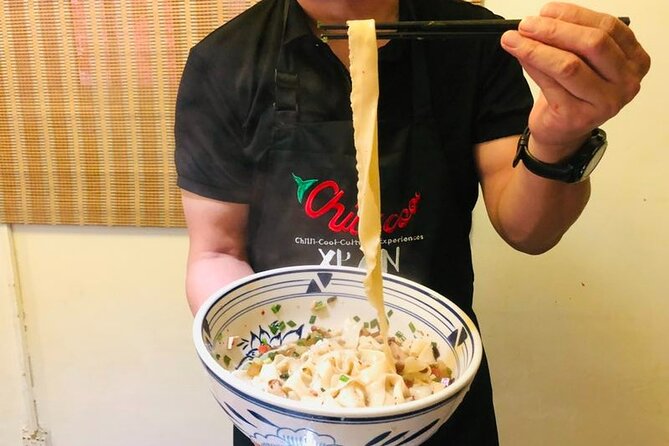
Xi’an is famous for its broad, hand-pulled biang biang noodles. The noodles are thick, long, and chewy, then finished with ingredients such as spices and oil. The appeal is not only the finished bowl. It is the physical work of stretching dough into wide ribbons and seeing how a few basic ingredients become a local specialty.
That makes this class a good fit if you enjoy food with a story attached. You are not simply shown a plate of noodles in a restaurant. You first encounter the raw materials in a local market, then follow them into a home kitchen, and finally eat what you have prepared.
The class also gives you a useful glimpse of ordinary food culture in Xi’an. A market visit can reveal more about daily cooking than a polished food hall, especially when a guide explains what the spices are used for and how they fit into local dishes.
More Cooking Classes in China
- Half-Day Chengdu Cooking Class with a Local Market Visit
★ 5.0 · 465 reviews - Lijiang Naxi Cuisine Cooking Class & Market Visit
★ 5.0 · 48 reviews - Chengdu: Cooking Class with Fresh Market Half Day Experience
★ 5.0 · 42 reviews
Meeting at Sa Jin Qiao
The meeting point is Sa Jin Qiao, or Sajin Bridge, in Xi’an’s Lianhu District. This is also where the activity finishes, so you do not need to arrange a separate return transfer after the meal.
Your timing choice matters. Morning and afternoon sessions are offered, and the included meal is described as lunch or dinner depending on the schedule. If you plan to visit other sights in Xi’an the same day, check the session time carefully before booking.
The tour lasts about three to three and a half hours. That is long enough for the market, the cooking, and the meal without taking up an entire day. You should still wear comfortable walking shoes, since the first part involves moving around the market before you settle in at the cooking location.
The group limit is 15 people. That is not a private lesson, but it is much more manageable than a large food tour. Guides named in past sessions include Fiona, Lily, Michael, Bruce, and Dongcheng. Fiona was praised for clear English, while Lily was singled out for her explanations of Chinese spices and cuisine. Your guide may differ, but those comments give you a useful sense of the teaching style to hope for.
Exploring the Muslim Quarter spice market
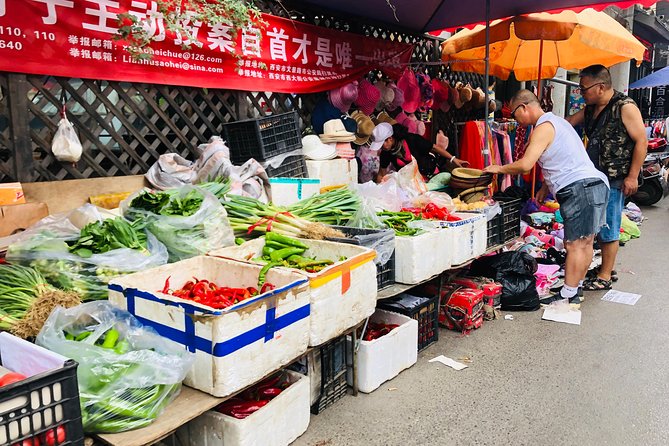
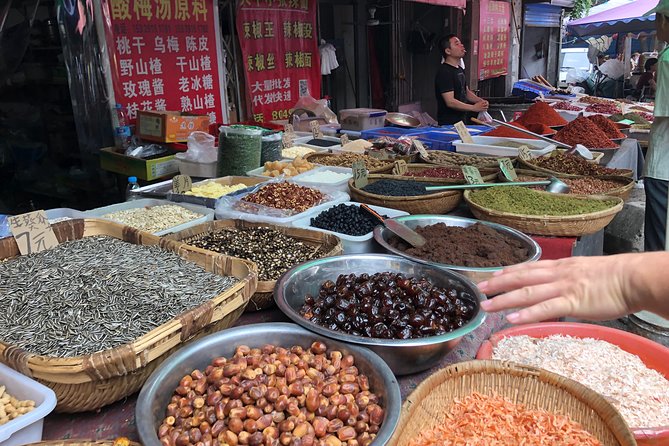
The market visit is not just a quick stop for ingredients. You are taken through a local food and spice market and given challenges or tasks to complete as you learn about the products used later in the kitchen.
This is one of the strongest parts of the experience for me. Before you cook, you get a chance to look, smell, and ask questions. A dish becomes easier to understand when you have seen the ingredients in their everyday setting rather than meeting them only after they have been chopped and cooked.
The market is in the Muslim Quarter, a well-known part of Xi’an with a strong food culture. The activity focuses on spices and cooking ingredients, not on a broad historical tour of the district. You should book it for the food connection, rather than expecting a long sightseeing walk.
The market portion also helps if you do not know Chinese ingredients well. A guide can explain which products are used in the noodles and how local cooks think about them. One useful feature is that the ingredients are not treated as decoration. You gather or select items that feed directly into the cooking session.
Expect some walking and a lively setting. That is part of the charm, but it may be less comfortable for anyone who dislikes crowded food markets or wants a quiet, orderly culinary lesson from the first minute.
Tea, dough, and the traditional home kitchen
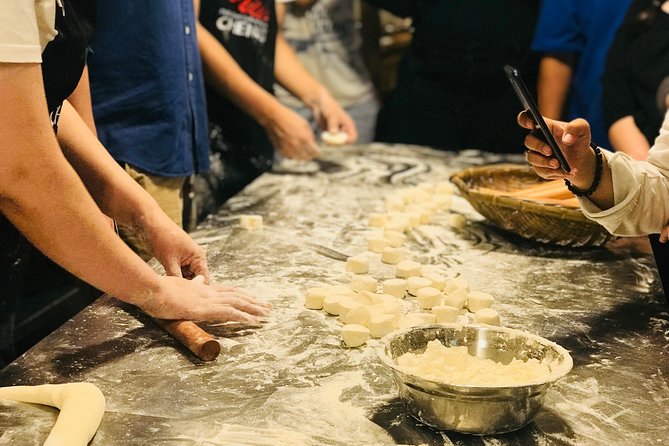
After the market, you go to a traditional Chinese courtyard or a chef’s home for the class. The exact wording used for the venue varies, but the important point is that this is a home-style setting rather than a hotel ballroom or restaurant kitchen.
You are welcomed with local tea, which fits the local custom of offering tea to friends and visitors. It gives the session a slower start before the dough work begins. The tea is included, as are water and beer or other drinks later in the meal.
A professional chef leads the cooking process. The focus is the dough and the technique needed to form biang biang noodles. You should expect to work through the process from the beginning, rather than simply watching a finished dish come together.
Several people specifically liked learning how to pull the noodles and felt able to repeat the method at home. One person booked mainly to solve a long-running problem with hand-pulled noodles and found the technique useful. That is an important distinction: the value here lies in learning a method, not simply eating a bowl of noodles in a pleasant setting.
Still, you should keep your expectations realistic. One three-star assessment described the session as a cooking demonstration in an apartment and objected to not having a fully independent station. The other available feedback is strongly positive, but this criticism points to a real question worth asking before booking: how much of the work will you personally do during your particular class?
If having your own workstation is essential, contact Chilli Cool China in advance. If you are happy to learn from a chef, practice the key steps, and share the cooking space with a small group, the home setting should feel more personal than a standard school kitchen.
Same place, a different set of stalls:
- Mini Group Xian Day Tour to Terracotta Army, City Wall, Pagoda and Muslim Bazaar
★ 5.0 · 1,320 reviews - Shanghai Day Tour to Zhujiajiao Water Town, Yu Garden, Bazaar, Bund
★ 5.0 · 162 reviews - Organic Chinese Dumpling Class with Market Walk
★ 5.0 · 88 reviews - Flavors of Beijing: Eat Like A Real Chinese
★ 5.0 · 78 reviews
The noodle-making lesson
Biang biang noodles are fun to make because the dough changes character as you work with it. The process is physical and visual. You begin with ingredients, follow the chef’s instructions, and work toward the wide, long noodle that gives the dish its identity.
The class includes all food ingredients and recipes. That matters because you do not need to shop for unusual products before the session, and you have written guidance to use after returning home.
The recipe is especially useful for anyone who already cooks Asian food. One participant who enjoys making Asian dishes booked the class to improve their noodle technique. Another was pleased to learn a process they believed they could recreate at home. You will get more from the class if you pay close attention to the handling of the dough, not just the seasoning at the end.
The session may produce more noodles than you expect. One person joked about making far too many, but that is hardly a serious problem when the final dish is your lunch or dinner. It does suggest that the class is generous with the food and gives you plenty of practice.
The broad shape of the class is clear, but individual participation may depend on group size and teaching style. Some sessions may feel very hands-on, while others may rely more on demonstration with guided practice. That variation is the main limitation to keep in mind.
Eating what you made
At the end, you eat the dishes prepared during the session. Lunch or dinner is included, depending on whether you choose the morning or afternoon class. Food tasting, ingredients, recipes, and beverages are all part of the price.
Beer, tea, and water are listed as included, along with other beverages. This makes the final meal feel like a social finish rather than a rushed taste at the counter. You can sit with the group, compare results, and enjoy the food while the technique is still fresh in your mind.
The meal also gives you a fair way to judge the lesson. If the noodles are too thick, uneven, or not quite as you imagined, you have learned something useful about the process. This is a cooking workshop, not a restaurant where every plate must look identical.
Vegetarian food is available, but you must advise the provider when booking. You should also provide any other dietary requirements at that stage. The supplied information does not confirm every possible dietary accommodation, so do not wait until the class begins to raise a serious restriction.
Is $75 a fair price?
The listed cost is $75 per person. That is more than you would pay for a simple bowl of biang biang noodles in Xi’an, but you are paying for several connected parts: a guided market visit, ingredient explanations, a professional cooking lesson, all food supplies, recipes, tea, beer or other drinks, and a full meal.
I think the price makes sense if you value participation. The market and the class are not two unrelated activities. The first explains the ingredients, and the second puts them to work. You also leave with a skill rather than only a photograph and a food memory.
The value is weaker if you only want to eat local noodles or if you prefer a formal kitchen with a private station. In that case, a restaurant meal would cost less and might suit you better. The price also assumes you will enjoy the social side of a small-group activity.
Group discounts are available, though the supplied details do not state the discount amount. If you are traveling with family or friends, check the final price for your party before paying.
The activity is popular enough that it is booked about 21 days in advance on average. That does not guarantee every date sells out, but it is a good reason to reserve early if you have a short stay in Xi’an or need a particular morning or afternoon time.
Who will enjoy this Xi’an food class?
I would recommend it most strongly to:
- Home cooks who want to learn hand-pulled noodle technique.
- Visitors interested in local ingredients, spices, and food customs.
- Couples and small groups looking for a shared activity.
- People who enjoy markets more than formal museum visits.
- Anyone who wants a meal that includes a story and a skill.
It is less suitable if you want a quiet, private lesson, dislike walking through food markets, or need a guaranteed individual cooking station. It may also disappoint you if you expect a full tour of the Muslim Quarter, since the focus is on ingredients used for the class.
The English ability of the guide matters if you want detailed instruction. Fiona was praised for being easy to understand, and several guide names appear in the available feedback, but the instructor is not fixed in the information provided. If clear English instruction is important to you, ask about the guide assigned to your date.
The activity operates in all weather according to the practical information, though the cancellation terms also say poor weather can lead to a rescheduled date or full refund. Dress for the conditions and confirm the arrangement if the forecast is poor.
Booking tips for a smoother class
Wear shoes you can walk in comfortably. The market visit comes first, and you will be on your feet before reaching the cooking venue.
Tell Chilli Cool China about vegetarian needs or other dietary requirements when you book. Confirmation is provided at booking, and the activity runs near public transportation.
Free cancellation is available if you cancel at least 24 hours before the start time. Changes or cancellations inside that window are not accepted for a refund. The provider can also offer a new date or a full refund if the minimum group size is not met or poor weather affects the activity.
Should you book the Xi’an biang biang noodle class?
Book it if you want to understand Xi’an through its food and learn a practical noodle skill along the way. The strongest reasons are the market-to-kitchen format, the local tea welcome, the home setting, the included meal, and the chance to practice a dish you can try again at home.
Before paying, decide how important personal workspace is to you. Most of the available feedback praises the guides, the market visit, and the noodle technique, but one clear complaint says the class felt more like a demonstration. If you accept that a small-group home lesson may vary from session to session, the $75 price offers a satisfying half-day. If you want a precise, individual cooking-school format, ask for details first.
FAQ
How long does the Xi’an noodle class last?
The activity lasts approximately three hours and 30 minutes, with the broader description giving a range of three to four hours.
Where does the experience begin?
It begins at Sa Jin Qiao, also called Sajin Bridge, in Lianhu District, Xi’an.
Where does the experience finish?
It finishes back at the meeting point.
Which market does the class visit?
The experience visits a spice and food market in Xi’an’s Muslim Quarter.
What will I learn to make?
You will learn to make biang biang noodles, an iconic Xi’an dish, using a guided hand-pulling and cooking process.
Are the ingredients included?
Yes. Food ingredients, food tasting, and recipes are included.
Are drinks included?
Yes. Tea, water, beer, and other beverages are included as listed for the activity.
Is a meal included?
Yes. Lunch or dinner is included, depending on the session schedule.
Can I request vegetarian food?
Yes. A vegetarian option is available, but you should request it when booking.
How many people can join the group?
The activity has a maximum of 15 travelers.
Can I cancel for a full refund?
Yes, if you cancel at least 24 hours before the experience start time. Cancellations or changes made less than 24 hours before the start are not refunded.
More Half-Day Trips in China
- Half-Day steamed Buns Cooking Class with a Local Market Visit
★ 5.0 · 26 reviews - Half-Day Professional Mapo Tofu Cooking with a Local Market Visit
★ 5.0 · 19 reviews - Half-day Dandan Noodles Cooking Class with a Local Market Visit
★ 5.0 · 8 reviews - Half-Day Railway Market and Floating Market Tour in Thailand
★ 4.5 · 3,924 reviews
Just added around China
- Half-day Dandan Noodles Cooking Class with a Local Market Visit★ 5.0 · 8 reviews
- Three-Hour Private Chengdu Tea Wholesale Market Tour★ 5.0 · 4 reviews
- 3-Hour Herbal Wholesale TCM Market and a Local Wet Market Tour★ 5.0 · 4 reviews
- Small Group Beijing Temple of heaven and Summer Palace with Pearl market★ 5.0 · 3 reviews
- Full-Day Private Tour Panjiayuan Antique Market and Beijing Capital Museum★ 5.0 · 3 reviews
- Private Distinctive Market Tour with Shaomai Lunch and Full Massage in Beijing★ 5.0 · 2 reviews
- Private Tour to Pearl Market Acrobatic Show & Peking Duck Dinner★ 5.0 · 5 reviews
- Half Day Tour:Market Shopping Acrobatic Show & Peking Duck dinner★ 5.0 · 2 reviews
Cooking Classes, compared.
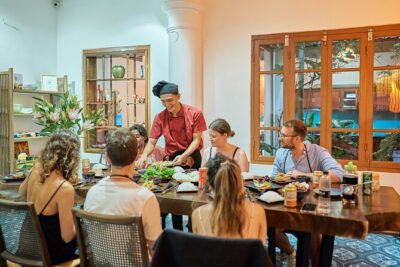
Hanoi Cooking Class: Culture, Local Market & Meaning CSR Impact
Read our review →
5 Traditional Dishes Hanoi Cooking Class with Market Trip
Read our review →
Cooking Class and Lunch at a Tuscan Farmhouse with Local Market Tour from Florence
Read our review →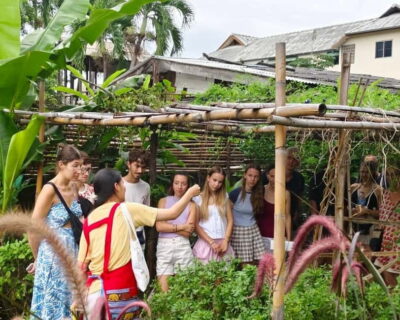
Cooking Class, Market & Thai Herbs Garden Tour
Read our review →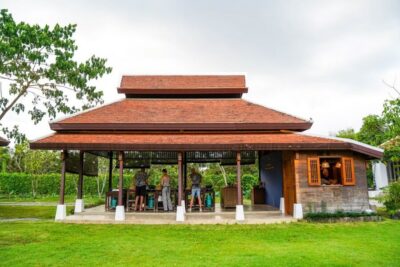
Authentic Cooking Class with Market & Farm Visit
Read our review →
Paella Cooking Experience & Boqueria Market Tour
Read our review →
Cooking Class Hoi An:Local Market, Basket Boat, Fishing & Cooking
Read our review →
Hoi An Cooking Class(Market,BasketBoat Crabfishing&Cooking Class)
Read our review →Browse the lists this tour appears in