
Review · JAPAN
Tokyo Tsukiji Fish Market Tour and Sushi Making Lesson
Come hungry and curious. This three-hour Tokyo experience pairs a guided walk through Tsukiji Outer Market with a practical Japanese cooking class, giving you both the food shopping scene and the chance to make lunch yourself. The small groups, capped at six people, make it easier to ask questions and get help at the stove.
I especially like the English-speaking market guide, who can explain unfamiliar foods and help you find worthwhile samples. I also like the class format: you prepare sushi, tamagoyaki, miso soup, and other traditional dishes, then sit down and eat what you made. The main consideration is value. At $99.49, the class is a good buy if you want hands-on instruction, but a basic sushi lesson may feel short for experienced home cooks.
The experience at a glance
- Tsukiji begins at a striking temple: Meet outside Tsukiji Hongwanji, whose unusual South Asian and Indian-inspired exterior makes a memorable starting point.
- The market is about tasting, not just looking: Your guide can point out dried seafood, tamagoyaki, mochi, beans, sea urchin, octopus, and other foods that are easy to miss on your own.
- A maximum of six people keeps it personal: Small groups help with translation, questions, and cooking assistance.
- The cooking class uses traditional staples: Expect dishes such as rolled sushi, nigiri, Japanese omelet, miso soup, and stock, though the menu changes with the season and available ingredients.
- Lunch is included in the lesson: You eat your finished dishes and can choose wine, plum sake, or soft drinks.
- Plan around the practical limits: The tour starts at Tsukiji Hongwanji, ends elsewhere, and does not include the tuna auction or hotel pickup.
Starting at Tsukiji Hongwanji Temple
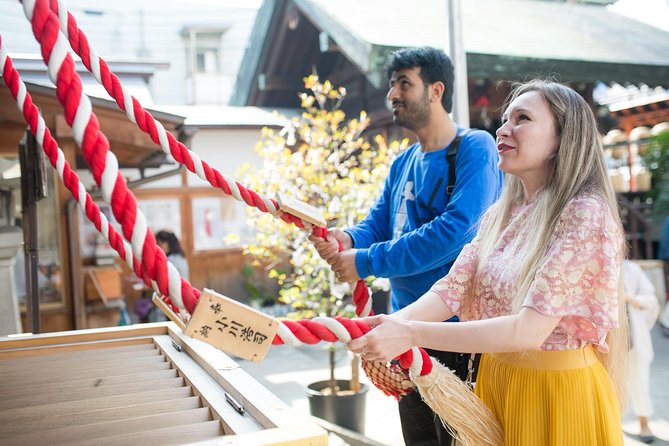
The meeting point is outside Tsukiji Hongwanji Temple at 3-chome-15-1 Tsukiji. The temple stop is brief, around five minutes, but it gives the morning a sense of place before you enter the market.
The building looks unlike a typical Tokyo Buddhist temple. Its exterior draws on South Asian and Indian design, while the interior has a different character. You should not expect a long temple visit or a formal cultural lecture here. Think of it as a useful landmark and a quick introduction to the Tsukiji neighborhood.
Arrive with enough time to find the guide. The tour begins at a fixed meeting point, and the activity does not include hotel pickup. Since the group may move quickly into crowded shopping lanes, being on time matters.
More Fish Market Tours in Japan
- Tokyo Tsukiji Fish Market Food and Culture Walking Tour
★ 5.0 · 3,184 reviews - Tokyo: Tsukiji Fish Market Food and Walking tour
★ 5.0 · 1,724 reviews - Tokyo: Tsukiji Fish Market Guided Walking Tour
★ 4.9 · 1,397 reviews
Walking through Tsukiji Outer Market
The market portion lasts about an hour, although the operator notes that the group may spend around 70 minutes in the outer shopping area instead. This is not the old wholesale tuna auction experience. The famous inner wholesale market moved to Toyosu, while Tsukiji Outer Market remains a dense collection of food shops, stalls, and small restaurants.
That distinction matters. You are not coming here to watch the auction. You are coming to see where Tokyo residents and restaurant workers shop for seafood, produce, dried goods, and cooking supplies.
With a guide, the narrow lanes become easier to understand. You might see giant tuna, sea urchin, octopus, dried scallops, soybeans, and other ingredients arranged for sale. The guide can explain what you are looking at and help with language when you want to buy or sample something.
Several guides receive special praise in the feedback, including Akiko, Miho, Shitomi, Nobu, Lucy, and Yoko. The experience can vary by guide, but the strongest descriptions point to warm hosts who keep the pace moving while allowing time for questions and tastings. Akiko, in particular, is praised for knowing where the useful samples were, while Lucy helped a large family group understand unfamiliar foods and vendor offerings.
The food samples are part of the fun. You might encounter tamagoyaki served on a stick, dried beans, dried crabs, mochi with strawberries, or dried scallops. These tastings are not listed as a fixed meal, so do not treat them as guaranteed menu items. The contents depend on the shops and the season.
I recommend eating a light breakfast before you arrive. You do not want to be full when the market offers its best little bites. At the same time, this is not a full market food crawl. The quality of the guide matters, and some sessions may focus more on walking and explanation than on extensive tasting.
Why a guide helps at Tsukiji
You can visit Tsukiji Outer Market on your own, and many people do. The lanes are accessible, and admission is free. The advantage here is not entry. It is translation, orientation, and food judgment.
A guide can show you which stalls are worth your attention and explain items that have no obvious English label. That is particularly useful if you want to taste something but are unsure how it is served or what it contains.
The guided walk also adds a social rhythm. You are not simply wandering past rows of seafood. You can ask why a certain ingredient matters, how it is used, or what might make a good souvenir for a cook at home.
Still, the market section may feel brief if Tsukiji is your main interest. One three-star assessment felt the guide walk could have offered more information about the market and traditional sashimi. If you are passionate about seafood, plan extra time at Tsukiji before or after the scheduled tour, as long as you can reach the meeting point and manage your timing.
Getting to the ABC Cooking Studio
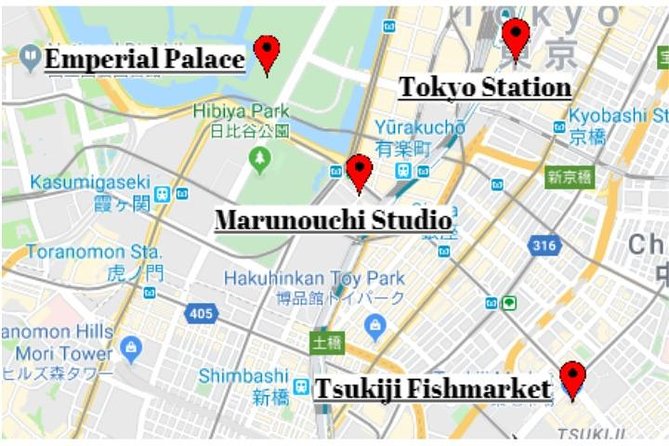
After the market, the group travels to ABC Cooking Studio. Transportation between Tsukiji and the studio is included, and detailed feedback describes a short bus ride, sometimes with a walk through the Ginza area along the way.
The change of setting is noticeable. You leave the tight market lanes and enter a clean, bright, modern cooking school. ABC Cooking Studio is a large Japanese cooking school with locations throughout the country and more than 150 studios across the wider region, according to the tour information.
The studio is designed for teaching, not theatrical demonstration. You receive an apron, use the cooking stations, and work with an instructor. Drinking water is included. The cooking segment lasts about 90 minutes, so the pace is active without becoming a marathon.
More Fish Market Tours in Tokyo
- Tokyo Sushi Making Class in Tsukiji with Professional Chef
★ 5.0 · 1,177 reviews - Tsukiji Fish Market Guided Tour and Sushi Making with Pro Chef
★ 5.0 · 775 reviews - Tokyo: Tsukiji Fish Market Food and Culture Walking Tour
★ 4.7 · 757 reviews - Tsukiji Fish Market: Street Food & Culture Walking Tour
★ 5.0 · 669 reviews
Making sushi, tamagoyaki, and miso soup
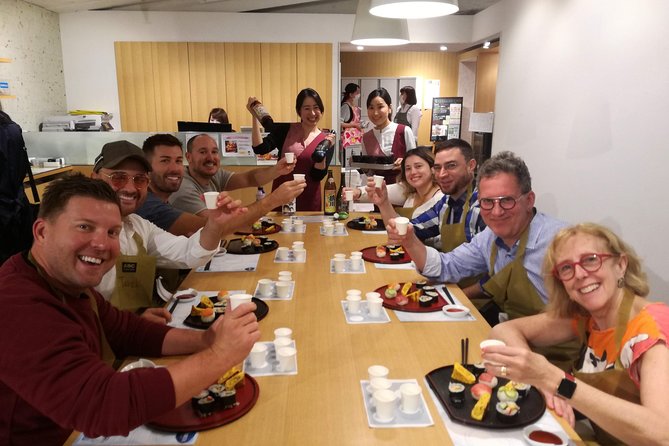
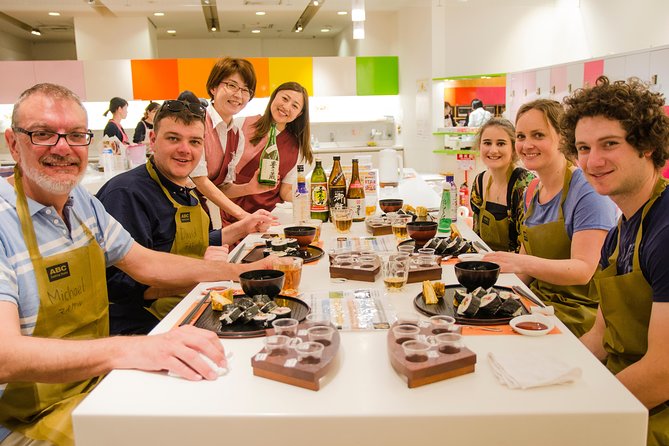
The exact menu changes with the season, ingredient availability, and the day’s class plan. The advertised examples include a sushi roll and tamagoyaki, the sweet-savory Japanese rolled omelet. Detailed class accounts also describe nigiri sushi, stock, miso soup, and several types of rolled sushi.
This is where the tour earns much of its price. You are not just watching a chef shape sushi. You get to handle ingredients and practice the steps yourself. One child went home eager to buy a tamagoyaki pan, which tells you how accessible the lesson can be for families.
The instructors are often praised for patience and clear demonstrations. Miwako, Miwa, Masayo, and Hiromi are among the instructors singled out for being friendly, organized, and helpful. The guide may assist the teacher, which is useful if you need an English explanation repeated or simplified.
The lesson is best for beginners. You learn basic preparation rather than advanced sushi-counter technique. If you have never made sushi at home, you will likely appreciate the clear process and the chance to repeat it later. If you already make maki rolls and omelets regularly, the class may seem elementary.
The experience also gives you a better sense of Japanese home cooking. Sushi gets the headline, but the stock, miso soup, omelet, and side dishes show that a Japanese meal depends on several small preparations working together. That is more useful than learning only how to roll rice in seaweed.
Eating the lunch you prepared
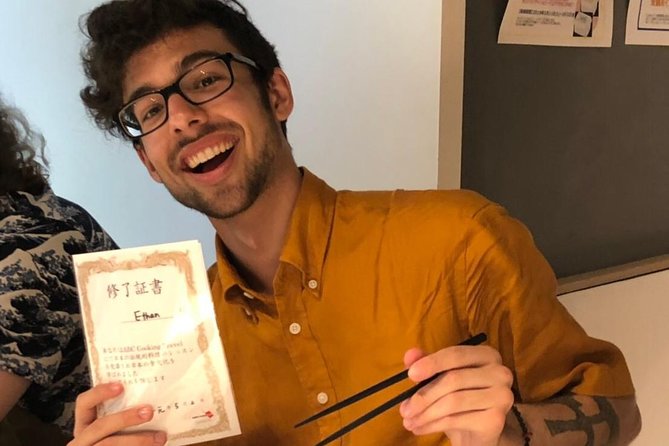
At the end, you sit down with the food you made. Depending on the session, this can include sushi, omelet, soup, and side dishes. You can choose wine, plum sake, or soft drinks with the meal.
This final meal changes the tone of the class. You are not rushing straight back into Tokyo sightseeing. You get time to see how the separate parts fit together, and you can compare your finished food with what you expected.
The portion size is one area where expectations should stay realistic. Some feedback felt that not enough food was prepared for the price. The class is a lesson with lunch, not a lavish sushi banquet. If you want the strongest value, think of the cooking instruction, market guidance, tastings, and included meal as one package.
What the $99.49 price really buys
At $99.49 per person, this is not the cheapest way to visit Tsukiji or eat sushi in Tokyo. The market itself is free, and you can buy food directly from vendors for much less.
The price becomes easier to justify if you value several services at once:
- An English-speaking guide through confusing market lanes
- Help understanding and tasting local ingredients
- Transportation from the market to the cooking studio
- A 90-minute class with an instructor
- Apron use and water
- A prepared meal made during the lesson
- A small group of no more than six people
For a family, the combination can work well because children and teenagers have something active to do. The minimum age is nine, and participants must be at least 4.2 feet, or 130 centimeters, tall. One family group found the experience held the attention of adults, children, and teens alike.
For a solo visitor, the small group can also be appealing. You may pay more than you would for a casual market breakfast, but you get a structured morning and a skill you can try again at home.
The value is weaker for an experienced cook who wants advanced sushi knowledge, a full market shopping session, or a large meal. The class has a beginner-friendly design, and the market ingredients used in the lesson are not necessarily bought by the group during the walk.
Group size, language, and the pace
The maximum group size is six. That is one of the strongest practical features. In a small group, the guide can answer questions and the instructor can watch your technique instead of leaving you to copy from a distance.
English ability can vary by guide and instructor. Many sessions are described as clear and easy to follow, but one assessment found communication more limited and wanted more explanation of sushi traditions. You should book this mainly for the food activity, not as a detailed academic lecture on Japanese cuisine.
The pace is moderate. You spend about five minutes at the temple, roughly an hour in the market, and about 90 minutes cooking, with transport between the two main stops. Since the market is crowded and the class has a set start time, you will not have unlimited freedom to linger at every stall.
No strollers or luggage are allowed. That makes sense in tight market lanes and a working cooking studio, but it means you should arrive with only what you need for the morning.
Who should book this Tokyo food experience?
I would recommend it most strongly to:
- First-time visitors who want an introduction to Tsukiji
- Families with children aged nine and older
- Couples and friends who enjoy cooking together
- People who want help ordering or tasting unfamiliar foods
- Beginners who want to recreate Japanese dishes at home
- Visitors who prefer a small group over a large bus tour
I would be more cautious if you are mainly interested in the tuna auction, advanced sushi skills, or a long market visit. The tuna auction is not included, and the tour does not use the old wholesale market as its main attraction.
You should also consider the weather. The experience requires good weather and may be canceled if conditions are poor. In that case, you can receive a full refund or be offered another date. The tour also needs at least two participants to operate.
Should you book the Tsukiji and sushi class?
Book it if you want a friendly, practical morning that combines Tokyo food culture with a hands-on meal. The strongest parts are the small group, the market translation, the tasting stops, and the chance to make tamagoyaki and sushi with help from a patient instructor.
Skip it if you already know how to make basic sushi or if your main goal is a serious seafood tour. You may find the market visit too short and the cooking class too simple. For everyone else, the $99.49 fee is reasonable when you treat the experience as a guided market visit, transport, cooking lesson, and lunch in one package.
FAQ
How long does the Tsukiji and sushi-making experience last?
The experience lasts approximately three hours. The schedule includes a short temple stop, about an hour at Tsukiji Outer Market, transportation to the cooking studio, and around 90 minutes of cooking.
Where does the tour begin?
It begins outside Tsukiji Hongwanji Temple at 3-chome-15-1 Tsukiji, Chuo City, Tokyo 104-8435, Japan.
Where does the experience end?
It ends at a different location from the starting point, at or near the cooking studio. Hotel drop-off is not included.
Is transportation included?
Yes. Transportation between Tsukiji Market and the cooking studio is included.
Is the tuna auction part of the tour?
No. Tuna auction viewing is not included. The market visit focuses on Tsukiji Outer Market.
What food will I make?
The class typically includes sushi, a Japanese omelet called tamagoyaki, and side dishes. Some sessions also include nigiri sushi, rolled sushi, stock, and miso soup. The ingredients and menu can change with the season and availability.
Is the cooking class suitable for children?
The minimum age is nine years old, and the minimum height is 4.2 feet, or 130 centimeters. No strollers are allowed.
How many people can join the tour?
The maximum group size is six people. At least two participants are required for the tour to operate.
Are drinks included?
Drinking water is included at the cooking studio. With the meal, you can choose wine, plum sake, or soft drinks.
Can I cancel for a full refund?
Yes, if you cancel at least 24 hours before the local start time. Cancellations or changes made less than 24 hours in advance are not accepted for a refund. If poor weather or an insufficient number of participants causes cancellation, you can receive a full refund or request another date.
Just added around Tokyo
- Tokyo: Private Tsukiji Street Food & Sake with Local Guide★ 5.0 · 3 reviews
- Tokyo: Tsukiji Market Guided Tour & Sushi-Making Experience★ 4.4 · 11 reviews
- Tokyo: Tsukiji Market and Hama-rikyu Gardens Guided Tour★ 4.8 · 73 reviews
- Tokyo: Tsukiji Fish Market Culture Tour with Sashimi Tasting★ 4.6 · 54 reviews
- Tokyo: Tsukiji Fish Market Foodie and Educational Tour★ 5.0 · 4 reviews
- Tokyo : Tsukiji Fish Market Food Walking & Shrine Visit Tour★ 5.0 · 3 reviews
- Tokyo’s Kitchen: Tsukiji Market Food & Culture Walk★ 4.7 · 74 reviews
- Tokyo: Guided Walking Tour of Tsukiji Market with Lunch★ 4.4 · 24 reviews
Fish Market Tours, compared.
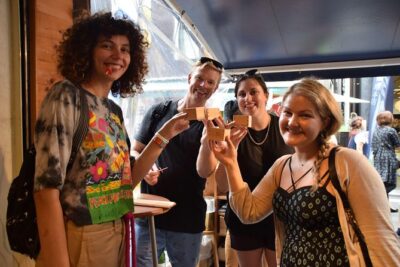
Tokyo Tsukiji Fish Market Food and Culture Walking Tour
Read our review →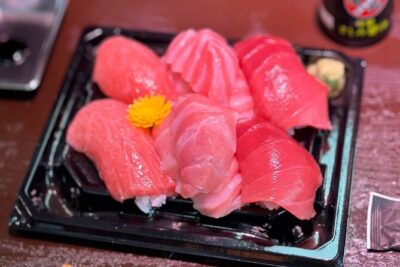
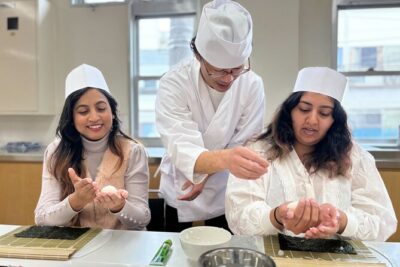
Tokyo Sushi Making Class in Tsukiji with Professional Chef
Read our review →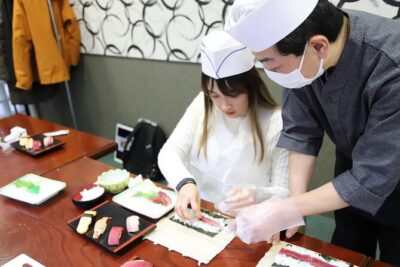
Tsukiji Fish Market Guided Tour and Sushi Making with Pro Chef
Read our review →Tsukiji Fish Market Food and Culture Walking Tour
Read our review →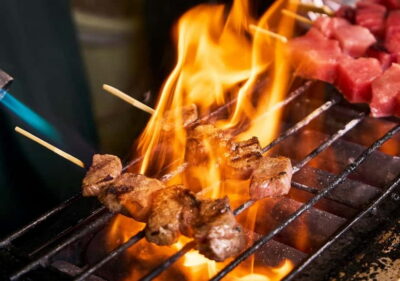
Tsukiji Fish Market: Street Food & Culture Walking Tour
Read our review →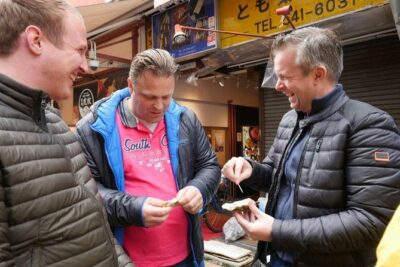
Tsukiji Fish Market Small-Group Food Walking Tour
Read our review →
Tsukiji Fish Market Sushi Making Class with Pro Chef
Read our review →Browse the lists this tour appears in