
Review · JAPAN
Tokyo Sushi Making Class in Tsukiji with Professional Chef
Sushi tastes better when you make it. This 90-minute class puts you in a traditional Japanese-style classroom near Tsukiji Market, where an English-speaking host and professional sushi chef guide you through fish preparation, nigiri, and rolled sushi. I like the hands-on format and the fact that your finished work becomes lunch. I also like the small local setting, which feels more personal than a large cooking school.
The main thing to consider is the short schedule. You will learn the basics, not become a sushi chef in one morning. The classroom is on the third floor of a traditional building with stairs only, and the group can include up to 20 people. Still, at $49.74 per person, the combination of instruction, fresh ingredients, a fish-cutting demonstration, and a full plate of sushi makes this a strong value.
The best parts of the class at a glance
- Watch a professional fish-cutting demonstration: The chef shows how fish is prepared for sushi and explains the Japanese knives used in the process.
- Make six pieces of sushi yourself: You prepare five different nigiri sushi and one rolled sushi, then eat what you have made.
- Learn in Tsukiji: The class takes place near Tsukiji Fish Market, Tsukiji Jogai Market, and the Tsukiji Nippon Fish Port Market.
- Get steady English-language help: The host translates and explains the chef’s instructions throughout the session.
- Bring the family: Children from about 7 to 12 have enjoyed the class, and beginners are welcome.
- Leave room for lunch: Your sushi is the meal, so arriving with a little appetite makes sense.
Why Tsukiji is the right place for a sushi lesson
Tsukiji gives the class a useful sense of place. The famous inner wholesale market moved to Toyosu, but Tsukiji’s outer market remains a busy food district with shops, counters, and suppliers serving the public. This experience takes place near the Tsukiji Fish Market, Tsukiji Jogai Market, and Tsukiji Nippon Fish Port Market, so you are learning sushi in one of Tokyo’s best-known food areas.
The class itself is in a hidden local building rather than a polished hotel kitchen. That can make the arrival feel slightly less obvious, so allow time to find the meeting point at 4-chome-16-2 Tsukiji, Chuo City. The address is near public transportation, and the class ends where it begins.
I like the way the location adds meaning without requiring a long walking tour. You can visit the outer market before or after class, look at the seafood shops, and make the cooking lesson part of a larger Tsukiji morning. Just remember that the class is not a hotel pickup experience. You make your own way there.
More Fish Market Tours in Japan
- Tokyo Tsukiji Fish Market Food and Culture Walking Tour
★ 5.0 · 3,184 reviews - Tokyo: Tsukiji Fish Market Food and Walking tour
★ 5.0 · 1,724 reviews - Tokyo: Tsukiji Fish Market Guided Walking Tour
★ 4.9 · 1,397 reviews
The opening fish demonstration and knife lesson
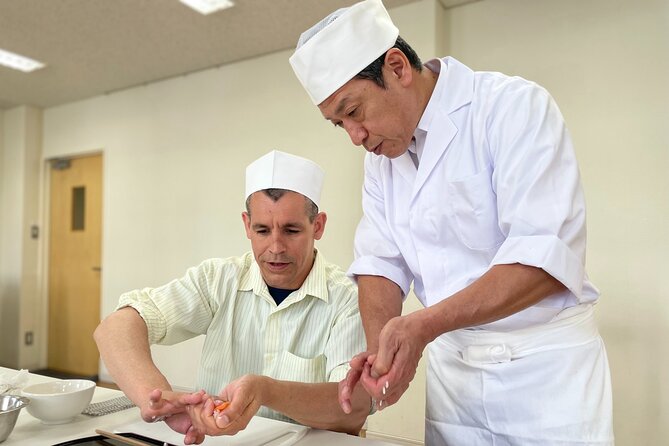
The session starts with a professional demonstration of fish preparation. The sushi chef takes you through the steps used to prepare fish for sushi and explains the Japanese knives involved. This is more useful than simply being told that sushi requires fresh ingredients. You see the precision behind the finished piece.
This part also helps explain why sushi can look simple but demands practice. A piece of nigiri may contain only rice, fish, and wasabi, yet the chef has to handle each part with care. The demonstration gives you a better eye for the shape, cut, and finish of the sushi you later make.
The chef’s presentation is supported by the English-speaking host. Names vary by session, but past classes have included hosts and assistants such as Yuko, Yoko, Yugo, Kanon, Emma, Eri, and Nao, along with chefs including Tanaka and Kate. The most consistent praise goes to the clear translation and the friendly support at the worktable.
If you do not know much about sushi, this introduction is especially helpful. You will hear about different types of sushi and learn what makes nigiri different from rolled sushi. The class also touches on sushi’s place in Japanese food culture and its origins in Edo, the old name for Tokyo.
Making five nigiri and one rolled sushi
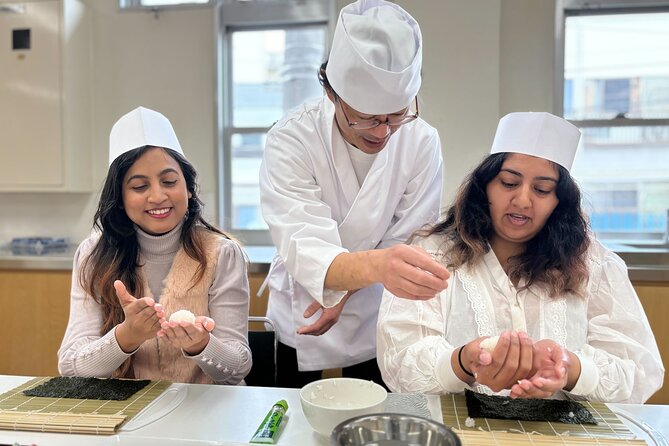
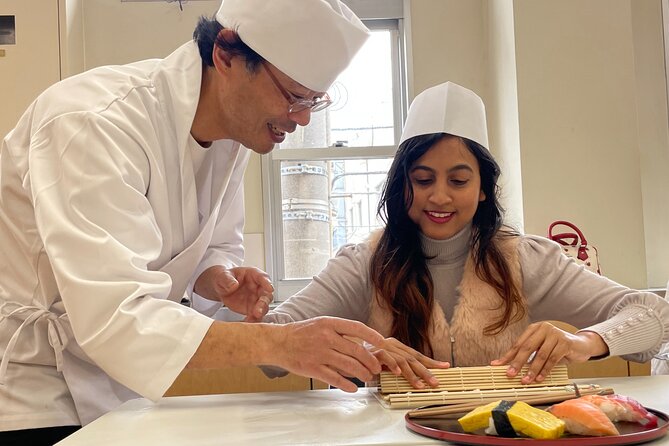
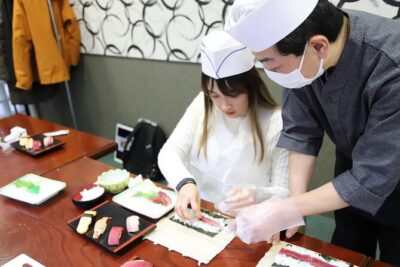
The practical part is the heart of the class. You learn how to form nigiri sushi and how to make a rolled type. The chef demonstrates each step, then helps you copy the movements. Staff assist when your rice shape is uneven or your roll needs a little repair. This is a beginner class, so perfect technique is not expected.
You make five different nigiri sushi and one rolled sushi. That is enough variety to teach the basic ideas without turning the lesson into a race. You work with fresh ingredients sourced from the market, along with proper utensils and tableware provided by local shops.
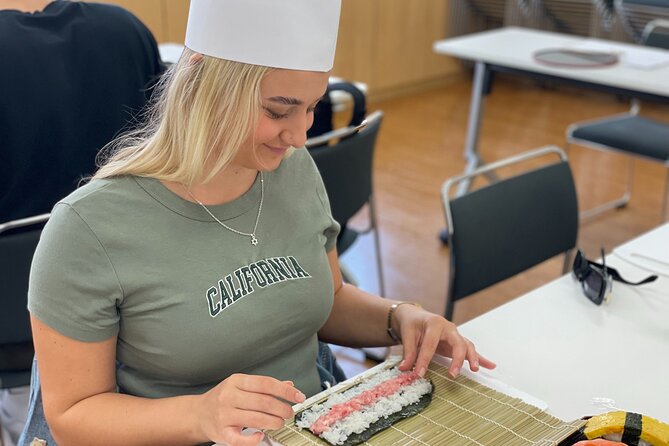
Nigiri is the part most people want to try, since it looks so neat at a sushi counter. You learn how to handle the rice and place the fish on top. The rolled sushi gives you a different skill, since the ingredients must be arranged and shaped inside a roll.
The class is hands-on, but it is not completely independent. The chef and assistants guide you step by step. That is good news if you are nervous about making sushi for the first time. You get enough control to feel that you made the food, while still receiving help before small mistakes become large ones.
Several participants have also taken photos of their completed sushi. The presentation is part of the fun, especially for families and groups. Your pieces may not look exactly like the chef’s, but that is part of the lesson. The finished plate shows how much shape and balance matter.
Eating your own sushi for lunch
After the work comes the best part: you eat the sushi you made. The included meal consists of the five nigiri and one rolled sushi, so you should not plan on a separate lunch during the 90-minute session. One useful tip is to arrive with your stomach slightly empty.
The chef also prepares another piece with freshly prepared wasabi while you eat. This gives you a chance to compare your beginner work with a professional version. It is a small touch, but it helps you understand the difference between following a recipe and developing the hand skills of a sushi master.
The ingredients are described as fresh and market-sourced, and the food receives strong praise for both taste and quality. That matters because a cooking class can be fun even when the food is ordinary. Here, the meal is part of the value, not just an afterthought.
Dietary needs require advance notice. The provider will try to accommodate allergies, but it cannot promise every request. Halal and kosher requests are not accommodated, and kosher options are specifically unavailable. If you have a serious allergy, contact the provider before booking rather than relying on an in-class conversation.
More Fish Market Tours in Tokyo
- Tsukiji Fish Market Guided Tour and Sushi Making with Pro Chef
★ 5.0 · 775 reviews - Tokyo: Tsukiji Fish Market Food and Culture Walking Tour
★ 4.7 · 757 reviews - Tsukiji Fish Market: Street Food & Culture Walking Tour
★ 5.0 · 669 reviews - Tsukiji Fish Market Small-Group Food Walking Tour
★ 5.0 · 621 reviews
What the 90-minute schedule feels like
A 90-minute class fits neatly into a busy Tokyo day. You can schedule it before more sightseeing, after a visit to Tsukiji’s food stalls, or as a compact lunch activity. The short length is a benefit for families and people managing a packed itinerary.
The tradeoff is that the lesson moves at a practical pace. You get an introduction to sushi, a fish-preparation demonstration, instruction in two styles, and time to eat. You do not get a long culinary lecture or an extended market tour.
The end time is approximate, and the activity may run beyond the scheduled finish. If you have a timed reservation immediately afterward, leave some breathing room. Tokyo public transportation is efficient, but a tight connection can turn a pleasant class into a hurried exit.
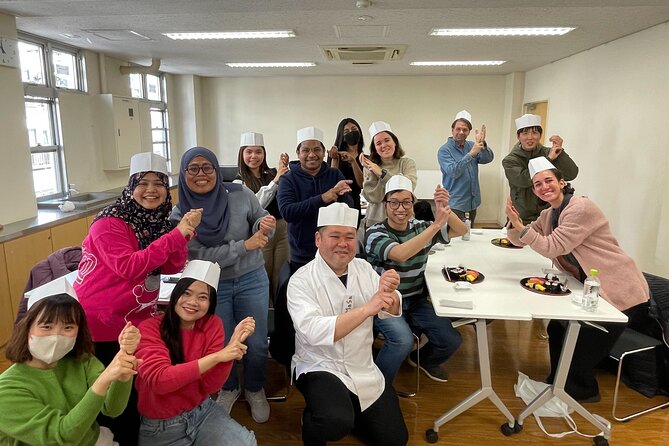
The group may contain as many as 20 people. That is not a private lesson, though the host and staff provide individual help. If you want a quiet, one-on-one session, this may feel larger than expected. For most beginners, the group setting adds energy and gives children or first-time cooks permission to laugh at imperfect rolls.
Why families and first-time sushi cooks fit well
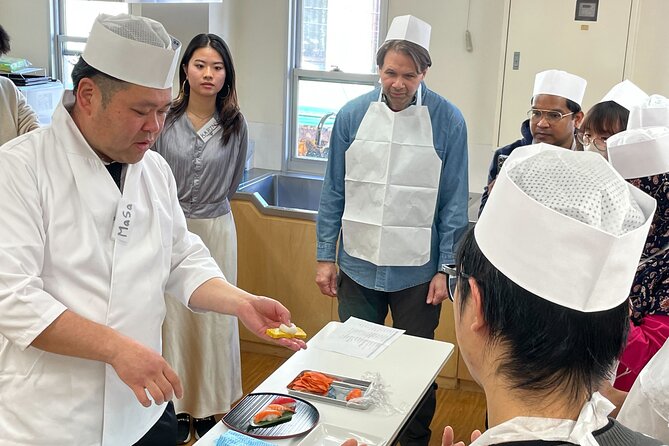
This class works especially well for families. Children have enjoyed making their own sushi, and some have tried sushi or sashimi for the first time because they were involved in preparing it. That is one of the strongest reasons to choose a class instead of simply booking another sushi meal.
The session also suits adults who are new to sushi. You do not need advanced cooking skills, and the host translates the chef’s instructions into clear English. The demonstrations, close help, and simple sequence make the lesson approachable.
I would be more cautious about booking it for anyone who has difficulty with stairs. The classroom is on the third floor of a traditional Japanese building, and there is no elevator information provided. The experience also may not suit someone seeking a long market walk, a full meal with many courses, or a specialized dietary menu.
For most other visitors, the class offers a good mix of instruction and entertainment. You learn a skill you can try again at home, and you get a meal that feels connected to Tokyo rather than selected from a standard restaurant menu.
Is $49.74 a good price?
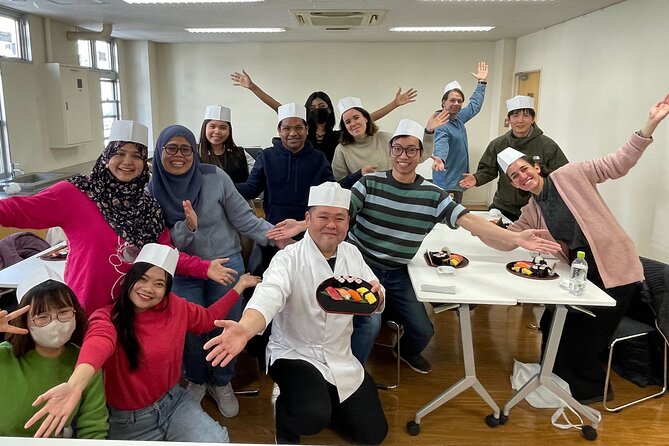
At $49.74, the price is reasonable for a short Tokyo food activity. You receive an English-speaking host, a professional sushi chef, fresh ingredients, cooking tools, a fish-cutting demonstration, and six pieces of handmade sushi to eat.
The value improves if you were already planning to visit Tsukiji. You do not need to pay for a separate lunch after class, and the meeting point lets you combine the experience with time in the outer market. The class also provides something a normal restaurant meal cannot: direct instruction and the satisfaction of making the food yourself.
The price does not include transportation to Tsukiji, hotel pickup, extra food, or drinks. If you expect a guided market tour or a large meal beyond the sushi you prepare, adjust your expectations. Think of this as a compact cooking workshop with lunch, not a full-day food tour.
The very high satisfaction level, with 99 percent recommending it and a 5 rating from more than 1,100 reviews, supports the idea that the experience delivers what it promises. The repeated praise centers on the same useful qualities: clear English help, patient chefs, fresh food, family appeal, and a well-managed pace.
Practical details before you reserve
The meeting point is at 千社額棟4-chōme-16-2 Tsukiji, Chuo City, Tokyo 104-0045. Since the class is in a local building, check the address carefully and arrive with enough time to find the entrance.
Mobile tickets are accepted, and confirmation is provided at booking. The class ends back at the meeting point. You are responsible for getting to and from Tsukiji, so include that travel time when planning the rest of your day.
Wear something comfortable for a hands-on food session. The supplied information does not specify a dress code, but you should expect to work at a table, handle rice and fish, and move through a traditional building with stairs.
Free cancellation is available if you cancel at least 24 hours before the start time. Cancellations or changes made within 24 hours are not refunded or accepted, based on the stated policy. That matters if your Tokyo schedule is still shifting.
Who should book this Tsukiji sushi class?
I would book this for sushi fans, first-time visitors to Tokyo, families with children, and anyone who prefers an activity with a clear result. You leave having learned two basic sushi styles and eaten the food you made.
It is also a smart choice for a rainy day. The class takes place indoors, lasts only about 90 minutes, and does not depend on good weather. You can pair it with Tsukiji market browsing when conditions allow, but the cooking session itself gives you a useful indoor plan.
I would skip it if you need halal or kosher food, have serious dietary restrictions that cannot be adjusted, or cannot manage three flights of stairs. I would also choose a longer cooking course if your main goal is detailed knife training or advanced sushi technique.
Should you book it?
Yes, if you want a friendly, practical introduction to sushi rather than a formal chef’s course. The fish demonstration, clear English support, fresh ingredients, and six-piece meal make the $49.74 price fair. The class has enough structure to teach you something, but enough humor and help to keep beginners relaxed.
Book it alongside a visit to Tsukiji’s outer market, leave room for the class to run a little long, and tell the provider about allergies before you reserve. For a short Tokyo activity that combines food, culture, and a skill you can try at home, this is an easy recommendation.
FAQ
How long does the sushi-making class last?
The class lasts approximately 1 hour and 30 minutes. The activity may run beyond the scheduled ending time, so avoid making a very tight appointment afterward.
What sushi will I make?
You will make five different nigiri sushi and one rolled sushi. You eat the sushi you prepare as part of the experience.
Is the class taught in English?
Yes. An English-speaking host supports the professional sushi chef and explains the instructions throughout the session.
Where does the class meet?
The meeting point is at 千社額棟4-chōme-16-2 Tsukiji, Chuo City, Tokyo 104-0045, Japan. The class ends back at the meeting point.
Is hotel pickup included?
No. You make your own way to the Tsukiji meeting point, and hotel pickup and drop-off are not included.
Can the class accommodate dietary requests?
You should report allergies when booking, and the provider will try to help, though accommodation is not guaranteed. Halal and kosher requests are not accommodated.
Just added around Tokyo
- Tokyo: Private Tsukiji Street Food & Sake with Local Guide★ 5.0 · 3 reviews
- Tokyo: Tsukiji Market Guided Tour & Sushi-Making Experience★ 4.4 · 11 reviews
- Tokyo: Tsukiji Market and Hama-rikyu Gardens Guided Tour★ 4.8 · 73 reviews
- Tokyo: Tsukiji Fish Market Culture Tour with Sashimi Tasting★ 4.6 · 54 reviews
- Tokyo’s Kitchen: Tsukiji Market Food & Culture Walk★ 4.7 · 74 reviews
- Tokyo: Tsukiji Fish Market Foodie and Educational Tour★ 5.0 · 4 reviews
- Tokyo : Tsukiji Fish Market Food Walking & Shrine Visit Tour★ 5.0 · 3 reviews
- Tokyo: Guided Walking Tour of Tsukiji Market with Lunch★ 4.4 · 24 reviews
Fish Market Tours, compared.

Tokyo Tsukiji Fish Market Food and Culture Walking Tour
Read our review →
Tsukiji Fish Market Guided Tour and Sushi Making with Pro Chef
Read our review →Tsukiji Fish Market Food and Culture Walking Tour
Read our review →
Tsukiji Fish Market: Street Food & Culture Walking Tour
Read our review →
Tsukiji Fish Market Small-Group Food Walking Tour
Read our review →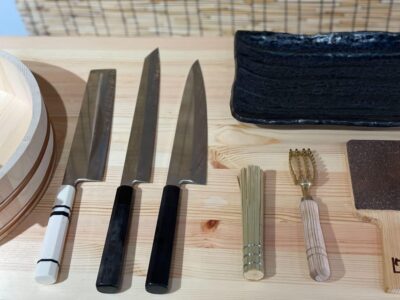
Tsukiji Fish Market Sushi Making Class with Pro Chef
Read our review →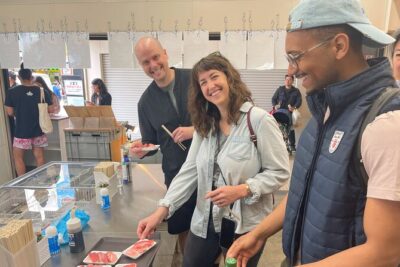
Tokyo Food Tour Taste Fresh Delights at Tsukiji Market
Read our review →Browse the lists this tour appears in