
Review · SOUTH KOREA
Local Home Korean Cooking Class & Market Adventure in Seoul
Come hungry, leave with recipes. This Seoul experience pairs a guided walk through Mangwon Market with a hands-on class in a local home, giving you a useful introduction to Korean food beyond the restaurant table. I especially like the market visit, where you learn what ingredients are called and sample street food, and the generous Hanjeongsik meal, served with more than 10 side dishes, dessert, and makgeolli. The main consideration is time: three and a half hours is a sizeable afternoon commitment, and the cooking portion may feel less appealing if you prefer simply eating your way around Seoul.
The small group, capped at 10 people, keeps the class personal. Hosts named Sarah and Junghee are praised for clear English, humor, practical cooking tips, and a relaxed teaching style. You should also know that the exact dishes can vary, with bibimbap and dakgalbi given as examples rather than a fixed menu.
Key things to know before booking
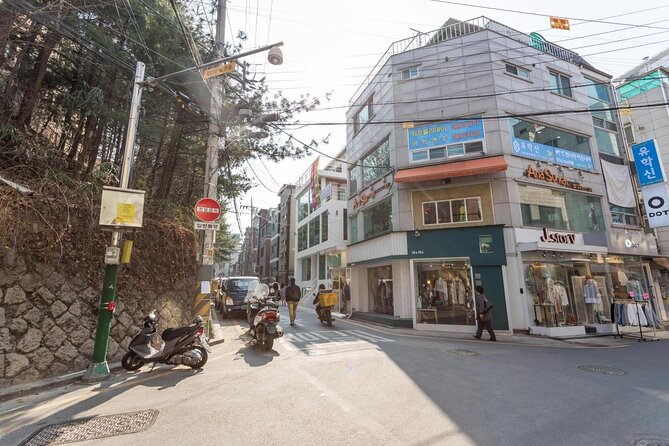
- Mangwon Market comes first: You walk through a local market with your host, learn about Korean produce, herbs, spices, and street foods, and taste something along the way.
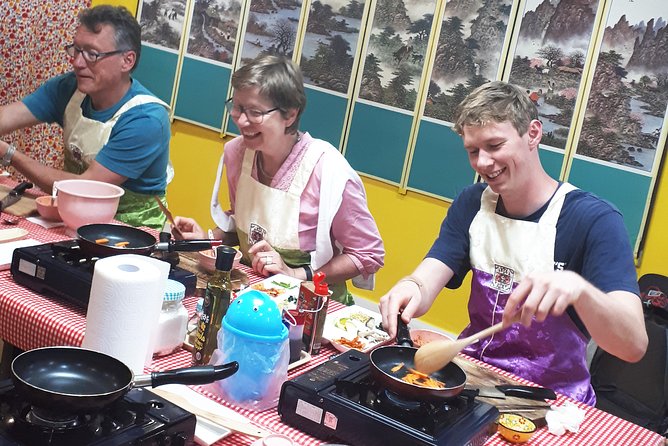
- You cook four Korean dishes: The class is fully hands-on, with examples including bibimbap and dakgalbi.
- The meal is much bigger than your four dishes: Your homemade food is joined by a traditional Hanjeongsik spread, more than 10 side dishes, dessert, and a glass of makgeolli.
- The group stays small: A maximum of 10 people means more chances to ask questions and get help at the stove.
- The class takes place in a real home: That gives the experience a personal feel rather than the atmosphere of a large culinary school.
- The meeting point is easy to reach: Meet at Mangwon Station Exit 2, at 377-20 Mangwon-dong, Mapo-gu, and finish back at the meeting point.
Why this Seoul food experience feels different
Seoul offers no shortage of food tours, but this one connects three parts of Korean food culture: shopping, cooking, and sitting down to eat together. You start in Mangwon Market, where ingredients are not presented as museum pieces. You see how they are sold, hear what they are called, and get a sense of how ordinary households shop.
Then you carry that market knowledge into the kitchen. Instead of watching a chef prepare a polished demonstration, you help make four dishes yourself. Finally, you sit at a home table for a Hanjeongsik-style meal. That order matters. You understand the ingredients before you cook them, then taste them in a broader Korean meal.
I like that this is not built around a single famous dish. Bibimbap can introduce you to rice, vegetables, seasoning, and the pleasure of mixing everything together. Dakgalbi offers a different lesson, with its bold seasoning and shared-pan character. Since the menu may vary, you should treat those dishes as examples, not promises.
The tone also appears to be a major part of the experience. Sarah is described as warm, funny, and easygoing, while Junghee is praised for turning the class into something close to a cooking lesson mixed with a comedy show. That may sound like a small detail, but it matters when you are cooking in an unfamiliar kitchen with people you have just met.
More Cooking Classes in Seoul:
- Seoul: Korean Cooking Class at a Local Home and Market Tour
★ 5.0 · 348 reviews - Korean Cooking Class with Grocery Shopping at Seoul Local Market
★ 5.0 · 107 reviews - Seoul: Authentic Korean Cooking Class and Market Tour
★ 5.0 · 6 reviews
Meeting at Mangwon Station and entering the market
The group meets at Mangwon Station Entrance 2. The listed meeting address is 377-20 Mangwon-dong, Mapo-gu, Seoul, and the activity returns to this same meeting point at the end.
Mangwon Market is the first real stop. Your host guides you through the stalls and explains local produce, typical herbs, spices, and street foods. This is not just a walk past colorful displays. The useful part is learning the names of ingredients and seeing how they fit into Korean cooking.
The market walk also gives you a chance to ask the questions that are hard to answer in a restaurant. What is this vegetable? How is that seasoning used? Which foods are common at home, and which are mainly snacks? The host can also explain regional cooking differences and seasonal ingredients.
You may sample street food during the walk. Specific examples from the experience include kwabaeggi, a twisted Korean doughnut, and Korean market snacks such as donuts. One particularly useful touch is the chance to practice ordering in Korean. You do not need fluency, but saying a food name yourself makes the market feel less like a show and more like a place you can return to on your own.
The market portion is also where the cultural details become most practical. One cooking tip highlighted by a participant involved Korea’s use of spring onions rather than chives in a particular context. Details like this help you notice why a dish tastes different from a similar dish at home.
Expect to walk while looking closely at ingredients, so comfortable shoes make sense. The schedule is not presented as a rushed race through the market, but it is still part of a three-and-a-half-hour activity. If you want a long, independent market visit, save extra time before or after the class.
From market basket to local kitchen
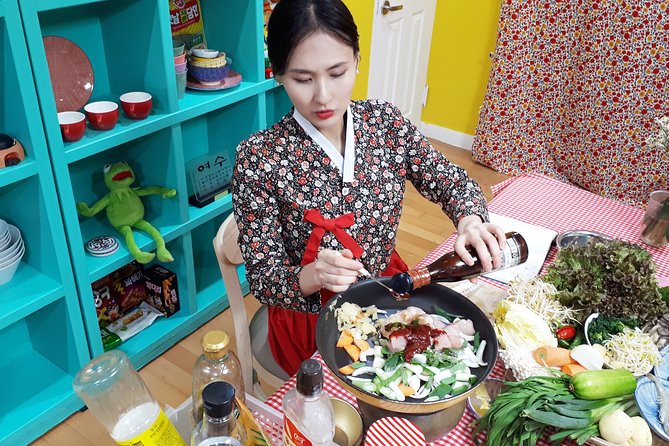
After the market, you head to the host’s home for the cooking class. This is the most personal part of the experience. You are not moving into a restaurant demonstration kitchen or a large school with rows of stations. You are welcomed into a working home, with the host’s own stories and approach shaping the afternoon.
The class is described as 100 percent hands-on. That means you should expect to take part rather than watch from the edge. You may chop, mix, season, assemble, and cook under guidance, depending on the dishes selected for the session.
Four Korean dishes are prepared. Bibimbap and dakgalbi are examples, but the exact combination is not guaranteed. That flexibility can be useful because the host may choose dishes that work well with available ingredients or suit the group.
The instruction is aimed at making Korean cooking feel manageable. Several comments highlight simple techniques, practical tips, and recipes that are realistic to repeat at home. That is a real strength. You are not just collecting pretty food photographs. You leave with methods you can use in your own kitchen, along with copies of the recipes.
Sarah and Junghee are both praised for strong English, patience, and lively instruction. You also learn some basic Korean words during the class. A few phrases are enough to help with food names and market interactions, and they add a nice layer to the afternoon without turning it into a formal language lesson.
The small group size helps here. With no more than 10 people, you have a better chance of receiving direct guidance. If you are nervous about cooking, that support matters. The class is also suitable for families with older children. One family used it with children aged 16, 18, and 28, and all enjoyed the activity.
Still, hands-on means you should be willing to participate. This is not ideal for someone who wants a quiet meal with no preparation. The home setting may also feel more informal than a professional culinary studio, although the setup has been described as professional.
The Hanjeongsik table is the payoff
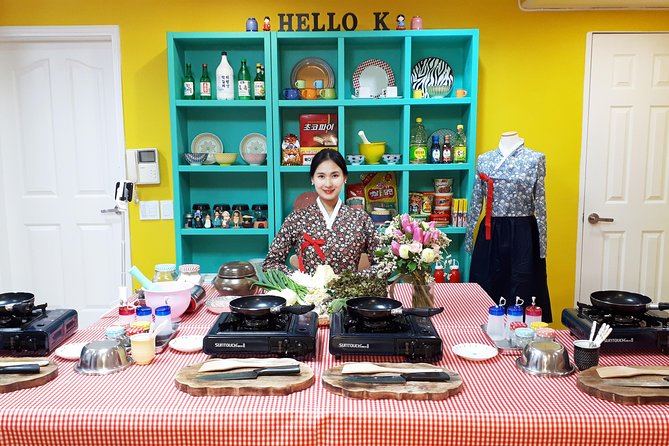
Once the cooking is finished, you sit down to eat what you made. The meal also includes more than 10 homemade side dishes, dessert, and a glass of makgeolli, Korean rice wine.
Hanjeongsik is less about one centerpiece dish and more about variety at the table. You get to see how your four cooked items fit among smaller side dishes with different colors, textures, and flavors. That gives you a better idea of how Korean meals are structured than a single bowl of bibimbap would.
I like this part because it turns the class into a shared meal rather than a task followed by a quick taste. You can compare techniques, talk with the host, and meet the other people in the group. Several comments describe the meal as a highlight of the visit, with food that was both delicious and approachable.
The makgeolli is a small but fitting addition. It connects the meal to Korean dining customs and gives you one more local item to try. Since the experience includes a glass, you do not need to order it separately as part of the listed meal.
Dessert is included as well. The supplied details do not specify what dessert will be served, so do not book this expecting a particular sweet. The same goes for the side dishes and the exact four-course cooking menu. The appeal is the broad home-style spread, not a fixed restaurant menu.
A few more market tours around Seoul worth a look
- Seoul Street Food Market Tour
★ 5.0 · 1,226 reviews - Seoul: Night Market Food Tour with Local Guide
★ 4.9 · 943 reviews - Seoul: Palace, Temple and Market Guided Foodie Tour at Night
★ 4.9 · 750 reviews - Seoul: Guided Food & Market Tour with 8+ Tastings
★ 4.9 · 342 reviews
The hosts make the difference
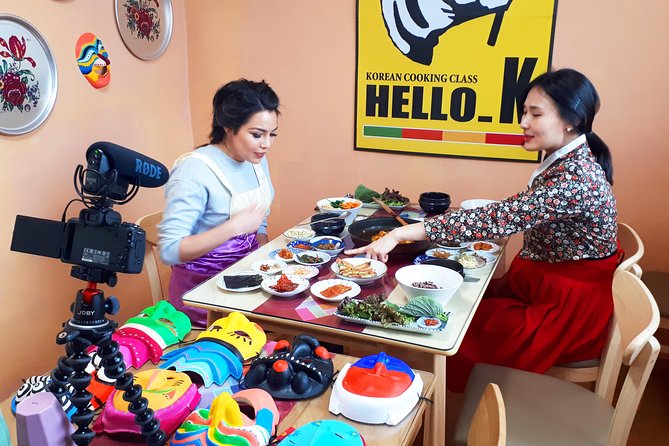
The clearest strength of this experience is the host. Sarah is described as welcoming, charismatic, funny, and generous with practical advice. Junghee is praised for being warm, engaging, and entertaining, while also explaining food and culture clearly.
That personality matters because a home cooking class can go one of two ways. It can feel stiff and overly careful, or it can feel like an invitation into someone’s daily world. The feedback points strongly toward the second option. Guests learned about family cooking, Korean life, regional food styles, and useful phrases while preparing the meal.
The host may also offer recommendations for the rest of your Seoul visit. Specific comments mention restaurant tips sent after the class and suggestions for what to eat during the rest of the trip. Those extras are not a formal part of the advertised itinerary, so consider them a welcome possibility rather than a guaranteed service.
Photos may also be taken during the class and sent afterward. Again, this is mentioned as something the host has done, not a separately promised package. It is a nice benefit if you want a record of the meal without stopping to photograph every step yourself.
The atmosphere seems particularly good for couples, families with older children, friends, and solo visitors who like meeting people around a table. The class also suits anyone who wants more cultural context than a standard food tasting provides.
Is $91 a fair price?
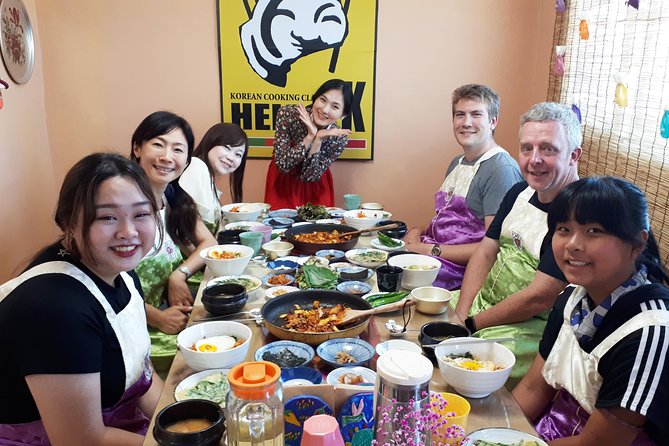
At $91 per person, this is not the cheapest way to eat in Seoul. You can buy plenty of market snacks and restaurant meals for far less. The value comes from combining several services in one three-and-a-half-hour experience.
Your price covers a guided market visit, street food tasting, ingredient instruction, a fully hands-on class, four dishes, a large Hanjeongsik meal, more than 10 side dishes, dessert, and makgeolli. You also receive the host’s time, recipes, cooking advice, and cultural explanations. For someone who would otherwise book a market tour and a cooking lesson separately, the price is easier to justify.
The small group adds value, too. A maximum of 10 people is not the same as a private class, but it is small enough for personal help. Some dates may even have so few bookings that the class feels nearly private, though you should not count on that.
I would book this if you want an activity that fills a half day and gives you something to take home besides memories. I would skip it if your priority is finding the lowest-cost food in Seoul, or if you prefer an unstructured afternoon of market grazing.
Timing, transport, and cancellation details
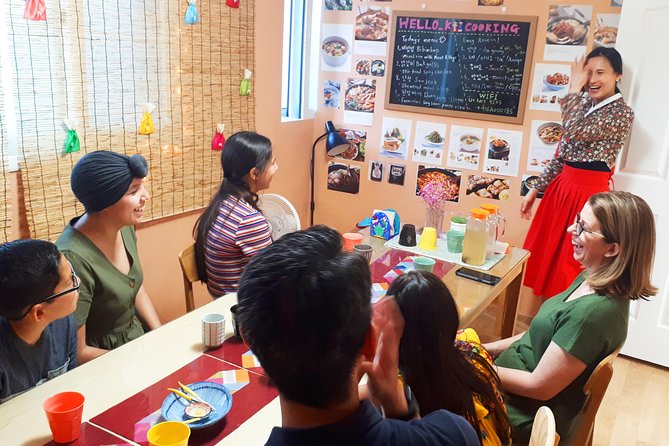
The experience lasts about three hours and 30 minutes and begins at Mangwon Station Entrance 2. The meeting point is near public transportation, and the activity ends back at the same meeting point.
Your booking confirmation is provided at the time of booking. The maximum group size is 10 people. Mobile ticketing is available, which makes the practical side fairly simple.
Free cancellation is available if you cancel at least 24 hours before the start time. Cancellations made less than 24 hours in advance are not refunded, and late changes are not accepted. The cut-off follows Seoul local time, so check the clock carefully if you are booking from another country.
Who should book this class?
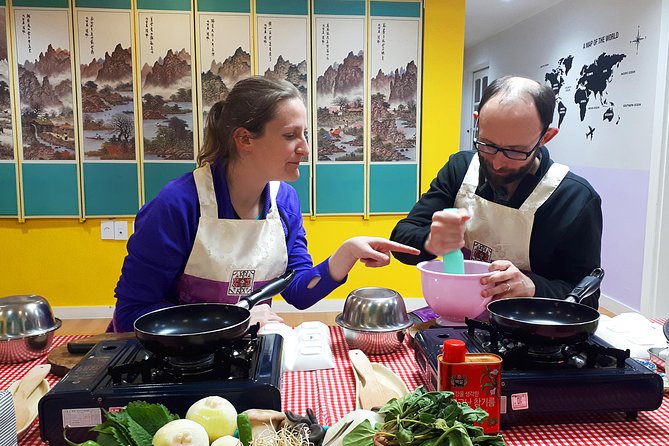
I would put this near the top of the list for:
- First-time visitors who want a clear introduction to Korean food
- Couples looking for a shared cultural activity
- Families with older children and teenagers
- Solo visitors who enjoy cooking and meeting people
- Anyone who wants recipes and techniques to use at home
- Food lovers who want to understand ingredients before tasting them
It is less suited to you if you dislike group activities, cannot spare a half day, or want a fixed menu with every dish announced in advance. The exact recipes may change, and the experience depends heavily on your interest in participating.
FAQ
Where does the Korean cooking class meet?
The meeting point is at Mangwon Station Entrance 2, at 377-20 Mangwon-dong, Mapo-gu, Seoul, South Korea.
Where does the experience end?
The activity ends back at the meeting point near Mangwon Station.
How long does the experience last?
The experience lasts approximately three hours and 30 minutes.
How many people can join the class?
The activity has a maximum of 10 travelers.
What food is included?
You prepare four Korean dishes, with bibimbap and dakgalbi given as examples. The meal also includes more than 10 side dishes, dessert, and a glass of makgeolli. The exact four dishes and side dishes are not specified.
Can I cancel for a full refund?
Yes. You can cancel for a full refund at least 24 hours before the experience start time. Cancellations or changes made less than 24 hours before the start time are not accepted for a refund.
Should you book it?
Book this experience if you want Seoul food culture explained at the market, practiced in a home kitchen, and enjoyed at a generous shared table. The strongest reasons are the personal hosts, small group, useful recipes, and the unusual combination of market shopping and Hanjeongsik dining.
The best fit is an afternoon when you can slow down and take part. If you want only a quick tasting, choose a shorter food walk. If you want to understand how Korean ingredients become a home meal, this $91 class offers a solid, hands-on introduction.
Just added around Seoul
- Seoul: The Biggest Sea-food Noryangjin Market Tour★ 4.3 · 30 reviews
- Seoul: Sokcho beach, market, hot spring and Seorak Cable Car★ 4.8 · 5 reviews
- Seoul Gwangjang Market Foody Walking Tour★ 4.1 · 7 reviews
- Seoul: Namdaemun Market Food Tour★ 4.9 · 34 reviews
- Seoul: Gyeongbokgung Palace Tour & Lunch at Authentic Market★ 4.5 · 2 reviews
- Seoul: Gwangjang Market Vegan & Vegetarian Food Tour★ 5.0 · 16 reviews
- Seoul: Guided Street Food Tour at Namdaemun Market★ 5.0 · 10 reviews
- Seoul: Fearless Foodie Gwangjang Market Food Adventure★ 5.0 · 10 reviews
Cooking Classes, compared.
Hanoi Cooking Class: Culture, Local Market & Meaning CSR Impact
Read our review →
5 Traditional Dishes Hanoi Cooking Class with Market Trip
Read our review →
Cooking Class and Lunch at a Tuscan Farmhouse with Local Market Tour from Florence
Read our review →
Cooking Class, Market & Thai Herbs Garden Tour
Read our review →
Authentic Cooking Class with Market & Farm Visit
Read our review →
Paella Cooking Experience & Boqueria Market Tour
Read our review →
Cooking Class Hoi An:Local Market, Basket Boat, Fishing & Cooking
Read our review →
Hoi An Cooking Class(Market,BasketBoat Crabfishing&Cooking Class)
Read our review →Browse the lists this tour appears in