
Review · JAPAN
Kyoto Nishiki Market Food and Culture Walking Tour
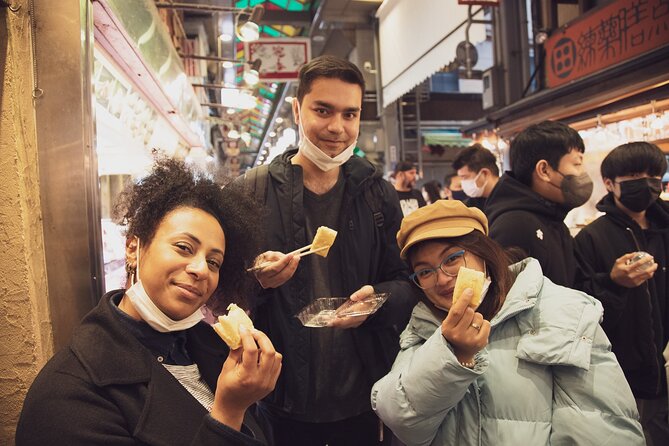
Kyoto’s tastiest street is five blocks long. The Nishiki Market Food and Culture Walking Tour gives you a guided way into Kyoto’s famous food lane, with enough tasting stops to replace a meal and a small group capped at six people. I like the mix of market food and everyday religious sites, and I like that guides such as Takuma, Miku, Annie, and Atsu have earned praise for clear English and personal attention. The main catch is value: at $80.92, you need to care about explanation and guidance, not just the number of bites.
You’ll spend about three hours walking, eating, shopping, and learning how to behave at a Shinto shrine and Buddhist temple. The food can be generous, but the exact amount varies. Some outings include many tastes, while others have focused on only a few paid samples plus restaurant food. Dietary restrictions are not accommodated, so read the fine print before booking.
Key points to know before booking
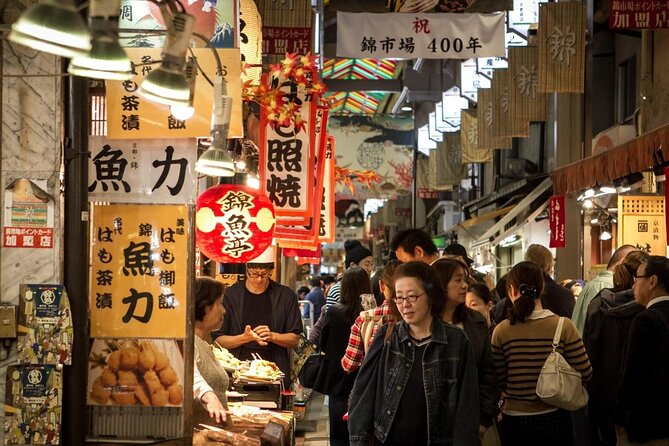
- Nishiki Market takes about 1 hour 40 minutes: Expect the largest part of the outing to unfold among roughly 130 shops along a narrow, five-block street.
- The group has a maximum of six people: This makes it easier to ask questions, slow down for shopping, or receive suggestions based on your interests.
- Food replaces a regular meal: Past menus have included yuba, soy doughnuts, omelet, pickles, gyoza, fruit, wagyu or minced meat sandwiches, eel, and drinks.
- The route adds culture beyond eating: Nishiki Tenmangu, Takoyakushido Eifukuji Temple, Shinkyogoku, and Teramachi-dori show how worship and shopping fit into daily Kyoto life.
- Dietary restrictions are a serious limitation: Vegetarian, halal, kosher, gluten-free, and allergy-related requests cannot be arranged.
- The price buys guidance, not admission tickets: The market, shrine, shopping arcades, and temple are free to enter, so the value rests on the guide, food, translation, and route planning.
Why Nishiki Market is worth seeing with a guide
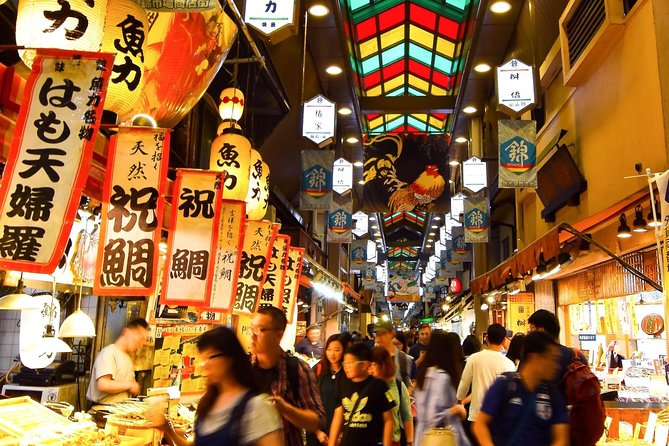
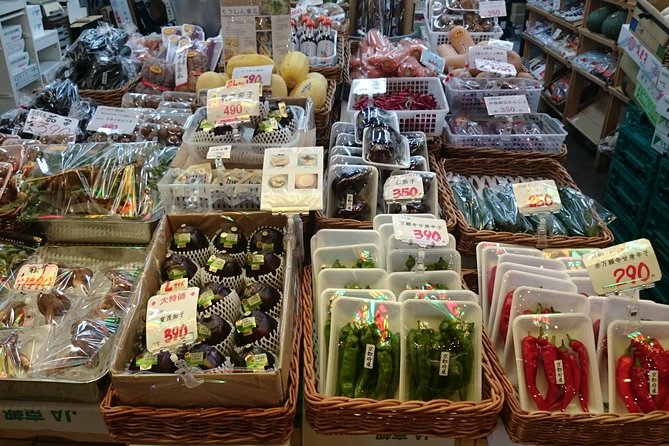
Nishiki Market is often called Kyoto’s Kitchen, and the nickname makes sense once you enter the long covered lane. Food stalls, specialty shops, and small counters line both sides, leaving a tight passage where shoppers, diners, and curious newcomers all share the same space.
You can walk through Nishiki on your own. That is easy enough. The hard part is knowing what you are looking at, which samples are worth trying, how to order, and how to keep moving without blocking the lane. A guide turns a crowded food corridor into a series of small lessons.
I especially like the way this tour connects food with local habits. You might learn why a particular ingredient matters in Kyoto, how a dish is eaten, or what a vendor is selling beyond the obvious item in front of you. Guides have also helped people choose Japanese seasonings, drink concentrates, and items such as matcha salt to take home.
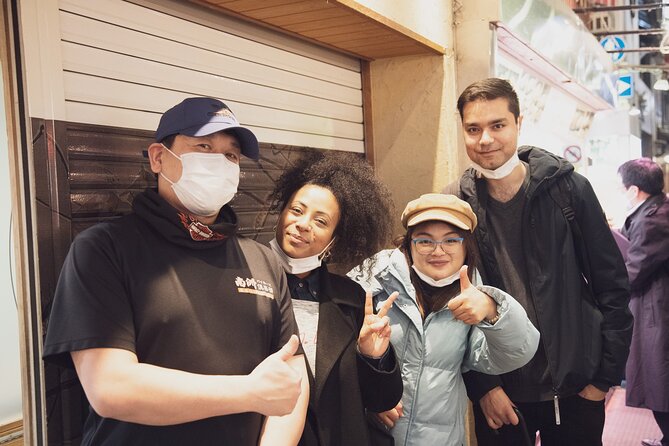
The small size matters here. With a maximum of six people, you are not trailing behind a flag or trying to hear a speech over the market noise. Guides can answer questions, adjust the pace, and spend more time at shops that catch your eye. Saeko, Chizuko, and Taka were praised for adapting the outing to personal interests, while several guides helped families and multigenerational groups stay involved.
There is one practical warning: the market gets crowded. If you bring a stroller, tell the operator beforehand. You should also wear comfortable shoes and keep your belongings close, not because the route is unusually strenuous, but because the lane can feel tight.
More Market Walking Tours in Japan
- Nishiki Market Brunch Walking Tour (7 Tastings + Brunch)
★ 5.0 · 1,355 reviews - Taste of Nishiki Market Walking Food Tour with Local guide
★ 5.0 · 17 reviews - Kyoto: Wholesale Fish Market Walking Tour
★ 5.0 · 2 reviews
The food: more than a checklist of samples
The exact menu is not fixed in the information provided, and that is normal for a market tour. Shops open and close, ingredients change, and a guide may adjust the route to suit the day. The food examples give you a useful sense of the range.
Past tastings have included yuba, soy doughnuts, omelet, pickled cucumbers, gyoza, wheat starch, honey yuzu lemonade, minced meat sandwiches, and tempura conger eel. Other experiences included strawberries, fruit, wagyu, Kobe-style minced meat pies, and restaurant servings. That is a broad spread, from sweet snacks to savory bites and ingredients you may not recognize at first glance.
The best part is the explanation beside the food. A small bite of yuba is more interesting when you understand what it is and why it appears in Kyoto cooking. A Japanese pickle becomes less mysterious when someone explains how it fits into local eating habits. You may also learn a few Japanese words or local expressions, such as okini, a Kyoto-style way to say thank you.
Still, do not assume every departure includes every item listed above. The food count has been the biggest point of disagreement in the available feedback. Some people finished full and happy after many tastings and free samples. Others received only three market items and three dishes at a sit-down restaurant, and felt the cost was too high.
That makes the tour a better choice for a person who wants guided tasting than for someone who wants to maximize food quantity. If you are willing to buy extra snacks as you walk, you can turn the outing into a much larger meal. Extra food and drinks are not included in the price.
Stop one: 1 hour 40 minutes inside Nishiki Market
The market is the heart of the outing. You will spend roughly 1 hour and 40 minutes here, soaking up the smells, sounds, displays, and close-packed shops. Admission is free, but the guide-led food stops are what give the visit structure.
This is where the tour earns its keep if you are new to Japanese food. You do not need to reserve a restaurant, decode every sign, or decide instantly what to order. Your guide can point out local specialties and help you avoid wandering past something interesting simply because you do not recognize it.
The market also works well for shopping. You may find seasonings, sweets, preserved foods, drink concentrates, and small souvenirs. Chizuko was praised for directing a guest toward useful food products that might have been missed during a quick independent walk. Annie helped one person find matcha salt, a practical souvenir rather than another generic trinket.
The drawback is that Nishiki can be overwhelming. You may stop often, but you are still moving through a public shopping street rather than a private tasting room. Some shops have limited space, and your guide cannot control the crowd. If you prefer a slow meal with a long conversation at each stop, this is not that kind of experience.
Stop two: Nishiki Tenmangu and the basics of shrine worship
After the market, the route visits Nishiki Tenmangu for about 15 minutes. This short stop adds an important layer to the day. You learn what you may see at a Shinto shrine and how to pray, including basic points about Japanese worship.
Fifteen minutes is not long enough for a detailed religious tour, but it is enough to give you useful manners and context. If you have felt uncertain about what to do at a shrine, this is a friendly introduction. You can ask questions instead of copying the nearest person and hoping for the best.
This stop also helps explain the setting around Nishiki. Kyoto’s religious places are not isolated museum pieces. They can sit beside shopping streets, food stalls, and ordinary businesses. The tour makes that connection clear.
More Market Walking Tours in Kyoto:
- Bangkok: City Highlights Temple and Market Walking Tour
★ 4.5 · 3,990 reviews - Tokyo Tsukiji Fish Market Food and Culture Walking Tour
★ 5.0 · 3,184 reviews - Marrakech: Ben Youssef, Secret Garden, & Souks Walking Tour
★ 4.6 · 2,802 reviews - Marrakech: Colorful Medina Souks Guided Walking Tour
★ 4.7 · 2,470 reviews
Stop three: 20 minutes along Shinkyogoku
Shinkyogoku Shopping District brings a more modern commercial mood to the route. The pedestrian arcade mixes Kyoto traditions with contemporary shops, giving you a look at how local shopping works beyond the market itself.
The 20-minute walk is useful because it changes the rhythm. You have been looking at food and narrow stalls, and now you see a wider commercial strip with room to browse. Your guide may help you understand what feels local, what is aimed at visitors, and where you might want to return later.
This is also one of the places where personal guidance can save time. Kyoto’s downtown shopping streets offer many choices, and a short orientation helps you avoid spending an hour going in circles. You should not expect a full shopping session, though. The route keeps moving.
Stop four: 10 minutes at Takoyakushido Eifukuji Temple
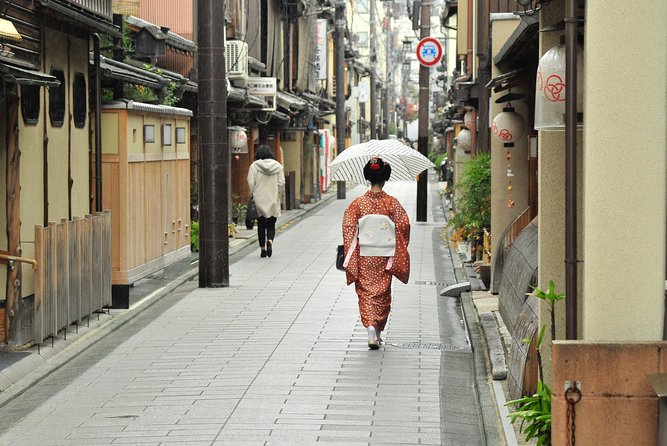
Takoyakushido Eifukuji Temple is a small Buddhist temple at the corner of a shopping street. The stop lasts about 10 minutes, but its value is the setting rather than the length.
You get to see a temple as part of ordinary city life. It is not separated from the neighborhood by a grand entrance or a long approach. Shops and worship exist side by side, which is a useful counterpoint to Kyoto’s major temple complexes.
The guide explains what makes Buddhist temples different from Shinto shrines and points out the sort of details you might otherwise pass without noticing. If you have already visited several major religious sites, this smaller stop may feel especially refreshing. It shows a less staged side of Kyoto.
Stop five: 15 minutes on Teramachi-dori
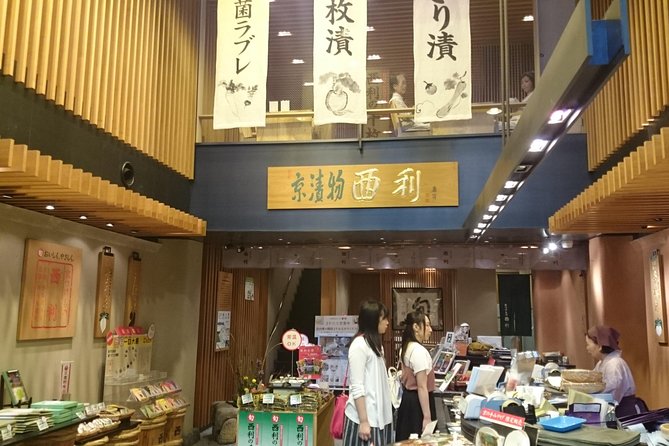
The final listed section is Teramachi-dori, a local shopping street lined with long-running businesses and newer shops. You spend about 15 minutes here, taking in another slice of downtown Kyoto life.
Teramachi works well as the closing piece because it returns you to everyday commerce. You have seen food specialists, a Shinto shrine, a Buddhist temple, and two shopping arcades. Together, these stops show how closely eating, worship, and shopping overlap in central Kyoto.
You may also have time to shop during the tour. One useful point from the experience is that the guide can help you decide what is worth bringing home. Still, shopping purchases are your responsibility, and you should not count on a long independent browsing period.
The guides are the main reason to pay for this tour
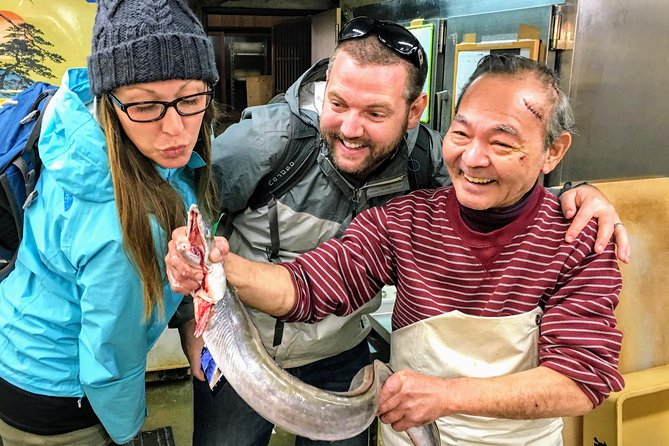
The strongest part of the experience is the human element. Guides such as Miku, Takuma, Toshi, Naoko, Atsu, Annie, Saeko, Yasuko, Yoko, Chizuko, and Taisei have been praised for warmth, clear English, good pacing, and the ability to explain food without making the outing feel like a lecture.
That praise is specific. Takuma was appreciated for giving cultural and language tips without rushing. Atsu handled a multigenerational group well. Taisei mixed food recommendations with fun facts and kept the walking and sitting balanced. Toshi connected market food with religious customs and local expressions.
Solo visitors can benefit from the small group, since a guide gives you company without requiring a large social commitment. Families may appreciate the flexible pace and the chance to let younger people try unfamiliar foods with some explanation. The tour also suits first-time visitors who find Japanese markets exciting but hard to read.
If you already know Nishiki Market well, the value becomes less certain. You can enter for free and buy food one item at a time. The tour makes sense when you want help choosing, translating, tasting, and placing the market in its cultural setting.
Is $80.92 a fair price?
At $80.92 per person, this is not a bargain market stroll. There are no admission charges for the listed stops, and transportation, hotel pickup, extra food, drinks, and personal purchases are not included.
You are paying for roughly three hours of a small-group service, food samples, cultural interpretation, and route planning. If you eat enough to replace lunch, get useful shopping advice, and avoid several wrong turns, the price can be reasonable. A full meal plus a private guide would cost more, but this is still expensive compared with exploring the market alone.
The number of tastings determines how the price feels. Several outings included enough food to leave people full, while one particularly critical experience felt limited with three market items and three restaurant dishes. The operator’s response indicates that some days include five shops and around 10 samples, but you should not treat that as a guaranteed menu.
My advice is simple: book for access and guidance, not for a bargain. If you want the cheapest way to eat at Nishiki, go independently. If you want a confident introduction and value explanations as much as food, the price is easier to justify.
Timing, weather, and food restrictions
The tour lasts about three hours and takes place near public transportation. The route is mostly a combination of walking and standing, with some sitting for food stops. One person with back problems found the rhythm comfortable, but the market can be crowded and the day may feel tiring in hot weather.
The activity is advertised as operating rain or shine, yet poor weather may lead to a different date or a full refund. That means you should check the operator’s message if the forecast turns bad.
The food policy needs close attention. Vegetarian, halal, kosher, gluten-free, and allergy-related requests cannot be accommodated. If you have severe restrictions, the operator says food may not be possible to arrange. This is not a tour to book casually with a serious allergy.
You receive confirmation when booking, and free cancellation is available up to 24 hours before the start time. Changes or cancellations inside that window are not accepted for a refund.
Who should book the Nishiki Market tour?
I would choose this outing if you are visiting Kyoto for the first time, want a meal-sized tasting experience, and feel unsure about entering a crowded Japanese food market alone. It is also a good fit for solo visitors, families, and small groups that want a guide who can answer questions on the spot.
You may also like it if you want more than food. The shrine, temple, shopping arcades, and market make the route feel like an introduction to central Kyoto rather than a simple eating crawl.
I would skip it if you have strict dietary needs, dislike crowded shopping streets, or measure value by the number of individual bites alone. Independent visitors can spend less and choose exactly what they want, though they will miss the explanations and local direction.
Should you book it?
Book this tour if you want an easy, guided first look at Nishiki Market, especially if the culture around the food matters to you. The small group, three-hour route, and consistently praised guides are the strongest reasons to go.
Before paying, accept two limits: the exact tastings can vary, and dietary restrictions are not supported. If those points work for you, $80.92 can buy a satisfying introduction to Kyoto’s food streets, neighborhood shrines, and everyday shopping culture. If not, walk Nishiki independently and spend your budget directly at the stalls.
FAQ
How long does the Kyoto Nishiki Market Food and Culture Walking Tour last?
The tour lasts approximately three hours.
What places are included?
The route includes Nishiki Market, Nishiki Tenmangu, Shinkyogoku Shopping District, Takoyakushido Eifukuji Temple, and Teramachi-dori Street.
How many people can join the tour?
The maximum group size is six travelers.
Is enough food included to replace a meal?
The tour is designed to include enough samples to fill you in place of a meal, but the exact number and type of tastings can vary.
Can the tour accommodate vegetarian, halal, kosher, gluten-free, or allergy-related diets?
No. The operator cannot accommodate these dietary restrictions, and severe restrictions may make it impossible to arrange food.
What is the cancellation policy?
You can cancel for a full refund at least 24 hours before the experience begins. Cancellations or changes made less than 24 hours before the start time are not refunded.
More Food Trips in Kyoto
- Kyoto: Nishiki Market Tour with a Local Foodie & Tastings
★ 4.5 · 67 reviews - Kyoto: Nishiki Market Food Tour with Local Guide
★ 4.6 · 5 reviews - Dubai: Old Town, Creek, Museums, Souks, & Street Food Tour
★ 4.8 · 10,816 reviews - Dubai: Old Town, Souks, Street Food, Guided Tour & Abra Ride
★ 4.9 · 7,170 reviews
More Food and Drink Trips in Kyoto
- Kyoto: Local Food Tasting Tour at the Nishiki Market
★ 4.7 · 135 reviews - Kyoto: Nishiki Market and Depachika Food Tour with a Local
★ 4.7 · 76 reviews - Nishiki Market Food Tour with Cooking Class
★ 4.9 · 42 reviews - Kyoto: Nishiki Market Food Tour
★ 4.9 · 21 reviews
Just added around Kyoto
- Taste of Nishiki Market Walking Food Tour with Local guide★ 5.0 · 17 reviews
- Kyoto: Wholesale Fish Market Walking Tour★ 5.0 · 2 reviews
- Kyoto: Nishiki Market Tour with a Local Foodie & Tastings★ 4.5 · 67 reviews
- Golden Pavilion, Nijo Castle, & Nishiki Market Half day tour★ 5.0 · 29 reviews
- Kyoto: Nishiki Market Food Tour with Local Guide★ 4.6 · 5 reviews
- Kyoto: Nishiki Market Food Tour★ 4.9 · 21 reviews
- Kyoto: Enjoy Sushi & Market Tour! Best for Family & Couple!★ 4.8 · 20 reviews
- Kyoto: Nishiki Market and Depachika Food Tour with a Local★ 4.7 · 76 reviews
Walking Tours, compared.
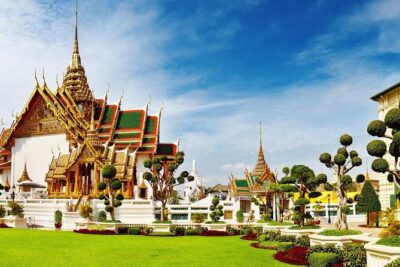
City Highlights Temple and Market Walking Tour
Read our review →
Tokyo Tsukiji Fish Market Food and Culture Walking Tour
Read our review →
Ben Youssef, Secret Garden, & Souks Walking Tour
Read our review →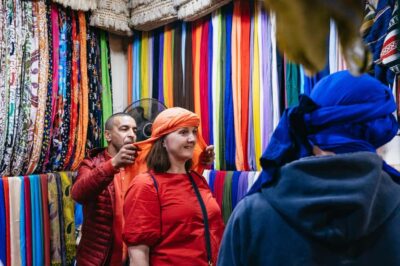
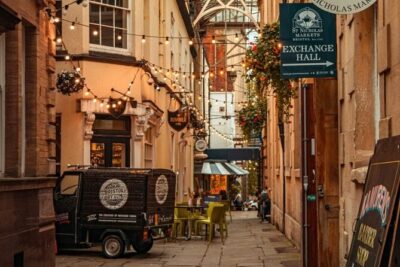
Air Raid Shelter + St. Nicholas Market Walking Tour
Read our review →
Nishiki Market Brunch Walking Tour (7 Tastings + Brunch)
Read our review →Tsukiji Fish Market Food and Culture Walking Tour
Read our review →Browse the lists this tour appears in