
Review · JAPAN
Tokyo: Private Tsukiji Street Food & Sake with Local Guide
Tsukiji tastes better with a local guide. This two-hour walk pairs the striking Tsukiji Hongwanji Temple with the Outer Market’s best-known flavors, then settles down for a guided sake tasting. I especially like the included food stops and the way the guide explains why Tsukiji still matters after the wholesale fish market moved to Toyosu. The tour also makes a smart choice for anyone who wants help crossing the language gap.
The other strong point is the well-paced mix of eating and context. You get wagyu, tamagoyaki, tea, beans, dashi, sake, and scallops, but you also learn how the market changed. The main consideration is that two hours goes quickly, and extra snacks or shopping cost more than the $99 tour price. Come ready to walk, and do not expect a full meal with unlimited tastings.
Key points at a glance
- Temple first, market second: Begin at Tsukiji Hongwanji, an unusual landmark with Indian-style stone details, animal carvings, stained glass, and a Buddhist story shaped by fire and rebuilding.
- Four included food moments: Your $99 covers one charcoal-grilled wagyu skewer, one tamagoyaki portion, tea and bean samples, plus the complete sake tasting with scallops.
- A useful market guide: The guide helps you move through Tsukiji Outer Market, avoid guesswork, and understand what is included before you buy anything extra.
- Sake with a proper comparison: Taste three types and one special selection, paired with sake-steamed baby scallops.
- English and Japanese support: The tour is led in English, with bilingual guide service in English and Japanese.
- Flexible booking: You can cancel up to 24 hours before the start for a full refund, and reserve now while paying later.
Starting at Tsukiji Hongwanji Temple
Meet at the main gate of Tsukiji Hongwanji Temple. Look for a guide holding a smartphone displaying AlvaJapan. That simple detail matters in a busy Tokyo district, where a clear meeting point can save you from circling the wrong entrance.
The temple is not a quiet wooden hall like the famous temples in Kyoto. Its design draws on Indian stone architecture while serving a Japanese Buddhist tradition. You will see carved animal figures, stained glass, and a broad, solid exterior that can surprise you before the food part even begins.
The guided temple stop lasts about 20 minutes. That is enough time for photographs and a compact explanation of the building. The key story is its reconstruction after a major Meiji-era fire. Instead of rushing straight to the market, the tour gives you a quick look at how Tokyo has repeatedly rebuilt itself.
I like this opening because it gives the morning some shape. You are not simply being led from one snack to another. You first get a cultural marker, then see how the surrounding district developed around food and trade.
Still, the temple stop is brief. If architecture is your main interest, you may want to return on your own for a longer look. The value here is the guide’s framing, not an extended temple visit.
More Fish Market Tours in Japan
- Tokyo Tsukiji Fish Market Food and Culture Walking Tour
★ 5.0 · 3,184 reviews - Tokyo: Tsukiji Fish Market Food and Walking tour
★ 5.0 · 1,724 reviews - Tokyo: Tsukiji Fish Market Guided Walking Tour
★ 4.9 · 1,397 reviews
Why Tsukiji Outer Market Still Matters
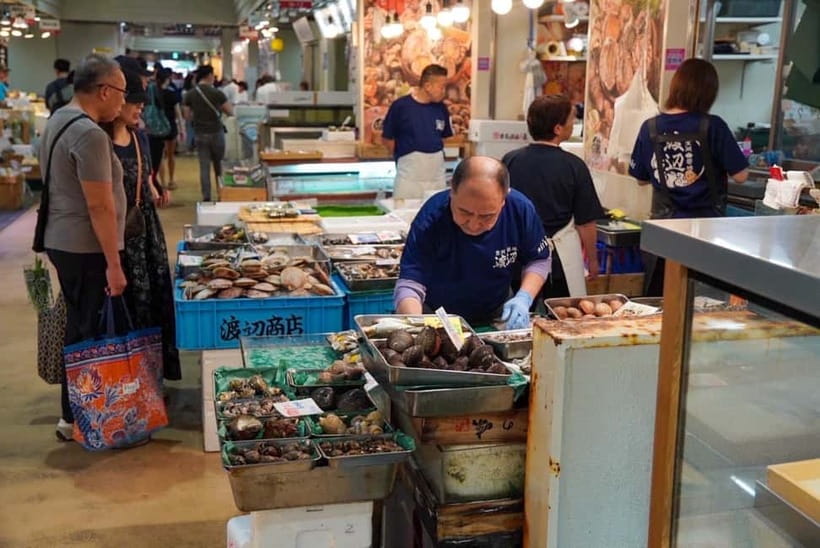
The tour then moves into Tsukiji Outer Market for roughly 100 minutes. This is the main portion of the walk, and it includes guided sightseeing, food stops, and time for shopping.
The wholesale fish market moved to Toyosu, but Tsukiji Outer Market continued as a place where food shops, prepared dishes, kitchen goods, and long-running specialty businesses serve the public. The guide explains that change while leading you through the market. That background helps you understand why the area still has a strong food identity even though the wholesale operation is elsewhere.
Market walks can be tricky without help. Crowds, narrow paths, unfamiliar food names, and limited English signs can turn a simple snack stop into a guessing game. Here, the English-speaking guide helps you identify the planned tastings and communicate at the stalls. Japanese language support is also part of the bilingual service.
One useful point needs special attention: the included tastings are covered, but extra food and drinks are not. One person who enjoyed the tour felt the guides could have made the free items clearer at the market. My advice is to ask at the beginning which foods are included and which purchases come from your own wallet. That removes any awkwardness at the counter.
The tour is listed as private, though the exact group size is not provided. A small or private setting should make it easier to ask questions and adjust the conversation to your interests. One booking had two guides for one guest, with the food choices adapted around eating restrictions. That suggests the team pays attention to personal needs, but you should still explain restrictions when you book and again at the meeting point.
Wagyu and Tamagoyaki: Two Very Different Bites
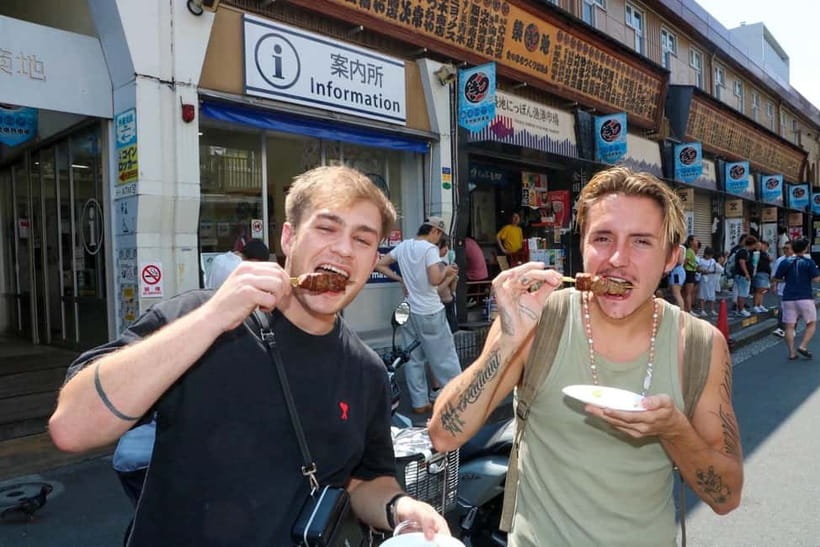
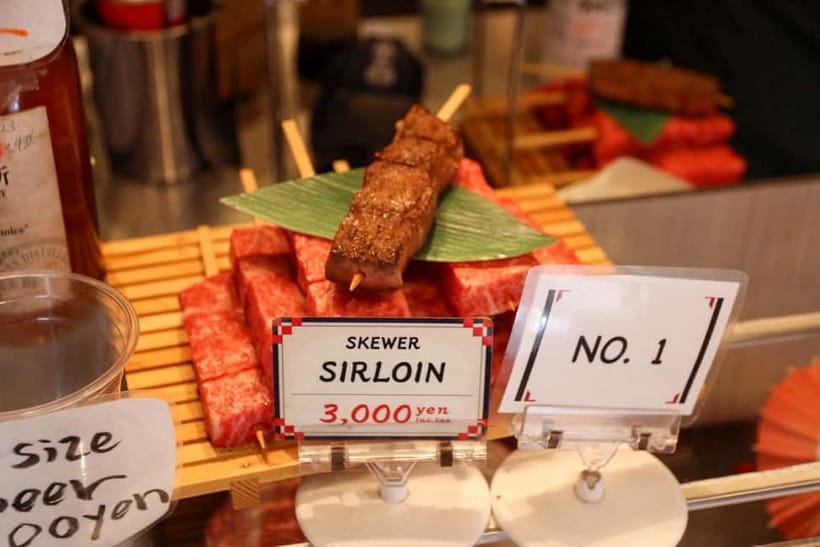
The first food pairing brings together charcoal-grilled wagyu beef and tamagoyaki. You receive one wagyu skewer and one portion of the Japanese omelet as part of the price.
The wagyu is grilled over charcoal, so the appeal is as much about the cooking method as the beef itself. You can expect a hot skewer prepared while you wait, rather than a prepackaged sample. The supplied details describe the market food as high quality and freshly prepared, but this is still a tasting, not a steak dinner. If you are hungry, use the free time and your own cash to add another snack.
Tamagoyaki gives you a different lesson in Japanese cooking. This rolled omelet is flavored with dashi, the stock that appears again later in the tea and specialty food stop. Its fluffy texture and gentle savory taste show how much flavor Japanese cooks can build into a simple egg dish.
I like that these two bites do not repeat each other. The skewer is direct and grilled. The omelet is soft, layered, and shaped by broth. Together they introduce two sides of market cooking in only a few minutes.
Your guide also helps you get past the tourist-stall problem. That does not mean every food in the market is off-limits to independent visitors. It means you have someone helping you choose, order, and understand what you are eating, which is particularly useful if you do not read Japanese.
Tea, Beans, and Dashi in a Historic Shop
After the market’s food stalls, the tour pauses at a traditional specialty shop that has served customers for more than a century. The tasting includes chilled Japanese teas, black beans, peanuts, and dashi broth.
This is a calmer part of the tour. The change of pace is welcome after the market walk, and the shop gives you a look at everyday ingredients rather than only prepared street food. Black beans and peanuts may sound modest compared with wagyu, but they help explain the flavors and snacks that sit behind Edo-style cooking.
The dashi tasting is especially useful. You may already know dashi as a soup base, but tasting the broth by itself makes its role easier to understand. It is the savory thread linking the tamagoyaki to other Japanese dishes.
The tea is served chilled, making it a practical palate cleanser. You are not only drinking something refreshing. You are also seeing how a specialist shop presents traditional products with care.
This stop lasts about 20 minutes, so it is not a full tea ceremony or a long shopping visit. That limitation is fair. The tour is designed to give you a taste and an explanation, then keep moving. If you find a bean or tea you love, purchases are optional and not included.
More Fish Market Tours in Tokyo
- Tokyo Sushi Making Class in Tsukiji with Professional Chef
★ 5.0 · 1,177 reviews - Tsukiji Fish Market Guided Tour and Sushi Making with Pro Chef
★ 5.0 · 775 reviews - Tokyo: Tsukiji Fish Market Food and Culture Walking Tour
★ 4.7 · 757 reviews - Tsukiji Fish Market: Street Food & Culture Walking Tour
★ 5.0 · 669 reviews
A Four-Pour Sake Session with Scallops
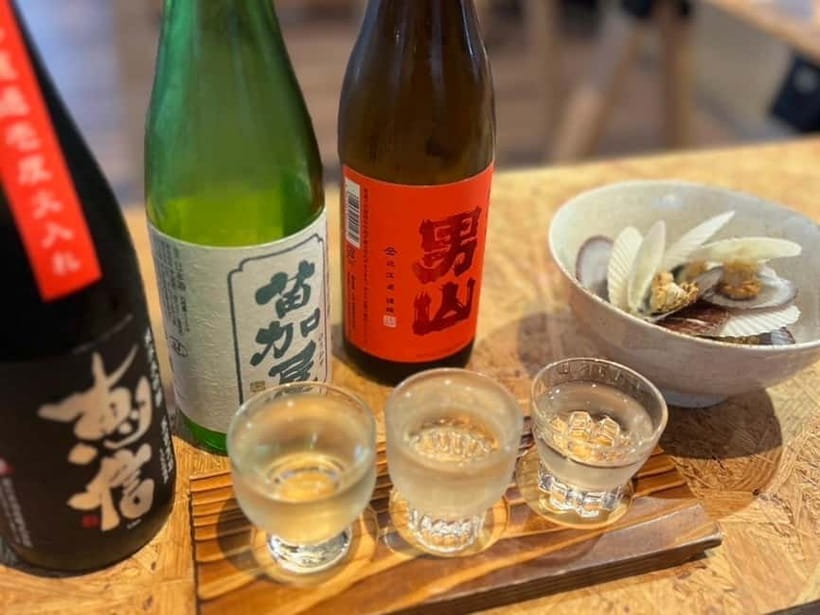
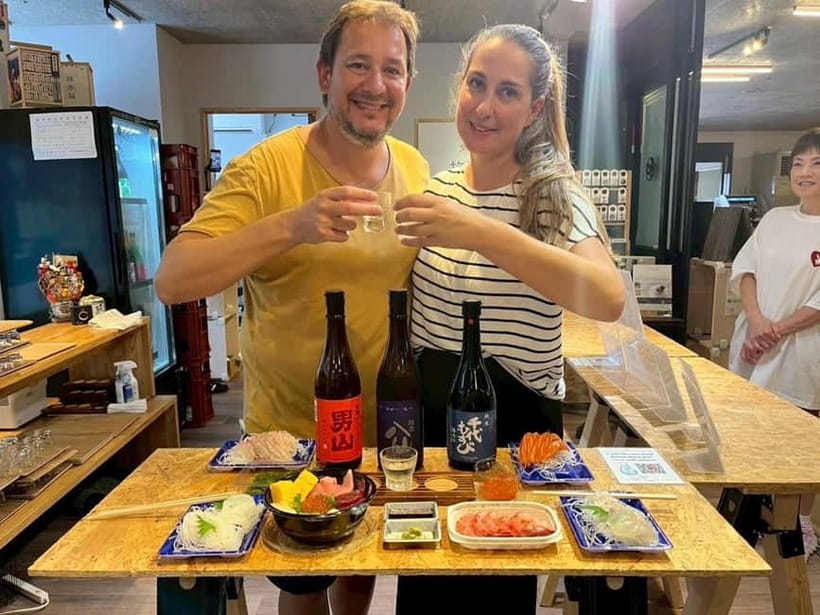
The final stop is the sake tasting, led by a certified sake sommelier. You taste three types of sake plus one special selection, paired with baby scallops steamed in sake.
This is where the tour gains value for anyone who has only tried one kind of sake in a restaurant. Four samples let you compare differences instead of treating sake as a single drink. The guide can explain what you are tasting and help you notice how the drink works with food.
The scallops are an excellent match for the session. They provide a savory bite between pours, and the sake-steaming method keeps the pairing tied to the drink itself. The tasting is included in the $99 price, including the scallops, so you are not counting each glass as an extra charge.
You must bring valid identification for this part. Japan’s legal drinking age is 20, so anyone under that age cannot take part in the alcohol tasting. The tour data does not specify a replacement tasting, so ask the operator ahead of time if that applies to you.
The sake stop is also the point where the tour becomes more than a snack crawl. You finish with an explanation of a major Japanese drink, not simply a final sample before heading out. Before parting, the guide provides lunch suggestions and tips for the rest of your trip. Those recommendations may be particularly useful if you are staying in Tokyo for several days and want to continue eating beyond Tsukiji.
What the $99 Price Really Covers
At $99 per person, the tour is not the cheapest way to buy food in Tsukiji. You can certainly walk through the market on your own and choose a few snacks for less.
The price makes more sense when you add up what is included: a temple visit, 100 minutes of guided market time, wagyu, tamagoyaki, tea, black beans, peanuts, dashi, four sake pours, and sake-steamed scallops. You are also paying for an English-speaking guide who handles the flow of the stops and helps with communication.
The strongest value comes from the sake tasting. Four guided selections and a food pairing can be difficult to arrange independently, especially if you do not know which shop offers a proper comparison. The included wagyu and tamagoyaki also keep the cost predictable.
You should budget extra cash if you want more food, drinks, souvenirs, or ingredients from the market. Cash is recommended for those purchases. The tour price covers the listed tastings, not every appealing smell you encounter along the way, and Tsukiji has plenty of those.
Timing, Walking, and Weather
The total duration is about two hours. Most of that time is spent walking through Tsukiji Outer Market, with stops indoors or under cover. Wear comfortable shoes, since the route includes the temple and market paths rather than one seated tasting room.
The tour runs rain or shine, though many stops are covered or indoors. A light rain should not ruin the plan, but comfortable clothing and weather protection will make the walk easier.
You do not receive transportation to the meeting point, so plan your own route to Tsukiji Hongwanji Temple. The meeting point is precise: the main gate, with the guide identified by the AlvaJapan phone display.
The tour is conducted in English and Japanese, with English listed as the main language. If you have food restrictions, tell the guides at the start. A previous booking included questions about restrictions and food preferences, with the tastings adjusted to suit the person’s likes. That personal attention is one of the better reasons to choose a guided format.
Who Will Get the Most From This Walk?
I would choose this tour for a first visit to Tsukiji, especially if you want food and local explanation in the same morning. It suits people who prefer a planned route, enjoy small tastings, and want to try sake without ordering blindly.
It also fits couples, families with legal-drinking-age adults, and solo visitors who want company while navigating the market. The private format may be appealing if you value questions and personal attention over a large group presentation.
Food-focused visitors will appreciate the range. You move from beef to egg, tea, beans, broth, and sake, so the tour shows more than the seafood image often associated with Tsukiji.
I would be more cautious if you want a large lunch, extensive shopping time, or a long temple visit. The food portions are tasting portions, and the two-hour schedule leaves limited room to wander. Anyone who does not drink alcohol should confirm what can be substituted before booking.
Should You Book the Tsukiji Food and Sake Walk?
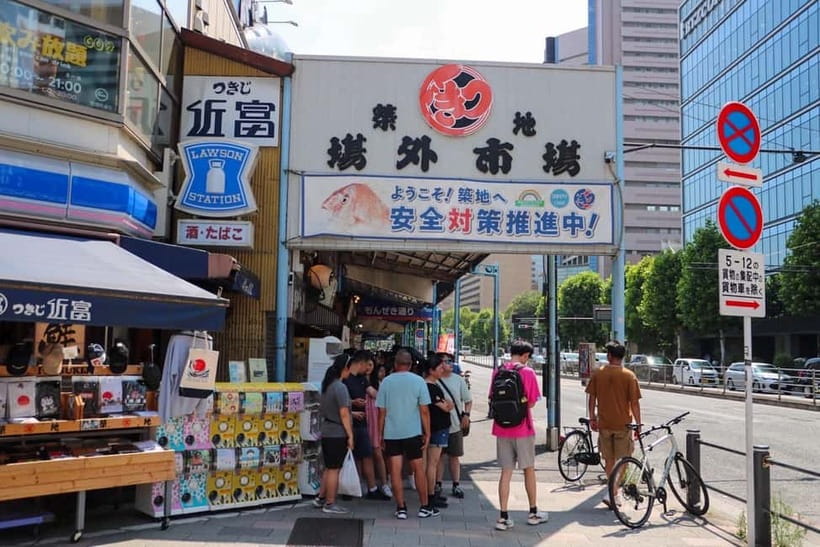
Book it if you want a friendly, efficient introduction to Tsukiji with the food costs mostly settled in advance. The best parts are the guide-led market navigation, the included wagyu and tamagoyaki, and the four-sake comparison with scallops.
Skip it if you prefer to browse alone, set your own pace, or spend the whole morning buying food. You will also need to plan around the legal drinking age and bring identification for the sake stop.
For most first-time visitors, $99 is a fair price for the combination of tastings, context, and help at the market. Ask clearly about included items, wear good shoes, and leave a little cash in your pocket for the snack that catches your eye after the official tasting ends.
FAQ
Where does the Tsukiji food tour meet?
The meeting point is in front of the main gate of Tsukiji Hongwanji Temple. Look for someone holding a smartphone displaying AlvaJapan.
How long does the tour last?
The tour lasts about two hours. The temple visit takes about 20 minutes, while the Tsukiji Outer Market portion takes about 100 minutes.
What food and drinks are included?
The price includes one wagyu skewer, one tamagoyaki portion, chilled tea, samples of black beans and peanuts, dashi broth, and a sake tasting with three types plus one special selection and baby scallops.
Is the sake tasting included in the tour price?
Yes. The full sake tasting flight and the sake-steamed baby scallops are included.
Do I need identification for the sake tasting?
Yes. Identification is required, and Japan’s legal drinking age is 20.
Are extra market purchases included?
No. Additional food, drinks, and anything you choose to buy at the market cost extra. Cash is recommended for those purchases.
More Street Food Market Tours in Japan
- Tsukiji Fish Market Small-Group Food Walking Tour
★ 5.0 · 621 reviews - Tokyo Food Tour Taste Fresh Delights at Tsukiji Market
★ 5.0 · 429 reviews - Tsukiji Fish Market: Street Food & Culture Walking Tour
★ 4.8 · 259 reviews - Toyosu Market Morning Tuna Auction and Tsukiji Food Tour with Licensed Guide
★ 4.5 · 146 reviews
More Private Market Tours in Japan
- Private Toyosu & Tsukiji Market Adventure with Tuna Auction
★ 4.8 · 191 reviews - Tokyo Early Morning Tour Asakusa Meiji Shrine (Private Opt)
★ 5.0 · 69 reviews - Tsukiji Fish Market Private Food Tour in Tokyo
★ 5.0 · 18 reviews - Tokyo: Private Tsukiji Fish Market Tour with 3 food stops
★ 4.7 · 15 reviews
Just added around Tokyo
- Tokyo: Tsukiji Market Guided Tour & Sushi-Making Experience★ 4.4 · 11 reviews
- Tokyo: Tsukiji Market and Hama-rikyu Gardens Guided Tour★ 4.8 · 73 reviews
- Tokyo: Tsukiji Fish Market Culture Tour with Sashimi Tasting★ 4.6 · 54 reviews
- Tokyo: Tsukiji Fish Market Foodie and Educational Tour★ 5.0 · 4 reviews
- Tokyo : Tsukiji Fish Market Food Walking & Shrine Visit Tour★ 5.0 · 3 reviews
- Tokyo’s Kitchen: Tsukiji Market Food & Culture Walk★ 4.7 · 74 reviews
- Tokyo: Guided Walking Tour of Tsukiji Market with Lunch★ 4.4 · 24 reviews
- Tokyo Morning Tour: Meiji Shrine, Asakusa & Fish Market★ 4.9 · 44 reviews
Street Food Market Tours, compared.
Old Town, Creek, Museums, Souks, & Street Food Tour
Read our review →
Old Town, Souks, Street Food, Guided Tour & Abra Ride
Read our review →

London Bridge & Borough Market Food Tour with 7 Authentic Dishes
Read our review →
Old Town, Souks, Street Food, Guided Tour & Abra Ride
Read our review →
Small Group Cooking Class & Market Food Tour in Florence
Read our review →
Browse the lists this tour appears in