
Review · JAPAN
Tokyo: Toyosu Tuna Auction &Tsukiji Market Gourmet Adventure
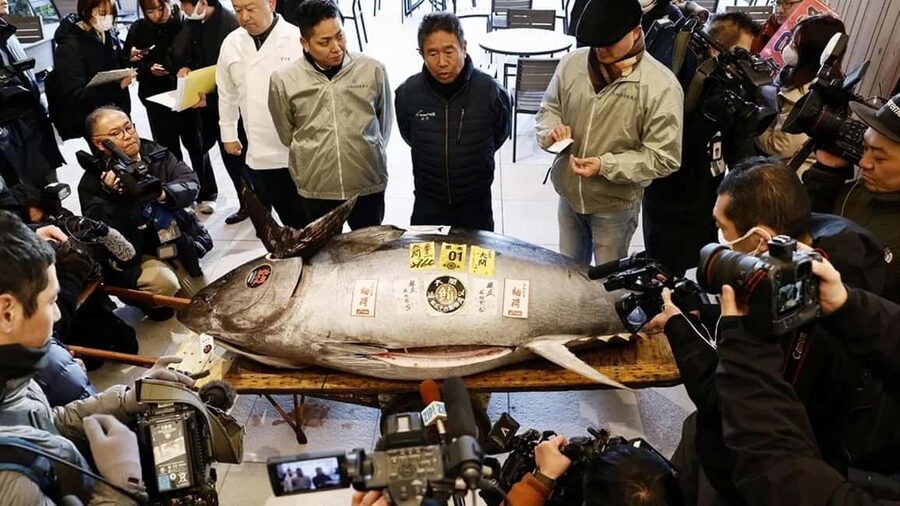
Wake up early for Tokyo’s fish trade. This 3.5-hour morning tour links the modern Toyosu tuna auction with the old-school stalls of Tsukiji, giving you two very different views of Tokyo’s seafood culture. I like the personal audio guide, which helps you follow the auction from the public viewing deck, and I like the included transfer to Tsukiji, which saves you from sorting out transport at 7:45 in the morning. The main drawback is simple: the auction is viewed from above, behind glass, unless you win a limited first-floor lottery.
I also like the small-group format and the way the guides handle the complicated market setting. Tim, Lin, Eon, and Ethan have been praised for clear explanations, good food suggestions, and helpful communication before the tour. But this is not a relaxed breakfast outing. You must reach Toyosu by 5:00 AM, public transport may not be running, and the tour is not suited to wheelchair users, people with mobility limits, vegetarians, people with food allergies, or anyone over 70.
Key points before you book
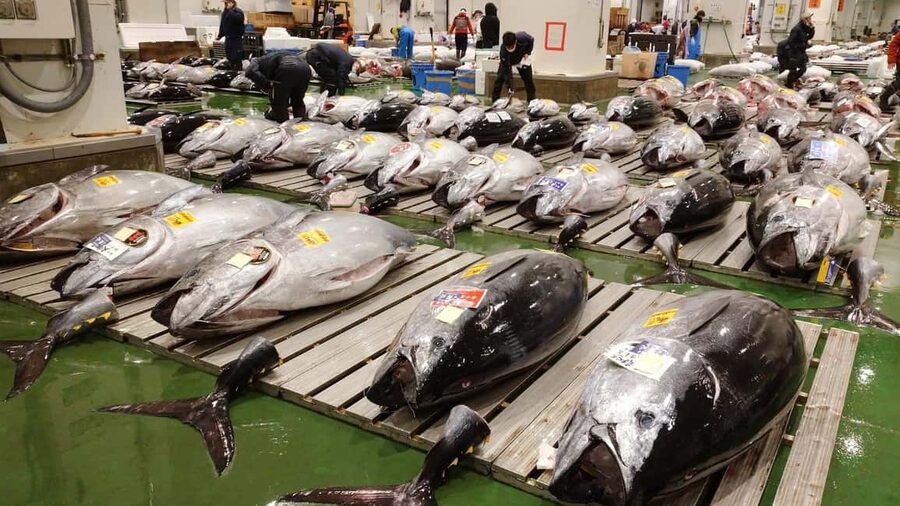
- See the tuna auction from Toyosu’s second-floor observation deck, with an audio guide explaining hand signals, grading, and sales as the action happens.
- Taste market seafood at breakfast, with dishes shaped by the day’s supply and restaurant hours.
- Compare two very different markets, from Toyosu’s carefully planned wholesale operation to Tsukiji’s compact shops and food stalls.
- Use the guide’s local advice, especially for tuna cuts, seasonal seafood, shop choices, and tourist traps.
- Plan the early start carefully, since the meeting time is 5:00 AM and taxi or Uber travel is recommended.
- Treat the first-floor auction viewing as a bonus, not a promise. Lottery registration must be completed by the fifth day of the previous month.
Why Toyosu is worth seeing before breakfast
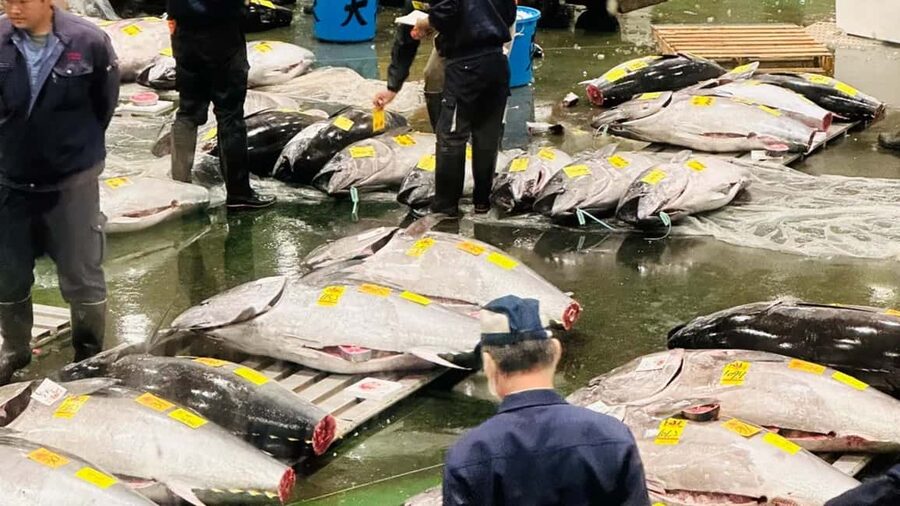
Toyosu is Tokyo’s newer wholesale market, and the tour begins at the point where its scale and order become clear. You meet at Lawson Toyosu Market Senkyaku Banrai at 5:00 AM. Arrive about five minutes early, but not much earlier, since the guide may not yet be waiting.
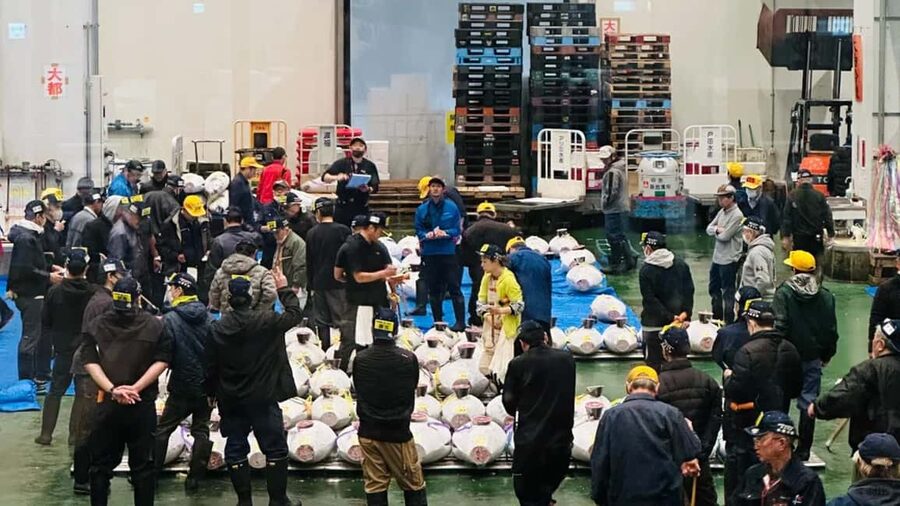
The early hour is part of the experience. Toyosu is already working while much of Tokyo is still asleep. The tuna auction is not staged for sightseeing, and that is important. You are watching a real commercial process, with buyers assessing fish and auction staff managing sales at speed.
Your guide helps translate what can otherwise look like a silent room full of gestures. Tuna grading, buyer behavior, auction signals, and the movement of fish through the market all make more sense when someone explains them at the right moment.
The tour supplies a personal audio guide for each participant. This is one of its strongest practical features. The observation area can be crowded, and the auction floor is separated from the public by glass and distance. Clear commentary in your own device means you do not have to stand shoulder to shoulder with the guide to hear every point.
The auction is best understood as a lesson in seafood trading rather than a theatrical show. You may not get a dramatic close-up of every tuna. The fish can be difficult to see from the upper viewing area, and the layers of glass and the speaker system reduce the feeling of being right in the middle of the action. Still, the guide gives the event meaning, which is far more useful than simply watching a few quick hand signals.
More Fish Market Tours in Japan
- Tokyo Tsukiji Fish Market Food and Culture Walking Tour
★ 5.0 · 3,184 reviews - Tokyo: Tsukiji Fish Market Food and Walking tour
★ 5.0 · 1,724 reviews - Tokyo: Tsukiji Fish Market Guided Walking Tour
★ 4.9 · 1,397 reviews
The first-floor lottery is not guaranteed
There is an optional lottery for closer viewing on the first floor. To qualify, you need to book by the fifth of the previous month and provide the full names of everyone in your party. The lottery has limited places, so entering does not mean you will be selected.
If you are chosen, bring your passport or another form of identification. If you are not chosen, you still join the regular tour from the second-floor public observation deck and receive the personal audio guide.
December works differently. There is no lottery then, so all participants use the second-floor viewing area. This is worth knowing if a close-up view is the main reason you want to book. The regular viewing experience can still be worthwhile, but the tour should not be sold to yourself as guaranteed access to the auction floor.
A few past participants found the auction less immersive than expected because of the viewing distance. I think that is a fair warning. If you want a close, photographic view of workers and tuna, your expectations may need adjusting. If you want context about how the auction works, the tour is a better fit.
Toyosu breakfast: fresh, useful, and variable
After the auction, the group has about 45 minutes for breakfast at Toyosu. This is not just a convenient meal after an early start. It connects what you have watched with what ends up on your plate.
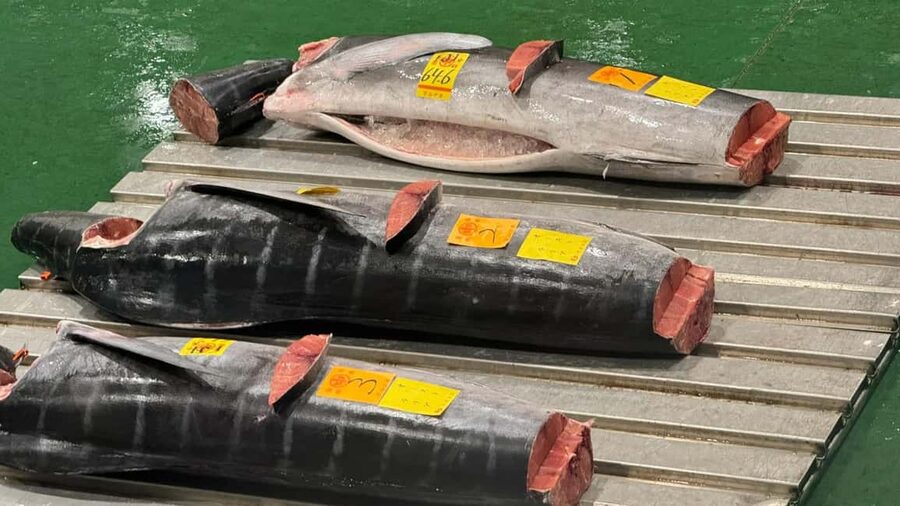
The menu changes with daily ingredients and restaurant opening hours. You might find seafood ramen with shrimp and octopus, or sushi featuring tuna and other market products. Some participants particularly enjoyed comparing different bluefin tuna cuts, including the difference between frozen and fresh tuna.
That comparison is one of the more useful parts of the morning. Tuna is often treated as a single luxury food, but texture and flavor vary by cut, handling, and preparation. A guide who can point out those differences adds real value, especially if you are unsure what to order later at Tsukiji.
Breakfast is not included in the tour price, according to the provided details, so bring cash. The exact amount is not specified, and the menu changes, so you should budget for your own meal rather than assume a fixed dish or price.
Food limits matter here. The tour cannot accommodate vegetarian, halal, or gluten-free diets, and some tastings may have age restrictions. If you have a serious food allergy, this is not a good tour to book without asking questions first. The market setting and changing menus make dietary control difficult.
A short look behind Toyosu’s seafood operation
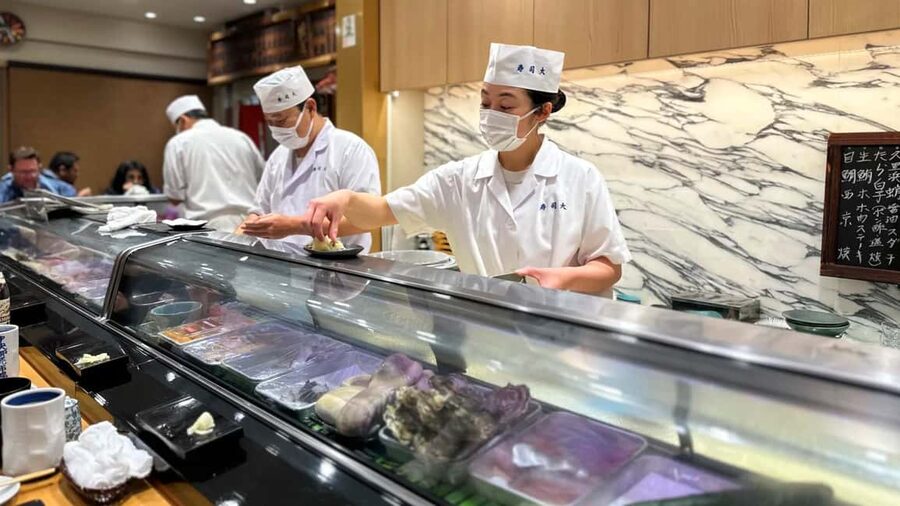
The next section includes a guided walk through Toyosu, lasting about 30 minutes. You see how fresh ingredients are processed and hear about the seafood supply chain. This part helps connect the auction to the stalls, restaurants, and meals that follow.
The time is short, so do not expect a full market seminar. The guide chooses the route and daily arrangements based on conditions at the market. That flexibility is useful in a working wholesale setting, but it also means the exact stops may vary.
The best guides add details beyond fish. Tim, Lin, Eon, and Ethan have each been praised for explaining Japanese customs, market history, and local food habits in clear English. Tim also speaks Chinese, and the tour operates in English and Chinese.
The small-group format helps here. A large group would be awkward in market corridors, especially when the tour must keep to a tight schedule. The guides are also reported to be attentive on WhatsApp before the tour, sending meeting instructions and helping people understand the early-morning plan.
More Fish Market Tours in Tokyo
- Tokyo Sushi Making Class in Tsukiji with Professional Chef
★ 5.0 · 1,177 reviews - Tsukiji Fish Market Guided Tour and Sushi Making with Pro Chef
★ 5.0 · 775 reviews - Tokyo: Tsukiji Fish Market Food and Culture Walking Tour
★ 4.7 · 757 reviews - Tsukiji Fish Market: Street Food & Culture Walking Tour
★ 5.0 · 669 reviews
The Toyosu to Tsukiji transfer saves precious time
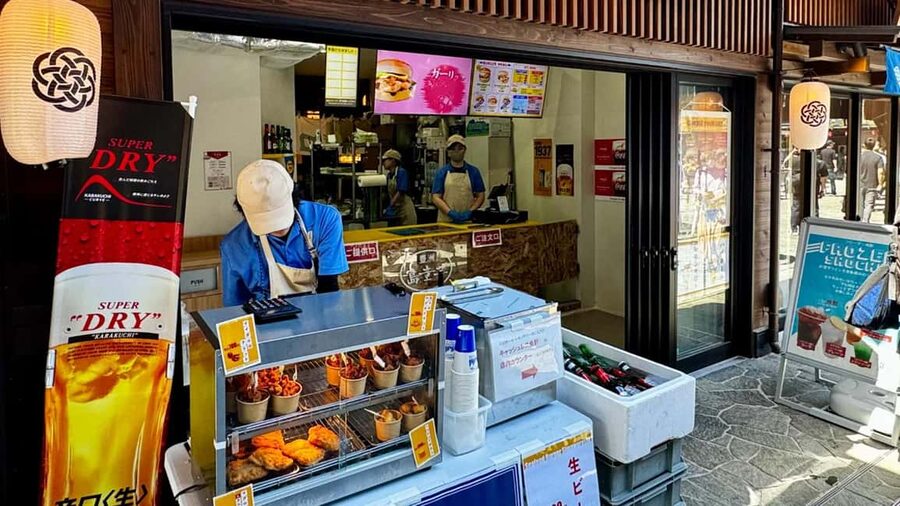
At about 7:45 AM, the group transfers from Toyosu to Tsukiji, with transportation costs included. The guide coordinates this part, so you are not left trying to locate a station or work out a route while tired and carrying food.
This transfer is more valuable than it may first sound. The tour ends at 8:30 AM, and a self-guided visit to both markets would require careful timing. Moving directly from one to the other lets you compare them while the morning food trade is still active.
Do not confuse this with hotel transport. Optional pickup is available for some hotels and inns in Chiyoda, Chuo, and Taito wards, with extra fees and a pickup time around 4:20 AM. You need to confirm that your accommodation qualifies.
For everyone else, the meeting point is Lawson Toyosu Market Senkyaku Banrai. Public transport may not be operating early enough, so taxi or Uber is recommended. A late arrival or no-show is not refundable. I would arrange the ride the night before and allow extra time, since a missed 5:00 AM departure means missing the core of the tour.
Tsukiji offers a different kind of market morning
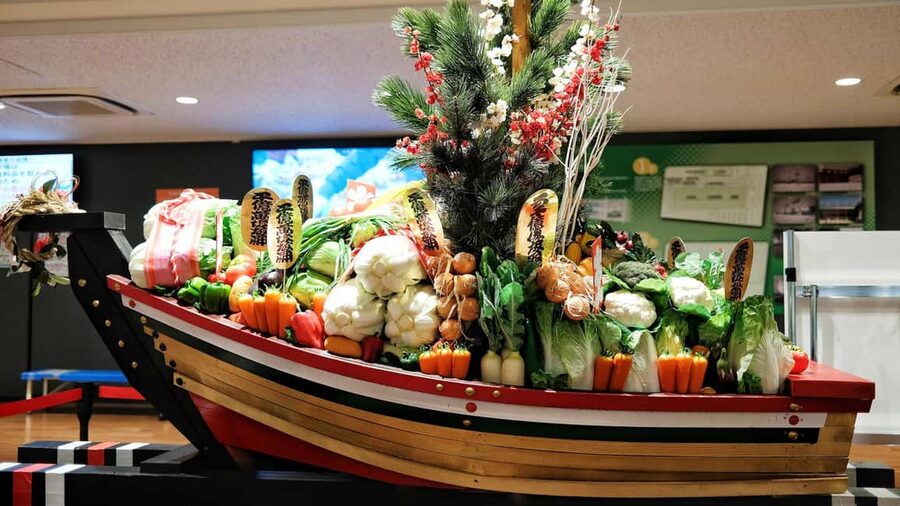
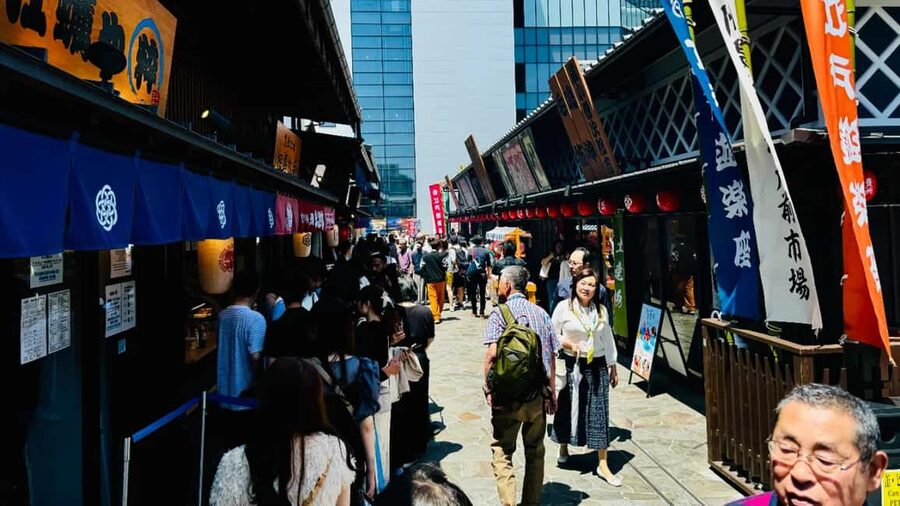
Tsukiji is not the same market it was before the wholesale tuna operation moved to Toyosu. What remains is its compact network of small shops and food businesses, where you can browse seafood to take home, kitchen tools, snacks, and other food-related goods.
The 30-minute stroll gives you a quick introduction to this older market character. You may watch shopkeepers work, look at specialty products, and pick up a souvenir. Some guides also point out places to eat and recommend particular tuna or other seafood choices.
This is the section where the tour can feel rushed. Half an hour is enough to get your bearings and identify places you may want to revisit, but it is not enough for slow browsing, a long meal, and detailed explanations of every stall. You may also spend part of the time on group activities such as a photo stop or waiting in line for a tasting.
One useful approach is to treat the tour as an introduction. Listen carefully to the guide’s recommendations, then return to Tsukiji later if you want to shop or eat at a slower pace. The tour gives you a route through the area, but it cannot replace an open-ended market morning.
The contrast with Toyosu is the point. Toyosu feels designed around wholesale efficiency and public viewing. Tsukiji feels more intimate, with small storefronts and products aimed at cooks, food lovers, and people looking for edible souvenirs. Seeing both in one morning gives you a fuller picture than visiting either one alone.
What guides add to the experience
The strongest praise has gone to the guides’ communication, organization, and food advice. Tim is often singled out for his upbeat personality, detailed auction explanations, and recommendations for sushi and tuna. Lin is praised for keeping people organized and sharing information about Japanese culture. Eon has been noted for explaining the market system and arranging the move to Tsukiji. Ethan is described as friendly and ready to answer questions.
Guide assignments can change, so you should not book on the assumption that one specific person will lead your group. The useful point is the role itself. A good guide helps you choose the right observation window, understand what you are hearing, avoid common tourist traps, and make sense of unfamiliar seafood.
The WhatsApp contact is also practical. You must provide your WhatsApp number, and advance messages can clarify where to meet and how to reach Toyosu. That matters more here than on a normal afternoon tour because the start time leaves little room for confusion.
Is $122 a fair price?
At $122 per person, this is not a cheap market walk. The value depends on how much you want the auction context and how difficult the early logistics would be for you to arrange alone.
You are paying for a professional guide, auction commentary, a personal audio guide, a guided Toyosu visit, the transfer to Tsukiji, and a tightly planned route. Breakfast is not included, and the first-floor auction lottery is only an optional application service with no guaranteed result.
I think the price is reasonable for someone who specifically wants to understand the tuna auction and see both markets in one morning. The transfer and early coordination remove several headaches. The value is weaker if you mainly want to eat at Tsukiji, since you could spend more time there independently and avoid the 5:00 AM start.
The best return comes from using the guide actively. Ask about tuna cuts, seasonal seafood, auction signals, and which Tsukiji stalls are worth your time. Several guides have given practical suggestions for restaurants and food shops, and that personal advice can be more useful than a generic market map.
Seasonal timing and changing market conditions
The auction follows fixed operating times, but market operations can change. There are no auctions on Wednesdays, Sundays, or Japanese public holidays, so check the market schedule before booking.
Seasonality also affects what you eat. The guide can explain the auction cycle and suggest alternatives during quieter periods or when a particular seafood item is not available. Since daily menus depend on ingredients and restaurant hours, you should arrive with an open mind rather than a fixed breakfast order.
The tour operates in all kinds of early-morning weather, so wear layers. Mornings may be cold, and the itinerary involves a moderate amount of walking. Comfortable shoes are essential.
Photography and loud talking are not allowed in the auction viewing area. This protects the working environment and keeps the public observation space orderly. You will get more from the experience if you watch, listen, and let the guide interpret the details instead of focusing only on taking pictures.
Who should book this morning tour?
I would choose this experience if you are interested in Japanese food, seafood supply chains, market customs, or the difference between wholesale trade and retail food culture. It also suits solo visitors, since the guide provides structure and makes it easier to navigate a complicated early start.
It works well for first-time Tokyo visitors who want a focused food experience without spending an entire day at markets. It is also useful for people who want to taste tuna with some explanation instead of simply ordering a dish at random.
I would skip it if you dislike early mornings, need a fully flexible meal schedule, have strict dietary requirements, or want a guaranteed close-up auction view. People with mobility impairments and wheelchair users should not book it, and the stated suitability excludes people over 70.
Should you book the Toyosu and Tsukiji tour?
Book it if you want the story behind the seafood, not just a market snack. The personal audio guide, the guide’s auction explanations, and the direct comparison between Toyosu and Tsukiji make the morning more useful than a simple walk through food stalls.
Go in knowing that the auction is viewed from above unless you win the lottery, breakfast costs extra, and the Tsukiji visit is brief. Arrange a taxi or Uber, wear warm comfortable clothing, bring cash and identification, and arrive early.
For a food-focused morning with strong local guidance, $122 is a fair price. For a leisurely Tsukiji breakfast, it is too structured. Choose it for access, context, and efficiency, and you will get much more from the experience.
FAQ
What time does the tour begin?
The tour begins at 5:00 AM at Lawson Toyosu Market Senkyaku Banrai. You should arrive about five minutes early.
How do I reach the meeting point?
Public transport may not be operating early enough, so taxi or Uber is recommended. Optional hotel pickup may be available from selected areas for an added fee.
Which areas qualify for hotel pickup?
Optional pickup can be arranged for eligible hotels or inns in Chiyoda, Chuo, and Taito wards. You need to confirm whether your accommodation is within the service area.
Where do I watch the tuna auction?
The standard viewing location is the second-floor public observation deck. A personal audio guide provides commentary during the auction.
Can I watch from the first floor?
You can apply for an optional first-floor viewing lottery. Registration requires booking by the fifth of the preceding month and providing the full names of all participants. Selection is not guaranteed.
Is there a first-floor lottery in December?
No. In December, all participants watch from the second-floor public observation deck.
What languages are available?
The tour is offered in English and Chinese.
Is breakfast included in the price?
The tour includes time for a seafood breakfast at Toyosu, but the provided details do not state that the meal itself is included. Bring cash for food and personal purchases.
Can the tour accommodate vegetarian, halal, or gluten-free diets?
No. The tour cannot accommodate vegetarian, halal, or gluten-free diets. People with food allergies should ask about suitability before booking.
What happens if I arrive late?
Late arrivals and no-shows are not refundable. Arriving five minutes early is recommended, and arranging transportation ahead of time is wise.
Just added around Tokyo
- Tokyo: Private Tsukiji Street Food & Sake with Local Guide★ 5.0 · 3 reviews
- Tokyo: Tsukiji Market Guided Tour & Sushi-Making Experience★ 4.4 · 11 reviews
- Tokyo: Tsukiji Fish Market Culture Tour with Sashimi Tasting★ 4.6 · 54 reviews
- Tokyo: Tsukiji Market and Hama-rikyu Gardens Guided Tour★ 4.8 · 73 reviews
- Tokyo’s Kitchen: Tsukiji Market Food & Culture Walk★ 4.7 · 74 reviews
- Tokyo: Tsukiji Fish Market Foodie and Educational Tour★ 5.0 · 4 reviews
- Tokyo : Tsukiji Fish Market Food Walking & Shrine Visit Tour★ 5.0 · 3 reviews
- Tokyo: Guided Walking Tour of Tsukiji Market with Lunch★ 4.4 · 24 reviews
Fish Market Tours, compared.
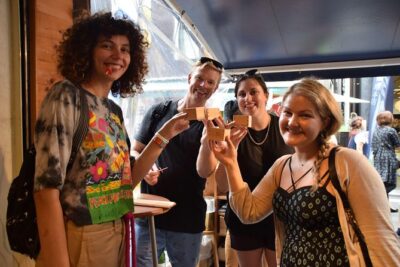
Tokyo Tsukiji Fish Market Food and Culture Walking Tour
Read our review →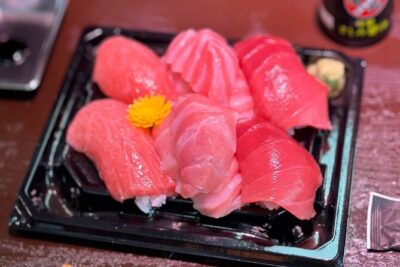
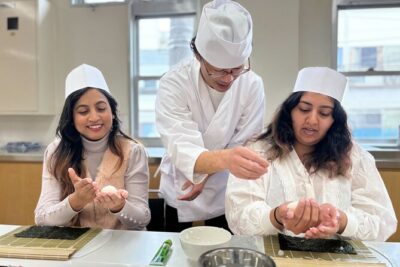
Tokyo Sushi Making Class in Tsukiji with Professional Chef
Read our review →
Tsukiji Fish Market Guided Tour and Sushi Making with Pro Chef
Read our review →Tsukiji Fish Market Food and Culture Walking Tour
Read our review →
Tsukiji Fish Market: Street Food & Culture Walking Tour
Read our review →
Tsukiji Fish Market Small-Group Food Walking Tour
Read our review →
Tsukiji Fish Market Sushi Making Class with Pro Chef
Read our review →Browse the lists this tour appears in