
Review · JAPAN
Golden Pavilion, Nijo Castle, & Nishiki Market Half day tour
Kyoto’s big three fit into one morning. I like the smart route from Kinkaku-ji’s gold-leaf pavilion to Nijo Castle’s samurai-era rooms, then Nishiki Market for lunch choices. I also like Roberto’s use of an iPad, which gives you visual explanations instead of relying on a long stream of spoken facts. The tradeoff is a quick pace, with public transport, walking, and three major stops packed into four hours.
This is especially useful early in a Kyoto visit because Roberto, a Kyoto City Certified Tourist Guide, offers suggestions for the rest of your stay. The price is $90 per person, but you should add the two admission fees and local transport. If you want a relaxed morning or need wheelchair access, this is not the right fit.
Key points at a glance
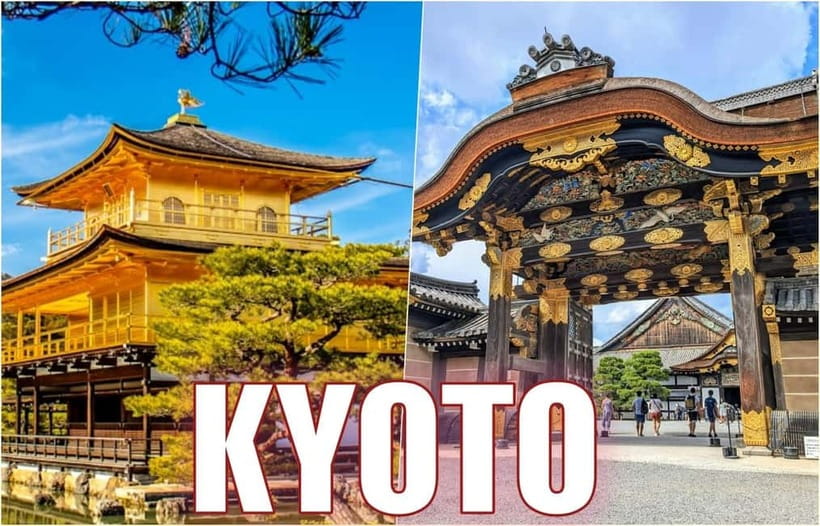
- Kinkaku-ji first at 8:30 am: See Kyoto’s famous gold-leaf temple before the morning gets farther along.
- Nijo Castle makes the history practical: Learn how the shogun, feudal lords, and samurai shaped Japan, then hear the castle’s famous nightingale floors.
- Nishiki Market is the finish line: End at Kyoto’s Kitchen, where you can choose lunch from many food stalls and shops.
- Roberto uses an iPad: His self-made visual material helps explain architecture, people, and events without leaving you to guess what you are seeing.
- Private group, English or Spanish: The tour suits families and couples who want direct attention rather than a large coach group.
- Budget extra cash: The listed price does not include transportation, 500 yen for Kinkaku-ji, or 1,300 yen for Nijo Castle.
Why this four-hour route works
Kyoto can feel scattered on a first visit. The Golden Pavilion sits in the northwest, Nijo Castle is closer to the central city, and Nishiki Market lies farther east in the shopping district. Visiting all three independently is possible, but you need to understand the bus and subway connections, keep an eye on time, and read enough background to make sense of each place.
This tour handles that structure for you. It begins at Kyoto Station, uses a public bus to reach Kinkaku-ji, then continues by subway to Nijo Castle and Nishiki Market. The movement between sights is not dead time. It gives Roberto a chance to connect the sites and explain how Kyoto changed from the age of military rule to the modern city you see today.
The route lasts about four hours, from 8:30 am to 12:30 pm. That is enough time for a useful introduction, not enough time for leisurely browsing at every stop. I would treat it as a strong orientation tour, especially on your first or second day in Kyoto.
More Market Day Trips in Kyoto:
- From Bangkok: Ayutthaya & Ayothaya Floating Market Day Trip
★ 4.7 · 6,084 reviews - Bangkok: Damnoen Saduak, Train Market & Mahanakhon Day Trip
★ 4.7 · 2,162 reviews - Day Trip to Bangkok Floating Market & Maeklong Railway
★ 5.0 · 1,528 reviews
Meeting Roberto at Kyoto Station
The meeting point is easy to identify if you use the right exit. Go to the JR Kyoto Station building’s first floor and use the Kyoto Tower side exit. Meet in front of the 7-Eleven Heart-In near the central entrance.
Roberto holds an iPad and a red card marked RBRT. That detail matters in a crowded station, where several exits and convenience stores can look similar. Arrive with enough time to find the Kyoto Tower side before the 8:30 am start.
The tour is offered in English or Spanish. It is a private group experience, so you get a more personal format than a large public tour. A Spanish-speaking family can ask questions naturally, while English-speaking visitors can use the same guide’s visual material and explanations.
Kinkaku-ji and the famous reflection
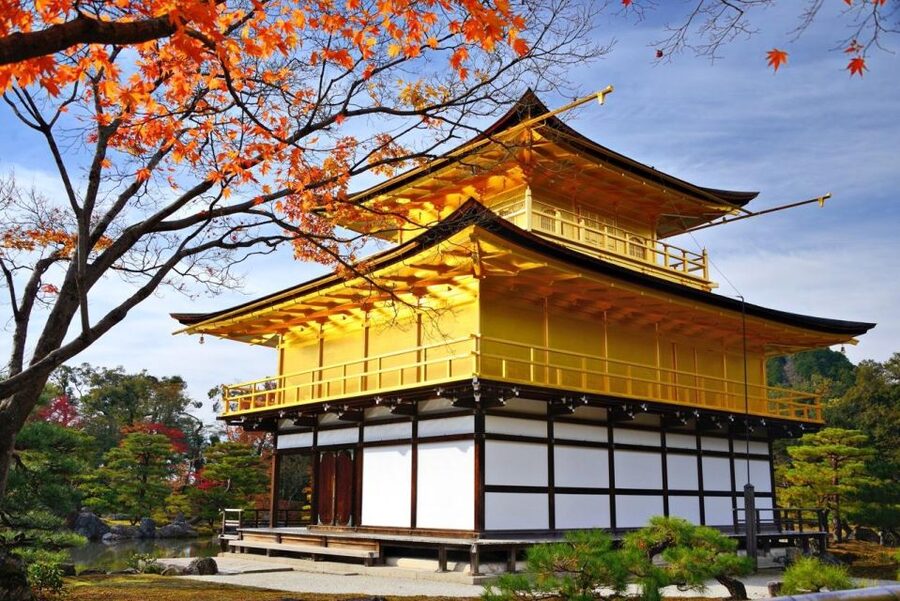
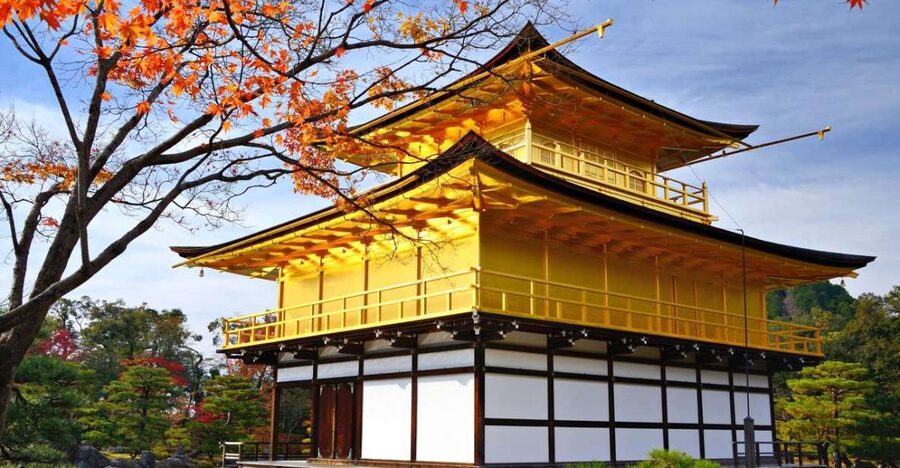
The first major stop is Kinkaku-ji, better known in English as the Golden Pavilion. This Zen Buddhist temple is one of Kyoto’s most recognizable sights, and its top two floors are covered in real gold leaf.
The pavilion began as a villa for Ashikaga Yoshimitsu, a 14th-century shogun. After his death, it became a Zen temple. That change from private residence to religious site helps explain why the building feels both luxurious and restrained. The gold suggests wealth, authority, and devotion, while the surrounding pond gives the pavilion its famous reflected view.
You can expect about 90 minutes here, including Roberto’s guided explanation. He can point out the building’s place in Japanese history and help you understand why this one structure matters beyond its appearance. Without context, Kinkaku-ji can become a quick photo stop. With the background, you get a clearer picture of the political and religious world that produced it.
The setting is one of the tour’s visual highlights, but the popularity of the site is also its main limitation. Kinkaku-ji is a major Kyoto destination, so you should expect other people around the viewing areas. The tour gives you a set amount of time, and you will not have unlimited freedom to linger.
Bring a camera, but pay attention to the rules. Some temple areas do not allow photography. Comfortable shoes are important from the beginning, since the tour involves walking as well as public transport.
Nijo Castle and the end of samurai rule
From Kinkaku-ji, the group travels by subway for about 20 minutes to Nijo Castle. The castle visit lasts about 95 minutes, making it the longest scheduled stop.
Nijo Castle offers a useful counterpoint to Kinkaku-ji. The Golden Pavilion expresses the power and taste of a shogun. Nijo Castle shows how that power operated. Roberto explains the struggles among samurai, feudal lords, and the shogun, who acted as Japan’s powerful military ruler.
Inside, look for the Edo-period woodwork and detailed decoration. The castle is not simply a defensive site. Its rooms, corridors, and design communicate rank and authority. The setting helps you understand how political power was displayed and managed before Japan’s modernization.
The nightingale floors are the castle’s most memorable feature for many people. These floorboards chirp when stepped on, creating an early warning system against unwanted movement. It is a small detail, but it turns a history lesson into something you can hear beneath your feet.
This stop also covers the end of the samurai era and the beginnings of Japan’s modernization. That makes Nijo Castle valuable for the rest of your trip. Once you visit other castles, temples, and historic neighborhoods, you will have a better framework for understanding who held power and how that system changed.
The entrance fee is not included. The listed cost is 1,300 yen, approximately $8.15. The castle also requires steady walking, so this is not a good choice for visitors with serious back problems, limited fitness, or wheelchair needs.
A few more market tours around Kyoto worth a look
- Nishiki Market Brunch Walking Tour (7 Tastings + Brunch)
★ 5.0 · 1,355 reviews - Kyoto Nishiki Market Food and Culture Walking Tour
★ 5.0 · 412 reviews - Kyoto: Nishiki Market Tea Ceremony with Koto Performance
★ 4.8 · 294 reviews - Kyoto: Local Food Tasting Tour at the Nishiki Market
★ 4.7 · 135 reviews
Nishiki Market, Kyoto’s Kitchen
After Nijo Castle, the group takes another subway ride of about 15 minutes, followed by a roughly 10-minute walk to Nishiki Market. The tour finishes at the market entrance around 12:30 pm.
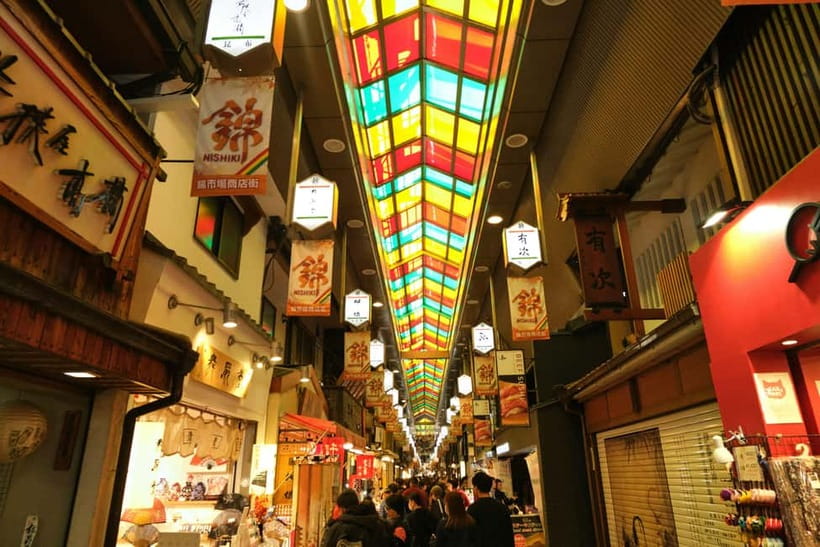
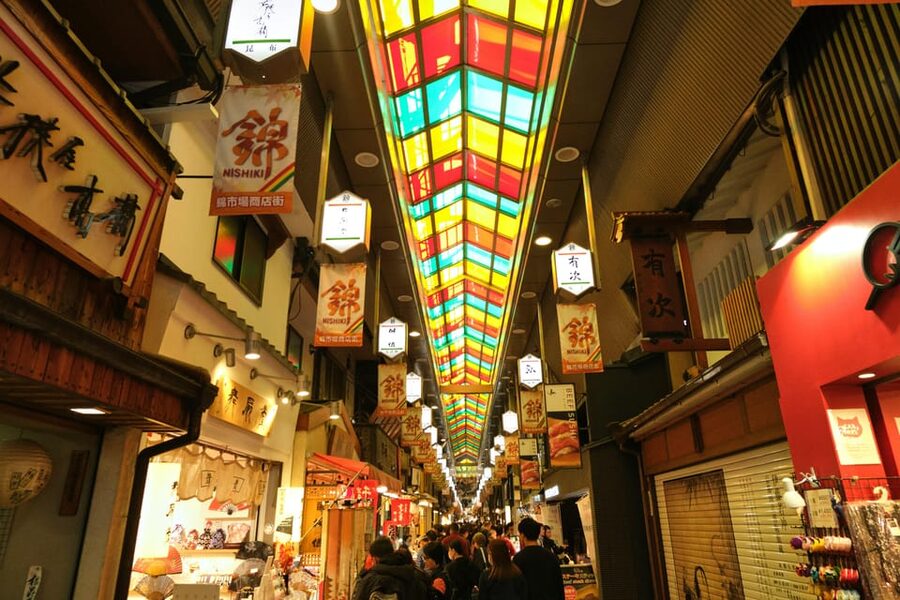
Nishiki Market is a narrow, five-block shopping street lined with more than 100 shops and restaurants. It is known as Kyoto’s Kitchen, and the name makes sense once you see the range of food-related goods. You can browse seafood, produce, knives, cookware, and other items associated with Kyoto cooking.
Roberto explains the market’s origins before leaving you to choose lunch. That ending is practical. Instead of forcing the group into one restaurant, the tour lets you decide what suits your appetite and budget among the market’s many offers.
Nishiki is lively and can feel crowded, especially in the central passage. Keep bags close and be considerate of people shopping rather than sightseeing. Large bags and luggage are not allowed on this tour, so leave suitcases at your accommodation or use appropriate storage before you meet the group.
The market is also a good place to ask Roberto for ideas about the rest of your Kyoto stay. Since the tour ends here, you are already in a useful central area for continuing on your own.
Roberto’s guiding style and visual explanations
The guide is a major part of this experience. Roberto is a Kyoto City Certified Tourist Guide, and his approach combines spoken explanations with images on an iPad. That can make a real difference at places where architecture alone does not tell the whole story.
An iPad is especially useful when discussing historical figures, shifting political power, or details that are difficult to see from a distance. The material was created by Roberto himself, so it is designed for this tour rather than being a generic audio script.
His attention to individual guests also appears to be a strength. One recent booking described genuine one-to-one attention, while another praised his ability to listen and adjust to the group. He has also made short videos for participants, including a final video that one person found to be a welcome extra.
The practical result is a tour that feels personal. You can ask about places you plan to visit later, and Roberto is happy to recommend additional sights. That advice may be one of the best reasons to schedule this tour near the start of your Kyoto stay.
What the $90 price really covers
At $90 per person, this is not a bargain basement sightseeing walk. You are paying for a private group format, a certified local guide, direct questions and answers, visual teaching material, and help with a route that crosses several parts of Kyoto.
You must budget separately for the two main admissions:
- Kinkaku-ji: 500 yen, approximately $3.10
- Nijo Castle: 1,300 yen, approximately $8.15
Transportation is also excluded. The route uses a public bus, subway services, and walking, so carry some yen or have a reliable way to pay local fares. The additional cost is modest, but it should be included when comparing the tour with a self-guided morning.
The value is strongest if you want historical context and personal guidance. If you already know Kyoto well, speak Japanese, and feel comfortable planning transit, you may prefer to visit the sites independently. You would save the guide fee, but you would also lose Roberto’s explanations, recommendations, and time management.
Pace, walking, and practical limits
This is a walking tour supported by buses and trains. It does not involve mountain climbing or very long stairways, but you still need to be in reasonable walking condition.
The schedule includes about 35 minutes by bus to the first stop, 20 minutes by subway to Nijo Castle, another 15 minutes by subway, and a 10-minute walk to Nishiki Market. Add walking inside the temple, castle, and market areas. Wear shoes you can use comfortably for several hours.
The tour runs rain or shine. Kyoto weather can change, so bring suitable rain protection when needed. Since strollers are not allowed, families with very young children should consider that limitation before booking. The experience is also not suitable for pregnant women, wheelchair users, people with back problems, people with low fitness, or people prone to seasickness, according to the stated restrictions.
Some temple areas prohibit photography. Listen when Roberto gives instructions, and do not assume that a beautiful interior can be photographed.
Who should book this Kyoto morning?
I would recommend this tour to first-time Kyoto visitors who want a clear introduction to the city’s religious buildings, samurai politics, and food culture. It also suits couples and families who prefer a private format and want to ask questions without competing with a large group.
It is a good fit for English or Spanish speakers who appreciate visual explanations. The tour can also help you plan later days, since Roberto offers suggestions for additional places to visit.
I would be more cautious if you want slow photography time, long meals, or independent wandering. The four-hour schedule is efficient, but it is not leisurely. You will see three important places, yet you will need to keep moving.
The tour also pairs well with a different half-day route covering Kiyomizu-dera, Fushimi Inari, and the Gion Geisha District. A full-day option is available that combines three UNESCO World Heritage sites with Fushimi Inari. Those alternatives may suit you better if you want a different part of Kyoto or more time in one outing.
Should you book it?
Book this tour if you want a personal historical introduction to Kyoto, especially early in your visit. Roberto’s iPad explanations, local recommendations, and direct attention add value that you will not get from simply following a map between the same three sights.
Skip it if you need wheelchair access, dislike public transport, want a slow morning, or prefer to control every minute yourself. For most reasonably fit visitors who want Kinkaku-ji, Nijo Castle, and Nishiki Market handled in one well-planned morning, the route offers a useful balance of famous sights, political history, and a flexible lunch finish.
FAQ
Where does the tour begin?
It begins at 8:30 am in front of the 7-Eleven Heart-In at the JR Kyoto Station building, first floor. Use the Kyoto Tower side exit. Roberto holds an iPad and a red card marked RBRT.
Where does the tour finish?
The tour finishes at the entrance of Nishiki Market at about 12:30 pm.
What languages are available?
The live guide is available in English and Spanish.
Are entrance fees included?
No. Kinkaku-ji costs 500 yen and Nijo Castle costs 1,300 yen. These amounts are listed separately from the tour price.
Is transportation included?
No. The tour uses a public bus, subway services, and walking, but transportation fees are not included.
What should I bring?
Bring comfortable shoes. The tour involves walking at all three sites and between public transport stops.
Can I cancel the booking?
You can cancel up to 24 hours in advance for a full refund. A reserve-now-and-pay-later option is also available.
Just added around Kyoto
- Taste of Nishiki Market Walking Food Tour with Local guide★ 5.0 · 17 reviews
- Kyoto: Wholesale Fish Market Walking Tour★ 5.0 · 2 reviews
- Kyoto: Nishiki Market Tour with a Local Foodie & Tastings★ 4.5 · 67 reviews
- Kyoto: Nishiki Market Food Tour with Local Guide★ 4.6 · 5 reviews
- Kyoto: Nishiki Market Food Tour★ 4.9 · 21 reviews
- Kyoto: Enjoy Sushi & Market Tour! Best for Family & Couple!★ 4.8 · 20 reviews
- Kyoto: Nishiki Market and Depachika Food Tour with a Local★ 4.7 · 76 reviews
- Nishiki Market Food Tour with Cooking Class★ 4.9 · 42 reviews
Market Day Trips, compared.

Ayutthaya & Ayothaya Floating Market Day Trip
Read our review →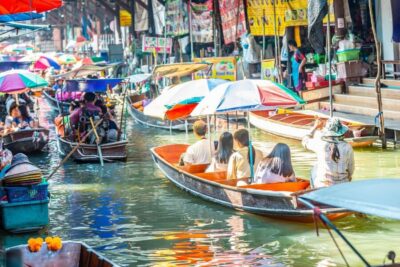
Damnoen Saduak, Train Market & Mahanakhon Day Trip
Read our review →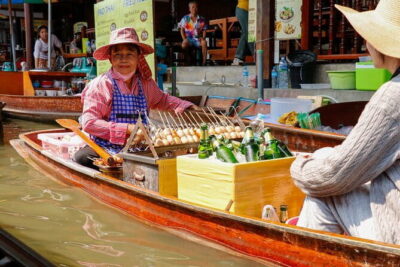
Day Trip to Bangkok Floating Market & Maeklong Railway
Read our review →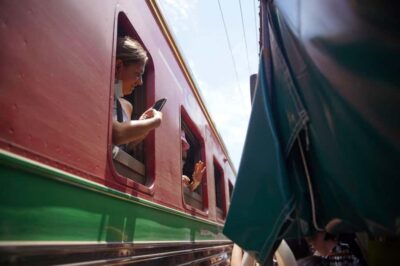
Floating Market and Ayutthaya Guided Day Tour
Read our review →
Mini Group Xian Day Tour to Terracotta Army, City Wall, Pagoda and Muslim Bazaar
Read our review →
From Durres/Golem: Kruja Castle & Old Bazaar Day Tour
Read our review →
Ayutthaya, Railway & Floating Markets Full-Day Tour
Read our review →
Mekong Delta & Cai Rang Floating Market 2-Day Tour
Read our review →Browse the lists this tour appears in