
Review · JAPAN
Kyoto: Nishiki Market Tea Ceremony with Koto Performance
A quiet hour in central Kyoto. This small-group experience pairs a guided matcha tea ceremony with live koto music at KOTOLILY KYOTO, a cozy studio near Nishiki Market. You make your own tea, taste traditional sweets, and learn about the customs behind each step.
I especially like the personal teaching and the live music from host Yurika. The setting also works well on a rainy day, since you are indoors and close to Kyoto shopping streets. The main consideration is the short one-hour format. It gives you a pleasant introduction rather than a long, formal tea gathering.
I also like that you can add a kimono photo session or a koto lesson on-site. Those extras cost more, and the kimono is not part of the basic tea ceremony, so check your budget before you arrive.
Key points to know before booking
- Tea making is hands-on: You whisk your own matcha rather than simply watching a demonstration.
- Koto music is part of the core experience: Yurika performs before and after the tea ceremony, with several songs included.
- The studio is near Nishiki Market: Plan to eat, shop, or explore the central Kyoto streets afterward.
- Groups are limited to eight people: The small size allows room for questions and personal instruction.
- Kimono photos are optional: You can arrange a kimono session and photographs for an additional fee at the studio.
- Shoes come off at the door: Wear comfortable, clean socks and leave bulky luggage elsewhere if possible.
Finding KOTOLILY KYOTO near Nishiki Market
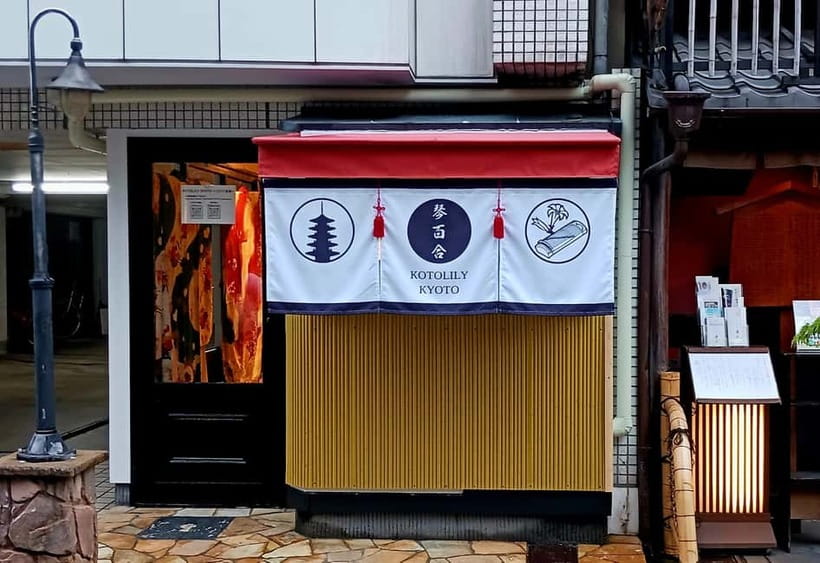
The meeting point is KOTOLILY KYOTO. Go inside the shop rather than waiting outside or at a nearby hotel. The studio is next to KINMATA Restaurant and across the street from Hotel GOCO stay.
This location is one of the experience’s practical strengths. You are in central Kyoto, close to Nishiki Market and shopping areas, so it is easy to fit the tea ceremony into a day of sightseeing. It is also a useful rainy-day activity. You can move from shops and food stalls into a warm indoor setting without giving up much time to transportation.
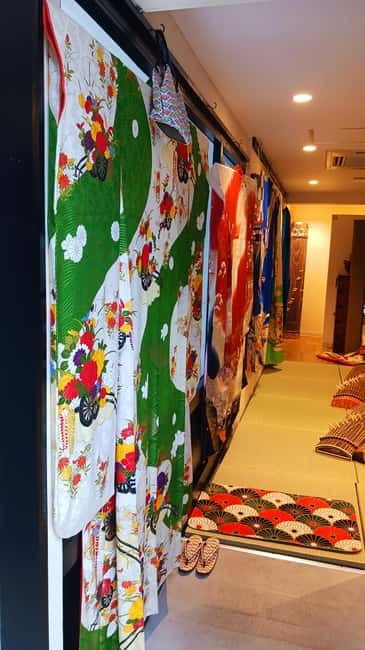
The studio itself is described as small, attractive, and lined with beautiful kimono. That gives the room a more personal feel than a large cultural venue. At the same time, limited space means you should avoid bringing a suitcase or a large backpack if you can. Shoes are removed at the entrance, a standard Japanese custom, so comfortable socks are a sensible detail to remember.
More Coffee and Tea Market Tours in Kyoto:
- Active Volcano, Rice Field, Hot Spring, Fruit market, Tea Plantation with Lunch
★ 5.0 · 513 reviews - Da Nang Cooking Class with Coffee Tasting and Market Visit
★ 5.0 · 310 reviews - Hungry in Vienna? A Food Lover’s Coffee & Market Walk
★ 4.9 · 276 reviews
The first koto performance sets the mood
The experience includes a live performance on the koto, a traditional Japanese string instrument often described in English as a Japanese harp. Yurika plays before the tea ceremony and again afterward, making the music more than a short add-on.
This is one of the strongest reasons to choose this activity over a basic matcha workshop. You are not only learning how to prepare tea. You also hear a skilled musician explain and perform an instrument that many visitors would not otherwise encounter during a short Kyoto visit.
The performance helps slow the pace. Kyoto’s central shopping streets can be crowded and noisy, while the koto creates a calmer start to the hour. Yurika is also praised for her warm manner, clear English, humor, and ability to explain both the instrument and the ceremony in an approachable way.
The songs can be moving and relaxing, but this is not presented as a full concert. The main focus remains the tea ceremony, with music placed before, between, and after the tea activities.
Learning the meaning behind the tea ceremony
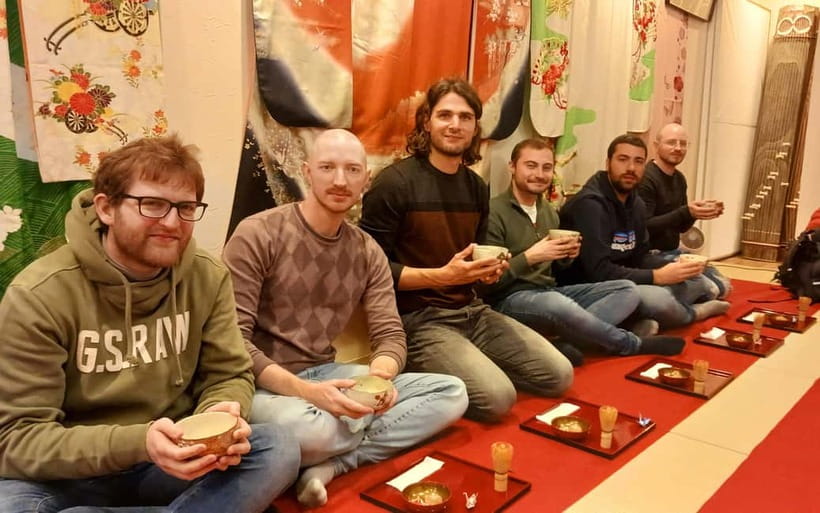
The instruction goes beyond simply showing you how to whisk green tea. Yurika explains the steps and the cultural meaning behind them, including tea etiquette and the role of the different movements.
That matters because a tea ceremony can otherwise feel like a string of unfamiliar gestures. Here, you are given enough context to understand why the process is careful and deliberate. The experience is designed for visitors who may know little about Japanese tea customs, but it can still appeal to people who have attended a tea ceremony before.
The format is friendly rather than intimidating. You do not need to arrive with a detailed knowledge of Japanese manners. The guide provides the instructions, and the small group makes it easier to follow along without feeling rushed or lost.
The ceremony is also less formal than a long traditional gathering. That is a benefit for most first-time visitors, especially if you want cultural background without spending several hours seated in one place.
Making two kinds of matcha
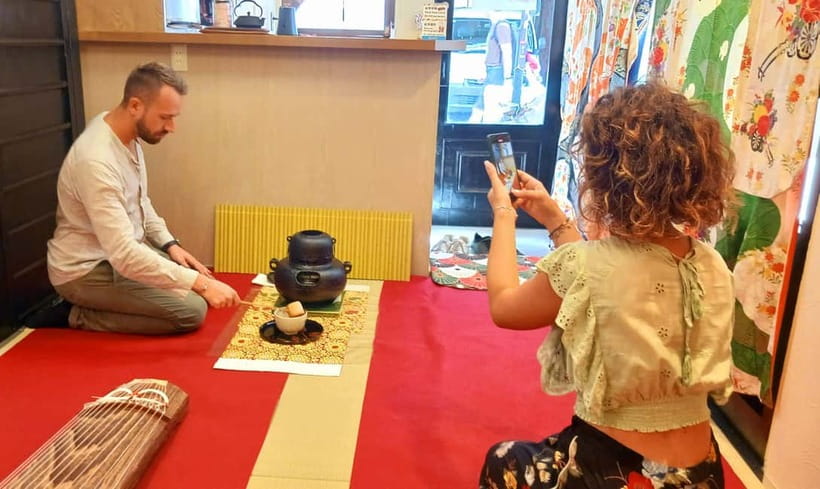
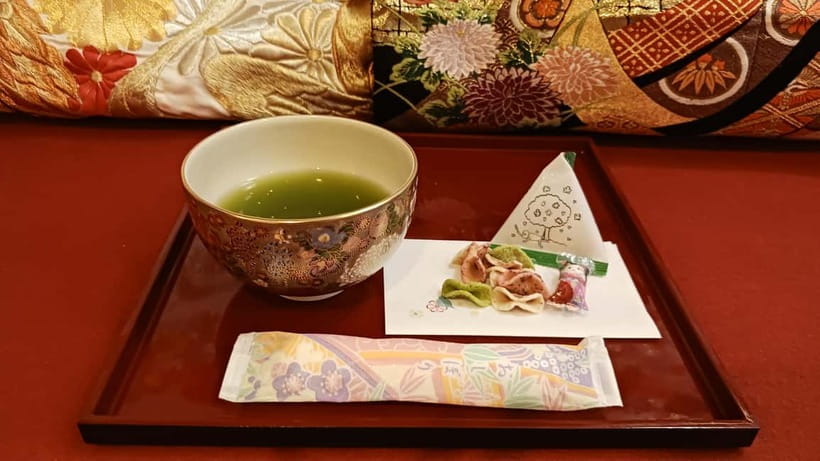
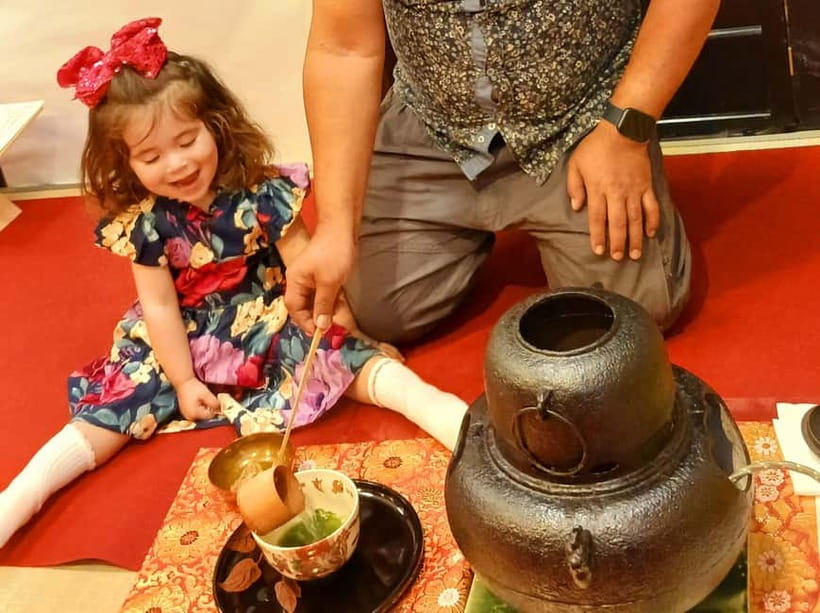
The hands-on section is the heart of the activity. You prepare your own matcha, starting with the water and finishing with the whisking. Some sessions include two different green teas, giving you a chance to notice differences in taste.
The careful instruction is aimed at producing a creamy tea with less bitterness. That is useful if you are unsure about matcha or have only tried sweetened matcha drinks. The preparation gives you a better sense of how the flavor develops and how much the method affects the final cup.
You will also have tea sweets to eat alongside the matcha. The sweets provide a traditional counterpoint to the tea’s earthy taste and make the session feel like a complete tasting rather than a quick lesson.
The basic package includes the tea ceremony, matcha making, tea sweets, and the live koto performance. Meals are not included, so plan to eat separately at Nishiki Market or in the surrounding streets. Since the experience lasts one hour, it is easy to arrange before lunch, after lunch, or between other central Kyoto sights.
A few more market tours around Kyoto worth a look
- Nishiki Market Brunch Walking Tour (7 Tastings + Brunch)
★ 5.0 · 1,355 reviews - Kyoto Nishiki Market Food and Culture Walking Tour
★ 5.0 · 412 reviews - Kyoto: Local Food Tasting Tour at the Nishiki Market
★ 4.7 · 135 reviews - Kyoto: Nishiki Market and Depachika Food Tour with a Local
★ 4.7 · 76 reviews
Why the koto and tea pairing works
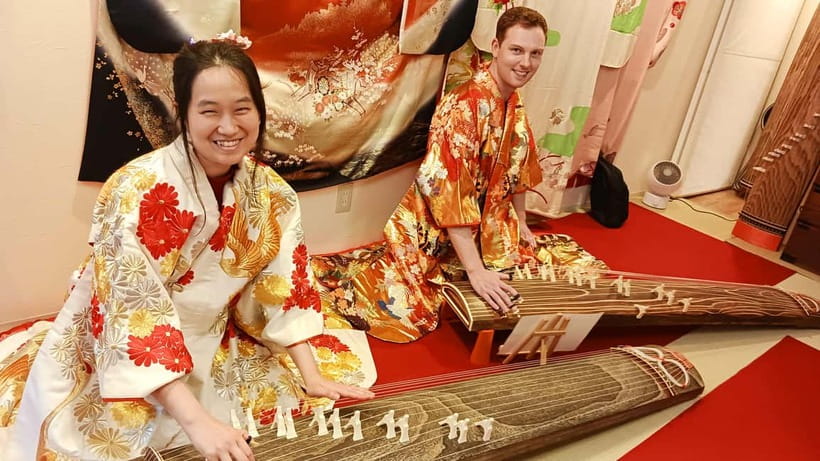
Tea and music might sound like separate activities, but the combination gives this experience its character. The tea ceremony asks you to pay attention to small movements, texture, taste, and quiet pauses. The koto performance adds another way to notice Japanese tradition through sound.
I like this pairing because it avoids the feeling of checking off one cultural activity and then moving to another. The music creates breathing space during the hour, while the tea preparation keeps you involved rather than leaving you as a passive audience member.
The host’s own interest in the koto is also important. The music is not just background sound while you drink tea. Yurika explains the instrument and performs several pieces, which gives the activity a personal element. The result is a cultural introduction that feels connected to the person leading it.
Some people may prefer a strictly formal tea ceremony with no performance or photo option. If that is your goal, this experience may feel more relaxed and visitor-friendly than ceremonial. For most first-time visitors, however, that approachable style is part of the appeal.
Optional kimono photos and koto lessons
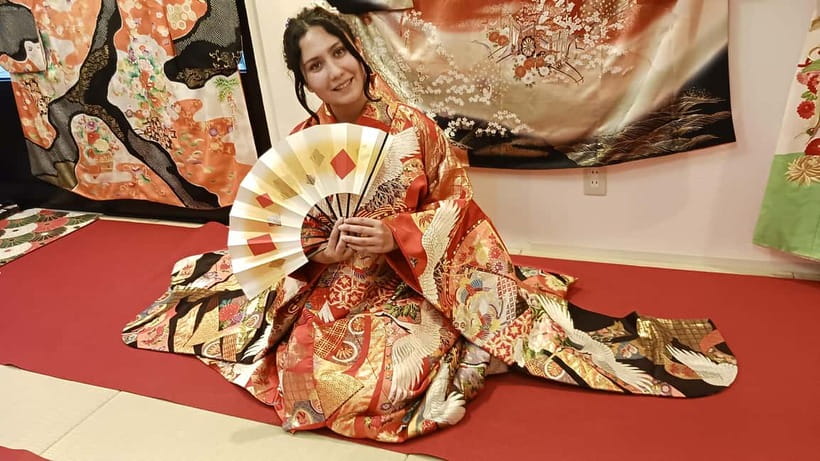
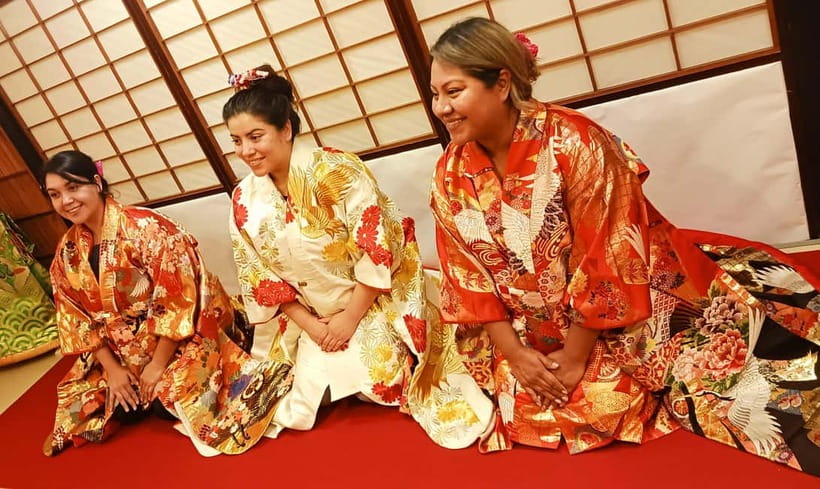
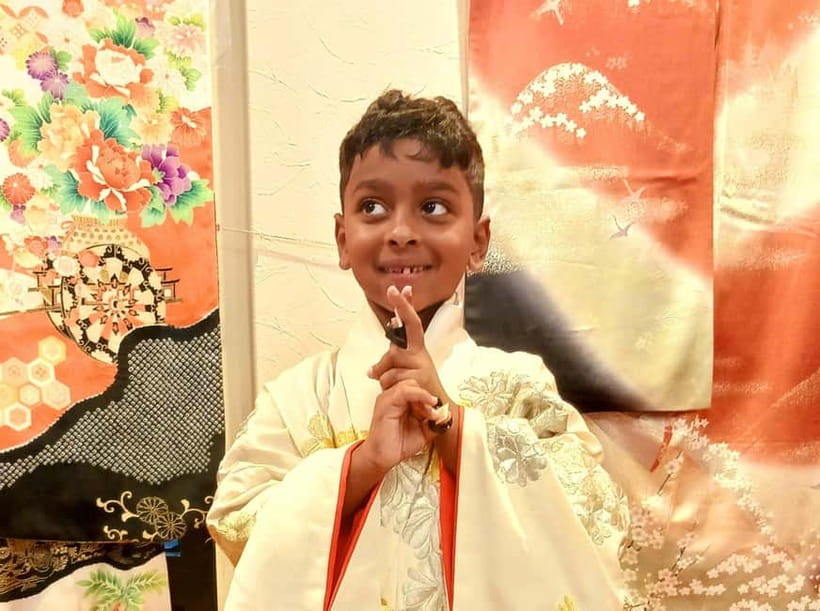
Kimono wear is available for an additional fee at the studio. You can ask the staff about a kimono session with photos and video, and traditional hair accessories may also be available as part of the photo option.
This can be a good choice if you want a keepsake from Kyoto or would like a more complete visual setting for your photos. The studio has attractive kimono on display, and the small room provides a natural backdrop. Allow extra time and money for this option, since it is not included in the $56 basic price.
One point is worth understanding clearly: the kimono option may take place after the tea ceremony rather than during the full tea experience. If you want to drink your matcha while dressed in kimono, ask the staff what the add-on includes before agreeing to it.
A koto-playing lesson is also available for an extra charge. This is a nice choice for music lovers or anyone who wants more than a performance. It is arranged at the location, so you can ask about the price and availability after the main ceremony.
Is $56 a fair price?
At $56 per person, this is not the cheapest way to drink matcha in Kyoto. The value depends on what you want from the hour.
A simple tea tasting may cost less, but this booking combines guided tea preparation, sweets, cultural explanation, and live koto music. The small group, capped at eight people, also gives it more personal attention than a large group demonstration. If you would otherwise book separate tea and traditional music activities, the combined format is a sensible use of time.
The price does not include transportation, a meal, kimono photos, video, or a koto lesson. Those extras can make the outing more expensive, so I would treat them as optional additions rather than part of the value calculation.
For a visitor with only a few days in Kyoto, the location helps justify the cost. You can pair the hour with Nishiki Market, nearby shops, and central Kyoto sights without making a special trip across the city. For anyone mainly seeking a formal tea ceremony, the price may feel high for a one-hour introduction.
Who will enjoy this Kyoto activity most?
This experience suits first-time visitors who want a clear and friendly introduction to matcha. You get to participate, ask questions, and taste the result rather than simply watch someone else prepare tea.
It is also a strong pick for couples, families with older children, and solo visitors who enjoy music and small cultural workshops. Children must be at least eight years old, and the activity is not suitable for people with food allergies or wheelchair users.
The calm setting makes it a useful break during a busy sightseeing day. If you have spent the morning walking through central Kyoto, an hour of tea and music offers a change of pace without requiring a long journey.
You should choose something else if you need step-free access, have a serious food allergy, or want a full meal included. The activity also may not suit visitors who dislike sitting indoors, removing shoes, or taking part in a structured cultural demonstration.
Practical tips for a smoother visit
Wear comfortable clothes. You will be inside the studio, but the tea ceremony includes seated instruction and hands-on preparation.
Bring a camera if you want photos of the setting or any paid kimono session. Flash photography is not allowed, so keep your camera or phone on a non-flash setting.
Arrive at the correct shop and go inside. Do not wait at Hotel GOCO stay, even though the meeting point is across from it. The nearby restaurant, KINMATA, is another useful landmark.
Try to leave large shopping bags, suitcases, and oversized backpacks at your hotel or in luggage storage. The room is small, and keeping your hands and floor space clear will make the ceremony more comfortable.
English and Japanese are available. The guide’s clear English is especially helpful when explaining tea etiquette, the koto, and the meaning of the ceremony.
You can cancel up to 24 hours before the activity for a full refund, and reserve now while paying later if that option is offered for your booking. Check the available starting times because the experience lasts one hour.
Should you book the Nishiki Market tea ceremony?
I would book this if you want a compact Kyoto cultural activity with real participation, personal instruction, and live traditional music. The koto performance is the feature that gives the hour extra value, while the matcha preparation keeps you involved.
The best reason to choose it is the balance. You get tea, sweets, music, cultural explanation, and the chance to add a kimono session or koto lesson, all in a central location. It is short enough to fit around Nishiki Market and other sightseeing.
I would skip it if you want a highly formal, lengthy tea ceremony, need wheelchair access, or have food allergies. For everyone else, especially first-time visitors, couples, and music lovers, KOTOLILY KYOTO offers a thoughtful hour and a pleasant pause in central Kyoto.
FAQ
Where does the tea ceremony take place?
It takes place at KOTOLILY KYOTO in central Kyoto. The shop is next to KINMATA Restaurant and across the street from Hotel GOCO stay.
Should I wait outside the hotel?
No. Go inside KOTOLILY KYOTO. The hotel is only a landmark across the street, not the meeting point.
How long does the experience last?
The tea ceremony and koto experience lasts one hour.
What does the $56 price include?
The price includes the tea ceremony, matcha green tea making, tea sweets, and a live koto performance.
Is transportation included?
No. Transportation to and from KOTOLILY KYOTO is not included.
Is the kimono included?
No. Kimono wear with photos and video is available for an additional fee at the location.
Can I take a koto lesson?
Yes. A koto-playing lesson can be added for an additional fee at the studio. Ask the staff after the tea ceremony.
What languages are available?
The activity is offered in English and Japanese.
How large is the group?
The group is limited to eight participants.
Is the activity suitable for children and wheelchair users?
Children under eight are not permitted. The experience is not suitable for wheelchair users or people with food allergies.
Just added around Kyoto
- Taste of Nishiki Market Walking Food Tour with Local guide★ 5.0 · 17 reviews
- Kyoto: Wholesale Fish Market Walking Tour★ 5.0 · 2 reviews
- Kyoto: Nishiki Market Tour with a Local Foodie & Tastings★ 4.5 · 67 reviews
- Golden Pavilion, Nijo Castle, & Nishiki Market Half day tour★ 5.0 · 29 reviews
- Kyoto: Nishiki Market Food Tour with Local Guide★ 4.6 · 5 reviews
- Kyoto: Nishiki Market Food Tour★ 4.9 · 21 reviews
- Kyoto: Enjoy Sushi & Market Tour! Best for Family & Couple!★ 4.8 · 20 reviews
- Kyoto: Nishiki Market and Depachika Food Tour with a Local★ 4.7 · 76 reviews
Coffee & Tea Market Tours, compared.

Active Volcano, Rice Field, Hot Spring, Fruit market, Tea Plantation with Lunch
Read our review →
Da Nang Cooking Class with Coffee Tasting and Market Visit
Read our review →
Hungry in Vienna? A Food Lover’s Coffee & Market Walk
Read our review →
Delicious Doughnuts & Tea: Small-Group Borough Market Experience
Read our review →
Mini Hanoi Coffee Workshop: Pick Any Signature Coffee You Like
Read our review →
From rick’s coffee to local markets authentic casablanca
Read our review →
Vienna Eats: Private Foodie Walk with Coffee & Markets
Read our review →
Ethiopian Culinary Tour – Market, Food, Coffee Ceremony & more
Read our review →Browse the lists this tour appears in