
Review · PORTUGAL
Porto: Coastal Villages Market & Seafood Cooking Tour
Fresh fish tells the story. This half-day outing links Porto’s coast, open-air markets, and a home-cooked seafood meal in one easy trip. I like the small maximum of six people and the chance to buy ingredients before cooking them. I also like that the route reaches several fishing villages rather than stopping at one polished seaside town. The main consideration is timing: the early market visit and 4 to 5 hours on the move may feel brisk if you prefer slow sightseeing.
Guide Marco adds a personal touch, with strong knowledge of the fishing trade and a family connection to organic farming. A meal of clams, squid, sardines, potatoes, peppers, bread, olive oil, and wine sounds like a fine reward. Still, Marco does most of the cooking, so this is partly a cooking lesson and partly a hosted seafood lunch, not a full hands-on class for every dish.
The best parts of this Porto food tour
- The fish market comes first: You see the daily catch and learn how locals judge freshness.
- Five coastal communities share one route: Afurada, Miramar, Aguda, Granja, and Espinho each offer a different glimpse of northern Portuguese life.
- You shop for the meal yourself: Fish, shellfish, produce, herbs, bread, cheese, olives, and wine become part of the day’s story.
- The group stays small: With no more than six people, conversation and questions should be easy.
- Lunch is built around local seafood: Depending on the season, dishes may include seafood rice, shrimp bread stew, or grilled fish.
- Marco’s organic farm adds a personal link: Produce from the family farm can help connect the market visit to the plate.
Why the fish market is the right beginning
The day starts in São Pedro da Afurada, a fishing district just outside central Porto, with pickup available in Porto, Vila Nova de Gaia, or Espinho. The van ride from the pickup point is listed as about five minutes, so you reach the first stop quickly.
This is not a market visit designed only for photographs. You watch fishermen present sardines, octopus, clams, seabass, and whatever else has come in that day. The exact selection changes with the season and the tides, which is an important part of understanding Portuguese cooking. Seafood here is not an abstract restaurant category. It follows the sea.
I like the practical lesson built into this stop. You learn what fresh fish and shellfish should look like, and you see how a local meal begins with the catch rather than with a fixed menu. That makes the later cooking feel connected to the coast.
The market visit lasts about 45 minutes. That gives you enough time to look closely and ask questions, but not enough time for a leisurely wander through every stall. Bring comfortable shoes, since the experience involves walking between market areas and village streets. A camera is useful, though you should give the buying and cooking process more attention than your phone.
More Cooking Classes in Portugal
- Porto Local Market Visit & Cooking Class / Showcooking
★ 5.0 · 206 reviews - Lisbon Market and Food Tour with Cooking Class and Lunch
★ 5.0 · 117 reviews - Private Lisbon Market Tour & Portuguese Cooking Class with Paula
★ 5.0 · 89 reviews
From Afurada to Espinho by the coast
After the fish market, you travel by van for around 20 minutes before a 45-minute sightseeing stop. The route takes in a string of coastal and agricultural communities: Afurada, Miramar, Aguda, Granja, and Espinho.
Each place offers a slightly different view of northern coastal life. In Afurada, you may see clothes drying in the sea air and fishermen repairing nets. That ordinary work is exactly the point. The area gives you a look at a living fishing community, rather than a seaside resort prepared only for visitors.
Miramar and Aguda are associated with distinctive wooden boats resting on the sand. These boats provide a useful reminder that local fishing traditions have their own tools and visual character. The route also gives your guide room to explain how the ocean has shaped festivals, food, work, and family customs.
The sightseeing portion is brief, so do not expect a detailed walking tour of all five communities. Instead, think of it as a coastal sampler. You get several short impressions, linked by stories and views from the van. If your priority is architecture or a long beach walk, this tour may leave you wanting more time in each village.
A second market stop and the move from shore to kitchen
The next van ride lasts about 15 minutes, followed by roughly 30 minutes of shopping. This is where the day expands beyond seafood. You may choose vegetables, herbs, fruit, olives, cheese, and bread from nearby farms and producers.
The shopping matters because it puts you in the middle of the meal’s decisions. You are not simply shown a prepared lunch. The ingredients are selected during the outing, then carried into the cooking session. Seasonality also becomes easier to understand when you see what is available at that moment.
Marco’s family organic farm is part of the experience, according to the detailed account of the day. That adds a useful agricultural side to a tour otherwise centered on the ocean. You can see how the meal draws from both the fishing villages and the nearby countryside.
The 30-minute shopping period is enough for a focused selection of ingredients. It is not a long farmers’ market exploration. If you enjoy lingering over every cheese, fruit, or jar of olives, you may need to keep an eye on the clock.
Cooking seafood in a coastal home
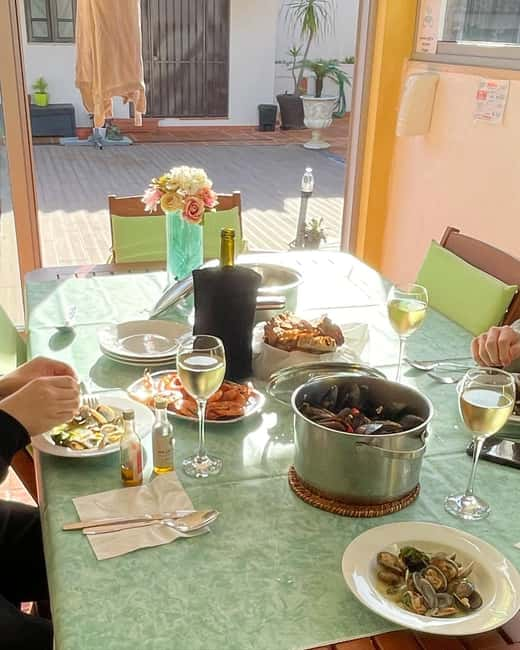
A final 10-minute van ride brings you to Espinho for lunch. The meal lasts about two and a half hours, making it the longest stop and the emotional center of the outing.
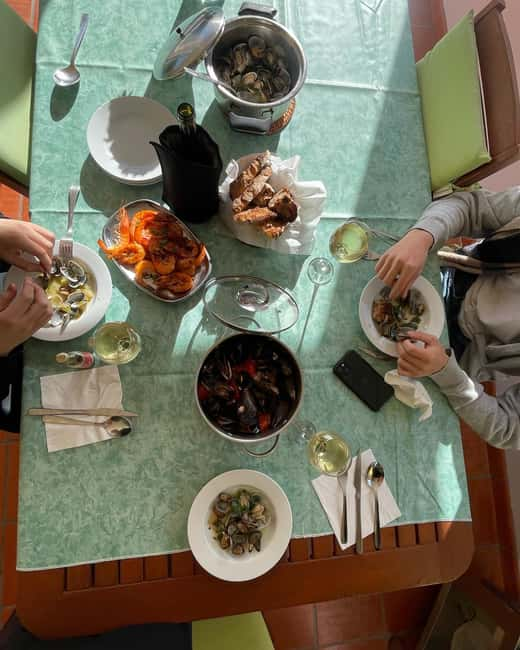
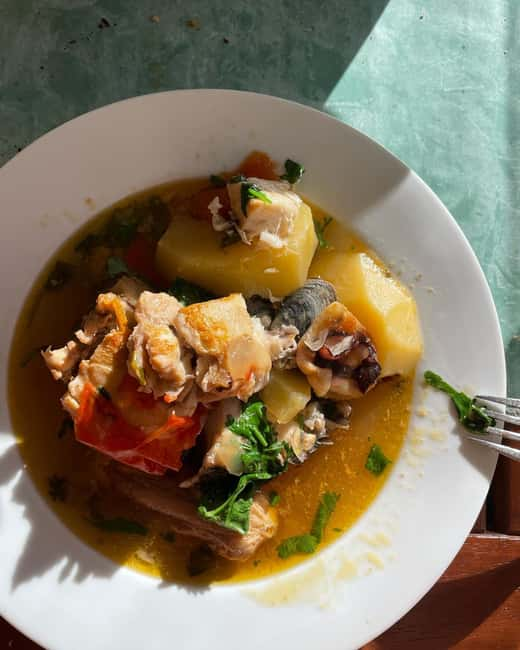
The kitchen becomes a shared working space. Depending on the season, the dishes may include arroz de marisco, a Portuguese seafood rice; açorda de camarão, a garlic and shrimp bread stew; or freshly grilled fish finished with olive oil, garlic, and herbs. The ingredients come from the markets, so the menu can change rather than follow a rigid plan.
This seasonal approach is a strength. You are more likely to understand why Portuguese home cooking changes through the year. The lesson is not only about following a recipe. It is also about balancing sea flavors, using simple seasonings well, and letting good ingredients do most of the work.
There is one important distinction. The description presents this as a cooking experience, but Marco’s account of the day says that he did the cooking. You may help prepare ingredients and learn the techniques, but do not book this expecting to cook every course from start to finish. It is best understood as a hosted kitchen session with instruction and participation.
The setting is informal, with Portuguese wine and music during the meal. Local wines may include Vinho Verde, Alvarinho, or wines from the Douro, with both white and red options. The supplied details also describe a family-connected B&B as the lunch setting, though the route identifies the lunch stop as Espinho. Either way, the focus is a home-style meal rather than a formal restaurant service.
Same place, a different set of stalls:
- Chef Led Porto Market Tour and Portuguese Tapas Class with Wine
★ 5.0 · 92 reviews - Arrábida Jeep Tour – Incredible Market & Hidden Gems
★ 5.0 · 61 reviews - Lisbon: Local Market, Food, and Culture Walking Tour
★ 4.7 · 40 reviews - Authentic Market & Food Tour in Portimão, Algarve
★ 5.0 · 38 reviews
What the long lunch is really worth
At $106 per person, the price needs to be judged against what is included. You receive transportation, market visits, ingredients, cooking materials, local wines, a guide, and a 2.5-hour lunch stop. Pickup and drop-off are available in Porto, Vila Nova de Gaia, and Espinho.
That is a fair package if you value convenience and personal contact. You do not need to arrange separate transport to the coast, decide which markets to visit, shop for seafood, or find a suitable place to cook it. The guide also connects the food to fishing and farming traditions, which would be difficult to replicate with a standard restaurant meal.
The one confusing point is the wording about the restaurant bill. The activity information says the restaurant bill is not included, while the rest of the description presents lunch as part of the hosted experience, with ingredients, wines, and cooking materials included. I would confirm this point before booking. Ask exactly what, if anything, you pay at the lunch venue beyond the listed price.
The value is strongest for someone who wants an all-in coastal food day. It is less compelling if you only want a cheap seafood lunch or a conventional sightseeing tour. You are paying for the transport, local access, small group, market shopping, stories, and time around a family table.
A small group makes a practical difference
The maximum group size is six people, with private and small-group options available. That matters in a market. A large group would crowd stalls and make it harder to hear explanations about fish, tides, or local buying habits.
A small group also suits the meal. You have more room to ask about recipes, wine, farming, and the fishing industry. Marco is described as having detailed knowledge of how the local fishing trade is changing, which gives the coastal stops more substance than a simple drive-by.
The experience is conducted in English with a Portuguese accent. Portuguese and Spanish are also offered. If you need very simple, highly scripted English, keep that language note in mind. The format sounds conversational rather than formal, and some flexibility will help.
Marco’s wife is connected with the organic farm, adding another personal thread to the day. The family connection continues at the lunch venue, described as a B&B run by his in-laws in the account of the outing. These details give the tour a sense of place that a standard restaurant meal cannot provide.
Transport, pace, and what to bring
The van is used between nearly every major stop. The listed travel times are short: five minutes to Afurada, 20 minutes to the sightseeing area, 15 minutes to shopping, 10 minutes to lunch, and 20 minutes back to the drop-off area. That keeps the day manageable and makes the coastal route possible in half a day.
The full experience is advertised as 4 to 6 hours, with the practical guidance placing it around 4 to 5 hours. Allow extra time if your pickup or drop-off is affected by traffic. The route begins early because the fish market is part of the morning trade.
Pickup is arranged in front of your hotel, hostel, or Airbnb. Drop-off is available in Porto, Vila Nova de Gaia, or Espinho. That is useful if you are staying in Porto but want to finish closer to the coast, or if you are already based in one of the coastal towns.
Wear comfortable shoes. You will walk through markets and villages, and the coastal setting may include uneven surfaces. Sunscreen and a camera are sensible choices. The day includes food and wine, so plan to keep your schedule light afterward rather than rushing to another major attraction.
Who will enjoy this most
I would choose this outing if you want food to be your main way into Portugal. It suits couples, friends, solo visitors comfortable with a small group, and anyone who prefers a local meal to a list of monuments.
It is also a good fit for people who want to see the area around Porto without planning a separate coastal excursion. You get fishing communities, village streets, market stalls, an organic farm connection, and lunch in one route.
Families with very young children may find it less suitable. Babies under one year are not accepted, and the activity is not suitable for people over 95. The early start, walking, van transfers, and long meal also make it a better choice for people who can manage a moderately active half-day.
I would not pick it for a strict cooking-school experience. Since the guide may handle most of the actual cooking, the main reward is learning, tasting, and sharing time with the host. Nor is it ideal if you want full control over the menu, since seafood and produce depend on the season and market supply.
Should you book this seafood day?
Book it if you want to meet Porto through its coast, markets, and food rather than through major sights alone. The strongest features are the small group, Marco’s personal connection to fishing and farming, and the chance to eat ingredients selected during the day.
Before paying, clarify the lunch-bill wording and confirm your pickup point. Also accept that the route is a sampler, the schedule begins early, and the cooking may be more demonstration than full class. With those expectations in place, $106 is reasonable for a personal, transport-included day that brings together fish markets, village life, local wine, and a generous home-style meal.
FAQ
How long does the Porto coastal villages food tour last?
The experience is listed as lasting 4 to 6 hours, with practical guidance placing it at around 4 to 5 hours.
Where can pickup and drop-off take place?
Pickup and drop-off are available in Porto, Vila Nova de Gaia, and Espinho. Pickup is arranged in front of your hotel, hostel, or Airbnb.
Which villages are visited?
The route includes Afurada, Miramar, Aguda, Granja, and Espinho, with sightseeing through fishing and agricultural areas along the coast.
What food can be prepared?
Depending on the season, dishes may include arroz de marisco, açorda de camarão, or freshly grilled fish with olive oil, garlic, and herbs.
Are drinks included?
Local wines are included. Options may include Vinho Verde, Alvarinho, and Douro wines, with white and red wines available.
How many people can join the tour?
The maximum group size is six people. Private and small-group options are available.
Which languages are offered?
The tour is offered in English, Portuguese, and Spanish. The English experience is conducted with a Portuguese accent.
What should I bring?
Bring comfortable shoes, a camera, and sunscreen.
Just added around Portugal
- West Algarve Tour Visit Tavira Olhão Market and Ayamonte in Spain★ 5.0 · 2 reviews
- Quarteira Market & Town Bus Trip from Albufeira★ 4.0 · 13 reviews
- From Market to Table with Paula (Loulé) – Private Cookery Class★ 5.0 · 21 reviews
- Algarve Wines Tasting Shared Experience at Mercado Municipal de Silves★ 5.0 · 11 reviews
- Loulé Market and Town Half-Day Bus Round Trip from Albufeira★ 4.5 · 14 reviews
- Quarteira Town & Gypsy Market Tour with Beach Bliss★ 3.5 · 14 reviews
- Loule Traditional Market Tour★ 4.5 · 17 reviews
- Authentic Algarve: Loulé Town Tour and Markets★ 4.0 · 19 reviews
Cooking Classes, compared.
Hanoi Cooking Class: Culture, Local Market & Meaning CSR Impact
Read our review →
5 Traditional Dishes Hanoi Cooking Class with Market Trip
Read our review →
Cooking Class and Lunch at a Tuscan Farmhouse with Local Market Tour from Florence
Read our review →
Cooking Class, Market & Thai Herbs Garden Tour
Read our review →
Authentic Cooking Class with Market & Farm Visit
Read our review →
Paella Cooking Experience & Boqueria Market Tour
Read our review →
Cooking Class Hoi An:Local Market, Basket Boat, Fishing & Cooking
Read our review →
Hoi An Cooking Class(Market,BasketBoat Crabfishing&Cooking Class)
Read our review →Browse the lists this tour appears in