
Review · PORTUGAL
Lisbon: Local Market, Food, and Culture Walking Tour
Taste Lisbon one bite at a time. This three-hour walk links local food and city history with a short ferry ride across the Tagus, giving you more than a string of restaurant stops. I like the mix of a Portuguese breakfast at Mercado da Ribeira and seafood in Cacilhas, and I like that the group is capped at 12 people. The main drawback is the amount of walking, plus the ferry and market timing can affect the flow.
Guides such as Luis, Bruno, Alexandra, and Tania have earned praise for being friendly, clear, and good company. I would wear proper walking shoes, bring water, and arrive hungry. The tour costs $82 per person, which is fair if you value several tastings, a guide, and transport across the river rather than simply buying a few snacks on your own.
Key things to know before you book
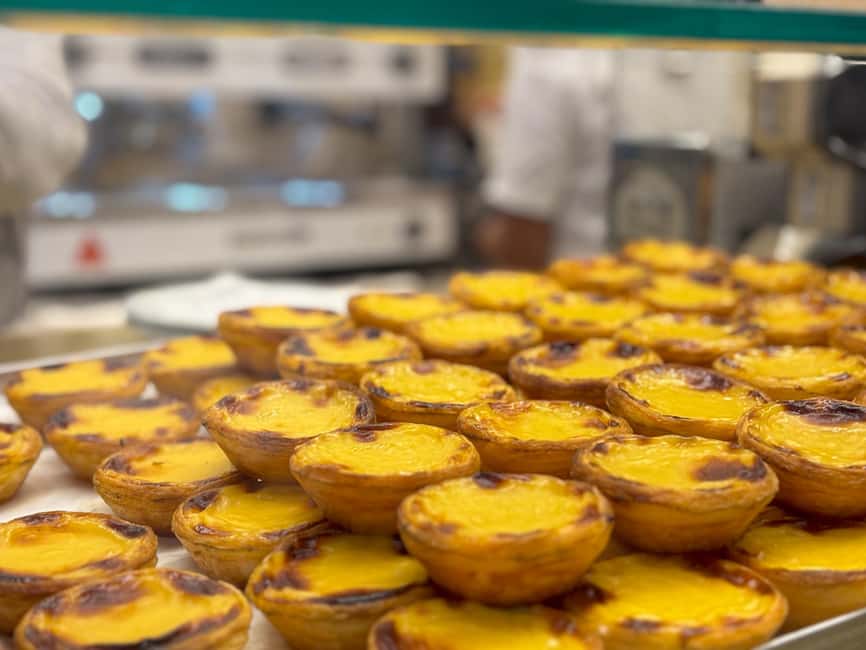
- Your breakfast starts at Time Out Market: Coffee and a Pastel de Nata open the tour with two Portuguese staples.
- The Tagus crossing is part of the experience: The ferry ride gives you views back toward Lisbon and takes you to Cacilhas for seafood.
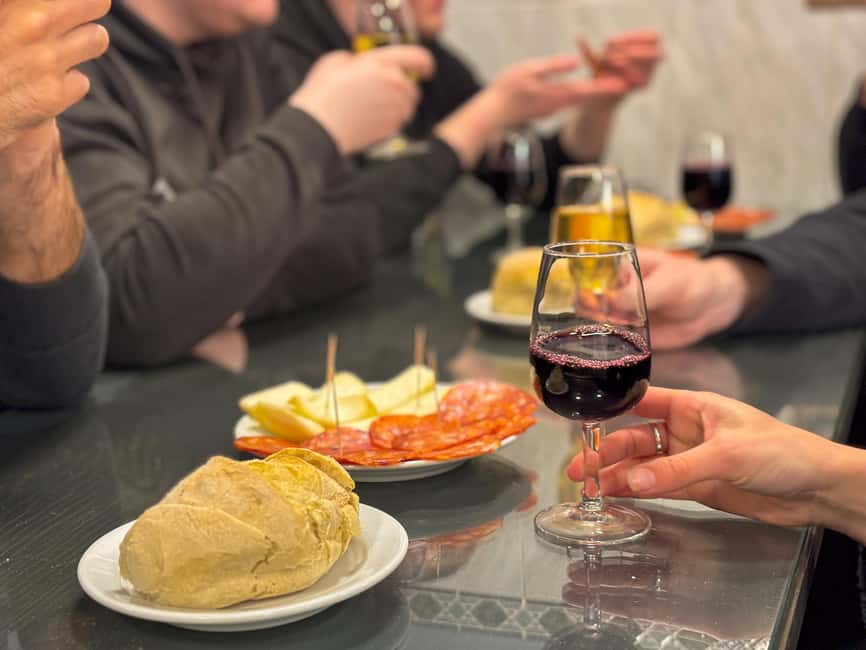
- You taste more than sweets: Expect fish soup, a shrimp patty, Bifana, salty snacks, cheese, wine, and Ginjinha.
- The route ends in central Lisbon: You finish at Rossio Square after food stops in Baixa and the city center.
- Small groups make a difference: With no more than 12 people, it should be easier to hear the guide and ask questions.
- This is a walking tour first: It is not suitable for wheelchair users, people with mobility impairments, or pregnant women.
Why this food walk works well in Lisbon

Lisbon is easy to admire from a viewpoint, but food helps you understand how the city lives day to day. A custard tart with coffee, a quick bifana, a glass of wine, or a bowl of fish soup tells you something about local habits without turning the experience into a formal history lecture.
This tour connects those tastes to several parts of the city. You begin beside the river at Time Out Market, cross to the south bank, then return to central Lisbon for stops around Baixa and Rossio. That route gives the experience a useful sense of place. You are not eating the same dish in one restaurant for three hours.
I also like the balance between guided explanation and eating time. The guides are described as informal, friendly, and willing to answer questions. Alexandra is praised for handling questions well, while Bruno is remembered for mixing food, history, and humor. Tania’s tour ran longer than three hours, though the time passed quickly. Those details suggest a relaxed pace rather than a rushed checklist.
The group limit of 12 matters here. Food walks can become awkward when a large crowd blocks a counter or must wait for every person to receive a sample. A small group gives you a better chance to stay close to the guide and hear what you are tasting.
More Farmers Market Tours in Portugal
- Porto Local Market Visit & Cooking Class / Showcooking
★ 5.0 · 206 reviews - Porto: Local Market Tour & Cooking Class/Showcooking
★ 4.9 · 32 reviews - Madeira : Santo de Serra Local Farmers’ Market half day trip
★ 4.3 · 26 reviews
Starting with coffee and Pastel de Nata at Mercado da Ribeira
Meet at the riverside entrance of Time Out Market Lisboa. The first part takes place around Mercado da Ribeira, a traditional market with a modern food hall presence and a strong connection to Lisbon’s food scene.
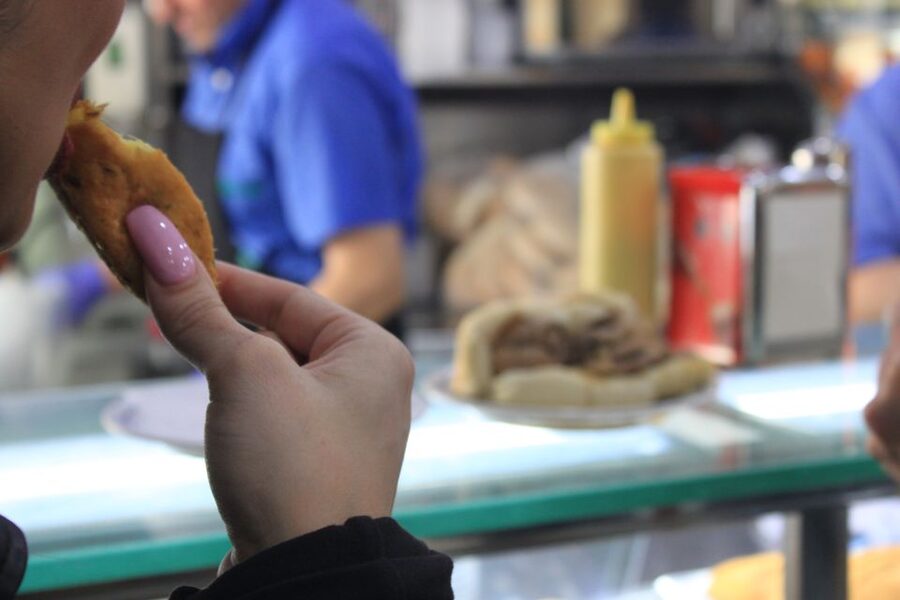
The opening tasting is simple but useful: Portuguese coffee and a Pastel de Nata. The custard tart has a crisp pastry shell and a soft, sweet center. It is a small serving, but it works as a Portuguese-style breakfast and gets you into the right mood for the rest of the walk.
The market stop lasts about 30 minutes, including a photo opportunity and tasting. That is enough time to get your bearings and hear why the market matters, but not enough for a long independent browse. One practical warning: the market’s activity can vary by time of day. If your tour arrives later, some stalls may be closing or have less choice. One tour timing found the market packing up around 2 p.m., so do not expect the same scene at every starting time.
That does not ruin the experience, but it is worth keeping in mind. If browsing food halls is your main reason for booking, confirm the start time before paying. If you mainly want the guided route and tastings, the changing market hours matter less.
Crossing the Tagus to Cacilhas by ferry
After the first stop, you take a ferry across the Tagus. The ride lasts about 15 minutes, and the ferry is included as part of the route rather than treated as a separate sightseeing cruise.
This short crossing gives you a different view of Lisbon. From the water, you can look back toward the city and see how the river shapes its identity. The view is one of the tour’s best extras because it breaks up the walking and shifts the setting from central Lisbon to the south bank.
The ferry also adds a local transport experience. You are not simply being driven between restaurants. You cross the river in the same practical way people use to move between the two sides, though the tour is still designed around food rather than public transport instruction.
Conditions on the day can affect how pleasant the crossing feels. In summer, sunscreen is sensible, and in winter you will want a jacket. Keep your water bottle with you. The ferry ride is short, so it is best viewed as a scenic link in the route rather than a major cruise.
Seafood in Cacilhas, where the river changes the menu
Cacilhas is the food center of the south-bank portion. Here, seafood takes the lead, and the tasting includes fish soup and a shrimp patty. The stop lasts around 45 minutes, giving you more time to eat and listen than you have at the opening market.
This is one of the tour’s most useful contrasts. Lisbon’s central districts can make Portuguese cuisine feel like pastries, sandwiches, and cod dishes alone. Cacilhas shows another side, with seafood as the main feature and the river close at hand.
The soup and shrimp patty also give you different textures and temperatures. The soup offers a warm, spoonable taste, while the patty provides a saltier, more compact bite. The information does not specify every ingredient or portion size, so I would treat these as tastings rather than a full seafood meal.
That distinction matters when judging the $82 price. You are likely sampling several foods over three hours, not receiving a large lunch at every stop. Eat a light breakfast before arriving, but do not come completely full. You will get more from the tour if you have room to taste at each location.
After Cacilhas, you take the ferry back to Lisbon for another 15-minute crossing. The return journey helps the route feel like a connected city experience rather than a collection of unrelated food stops.
Same place, a different set of stalls:
- Lisbon Market and Food Tour with Cooking Class and Lunch
★ 5.0 · 117 reviews - Chef Led Porto Market Tour and Portuguese Tapas Class with Wine
★ 5.0 · 92 reviews - Private Lisbon Market Tour & Portuguese Cooking Class with Paula
★ 5.0 · 89 reviews - Arrábida Jeep Tour – Incredible Market & Hidden Gems
★ 5.0 · 61 reviews
Baixa brings the tour back into central Lisbon

The next food stop is in Baixa de Lisboa, one of the city’s central areas. Here the guide shifts the focus back toward Lisbon’s urban center, daily routines, and historic streets.
The tasting list includes several items that may appear at this stage, including salty delicacies, cheese, wine, and perhaps a Bifana depending on the order of stops. Bifana is a Portuguese pork sandwich, generally served as a quick and practical meal. It is a good fit for this part of the route because it represents the kind of food you can eat without making a long event of it.
The 45-minute stop gives your guide time to explain what you are eating and how it fits into local life. That is where the tour earns more than a self-guided snack crawl. You can buy a Bifana or a glass of wine independently, but you would not automatically know why one stop was chosen or how it connects to Lisbon’s food culture.
Baixa also means more city walking between bites. The streets are central and interesting, but the route is not designed for lingering at every building. If your main goal is architecture, save extra time for a separate walk through Baixa. This tour gives you food-led context, not a full architectural tour of downtown.
Rossio Square finishes the tasting trail
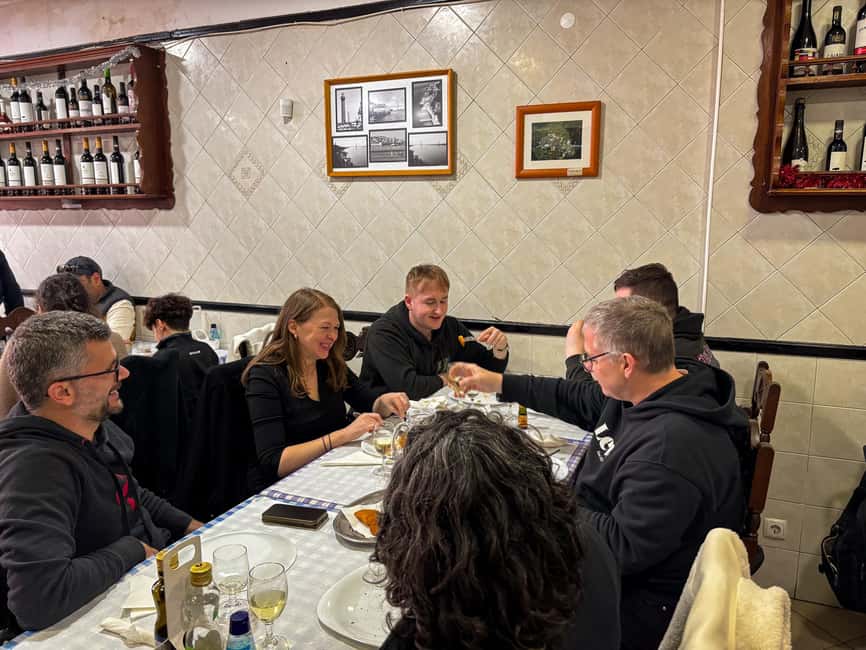
The final stop is around Rossio Square, where the tour ends. Rossio is a practical finish because it leaves you in a central part of Lisbon, close to other sights and transport connections.
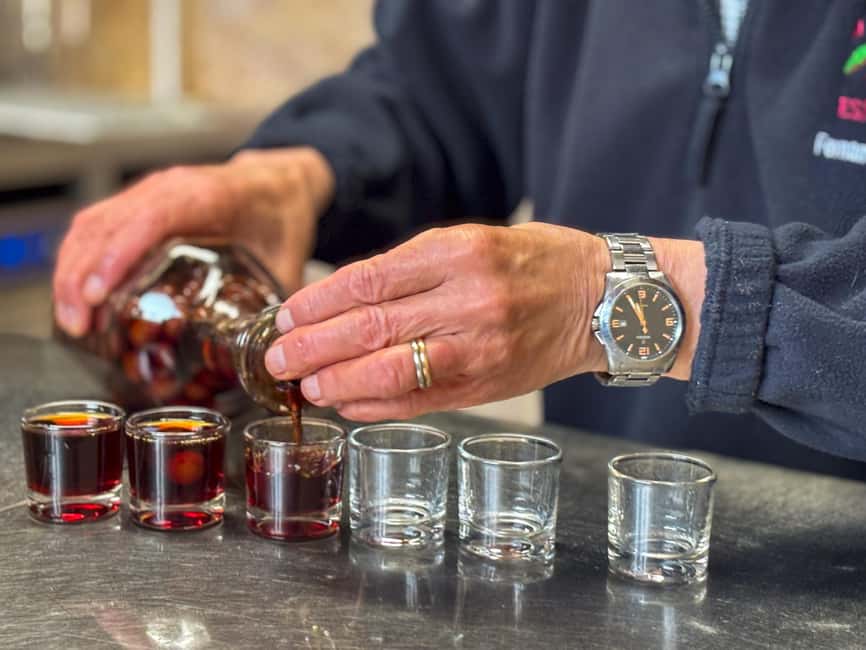
The last tasting may include Ginjinha, the city’s well-known sour-cherry liqueur, along with additional local food. Ginjinha is usually served in a small glass and is much more concentrated than the earlier coffee or soup. If you do not drink alcohol, tell the guide in advance so a suitable arrangement can be considered.
The broader tasting list also includes wine, cheese, salty delicacies, and Bifana. The exact order can vary, and the supplied details do not promise a fixed serving at each named stop. I would think of the route as a guided sample of Lisbon’s everyday flavors rather than a rigid restaurant menu.
Finishing at Rossio is convenient, but remember that the tour does not provide a long final meal. If you are hungry after the tour, you will be well placed to continue eating independently in central Lisbon.
What the $82 price really covers
At $82 per person, this is not the cheapest way to sample Lisbon. You could buy a Pastel de Nata, coffee, a sandwich, and a drink for much less if price alone is your concern.
The value comes from the package:
- Several traditional tastings across different neighborhoods
- A professional local guide
- Historical and cultural explanation
- Two ferry crossings
- A small group of no more than 12 people
- Help choosing stops that show different sides of Lisbon
The ferry rides are especially useful because they add scenery and connect the food to the city’s geography. You are also paying for the time saved in finding suitable places and working out how to fit Cacilhas into a short stay.
I think the price makes the most sense early in your Lisbon visit. The tour can help you find foods to order later and give you a basic map of the downtown area. If you already know Lisbon well, speak Portuguese, and prefer choosing your own restaurants, the guided element may feel less necessary.
The tour can also run slightly longer than three hours. Tania’s tour lasted over three hours, which was viewed as a positive because the pace still felt quick. Leave some room in your schedule rather than booking a tight museum entry immediately afterward.
The walking, language, and comfort questions
You should expect a considerable amount of walking, with time on your feet at markets, food stops, ferry terminals, and central streets. Wear tennis shoes or another pair of comfortable walking shoes. Lisbon’s slopes and paving can be tiring even when the route itself is not described in detail.
Bring a bottle of water. In summer, add sunscreen. In winter, bring a jacket, especially because the ferry crossings can feel cooler than the streets.
The tour is offered in English, Spanish, and Portuguese. A group may use up to two languages, so some explanations could take longer than they would in a single-language group. If you need very detailed commentary in one language, ask about the language arrangement before booking.
This activity is not suitable for pregnant women, people with mobility impairments, or wheelchair users. That is important because the route combines walking with ferry access and several food stops. If you have food restrictions, tell the provider in advance so arrangements can be made. The supplied details do not guarantee that every restriction can be handled on the day.
Which guide style may suit you best
The guide can shape the whole experience. Luis is praised for giving insight into Lisbon, its food, and its culture. Bruno is described as friendly, informative, and fun, with a good balance of tasting and historical explanation. Alexandra is praised for answering questions, while Tania is noted for a tour that lasted beyond the advertised three hours without feeling slow.
These comments point to a guide-led experience rather than a scripted food delivery. You will likely get the most from it if you ask questions and show interest in the local customs behind each dish.
The informal tone should suit you if you prefer conversation to a formal lecture. It may be less ideal if you want exact culinary instruction, a long market visit, or a detailed account of every building along the route.
Who should book this Lisbon food tour?
I would recommend it to a first-time Lisbon visitor who wants a quick introduction to local food and neighborhoods. It also suits solo visitors and couples who like a social small-group setting without joining a large coach tour.
Food-curious visitors will appreciate the range. You get sweet, savory, seafood, meat, cheese, wine, coffee, and liqueur in one route. The ferry crossing adds a change of scene that many food walks leave out.
It is less suitable if you want a full meal, dislike walking, avoid all alcohol, or need step-free access. It may also disappoint if you expect an extended visit inside the market. The market is one part of a larger route, not the whole event.
Should you book it?
Book this tour if you want a guided introduction to Lisbon through food, with a ferry ride and several central neighborhoods included. The strongest reasons are the small group, the range of tastings, and the chance to connect Cacilhas seafood with Lisbon’s downtown food culture.
Skip it if you would rather spend $82 on independent meals or if the walking and ferry access will be difficult. For most first visits, though, the combination of Pastel de Nata, Ginjinha, Bifana, fish soup, cheese, wine, and local stories gives you a useful start. Wear good shoes, check the departure time, and leave room for a second meal later.
FAQ
How long does the Lisbon food and culture tour last?
The tour is scheduled for three hours, although it can run longer depending on the pace and guide.
Where does the tour start?
It starts at the riverside entrance in front of Time Out Market Lisboa.
Where does the tour finish?
The activity ends at Rossio Square.
Which languages are available?
The live guide is available in English, Spanish, and Portuguese. A tour may use up to two languages.
What food and drinks are included?
Tastings include Pastel de Nata, Ginjinha, Bifana, fish soup, salty delicacies, Portuguese coffee, wine, and cheese.
Is the tour suitable for wheelchair users?
No. The activity is not suitable for wheelchair users, people with mobility impairments, or pregnant women.
More Food and Drink Trips in Portugal
- Authentic Market & Food Tour in Portimão, Algarve
★ 5.0 · 38 reviews - Setúbal: Winery & Fish Market Tasting Tour from Lisbon
★ 5.0 · 35 reviews - Bolhão Market Guided Food Tour
★ 4.5 · 23 reviews - Porto: Bolhão Market Guided Food Tour
★ 4.6 · 15 reviews
More Market Walking Tours in Portugal
- Bangkok: City Highlights Temple and Market Walking Tour
★ 4.5 · 3,990 reviews - Tokyo Tsukiji Fish Market Food and Culture Walking Tour
★ 5.0 · 3,184 reviews - Marrakech: Ben Youssef, Secret Garden, & Souks Walking Tour
★ 4.6 · 2,802 reviews - Marrakech: Colorful Medina Souks Guided Walking Tour
★ 4.7 · 2,470 reviews
Just added around Portugal
- West Algarve Tour Visit Tavira Olhão Market and Ayamonte in Spain★ 5.0 · 2 reviews
- Quarteira Market & Town Bus Trip from Albufeira★ 4.0 · 13 reviews
- From Market to Table with Paula (Loulé) – Private Cookery Class★ 5.0 · 21 reviews
- Algarve Wines Tasting Shared Experience at Mercado Municipal de Silves★ 5.0 · 11 reviews
- Loulé Market and Town Half-Day Bus Round Trip from Albufeira★ 4.5 · 14 reviews
- Quarteira Town & Gypsy Market Tour with Beach Bliss★ 3.5 · 14 reviews
- Loule Traditional Market Tour★ 4.5 · 17 reviews
- Authentic Algarve: Loulé Town Tour and Markets★ 4.0 · 19 reviews
Local & Farmers Market Tours, compared.
Hanoi Cooking Class: Culture, Local Market & Meaning CSR Impact
Read our review →
Cooking Class and Lunch at a Tuscan Farmhouse with Local Market Tour from Florence
Read our review →
Cooking Class Hoi An:Local Market, Basket Boat, Fishing & Cooking
Read our review →
London Bridge & Borough Market Food Tour with 7 Authentic Dishes
Read our review →
Hoi An Cooking Class(Local market,Basket Boat,Fishing & Cooking)
Read our review →
Browse the lists this tour appears in