
Review · JAPAN
Osaka: Kuromon Market Street Food Tour with Pro Local Guide
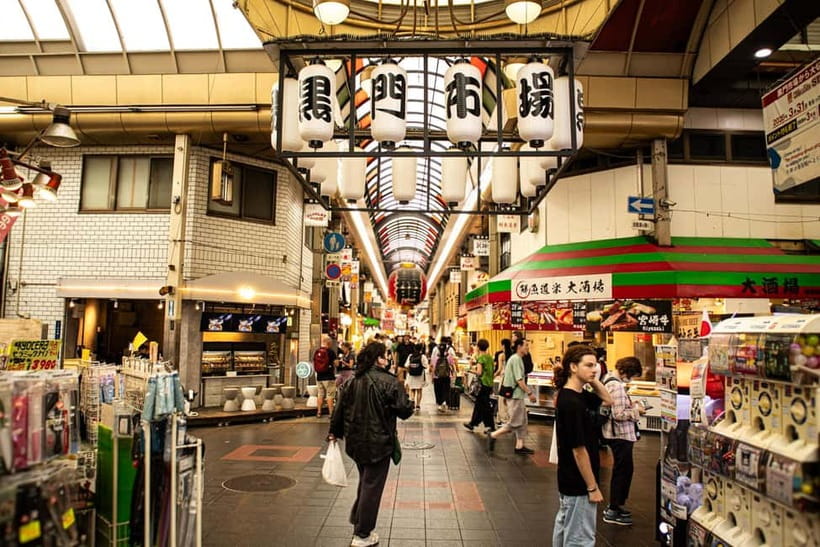
Follow your appetite through Osaka. This two-hour walk pairs four to five local tastings with Kuromon Market, Osaka’s famous food market, then adds Sennichimae Doguyasuji Shotengai and Hozenji Yokocho. I like the mix of eating and neighborhood wandering, and I especially like that the small group is limited to 10 people, so your guide can respond to your interests instead of delivering a speech to a crowd.
I also like the human touch. Guides such as Goku and Yuna have received especially warm praise for their food suggestions, local contacts, and easy conversation. Yuna has lived in Osaka for many years and can adjust the walk to your likes, dislikes, and interests. The main drawback is that food allergies are listed as a reason not to take this tour, even though dietary requests can be discussed in advance.
Key points at a glance
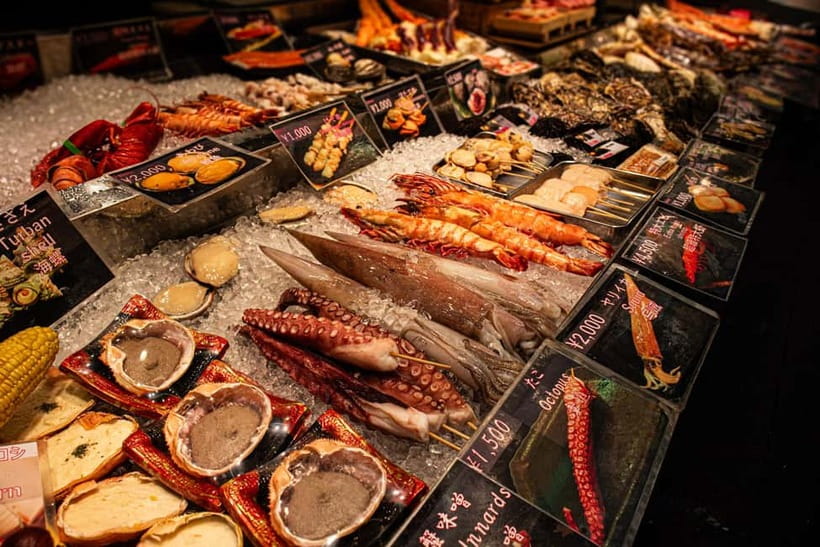
- Four to five food samples: Expect Osaka favorites such as grilled scallops, yakitori skewers, and takoyaki, with extra food and drinks purchased separately.
- Kuromon Market for two hours: The market is the main setting, giving you time to eat, ask questions, and learn how local food stalls work.
- Three distinct Osaka stops: The route includes Kuromon Market, Sennichimae Doguyasuji Shotengai, and Hozenji Yokocho.
- A maximum of 10 people: The small size makes it easier to ask about ingredients, etiquette, souvenirs, and neighborhood life.
- Several guide languages: English is standard, with French, Spanish, Russian, and Japanese available depending on the booking.
- A practical price point: At $51 per person, the tour is most useful if you value guidance, context, and help choosing food rather than simply paying for a meal.
Why Kuromon Market is the right place to start
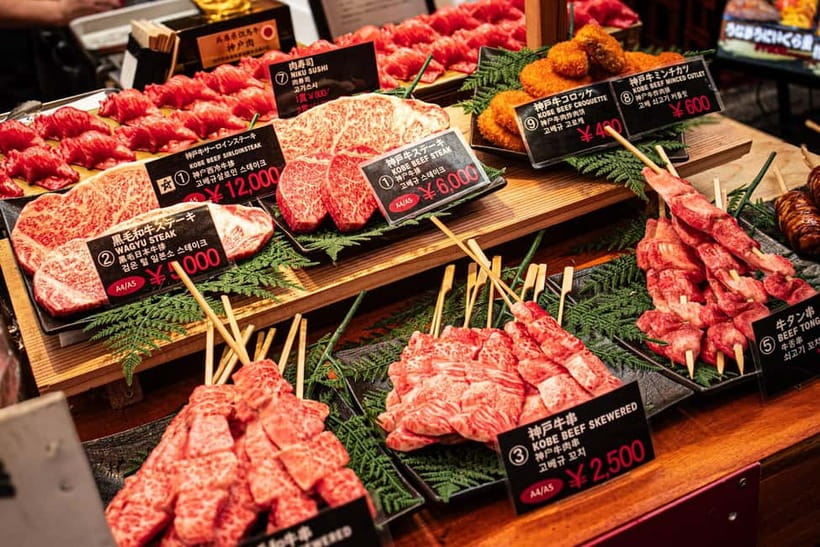
Kuromon Ichiba Market is known as Osaka’s Kitchen, and that nickname tells you what kind of place this is. It is a food-centered walk through one of the city’s best-known market areas, where the point is not just to see stalls but to understand what Osaka eats and how its markets function.
I like starting here because a guide can turn a crowded food street into something easier to read. Instead of guessing at unfamiliar dishes, you can ask what you are seeing, how it is prepared, and what makes it local. The guide also explains Japanese culinary customs, market traditions, and basic etiquette as you go.
The two-hour length gives Kuromon most of the attention. This is not a quick photo stop followed by a rushed snack. You have time to make several tastings, listen to stories, and pause when something catches your eye. Still, the tour is short enough to fit neatly into a morning or afternoon in central Osaka.
Come with room in your stomach, but do not expect a full restaurant meal. The included food consists of four to five selected samples, while additional food and drinks cost extra. That arrangement lets the guide introduce you to a range of Osaka specialties without forcing you into a large fixed menu.
More Street Food Market Tours in Japan
- Tsukiji Fish Market: Street Food & Culture Walking Tour
★ 5.0 · 669 reviews - Tsukiji Fish Market Small-Group Food Walking Tour
★ 5.0 · 621 reviews - Kuromon Market Food Walking Tour in Osaka (6 stops, 6 tastes)
★ 5.0 · 550 reviews
The food: scallops, skewers, and takoyaki
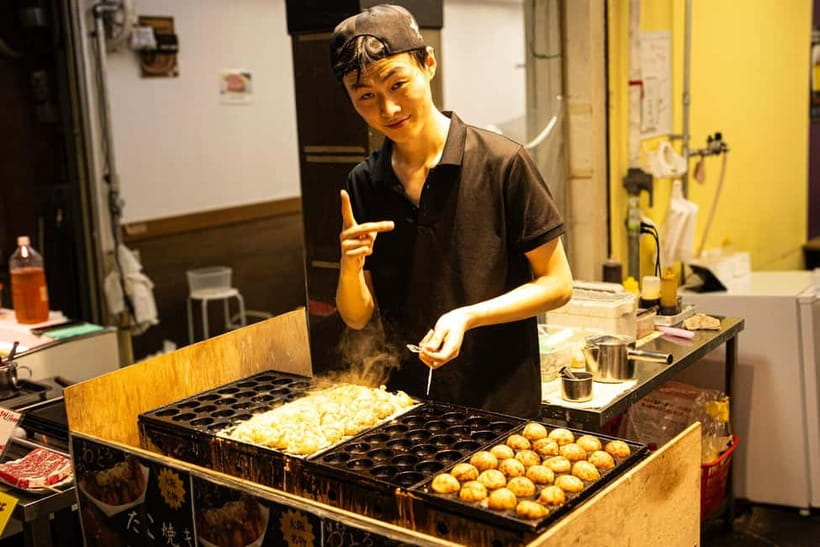
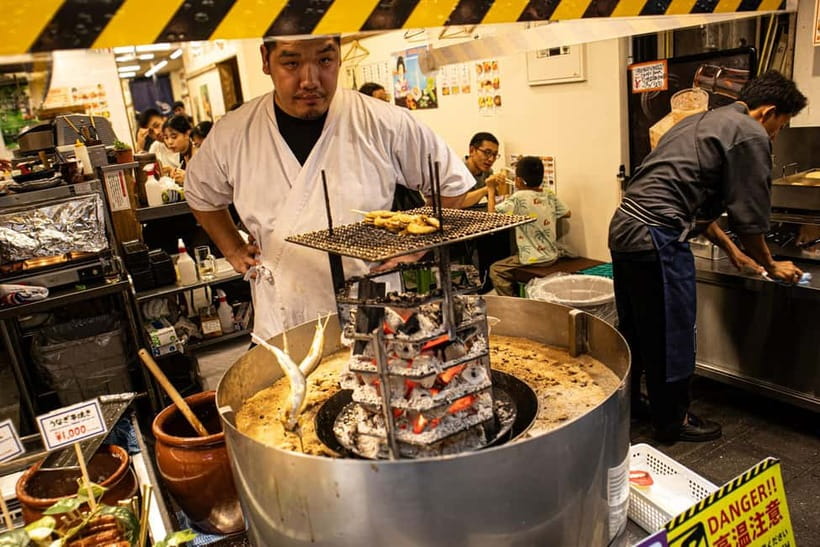
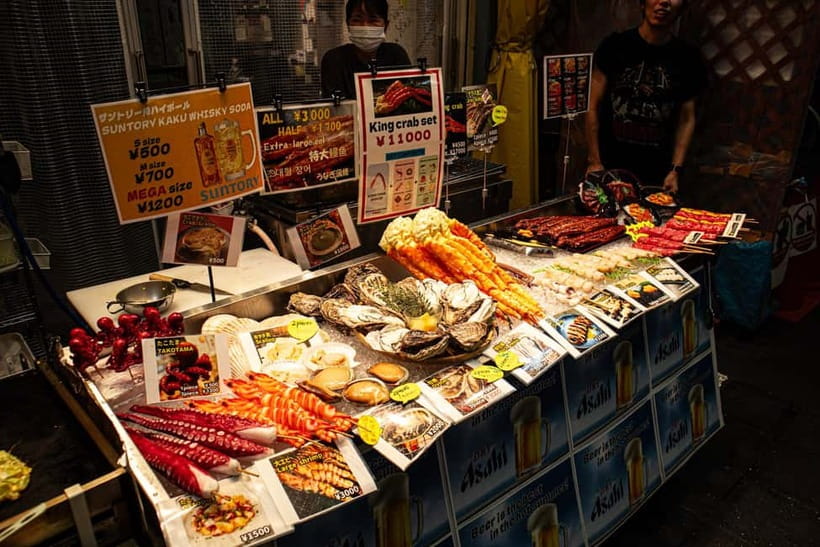
The tastings are the heart of the experience. Examples include grilled scallops, yakitori skewers, and takoyaki, three foods that offer very different textures and flavors.
Grilled scallops give you a taste of Japan’s seafood culture in a simple market setting. Yakitori provides the familiar pleasure of food on a stick, while takoyaki connects you with one of Osaka’s best-known street foods. Since the exact samples can vary, you should view the food list as a guide to the style of eating rather than a guaranteed menu.
I like this format because it spreads your attention across several small bites. You can compare dishes, ask questions as you eat, and decide what deserves a second purchase. If you arrive hungry, remember that four or five samples may feel more like a generous introduction than lunch.
Extra purchases are not included, so carry cash. That is useful not only for more food but also for drinks or souvenirs you may find along the way. The guide can point you toward items worth considering, which is more helpful than buying something at random because the packaging looks attractive.
Food allergies need serious attention. The activity says dietary requests can be accommodated, but it also says the tour is not suitable for people with food allergies. If you have a restriction that is not allergy-related, contact the provider before booking and explain it clearly. Do not rely on last-minute explanations at a market stall.
Sennichimae Doguyasuji Shotengai and the tools of Japanese cooking
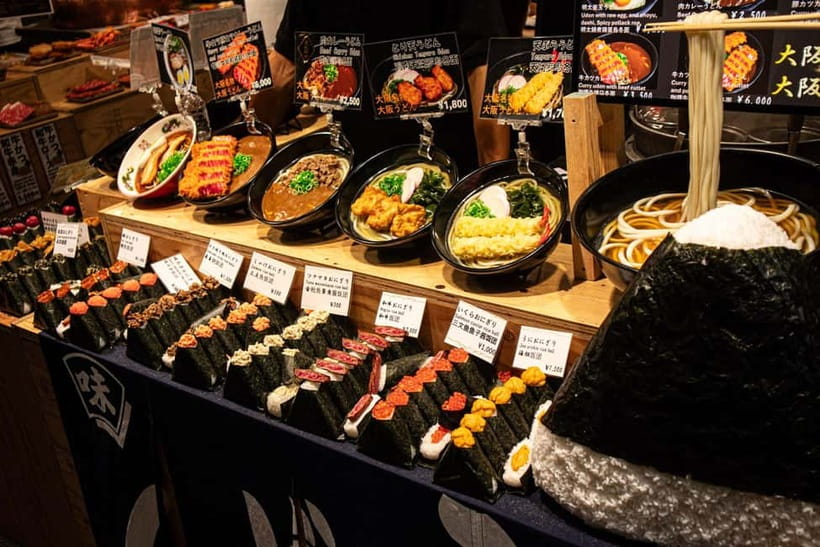
The walk does not stop with ready-to-eat food. It also visits Sennichimae Doguyasuji Shotengai, a shopping street known for Japanese kitchenware and cooking supplies.
This is a useful change of pace after the market. You move from eating Osaka food to looking at the tools and objects used to prepare and serve it. For anyone who enjoys cooking, tableware, knives, utensils, or food-related souvenirs, this may be one of the most practical parts of the route.
I would pay attention to the guide’s souvenir advice here. Japanese kitchen goods can look appealing, but size, weight, and usefulness matter once you have to carry them home. A local guide can help you focus on items that suit your budget and luggage rather than simply pointing out the most eye-catching display.
The information provided does not promise that every shop or product will be available on every departure. Think of the street as an added part of the neighborhood walk, with the guide helping you understand what you are seeing.
Hozenji Yokocho adds a quieter finish
Hozenji Yokocho brings a different mood to the tour. This traditional alleyway offers a look at an older style of Osaka street, with a setting that contrasts with the open market and its food stalls.
I like this stop because it widens the experience beyond eating. You get a sense of how food, narrow lanes, local customs, and everyday city life fit together. The guide discusses Osaka’s history and culture along the route, so the alley is not just a backdrop for photographs.
The itinerary identifies Hozenji Yokocho as a visit rather than a separate food stop. That distinction matters. You should not assume that every location includes another included tasting. The value here comes from seeing a different side of central Osaka and hearing the stories that connect the area to the city.
Same place, a different set of stalls:
- Tokyo Tsukiji Fish Market Food and Culture Walking Tour
★ 5.0 · 3,184 reviews - Tokyo: Tsukiji Fish Market Food and Walking tour
★ 5.0 · 1,724 reviews - Tokyo: Tsukiji Fish Market Guided Walking Tour
★ 4.9 · 1,397 reviews - Nishiki Market Brunch Walking Tour (7 Tastings + Brunch)
★ 5.0 · 1,355 reviews
What the guide adds to the experience
A food market is easy to visit on your own, but a guide changes the quality of the stop. You can point to an unfamiliar dish and get an explanation before buying it. You can ask about manners, local ingredients, food customs, or what makes a souvenir useful.
The guides are described as professional Japanese guides with strong training in Japanese culture, history, and etiquette. That is useful for first-time visitors who want more than a list of dishes. You are not only being led from one bite to the next. You are given a framework for understanding the market.
The strongest personal praise has gone to Goku and Yuna. Goku is noted for combining delicious food recommendations with a friendly, comfortable relationship. Yuna is described as someone who has lived in Osaka for many years and knows many of the market traders personally. Her walk was adjusted around individual likes, dislikes, and interests.
Those details matter because a small-group tour can feel very different depending on the guide. A good guide listens. If you care more about food history than souvenirs, or more about local customs than photography, the group format gives you a better chance of saying so.
Languages include English, French, Spanish, Russian, and Japanese, though the tour is conducted in English unless another language has been arranged. If you need French, Spanish, or Russian, request it before booking rather than assuming it will be available on the day.
The small-group format and what it means
The maximum group size is 10 people, with private options also available. Ten is not a private walk, but it is small enough to keep questions manageable and make conversation possible.
I see this as a good middle ground. You avoid paying the full price of a private guide, yet you are less likely to disappear into a large crowd. A small group also works well in a market, where narrow spaces and busy stalls can make a big tour awkward.
The tradeoff is that the pace may reflect the interests of several people. One person may want more tastings, another may care about kitchenware, and someone else may want history. The guide can adapt to some degree, but the experience is still shared.
If you want maximum flexibility, choose the private option if it is available for your date and budget. If you mainly want guidance, good food suggestions, and a friendly introduction to Osaka, the small-group version should offer solid value.
Is $51 a fair price?
At $51 per person, this is not the cheapest way to eat around Kuromon Market. You can buy individual snacks on your own for less, and you will still see the market without a ticket.
The real question is what you want your money to accomplish. The price includes a two-hour guided walk, a professional Japanese guide, four to five food samples, and visits to three notable areas. You are also paying for help with choices, cultural explanations, etiquette, and local recommendations.
I think the price is fair for first-time visitors who might otherwise spend money on random dishes and leave without understanding what they ate. It is less compelling for confident repeat visitors who already know Osaka’s food streets and prefer to browse independently.
Because extra food and drinks are not included, set aside additional cash if you want a larger meal. The tour is best viewed as a guided tasting and neighborhood introduction, not an all-you-can-eat outing.
Meeting points, timing, and practical preparation
There are two possible starting points listed: ピカソ日本一ビル and a Sumitomo Mitsui Banking Corporation ATM. The exact meeting point can depend on the option you book, so check your confirmation carefully before setting out.
The tour ends at one of those same two locations. Transportation to and from the meeting point is not included, so you need to arrange your own way there and back. Since the walk lasts two hours, comfortable shoes are a sensible choice.
Bring a camera if you want to record the market, kitchenware street, and traditional lanes. Bring cash for extra purchases, since the included samples do not cover additional food and drinks.
The activity allows cancellation up to 24 hours in advance for a full refund. You can also reserve now and pay later, which helps if your Osaka schedule is still shifting. Starting times vary, so you need to check availability for your chosen date.
Who will enjoy this walk most?
I would recommend it most strongly to first-time visitors to Osaka who want a friendly introduction to local food without spending half a day on a formal food class. It also suits people who enjoy asking questions and prefer a guide to help them make sense of unfamiliar dishes.
Couples and small groups should benefit from the relaxed format. The personal experiences with Goku and Yuna suggest that the best part may be the conversation and recommendations between tastings, not just the food itself.
It is also a good fit for anyone interested in Japanese cooking tools and food-related souvenirs. Sennichimae Doguyasuji Shotengai gives the walk a practical shopping angle that many food tours leave out.
I would hesitate if you have serious food allergies, dislike shared group activities, or want a large, guaranteed meal. The tour is also not ideal if you already know Kuromon Market well and prefer complete freedom to eat at your own pace.
Should you book this Osaka food tour?
Book it if you want context with your snacks. The strongest reasons are the small group, the mix of market food and neighborhood streets, and the chance to spend two hours with a guide who can adjust recommendations to your interests.
The experience looks particularly promising with a guide such as Goku or Yuna, whose friendly style and local connections have received the most praise. Just keep your expectations clear: the included tastings are an introduction, not a full lunch, and extra purchases cost more.
For a first visit to Osaka, $51 is a reasonable price for getting your bearings in Kuromon Market while learning what to eat and why it matters. If that sounds useful, arrive in comfortable shoes, carry cash, and leave enough appetite for more than four or five bites.
FAQ
How long does the Osaka Kuromon Market food tour last?
The tour lasts two hours.
How many food samples are included?
You receive four to five selected samples of local dishes.
What foods might be included?
Possible examples include grilled scallops, yakitori skewers, and takoyaki. The exact food selection is not guaranteed.
Is extra food included?
No. Additional food and drinks are not included in the price.
What places does the tour visit?
The route includes Kuromon Ichiba Market, Sennichimae Doguyasuji Shotengai, and Hozenji Yokocho.
How large is the group?
The small-group tour has a maximum of 10 people. Private options are also available.
What languages are offered?
English, French, Spanish, Russian, and Japanese are listed. The tour is conducted in English, while other languages may be available upon request.
Can dietary requests be accommodated?
Dietary requests can be accommodated, but the activity is not suitable for people with food allergies. Contact the provider before booking if you have dietary concerns.
What should I bring?
Bring comfortable shoes, a camera, and cash.
Where does the tour start and finish?
The meeting point may vary by booking option. The listed locations are ピカソ日本一ビル and a Sumitomo Mitsui Banking Corporation ATM, and the drop-off locations are the same.
More Food Trips in Japan
- Tsukiji Fish Market: Street Food & Culture Walking Tour
★ 4.8 · 259 reviews - Inside Tokyo’s Kitchen: Tsukiji Market, Food & Culture Tour
★ 5.0 · 162 reviews - Tsukiji Food and Toyosu Market with Government-Licensed Guide
★ 5.0 · 158 reviews - Toyosu Market Morning Tuna Auction and Tsukiji Food Tour with Licensed Guide
★ 4.5 · 146 reviews
More Food and Drink Trips in Japan
- Tokyo: Tsukiji Fish Market Food and Culture Walking Tour
★ 4.7 · 757 reviews - Tokyo Food Tour Taste Fresh Delights at Tsukiji Market
★ 5.0 · 429 reviews - Kyoto Nishiki Market Food and Culture Walking Tour
★ 5.0 · 412 reviews - Osaka: Kuromon Market Food Walking Tour (6 stops, 6 tastes)
★ 4.6 · 272 reviews
Just added around Japan
- Nagoya Super Market Tour & Home Cooking Class with a Local, Akiko★ 5.0 · 10 reviews
- Tokyo: Private Tsukiji Street Food & Sake with Local Guide★ 5.0 · 3 reviews
- Tokyo: Tsukiji Market Guided Tour & Sushi-Making Experience★ 4.4 · 11 reviews
- Tokyo: Tsukiji Market and Hama-rikyu Gardens Guided Tour★ 4.8 · 73 reviews
- Tokyo: Tsukiji Fish Market Culture Tour with Sashimi Tasting★ 4.6 · 54 reviews
- 【Family pack】Tokyo: Tsukiji fish market food tour★ 5.0 · 3 reviews
- Tokyo’s Kitchen: Tsukiji Market Food & Culture Walk★ 4.7 · 74 reviews
- Tokyo: Tsukiji Fish Market Foodie and Educational Tour★ 5.0 · 4 reviews
Street Food Market Tours, compared.
Old Town, Creek, Museums, Souks, & Street Food Tour
Read our review →
Old Town, Souks, Street Food, Guided Tour & Abra Ride
Read our review →

London Bridge & Borough Market Food Tour with 7 Authentic Dishes
Read our review →
Old Town, Souks, Street Food, Guided Tour & Abra Ride
Read our review →
Small Group Cooking Class & Market Food Tour in Florence
Read our review →
Browse the lists this tour appears in