
Review · JAPAN
Osaka: Food Tour Kuromon Market & Dotonbori with Guide
Start hungry, leave happy. This guided walk brings together Osaka’s best-known food stops, from Kuromon Market takoyaki to okonomiyaki, kushikatsu, dango, and a custard tart. I like the way it links food with the city’s lively streets, rather than treating each dish as a separate tasting.
I also like the easy meeting point outside Hotel Royal Classic Osaka and the chance to finish at Ebisu Bridge beneath the famous Glico sign. The main consideration is authenticity: the guide may speak excellent English or Spanish without being Japanese, so you may get strong city guidance but less local culinary insight than you would from a Japanese food specialist.
The tour costs $84 per person and includes the listed food tastings, an English- and Spanish-speaking guide, and the walking route through Kuromon Market, Hozenji, and Dotonbori. It is a good fit if you want an introduction to Osaka’s food culture without spending time choosing every stall yourself.
Key points to know before booking
- Kuromon Market is the food anchor: You begin among fresh ingredients and local specialties, then stop at Wanaka for Osaka-style takoyaki.
- The menu covers several Osaka classics: Tastings include takoyaki, three-colour dango, okonomiyaki, kushikatsu, and an egg tart.
- The route connects food with famous sights: You walk through the Hozenji area, Dotonbori, and Ebisu Bridge.
- English and Spanish are available: The guide leads the group in either language, depending on the tour arrangement.
- The strongest guide feedback names Paula and Angeles: Both received specific praise for energy and city commentary.
- There is one serious reliability warning: One booking group waited more than 30 minutes because the guide did not appear.
Meeting at Hotel Royal Classic Osaka
The tour begins outside Hotel Royal Classic Osaka, where you should arrive at least 10 minutes before departure. Look for a guide holding an Amigo Tours sign. This is a useful meeting arrangement because it gives you a clear landmark in the Namba area rather than sending you into a market to search for a guide.
The tour also returns to the same meeting point. That makes the route simple to manage, especially if you are still learning Osaka’s train system or prefer not to navigate home after a food-heavy afternoon or evening.
You will be walking through crowded commercial streets and market lanes, so comfortable shoes matter. Bring a camera for Dotonbori and the Glico sign, plus an umbrella or raincoat, sunglasses, and sunscreen as the season requires. In cold weather, warm clothing is important, along with spare socks and shoes in case snow or wet conditions leave your feet damp.
Pets are not allowed, and the activity is not suitable for wheelchair users. The route includes market lanes and lively pedestrian areas, so anyone with mobility concerns should consider that limitation carefully before paying.
More Street Food Market Tours in Japan
- Tsukiji Fish Market: Street Food & Culture Walking Tour
★ 5.0 · 669 reviews - Tsukiji Fish Market Small-Group Food Walking Tour
★ 5.0 · 621 reviews - Kuromon Market Food Walking Tour in Osaka (6 stops, 6 tastes)
★ 5.0 · 550 reviews
Kuromon Market: the right place to begin
Kuromon Market gives the tour its strongest sense of place. This is not simply a restaurant corridor. It is a food market filled with fresh ingredients and prepared specialties, giving you a quick look at what Osaka shops and cooks value.
Markets can be hard to handle alone. You may not know which stall specializes in what, how much to order, or where a local favorite fits into the city’s food culture. A guide helps turn a series of displays into a usable introduction, though the supplied details do not specify how much time the group spends browsing or how many vendors you visit beyond the named stops.
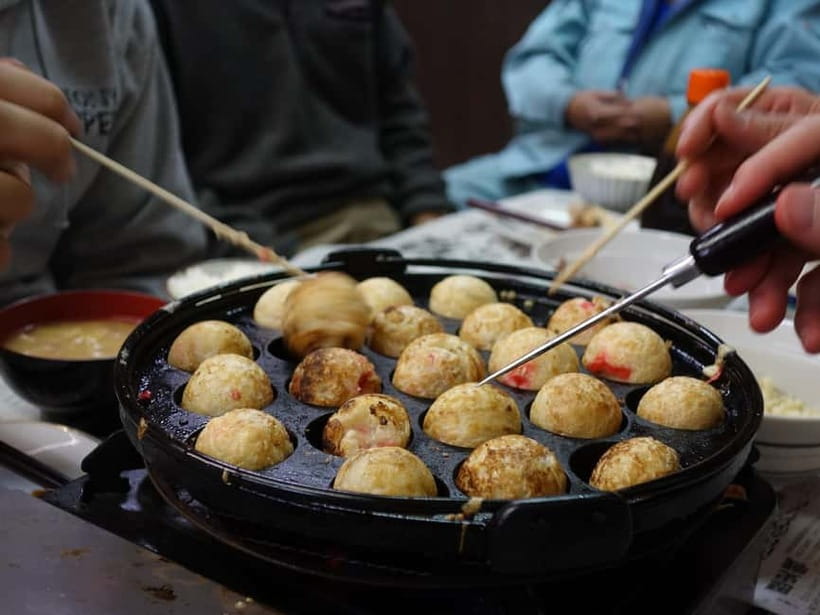
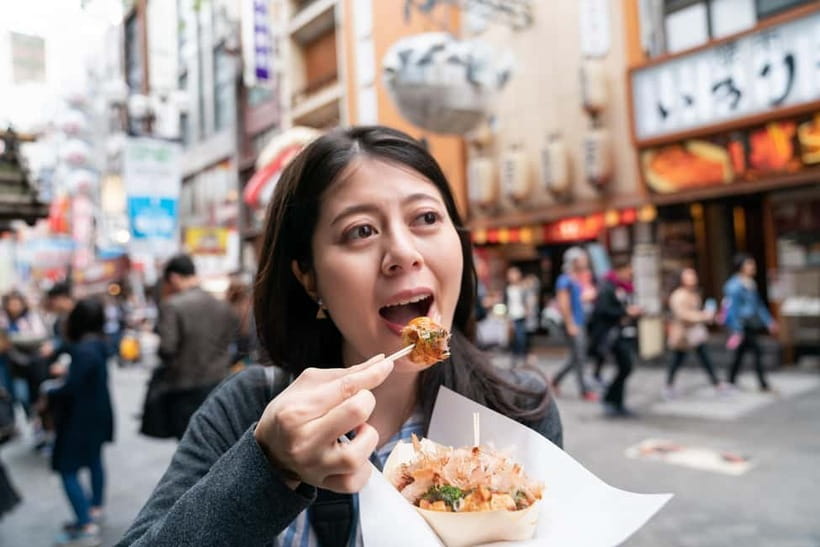
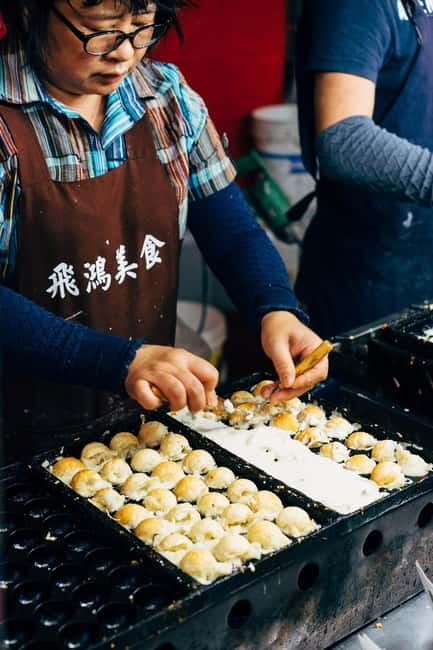
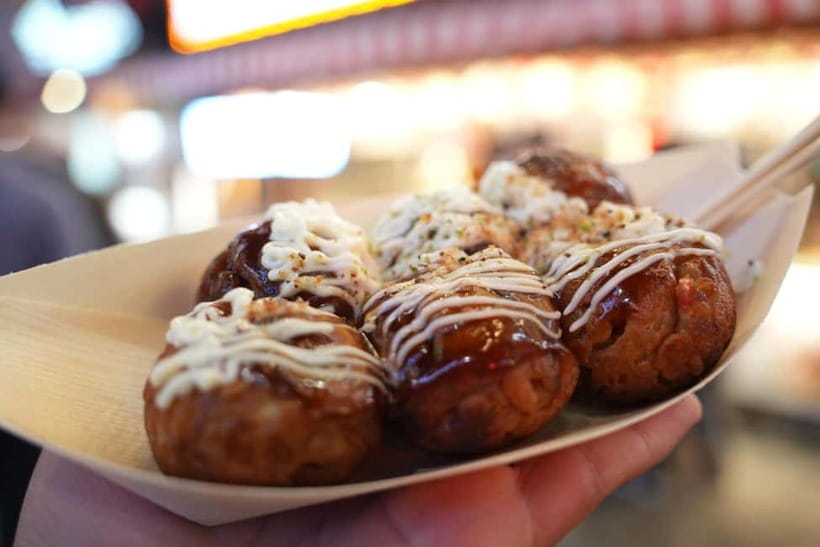
The first tasting is at Wanaka, where you try takoyaki. These round batter snacks are a defining Osaka food: crisp on the outside and soft and creamy inside. They are served hot, so take care with the first bite. Takoyaki is casual food, but it is also a useful introduction to Osaka’s fondness for hearty, comforting dishes served in busy public places.
This stop is especially helpful if you have never tried takoyaki. You get a known portion through the tour rather than ordering blindly, and you can pay attention to the texture and flavor instead of worrying about the menu. If you already know and love takoyaki, the value is less about discovery and more about having a guide place the dish within the route.
Three-colour dango at Mitoya
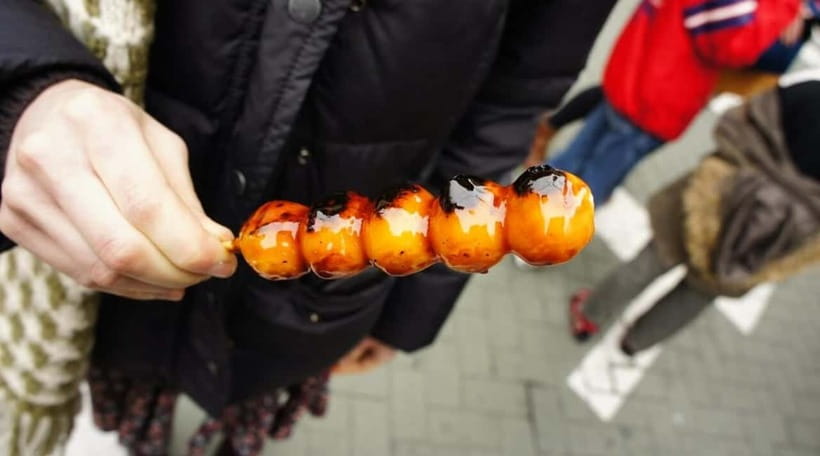
At Mitoya, the tour adds three-colour dango. These are chewy rice-flour dumplings served on a skewer, with three different colors that make the snack as photogenic as it is easy to eat.
Dango gives the food lineup some balance. Takoyaki is hot and savory, while dango is mild, chewy, and sweet. It also shows how Japanese snack foods can be simple in form but distinctive in texture. You should not expect a large dish here. Think of it as a small traditional treat between the heavier parts of the meal.
The itinerary does not state whether each tasting comes in a full serving or a sample portion. That matters because the tour includes several foods, but it should not be treated as an unlimited meal. If you have a large appetite, you may want to budget for extra food or drinks, which are not included unless specifically listed.
Hozenji and two Osaka favorites
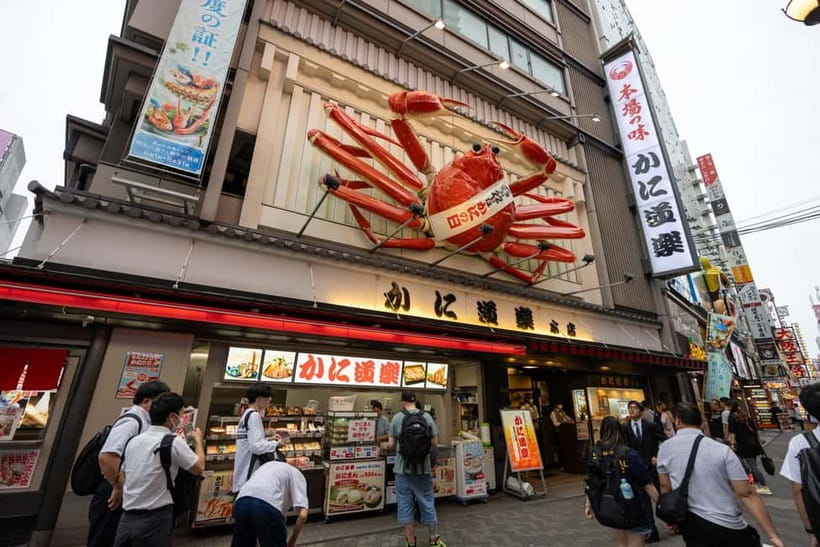
The route continues through the Hozenji area before stopping at Kushikatsu Yokozuna, located in front of Gigo. This section shifts from the market setting to the atmospheric streets around Namba, giving you a better feel for how Osaka’s food culture fits into its entertainment districts.
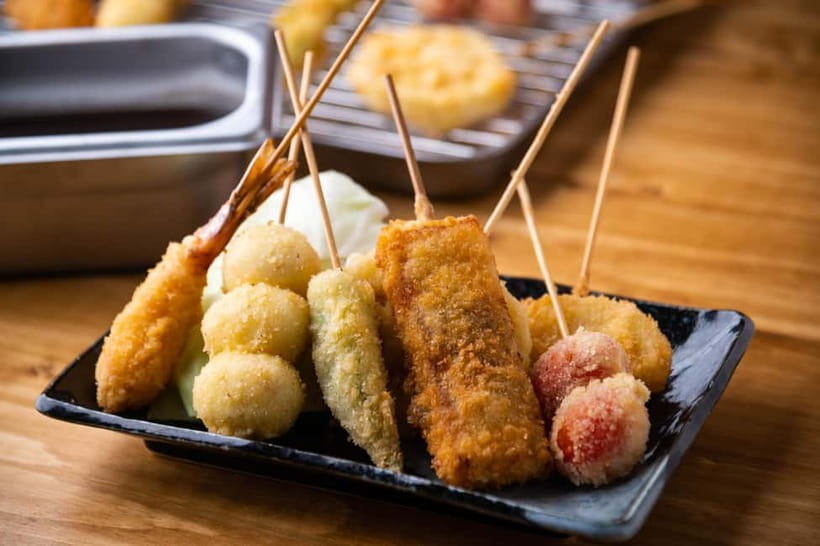
At Kushikatsu Yokozuna, you try two important Osaka specialties: okonomiyaki and kushikatsu. Okonomiyaki is a savory pancake packed with flavor. Its name is often explained as meaning something like cooked as you like, and the dish is associated with Osaka’s relaxed, filling style of comfort food. The supplied details do not specify the exact toppings or preparation used on this tour, so you should expect the Osaka classic rather than a particular recipe.
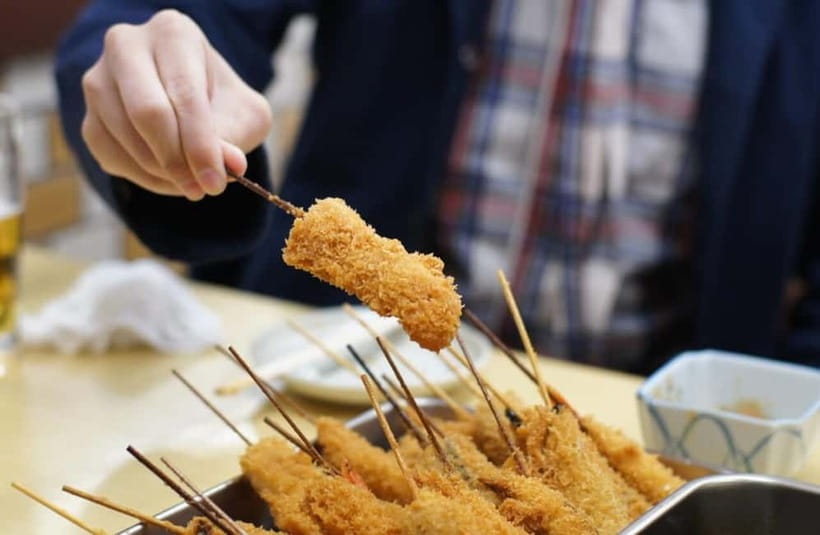
Kushikatsu consists of deep-fried skewers served with dipping sauce. The contrast with okonomiyaki is welcome: one is soft and substantial, while the other is crisp and bite-sized. Deep-fried food can become heavy when eaten alone, but on a tasting route it gives you a clear sample without requiring you to make it your entire meal.
The stop is also practical. You do not need to spend time comparing menus in Dotonbori or guessing which restaurant is worth entering. The tradeoff is that a fixed tasting route gives you less freedom to choose your own skewers or linger over one dish.
Same place, a different set of stalls:
- Tokyo Tsukiji Fish Market Food and Culture Walking Tour
★ 5.0 · 3,184 reviews - Tokyo: Tsukiji Fish Market Food and Walking tour
★ 5.0 · 1,724 reviews - Tokyo: Tsukiji Fish Market Guided Walking Tour
★ 4.9 · 1,397 reviews - Nishiki Market Brunch Walking Tour (7 Tastings + Brunch)
★ 5.0 · 1,355 reviews
An egg tart for the sweet finish
The final food stop is Egg Tart, a dessert shop known for custard tarts with flaky pastry and a creamy filling. This is a smart way to end the tasting sequence. After several savory foods, a warm or rich pastry gives the walk a clear finish.
The tart is also one of the more accessible foods on the route. You do not need previous experience with Japanese cuisine to appreciate crisp pastry and custard. If you are sensitive to heavy food, however, remember that the tour combines fried items, a savory pancake, takoyaki, dango, and dessert. Pace yourself at the earlier stops.
The tour information does not list drinks, dietary substitutions, or allergy arrangements. If you have dietary restrictions, ask before booking rather than assuming each stop can adjust its food. The included tastings are specific, and additional food and drinks are your own expense.
Dotonbori after the food stops
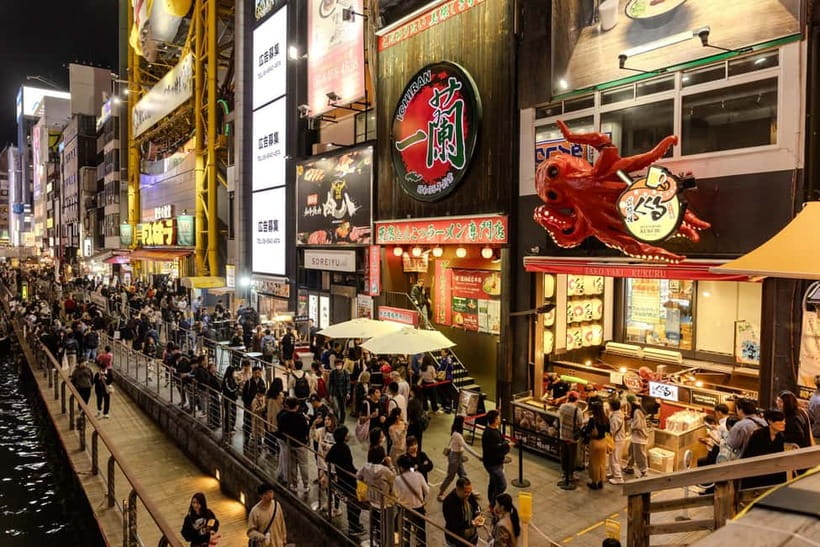
After the tastings, you walk through Dotonbori, one of Osaka’s most famous entertainment districts. This is where the city becomes a spectacle of bright signs, neon lights, restaurants, and foot traffic.
Dotonbori is not a quiet or subtle neighborhood. It is loud, flashy, and designed to catch your eye. That makes it a useful contrast to Kuromon Market. At the market, food is the main attraction. In Dotonbori, food is part of a larger show of lights, signs, crowds, and commercial energy.
A guide is useful here because you can focus on the scene rather than your map. The route lets you connect the dishes you have just eaten with the district that helped make Osaka famous for casual dining and nightlife. Guides Paula and Angeles received particularly strong praise for their energy and explanations of local sights. Paula was also praised for pointing out attractions along the walk, which adds value beyond simply escorting you from one restaurant to the next.
Still, the tour is not a dedicated architecture or history walk. If your main interest is Osaka’s temples, museums, or detailed historical interpretation, this experience will only provide a light introduction while you move between food stops.
Ebisu Bridge and the Glico photo
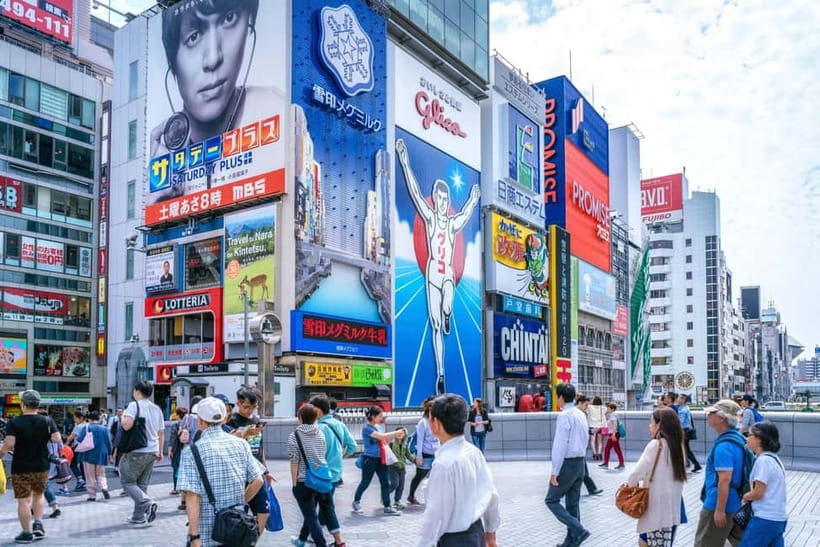
The stop at Ebisu Bridge is one of the tour’s most recognizable moments. From here, you can photograph the famous Glico running-man sign, an image closely tied to Osaka’s public identity.
This photo stop may sound predictable, but it serves a useful purpose. After walking through Kuromon Market, Hozenji, and Dotonbori, you get a clear landmark that marks the end of your Namba experience. It is also a good place to take a group photo or record a simple memory of the evening.
Expect a popular public viewpoint rather than a quiet scenic overlook. The bridge and surrounding streets can be crowded, and the best photo may require patience. Your guide can help keep the group together, but the information provided does not promise reserved viewing space or a private photo area.
What the $84 price really covers
At $84 per person, this tour is not the cheapest way to eat in Osaka. You can buy individual snacks on your own for less, especially if you are comfortable reading menus, comparing stalls, and finding Dotonbori without assistance.
The price makes more sense if you place value on guided food selection and a ready-made route. You receive several named tastings, a bilingual guide, and a walk through three well-known parts of the city. You also avoid the common first-time problem of spending an hour choosing a restaurant and never getting past the most obvious options.
The value depends on portion size, which is not specified. Do not book this assuming that the tastings replace every meal of the day. Additional meals and drinks are not included, and personal expenses remain your responsibility.
The guide quality is another part of the price. Paula and Angeles received excellent marks for energy and city commentary, while one person felt a Japanese food tour would be more authentic with a local Japanese guide. That is a fair distinction. A guide who speaks English or Spanish well can make the route easy and enjoyable, but may not provide the same depth of insight into ingredients, regional cooking, or Japanese food customs as a local specialist.
There is also one practical concern: one group reported waiting more than 30 minutes because the guide did not show up. Most of the available feedback is positive, but that complaint is serious enough to mention. Arrive early, keep your confirmation details handy, and know that the tour provider is Amigo Tours Japan GK.
Who will enjoy this Osaka food walk?
I would recommend it to first-time visitors who want an easy introduction to Osaka’s signature foods and famous Namba sights. It suits you especially well if you prefer a guide to choose established stops, explain what you are eating, and keep the route moving.
It is also useful for couples, small groups, and solo visitors who want company during an evening around Dotonbori. The bilingual format makes it a practical choice for English- or Spanish-speaking visitors.
You may want another option if you are an experienced Osaka eater who prefers to choose every dish yourself. The same applies if you need wheelchair access, require detailed dietary adjustments, or want a tour led specifically by a Japanese culinary expert.
Cancellation is allowed up to 24 hours before the activity for a full refund, and you can reserve now and pay later. Those terms make the booking less risky if your Osaka plans are still shifting.
Should you book the Kuromon Market and Dotonbori tour?
Book it if you want a well-organized introduction to Osaka food, with the city’s best-known sights built into the same walk. Takoyaki at Wanaka, dango at Mitoya, okonomiyaki and kushikatsu at Kushikatsu Yokozuna, and an egg tart create a broad tasting of local favorites.
I would not book it solely for deep culinary scholarship or a fully local Japanese perspective. The guide can make the route lively and informative, but the food interpretation may be lighter than what you get from a specialist Japanese guide.
For $84, the experience offers fair value when you count the food, route planning, and bilingual assistance. Just arrive early, wear shoes suited to city walking, and leave room for extra drinks or food if the tastings are smaller than you expect.
FAQ
Where does the Osaka food tour begin?
It begins outside Hotel Royal Classic Osaka. The guide will be holding an Amigo Tours sign.
Where does the tour end?
The activity ends back at the meeting point outside Hotel Royal Classic Osaka.
How early should I arrive?
You should arrive at least 10 minutes before the departure time for check-in.
Which languages are available?
The tour is offered in English and Spanish with a bilingual guide.
What foods are included?
The listed tastings include takoyaki, three-colour dango, okonomiyaki, kushikatsu, and a custard egg tart.
Is the tour suitable for wheelchair users?
No. The activity is not suitable for wheelchair users.
Can I cancel for a refund?
Yes. You can cancel up to 24 hours in advance for a full refund.
More Food Trips in Japan
- Tsukiji Fish Market: Street Food & Culture Walking Tour
★ 4.8 · 259 reviews - Inside Tokyo’s Kitchen: Tsukiji Market, Food & Culture Tour
★ 5.0 · 162 reviews - Tsukiji Food and Toyosu Market with Government-Licensed Guide
★ 5.0 · 158 reviews - Toyosu Market Morning Tuna Auction and Tsukiji Food Tour with Licensed Guide
★ 4.5 · 146 reviews
More Food and Drink Trips in Japan
- Tokyo: Tsukiji Fish Market Food and Culture Walking Tour
★ 4.7 · 757 reviews - Tokyo Food Tour Taste Fresh Delights at Tsukiji Market
★ 5.0 · 429 reviews - Kyoto Nishiki Market Food and Culture Walking Tour
★ 5.0 · 412 reviews - Osaka: Kuromon Market Food Walking Tour (6 stops, 6 tastes)
★ 4.6 · 272 reviews
Just added around Japan
- Nagoya Super Market Tour & Home Cooking Class with a Local, Akiko★ 5.0 · 10 reviews
- Tokyo: Private Tsukiji Street Food & Sake with Local Guide★ 5.0 · 3 reviews
- Tokyo: Tsukiji Market Guided Tour & Sushi-Making Experience★ 4.4 · 11 reviews
- 【Family pack】Tokyo: Tsukiji fish market food tour★ 5.0 · 3 reviews
- Tokyo: Tsukiji Market and Hama-rikyu Gardens Guided Tour★ 4.8 · 73 reviews
- Tokyo: Tsukiji Fish Market Culture Tour with Sashimi Tasting★ 4.6 · 54 reviews
- Tokyo’s Kitchen: Tsukiji Market Food & Culture Walk★ 4.7 · 74 reviews
- Tokyo: Tsukiji Fish Market Foodie and Educational Tour★ 5.0 · 4 reviews
Street Food Market Tours, compared.
Old Town, Creek, Museums, Souks, & Street Food Tour
Read our review →
Old Town, Souks, Street Food, Guided Tour & Abra Ride
Read our review →

London Bridge & Borough Market Food Tour with 7 Authentic Dishes
Read our review →
Old Town, Souks, Street Food, Guided Tour & Abra Ride
Read our review →
Small Group Cooking Class & Market Food Tour in Florence
Read our review →
Browse the lists this tour appears in