
Review · MOROCCO
Marrakech: Traditional Moroccan Cooking Class & Market Visit
Moroccan cooking begins long before the kitchen. This experience takes you into a local souk to choose fresh ingredients, then into an intimate riad workshop where local women guide you through Moroccan recipes, spices, mint tea, and a shared meal. I especially like the market visit, which gives the class a real connection to daily life, and the fact that you receive electronic recipes to use at home.
The class also earns high marks for its warm, family-style teaching. Kawtar, Khmisa, Ilham, Leila, and other local hosts are praised for making people feel involved, even when language differences appear. The main thing to consider is that the experience takes place in the Medina, with a walking market visit and a non-wheelchair-accessible venue. The meeting point can also feel broad, so confirm whether you should wait at the front entrance of the mosque.
Key points at a glance
- Market shopping comes first: You help choose fresh vegetables, chicken, herbs, spices, and other ingredients in a less tourist-focused part of the souk.
- Mint tea is taught properly: The ritual includes more than pouring hot water over mint, and the tea demonstration is one of the class highlights.
- You cook several dishes: The menu can include three to six dishes, often with Moroccan salads, tagines, starters, and milk pastilla for dessert.
- The setting feels personal: Cooking takes place in an intimate riad workshop, sometimes described as a family home, rather than a large commercial kitchen.
- Vegetarians have good options: Vegetarian starters and a vegetarian tagine are available, although you should discuss restrictions before the market visit.
- The $40 price covers the meal: Ingredients, tea, instruction, market shopping, lunch or dinner, and recipes are included.
From Marrakech’s souk to the cooking table
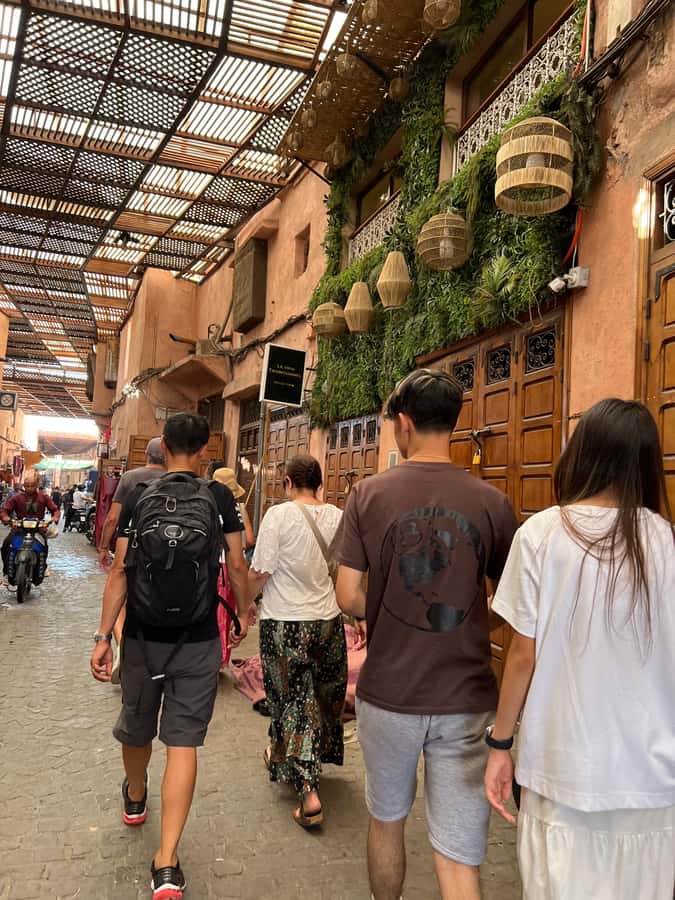
The experience begins with a short walk through a local food market. Before setting out, you discuss food allergies and dietary restrictions with the team. That matters here because you are not simply watching a chef prepare a fixed menu. You help buy the ingredients that will become your meal.
The market portion is brief, but it adds useful context. You see fresh produce, spices, and everyday food shopping in the middle of the Medina. The hosts help you choose what is needed, and the process gives you a better sense of how Moroccan meals start with basic, fresh products.
I like this opening because it avoids the feeling of a cooking demonstration staged in isolation. You see the ingredients in their raw form, then handle them again in the kitchen. That small connection makes the finished tagine or salad more meaningful.
Expect Medina walking conditions, including uneven surfaces and narrow routes. Comfortable shoes are a sensible choice. The activity is not suitable for wheelchair users, and you should be ready to walk from the meeting point to the market and then to the workshop.
The meeting point deserves a little care. One person found the mosque easy to identify but too large as a specific meeting location, so it is wise to ask for the front entrance rather than relying on the name of the mosque alone.
More Cooking Classes in Marrakech
- Marrakech: Moroccan Cooking Class with Market Visit and Meal
★ 4.9 · 347 reviews - Edgy 8 Dish Private, Fusion Cooking Class, Menu Plan, Market
★ 4.9 · 31 reviews - Marrakesh: Private Cooking Class & Local Market Shopping
★ 4.7 · 15 reviews
Entering Khmisa’s intimate riad workshop
After the market, you go to Khmisa’s workshop, an intimate riad in the heart of Marrakech’s Medina. The setting is part of the experience. Instead of sitting in a hotel classroom, you cook in a Moroccan home-style space with local women who have experience in cooking, pastry, restaurants, hotels, and catering.
The tone is informal and friendly. Some sessions are led by Kawtar and Khmisa, while other hosts named in the feedback include Leila and Ilham. Ilham has helped translate for the chef, and the teaching is designed to keep the group moving together even when the chef and participants do not share the same first language.
The group is generally shared, with up to 12 people, although it can be smaller. One session had only six participants, which allowed plenty of attention. A group of 12 will feel livelier and may mean more waiting for your turn, but the class is organized around teamwork rather than private instruction.
That format works well for people who enjoy meeting others. Families, couples, solo participants, and mixed international groups have all fit comfortably into the activity. A young child took part successfully in one family group, while teenagers also enjoyed choosing ingredients and helping with the cooking.
Learning the Moroccan mint tea ritual
Tea comes before the main cooking. You are welcomed with Moroccan mint tea and shown the steps of the preparation ritual.
This is more than a quick drink while you wait. The hosts explain the method, and several participants were surprised to learn that Moroccan mint tea is not simply mint leaves steeped in hot water with sugar. The pouring, mixing, sweetness, and presentation all play a role.
For me, this is one of the most useful parts of the session because it is easy to repeat at home. It also gives you a small window into Moroccan hospitality. Tea is not treated as an afterthought. It is a social ritual and a proper part of welcoming people into the home.
The demonstration is hands-on in spirit, and the hosts make room for questions. If you have enjoyed mint tea in Marrakech but never understood how it was prepared, this section gives you a clearer sense of what you are tasting.
Preparing salads, tagines, and dessert
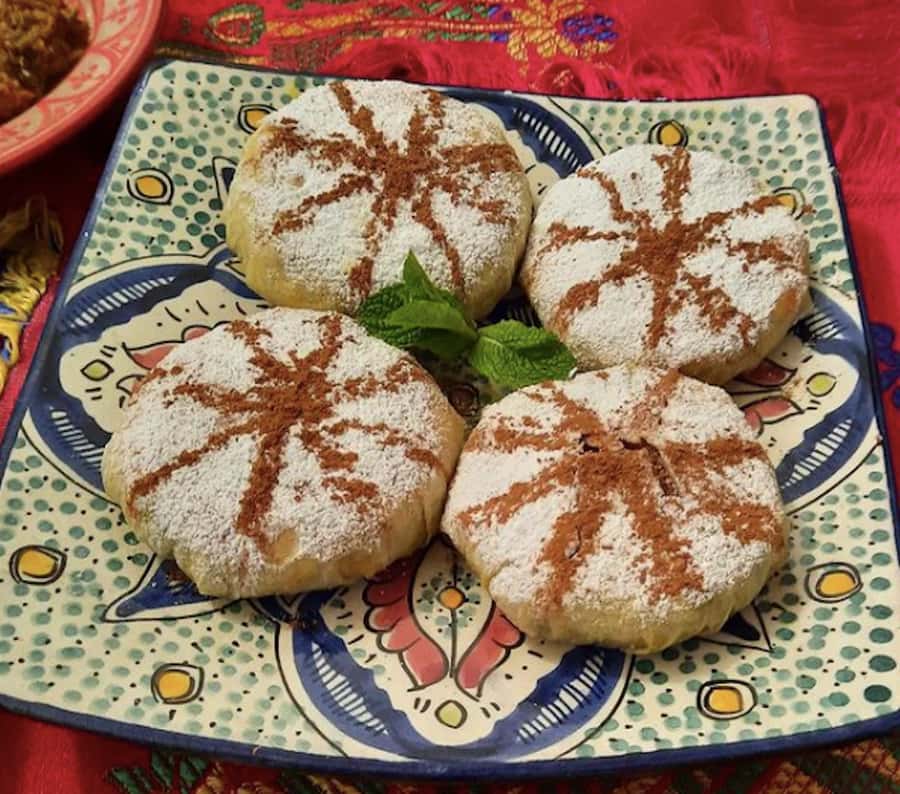
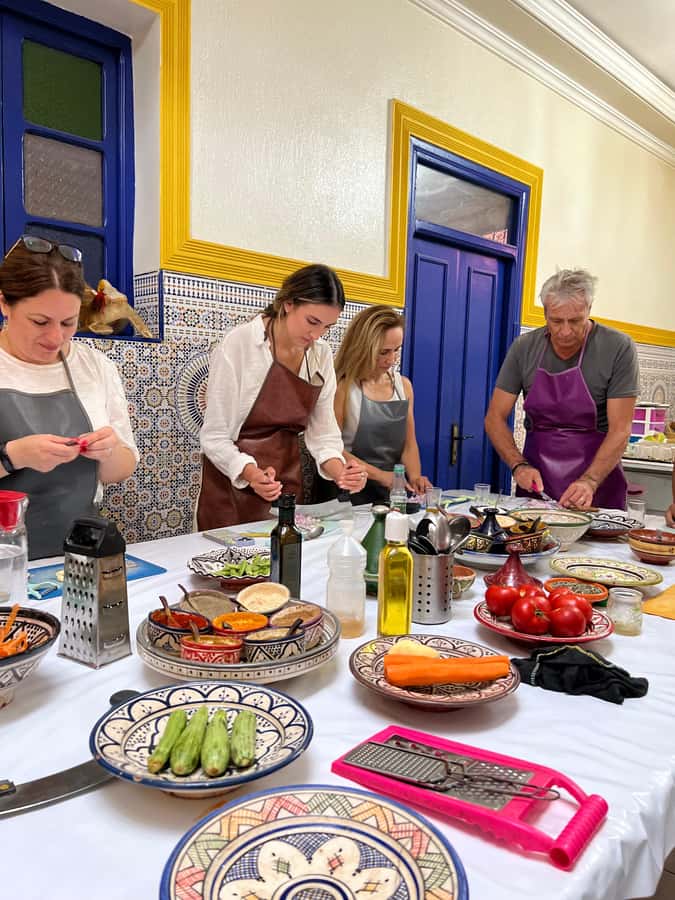
The cooking portion is built around shared work. You may prepare three to six dishes, depending on the session and menu. The food can include several Moroccan starters or salads, a chicken tagine, a vegetarian tagine, and a dessert such as milk pastilla.
Several participants singled out the chicken tagine, especially the lemon chicken version, as one of the best dishes they had eaten during their stay. That is useful praise because tagine is served throughout Marrakech, and a class should do more than produce food that is merely edible. Here, the teaching focuses on how spices work together and how the dishes are assembled.
You may chop vegetables, prepare salads, add spices, arrange ingredients in the tagine, and help with the dessert. The instructors give directions, then make adjustments as needed. One participant described the chef adding a little more seasoning after the group followed the instructions, a practical reminder that Moroccan cooking depends on judgment as much as exact measurements.
The class is not designed as a quiet chef demonstration. You work as a team, and the hosts try to involve everyone. That can mean taking turns rather than each person making a complete dish alone. If you want a private lesson with individual control over every recipe, ask about a private session before booking.
Vegetarians appear to be well served. One reported menu included four vegetarian appetizers, a vegetarian tagine, and a chicken tagine for the group. Still, menus can vary, so state your needs before heading to the market. The class welcomes discussion of allergies and restrictions, but the supplied information does not promise every dietary arrangement.
More Cooking Classes in Morocco
- Marrakech: Cooking Class and Market Visit
★ 4.4 · 5 reviews - Moroccan Cooking Class & Marrakech Market Visit with Chef Khmisa
★ 5.0 · 1,504 reviews - Moroccan Cooking Class with Market Visit and Meal
★ 5.0 · 196 reviews - Fez: Souk Tour and Traditional Home Cooking Class
★ 4.9 · 186 reviews
Why the spice lesson matters
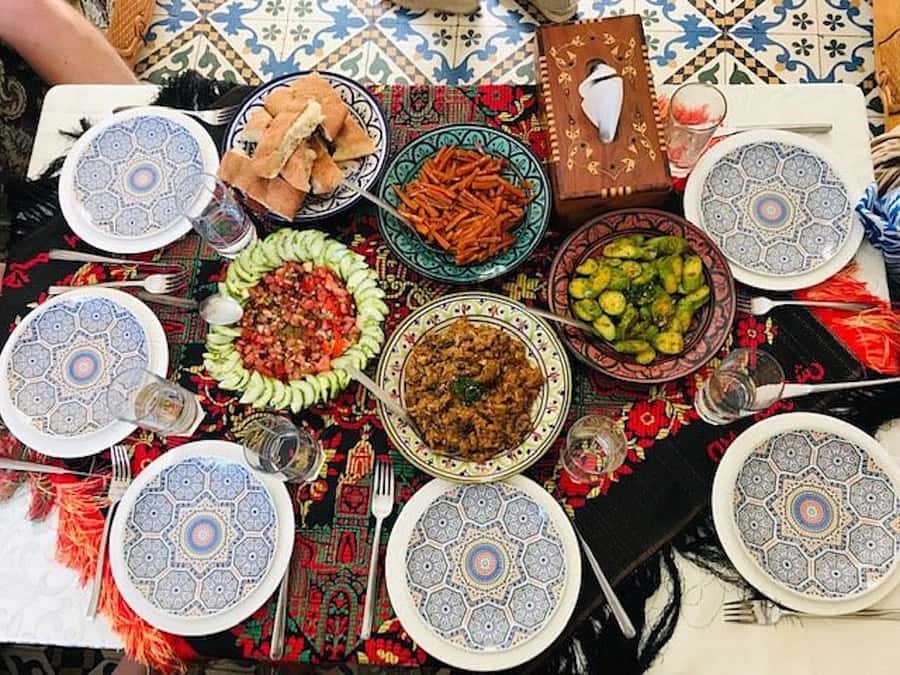
Moroccan food can look simple on the plate, but the flavor depends on careful seasoning. The hosts explain the spices used in the dishes and show how they fit into the recipes. This is more valuable than receiving a long list of ingredients without context.
You get to see the spices before they are mixed into the food, taste the final result, and ask questions about what you can recreate at home. Fresh homemade spices are also available to purchase before you leave. That gives you the chance to continue the lesson in your own kitchen.
The recipes are sent electronically afterward, by email or, in some cases, WhatsApp. This is an important part of the $40 value. The class does not end when the meal is finished. You leave with instructions for making the food again, including dishes that participants found practical for home kitchens in Australia and elsewhere.
Of course, your result at home may not match the riad meal perfectly. The local ingredients, fresh herbs, and the chef’s experienced eye all help. Still, the recipes appear intended for ordinary home cooking, not for professional kitchens with difficult equipment.
Eating the meal you prepared
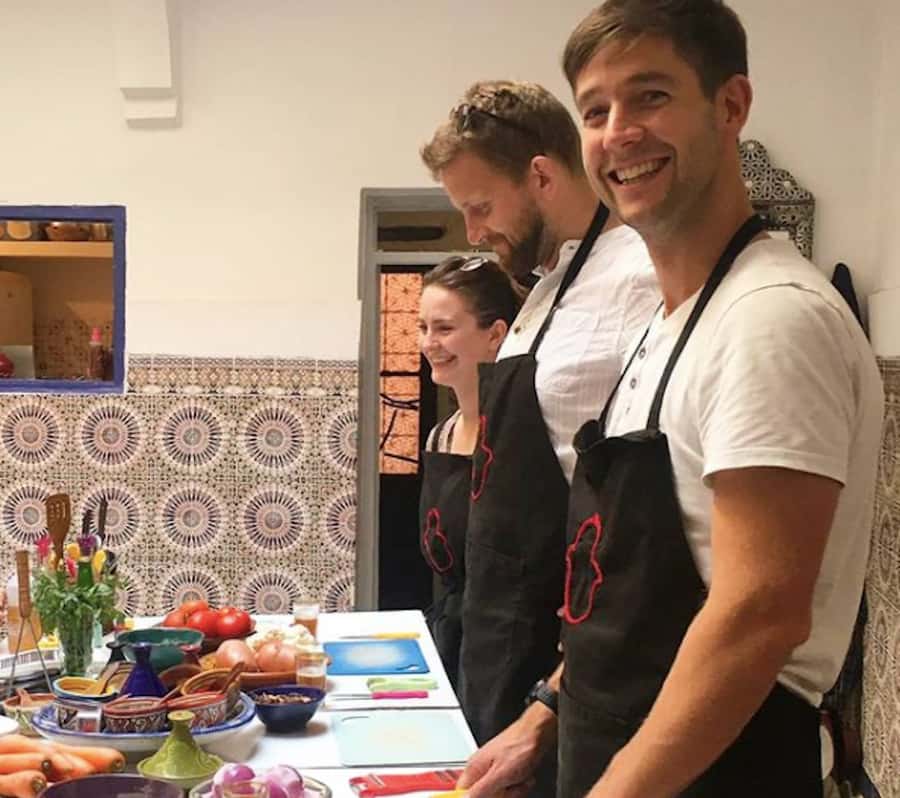
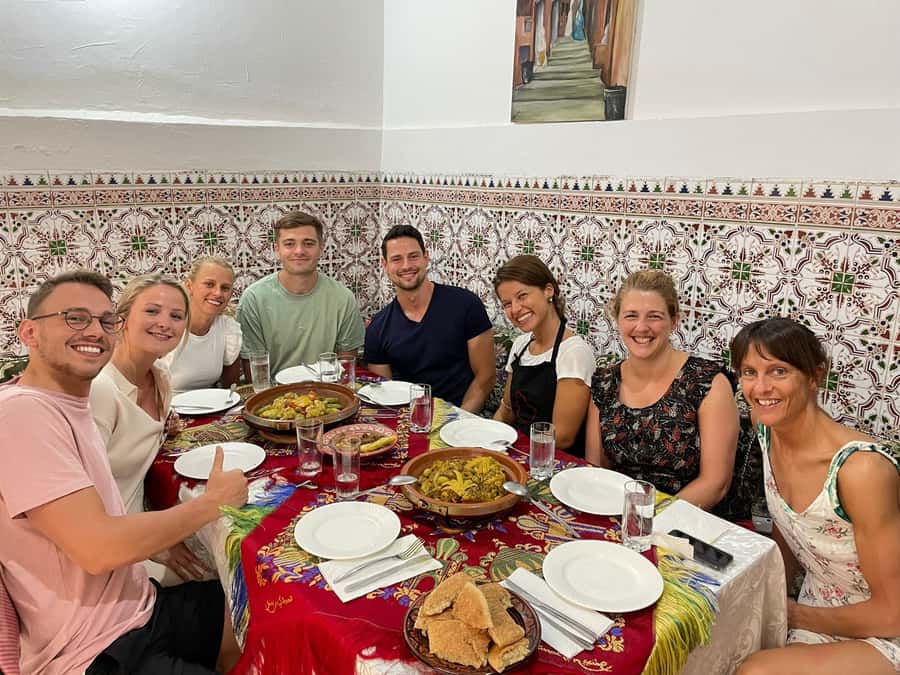
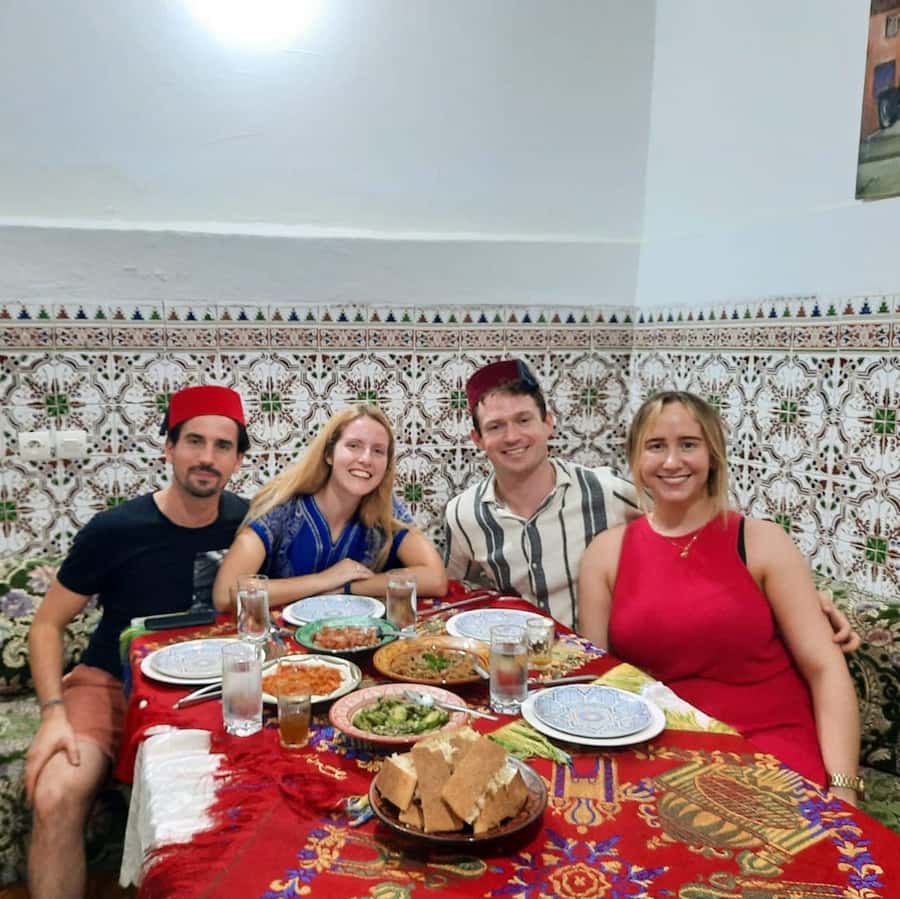
Once the dishes are ready, everyone sits down to eat together. The meal is included in the price and can be either lunch or dinner, depending on your booking.
The portions sound generous. Several participants found the meal very filling, especially after preparing multiple starters, two main dishes, and dessert. The shared table also changes the feel of the class. You are not rushing through a demonstration and leaving with a small sample. You eat what the group has made.
The strongest praise centers on flavor. Chicken tagine, potatoes, Moroccan salads, and the dessert receive repeated approval. Many people describe it as one of their best meals in Marrakech, though taste is always personal and the exact menu varies.
I also like the social side. The meal gives you time to talk with the group and the hosts without chopping, stirring, or trying to follow instructions. For solo visitors, this can be a pleasant way to meet people. For families, it gives children and teenagers a clear role instead of asking them to sit and watch.
What the $40 price really includes
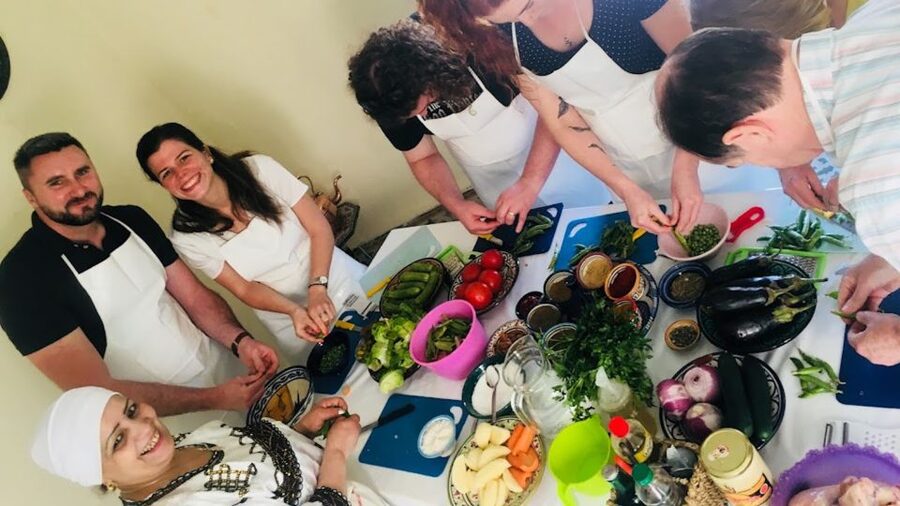
At $40 per person, this is a strong value if you want more than a meal. The price includes the market walk, all ingredients, a Moroccan chef, a French, English, or Arabic-speaking local guide, mint tea, the cooking session, lunch or dinner, and electronic recipes.
You are paying for a cultural activity and a substantial meal at the same time. A standard restaurant meal would not give you the market visit, cooking instruction, tea ritual, and recipes. A private cooking lesson would usually cost more, though this is a shared session rather than one-on-one tuition.
The group size affects the value. A small group of six offers more personal attention and a calmer pace. A group of up to 12 may feel more social, but each person may have fewer individual tasks. The hosts aim to involve everyone, and the hands-on format receives especially strong praise, but you should set expectations accordingly.
Hotel pickup and drop-off are not included. You make your own way to the meeting point, and the Medina setting means you should allow time to find the correct entrance. The booking can be canceled up to 24 hours ahead for a full refund, and you can reserve while paying later, which helps if your Marrakech plans are still shifting.
Timing, clothing, and practical planning
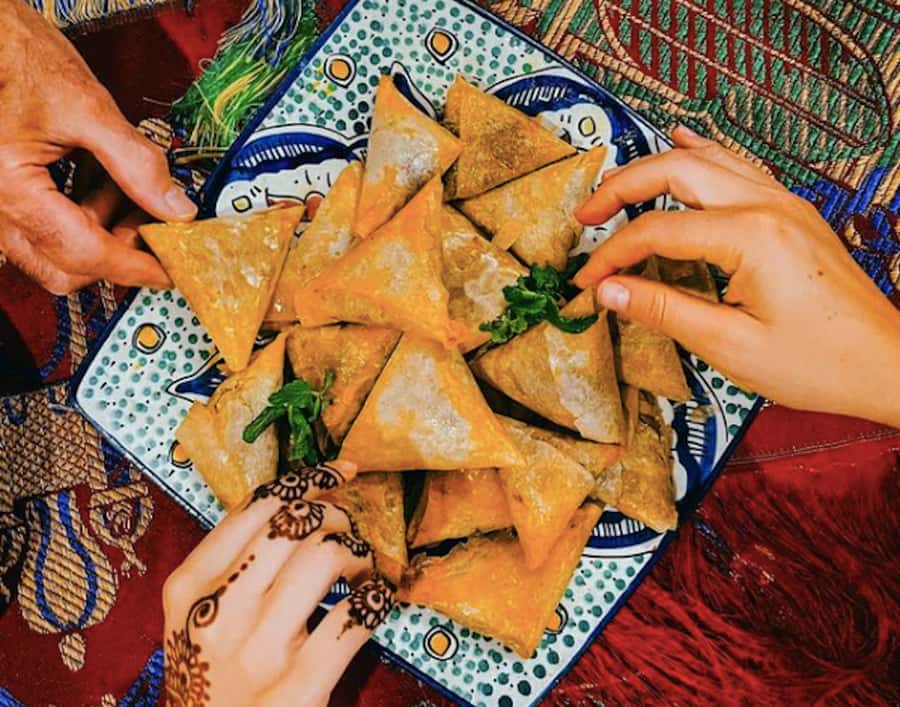
The formal information does not set one fixed duration, but a reported session lasted about two and a half hours. The market walk, tea ritual, food preparation, eating, and dessert make this more than a quick one-hour class.
Start times can change. One participant was told the night before that a 10 a.m. start had moved to 11 a.m., so check your messages before setting out. This is especially important if you have a tightly packed sightseeing day.
Wear comfortable shoes for the market and bring a hair tie for cooking. Smoking, alcohol, drugs, and pets are not allowed. The venue is not suitable for wheelchair users.
You should also come hungry. The meal is described as plentiful, and the class may include several starters, two main dishes, dessert, and tea. A heavy breakfast or an early lunch could make it harder to appreciate the food at the end.
Who will enjoy this cooking class most
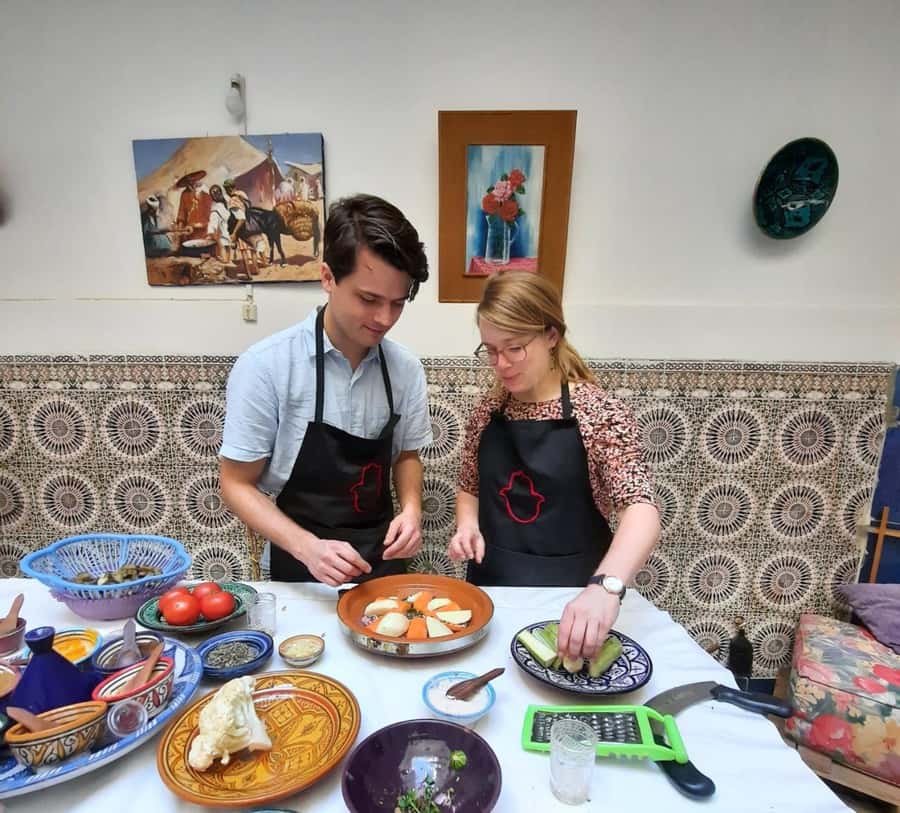
I would recommend this experience to anyone who wants a practical introduction to Moroccan food rather than a polished show. You get to shop, chop, season, cook, and eat. That makes it especially useful for first-time visitors who want a stronger connection to everyday Marrakech.
It suits families well. Children and teenagers can help select ingredients and prepare food, and the hosts work to include everyone. It also suits solo visitors who like shared activities and do not mind joining a group.
Vegetarians should consider it, too, because the menu can include several vegetarian starters and a vegetarian tagine. Still, contact the hosts about allergies or strict dietary requirements before booking.
You may want to skip it if you dislike group activities, have limited mobility, or want a highly technical chef-led course. The class favors warmth, participation, and cultural exchange over restaurant-school precision.
Should you book the Khmisa cooking experience?
I would book it if you want an affordable, hands-on way to understand Moroccan food. The market visit gives the class a useful sense of place, the tea ritual adds a cultural detail many cooking classes rush past, and the hosts make a real effort to involve every person.
The strongest reasons to choose it are the friendly local instruction, generous meal, practical recipes, and the chance to cook dishes you can attempt at home. The main cautions are the shared format, Medina walking, uncertain group size, and the need to confirm the meeting point.
For $40, you receive much more than a recipe lesson. You spend time with local cooks, help buy the food, learn how Moroccan seasoning works, and sit down to share the results. If that sounds better than simply booking another restaurant dinner, this is a very good use of an afternoon or evening in Marrakech.
FAQ
What is included in the Marrakech cooking class?
The price includes lunch or dinner, all ingredients, a short market walk, Moroccan mint tea, a local guide, a Moroccan chef, the shared cooking session, and electronic recipes.
How much does the cooking class cost?
The listed price is $40 per person.
Does the experience include a market visit?
Yes. You take a short walk through a local food market to help buy the fresh ingredients used in the cooking session.
What dishes might I prepare?
The menu can include three to six Moroccan dishes, with starters, main courses, and dessert. Reported menus included Moroccan salads, chicken tagine, vegetarian tagine, and milk pastilla.
Is mint tea part of the experience?
Yes. You are welcomed with Moroccan mint tea and learn the steps of the traditional tea preparation ritual.
Are recipes provided after the class?
Yes. The recipes are sent electronically afterward, by email. Some participants also received them through WhatsApp.
Is the class suitable for vegetarians?
Vegetarian dishes can be included, including vegetarian starters and a vegetarian tagine. Discuss your dietary needs and restrictions before the market visit.
What languages are available?
The local guide and chef support English, French, and Arabic.
Is hotel pickup included?
No. Hotel pickup and drop-off are not included, so you need to reach the meeting point yourself.
Is the experience wheelchair accessible?
No. The experience is not suitable for wheelchair users. Comfortable shoes are recommended because the activity includes walking through the Medina market.
More Cooking Classes in Marrakesh
- Hanoi Cooking Class: Culture, Local Market & Meaning CSR Impact
★ 5.0 · 5,147 reviews - 5 Traditional Dishes Hanoi Cooking Class with Market Trip
★ 5.0 · 4,890 reviews - Cooking Class and Lunch at a Tuscan Farmhouse with Local Market Tour from Florence
★ 5.0 · 4,831 reviews - Chiang Mai: Cooking Class, Market & Thai Herbs Garden Tour
★ 4.9 · 4,824 reviews
Just added around Marrakesh
- Souks tour of Marrakech ( 3 hours )★ 5.0 · 5 reviews
- Marrakech: Hidden Souks Shopping Tour with Private Guide★ 4.1 · 53 reviews
- Marrakech: Half-Day Medina Markets Tour★ 4.5 · 11 reviews
- Edgy 8 Dish Private, Fusion Cooking Class, Menu Plan, Market★ 4.9 · 31 reviews
- Marrakesh: Private Cooking Class & Local Market Shopping★ 4.7 · 15 reviews
- Marrakech: Bahia Palace, Madrassa & Souks Guided Tour★ 4.8 · 47 reviews
- Marrakech: Vibrant Souks, Local Artisans & Medina Experience★ 4.5 · 66 reviews
- Marrakech: Private Souks Tour with Tea and Traditional Snack★ 4.6 · 33 reviews
Cooking Classes, compared.
Hanoi Cooking Class: Culture, Local Market & Meaning CSR Impact
Read our review →
5 Traditional Dishes Hanoi Cooking Class with Market Trip
Read our review →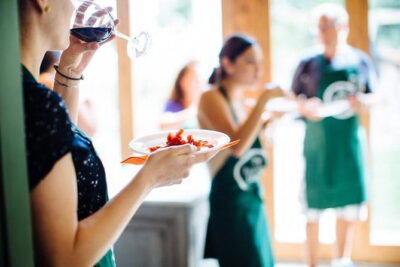
Cooking Class and Lunch at a Tuscan Farmhouse with Local Market Tour from Florence
Read our review →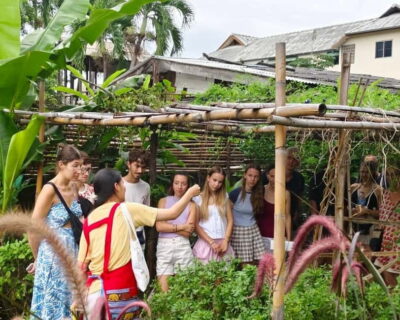
Cooking Class, Market & Thai Herbs Garden Tour
Read our review →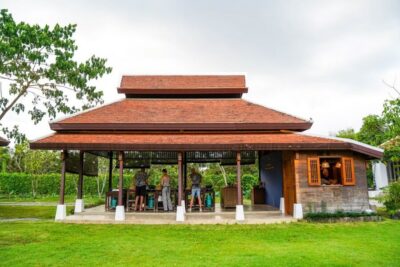
Authentic Cooking Class with Market & Farm Visit
Read our review →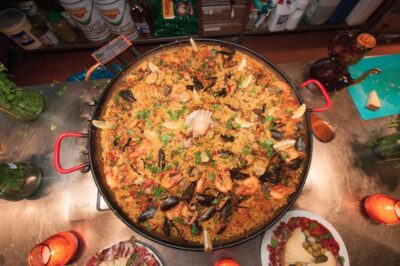
Paella Cooking Experience & Boqueria Market Tour
Read our review →
Cooking Class Hoi An:Local Market, Basket Boat, Fishing & Cooking
Read our review →
Hoi An Cooking Class(Market,BasketBoat Crabfishing&Cooking Class)
Read our review →Browse the lists this tour appears in