
Review · MOROCCO
Marrakech: Moroccan Cooking Class with Market Visit and Meal
Come hungry, leave with recipes. This four-hour Marrakech cooking class links the local market with a hands-on meal, so you see where the ingredients come from before preparing them yourself. I especially like the morning market visit and the small group size, which makes it easier to ask questions and get real time help at the stove.
The teachers, including Leyla, Kaoutar, Fatiha, Bouchra, and Fatima, are praised for their warmth and clear instruction. I also like that the class covers much more than one tagine: salads, starters, dessert, tea, and spice tips can all be part of the meal. The main consideration is simple: the market visit is only included in the morning session, and the class can involve food preparation topics that may not suit everyone.
Key points at a glance
- Morning market walk: Shop for vegetables, herbs, chicken, spices, and other ingredients before cooking.
- Two start times: Choose the 10:30 am morning class for the market, or the 4:30 pm evening class for dinner.
- Small working group: Up to 10 people, with many sessions running at around 6 or 7 participants.
- A full Moroccan meal: Expect several dishes, often including tagines, salads, cooked vegetable starters, dessert, tea, and coffee.
- Local instruction: English and Arabic are offered, with teachers who explain food customs as well as recipes.
- Recipes to take home: A PDF of the dishes prepared in class is sent by email after the experience.
Why this class is more than a tagine lesson
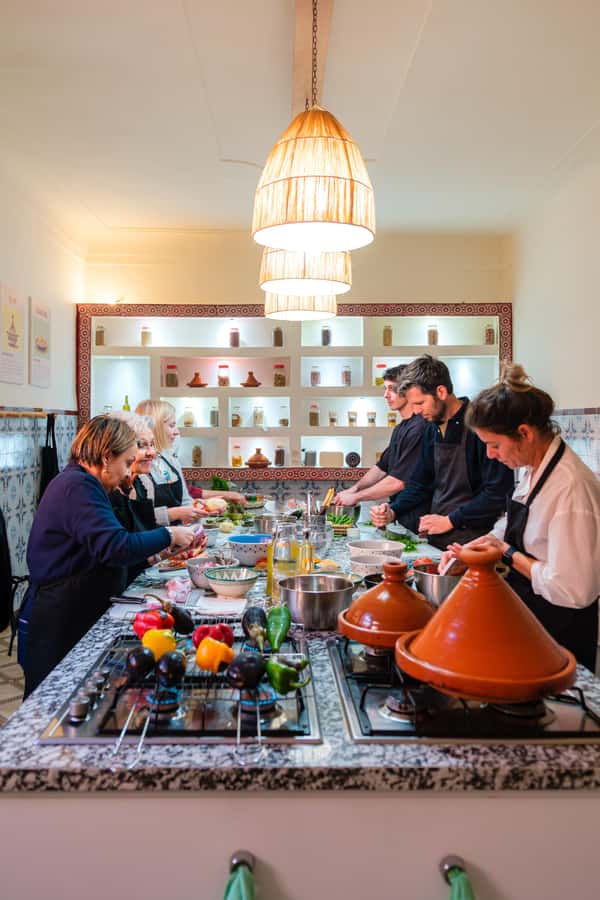
Marrakech offers plenty of food tours, but this one earns its four-hour length by joining three useful experiences: shopping, cooking, and eating. You do not simply watch a chef prepare a meal. You help choose ingredients, prepare them, season them, and sit down to eat the results.
That connection matters. Moroccan food can look simple on the plate, but its character comes from small choices: how vegetables are cut, when spices are added, how a tagine cooks slowly, and how salads are seasoned. The class gives you a working sense of those choices rather than leaving you with a list of ingredients.
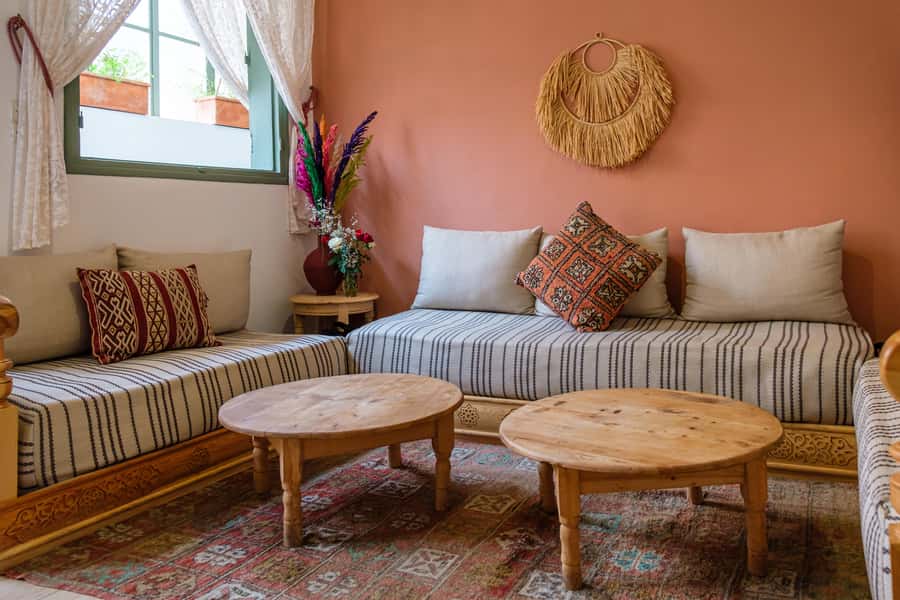
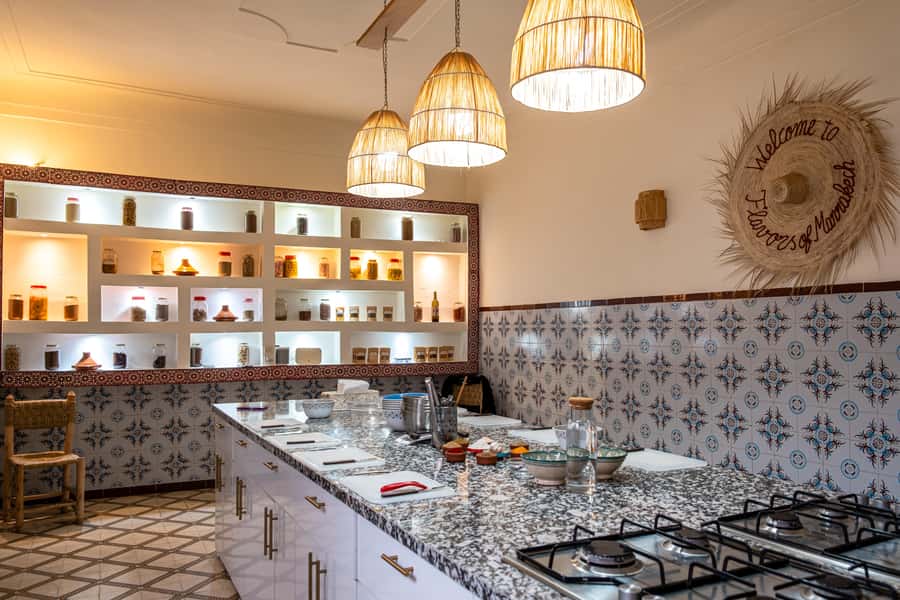
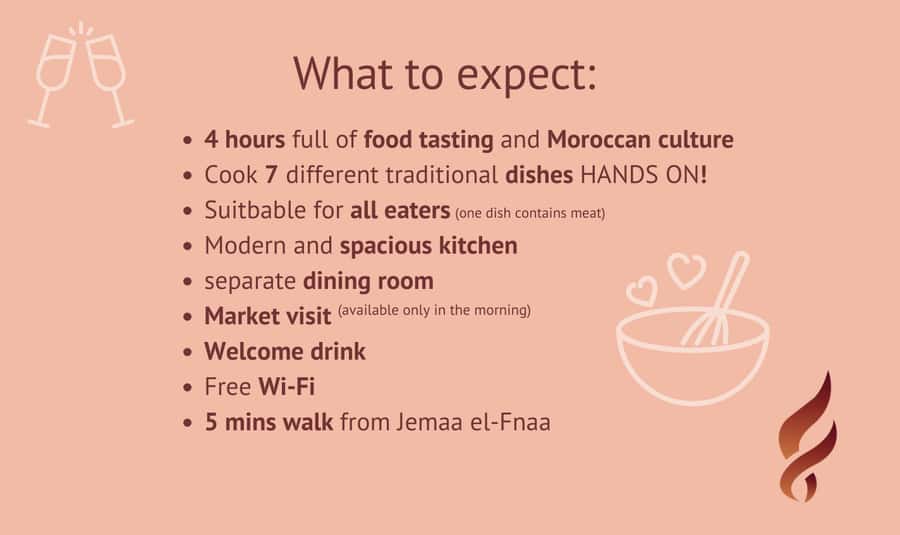
The setting is also part of the appeal. Flavors of Marrakesh is next to the BIM store, near the central Medina area. The kitchen is described as spacious, clean, bright, and well equipped, with a salon or dining room set up for the final meal. That combination gives the experience a more comfortable rhythm than cooking in a cramped demonstration kitchen.
At $57 per person, this is not the cheapest meal you can buy in Marrakech. It is fair value if you want instruction, a market visit, a substantial meal, drinks, and recipes for later. You are paying for a cultural activity as much as for lunch or dinner.
More Cooking Classes in Marrakech
- Marrakech: Traditional Moroccan Cooking Class & Market Visit
★ 4.8 · 1,861 reviews - Edgy 8 Dish Private, Fusion Cooking Class, Menu Plan, Market
★ 4.9 · 31 reviews - Marrakesh: Private Cooking Class & Local Market Shopping
★ 4.7 · 15 reviews
The 10:30 am market visit
Choose the morning session if you want the most complete version of the experience. The class begins at 10:30 am, and the group walks to a nearby local market with the guide.
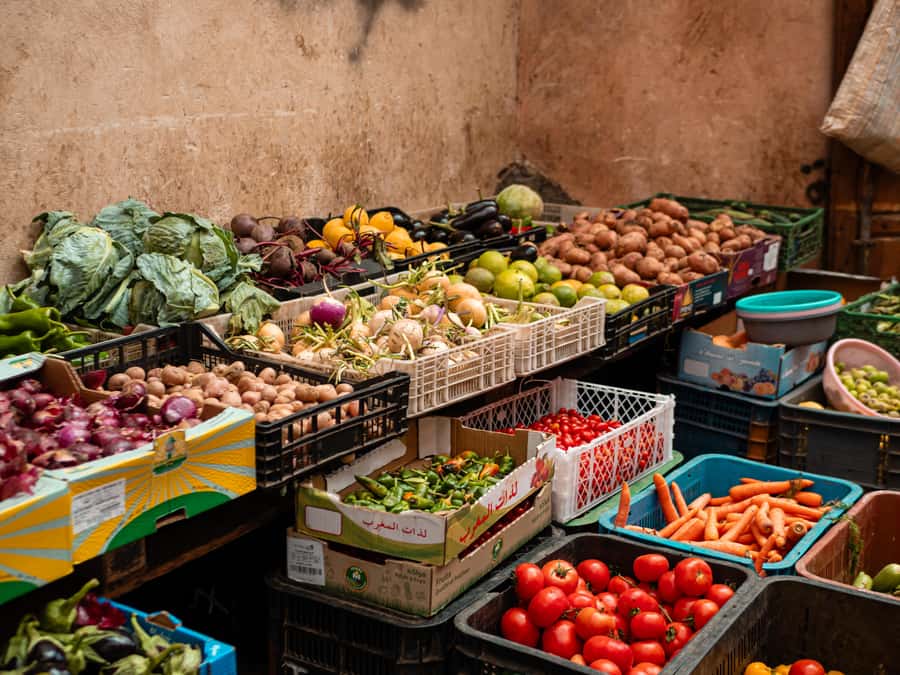
This is not just a quick stop for a photo. You help select some of the ingredients that will later appear on your plate. Depending on the menu, that can include vegetables, herbs, chicken, fresh filo pastry, and other produce. Participants may be given baskets and assigned items to collect, turning the shopping into a small group task rather than a passive walk behind a guide.
The market is also where the food customs begin to make sense. The guide can explain how ingredients are sold and prepared, and the chicken seller may be part of the discussion. One particularly useful part of the experience is the explanation of halal slaughter. If that subject is uncomfortable for you, keep in mind that the market portion may include a close look at food preparation practices. The activity is presented as optional to observe, so you can make your own choice.
The market visit adds roughly the kind of context that is hard to get from a recipe card. You see the raw materials before they become a polished dish. You also get a better feel for the everyday food economy of the Medina, without turning the visit into a formal history lecture.
There is one practical catch. The evening session does not include the market walk. If fresh shopping and market culture are central to your plans, book the morning option. If you care more about cooking after a day of sightseeing, the 4:30 pm session still includes the class, meal, drinks, and recipes.
Tea first, then the work begins
After the market, the group returns to the cooking school. Tea is served before the preparation starts, and there may be another short tea break during the morning program.
This pause is useful. Marrakech cooking classes can be social affairs, and the tea gives everyone a chance to settle in, meet the other participants, and ask questions. The group size is capped at 10, with several sessions described as having around 6 or 7 people. That is small enough for hands-on work without making the class feel like a private lesson.
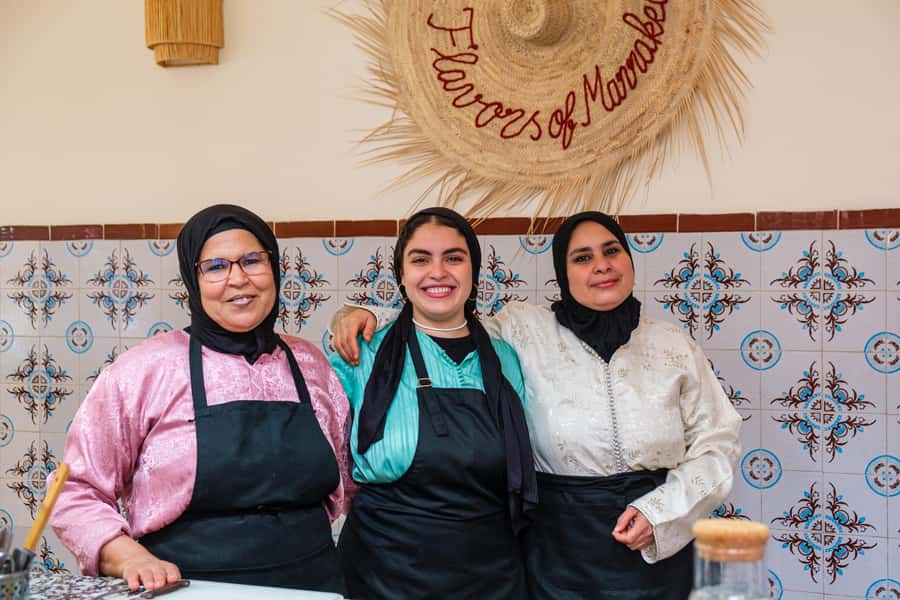
The teachers are a major part of the experience. Kaoutar, sometimes called Kooky or Cookie, is praised for her energetic teaching style, while Leyla is noted for her cultural explanations and clear organization. Fatiha, Bouchra, Fatima, and the other women assisting in the kitchen are repeatedly described as patient, friendly, and willing to help at each stage.
The atmosphere is informal. Music, humor, and dancing may enter the lesson, but the instruction remains practical. You are shown how to chop, season, combine, and cook the dishes, with help available if your knife skills are less than heroic. First-time cooks are welcome, and the class also gives experienced home cooks enough useful detail to justify the time.
English and Arabic are the stated languages. The teaching style appears especially suited to people who want conversation along with instruction, not just a silent demonstration followed by a worksheet.
Preparing several Moroccan dishes
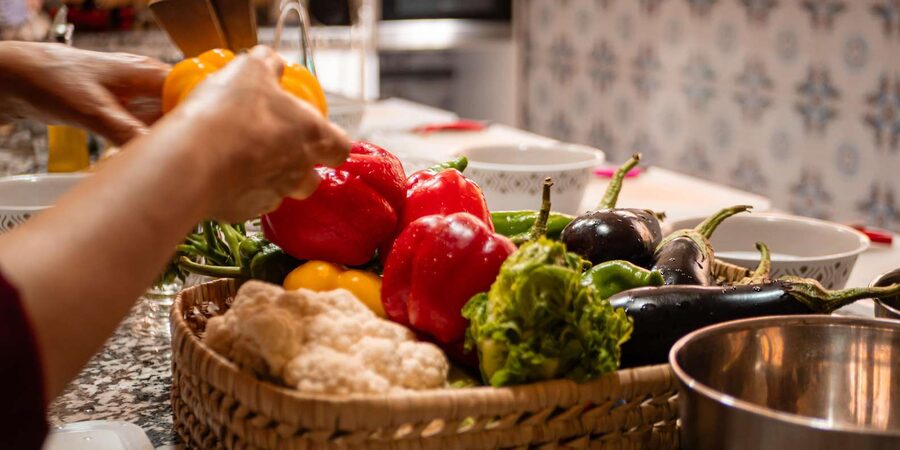
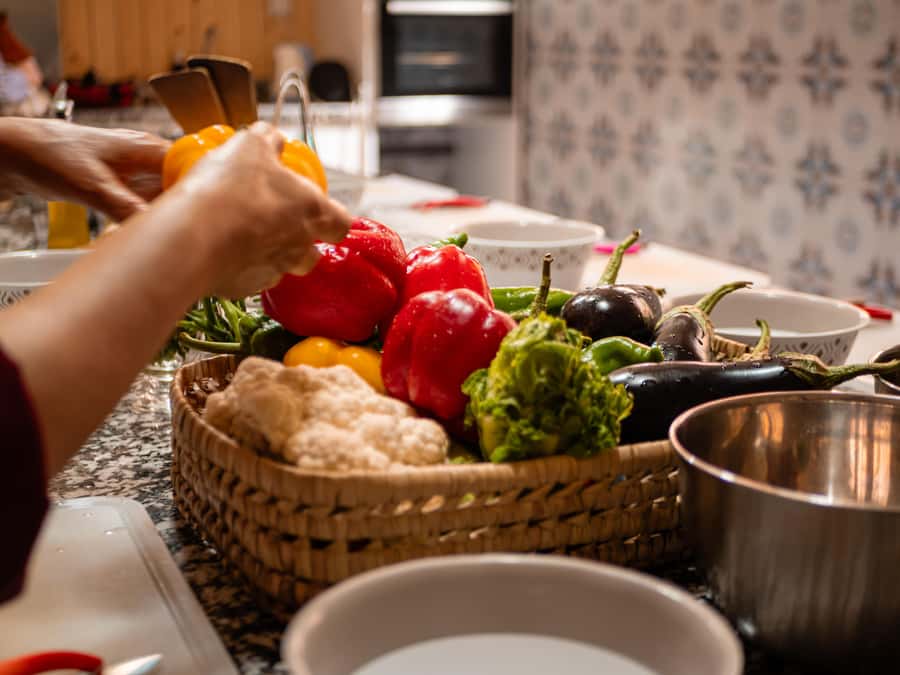
The menu can vary, but this is not a one-dish workshop. Examples include two tagines, Moroccan salad, zaalouk, taktouka, other starters, dessert, and tea.
Tagines are usually the main lesson. The class may prepare a lemon chicken tagine and a vegetable tagine, giving you a useful comparison between a meat dish and a vegetable version. You learn how the ingredients are layered and seasoned before the tagine goes onto the heat.
The vegetable starters are just as valuable. Zaalouk, often made with eggplant, and taktouka, commonly based on cooked peppers and tomatoes, show another side of Moroccan food. These dishes rely on slow cooking and careful seasoning rather than complicated equipment. They are also realistic recipes for a home kitchen.
Dessert adds another lesson. Some sessions prepare an almond and filo pastry dessert, while the exact menu may change. Fresh filo dough and the handling of pastry can be part of the preparation. If you have a nut allergy, tell the staff before cooking. One class accommodated nut-free needs by substituting the dessert and keeping participants away from the nuts during preparation, but you should still raise any allergy clearly before the activity begins.
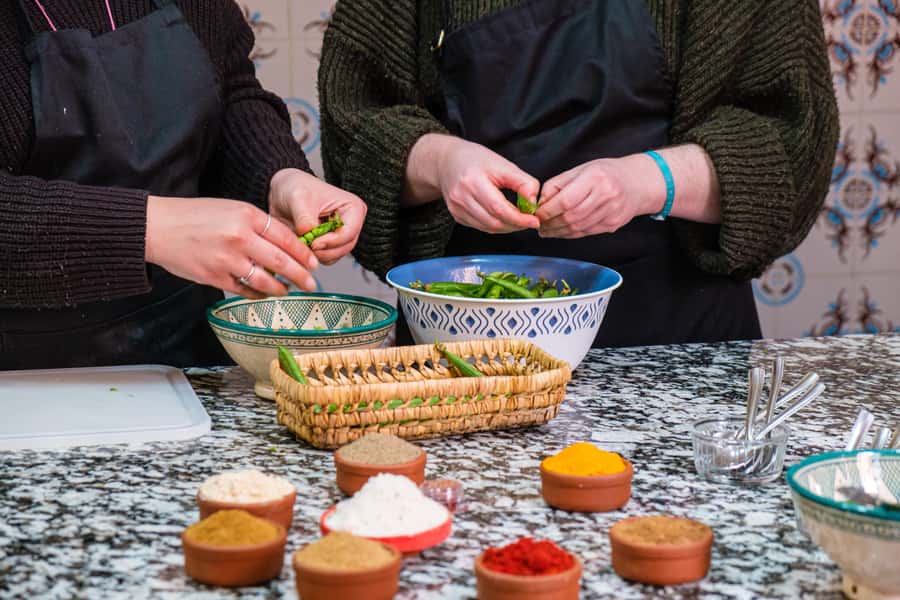
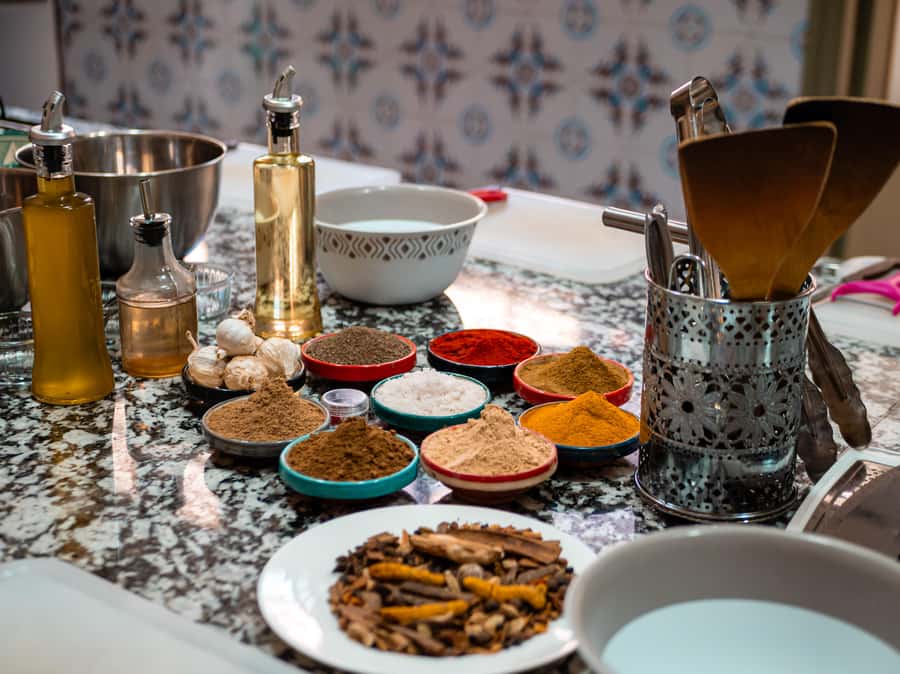
The class also gives you a chance to work with Moroccan spices such as ras el hanout, saffron, paprika, and cumin. The useful part is not simply hearing the names. The teachers explain how herbs and spices affect the finished dish and how Moroccan cooking builds flavor without relying on heavy sauces.
Expect to contribute. You may chop vegetables, prepare salads, mix ingredients, or work alongside another participant on a tagine. It is a shared kitchen, so you will not necessarily prepare every item alone. That is part of the social design, though anyone seeking a private, individual cooking station may find the format less precise than expected.
More Cooking Classes in Morocco
- Marrakech: Cooking Class and Market Visit
★ 4.4 · 5 reviews - Moroccan Cooking Class & Marrakech Market Visit with Chef Khmisa
★ 5.0 · 1,504 reviews - Moroccan Cooking Class with Market Visit and Meal
★ 5.0 · 196 reviews - Fez: Souk Tour and Traditional Home Cooking Class
★ 4.9 · 186 reviews
The meal in the Moroccan salon
The payoff comes when the tagines are ready and the group sits down together. The meal is served in a comfortable salon with a Moroccan style, and tea, coffee, and bottled mineral water are included.
Because you helped make the dishes, the meal has a satisfying logic. You know which vegetables went into each pot, which spices were used, and how long the cooking took. That makes it easier to notice the difference between a bright salad, a smoky vegetable dish, and a slow-cooked tagine.
The portions appear generous. Several menus include multiple starters, two main dishes, dessert, and tea. This is closer to a full lunch or dinner than a small tasting. Plan your appetite accordingly, especially if you choose the evening class after a day of eating around the Medina.
The shared table is one of the strongest parts of the experience. Cooking groups often begin as strangers and become more relaxed as the tasks move along. If you are traveling alone, this gives you easy company without requiring a separate social event. Couples and families can also enjoy it together, and a nine-year-old participant was reported to have enjoyed the class.
Do not expect a restaurant-level service format. You are eating food prepared by the group, in a teaching kitchen, with the instructors nearby. That is the point. The meal feels connected to the work rather than presented as a separate performance.
What makes the instruction useful at home
The PDF recipe collection is an important part of the value. It is sent by email and includes the dishes made during your session, so you can try the menu again after returning home.
That follow-up matters because Moroccan food often looks easier than it is. Without written quantities and steps, it is easy to forget how the teachers handled the vegetables, when they added seasoning, or how the tagine was arranged. The recipes give you a practical starting point.
One participant did not receive the recipe PDF because of internet problems. That appears to have been an isolated issue, but it is worth checking your email after the class and contacting the provider if the file does not arrive. Keep a note of the dishes prepared, just in case you need to search for a recipe later.
The best time to take the class may be near the start of your Morocco trip. You can use what you learn when ordering food afterward. You will recognize zaalouk, taktouka, tagines, ras el hanout, and other flavors with more confidence. The lesson can turn restaurant meals from a guessing game into a more informed part of your visit.
Timing, meeting point, and practical details
The activity lasts four hours. The morning class begins at 10:30 am and includes the market. The evening session begins at 4:30 pm and produces dinner, but not the shopping walk.
Meet at Flavors of Marrakesh, next to the BIM store. Go inside and look for the staff. Transportation to and from the activity is not included, so plan your own way to the meeting point. The location is central and described as a short walk from Jemaa el-Fna, but you should allow extra time if you are staying deeper inside the Medina and are not familiar with its lanes.
Wear comfortable clothes. You will be standing, moving around the kitchen, and handling ingredients. Bring a camera if you want photos of the market or the finished meal, but keep it out of the way during food preparation.
The group limit is 10 people. That is a useful balance: large enough for a lively table, small enough for access to the instructors. If you strongly prefer personal attention, ask about the group size when booking, since actual sessions may be smaller than the maximum.
Cancellation is free up to 24 hours before the start time, and you can reserve now and pay later. Those options help if your Marrakech schedule is still shifting, but the important choice is the session time. Book the morning if the market matters to you.
Who will enjoy this Marrakech cooking class?
I would recommend it most to:
- First-time visitors to Morocco who want food explained in a cultural setting.
- Home cooks who would like recipes they can repeat after the trip.
- Couples and families looking for a shared activity rather than another guided walk.
- Solo visitors who want an easy way to meet a small group over a meal.
- People who enjoy markets, fresh ingredients, and seeing how food is bought before it is cooked.
- Cooks of any level, including complete beginners.
It may be less suitable if you want a quiet restaurant meal, a private class, or a tightly timed professional kitchen lesson. The class is friendly and social, and the group works together. You should also consider the market food preparation topics and mention allergies before the cooking begins.
Should you book it?
Yes, if you want a hands-on introduction to Moroccan food rather than a simple meal. The strongest version is the morning class, because the market visit gives the cooking a clear beginning and shows you how the ingredients reach the table.
At $57, the price is reasonable for four hours of instruction, a market outing, a multi-dish meal, drinks, a small group, and recipes to take home. The warm teaching style of people such as Kaoutar, Leyla, Fatiha, and Bouchra adds real value. Book the 10:30 am session for the full market-to-table experience, or choose 4:30 pm if you prefer an evening meal and do not need the market stop.
FAQ
How long does the Marrakech cooking class last?
The experience lasts four hours.
What time does the morning class begin?
The morning session begins at 10:30 am.
Does the evening class include the market visit?
No. The local market visit is included with the morning session only. The evening class begins at 4:30 pm.
Where is the meeting point?
Meet at Flavors of Marrakesh, next to the BIM store. Go inside to meet the staff.
What languages are available?
The live guides speak English and Arabic.
Is transportation included?
No. Transportation to and from the activity is not included.
Do I receive the recipes after the class?
Yes. A PDF containing the recipes used during the class is sent by email.
More Cooking Classes in Marrakesh
- Hanoi Cooking Class: Culture, Local Market & Meaning CSR Impact
★ 5.0 · 5,147 reviews - 5 Traditional Dishes Hanoi Cooking Class with Market Trip
★ 5.0 · 4,890 reviews - Cooking Class and Lunch at a Tuscan Farmhouse with Local Market Tour from Florence
★ 5.0 · 4,831 reviews - Chiang Mai: Cooking Class, Market & Thai Herbs Garden Tour
★ 4.9 · 4,824 reviews
Just added around Marrakesh
- Souks tour of Marrakech ( 3 hours )★ 5.0 · 5 reviews
- Marrakech: Hidden Souks Shopping Tour with Private Guide★ 4.1 · 53 reviews
- Marrakech: Half-Day Medina Markets Tour★ 4.5 · 11 reviews
- Edgy 8 Dish Private, Fusion Cooking Class, Menu Plan, Market★ 4.9 · 31 reviews
- Marrakesh: Private Cooking Class & Local Market Shopping★ 4.7 · 15 reviews
- Marrakech: Bahia Palace, Madrassa & Souks Guided Tour★ 4.8 · 47 reviews
- Marrakech: Vibrant Souks, Local Artisans & Medina Experience★ 4.5 · 66 reviews
- Marrakech: Private Souks Tour with Tea and Traditional Snack★ 4.6 · 33 reviews
Cooking Classes, compared.
Hanoi Cooking Class: Culture, Local Market & Meaning CSR Impact
Read our review →
5 Traditional Dishes Hanoi Cooking Class with Market Trip
Read our review →
Cooking Class and Lunch at a Tuscan Farmhouse with Local Market Tour from Florence
Read our review →
Cooking Class, Market & Thai Herbs Garden Tour
Read our review →
Authentic Cooking Class with Market & Farm Visit
Read our review →
Paella Cooking Experience & Boqueria Market Tour
Read our review →
Cooking Class Hoi An:Local Market, Basket Boat, Fishing & Cooking
Read our review →
Hoi An Cooking Class(Market,BasketBoat Crabfishing&Cooking Class)
Read our review →Browse the lists this tour appears in