
Review · JAPAN
Tuna Auction Market Guided Private Tour in Nachi-Katsuura
The tuna auction starts your morning right. This short private tour gives you a close look at Nachi-Katsuura’s working fishing port, then explains how buyers judge tuna, how the auction moves, and why the town’s fishery depends on more than fishermen alone. I like the direct access to a real market and the chance to ask questions in excellent English. I also like the focus on long-line fishing and fresh, never-frozen tuna. The main consideration is timing: the full experience can last anywhere from 40 minutes to about 1 hour 15 minutes, and the optional breakfast costs extra.
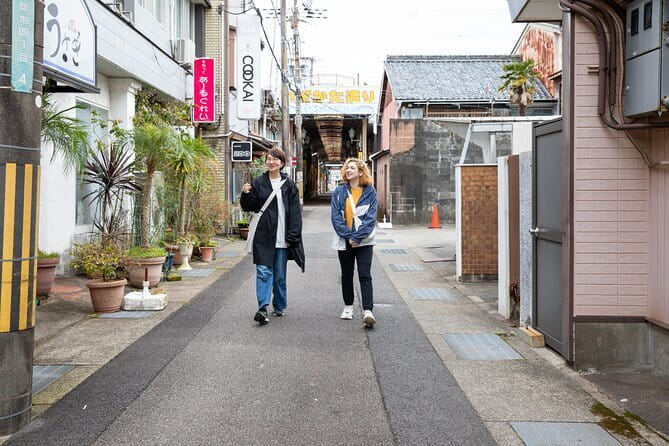
You meet at the JF Katsuura Seafood Market, though the guide can arrange a walking pickup from your accommodation. Stella, also known as Chizuko, is the central strength of the experience. She explains the port with warmth, clear English, teaching aids, and plenty of practical local suggestions. Since this is a private tour, your group gets the conversation rather than a one-size-fits-all speech.
What makes this morning special
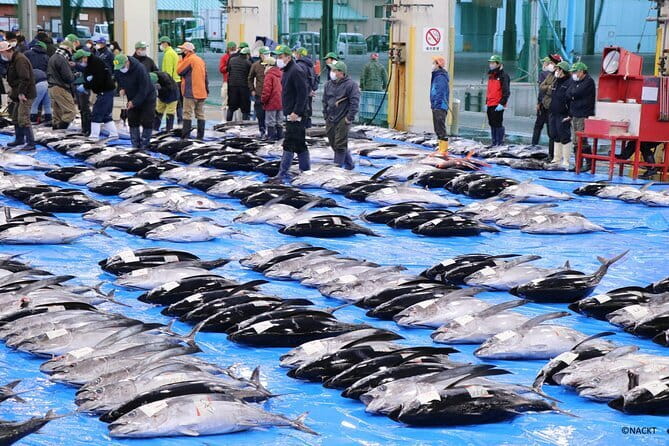
- See tuna laid out for a live auction at JF Katsuura Seafood Market, with time for photos and videos.
- Learn how professionals assess tuna, including the flow of the auction and the signs of quality buyers look for.
- Understand long-line fishing, a lower-impact method linked to Nachi-Katsuura’s fresh, never-frozen tuna.
- Hear the town’s lesser-known story, including why no tuna fishermen actually live in Nachi-Katsuura.
- Visit an exhibition room with maps, illustrations, and videos that make the port easier to understand.
- Add a local tuna breakfast, guided by Stella at Katsuura Nigiwai Market, though food is not included.
Why the tuna auction matters
Nachi-Katsuura is known for fresh tuna landings, and the auction is the best way to see the local economy at work. This is not a staged food demonstration or a museum display pretending to be a market. You watch rows of tuna prepared for sale and learn how the process connects fishermen, buyers, sellers, restaurants, and the wider town.
That distinction matters. If you simply walk around a seafood market alone, you may see impressive fish but miss the system behind them. Stella explains what is happening, who is involved, and why the tuna reaches the market in the condition it does.
The tour begins at the JF Katsuura Seafood Market at 7-chōme-12-12 Tsukiji, Nachikatsuura. You can take photos and videos of the tuna, while your guide points out the different roles around the auction. The market visit lasts about 40 minutes, making it long enough to understand the activity without turning into a drawn-out lecture.
I especially like that the tour treats the auction as work, not just a photo opportunity. You get the visual impact of rows of tuna, but the useful part is learning how buyers read quality and how the auction itself is organized. That gives your later tuna meals more meaning. You are not just ordering a famous local dish. You understand something about its route to the table.
More Private Market Tours in Japan
- Private Toyosu & Tsukiji Market Adventure with Tuna Auction
★ 4.8 · 191 reviews - Tokyo Early Morning Tour Asakusa Meiji Shrine (Private Opt)
★ 5.0 · 69 reviews - Private Market Tour and Cooking Class with Kanae, a Sapporo Local
★ 5.0 · 29 reviews
Learning how buyers judge tuna
Fresh tuna is not judged by appearance alone. The tour introduces you to the criteria used by experts and explains the auction’s movement in plain terms. The supplied details do not promise that you will handle the fish or participate in bidding, so expect observation and explanation rather than hands-on training.
This is where a private guide adds real value. Stella can answer questions as they arise, and the tour can spend more time on the parts that interest you. Families have found this useful because children and adults often ask different questions. A private format avoids the awkwardness of holding up a larger group or losing your chance to ask something specific.
The experience also gives you a more accurate picture of the fishing business. The town is not simply a place where tuna fishermen live and sell their catch. One of the tour’s unusual points is that no tuna fishermen actually live in Nachi-Katsuura. You learn what other professions are present, including the people involved in buying and handling the fish.
That detail changes how you see the port. Fishing towns are often described too simply, as if every local person goes to sea. Here, the tour shows the commercial network around the catch. Buyers, market workers, and other businesses all help keep the industry moving.
Long-line fishing and fresh, never-frozen tuna
The sustainability lesson is one of the strongest parts of this experience. Stella explains long-line fishing as a lower-impact method that aims to protect the ocean’s future. The tour also covers why Nachi-Katsuura’s tuna is described as fresh, never frozen, and how the fishing method contributes to its quality.
That is useful context at a time when seafood labels can be confusing. You hear not only that the tuna tastes good, but why the local industry values its handling and fishing practices. The point is not to turn you into a fisheries expert in one morning. It is to help you connect the food on your plate with the method used to catch it.
The subject also keeps the tour from being only about spectacle. A tuna auction can look exciting, but it raises questions about sustainability and the future of the sea. By including long-line fishing, the experience asks you to think about both taste and responsibility.
The information provided does not promise a formal certification lesson or a detailed scientific presentation. You should expect a local explanation supported by practical examples, rather than a university seminar. For most people, that is the right balance during a short market visit.
The exhibition room adds the missing context
After the auction, you move to a specialized exhibition room for about 20 minutes. Maps, illustrations, and videos help explain parts of the tuna trade and local life that are difficult to see from the market floor.
This second stop is important because the auction itself can move quickly. Even with a good guide, you may focus on the rows of tuna, the people working nearby, and the general energy of the sale. The exhibition room slows things down and gives you a chance to connect the pieces.
I see this as particularly helpful if you are visiting Nachi-Katsuura as part of a wider Wakayama trip or after walking the Kumano Kodō. The tour adds a local story that is different from temples, waterfalls, and pilgrimage routes. One particularly useful part of the experience is the way Stella connects the fishing industry with everyday life in town.
The room also suits people who prefer visual explanations. Maps and illustrations can make the port’s role easier to understand than spoken directions alone. Videos provide another way to see the fishing process and the setting around Nachi-Katsuura.
Same place, a different set of stalls:
- Tokyo Tsukiji Fish Market Food and Culture Walking Tour
★ 5.0 · 3,184 reviews - Tokyo: Tsukiji Fish Market Food and Walking tour
★ 5.0 · 1,724 reviews - Tokyo: Tsukiji Fish Market Guided Walking Tour
★ 4.9 · 1,397 reviews - Nishiki Market Brunch Walking Tour (7 Tastings + Brunch)
★ 5.0 · 1,355 reviews
Finish with tuna at Katsuura Nigiwai Market
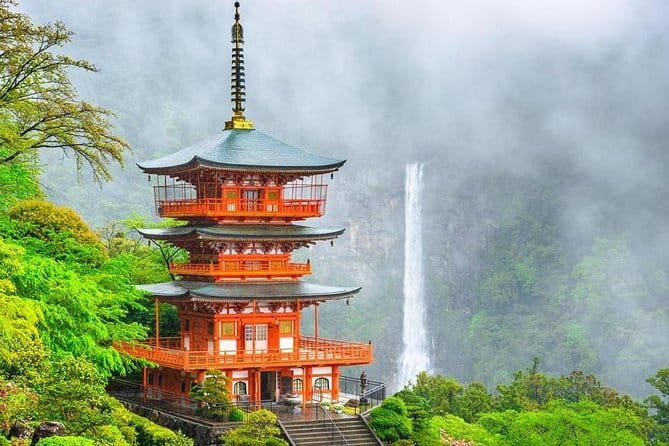
The final stop is optional. Stella can guide you to a local restaurant at Katsuura Nigiwai Market for breakfast, where you can taste tuna after learning how it reaches the market. Breakfast is not included in the tour price, so bring extra money if you want to eat.
This is a smart add-on, especially if you are already interested in local food. The meal becomes a natural finish rather than a separate restaurant search. Stella has also helped visitors find coffee and offered suggestions for the rest of the day, so you can ask for ideas beyond the tuna breakfast.
Still, keep your expectations precise. The tour promises guidance to a local favorite, not a set meal, tasting menu, or included reservation. Your food and transportation costs are separate. The breakfast stop lasts about 15 minutes in the stated itinerary, so it is best seen as a quick local meal rather than a long dining experience.
If you are not hungry, you can skip it and finish after the market and exhibition room. That flexibility is useful for people catching transport, following a hiking schedule, or simply wanting a shorter outing.
Stella and Chizuko make the difference
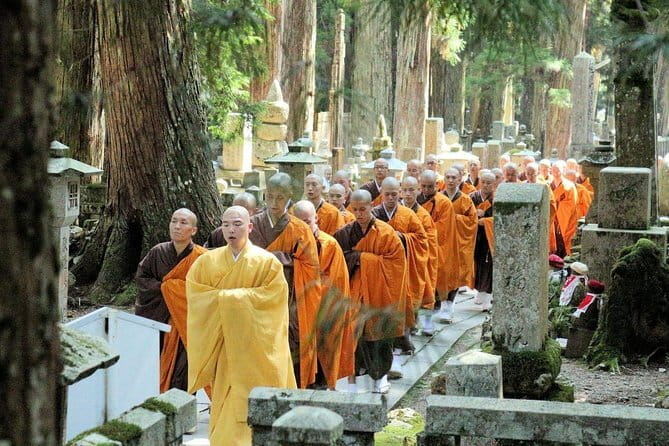
The guide may be listed as Stella, while some local references use Chizuko. Either way, the feedback consistently praises the guide’s English, warmth, patience, and command of the subject. She has guided families, couples, and people visiting after the Kumano Kodō.
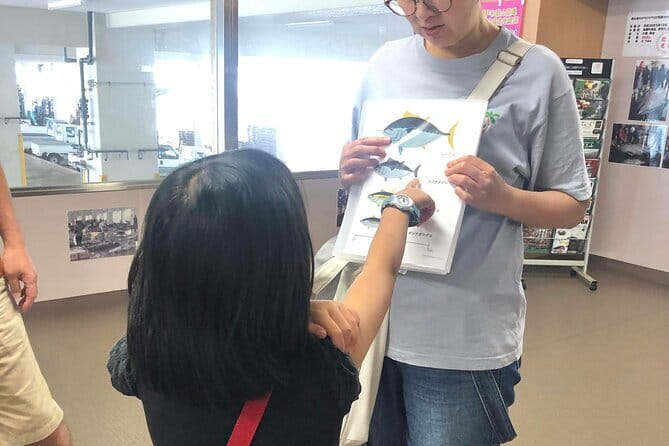
The strongest praise centers on her ability to explain tuna, commercial fishing, the auction, and local life without making the subject feel dry. She also uses teaching aids and answers questions carefully. That matters because the port itself may not explain what you are seeing in a way that makes sense to an English-speaking visitor.
I also like the practical local help. Stella has recommended coffee shops and places to visit later in the day. Those suggestions are not the main product, but they can save time in a small town where a good recommendation is often more useful than a long list of online results.
Since this is a private activity, only your group participates. That is a good fit if you want to ask many questions, need a slower explanation, or are traveling with family. It is less important if you prefer to look around independently and do not need interpretation.
Price, timing, and practical value
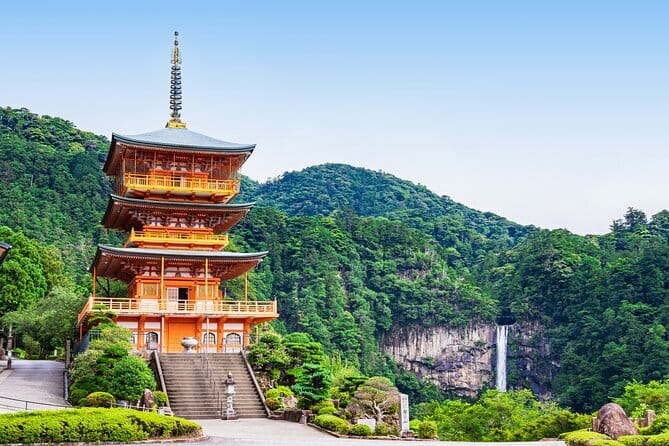
The listed price is $42.93 per person. For a 40-minute to 1-hour-15-minute private experience, that is not the cheapest way to visit a market. The value comes from the guide rather than the length alone.
You are paying for access to an explanation of the auction, a lesson in tuna quality, background on local work, sustainability information, and a second stop in the exhibition room. You also get the chance to ask questions in English and receive local suggestions afterward. For a group, the private format can make the price easier to justify because the guide’s attention is reserved for you.
The tour is often booked around 78 days ahead, so plan early if your Wakayama dates are fixed. Confirmation is sent within 48 hours of booking, subject to availability. Free cancellation is available up to 24 hours before the start time. If you cancel or change the booking inside that final 24-hour period, the payment is not refunded.
The meeting and ending point is the same JF Katsuura Seafood Market. Walking transfers to and from your accommodation are included when practical. Taxi costs or other transport expenses are not included, so check your route before booking.
Most people can participate, and service animals are allowed. The activity is near public transportation, but the supplied details do not give a specific train or bus timetable. You should confirm your own arrival plan rather than assume the market is directly beside your lodging.
Who should book this experience?
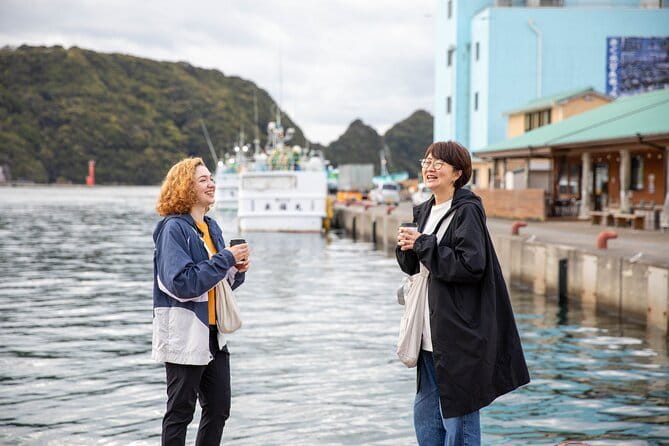
I would recommend it to you if you enjoy seeing working places, eating local food, and asking questions that a signboard cannot answer. It is especially useful for first-time visitors to Nachi-Katsuura, people walking the Kumano Kodō, and families who want a short activity with clear explanations.
Food lovers will appreciate the connection between the auction and the optional tuna breakfast. Photography fans will like the rows of tuna and the chance to capture the market, though the main value is the interpretation rather than the pictures alone.
It also suits visitors who care about responsible fishing. The long-line fishing discussion gives the morning a wider purpose and helps you think about the environmental side of seafood.
I would hesitate if you want a long, dramatic boat excursion, a hands-on fishing activity, or a full meal included in the price. This is a compact educational visit to a real market. It works best when you value local access and context more than entertainment.
Final call: a smart short stop in Kii-Katsuura
Book this tour if you want to understand Nachi-Katsuura’s tuna industry rather than simply photograph it. Stella’s clear English, warm manner, teaching aids, and local advice are the main reasons to choose a guided visit instead of walking through the market alone.
The auction, exhibition room, and optional breakfast form a sensible morning, but you should budget for food and possible taxis. Give yourself flexibility around timing, and book ahead if your schedule is firm. For an authentic look at the port and the people behind one of Japan’s best-known seafood products, this is a strong-value private tour.
FAQ
Where does the tuna auction tour begin?
It begins at JF Katsuura Seafood Market, 7-chōme-12-12 Tsukiji, Nachikatsuura, Higashimuro District, Wakayama 649-5335, Japan.
Where does the tour end?
The tour ends at the same JF Katsuura Seafood Market meeting point.
How long does the experience last?
The experience lasts approximately 40 minutes to 1 hour 15 minutes. The market visit is listed as 40 minutes, the exhibition room as 20 minutes, and the optional breakfast guidance as 15 minutes.
Is this a private tour?
Yes. Only your group participates in the private activity.
Is pickup available?
Walking transfers to and from your accommodation are offered. Taxi and other transportation costs are not included if you do not travel on foot.
Is breakfast included?
No. Breakfast is not included in the tour price. Your guide can introduce you to a local restaurant for fresh tuna breakfast if you are interested.
Can I take photos or videos?
Yes. The market visit includes the opportunity to photograph and record the rows of tuna.
What will I learn about the tuna?
You will learn how experts assess tuna quality, how the auction operates, and why the area is known for fresh, never-frozen tuna.
Does the tour discuss sustainable fishing?
Yes. The tour explains long-line fishing as a lower-impact fishing method and discusses its connection to the future of the ocean.
What is the cancellation policy?
You can cancel at least 24 hours before the experience start time for a full refund. Cancellations or changes made less than 24 hours before the start time are not accepted for a refund.
Just added around Japan
- Nagoya Super Market Tour & Home Cooking Class with a Local, Akiko★ 5.0 · 10 reviews
- Tokyo: Private Tsukiji Street Food & Sake with Local Guide★ 5.0 · 3 reviews
- Tokyo: Tsukiji Market Guided Tour & Sushi-Making Experience★ 4.4 · 11 reviews
- 【Family pack】Tokyo: Tsukiji fish market food tour★ 5.0 · 3 reviews
- Tokyo: Tsukiji Market and Hama-rikyu Gardens Guided Tour★ 4.8 · 73 reviews
- Tokyo: Tsukiji Fish Market Culture Tour with Sashimi Tasting★ 4.6 · 54 reviews
- Tokyo’s Kitchen: Tsukiji Market Food & Culture Walk★ 4.7 · 74 reviews
- Tokyo: Tsukiji Fish Market Foodie and Educational Tour★ 5.0 · 4 reviews
Private Market Tours, compared.
Cairo 8 Hour Private Tour of Pyramids, Egyptian Museum and Bazaar
Read our review →
Private Excursion to Maeklong Railway and Floating Markets
Read our review →
Floating and Railway Market (Optional Waterfall): Private Tour
Read our review →
Shopping in the Souks of Marrakech Private Tour
Read our review →
Local Markets & Khan el Khalili Private Shopping Tour
Read our review →
Private Excursion to Floating Market and Ayutthaya World Heritage
Read our review →
Private Heritage Walking Tour in Jaisalmer Fort and Old Bazaar
Read our review →Browse the lists this tour appears in