
Review · INDIA
Mumbai:Dhobi Ghat Laundry,Dharavi Slum & Flower market Tour
Mumbai wakes up early. This tour follows that energy by train, taking you from Churchgate to Dhobi Ghat, a flower market, and the narrow lanes of Dharavi. For $9, you get a local guide, train ticket, taxi fare, and bottled water, which makes this one of the city’s most affordable ways to see working Mumbai rather than only its grand buildings.
I especially like the train ride, since it gives you a practical look at how Mumbai moves, and the chance to see several very different parts of the city in one outing. I also like the guides’ personal connection to Dharavi. Guides such as Shivam speak clear English and know the area closely. The main consideration is that this is not a gentle sightseeing stroll: crowded trains, tight lanes, working sites, and the realities of poverty require respect, curiosity, and comfortable shoes.
Key points to know before booking
- Dhobi Ghat by train: See rows of laundry being washed and dried at Mumbai’s famous open-air laundry.
- A flower market full of color and scent: Visit a busy trading place where the city’s day begins with flowers.
- Dharavi beyond the stereotype: Walk through local lanes, markets, schools, workshops, and small businesses.
- Local guides with personal ties: The guides are from Mumbai and have lived in slum communities for generations.
- Strong value at $9: The price includes the guide, train ticket, taxi fare, and bottled water.
- A people-focused outing: You see work, family life, recycling, leather, garments, and pottery rather than polished tourist attractions.
Starting at Churchgate and taking Mumbai’s train
The meeting point is inside Churchgate station, at the train ticket counter near the Wheelers bookstall. This detail matters. Churchgate is a busy place, so arrive with enough time to find the counter and look for your guide rather than waiting outside the station entrance.
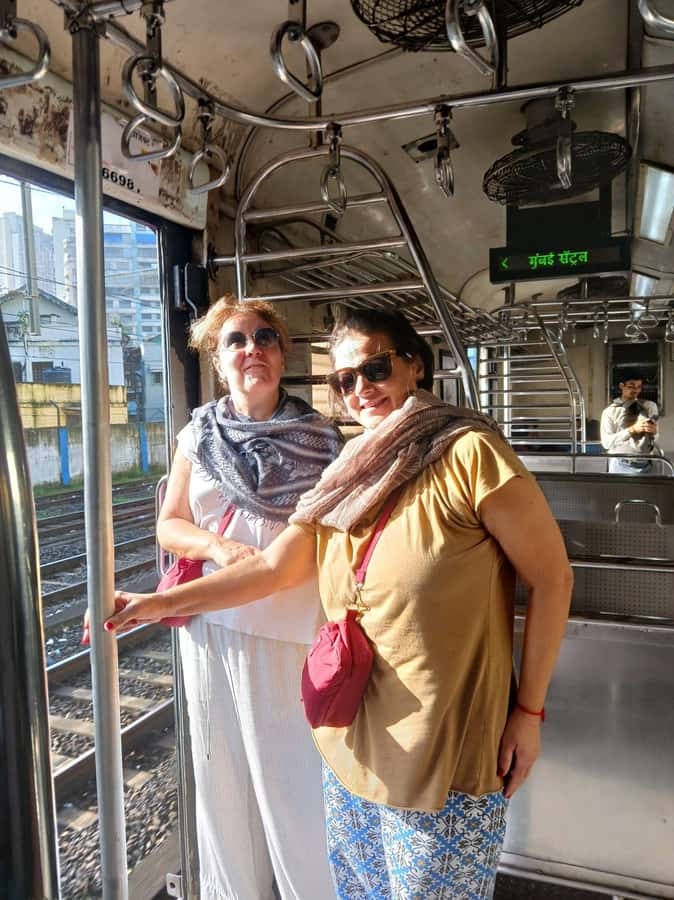
The outing begins with a local train ride toward Dhobi Ghat. That train journey is not just transportation. It places you inside one of Mumbai’s everyday systems, alongside the commuters who rely on the railway to cross the city. The ride also helps set the tone for the day: you are not being carried between isolated sights in a private vehicle, but moving through Mumbai as the city moves.
Your guide handles the train ticket, which is included in the price. Since the tour uses public transport, you should expect a more active outing than a standard coach excursion. Wear shoes that are easy to walk in, keep your belongings secure, and bring water even though a bottle is provided.
The guide’s role is important here. A good explanation can turn a simple train ride into a lesson in Mumbai’s daily rhythm. Shivam, praised for his friendly manner and clear English, is one guide associated with this experience. His close knowledge of Dharavi is especially useful later in the tour.
More Flower and Flea Market Tours in India
- Jaipur Tuk-Tuk Tour with Flower Market Visit
★ 5.0 · 124 reviews - Jaipur Tour by Tuk-Tuk or Car with Flower Market
★ 5.0 · 120 reviews - Jaipur: Half-Day Guided Sightseeing Tour with Flower Market
★ 4.9 · 119 reviews
Dhobi Ghat and the work behind the laundry
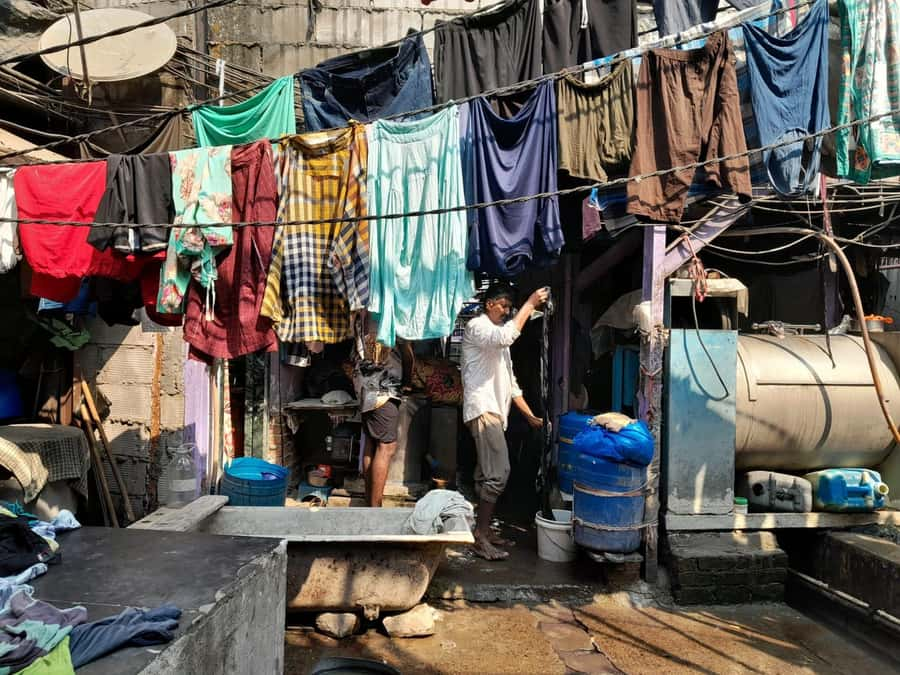
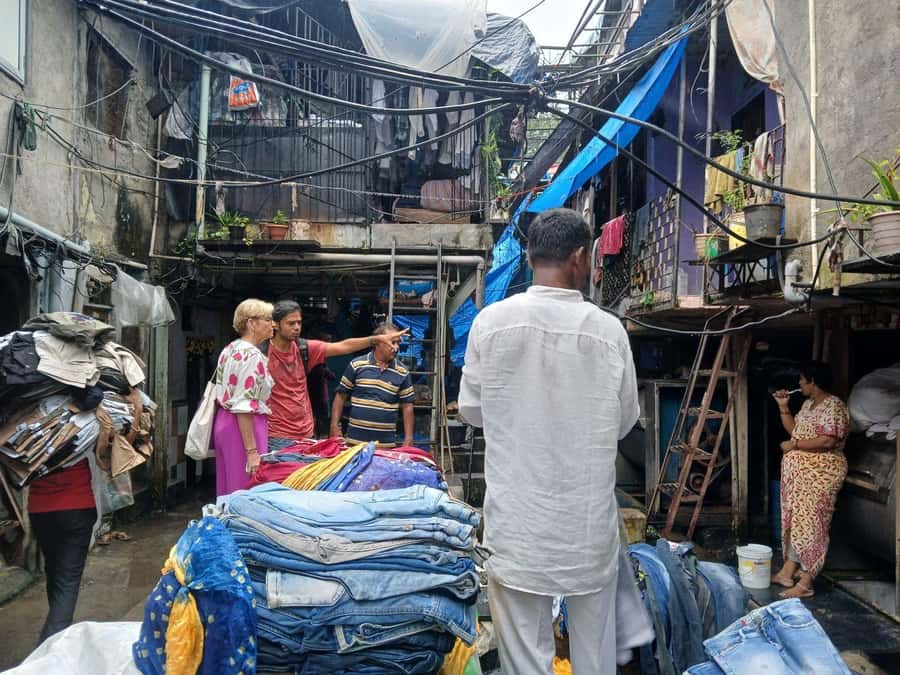
Dhobi Ghat is the first major stop. It is known as the world’s largest open-air laundry, where hundreds of garments are washed and dried. From the viewing area or route used by the group, you can see the scale of the operation and the coordination required to keep so much clothing moving.
This is a working place, not a staged performance. The appeal comes from watching a real service that has long been part of Mumbai’s urban life. Clothing arrives, is cleaned, and is laid out to dry. The scene gives you a quick lesson in how large cities depend on networks of small, specialized workers.
I like this stop because it asks you to look closely at labor. It is easy to admire Mumbai for its skyline, food, and film industry. Dhobi Ghat points to another side of the city, one built on repetition, skill, and teamwork.
You should also keep your expectations sensible. This is not a museum with detailed displays or a long historical presentation. The visit is mainly visual, supported by your guide’s explanations. If you want to understand what you are seeing, ask questions about the workers, the laundry process, and how the site serves the city.
Photography may be tempting, but treat the area as someone’s workplace. Ask before photographing people, and avoid turning workers into background decoration. That small bit of care makes the visit more respectful.
The flower market’s early-day energy
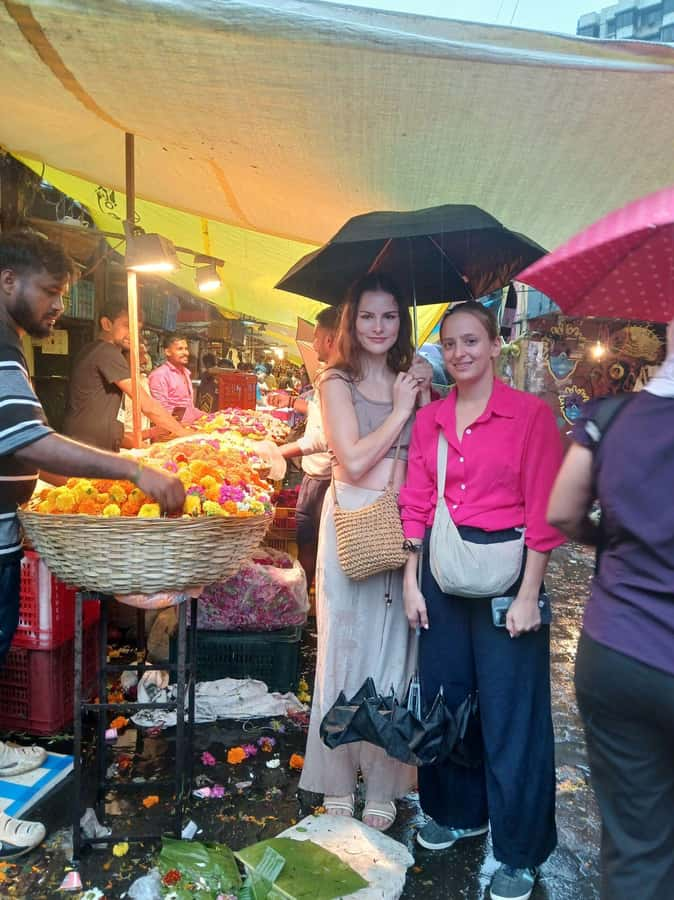
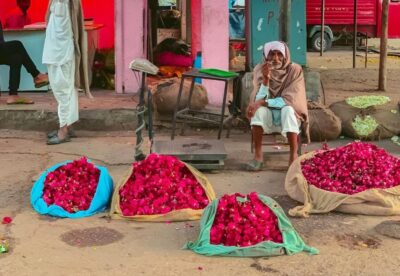
After Dhobi Ghat, a short ride takes you to a colorful flower market. The market offers a completely different mood. Instead of rows of laundry and industrial work, you find flowers being handled, sorted, sold, and carried through a crowded trading area.
The strong point here is the contrast. In one part of the tour, you watch garments being processed. At the market, you see color, scent, and rapid buying and selling. The stop also shows how many people begin their day through ordinary commercial work, long before Mumbai’s tourist sights fill up.
The flower market is best approached with your senses open. Notice the color of the flowers, the movement of sellers and buyers, and the smell in the air. Your guide can help explain what you are seeing, especially if the activity seems too quick to follow on your own.
There is a practical side to this stop. Markets can feel tight and hectic, and you may need to stay close to the guide. Keep your camera and phone secure. If you want photographs, take them carefully and do not block the workers who are trying to move goods.
The market is not presented as a formal attraction. That is precisely why it has value. You get a glimpse of a commercial routine that many visitors would miss if they stayed on a standard sightseeing route.
Entering Dharavi with a local guide
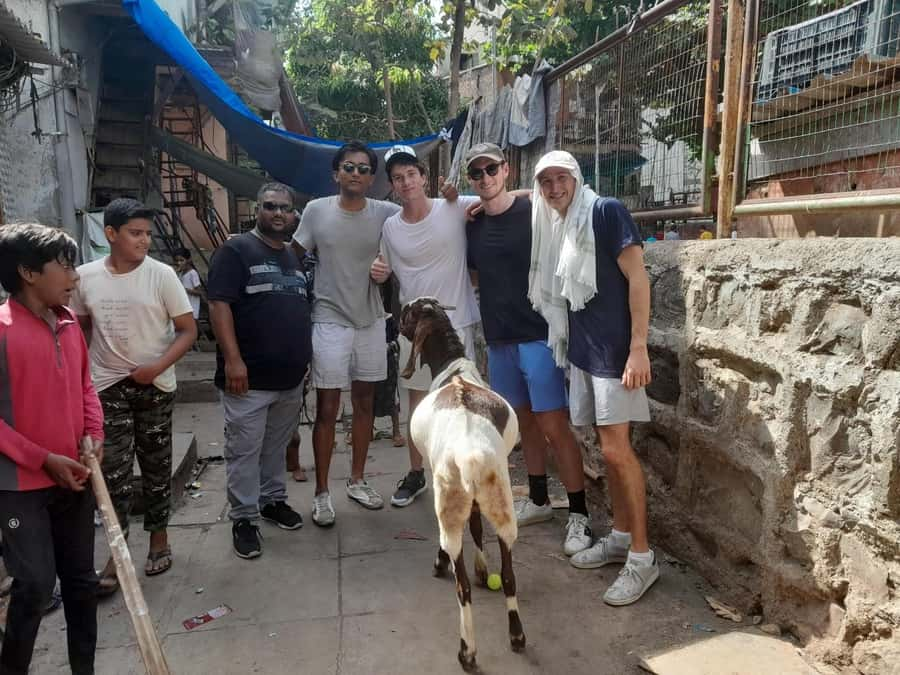
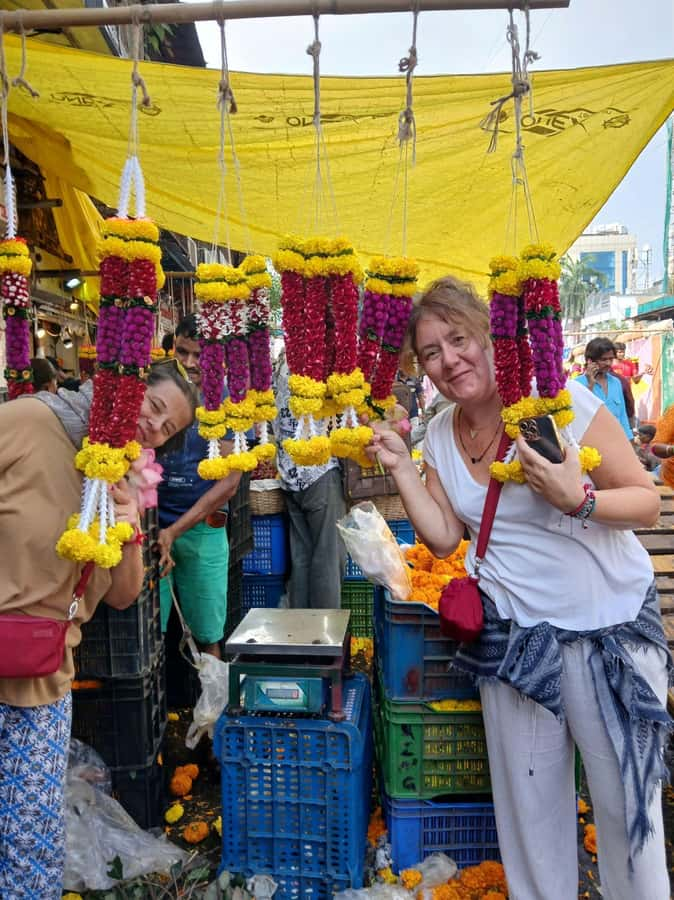
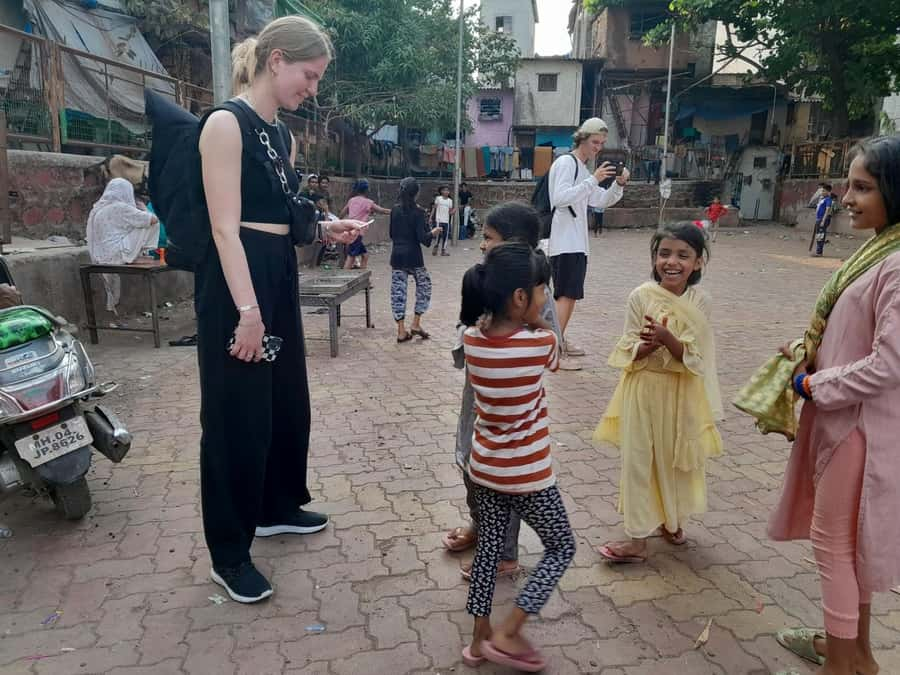
The largest part of the outing is the visit to Dharavi. The area is often described only through poverty, but the tour presents a wider picture: homes, markets, schools, recycling work, leather production, garment businesses, and pottery.
The guide leads you through narrow lanes where houses and workshops sit close together. Space is limited, and the streets can be busy. You may see the smallest homes mentioned in the tour description, along with people managing family life and work in the same compact setting.
The most useful part of the visit is the attention given to local enterprise. Dharavi is described as generating more than $1 billion annually, with thousands of small-scale businesses operating there. The figure is meant to show economic activity, but the important point for you is more personal: you can see how residents create livelihoods through many different trades.
Recycling is one example. The tour may show how used materials become part of a working industry. Leather, garments, and pottery offer other views of production. These are not polished factories designed for tourists. They are working businesses inside a densely settled community, so you need to follow the guide’s instructions and avoid interfering with daily work.
The tour also highlights Dharavi’s mixed population. Families from different parts of India live in the area and speak different languages. That detail helps explain why Dharavi is not a single, uniform community. Its identity comes from many families, trades, and regional backgrounds sharing a small area.
I appreciate this broader view because it avoids reducing Dharavi to a photo opportunity. At the same time, the experience can feel uncomfortable. You will be walking through places where people live, work, and raise families. If you are mainly seeking dramatic photographs, this is not the right tour. If you want to listen, observe, and understand the community’s working life, it offers far more.
More Flower and Flea Market Tours in Mumbai:
- Bangkok: Night Bike Tour with Temples & Flower Market Visit
★ 4.8 · 751 reviews - Bangkok: Night Bike Tour with Temples & Flower Market Visit
★ 5.0 · 223 reviews - Jaipur: Half or Full Day Sightseeing Tour with Flower Market
★ 5.0 · 94 reviews - Paris: Flea Market Insider’s Tour in Extra-Small Group
★ 4.6 · 73 reviews
What the guide adds to the visit
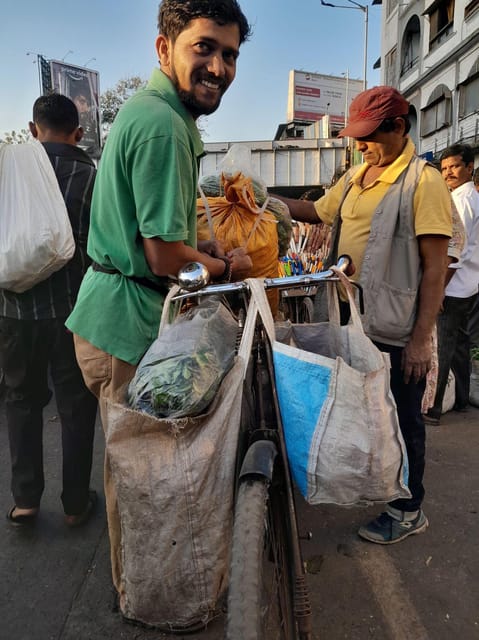
The guide is the thread tying the three stops together. Without context, Dhobi Ghat can look like rows of concrete washing spaces, the flower market can seem like a blur of movement, and Dharavi can feel confusing. A local guide gives each place meaning.
The guides are described as passionate locals who have lived in slum communities for generations. That connection can help you understand the area with more care than you might gain from walking alone. Shivam, in particular, is praised for clear English, friendliness, and detailed knowledge of Dharavi.
You should use the guide actively. Ask how the different businesses operate, what the school represents in the community, and how families from different parts of India live together. The more specific your questions, the more useful the visit is likely to become.
The language offered is English. If you need another language, this experience may not suit you. The supplied comments point to the guide’s communication as a strength, especially for explaining complex social and economic contrasts in simple terms.
Is $9 good value for Mumbai?
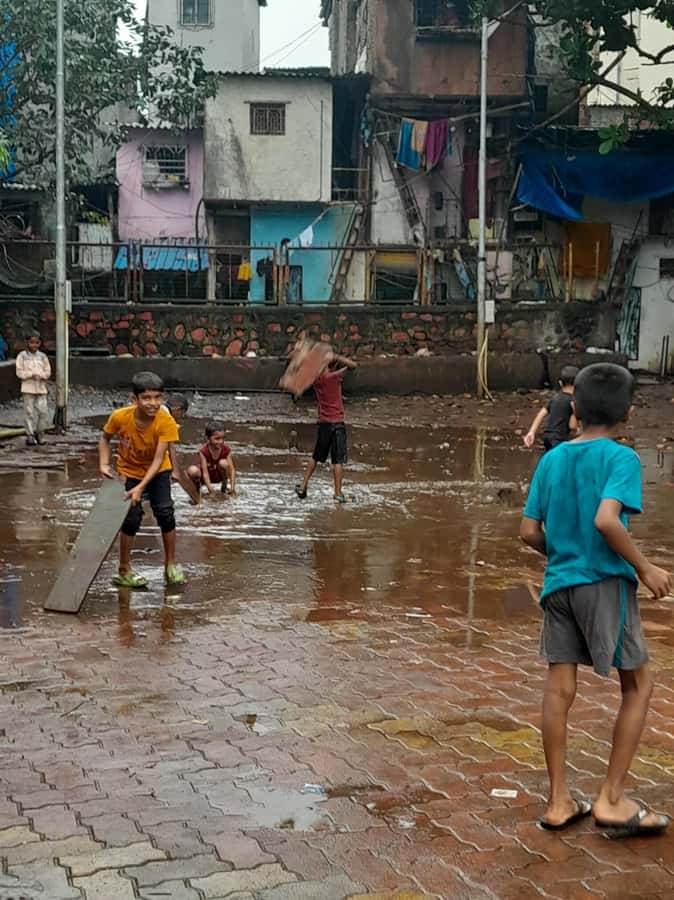
At $9 per person, this tour offers strong value. The price includes a local guide, train ticket, taxi fare, and bottled water. You do not need to pay separately for the main transport used during the outing, although snacks and a tip are not included.
The value is not only about the number of stops. You are paying for access to local knowledge and for a route that links three parts of Mumbai’s working life. A train ride, Dhobi Ghat, a flower market, and Dharavi would be difficult to organize smoothly on your own, especially if you do not know the station, market, or local lanes.
There are limits. This is a low-cost walking and public-transport experience, not a private luxury tour. The exact duration is not provided, and the route may feel tiring if you are not used to walking through crowded urban areas. The price also does not include food, so bring money if you want snacks.
The option to reserve now and pay later gives you some flexibility. You can cancel up to 24 hours in advance for a full refund, which is helpful when your Mumbai plans are still shifting.
Who will enjoy this experience most?
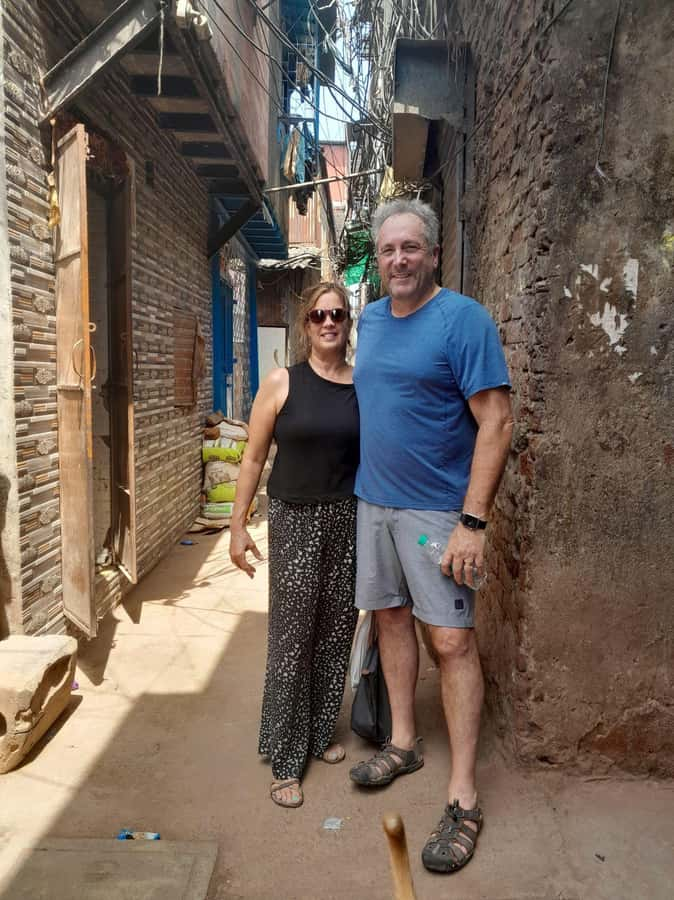
I would choose this tour if you want to understand Mumbai through its workers, transport, markets, and neighborhoods. It suits curious visitors who prefer local routines to a checklist of monuments.
It is also a good fit if you have limited time but want several contrasting scenes in one outing. Dhobi Ghat shows organized manual work, the flower market shows trade and color, and Dharavi shows a large community with many businesses and languages.
You should think twice if you dislike trains, narrow lanes, or busy public places. The tour involves movement and close contact with the city. It may also feel emotionally challenging, since Dharavi is a real residential area and poverty is part of the setting.
Bring comfortable shoes, water, and a camera if you want one. Dress in a way that allows you to walk easily, and keep your behavior low-key around homes and workplaces. A respectful attitude matters more here than a perfect photograph.
Should you book this Mumbai tour?
Book it if you want a practical, human look at Mumbai and are willing to meet the city on its own terms. The combination of train travel, Dhobi Ghat, the flower market, and Dharavi gives you more than a single attraction, while the $9 price keeps the outing accessible.
The best reason to go is the guide. Shivam and the other local guides can explain what you are seeing and help you move through Dharavi with context. The main caution is simple: do not expect a polished sightseeing product. Expect crowds, working streets, narrow lanes, and a serious look at how people earn a living.
For respectful, curious visitors, this is a worthwhile introduction to Mumbai’s everyday life.
FAQ
Where does the tour start?
The guide meets you inside Churchgate station at the train ticket counter, near the Wheelers bookstall.
Where does the tour end?
The activity ends back at the meeting point.
Is the train ticket included?
Yes. The train ticket is included in the price, along with the tour guide, taxi fare, and bottled water.
Is the tour offered in English?
Yes. English is the listed tour language.
What should I bring?
Bring comfortable shoes, a camera, and water. Snacks are not included, so you may want to bring money for them.
Can I cancel the booking?
Yes. You can cancel up to 24 hours in advance for a full refund. You can also reserve and pay later.
Just added around Mumbai
- Mumbai: Local Markets & Temples Tour★ 4.6 · 45 reviews
- Night Tour: Mumbai’s Nights & Buzzing Bazaars★ 5.0 · 7 reviews
- Mumbai: Magical Markets Tour★ 4.5 · 23 reviews
- Mumbai Morning Market Tour of Flowers, Fish, and More★ 5.0 · 100 reviews
- Mumbai Heritage, Street Food & Bazaar Walking Tour★ 5.0 · 4 reviews
- Mumbai Market Tour★ 4.6 · 12 reviews
- Mumbai: Evening Street Food Tasting & Cultural Market Tour★ 4.7 · 11 reviews
- Mumbai: 2 Hours Markets And Temple Tour★ 4.7 · 6 reviews
Flower & Flea Market Tours, compared.
Night Bike Tour with Temples & Flower Market Visit
Read our review →
Night Bike Tour with Temples & Flower Market Visit
Read our review →


Browse the lists this tour appears in