
Review · KENYA
Memorable Daily KIBERA Slums/Toi Market Tour with Locals (2 hours)
Look beyond Nairobi’s polished center. This two-hour walking experience takes you into Kibera with a local youth guide, offering a close look at daily life, small businesses, housing, schools, and community projects. I like the local connection, especially guides such as Bramwel and Frederick, who know the area personally and can explain more than a sightseeing guidebook can.
I also like the tour’s community focus. Your fee helps employ local young people, and part of the company’s proceeds supports girl-child education through its rural charity work. The main consideration is that Kibera is a home, not a staged attraction, so you need to arrive with respect, modest expectations, sturdy shoes, and a willingness to listen rather than simply take photographs.
Key Points to Know Before You Go
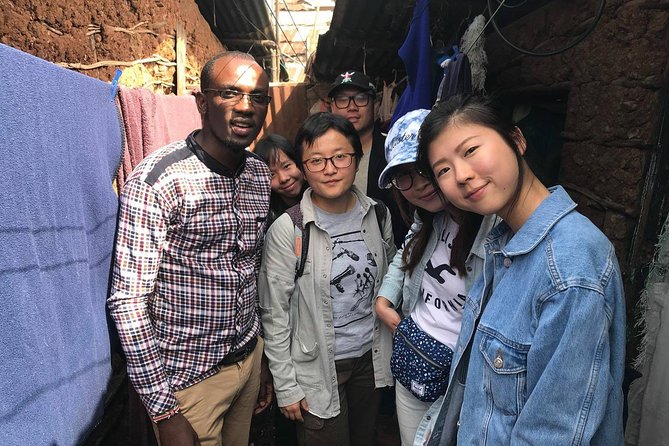
- Local guides lead the walk: Bramwel and Frederick have received especially warm praise for their friendly manner, personal connections, and care with visitors.
- Olympic Primary School is the meeting point and final stop: The tour begins and ends at the school in Kibera.
- Community projects are part of the story: You learn about efforts involving housing, education, health, and employment.
- The tour costs $25 per person: For a two to three-hour local walk, that is a reasonable price if you value direct community contact.
- Dress for mud and uneven ground: Sturdy shoes that can get wet or dirty are a smart choice.
- Photography needs good judgment: People live and work here. Ask before taking pictures, and consider putting your camera away for much of the walk.
Why Kibera Adds Something Important to a Nairobi Visit
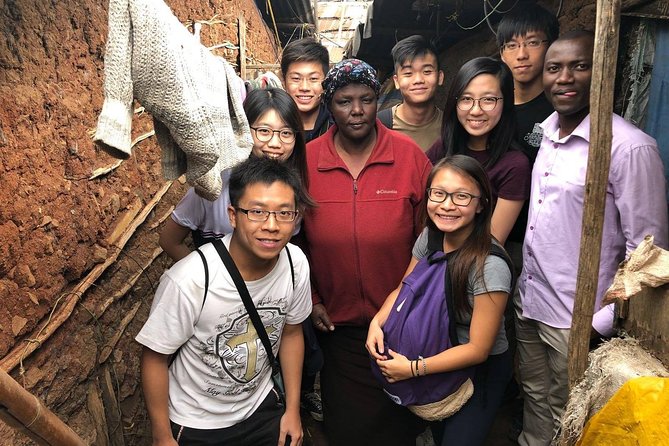
Nairobi can be easy to experience through wildlife parks, shopping centers, restaurants, and comfortable hotels. Kibera shows another side of the city, one shaped by crowded housing, informal work, schools, charities, and strong neighborhood ties.
The settlement is described as covering about 2.5 square kilometers and being home to an estimated one million people from across East Africa. Exact population figures are difficult to confirm, but the larger point is clear: this is a very large community with its own social and economic life.
You will not get a neat display of poverty arranged for visitors. You will walk through a working neighborhood. That distinction matters. The streets, homes, shops, and projects you see are part of daily life, and the experience asks you to pay attention to people rather than treat the area as a backdrop.
I find the best reason to book this tour is the chance to hear local explanations. A guide who grew up in or near Kibera can add details about how families manage, how small businesses operate, and how community projects affect residents. That personal link can turn a quick walk into a more thoughtful visit.
More Two-Hour Tours in Kenya:
- 2 Hour Historic Market Food Tour and Hands-On Biscuit Class
★ 5.0 · 251 reviews - 2-Hour Food, History and Street Art Tour of Ponce City Market
★ 5.0 · 159 reviews - Palermo in 2 hours Main monuments and historic markets
★ 5.0 · 136 reviews
Meeting at Olympic Primary School
The tour starts at Olympic Primary School, listed at MQQH+3FJ in Nairobi, and finishes at the same place. This makes the logistics fairly simple, particularly if you are arranging the visit around other plans in Nairobi.
The school is not just a pickup point. It is also the final stop and an important part of the tour’s story. Olympic Primary School is described as Kenya’s largest public primary school and was once known for strong academic performance. Its longer story is tied to families using education as a route out of poverty.
That setting gives the tour a useful balance. You are not only shown difficult living conditions. You also hear about education, ambition, and the institutions that help families build a more secure future.
Round-trip transfers from a designated meeting point are included, although the exact transfer arrangement should be confirmed when you book. The company also says the tour is near public transportation.
Walking Kibera With Bramwel or Frederick
The guide can make or break an experience like this. Kibera is not a place where a detached commentary from a passing guide will tell you enough. The strongest guide experiences here have involved Bramwel and Frederick, both praised for being friendly, approachable, and attentive to safety.
Bramwel is described as having grown up in Kibera, later moving out of the most crowded part while remaining close to the area and connected to its football community. That background gives him a personal understanding of the neighborhood rather than only a set of memorized facts.
Frederick is also praised for making the experience personal and answering questions clearly. He has been described as someone who takes care of the group and helps connect the walk with local efforts to support children’s education.
You might also encounter a guide such as Erick, the company founder, who previously lived in Kibera and still has relatives there. The company’s local roots are central to its approach, and that is one reason the tour feels different from an outside operator simply passing through.
The company allows groups of up to 50 people. That is a fairly large maximum for a neighborhood walk. A smaller group should feel more personal, so I would ask about the expected group size if conversation and access are important to you.
What the Two-Hour Walk Covers
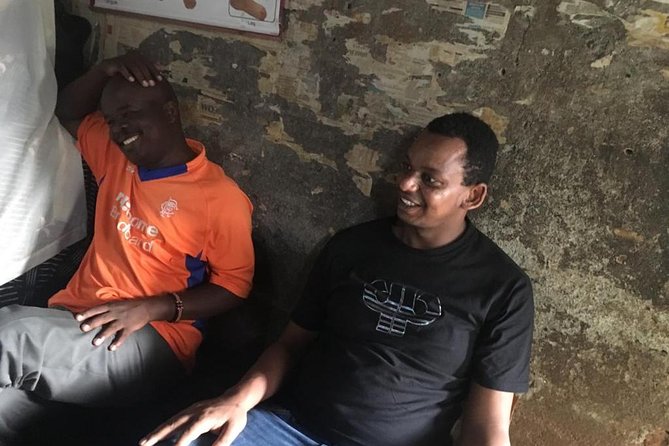
The main walk lasts about two hours, though the overall experience may take two to three hours. The route is built around Kibera’s homes, streets, businesses, and community projects.
You can expect explanations of the informal economy, meaning the many jobs and small enterprises that operate outside formal office or industrial systems. This may include local shops, services, and other ways residents earn money. The value is not in seeing a list of businesses, but in understanding how a large community functions when formal employment is scarce.
The tour also discusses NGO projects aimed at improving housing, education, and health. Some projects may be successful, while others may have struggled with poor management or corruption. That frankness is useful. It avoids presenting every outside project as automatically helpful.
The company says Kenya has youth unemployment above 50 percent and that tour bookings help employ local young people. In practical terms, your $25 is not only paying for a guide and an organized walk. It also supports a local employment model, although you should not treat the booking as a substitute for responsible charity.
A few more market tours around Kenya worth a look
- Traditional Kenyan Cooking Class & Local Market Tour
★ 5.0 · 129 reviews - Mombasa City Tour,Fortjesus,Oldtown,Tusks and Spice Market.
★ 4.8 · 19 reviews - Half-Day Nairobi National Park and Maasai Market with Pick up
★ 5.0 · 16 reviews - Authentic Kenyan Cooking Class & Market Tour in Nairobi
★ 5.0 · 12 reviews
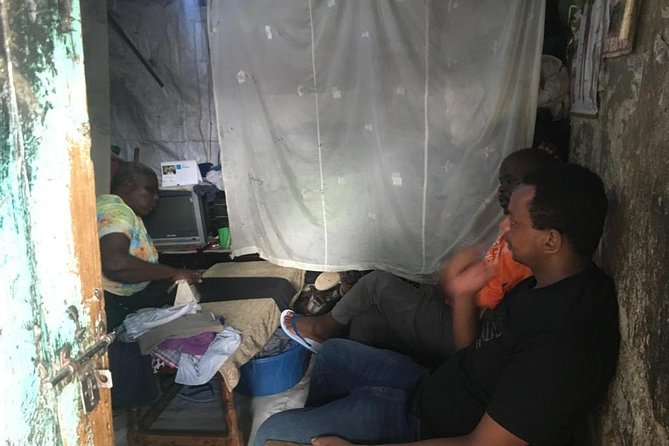
Meeting Residents and Entering a Home
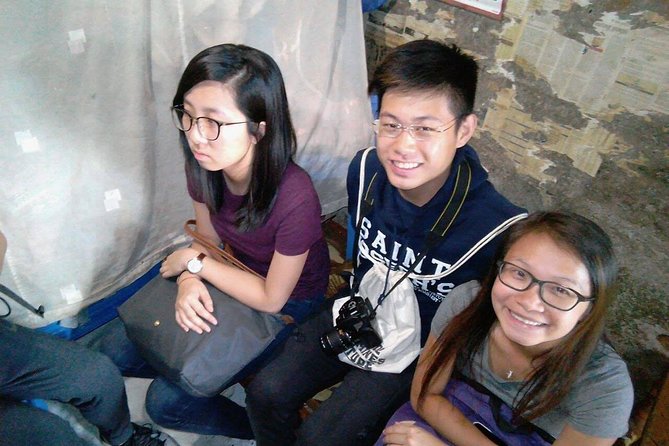
One of the most personal elements described for this experience is the possibility of meeting residents through the guide’s local relationships. In some cases, visitors have been welcomed into a friend’s home and shown how people live.
This can be powerful, but it also needs careful handling. A private home is not a public exhibit. You should follow the guide’s lead, ask before taking photographs, and accept a refusal without question.
The most useful approach is to listen. Ask about ordinary routines, work, school, or the changes residents would like to see. Avoid turning the conversation into an interrogation about hardship. People in Kibera have families, ambitions, humor, and ordinary concerns, just like people anywhere else.
A good guide helps keep these encounters respectful. Bramwel, in particular, has been praised for knowing people in the area and making visitors feel safe. That does not mean you should stop paying attention to your surroundings. It means a trusted local guide can help you move through the area with better judgment.
Community Projects and the DALA Connection
The company, DALA Tours, Safaris and Volunteers Kenya, presents the tour as part of a wider local employment and education effort. Your booking helps employ local youth, and part of the proceeds supports MAKLWETA, a charity founded to assist rural girl-child education.
This is a meaningful feature, but I would keep your expectations realistic. A short tour cannot solve Kibera’s housing, health, employment, or education challenges. What it can do is put local people in control of the explanation and direct some income toward community-linked work.
The tour also introduces you to the mixed results of NGO activity. Some projects improve lives. Others may not work well because of corruption, weak planning, or a poor understanding of local needs. Hearing that distinction is more useful than a simple message that every outside project is beneficial.
If you are interested in volunteering, the company also works with schools and mentions teaching opportunities. Those are separate from this two-hour tour, so you should ask for current details rather than assume volunteering is included.
Olympic Primary School and the Education Story

Ending at Olympic Primary School gives the visit a strong final focus. Education is one of the clearest ways to understand the connection between present hardship and future opportunity.
The school is described as the largest public primary school in Kenya and as having a record of helping families move away from poverty. Even if your visit is brief, the school gives context to the charity and education work discussed during the walk.
This stop may also help correct a common mistake in visiting informal settlements. It is easy to see only immediate problems: poor housing, limited services, and crowded streets. A school shows the longer view. Families are not simply coping with today. They are investing in children and trying to create different options for the next generation.
Because the school is also the end point, you can finish the tour in a place connected to possibility rather than leave with only a grim impression.
Price, Timing, and What You Receive

At $25 per person, this is reasonably priced for a two-hour local experience in Nairobi. The fee includes all taxes and fees, and the company provides round-trip transfers from a designated meeting point.
The strongest value comes from the guide’s local background. If you want a standard sightseeing route with polished facilities, this is not the right product. If you want direct conversation, context, and a better understanding of Nairobi’s inequalities and community efforts, the price is fair.
The experience is generally booked about 11 days ahead, but same-day arrangements have also been made successfully. I would still book ahead if your Nairobi schedule is tight, then confirm the meeting details and guide contact before setting out.
The listed maximum is 50 people. That is worth noting because a large group can make a narrow walking route less comfortable and reduce time for questions. Ask whether a smaller group is available if that matters to you.
What to Wear and How to Behave
Wear sturdy shoes that can get wet or muddy. The ground may be uneven, and practical footwear will make the walk easier. Comfortable clothing is also sensible, but dress modestly because you are entering a residential community.
Keep valuables secure and carry only what you need. The information provided does not describe a formal safety problem, and the guides are repeatedly praised for helping people feel comfortable. Still, sensible city-walking habits are appropriate.
Photography is the most important etiquette issue. Kibera is not a photo set. Ask before photographing people, and be especially careful around homes, children, schools, and private conversations. You may find the tour more rewarding if you spend less time behind a camera and more time listening.
Tips are not included. If your guide is helpful and the experience meets your expectations, a tip is a reasonable way to show appreciation, though the amount is your choice. Lunch and drinks are also not included. The company says local restaurants can be visited at your request.
Who Will Appreciate This Tour Most?
I would recommend this experience to visitors who want to understand Nairobi beyond its better-known attractions. It suits people who are curious about local employment, education, housing, and community-led change.
It is also a good fit if you prefer a personal guide over a large commercial operation. Guides such as Bramwel and Frederick have been praised for their warmth, local connections, and ability to answer questions.
This may not suit you if you want a relaxed sightseeing walk with little emotional weight. Kibera can be confronting. You may see difficult living conditions, and the experience may leave you thinking about poverty, inequality, and the limits of short-term aid.
Families and groups should consider the tone before booking. Most people can participate, and service animals are allowed, but the company does not provide detailed information about every walking condition. If you have mobility concerns, ask directly before reserving.
Should You Book the Kibera Tour?
Book it if you want a local-led, honest introduction to Kibera and are prepared to behave as a respectful visitor in someone else’s neighborhood. The personal guides, community focus, Olympic Primary School visit, and modest $25 price make it a worthwhile choice for many Nairobi itineraries.
Skip it if you are mainly looking for dramatic photographs or a quick poverty spectacle. The right reason to go is to listen, learn, and understand how residents work, study, organize, and support one another.
You can cancel for a full refund up to 24 hours before the start time. Cancellations or changes within 24 hours are not refundable. Confirm the meeting point and expected group size before you go, then bring sturdy shoes and a respectful attitude.
FAQ
How long does the Kibera tour last?
The main tour lasts about two hours, while the overall experience may take two to three hours.
Where does the tour start?
The tour starts at Olympic Primary School, MQQH+3FJ, Nairobi, Kenya.
Where does the tour end?
The tour ends at Olympic Primary School, the same place where it begins.
Is transportation included?
Round-trip transfers from a designated meeting point are provided. The tour is also near public transportation.
What is included in the price?
All fees and taxes are included in the $25 price per person.
Are food and drinks included?
No. Lunch and drinks are optional and are not included. Local restaurants can be visited at your request.
Is a tip included?
No. Tips are not included in the tour price.
Can service animals join the tour?
Yes. Service animals are allowed.
What is the cancellation policy?
You can cancel at least 24 hours before the experience for a full refund. Cancellations or changes made less than 24 hours before the start time are not refunded or accepted.
Just added around Kenya
- Nairobi Traditional Cooking Classes and Local Market Visit★ 5.0 · 2 reviews
- Nairobi: Maasai Market and Nairobi City Tour★ 5.0 · 4 reviews
- Nairobi: Hop on Hop off and Maasai market Collections Visit★ 3.5 · 10 reviews
- Nairobi: Explore Maasai Market for Unique Souvenirs★ 5.0 · 5 reviews
- Market Tour and Traditional Kenyan Cooking Class in Nairobi★ 4.8 · 6 reviews
- Maasai Market Souvenir Shopping★ 5.0 · 2 reviews
- Local Market Tour and Traditional Meal Cooking Class★ 5.0 · 4 reviews
- Diani: Market and Street Food Walking Tour★ 4.2 · 6 reviews
Market Tours, compared.
Damnoen Saduak Market and Maeklong Railway Market
Read our review →
The Old Siam: Damnoen Saduak and Maeklong Railway Market
Read our review →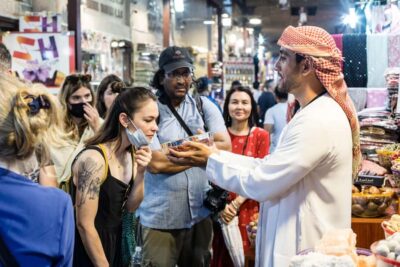
Old Town, Creek, Museums, Souks, & Street Food Tour
Read our review →Train Market & Floating Market with Boat Ride
Read our review →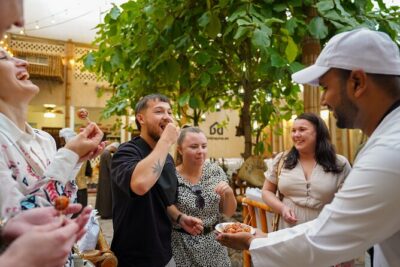
Old Town, Souks, Street Food, Guided Tour & Abra Ride
Read our review →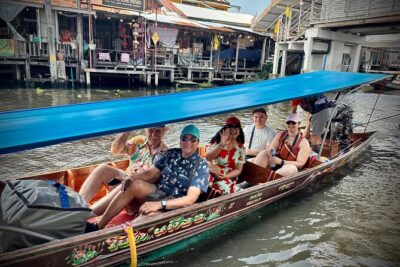
Ayutthaya & Ayothaya Floating Market Day Trip
Read our review →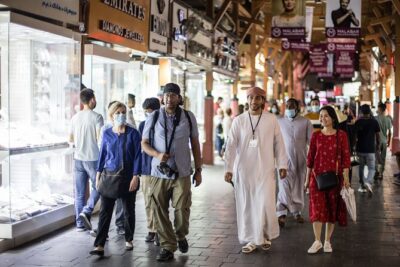
Frame Tickets, Creek, Souks & Blue Mosque Guided Tour
Read our review →
Hanoi Cooking Class: Culture, Local Market & Meaning CSR Impact
Read our review →Browse the lists this tour appears in