
Review · SPAIN
Málaga: Paella and Sangria Cooking Class with Market Visit
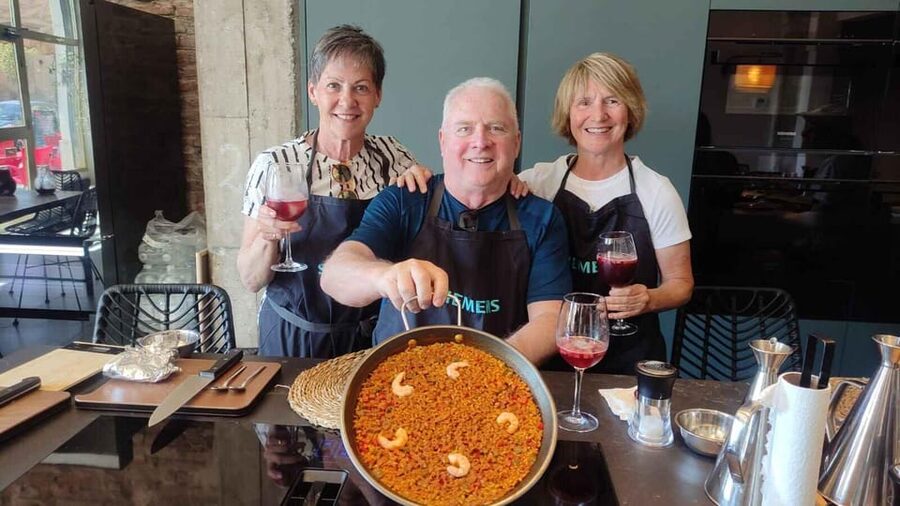
Good food makes a city easier to understand. This Málaga cooking class combines a weekday or Saturday morning visit to Atarazanas Market with a hands-on lesson in paella, gazpacho, and churros. I like the market connection, which gives the meal a local setting, and I like that you cook and eat your own lunch rather than watching a chef do all the work. The main consideration is timing: Sunday and evening sessions skip the market because it is closed.
The class costs $94 per person and lasts about 3.5 hours. That is a fair price for a market visit, olive oil tasting, sangria, a full cooked meal, wine or beer, churros, recipes, and a take-home apron. I also appreciate the practical focus. The paella method is explained clearly enough to repeat at home, and the team can take food intolerances into account if you mention them in advance.
Quick take: five useful things to know
- Atarazanas Market adds local flavor: On weekday and Saturday morning sessions, you walk through Málaga’s famous market and sample regional products before cooking.
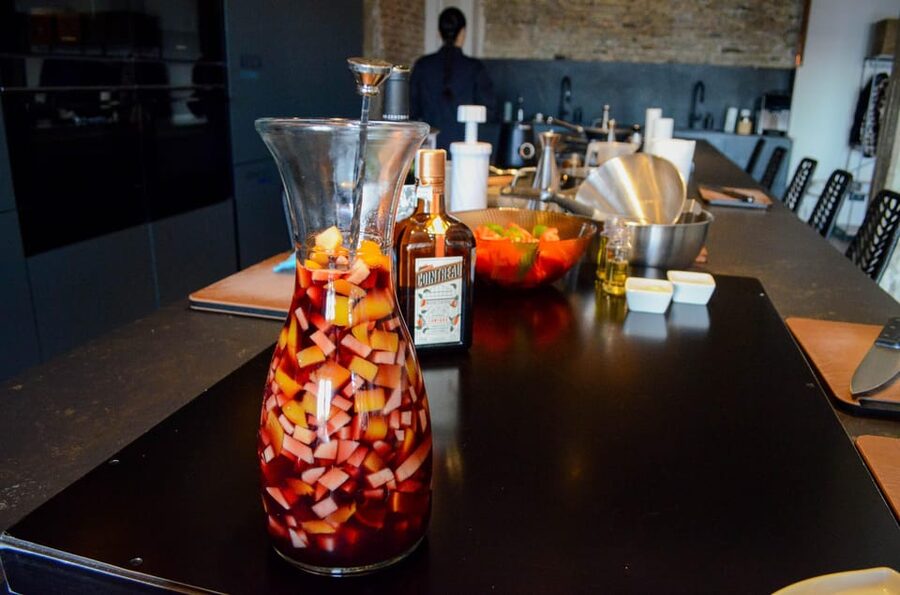
- The class is fully hands-on: You prepare paella, gazpacho, sangria, and churros, with help from the chef when needed.
- Olive oil gets proper attention: A tasting with local nibbles shows how much flavor extra virgin olive oil can bring to a simple dish.
- You leave with practical souvenirs: Kulinarea sends the recipes the next day and gives you the apron used in class.
- Sunday and evening sessions differ: These start directly at the Soho District kitchen because Atarazanas Market is closed.
Starting near Málaga’s Atarazanas Market
Morning sessions begin with a relaxed walk to Atarazanas Market, a central food stop that gives the class more purpose than a standard cooking lesson. You are not simply handed ingredients in a classroom. You first see the sort of produce and regional specialties that shape Andalusian cooking.
Guide Anaïs has been praised for adding useful facts about Málaga and Spanish food during the market walk. That matters because a good market visit should explain more than what is on the nearest stall. You get a bit of city context, a look at local ingredients, and opportunities to sample regional delicacies before heading to the kitchen.
The market visit is especially useful if this is your first day or two in Málaga. It helps you get your bearings around the city center while giving you ideas for later meals. I would not expect a full food tour, though. The main purpose is to prepare you for the cooking class, not to replace a dedicated market tour.
The market is closed on Sundays and during evening sessions. On those departures, you go directly to the Kulinarea kitchen in the Soho District, just steps from the market. This is not a flaw, but it changes the feel of the experience. Morning bookings on weekdays or Saturdays offer the fullest version of the itinerary.
More Cooking Classes in Spain
- Barcelona: Paella Cooking Experience & Boqueria Market Tour
★ 4.8 · 3,661 reviews - Barcelona Paella Cooking Class with Market Visit, Tapas & Sangria
★ 5.0 · 2,531 reviews - Paella Cooking Class, Wine Tasting & Central Market in Valencia
★ 5.0 · 1,150 reviews
The Kulinarea kitchen in Málaga’s Soho District
The meeting point is Kulinarea at Av Manuel Agustín Heredia 24. The kitchen is described as spacious, contemporary, clean, and attractive, which makes a difference during a three-and-a-half-hour class. Cooking can become cramped when several people work around one counter, so a well-kept kitchen is more than decoration.
The location is also practical. If you are driving, Parking de La Marina is directly across from the meeting point. You should arrive without large luggage, since bags and suitcases are not allowed in the activity.
The class operates in English with a live guide. The international mix of the group can add to the fun, especially when people compare food habits and cooking customs. At the same time, group cooking means you will share tasks and equipment. If you prefer a private lesson with every step tailored to you, this is probably not the right format.
The setting appears designed for social cooking. You have time to talk with the guide, the chef, and the other people at your work area, but the activity still has a clear result: a meal you prepare together and then eat.
Olive oil tasting before the cooking begins
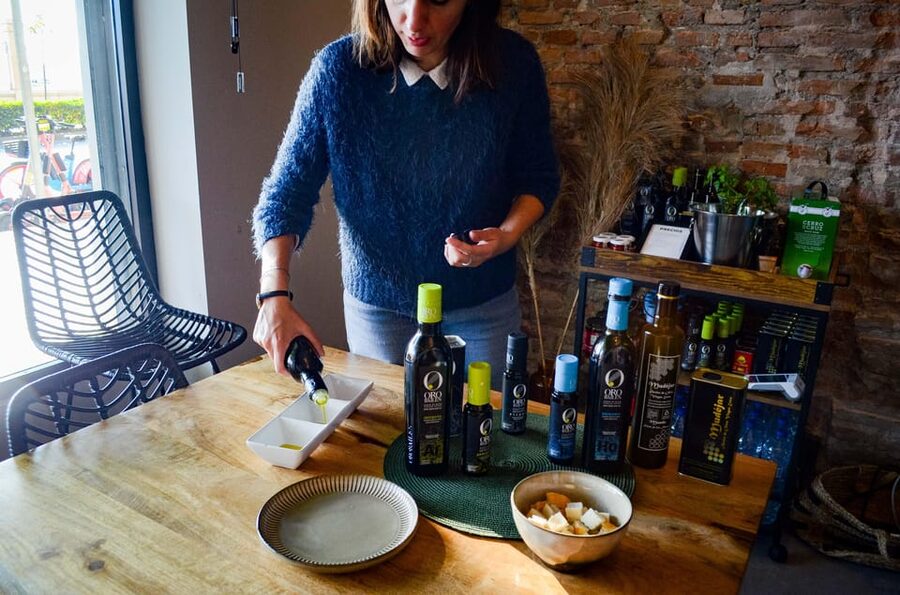
Before the apron goes on, the class starts with an extra virgin olive oil tasting and traditional nibbles. This is one of the strongest parts of the experience because olive oil is central to Spanish cooking, yet many people use it without paying attention to its flavor.
You taste the oil and notice its differences rather than treating it as a background ingredient. The tasting gives you a simple lesson you can use at home: good oil can be sampled on its own, not just poured into a pan.
The nibbles also give you something to eat while the class gets organized. That is helpful, since the full meal comes later and the activity runs for several hours. The tasting is not a separate professional course, but it is a thoughtful addition to the paella lesson and gives the class a distinctly Spanish start.
Making paella with a useful method
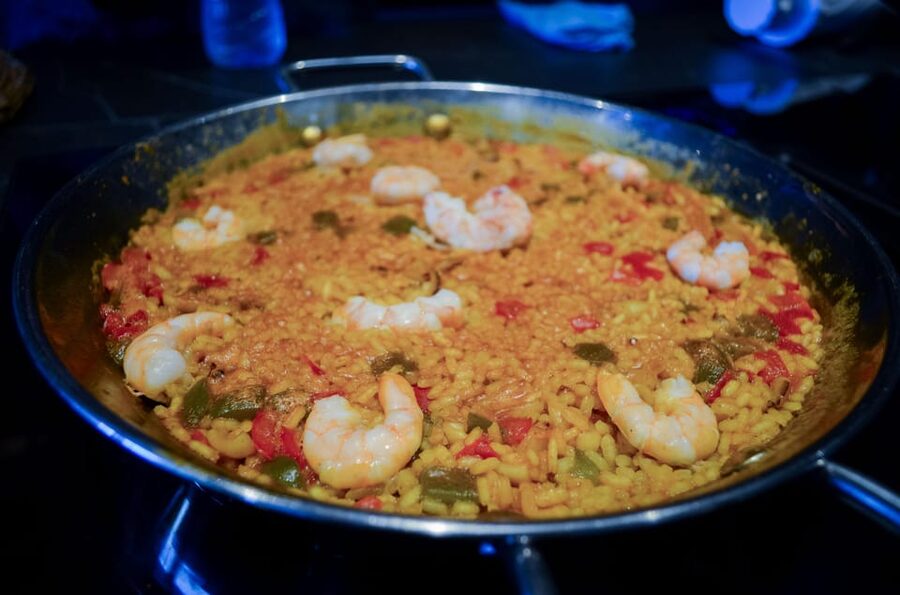
Paella is the main event, and this is where the class earns much of its price. The chef demonstrates how to combine fresh ingredients, rice, and traditional spices, then helps you as you cook. It is a practical lesson rather than a performance. You should expect to participate, stir, prepare, and make decisions under guidance.
One useful point is the attention given to technique. Jean from Canada specifically valued the method for getting paella right at home and preferred a lighter version built around shrimp and cuttlefish rather than heavier proteins. That is good advice for cooks who want to repeat the dish after returning home. You do not need to copy every ingredient exactly to keep the central technique.
The class is also helpful if you are unsure about seafood. The format gives you a chance to learn how the ingredients work together and to ask for help as the dish develops. The chef is there to correct mistakes before they become a problem, which is much less stressful than attempting paella alone for the first time.
The exact recipe may depend on the day’s ingredients and dietary needs, so I would not expect the dish to be identical every time. What you take home is more valuable than a single meal: a method, a recipe, and a better sense of how Spanish rice dishes are built.
Same place, a different set of stalls:
- Valencian paella cooking class, tapas and visit to Ruzafa market.
★ 5.0 · 828 reviews - Spanish Cooking Class & Triana Market Tour in Sevilla
★ 5.0 · 760 reviews - Seville: 3.5-Hour Spanish Cooking Class & Triana Market Tour
★ 4.9 · 751 reviews - Valencia: Paella Cooking Class with Central Market Tour
★ 5.0 · 721 reviews
Gazpacho, sangria, and churros complete the meal
Paella is supported by several smaller preparations, giving you a broader lesson in Spanish food. You prepare homemade gazpacho, a cool vegetable soup that contrasts nicely with the hot rice dish. Making it yourself helps you understand how fresh produce, olive oil, and seasoning work together without complicated equipment.
Sangria is also prepared during the class. It is a social drink and a natural fit for a group cooking activity, though the class is not centered on drinking. Wine or beer is served with the meal, so you have a chance to pair the finished food with a regional drink.
Churros finish the experience. This is a smart choice for a cooking class because dessert adds a clear ending and gives you another technique to practice. The meal is not limited to one famous Spanish dish. You prepare a starter, main course, drink, and sweet finish, then sit down to eat what you have made.
The food aspect makes the experience work well for people who like a full activity rather than a short demonstration. You are not just tasting small samples and moving on. The cooking builds toward lunch.
What the guides and chef add
The staff receive the highest praise for being friendly, attentive, and clear. Anaïs is specifically noted for making the market walk more interesting with facts about Málaga and Spanish cuisine. The chef explains the cooking steps and helps when someone needs support.
That human attention matters in a class. Cooking instructions must be clear enough for people with different skill levels, and the team seems to watch for problems before they become frustrating. Food intolerances can also be taken into account, according to the information provided. You should communicate any needs when booking or before the class rather than waiting until ingredients are being prepared.
The instruction is also practical rather than overly formal. You can chat with the people around you while still following the recipe. That balance suits couples, friends, solo visitors, and families with older children who are comfortable participating in a group activity.
One point to keep in mind is that the chef’s name is not provided, so you cannot choose the class based on a particular instructor. The strength here is the format and team approach, not a celebrity cooking personality.
Is $94 a fair price?
At $94 per person, this is not the cheapest way to eat paella in Málaga. It can still be good value if you use the full experience. The price covers the market visit when available, olive oil tasting, sangria, gazpacho, paella, wine or beer, churros, instruction, an apron, and recipes sent the following day.
A restaurant meal would generally be shorter and more relaxing. You would not have to chop, stir, or wait for rice to cook. The class gives you something different: a meal plus a skill you can use again.
The apron improves the value slightly because it is a practical souvenir rather than a disposable keepsake. The recipes are even more useful. If the paella technique works for you at home, the class keeps paying off after your trip.
I see the price as fair for visitors who want food, instruction, and social time in one activity. It is less attractive if you only want to taste Málaga’s cuisine or if you dislike group cooking. In that case, a market visit and restaurant meal may suit you better.
Timing, booking, and who should choose it
The class lasts 3.5 hours, so set aside a substantial part of your day. Morning sessions on weekdays and Saturdays include the market, while evening and Sunday bookings go straight to the kitchen. Check the starting time carefully so you know which version you are booking.
The experience is conducted in English. It suits anyone who wants clear guidance without needing to speak Spanish, though the international group setting may include people with different cooking speeds and habits.
I would recommend it most to:
- Couples who want a shared food activity
- Solo visitors who enjoy meeting people while doing something practical
- Families with older children who can take part in cooking
- Home cooks who want a repeatable paella method
- First-time visitors who want a little Málaga context with their meal
I would be more cautious if you have limited time, want a quiet meal, or are looking for a highly specialized seafood class. The class covers several dishes, so its strength is variety rather than a narrow study of paella alone.
Free cancellation is available up to 24 hours before the activity, and you can reserve now and pay later. Those terms are useful if your Málaga schedule is still changing.
Should you book the Málaga paella class?
Book it if you want to do more than order paella at a restaurant. The market walk, olive oil tasting, clear instruction, and full meal give the class a strong sense of place. I especially like that you leave with recipes and an apron, not just photographs.
Choose a weekday or Saturday morning if the Atarazanas Market matters to you. Pick an evening or Sunday session if the cooking itself is your priority and you prefer a direct start at the Soho kitchen.
With a 4.9 rating from 26 reviews and repeated praise for the clean facilities, capable team, useful paella technique, and good value, this is an easy recommendation for food-minded visitors. Just remember that it is a hands-on group activity. You will work for your lunch, but that is exactly why the final plate should taste better.
FAQ
How long does the Málaga paella cooking class last?
The experience lasts 3.5 hours.
What language is the class conducted in?
The class is conducted in English with a live tour guide.
Where is the meeting point?
You meet at the Kulinarea kitchen at Av Manuel Agustín Heredia 24 in Málaga.
Is parking available near the meeting point?
Yes. Parking de La Marina is an underground car park located across from the meeting point.
Does every session include a market visit?
No. Weekday and Saturday morning sessions include a walk to Atarazanas Market. Sunday and evening sessions go directly to the kitchen because the market is closed.
What dishes will I prepare?
You prepare paella, homemade gazpacho, sangria, and churros.
Is wine included?
Yes. Wine or beer is included with the meal.
Is an olive oil tasting included?
Yes. The class begins with an extra virgin olive oil tasting accompanied by traditional nibbles.
Do I receive anything to take home?
Yes. You receive a Kulinarea apron, and the recipes are sent the next day.
Can I cancel for a refund?
You can cancel up to 24 hours in advance for a full refund. You can also reserve now and pay later.
Just added around Spain
- Explore Bilbao’s Flavors Mercado de la Ribera and Old Town★ 4.5 · 3 reviews
- CERTAL Exclusive Tour: LA RIBERA Market + GASTROBARS Bilbao (3h)★ 4.5 · 12 reviews
- Barcelona La Boqueria & Sant Antoni Private Food Experience★ 5.0 · 7 reviews
- Taste of Barcelona: Boqueria Market, Tapas & History Tour★ 4.5 · 22 reviews
- Barcelona Tapas Cooking & Cocktail Class with Veronique & Mattias★ 5.0 · 3 reviews
- Spanish Oysters, Cava and Ibérico Ham at Barcelona’s La Boqueria Market★ 5.0 · 8 reviews
- Private Barcelona Market Tour & Paella Cooking Class with Josh★ 5.0 · 4 reviews
- Food and Market Tapas Tour★ 5.0 · 6 reviews
Cooking Classes, compared.
Hanoi Cooking Class: Culture, Local Market & Meaning CSR Impact
Read our review →
5 Traditional Dishes Hanoi Cooking Class with Market Trip
Read our review →
Cooking Class and Lunch at a Tuscan Farmhouse with Local Market Tour from Florence
Read our review →
Cooking Class, Market & Thai Herbs Garden Tour
Read our review →
Authentic Cooking Class with Market & Farm Visit
Read our review →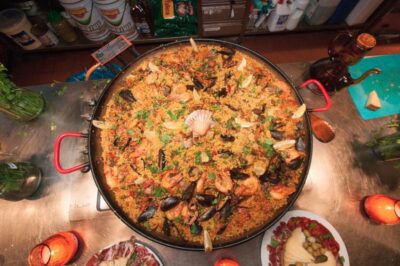
Paella Cooking Experience & Boqueria Market Tour
Read our review →
Cooking Class Hoi An:Local Market, Basket Boat, Fishing & Cooking
Read our review →
Hoi An Cooking Class(Market,BasketBoat Crabfishing&Cooking Class)
Read our review →Browse the lists this tour appears in