
Review · JAPAN
Kanazawa: Sushi Making Experience at Oumicho Market
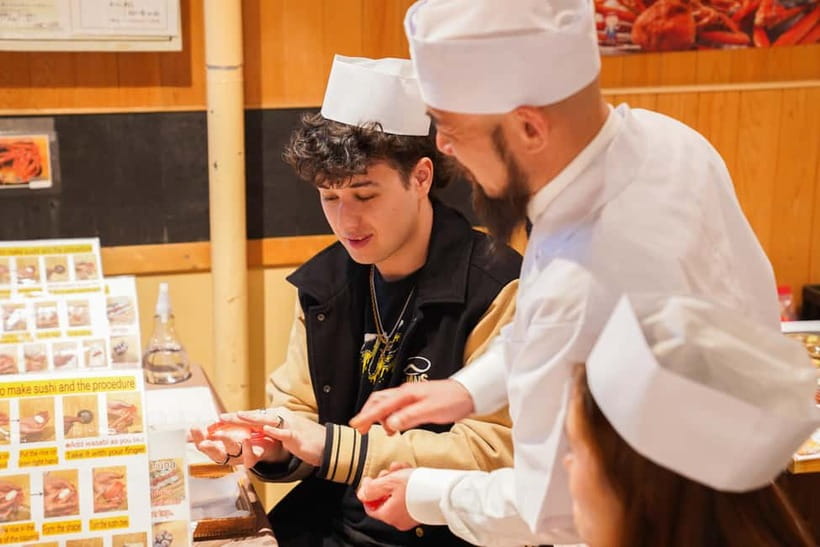
Fresh fish, busy market, hands-on sushi. At Enome Sushi in Kanazawa’s Omicho Market, you learn directly from a professional chef, then eat what you make. I like the setting: you are not tucked away in a generic cooking studio, but working inside one of the city’s main food markets. I also like the clear menu of results: five nigiri, two gunkan maki, and one roll.
The main thing to consider is language. The listed instruction language is Japanese, though one French participant described help from another restaurant staff member who provided translation. Arrive early, too. Omicho Market can be a little tricky to navigate, especially if you are trying to find the right entrance.
Key points to know before booking
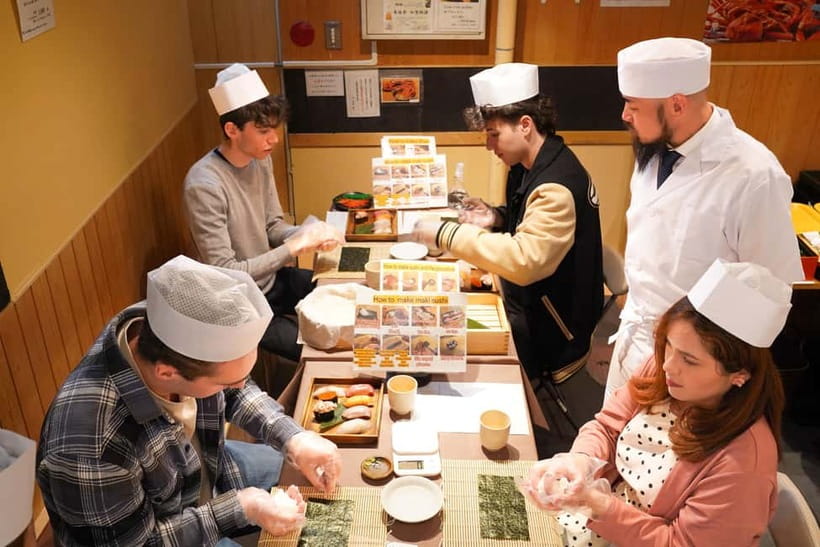
- Five nigiri, two gunkan maki, and one roll: You make eight sushi pieces in three different styles.
- Inside Omicho Market: The lesson takes place at Sushi Enome, in a market with more than 300 years of history.
- Professional chef instruction: You learn sushi technique, knife use, rolling, and some background on sushi culture.
- Your own lunch or snack: The tasting is built into the experience, so you eat the sushi you prepare.
- Private group format: This suits people who want a more personal lesson rather than a large class.
- Two-hour schedule: The time is long enough for instruction and practice without taking over your whole day.
Making sushi inside Kanazawa’s food market
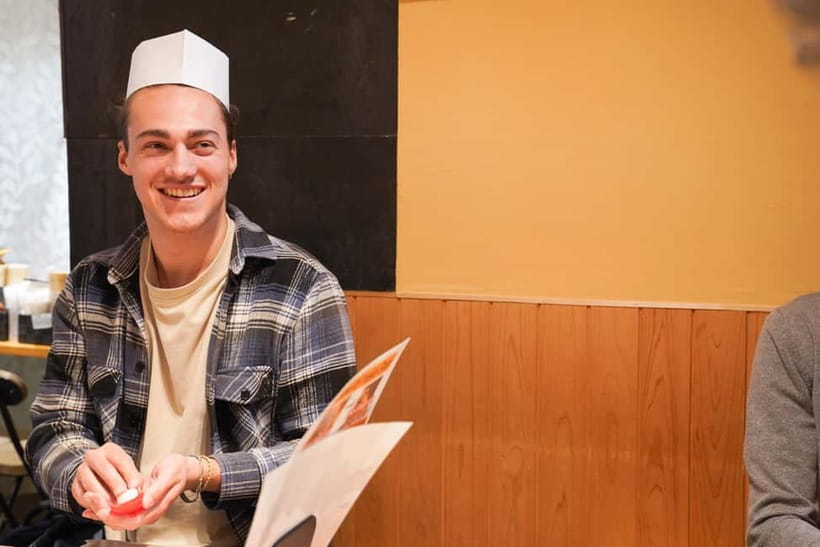
Omicho Market is an important part of the experience, not just a map reference. It has served Kanazawa for more than 300 years and remains a busy meeting place for locals and visitors. Shops and food counters fill the market, giving you a close-up look at the city’s connection to seafood.
Your meeting point is Sushi Enome. Enter Omicho Market through the Emza, also called M’ZA, entrance. At the first intersection, turn right and walk a short distance. The Sushi Enome sign should be on your left.
That route sounds easy on paper, but the market’s lanes can make a first visit confusing. I would allow extra time and arrive at least 10 minutes before the lesson. One participant specifically advised getting to the market early because finding the restaurant can take a little effort.
The setting gives the lesson some character. You are making sushi while the market carries on around you, rather than treating sushi as an abstract recipe in a quiet classroom. The tradeoff is that a market can feel busy and less controlled than a dedicated cooking school. If you prefer a calm, silent kitchen, this may not be your ideal class.
A few more market tours around Japan worth a look
- Tokyo Tsukiji Fish Market Food and Culture Walking Tour
★ 5.0 · 3,184 reviews - Tokyo: Tsukiji Fish Market Food and Walking tour
★ 5.0 · 1,724 reviews - Tokyo: Tsukiji Fish Market Guided Walking Tour
★ 4.9 · 1,397 reviews
What happens during the two-hour lesson
The experience lasts two hours. The exact starting time depends on availability, so you need to check the schedule when booking. The class begins with instruction from a professional sushi chef at Sushi Enome.
The chef explains elements of sushi history and culture, then shows you the practical skills needed for the meal. The lesson includes knife handling and sushi rolling. These are useful parts of the class because they explain what your hands are meant to do, rather than asking you to copy a finished piece without context.
You should expect to work with fresh seafood from Kanazawa. The information provided does not specify every fish or topping used on the day, so you should not book this expecting a fixed list of varieties. The clear promise is the use of fresh local seafood and the chance to prepare several common sushi forms.
The teaching style appears friendly and patient. One participant from the United States described two patient chefs, while another praised the teachers as helpful and funny. A French participant described the chef and a second restaurant staff member as kind and good at teaching. That second person also helped with translation, which may be useful because the official language is Japanese.
I would treat the translation point as a helpful possibility, not a guaranteed full-language service. If you have detailed dietary needs or need extensive instruction in a particular language, confirm that before booking.
Three sushi styles, not just one
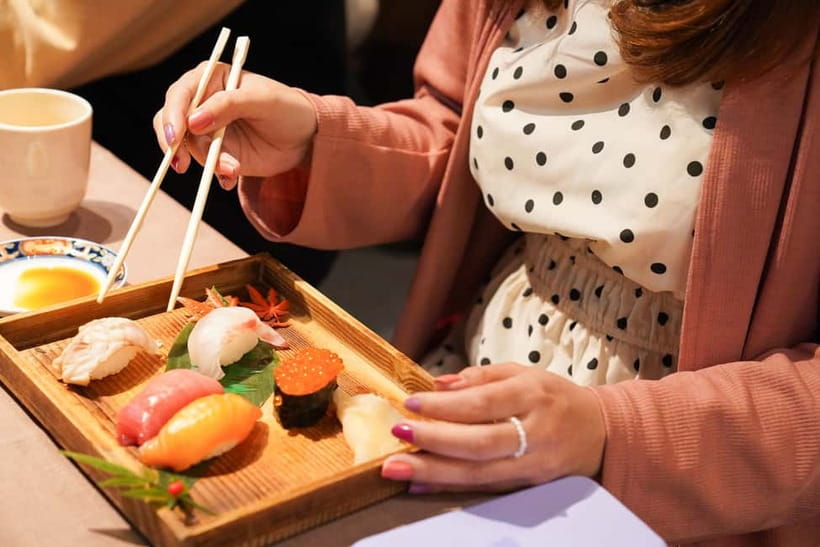
The lesson gives you a useful range of sushi techniques. You make five pieces of nigiri, two pieces of gunkan maki, and one roll.
Nigiri is the familiar hand-shaped sushi with a piece of fish or another topping placed over seasoned rice. Making five pieces gives you enough practice to notice how pressure, rice shape, and topping placement affect the result. It also gives you several pieces to eat afterward, which is helpful when your first attempt looks more homemade than restaurant-ready.
Gunkan maki has a strip of seaweed wrapped around the rice to form a small cup. The style is useful for toppings that need a little support. Making two pieces lets you try the technique without making the lesson feel repetitive.
You also prepare one sushi roll. Rolling is one of the skills covered by the chef, so this part gives the class a different physical rhythm from nigiri. You need to coordinate the seaweed, rice, fillings, and pressure. It can be a little fiddly, but that is exactly why instruction matters.
The total is eight pieces: five nigiri, two gunkan maki, and one roll. This is a tasting-sized meal rather than a large feast. If you arrive very hungry, do not assume the sushi alone will fill you for the day. The value comes from the lesson and the setting, with lunch as the reward.
The seafood matters, but the technique matters more
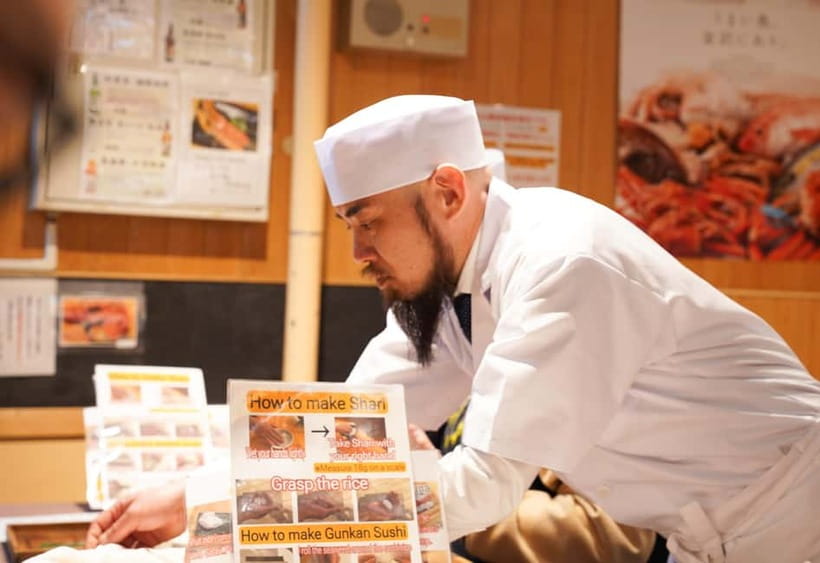
Kanazawa is known for its connection to the sea, and this class puts that connection directly on your plate. The fish is described as fresh seafood from Kanazawa, and the tasting lets you compare the clean flavor of the fish with the texture and seasoning of the rice.
The lesson also helps you understand why sushi is more than raw fish placed on rice. Rice shape, handling, knife work, and rolling all affect the final bite. You may not leave ready to run a sushi counter, but you should have a clearer sense of the work behind a simple-looking piece of nigiri.
I like that the final meal is made by you. It creates a direct link between the market, the chef’s instruction, and what you eat. The finished sushi may not look perfect, and that is part of the fun. The class is about learning the motions and enjoying the result, not passing a professional exam.
The seafood is also the reason to pay attention to any dietary concerns before booking. The supplied information does not list substitutions, allergy procedures, or vegetarian options. You should ask the provider directly if you cannot eat fish, seafood, seaweed, rice, or other standard sushi ingredients.
Same place, a different set of stalls:
- Nishiki Market Brunch Walking Tour (7 Tastings + Brunch)
★ 5.0 · 1,355 reviews - Tokyo Sushi Making Class in Tsukiji with Professional Chef
★ 5.0 · 1,177 reviews - Tsukiji Fish Market Guided Tour and Sushi Making with Pro Chef
★ 5.0 · 775 reviews - Tokyo: Tsukiji Fish Market Food and Culture Walking Tour
★ 4.7 · 757 reviews
Friendly teaching and the language question
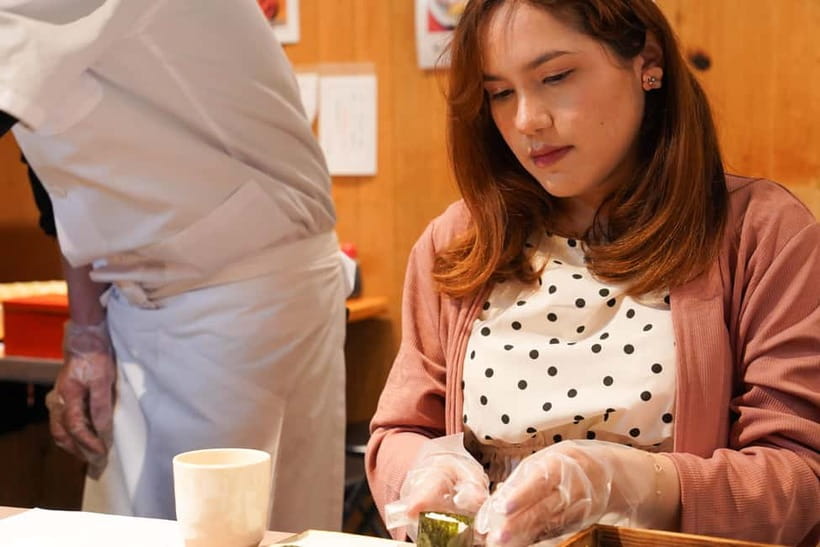
The strongest praise focuses on the people leading the class. The chefs are described as patient, funny, kind, and helpful. Those qualities matter in a hands-on lesson, since small corrections can make the difference between a loose piece of sushi and one that holds together.
The official activity information lists Japanese as the instructor language. A French participant described a chef who spoke Japanese and another restaurant worker who translated. This suggests that some language support may be available during a particular session, but the information does not promise instruction in English, French, or another language.
You can still prepare for the class by watching the chef closely and following the demonstrations. Comfortable clothing is required, and you should wear something suitable for cooking. Smoking, alcohol, and drugs are not allowed during the activity.
The private group format is another plus. It can make it easier to ask questions and receive corrections. The exact size of the private group is not stated, so I would not assume it means a one-to-one lesson. It does mean the booking is arranged for your own group rather than as a general open class.
Is $70 a fair price?
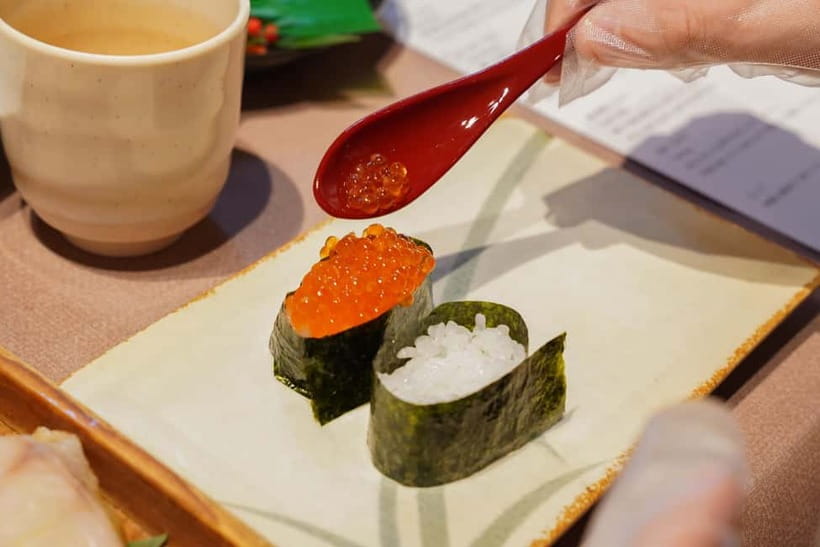
At $70 per person, this is not simply a meal at the market. You are paying for a two-hour activity, professional instruction, ingredients, eight pieces of sushi, and the chance to eat your own work.
The price makes the most sense if you value participation. A person who only wants to eat sushi can probably find a simpler meal elsewhere, but that misses the central reason to book this experience. You are paying for the instruction, the market setting, and the memory of making the food yourself.
The value is also stronger for first-time sushi makers, families, couples, and small private groups. You get three different forms to practice, rather than one quick demonstration followed by a tasting. The chefs’ patient and humorous style, as described by participants, adds to the sense that this is meant to be enjoyable rather than intimidating.
I would be more cautious if you are looking for a large meal, a long professional training session, or a class with guaranteed multilingual instruction. Drinks are not included, and hotel pickup and drop-off are not included either. You make your own way to Omicho Market.
Who will enjoy this experience most
I would recommend this class to you if you like food activities with a strong sense of place. The market setting gives the lesson a clear Kanazawa identity, and the seafood connects the activity to the city’s coastal food culture.
It is also a good choice for anyone who likes to learn by doing. Watching a chef prepare sushi is one thing. Handling the knife, shaping the rice, forming gunkan maki, and rolling sushi gives you a better feel for the craft.
Families and private groups may appreciate the two-hour length and the friendly teaching style. The activity is wheelchair accessible, which is important for many visitors, though you should still allow time to reach the restaurant from the correct market entrance.
You may want to skip it if you dislike seafood, need a guaranteed non-Japanese instruction language, or want a quiet restaurant meal with no practical activity. You should also check first if you have allergies or strict dietary requirements, since the available information does not provide a substitute menu.
Practical advice for a smooth visit
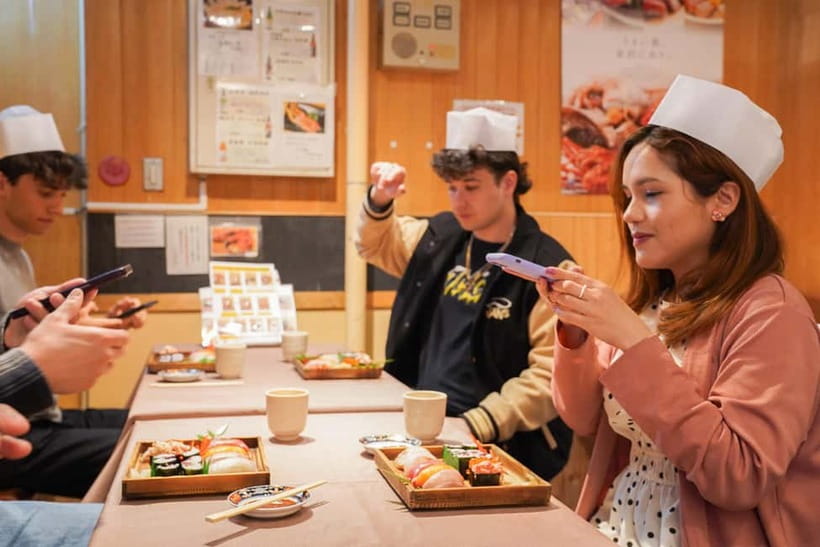
Arrive 10 minutes early. I would arrive even earlier if you have never been to Omicho Market, since the market lanes and entrances can slow you down.
Use the Emza, or M’ZA, entrance. Turn right at the first intersection, then look for Sushi Enome on the left after a short walk. Having the restaurant name ready on your phone should make the search easier.
Wear comfortable clothing that is suitable for cooking. You will be working with ingredients and practicing knife and rolling techniques, so stiff or fussy clothing is a poor match.
Do not plan around drinks being provided. Drinks are not included. Hotel transportation is not included either, so you need to reach the market independently.
The booking terms offer free cancellation up to 24 hours before the activity for a full refund. You can also reserve now and pay later, which helps if you are still arranging your Kanazawa schedule.
Should you book the Omicho Market sushi class?
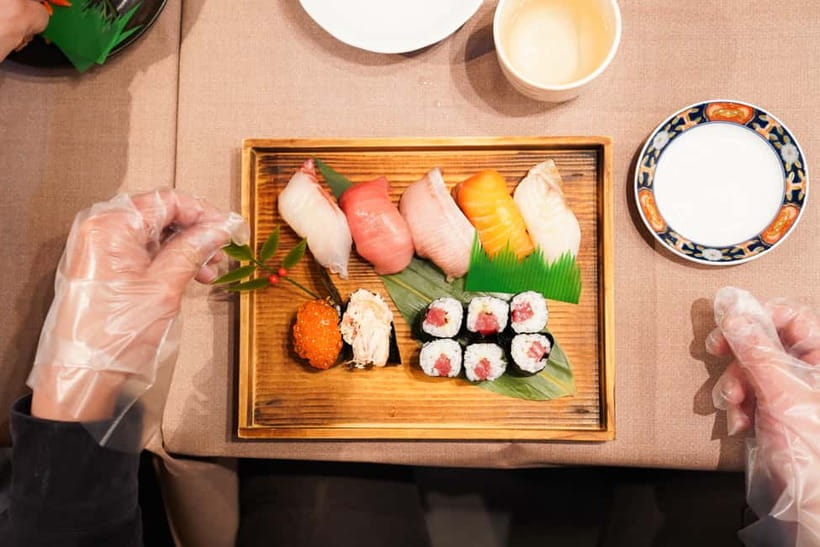
I would book this if you want a hands-on food experience tied closely to Kanazawa. The combination of a 300-year-old market, fresh local seafood, professional instruction, and a private group format gives the two hours a clear purpose.
The best reasons to go are the patient teaching, the chance to make three different sushi styles, and the pleasure of eating your own finished pieces. The main cautions are the Japanese instruction language, the need to find Sushi Enome inside the market, and the lack of information about substitutions for dietary needs.
For $70, this is good value when you want more than a meal. Arrive early, wear practical clothes, and keep your expectations focused on learning and tasting rather than producing restaurant-perfect sushi. You will likely leave with a full plate, a better feel for sushi technique, and a memorable connection to Kanazawa’s market food culture.
FAQ
Where does the sushi-making experience take place?
It takes place at Sushi Enome restaurant inside Omicho Market in Kanazawa, Japan.
How do I find Sushi Enome?
Enter Omicho Market through the Emza, or M’ZA, entrance. Turn right at the first intersection and walk a short distance. Sushi Enome is on the left.
How long does the activity last?
The experience lasts two hours.
What sushi will I make?
You will make five pieces of nigiri sushi, two pieces of gunkan maki, and one sushi roll.
Is the sushi included in the price?
Yes. The price includes the ingredients, five nigiri, two gunkan maki, one roll, and tasting your own sushi.
Is a professional chef included?
Yes. A professional sushi chef provides the instruction.
What language is the class taught in?
The listed instructor language is Japanese. One participant described translation help from another restaurant staff member during the class, but additional language support is not guaranteed in the provided information.
Is the activity wheelchair accessible?
Yes, the activity is listed as wheelchair accessible.
Can I cancel the booking?
Yes. You can cancel up to 24 hours in advance for a full refund. You can also reserve now and pay later.
Just added around Japan
- Nagoya Super Market Tour & Home Cooking Class with a Local, Akiko★ 5.0 · 10 reviews
- Tokyo: Private Tsukiji Street Food & Sake with Local Guide★ 5.0 · 3 reviews
- Tokyo: Tsukiji Market Guided Tour & Sushi-Making Experience★ 4.4 · 11 reviews
- 【Family pack】Tokyo: Tsukiji fish market food tour★ 5.0 · 3 reviews
- Tokyo: Tsukiji Market and Hama-rikyu Gardens Guided Tour★ 4.8 · 73 reviews
- Tokyo: Tsukiji Fish Market Culture Tour with Sashimi Tasting★ 4.6 · 54 reviews
- Tokyo: Tsukiji Fish Market Foodie and Educational Tour★ 5.0 · 4 reviews
- Tokyo : Tsukiji Fish Market Food Walking & Shrine Visit Tour★ 5.0 · 3 reviews
Market Tours, compared.
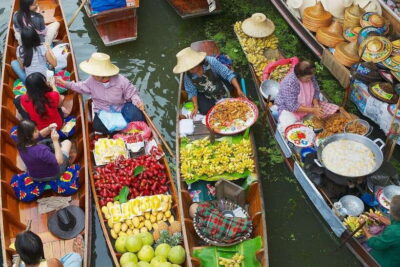
Damnoen Saduak Market and Maeklong Railway Market
Read our review →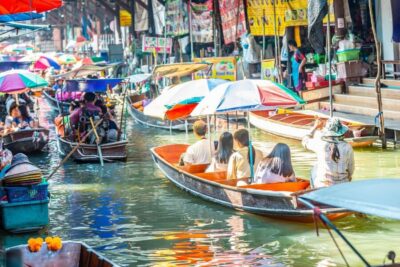
The Old Siam: Damnoen Saduak and Maeklong Railway Market
Read our review →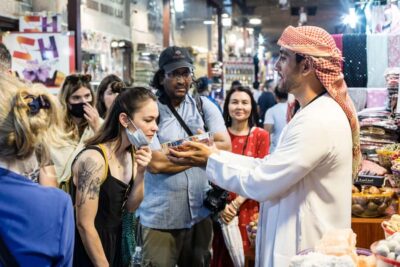
Old Town, Creek, Museums, Souks, & Street Food Tour
Read our review →Train Market & Floating Market with Boat Ride
Read our review →
Old Town, Souks, Street Food, Guided Tour & Abra Ride
Read our review →
Ayutthaya & Ayothaya Floating Market Day Trip
Read our review →
Frame Tickets, Creek, Souks & Blue Mosque Guided Tour
Read our review →
Hanoi Cooking Class: Culture, Local Market & Meaning CSR Impact
Read our review →Browse the lists this tour appears in