
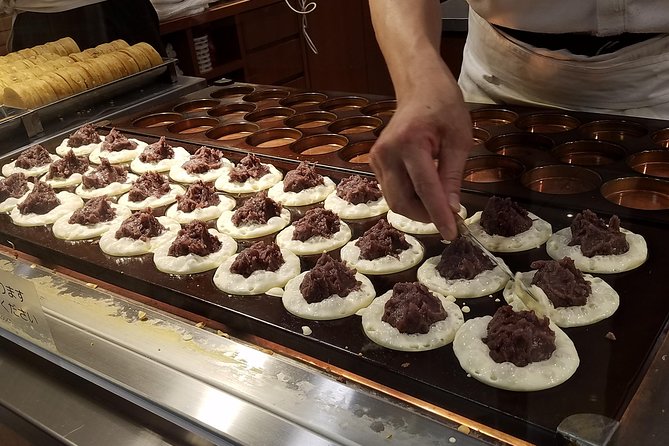
Review · JAPAN
Deep Dive: Osaka Food Markets from Local to Luxurious!
Osaka eats first. This four-hour food walk shows you a side of the city built around shopping, cooking, and daily meals, from a polished department store food hall to old-fashioned neighborhood markets. I like the wide range of stops and the chance to compare local Osaka life with Japanese and Korean food culture. I also like the small group, capped at eight people, which should make questions and tastings easier.
The catch is simple: food is not included. You pay $59 per person, then add your own snacks, drinks, and samples, plus 330 yen for transportation during the tour. That can be good news if you want control over what you eat, but your final cost will depend on your appetite.
Key things to know before you book
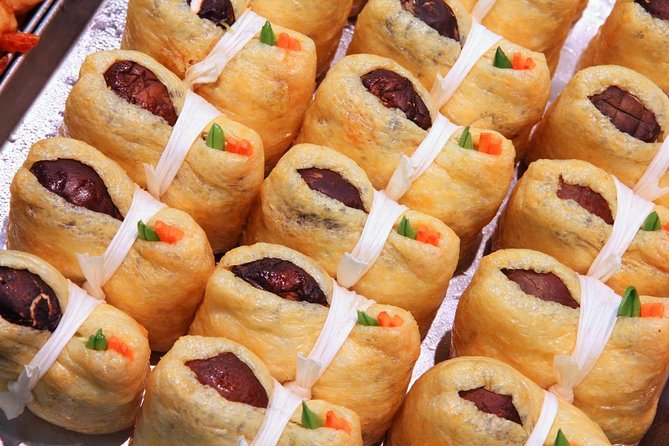
- Seven food-focused stops: The route includes a department store marketplace, Tenma markets, Tenjinbashisuji, Tsuruhashi, Kuromon Ichiba, Doguyasuji, and Namba.
- A useful contrast of Osaka: You see upscale food shopping, local staples, Japanese market specialties, and a Japanese-Korean neighborhood in one outing.
- Food purchases are separate: Snacks, samples, meals, drinks, and souvenirs are your responsibility.
- Small groups matter: The tour accepts no more than eight participants, a practical size for crowded market lanes.
- Three guide languages: You can book with an English, Spanish, or French-speaking guide.
- Wear comfortable shoes: The tour involves repeated walking between markets and shopping streets over four hours.
Why Osaka’s food culture deserves a full morning
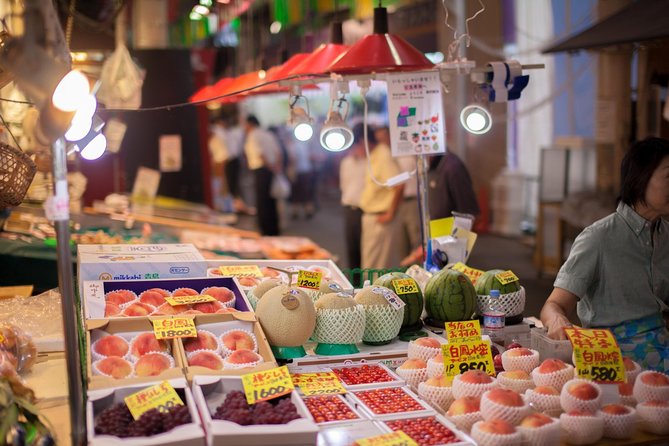
Osaka has long been associated with eating well and eating often. This tour leans into that reputation without reducing the city to a single famous market. Instead, it connects several parts of Osaka that show how food reaches the table, from high-end retail counters to neighborhood shops serving ordinary households.
I like that the experience is not limited to cooked street food. You also see meats, fish, vegetables, pantry goods, and kitchen tools. That wider view helps you understand food as part of daily life, not just as a snack bought for a photograph.
Your guide is central to the experience. The guide is a native or near-native speaker of your chosen language and is expected to explain customs, local life, and the different roles of each market. One French-speaking guide named Ferdinand received especially warm praise for explaining Japanese and Korean markets, sharing his own life in Japan, and taking time with questions.
More Food and Drink Trips in Japan:
- Tokyo Tsukiji Fish Market Food and Culture Walking Tour
★ 5.0 · 3,184 reviews - Tokyo: Tsukiji Fish Market Food and Walking tour
★ 5.0 · 1,724 reviews - Tokyo: Tsukiji Fish Market Food and Culture Walking Tour
★ 4.7 · 757 reviews
Starting at Tenma Station
The meeting point is the McDonald’s directly in front of Tenma Station. This is a practical place to meet because it is easy to identify, but I would still give yourself enough time to find the correct station exit and the exact restaurant entrance.
Tenma is a useful starting point for a food-centered walk. The route quickly moves into market streets and shopping areas rather than beginning with a major sightseeing monument. That tells you what this tour is about: ordinary Osaka commerce and eating habits, not a standard temple-and-castle circuit.
The tour is scheduled for four hours. Each listed stop receives about 25 minutes of guided sightseeing and walking time. Since the stops are spread across several districts, part of the morning is also spent moving between them. You should expect an active route rather than a single market visit.
Takashimaya: polished food shopping in Namba
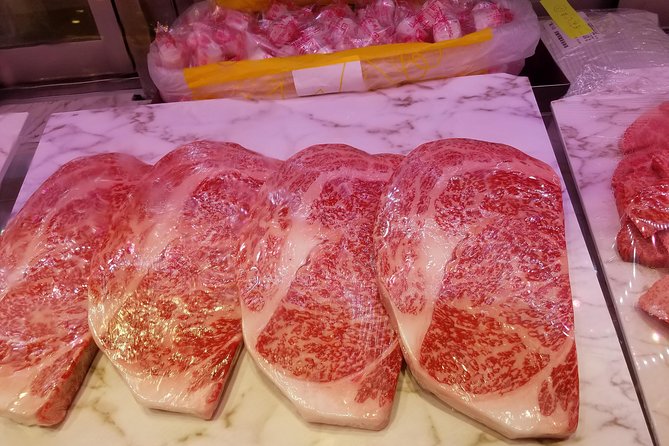
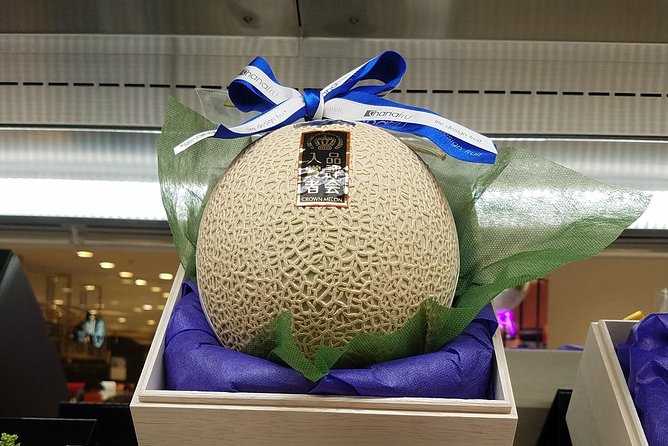
The first major retail stop is the TUMI Takashimaya Osaka Store area, listed as a guided sightseeing visit. The important point here is the department store setting. Japanese department store food floors are known for careful presentation and a wide range of prepared foods, sweets, ingredients, and specialty products.
This gives you the tour’s upscale reference point. You can see how food is presented when price, packaging, appearance, and gift-giving matter. After that, the more informal markets have a useful contrast.
Because the stop is tied to Takashimaya and later Namba, the route includes both luxury-oriented retail and more practical shopping streets. I would not expect a full meal here. Food purchases are optional and separate, so think of this as a guided look at Osaka’s refined food-shopping culture.
Pulala Tenma and Tenma Ichiba
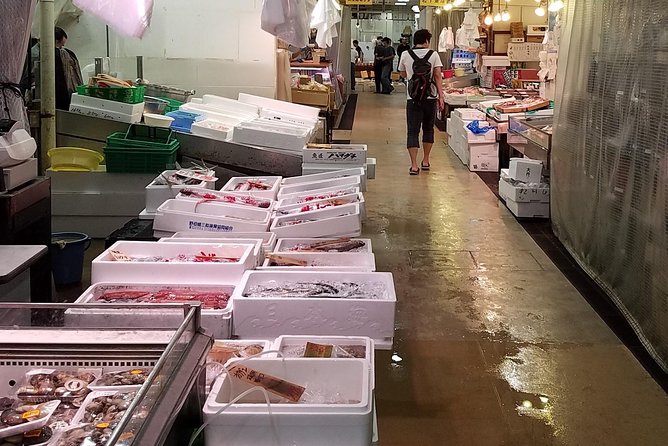
Pulala Tenma, also called the Tenma Ichiba Market Building, brings the route closer to the kind of shopping used by local residents. The emphasis is on market goods rather than a sightseeing landmark.
You might find meats, fish, produce, and other everyday staples, with your guide explaining what you are seeing and how the market fits into Osaka life. Since exact vendors and tastings are not specified, do not book this expecting a fixed menu or guaranteed sample at every stop.
This is one of the places where the guide’s explanations matter most. A market can look like a maze of counters if you do not know what is being sold or why it matters. Ferdinand’s ability to discuss customs and answer questions would be useful here, especially if you are curious about how Japanese shopping differs from what you know at home.
More Food Trips in Japan:
- Tsukiji Fish Market: Street Food & Culture Walking Tour
★ 5.0 · 669 reviews - Tsukiji Fish Market Small-Group Food Walking Tour
★ 5.0 · 621 reviews - Kuromon Market Food Walking Tour in Osaka (6 stops, 6 tastes)
★ 5.0 · 550 reviews - Tokyo Food Tour Taste Fresh Delights at Tsukiji Market
★ 5.0 · 429 reviews
Tenjinbashisuji: a long look at everyday shopping
Tenjinbashisuji Shopping Street is another important contrast. The visit is listed as a guided walk and sightseeing stop, not simply a quick food tasting. You get time to look at the shopping environment and see how food businesses fit alongside other local shops.
The value here is context. A market gives you concentrated food stalls and counters. A shopping street shows food as part of a larger neighborhood routine. You might see shops selling ingredients, prepared items, and household goods, though the exact businesses open during your tour can vary.
This section also makes comfortable footwear essential. Seven stops, repeated walking, and time spent standing at counters can make the morning tiring. The tour is not a difficult hike, but it is not a sit-down food crawl either.
Tsuruhashi and Osaka’s Korean food connection
Tsuruhashi is described as a Japanese-infused Korea Town where relatively few tourists go. That makes it one of the more distinctive parts of the route.
The experience here is not only about eating Korean food. It is about seeing how Japanese and Korean influences meet in a neighborhood food culture. Your guide can help explain customs and the area’s place in Osaka, giving you more than a quick pass through a row of restaurants and shops.
The wording Japanese-infused Korea Town is important. You should expect a local Osaka setting shaped by Korean food and culture, not a recreation of a Korean city. That mix is exactly why this stop adds something different to the tour.
Food purchases remain optional. If you want to try something, you pay for it yourself. If you prefer to save room for later, you can focus on the explanation and visual details without being required to buy anything.
Kuromon Ichiba, Osaka’s famous market stop
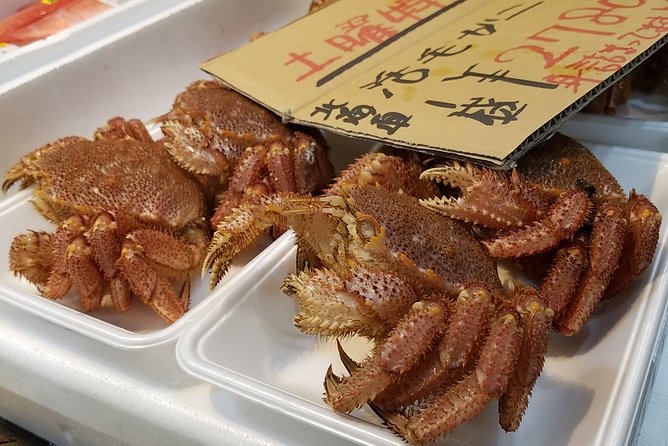
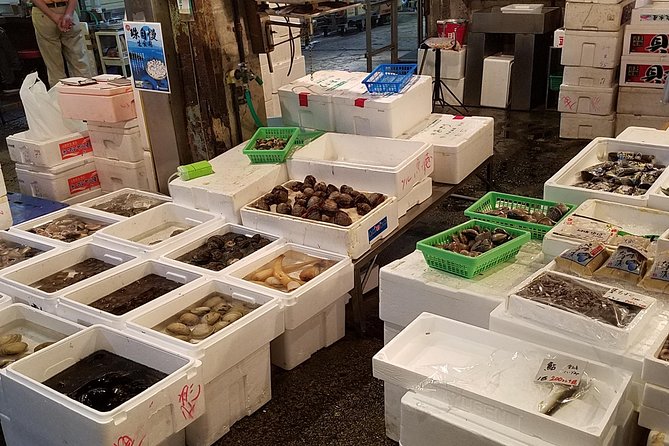
Kuromon Ichiba is the best-known market on the route. It is famous for delicacies sold raw and cooked, so this is likely to be the most immediately tempting section of the morning.
You can expect plenty to look at, from seafood and meats to prepared foods and other market specialties. The draw is the chance to see ingredients and ready-to-eat items side by side. That makes Kuromon more than a place to grab one snack. It is a concentrated display of Osaka’s food economy.
Still, keep your expectations sensible. The $59 price does not cover samples or refreshments. You will need to buy anything you want to taste, and popular foods can quickly add to the cost. I suggest deciding in advance how much extra you want to spend, especially if you are traveling with children or anyone who enjoys trying several small portions.
The guide helps you choose where to focus. With a group limited to eight, it should be easier to pause, ask what an unfamiliar item is, and decide whether it is worth buying. In a larger group, that kind of conversation can become difficult in a crowded market lane.
Doguyasuji: the practical side of Osaka food
Sennichimae Doguyasuji Shotengai changes the subject from food to the tools used to prepare and serve it. The covered shopping street is included as a guided sightseeing stop, so the focus is on the food-service world as well as the market experience.
This is a smart addition. After seeing ingredients at several markets, you get a look at the equipment and supplies connected to cooking. You might find kitchen-related goods and restaurant supplies, though specific shops and products are not guaranteed.
For many people, this will be a less obvious highlight than Kuromon Ichiba. I like it because it rounds out the tour. Food culture is not only about what you eat. It also includes knives, dishes, utensils, and the working tools behind meals.
If you are buying souvenirs, this may be one of the more useful stops. Keep in mind that souvenirs are not included, and any purchases are yours to carry for the rest of the outing.
Finishing in Namba
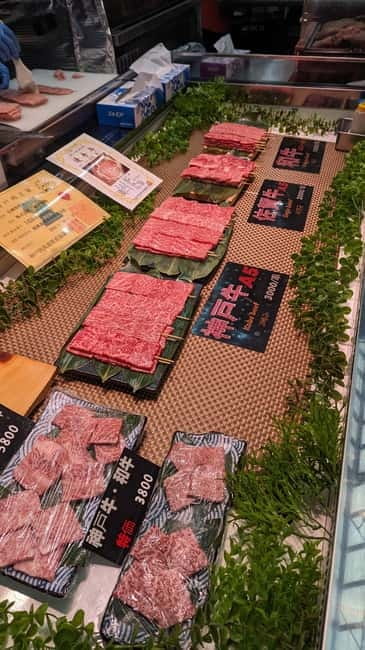
The tour ends in Namba, one of Osaka’s key urban areas. This is convenient if you want to continue eating, shopping, or sightseeing after the tour, though the experience itself finishes after the planned four hours.
Namba also connects neatly with the Takashimaya stop, giving the route an upscale beginning or reference point and a broad city finish. The exact order and pace may depend on the day’s route, traffic, and group, but Namba is a logical place to end a market-focused morning.
You will not finish with a formal included meal. Instead, you finish with a better sense of where to spend your own time and money afterward. That suits independent visitors who want guidance first, then freedom to continue alone.
What the $59 price really covers
At $59 per person, the main purchase is the guide’s time and the structure of the route. You are paying to connect seven food-related places across Osaka, receive explanations in your chosen language, and avoid having to work out the market sequence yourself.
The price is easier to justify if you value interpretation. Without a guide, you can certainly visit Kuromon Ichiba or Tenjinbashisuji on your own. What is harder to recreate is the comparison between upscale department-store food retail, local markets, Tsuruhashi’s Japanese-Korean character, Kuromon’s cooked and raw offerings, and Doguyasuji’s kitchen-supply shops in one organized morning.
The extra costs are clear but important:
- Transportation during the tour costs 330 yen per adult.
- Food samples are not included.
- Snacks and drinks are not included.
- Souvenirs are not included.
- Every purchase is your responsibility.
That setup gives you flexibility. You can spend very little beyond the tour fee, or you can turn the morning into a full grazing session. Just do not assume the advertised price covers the food itself.
Who will enjoy this food walk most
I would recommend this experience to first-time Osaka visitors who want food context rather than a simple list of famous places. It also suits returning visitors who have already seen the major sights and want to spend a morning in working markets and shopping streets.
It is a good fit if you:
- Like trying foods at your own pace.
- Want a guide who can explain customs and local life.
- Prefer a small group to a large bus tour.
- Enjoy markets, ingredients, and shopping as much as finished dishes.
- Can comfortably walk and stand for four hours.
- Want access to English, Spanish, or French guidance.
It may be less suitable if you want an included meal, a fixed tasting menu, or a relaxed tour with little walking. It also may not suit someone who wants only the most famous Osaka sights. The route is deliberately food-centered and local in tone.
Practical advice for making the morning work
Wear comfortable shoes. That is not a throwaway suggestion. You will walk through several districts, stop repeatedly, and spend time on your feet.
Bring room in your budget for purchases at Kuromon Ichiba and elsewhere. Since food and drinks are separate, you can choose what appeals to you, but having a spending limit helps prevent a market morning from becoming unexpectedly expensive.
Come prepared with questions. Ferdinand was praised for being attentive and explaining both Japanese and Korean market culture, and that is the kind of value you should seek from the guide. Ask about an unfamiliar ingredient, a cooking custom, or the difference between the markets. The tour becomes more useful when you treat it as a conversation rather than a procession.
The group limit is eight people. That is small enough for a more personal pace, but it is not private. You will still need to move with the group, especially between districts.
Cancellation is free up to 24 hours before the start, and you can reserve now and pay later. Those terms are helpful if your Osaka schedule is still moving, though the key booking decision is really whether you want a guided market morning rather than a self-guided food hunt.
Should you book this Osaka market tour?
Book it if you want to understand Osaka through its food shops, markets, and neighborhood streets. The strongest feature is the variety: Takashimaya gives you polished retail, Tenma and Tenjinbashisuji show everyday shopping, Tsuruhashi adds Japanese-Korean food culture, Kuromon supplies the famous market atmosphere, and Doguyasuji explains the tools behind the meals.
Skip it if you want food included in the ticket or if you dislike walking between several stops. At $59 plus 330 yen and your own food budget, it is not the cheapest way to eat in Osaka. But for a small group, a multilingual guide, and a carefully connected look at local-to-luxurious food culture, it offers good value for curious eaters.
FAQ
How long does the Osaka food market tour last?
The tour lasts four hours.
Where does the tour meet?
The meeting point is the McDonald’s directly in front of Tenma Station.
Where does the tour end?
The tour ends in Namba.
Which places are included on the route?
The route includes the TUMI Takashimaya Osaka Store area, Pulala Tenma, Tenjinbashisuji Shopping Street, Tsuruhashi, Kuromon Ichiba Market, Sennichimae Doguyasuji Shotengai, and Namba.
Is food included in the tour price?
No. Samples, food items, refreshments, snacks, and souvenirs are not included.
How much does transportation cost during the tour?
Transportation costs 330 yen per adult.
What languages are available?
The tour is available in English, Spanish, and French.
How many people can join the tour?
The group is limited to eight participants.
Can I cancel for a full refund?
Yes. You can cancel up to 24 hours in advance for a full refund.
Just added around Japan
- Nagoya Super Market Tour & Home Cooking Class with a Local, Akiko★ 5.0 · 10 reviews
- Tokyo: Tsukiji Market Guided Tour & Sushi-Making Experience★ 4.4 · 11 reviews
- Tokyo: Private Tsukiji Street Food & Sake with Local Guide★ 5.0 · 3 reviews
- 【Family pack】Tokyo: Tsukiji fish market food tour★ 5.0 · 3 reviews
- Tokyo: Tsukiji Market and Hama-rikyu Gardens Guided Tour★ 4.8 · 73 reviews
- Tokyo: Tsukiji Fish Market Culture Tour with Sashimi Tasting★ 4.6 · 54 reviews
- Tokyo’s Kitchen: Tsukiji Market Food & Culture Walk★ 4.7 · 74 reviews
- Tokyo: Tsukiji Fish Market Foodie and Educational Tour★ 5.0 · 4 reviews
Food & Drink, compared.
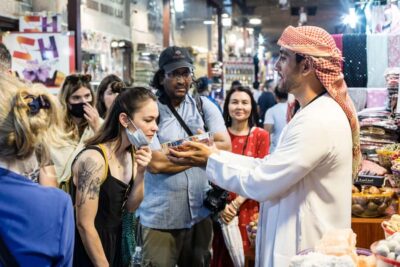
Old Town, Creek, Museums, Souks, & Street Food Tour
Read our review →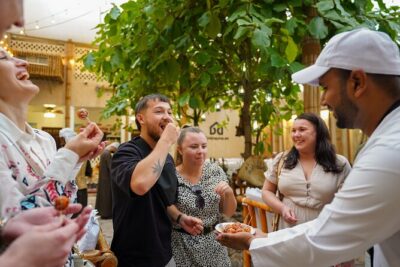
Old Town, Souks, Street Food, Guided Tour & Abra Ride
Read our review →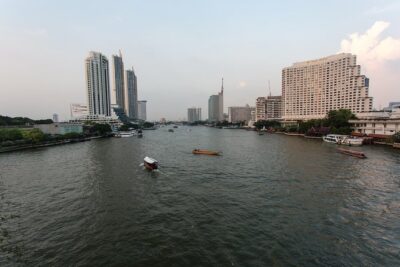
Bangkok by Night: Temples, Markets and Food Tuk-Tuk Tour
Read our review →
Tokyo Tsukiji Fish Market Food and Culture Walking Tour
Read our review →
Markets, Temples and Food Night Tour by Tuk Tuk
Read our review →
London Bridge & Borough Market Food Tour with 7 Authentic Dishes
Read our review →
Browse the lists this tour appears in