
Review · KATHMANDU, NEPAL
Best Nepali Cooking Class in Thamel with Local Market Trip
Food is Kathmandu’s most useful classroom. This three-hour Thamel experience pairs a local market visit with practical Nepali cooking, so you see the ingredients before they reach the pan. I like that the price includes the food, market shopping, snacks, and the meal you prepare. I also like the small maximum of eight people, which should make it easier to take part rather than simply watch.
The main caution is the compact kitchen. One account found that even four people made the room feel tight, with a somewhat hurried process that felt more like putting ingredients together than attending a formal cooking school. If you want detailed knife skills and long explanations, ask about the class format before booking. If you want good food, friendly staff, and a taste of local daily life, this is a strong-value choice.
Key points at a glance
- A market trip comes first: You are guided to a local market or grocery stop to help gather fresh ingredients for the class.
- The meal is part of the price: Food, market shopping, snacks, and the prepared meal are included.
- Small groups matter: The maximum is eight people, though the kitchen may feel most comfortable with fewer.
- Come hungry: The food supply is generous, and the experience includes eating what you prepare.
- Dietary requests are possible: Vegetarian and vegan options can be arranged on request.
- The price is friendly: At $30 per person, the class offers a practical way to spend three hours with Nepali food and culture.
Why a cooking class works well in Kathmandu
Kathmandu can feel like a lot to take in. Streets are busy, temples demand attention, and menus may contain ingredients you do not recognize. A cooking class gives you a quieter way to understand the city through ordinary food.
This experience is useful because it begins with ingredients rather than a lecture. You get a closer look at the produce, spices, and basic items used in Nepali cooking before sitting down to prepare them. That simple order matters. Afterward, a dish on a menu is no longer just a name. You have handled at least some of the ingredients and seen how they fit together.
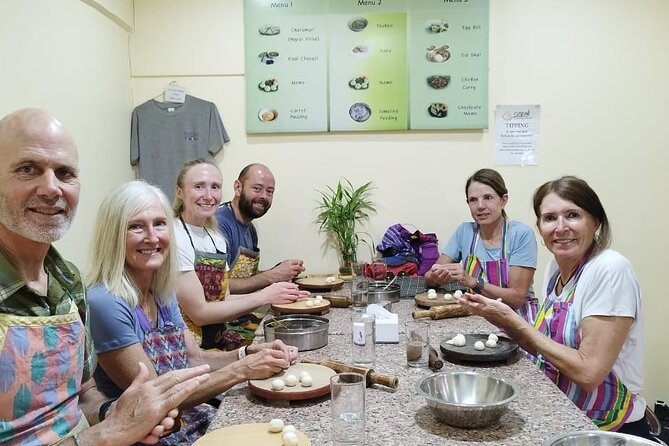
I also like the social side. You work with Nepali cooks and share a meal with other participants, so the class has more going for it than a standard restaurant visit. One account describes the staff as friendly and the group as a good meeting place for people who enjoy local food. That makes this a sensible choice early in your stay, when you are still getting your bearings and want an easy cultural activity.
The class is designed for up to eight people. That is small enough to feel personal on paper, but the kitchen itself is important. A group of four already felt tight to one participant, so the real comfort level may depend on the day’s attendance and the room layout.
More Farmers Market Tours in the world:
- Hanoi Cooking Class: Culture, Local Market & Meaning CSR Impact
★ 5.0 · 5,147 reviews - Cooking Class and Lunch at a Tuscan Farmhouse with Local Market Tour from Florence
★ 5.0 · 4,831 reviews - Chef Guided Food Tour of Pike Place Market
★ 5.0 · 3,733 reviews
Starting with ingredients at the local market
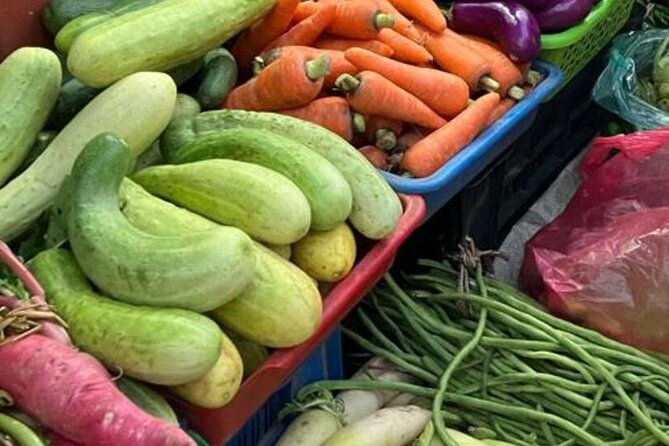
The market portion is one of the best reasons to book this experience. The class typically begins with an introduction to local ingredients, spices, and cooking methods, followed by market shopping for fresh produce and other items.
You should expect this part to be practical rather than a long guided market tour. The available information does not promise a particular market, a named vendor, or a set list of dishes. Instead, the emphasis is on gathering the ingredients used for the cooking session. That keeps the outing connected to the meal rather than turning it into a separate sightseeing stop.
For you, the value is in seeing how food shopping fits into daily life in Kathmandu. Fresh ingredients are not simply presented on a classroom table. They are selected through a process that gives the cooking more context. You may also find this helpful if you are unsure what to buy at local markets on your own.
The market visit also gives the three-hour schedule a natural rhythm. You begin outside, move into the kitchen, and finish at the table. Since market shopping is included, you do not need to budget extra for the ingredients used in the class.
The itinerary information lists about 30 minutes for the initial stop and introduction. Treat that as a guide rather than a promise of a precise timetable. The full experience lasts about three hours, and the market and cooking portions may vary depending on the menu, group size, and pace.
Cooking in a small Nepali kitchen
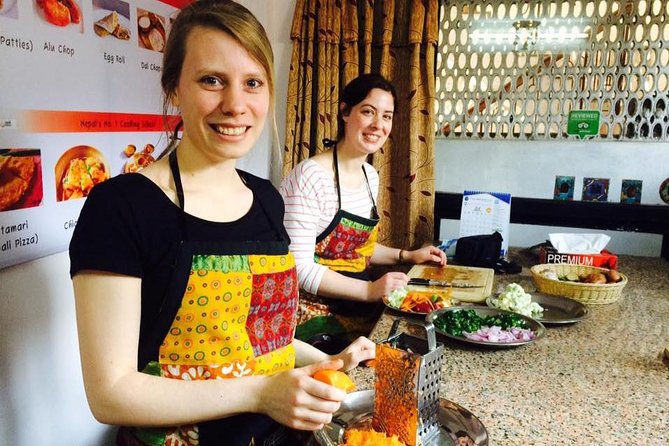
Once the ingredients are gathered, you return to the cooking school for the hands-on part. The stated aim is to learn from Nepali cooks while having fun, and the strongest feedback supports the practical side. One participant described the class as fully hands-on, with plenty of food and a friendly atmosphere.
That is important because some cooking classes turn into demonstrations. Here, you should expect to participate in preparing the food rather than simply sit at a counter while someone else does the work. The precise dishes and cooking techniques are not specified, so you should not book this expecting a guaranteed recipe list.
The class introduces local spices, ingredients, and cooking techniques used in the region. You will also receive recipes to take home, which gives the experience value after your Nepal trip. A recipe sheet cannot replace a full professional course, but it can help you recreate a dish and remember the setting where you first learned it.
The kitchen size deserves honest attention. One account rated the experience positively but felt it was not quite a traditional cooking school. The criticism was specific: the space was small, the pace felt stressful, and the activity sometimes seemed closer to combining prepared ingredients than learning each step in depth.
I would read that as a warning about expectations, not a reason to dismiss the class. At $30, this is an affordable cultural activity with a meal included. It is not presented as a professional culinary workshop. If you want a relaxed introduction and a social meal, the format should work well. If you want individual instruction, advanced technique, or plenty of room around every work surface, the limitations may bother you.
Eating what you prepare
The meal is not an afterthought. You eat your creations after the class, and the included food also covers snacks. The supplied details list lunch, dinner, and breakfast among the inclusions, which appears to be broad meal wording rather than a promise that all three are served during a three-hour session. Ask the provider what meal is scheduled for your booking if that distinction matters to you.
The clearest practical advice is simple: come hungry. One account specifically recommends it, and another points to the generous amount of food. You are paying for more than instruction. You are also paying for ingredients, preparation, and a shared meal.
This part can be especially satisfying after the market visit. You have seen the raw ingredients, worked with them, and then eaten the finished result. That gives the meal a stronger connection to place than ordering a familiar dish at a restaurant.
The class also offers a chance to meet local cooks and other participants. You may sit with people from different countries, but the shared task makes conversation easy. Food gives everyone something to discuss, even when the group has just met.
More Cooking Classes in the world:
- 5 Traditional Dishes Hanoi Cooking Class with Market Trip
★ 5.0 · 4,890 reviews - Chiang Mai: Cooking Class, Market & Thai Herbs Garden Tour
★ 4.9 · 4,824 reviews - Chiang Mai: Authentic Cooking Class with Market & Farm Visit
★ 4.9 · 4,546 reviews - Barcelona: Paella Cooking Experience & Boqueria Market Tour
★ 4.8 · 3,661 reviews
Vegetarian and vegan requests
Vegetarian and vegan options are available on request. That is useful, but you should make the request when booking rather than waiting until the class begins. The information provided does not specify the exact substitute dishes or guarantee that every menu item can be changed.
This is also a good reason to confirm the menu if you have a serious allergy or a strict dietary requirement. The experience includes all ingredients according to the menu, but no detailed allergy policy is provided. Clear communication in advance is the sensible approach.
What the $30 price really buys
At $30 per person, the experience offers good value if you want several activities in one short outing. You get a market visit, ingredient shopping, instruction from Nepali cooks, hands-on preparation, recipes, snacks, and a meal. Even without counting the food, the class creates a structured way to spend a morning or afternoon in Thamel.
The value is strongest for people who would otherwise pay separately for a market experience and a restaurant meal. Here, those elements are tied together. You also leave with something useful: recipes and a better sense of the ingredients used in Nepali cooking.
The price does not buy luxury. The kitchen may be cramped, the lesson may feel informal, and the pace may be brisk. You should think of it as a friendly local food activity rather than a polished culinary studio.
That distinction helps keep expectations fair. The high overall rating and full recommendation rate fit the experience’s strengths: lots of food, active participation, social contact, and a reasonable cost. The lower-scoring feedback does not object to the food or the people. It points to space and teaching depth, which are the areas to weigh before booking.
Timing, pickup, and group size
The activity lasts about three hours, so it fits neatly into a half-day plan. You can place it between other Kathmandu sights without losing a full day. Since it includes a market stop and a meal, allow yourself enough time afterward rather than scheduling something that begins immediately.
Pickup is offered, but private transportation is not included. Those details can sound contradictory, so confirm exactly what pickup means for your booking and where you need to meet. The experience is near public transportation, which gives you another way to reach it.
Booking confirmation is received at the time of booking. The maximum group size is eight, and most people can participate. No special fitness requirement is listed, but the market and cooking format may involve standing and moving around, so practical clothing and comfortable shoes make sense.
The class is commonly booked about 13 days ahead. That is a useful planning clue, especially if your Kathmandu schedule is fixed. You may still find availability closer to the date, but booking ahead is sensible if you need a particular day or want to request a vegetarian or vegan menu.
Who will enjoy this most
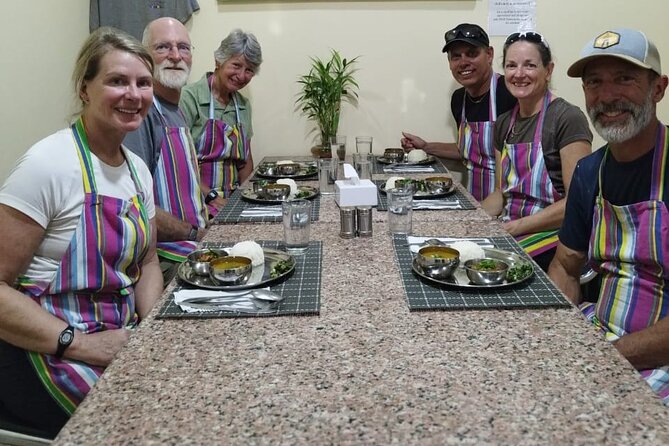
I would recommend this experience to you if you:
- Want an easy introduction to Nepali food and everyday culture
- Prefer active participation to a passive sightseeing stop
- Enjoy meeting local cooks and other food-focused participants
- Like the idea of eating a substantial meal after cooking
- Want recipes you can use at home
- Need a reasonably priced activity in or near Thamel
- Are happy with an informal class rather than a formal culinary lesson
It is also a good fit for solo visitors. A shared kitchen gives you a natural way to meet people, and the maximum of eight keeps the group from becoming unwieldy.
Families and mixed-age groups may also find the format appealing, since most participants can take part. Still, the small kitchen could be difficult for anyone who needs extra space or a slower, quieter environment.
I would hesitate if your main goal is serious technique. The available feedback suggests that the lesson may move quickly and may involve assembling ingredients more than teaching every cooking step. You may enjoy the food and social setting while still wishing for more detailed instruction.
A few practical tips before you book
Send dietary requests in advance. Vegetarian and vegan options are available, but the provider needs notice.
Plan to arrive ready to eat later. The experience includes snacks and a meal, and the portions appear generous.
Confirm the pickup arrangement. Pickup is offered, while private transportation is not included, so ask where the service begins and ends.
Keep your schedule flexible around the three-hour duration. The market visit, shopping, cooking, and meal may not run to an exact minute-by-minute plan.
Book ahead if your dates are limited. The activity is often reserved around 13 days in advance.
Remember the cancellation deadline. You can cancel for a full refund up to 24 hours before the start time. Cancellations or changes made within 24 hours are not accepted for a refund, based on local time.
Should you book this Nepali cooking class?
Yes, if you want a friendly, affordable food experience that connects a local market with a shared meal. The strongest reasons to book are the hands-on format, included ingredients, generous food, recipes to take home, and chance to work with Nepali cooks.
I would not book it expecting a spacious kitchen or a formal culinary curriculum. The class may feel hurried when the room is full, and the teaching can be more practical than detailed. But for $30, you get a useful window into Nepali food and daily life, plus enough to eat and remember afterward.
If that sounds like your kind of afternoon in Kathmandu, this is a worthwhile pick. Just request dietary needs early, confirm the pickup details, and arrive hungry.
FAQ
How long does the Nepali cooking class last?
The experience lasts approximately three hours.
How much does the cooking class cost?
The listed price is $30 per person.
Is a market visit included?
Yes. The experience includes guided market shopping for the ingredients used in the class.
Are ingredients included?
Yes. All food according to the menu and the market shopping are included.
Is a meal included?
Yes. The experience includes the food prepared during the class, along with snacks. The inclusions also list breakfast, lunch, and dinner, so confirm which meal applies to your scheduled session.
Are vegetarian and vegan options available?
Yes. Vegetarian and vegan options are available on request.
How many people can join?
The activity has a maximum of eight participants.
Is transportation included?
Private transportation is not included. Pickup is offered, and the activity is near public transportation, so confirm the pickup details when booking.
Can I cancel for a full refund?
Yes. You can cancel at least 24 hours before the start time for a full refund. Cancellations and changes made less than 24 hours before the start time are not accepted for a refund.
Just added around the world
- Half-day Dandan Noodles Cooking Class with a Local Market Visit★ 5.0 · 8 reviews
- Three-Hour Private Chengdu Tea Wholesale Market Tour★ 5.0 · 4 reviews
- 3-Hour Herbal Wholesale TCM Market and a Local Wet Market Tour★ 5.0 · 4 reviews
- Moroccan Cooking Class with a Local Family & Market Visit★ 5.0 · 16 reviews
- Charleston International Sweet Treats & Historic City Market Tour★ 5.0 · 22 reviews
- Chania Old Town, Public Market and Chrisopigi Monastery Tour★ 4.5 · 6 reviews
- Chania: Old Town, Public Market, Hill of Prophet Elias, Agia Triada★ 5.0 · 35 reviews
- Cesarine: Market Tour & Home Cooking Class in Catania★ 4.0 · 6 reviews
Local & Farmers Market Tours, compared.
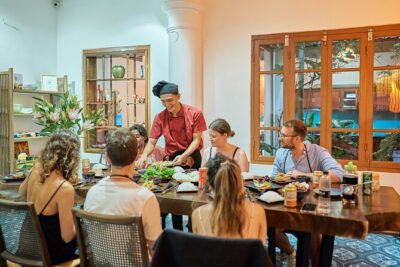
Hanoi Cooking Class: Culture, Local Market & Meaning CSR Impact
Read our review →
Cooking Class and Lunch at a Tuscan Farmhouse with Local Market Tour from Florence
Read our review →
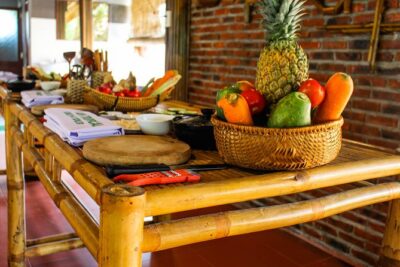
Cooking Class Hoi An:Local Market, Basket Boat, Fishing & Cooking
Read our review →
London Bridge & Borough Market Food Tour with 7 Authentic Dishes
Read our review →
Hoi An Cooking Class(Local market,Basket Boat,Fishing & Cooking)
Read our review →
Browse the lists this tour appears in