
Review · SPAIN
Basque Cooking Experience: Market Tour & Hands-On Class English
Food tells you a lot about San Sebastián. This experience starts where the ingredients are sold, then takes you into a working kitchen to prepare a four-course Basque meal. I like the visit to Mercado de La Bretxa, where you learn how locals choose fish, meat, and produce. I also like the small class size, with no more than 10 people and step-by-step help from chefs such as Carlos and Luis.
The one point to consider is the price: $168.17 per person is a serious spend for three and a half hours. Still, that cost includes the market visit, instruction, meal, beverage pairings, recipes, and a keepsake apron, so it can make sense if you want a full cultural activity rather than another restaurant lunch.
Key points at a glance
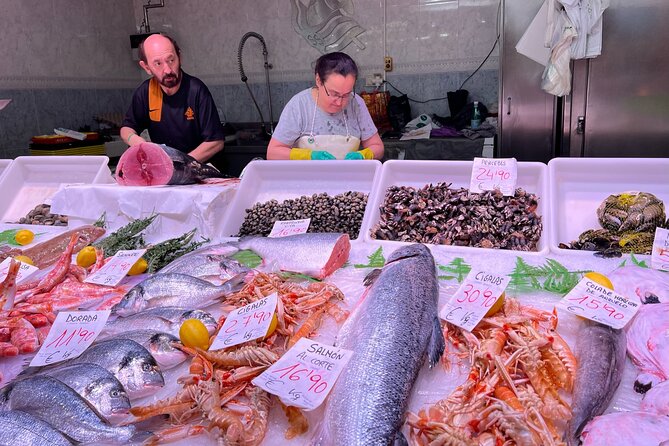
- You shop at Mercado de La Bretxa: Meet fishmongers, farmers, and other market sellers before cooking.
- The class lasts about 3 hours and 30 minutes: It begins at 10:00 a.m. and finishes back at the Donostia Information and Tourism Office.
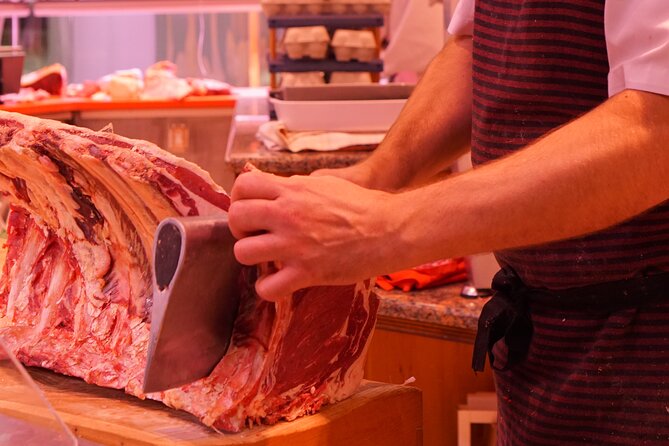
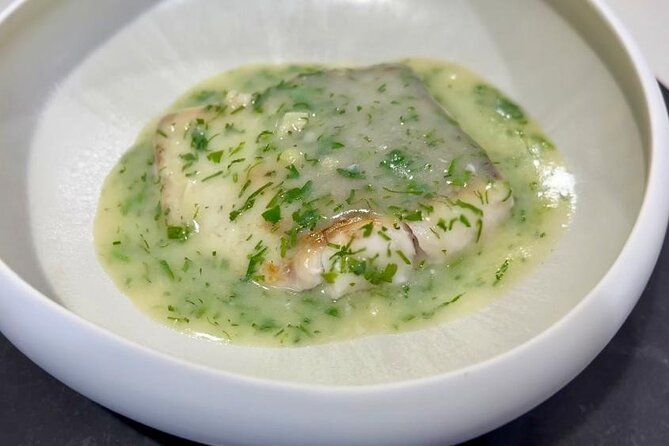
- The menu covers four Basque favorites: Prepare cod omelette, hake in green sauce, rib steak with piquillo peppers, and burnt Basque cheesecake.
- Carlos receives especially warm praise: His clear English, humor, patience, and easy teaching style help first-time cooks relax.
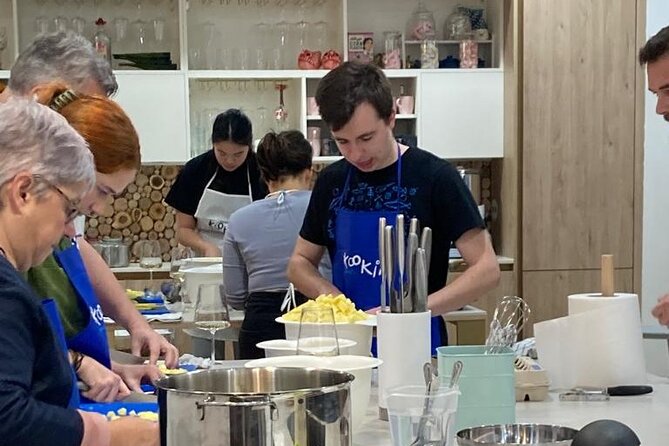
- The class is genuinely hands-on: You chop, mix, prepare, and cook rather than simply watch a demonstration.
- You leave with useful souvenirs: The apron and recipe copies help you recreate the dishes at home.
Why this San Sebastián food experience works
Many food activities in San Sebastián focus on eating. This one gives you a look at how the meal begins, with a morning visit to the market, followed by preparation and lunch in a dedicated cooking space.
That order matters. You first see the raw ingredients and learn why freshness matters in Basque cooking. Then you work with those ingredients yourself. By the time you sit down to eat, the dishes have a clear connection to the market, the region, and the people who supplied the food.
I especially like that the experience is not aimed only at serious cooks. The instructions are broken into manageable steps, and the chef guides you through the work. If you already cook often, you can still pick up useful lessons about seafood, general kitchen technique, and selecting quality ingredients.
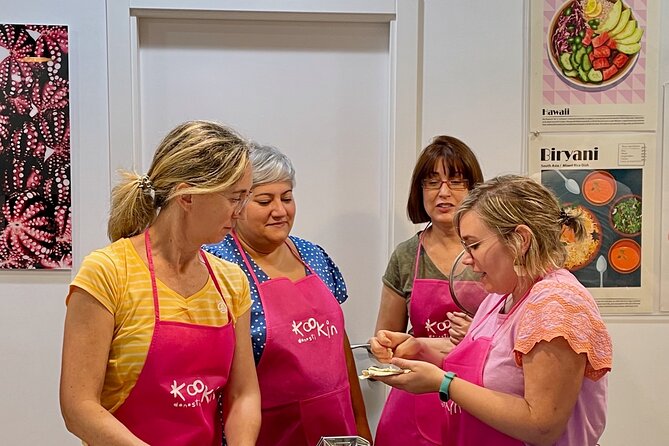
The group limit of 10 keeps the activity personal. It also means you are likely to have a real job in the kitchen instead of standing at the back while one person does everything. The exact division of tasks may vary, but the experience is designed for everyone to participate.
More Cooking Classes in Spain
- Barcelona: Paella Cooking Experience & Boqueria Market Tour
★ 4.8 · 3,661 reviews - Barcelona Paella Cooking Class with Market Visit, Tapas & Sangria
★ 5.0 · 2,531 reviews - Paella Cooking Class, Wine Tasting & Central Market in Valencia
★ 5.0 · 1,150 reviews
Meeting at 10:00 a.m. in central San Sebastián
You meet at the Donostia Information and Tourism Office at Alameda del Boulevard, 8. The start time is 10:00 a.m., and the activity returns to this same meeting point at the end.
That central meeting arrangement is simple, but arrive with enough time to find the office. You will be heading to the market first, so being late could mean missing part of the introduction or the market walk.
The morning schedule is also useful for planning the rest of your day. A three-and-a-half-hour activity beginning at 10:00 a.m. should finish around early afternoon. You can treat the meal as lunch, then leave the rest of the day open for San Sebastián’s old town, waterfront, or more pintxos.
The class is offered in English. That is important here because the value depends on understanding market advice, cooking instructions, and cultural explanations. Carlos is praised for speaking clearly and keeping the group involved, while the wider team helps with the practical work.
Mercado de La Bretxa: start with the ingredients
The first stop is Mercado de La Bretxa, a key part of the experience. Instead of beginning in a classroom with ingredients already laid out, you see the products in their market setting.
The market visit introduces you to the people behind Basque cooking. You meet local farmers and fishmongers, and you get a closer look at the products used in the meal. The focus is not just on what to buy, but on how to judge freshness and choose well.
The seafood lesson is especially useful. You learn how to select fish, including the hake later used for the main course. You may also discuss meat before the rib steak is prepared. These are practical skills that remain useful after your trip, even if you cannot find exactly the same ingredients at home.
The market also adds a cultural layer. You see how local food sellers fit into daily life in San Sebastián, rather than treating Basque cuisine as a set of recipes separated from the people who produce the food.
There is a small trade-off. The market section is an introduction rather than a long, free-form shopping expedition. If you want several hours to browse every stall at your own pace, this is not that kind of visit. Here, the market serves the cooking class, and the chef keeps the group moving toward the kitchen.
Cooking four courses in a dedicated kitchen
After the market, you head to the cooking school and begin the hands-on portion. The facility has a dedicated kitchen and a dining area, giving the class a clear rhythm: prepare, cook, sit down, and enjoy what you made.
The menu provides a good range of skills and flavors:
- Cod omelette
- Hake in green sauce
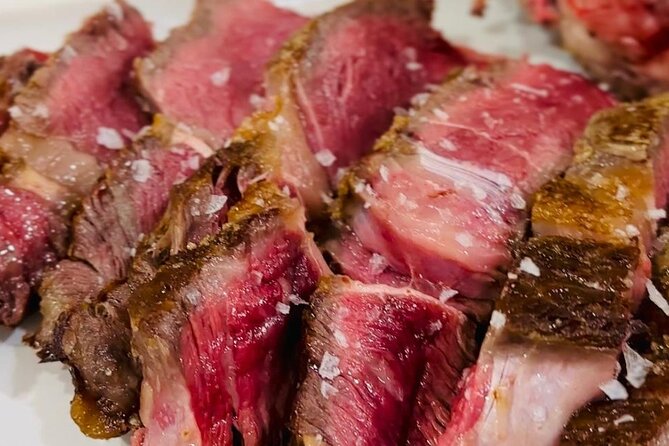
- Rib steak with piquillo peppers
- Burnt Basque cheesecake
This is a smart menu for a short class. The cod omelette introduces a simple dish where timing and texture matter. Hake in green sauce brings in seafood handling and a traditional Basque preparation. Rib steak and piquillo peppers give you a meat course with a different cooking approach. Dessert finishes with a famous regional specialty.
You are not just watching Carlos prepare the food. The class involves chopping, cutting, mixing, and grilling, with the chef explaining each stage. The instruction is set up so that both members of a pair can take part, which is useful if one person in your group is more confident in the kitchen than the other.
Carlos is repeatedly praised for being patient, funny, and easy to understand. Those qualities matter more than theatrical showmanship in a cooking class. Good instruction keeps the pace comfortable and lets you ask questions without feeling behind.
The class also includes basic techniques that apply beyond Basque dishes. You may come away with a better sense of how to handle fish, work with fresh produce, and organize a meal with several courses. That makes the experience more useful than a one-off demonstration.
Same place, a different set of stalls:
- Valencian paella cooking class, tapas and visit to Ruzafa market.
★ 5.0 · 828 reviews - Spanish Cooking Class & Triana Market Tour in Sevilla
★ 5.0 · 760 reviews - Seville: 3.5-Hour Spanish Cooking Class & Triana Market Tour
★ 4.9 · 751 reviews - Valencia: Paella Cooking Class with Central Market Tour
★ 5.0 · 721 reviews
A menu that shows different sides of Basque cooking
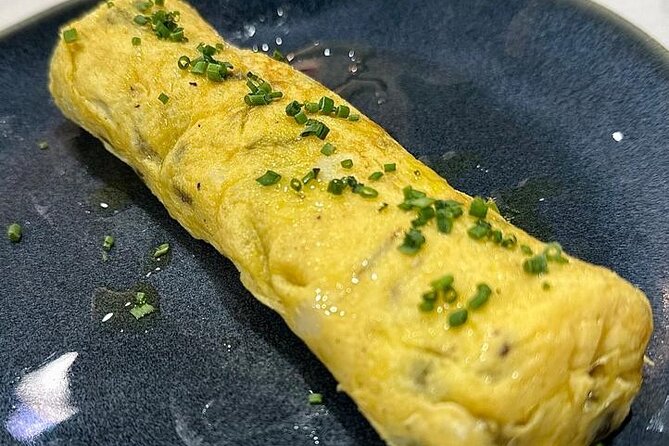
The cod omelette is a fitting start because it is straightforward enough for beginners but still requires attention. You learn how a few basic ingredients can produce a dish with a distinct regional identity.
The hake in green sauce puts the market visit into practice. Choosing fresh fish is one thing, but cooking it properly is another. The chef’s guidance helps connect the quality of the fish with the final texture and flavor.
The rib steak with piquillo peppers changes the pace. After seafood, you work with meat and a pepper that is closely associated with northern Spanish cooking. This variety keeps the class from feeling like one long lesson in a single technique.
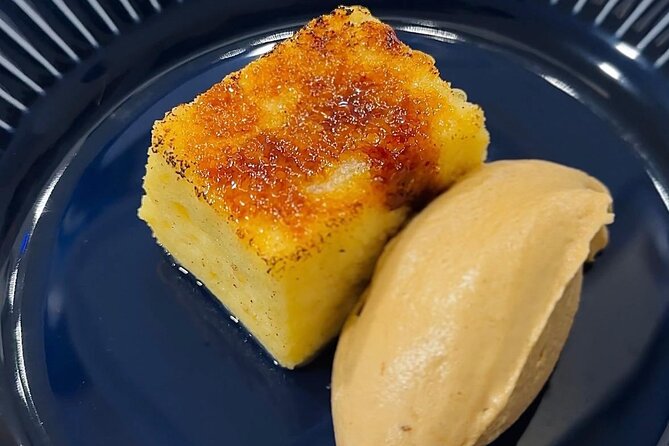
Burnt Basque cheesecake is a particularly good finish for a class because it is both iconic and approachable. One participant specifically appreciated learning that the cheesecake was surprisingly easy to make. You receive the recipes afterward, so this is a dish you can reasonably try again at home.
The menu is fixed, which is helpful for a well-organized group class but less flexible than a private cooking session. One person with a no-red-meat diet received an adjustment, so it is worth raising dietary needs when booking or before the class. Do not assume every request can be accommodated, but the kitchen has shown some ability to adapt.
Wine, cider, and the meal you helped create
The meal includes beverage pairings, adding more than a drink with lunch. The pairings may include local wine and regional cider, and the class can include instruction in how to pour the local cider.
That pouring lesson is a memorable local touch. It turns the beverage into part of the cultural experience rather than an afterthought. You also get to enjoy the food at the table in the same place where you prepared it, which makes the meal feel like the natural end of the class.
Wine is served only to people age 18 and older. If you do not drink alcohol, the supplied details do not specify an alternative, so ask the provider ahead of time if that matters to you.
The food and drink add real value to the price, particularly because the activity replaces a separate lunch. You are paying for instruction and access to a small group experience, but you also finish with a substantial meal built around several courses.
Is $168.17 a fair price?
At $168.17 per person, this is not a budget activity. The right comparison is not simply the cost of a cooking lesson. You are also paying for a guided market visit, a chef-led meal, beverage pairings, a small group, recipe copies, and an apron to keep.
For someone who already plans to eat lunch in San Sebastián, the value improves. The class combines sightseeing, shopping, food education, and dining into one morning. It also gives you a social setting where you can meet other people interested in cooking.
The price is harder to justify if you mainly want a quick introduction to Basque food. San Sebastián has plenty of less expensive ways to eat well, especially if you enjoy pintxos. This experience earns its cost through participation and instruction, not through the quantity of food alone.
I would consider it good value for couples, families with older children who enjoy cooking, and visitors who want a planned cultural activity. It is also worthwhile for experienced home cooks because the market advice and regional techniques offer more than a beginner lesson.
What the small group changes
A maximum of 10 participants is one of the strongest practical features. A small group gives the chef more chances to answer questions and makes it easier for each person to work with the ingredients.
It also helps the social side of the class. Several people found the group friendly and enjoyed meeting others from different places. The kitchen becomes a shared project, and the meal gives everyone a natural chance to talk.
Still, a group class is not the same as a private lesson. You will share workstations and attention, and the pace is set for the whole group. If you need highly specialized instruction or want to choose every dish, a private format would suit you better, but that is not what this experience offers.
What you take home besides a full stomach
The apron is a practical souvenir rather than a trinket. You can use it at home and remember the class each time you cook.
The recipes are even more valuable. They give you a way to repeat the dishes, including the burnt Basque cheesecake, cod omelette, hake in green sauce, and steak with piquillo peppers. Recipe copies also help preserve the techniques discussed during the class, especially after you return to a kitchen with different ingredients and equipment.
Do keep expectations sensible. The recipes cannot reproduce the market atmosphere, the chef’s corrections, or the quality of local ingredients by themselves. But they give you a useful starting point and a reason to keep cooking Basque food after your trip.
Who should book this class?
I would recommend it if you want to do more than sample San Sebastián from a restaurant table. It suits you especially well if you:
- Enjoy cooking at any skill level
- Want direct contact with local food sellers
- Prefer small-group activities
- Like meeting other people during a trip
- Want a substantial lunch included in a cultural experience
- Hope to recreate regional dishes at home
It may not be the best choice if you dislike group activities, avoid alcohol and need a confirmed nonalcoholic pairing, or want a completely flexible menu. It is also a poor fit if your schedule cannot spare the full morning and early afternoon.
The published rating is 5 out of 5, with 99 percent recommending the experience, and the strongest praise centers on Carlos, the market visit, the quality of the food, and the relaxed instruction. Those are the parts I would value most when deciding.
Practical details before you book
The experience lasts about 3 hours and 30 minutes and starts at 10:00 a.m. at the Donostia Information and Tourism Office. It ends back at the same meeting point.
Confirmation is provided when you book. The group is limited to 10 people, and the class may require a minimum number to run. If the minimum is not met, you are offered another date or experience, or a full refund.
You can cancel for a full refund up to 24 hours before the start time. Changes or cancellations made inside that 24-hour window are not accepted for a refund, and the cut-off follows local time.
Should you book the Basque Cooking Experience?
Yes, if you want a hands-on introduction to Basque food with real market context. The strongest reason to book is the complete progression from meeting fishmongers and farmers at La Bretxa to preparing and eating a four-course meal with guidance from Carlos and his team.
The price is high, but the experience includes much more than a demonstration. You receive instruction, lunch, local beverages, recipes, and an apron, all in a group small enough to keep the cooking personal.
I would skip it only if you prefer independent market browsing, a cheaper meal, or a private class with a custom menu. For everyone else, this is a practical and social way to understand San Sebastián through the food on your plate.
FAQ
Where does the Basque cooking experience begin?
It begins at the Donostia Information and Tourism Office at Alameda del Boulevard, 8, 20003 Donostia, San Sebastián.
What time does the experience start?
The start time is 10:00 a.m.
How long does the cooking experience last?
The activity lasts approximately 3 hours and 30 minutes.
Is the experience offered in English?
Yes. The experience is offered in English.
What dishes will I prepare?
The sample menu includes cod omelette, hake in green sauce, rib steak with piquillo peppers, and burnt Basque cheesecake.
How many people can join the class?
The class has a maximum of 10 participants.
Is wine included for everyone?
Wine is served only to people age 18 and older. The experience also includes planned beverage pairings, which may include local wine and regional cider.
Just added around Spain
- Explore Bilbao’s Flavors Mercado de la Ribera and Old Town★ 4.5 · 3 reviews
- CERTAL Exclusive Tour: LA RIBERA Market + GASTROBARS Bilbao (3h)★ 4.5 · 12 reviews
- Barcelona La Boqueria & Sant Antoni Private Food Experience★ 5.0 · 7 reviews
- Taste of Barcelona: Boqueria Market, Tapas & History Tour★ 4.5 · 22 reviews
- Barcelona Tapas Cooking & Cocktail Class with Veronique & Mattias★ 5.0 · 3 reviews
- Spanish Oysters, Cava and Ibérico Ham at Barcelona’s La Boqueria Market★ 5.0 · 8 reviews
- Private Barcelona Market Tour & Paella Cooking Class with Josh★ 5.0 · 4 reviews
- Food and Market Tapas Tour★ 5.0 · 6 reviews
Cooking Classes, compared.
Hanoi Cooking Class: Culture, Local Market & Meaning CSR Impact
Read our review →
5 Traditional Dishes Hanoi Cooking Class with Market Trip
Read our review →
Cooking Class and Lunch at a Tuscan Farmhouse with Local Market Tour from Florence
Read our review →
Cooking Class, Market & Thai Herbs Garden Tour
Read our review →
Authentic Cooking Class with Market & Farm Visit
Read our review →
Paella Cooking Experience & Boqueria Market Tour
Read our review →
Cooking Class Hoi An:Local Market, Basket Boat, Fishing & Cooking
Read our review →
Hoi An Cooking Class(Market,BasketBoat Crabfishing&Cooking Class)
Read our review →Browse the lists this tour appears in