
Review · JAPAN
All Inclusive Kuromon Markets Tour: Flavors Of Osaka
Come hungry, because two hours goes quickly. This small-group food walk through Osaka’s Kuromon Market gives you five to seven proper dishes plus several smaller tastings, from scallops and tuna sashimi to okonomiyaki and cherry blossom mochi. I especially like that the guide orders for you and explains what you are eating, and that the group is limited to nine people.
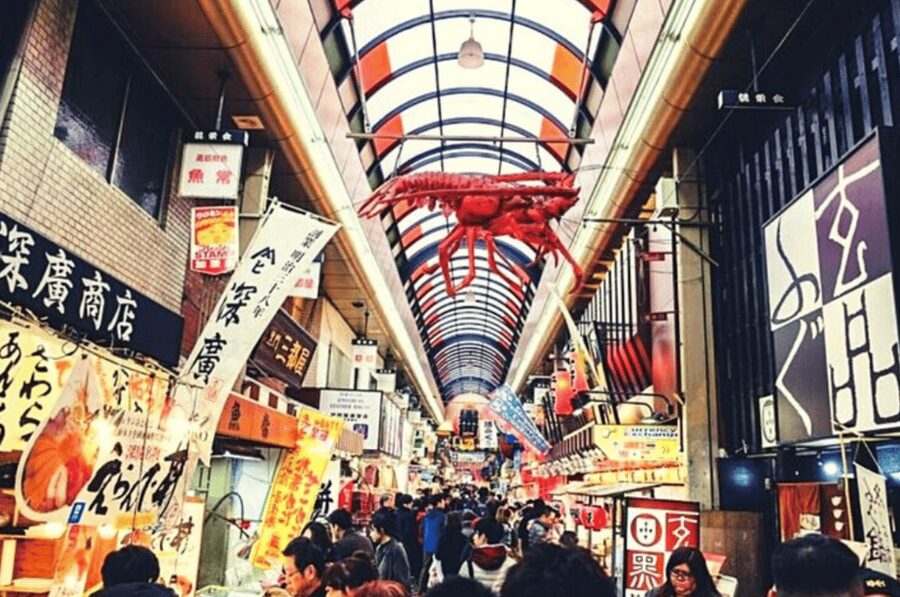
The market feels genuine rather than staged for tourists. Vendors have sold food here for generations, and the covered arcade is full of handwritten signs, cooking smells, and unfamiliar ingredients. The main drawback is also clear: this is a seafood-heavy tour, so it is not suitable for vegans and may disappoint anyone hoping for a broad meat-free menu. Pregnant women are also advised not to join.
Key points at a glance
- Meet at Nipponbashi Station Exit 6: Arrive around 1:45 to 1:50pm for the exact 2pm departure.
- Five to seven filling dishes: Expect specialties such as scallops, tuna sashimi, gobo tempura, and okonomiyaki.
- Three to four extra tastings: Green tea, pickled vegetables, dried fish, wasabi beans, and other small samples add variety.
- English-speaking local guide: Your guide handles ordering and explains ingredients, preparation, and Osaka food culture.
- Small group of up to nine: The size makes it easier to hear explanations and move through the market.
- Strong value at $61: The price covers a substantial amount of food, not just a few token bites.
Starting at Nipponbashi Station Exit 6
The meeting point is simple, but the timing is not flexible. You meet at the top of the stairs at Exit 6 of Nipponbashi Station at 2pm, and the group leaves exactly on time.
I would arrive between 1:45 and 1:50pm. On a two-hour food walk, arriving late is a serious problem. The organizers state that a late arrival cannot be caught up with, so this is not the sort of tour where you can stroll in a few minutes after the start and find the group inside.
That strict start has a practical reason. Kuromon Market is a working food district with narrow passages, many shops, and plenty of distractions. Once the group begins moving, finding it again could be difficult. Allow extra time to reach the station and get to the correct exit.
After a short introduction, you head into the market. There is no hotel pickup, so you need to make your own way to Nipponbashi. The station location is useful if you are already exploring southern Osaka, and the tour’s end can also fit well with more time in the surrounding food and shopping districts.
A few more market tours around Japan worth a look
- Tokyo Tsukiji Fish Market Food and Culture Walking Tour
★ 5.0 · 3,184 reviews - Tokyo: Tsukiji Fish Market Food and Walking tour
★ 5.0 · 1,724 reviews - Tokyo: Tsukiji Fish Market Guided Walking Tour
★ 4.9 · 1,397 reviews
Why Kuromon Market matters
Kuromon Market has drawn food shoppers for more than 200 years. It is not simply a row of restaurants. It is a covered market where vendors sell seafood, prepared dishes, snacks, ingredients, and kitchen goods.
That difference matters. At many Japanese markets, the food is easy to admire but harder to order. Menus may be handwritten in Japanese calligraphy, and some vendors speak little or no English. Even someone who can read Japanese may find the signs difficult to interpret quickly.
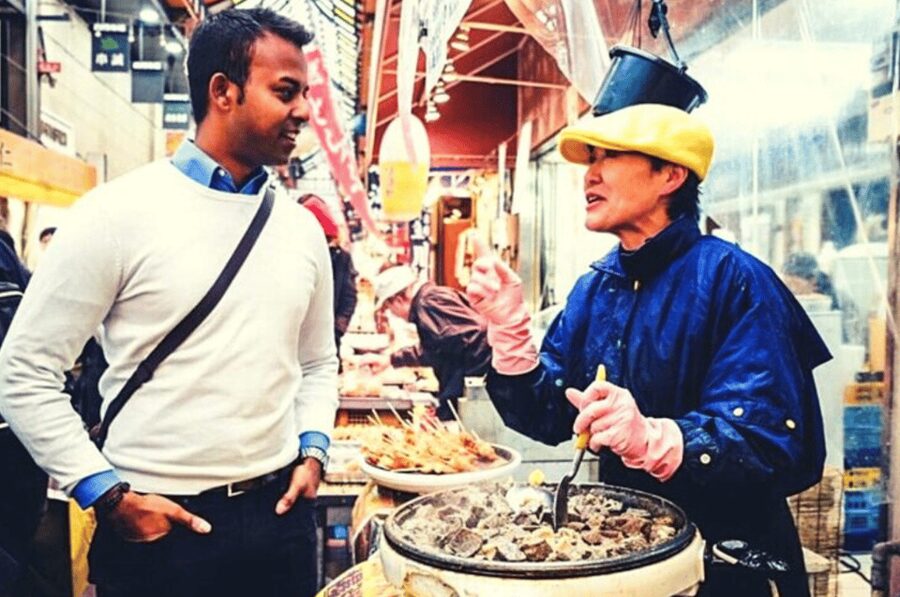
This is where the guide adds real value. Instead of pointing at a display and hoping for the best, you have someone who can choose suitable items, place the order, and explain how the food was prepared. The guide also helps you understand what makes a dish local or unusual, rather than treating the market as a string of random samples.
The market’s character comes from the vendors themselves. Many specialties have been passed down through families and are prepared by people who have spent years mastering one kind of food. You get a closer look at Osaka’s food culture by tasting dishes where they are sold, rather than hearing about them in a classroom.
The first tastes: seafood and market specialties
The food selection includes scallops, tuna sashimi, and dried fish. These choices give you a strong sense of the market’s seafood focus from the beginning.
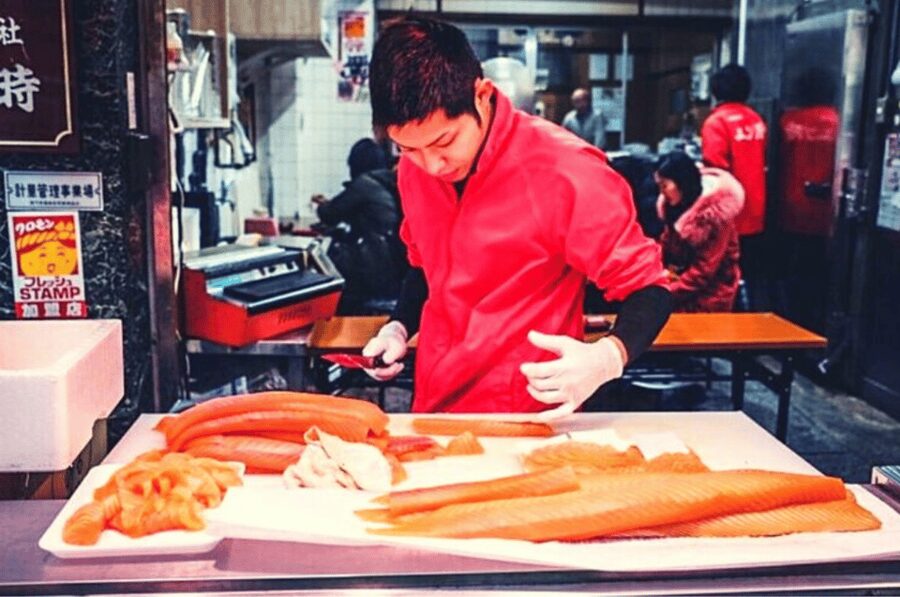
The scallops offer a cooked seafood bite, while tuna sashimi gives you a chance to taste one of Japan’s best-known raw fish preparations. Dried fish provides a different texture and a more concentrated flavor. These are not interchangeable samples, and that variety helps make the meal feel substantial.
You should understand the seafood emphasis before booking. One person who enjoyed the tour still found that almost everything savory was fish or seafood, with sweets providing the main break. If you do not eat seafood, this is not a good way to sample Osaka cuisine.
The exact order and selection can change. The tour includes five to seven dishes and three to four tastings, but market stalls operate independently, and available items may vary. The guide’s job is to make a thoughtful selection from what is available that day.
Gobo tempura and okonomiyaki

Gobo tempura introduces a less familiar Japanese ingredient. Gobo is burdock root, a long, firm root vegetable often used in Japanese cooking. Served as tempura, it offers a crisp contrast to sashimi and softer cooked foods.
Okonomiyaki gives you a taste of a dish closely associated with Osaka. It is a savory pancake-style specialty, and its place on this food walk helps balance the seafood. This is one of the tour’s more recognizable dishes, but the market setting gives it a different context from ordering it in a dedicated restaurant.
The guide explains ingredients and cooking methods as you go. That matters because several of the foods may be unfamiliar, and the names alone will not tell you how they taste or how they are made. Previous guide feedback especially praised the food explanations and the connection between each dish and Osaka’s culinary traditions.
Several guides have received especially warm praise. Hikaru was described as a chef who had spent time in both Japan and the United States, while Anna was praised for her close relationships with vendors and her enthusiasm for local food. Taka was also singled out for being informative, helpful, and fun. Guide assignments can change, but these comments give you a useful idea of the level of personal attention the tour aims to provide.
Same place, a different set of stalls:
- Nishiki Market Brunch Walking Tour (7 Tastings + Brunch)
★ 5.0 · 1,355 reviews - Tokyo Sushi Making Class in Tsukiji with Professional Chef
★ 5.0 · 1,177 reviews - Tsukiji Fish Market Guided Tour and Sushi Making with Pro Chef
★ 5.0 · 775 reviews - Tokyo: Tsukiji Fish Market Food and Culture Walking Tour
★ 4.7 · 757 reviews
Sweet bites and small tastings
The tour does not stop with savory food. Cherry blossom red bean mochi supplies a sweet finish, with a soft rice exterior and sweet bean filling.
You also taste green tea, pickled vegetables, dried fish, wasabi beans, and other small samples. These items may seem minor beside a full dish, but they help you notice the range of Japanese flavors: bitter tea, sharp pickles, salty dried seafood, spicy wasabi, and sweet bean paste.
The tasting format is useful if you want breadth. Rather than spending the whole two hours on one large plate, you sample several styles of food. At the same time, do not expect every item to be equally familiar or immediately appealing. This is a market tour built around trying local specialties, not a carefully controlled meal designed around universally mild flavors.
The amount of food can be surprisingly generous. One person who began the 2pm tour without lunch found the meal filling after two hours. I would still avoid arriving overly full if you want to try everything, but you do not need to think of this as a light snack stop.
A guide makes the market easier to read
The guide is more than a translator. The best part of this tour is the explanation that connects food with place and custom.
You can ask why a particular ingredient is used, how a dish is cooked, or what makes it typical of Osaka. The guide also explains the market, its vendors, and its place in the city’s food culture. That context turns a meal into something you can remember and recognize later.
Ordering support is especially helpful at stalls without English menus. You do not have to guess from a handwritten sign or point at something without knowing what it contains. The guide handles the conversation and makes the process less stressful.
The small group size helps here. With no more than nine people, you have a better chance of hearing the guide and asking questions. The group still has to move through a public market, so it will not feel private or leisurely at every stall, but it is more manageable than a large coach-style food outing.
The strongest guide comments focused on warmth, passion, and clear explanations. Anna was praised for making the food approachable, while Hikaru was praised for his understanding of Japanese food culture and his ability to answer detailed questions. That kind of guide can make a major difference when the food is unfamiliar.
What the $61 price really covers
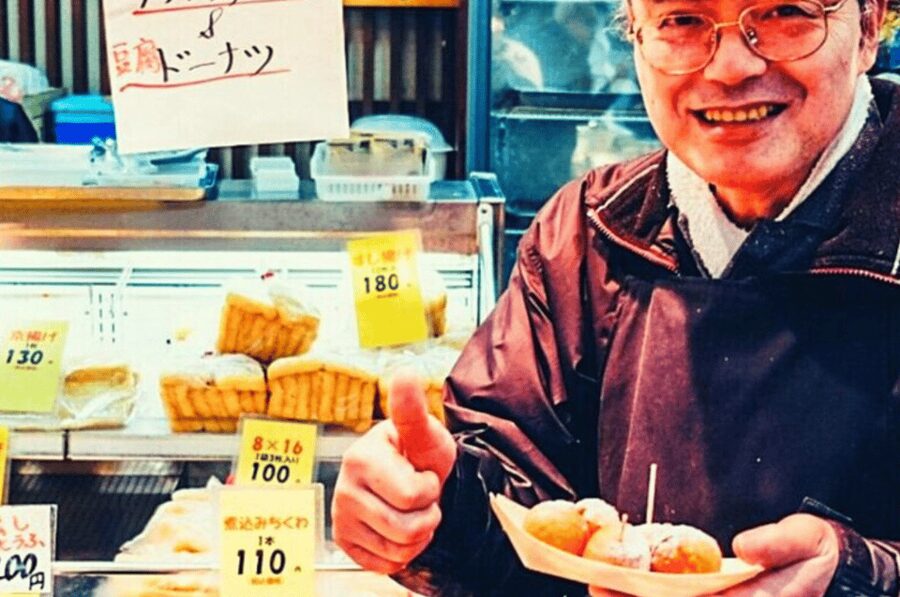
At $61 per person, this tour is not the cheapest way to walk through Kuromon Market. You could enter the market on your own and buy a few items for less.
The comparison changes once you count what is included. The fee covers five to seven dishes, three to four additional tastings, an English-speaking guide, help with ordering, and explanations about the ingredients and cooking methods. It also lets you try several foods without having to decide what to buy at each stall.
For a first visit to Osaka, I think the price is fair if you want a meal-sized introduction and practical help. You are paying for food, but also for selection and confidence. A guide who knows the vendors can save you from spending money on something you do not understand or missing a specialty because the sign is unreadable.
The value is weaker if you are comfortable ordering alone, speak Japanese, or mainly want to browse. It is also less attractive if seafood is not part of your diet. The tour’s strength is its range of samples and cultural explanation, not flexibility for individual dietary needs.
The market beyond the food stalls
The tour includes a look at Japanese knives and tableware, which adds a useful shopping angle. Kuromon Market is not only about eating on the spot. You can also see tools and serving items linked to Japanese cooking.
The tour does not promise a dedicated shopping session, so think of this as an introduction rather than a long buying visit. Still, the guide can help you recognize why certain knives or tableware appeal to cooks and collectors.
If the group has extra time, the guide may also show you Dotonbori. This is not guaranteed as a set part of the two-hour plan, but it gives you a possible extension into one of Osaka’s best-known entertainment and food areas. Ask your guide for recommendations if you want to continue eating after the tour. One guide was praised for offering useful suggestions for the rest of the day.
Timing, group size, and practical limits

The tour lasts two hours, which is long enough for a proper introduction but short enough to fit into a busy Osaka day. The 2pm start makes it work as a late lunch, an early afternoon meal, or a food stop before an evening in Dotonbori.
The fixed departure is the main logistical point. Be at Exit 6 by 1:50pm, not 2pm. Because the tour moves through the market quickly, there is no reliable way to join after the start.
The group is limited to nine people, and the language is English. No hotel pickup is provided. Free cancellation is available up to 24 hours before the tour for a full refund, and you can reserve now and pay later, which helps if your Osaka plans are still changing.
The food restrictions deserve equal attention. This tour is not suitable for vegans, and the seafood focus may be difficult for anyone with strong dietary limits. Pregnant women are also listed as unsuitable for the activity. If you have a less common allergy or restriction, the supplied information does not promise that substitutions can be made, so ask before booking.
Who should book the Kuromon Market tour?
I would choose this tour if you are visiting Osaka for the first time, want to try several local foods, and would rather have someone else handle the ordering. It is particularly useful if handwritten Japanese menus and unfamiliar seafood make you hesitate.
It also suits curious eaters who want more than the usual restaurant meal. You may try foods you would not have selected alone, and the guide’s explanations give the dishes a setting and a reason to remember them.
I would skip it if you are vegan, pregnant, avoiding seafood, or looking for a relaxed shopping tour. It is also not the best choice if you prefer to eat at your own pace or want a menu built around familiar ingredients.
At a 4.7 rating from 31 ratings, the experience has a strong record, with repeated praise for the guides, food range, and market knowledge. The most useful advice is simple: arrive early, do not eat a big lunch first, and expect seafood to make up much of the savory food.
FAQ
Where does the tour meet?
The meeting point is at the top of the stairs at Exit 6 of Nipponbashi metro station.
What time should I arrive?
The tour starts exactly at 2pm. Arrive between 1:45 and 1:50pm so you have time to reach the meeting point.
Can I join if I arrive late?
No. The tour information states that late arrivals cannot catch the group once it has left.
How much food is included?
The tour includes approximately five to seven dishes and three to four additional tastings.
What foods might I try?
Possible foods include scallops, tuna sashimi, gobo tempura, okonomiyaki, cherry blossom red bean mochi, green tea, pickled vegetables, dried fish, and wasabi beans.
Is the tour suitable for vegans?
No. The tour is not suitable for vegans, and much of the savory food is fish or seafood.
Can I cancel for a refund?
Yes. You can cancel up to 24 hours in advance for a full refund. You can also reserve now and pay later.
Should you book it?
Book this Kuromon Market walk if you want a filling, seafood-focused introduction to Osaka and value a guide who can order, translate, and explain. At $61, it offers solid value when you count the number of tastings and the help navigating a market where English menus are uncommon.
Skip it if the seafood focus does not suit you, or if you would rather choose your own stalls and spend longer shopping. For everyone else, arrive early, leave room in your stomach, and let the market set the menu.
Just added around Japan
- Nagoya Super Market Tour & Home Cooking Class with a Local, Akiko★ 5.0 · 10 reviews
- Tokyo: Private Tsukiji Street Food & Sake with Local Guide★ 5.0 · 3 reviews
- Tokyo: Tsukiji Market Guided Tour & Sushi-Making Experience★ 4.4 · 11 reviews
- 【Family pack】Tokyo: Tsukiji fish market food tour★ 5.0 · 3 reviews
- Tokyo: Tsukiji Market and Hama-rikyu Gardens Guided Tour★ 4.8 · 73 reviews
- Tokyo: Tsukiji Fish Market Culture Tour with Sashimi Tasting★ 4.6 · 54 reviews
- Tokyo’s Kitchen: Tsukiji Market Food & Culture Walk★ 4.7 · 74 reviews
- Tokyo: Tsukiji Fish Market Foodie and Educational Tour★ 5.0 · 4 reviews
Market Tours, compared.
Damnoen Saduak Market and Maeklong Railway Market
Read our review →
The Old Siam: Damnoen Saduak and Maeklong Railway Market
Read our review →
Old Town, Creek, Museums, Souks, & Street Food Tour
Read our review →Train Market & Floating Market with Boat Ride
Read our review →
Old Town, Souks, Street Food, Guided Tour & Abra Ride
Read our review →
Ayutthaya & Ayothaya Floating Market Day Trip
Read our review →
Frame Tickets, Creek, Souks & Blue Mosque Guided Tour
Read our review →
Hanoi Cooking Class: Culture, Local Market & Meaning CSR Impact
Read our review →Browse the lists this tour appears in