
Review · THAILAND
Chiang Mai: Traditional Thai-Akha Cooking Class& Market Tour
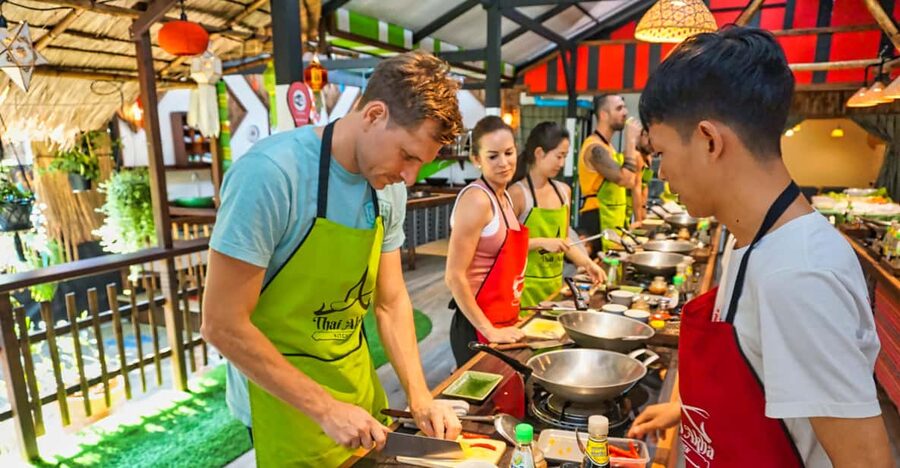
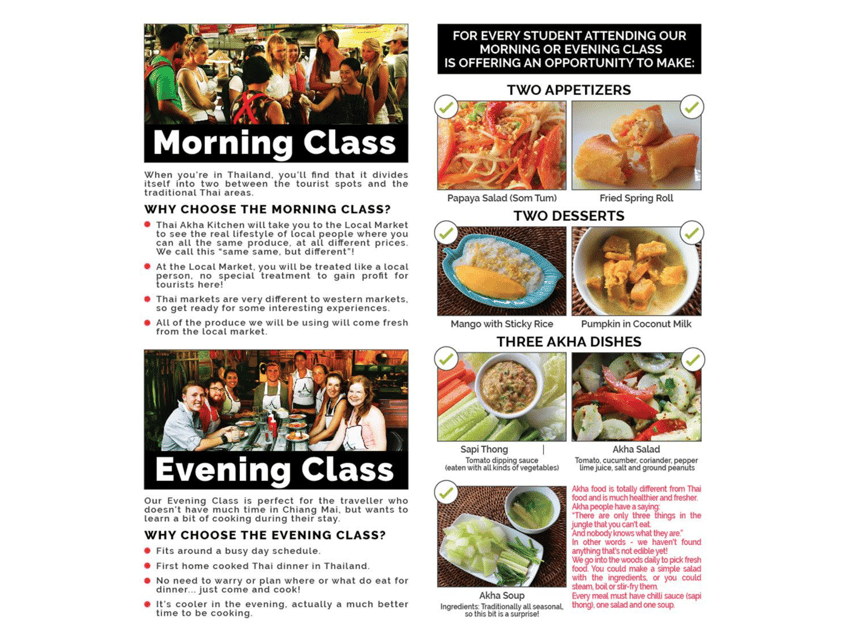
Cook northern Thailand, one plate at a time. This five to six-hour class pairs a local market visit with hands-on Thai and Akha cooking, giving you more than a meal and a recipe sheet. You explore ingredients, hear about Akha food traditions, then prepare a large menu at Thai Akha Kitchen.
I like the market-to-kitchen format, because it helps you understand what you are cooking before the chopping starts. I also like the generous menu: you prepare two appetizers, two desserts, three Akha dishes, plus a curry, soup, and stir-fry chosen from several options.
The main consideration is time. This is not a quick demonstration followed by one bowl of noodles. You may spend about three hours cooking and eat a lot, so it suits people who want a full food activity rather than a light cultural stop. The $41 price is fair for the hotel pickup, organic ingredients, market visit, cooking session, recipes, and cookbook.
Key points at a glance
- Akha food meets Thai classics: Learn tomato dipping sauce, Akha salad, and Akha soup alongside curry, pad Thai, spring rolls, and mango sticky rice.
- A real market comes first: See and select fresh ingredients before using them at the cooking school.
- You cook a substantial menu: The full selection can reach 11 dishes, depending on your choices and the class format.
- Spice levels can be adjusted: The cooking can be adapted to your preferred level of heat.
- Named instructors add warmth: An received especially strong praise, while Xuan and Evelyn were noted for their friendly, fun teaching.
- Hotel pickup keeps the day simple: Pickup from a Chiang Mai hotel is included, along with recipes and a cookbook.
Why the Akha connection matters
Thai food is familiar to many people, but Akha cooking gives this class a more specific regional and cultural focus. The Akha people migrated to Thailand in the early 1900s, and their food traditions developed in the mountain areas of northern Thailand.
At Thai Akha Kitchen, the cooking is presented as part of that cultural heritage. The emphasis is on fresh ingredients, healthy preparation, and making good use of what is available. That gives the class a clear purpose beyond learning how to stir a curry paste.
I especially like the way the menu places Akha dishes beside well-known Thai favorites. You might arrive expecting to cook green curry and pad Thai, then find yourself paying equal attention to tomato dipping sauce, ground peanuts, coriander, lime, and pepper in an Akha salad.
This is useful if you want a taste of northern Thai culture without signing up for a long rural excursion. The class does not replace visiting an Akha community, but it does give you a direct introduction to food traditions connected with the people.
More Cooking Classes in Chiang Mai
- Chiang Mai: Cooking Class, Market & Thai Herbs Garden Tour
★ 4.9 · 4,824 reviews - Chiang Mai: Authentic Cooking Class with Market & Farm Visit
★ 4.9 · 4,546 reviews - Chiang Mai: Cooking Class with Market and Pickup
★ 4.9 · 1,365 reviews
Starting at the local market
The day begins with a tour of a local market. This is the practical foundation of the class, not just a short walk past colorful stalls.
You see the ingredients before they become finished dishes. The focus is on selecting fresh produce and learning how those ingredients fit into Thai cooking. One particularly positive account described sampling local delicacies and treats during the morning market visit, which adds a small tasting element to the shopping trip.
I find this part valuable because Thai recipes can seem like long lists of unfamiliar items when you first read them. At the market, those ingredients have a place and a purpose. You begin to recognize the building blocks of the meal instead of treating every herb, vegetable, or paste as a mystery.
The market also gives the class a stronger sense of place. You are not simply handed premeasured ingredients in a classroom. You first see the local food supply, then carry that knowledge into the kitchen.
There is one practical point to keep in mind: market visits involve walking, browsing, and taking in a lot of information before the cooking starts. If you are hungry early in the day, the tasting opportunities may help, but the main meal comes later.
The cooking menu: a very full half-day

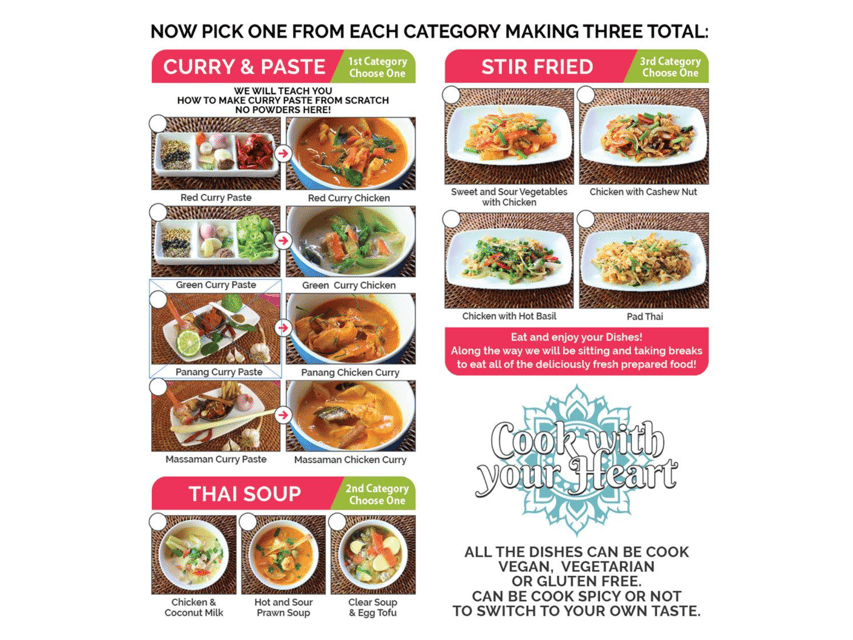
This class offers far more food than the standard one-dish cooking lesson. The menu is divided into several sections, and you choose one dish from some categories.
The appetizers are:
- Papaya salad
- Fried spring roll
The desserts are:
- Mango with sticky rice
- Pumpkin in coconut milk
The three Akha dishes are:
- Sapi Thong, a tomato dipping sauce
- Akha salad with tomato, cucumber, coriander, pepper, lime juice, salt, and ground peanuts
- Akha soup
For the curry, you choose one:
- Red curry chicken
- Green curry chicken
- Panang chicken curry
- Massaman chicken curry
For the Thai soup, you choose one:
- Chicken with coconut milk
- Hot and sour prawn soup
- Clear soup with egg tofu
For the stir-fried dish, you choose one:
- Sweet and sour vegetables and chicken
- Chicken with hot basil
- Chicken with cashew nut
- Pad Thai
Depending on the exact class arrangement, this amounts to a substantial spread. A morning session was described as preparing 11 Thai dishes, while another account praised the large number of dishes and the chance to adjust the heat to personal taste.
That quantity is one of the strongest reasons to book. You are not paying $41 for a short demonstration and a token sample. You receive a long practical session, several recipes, and enough food to make the class feel like a major activity in your Chiang Mai day.
The tradeoff is that you may not prepare every option in every category. Some sections involve a choice of one dish, so decide what matters most to you. If pad Thai is your priority, choose it over the other stir-fries. If you want to compare Thai curries, this class may not be the right setup, since the curry section calls for one selection.
Akha dishes that give the class its character
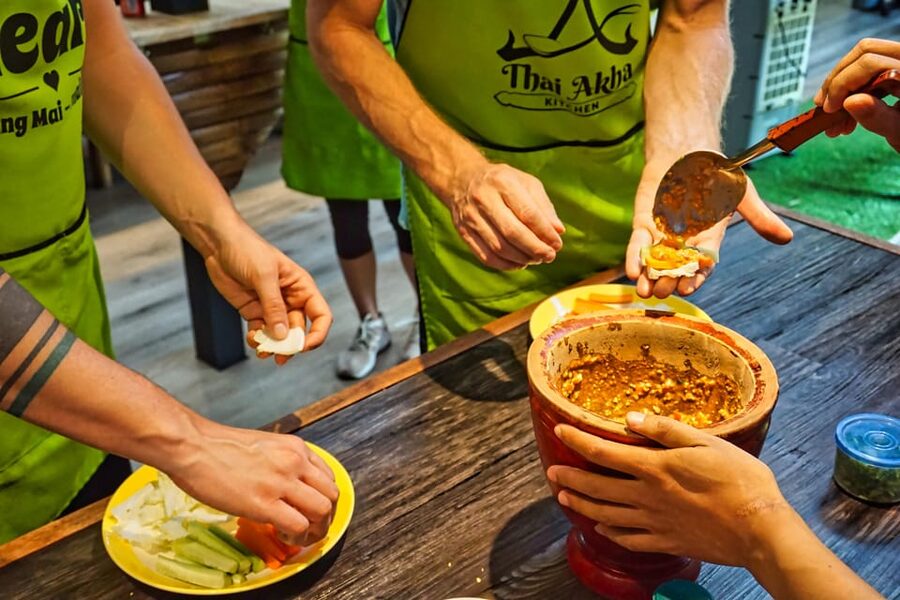
The Akha dishes are the part that sets this experience apart from a standard Chiang Mai cooking class.
Sapi Thong, the tomato dipping sauce, sounds simple, but simple dishes often show how ingredients work together. The Akha salad combines tomato, cucumber, coriander, pepper, lime juice, salt, and ground peanuts. It is a useful lesson in balancing sharp, fresh, salty, and nutty flavors.
The Akha soup adds another regional note to the menu. The supplied information does not specify all of its ingredients, so you should expect the instructor to explain the preparation in class rather than assume it follows a familiar Thai soup formula.
I like that these dishes are not treated as a footnote. They form a dedicated part of the menu, giving you a clear reason to choose this class over one focused only on green curry and pad Thai.
The food is also presented as fresh and health-conscious. That does not mean every dish is light. Curries, fried spring rolls, sticky rice, coconut milk, and peanut-based ingredients can be rich. The useful point is that the class pays attention to fresh ingredients and traditional preparation rather than relying only on packaged shortcuts.
More Cooking Classes in Thailand
- Chiang Mai: Evening Cooking Class and Local Market Visit
★ 4.9 · 648 reviews - Evening Cooking Class in Organic Farm with Local Market Tour
★ 5.0 · 394 reviews - Cooking Morning Class Chiang Mai Visit Organic Garden and Market
★ 5.0 · 211 reviews - Cooking Evening Class Chiang Mai Visit Organic Garden and Market
★ 5.0 · 187 reviews
Learning with An, Xuan, and Evelyn
The teacher can make or break a cooking class, and the strongest praise here centers on the instructors.
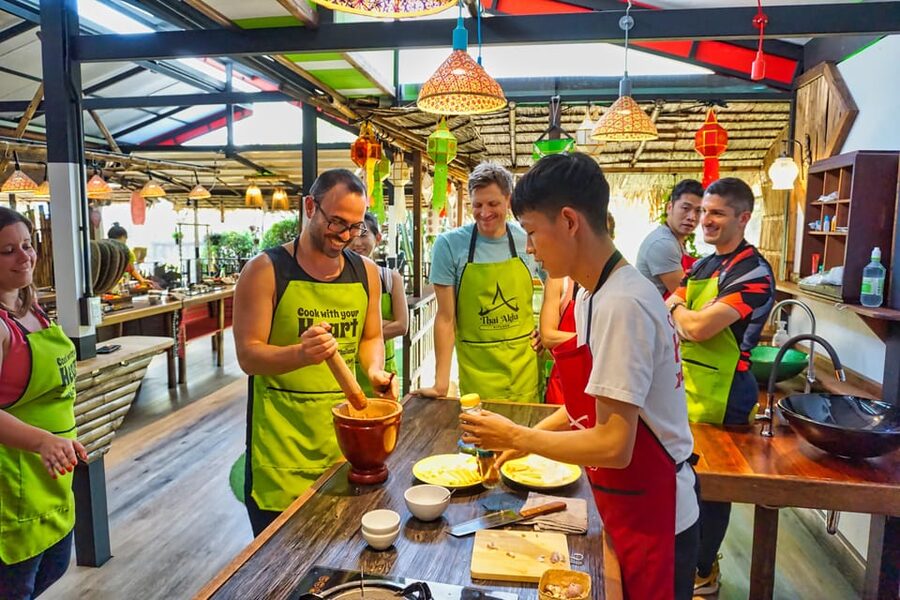
An was singled out for making the market tour, learning table, kitchen, and food enjoyable. Xuan and Evelyn were also praised for being fun, kind, and welcoming. That gives you a good sense of the teaching style: friendly, active, and personal rather than stiff or overly formal.
The class is taught in English and Thai. If you do not speak Thai, the English instruction is important, especially when learning techniques you will want to repeat at home. You should still expect cooking to involve demonstration, watching, copying, and tasting, which can make the lesson easy to follow even when a culinary term is unfamiliar.
A useful feature is the ability to adjust spice levels. Thai food can be hot enough to overwhelm the other flavors, particularly if you are not used to local chili heat. Here, you can follow the instructor’s advice while choosing a level that suits you. Inform the provider about food allergies in advance by email or WhatsApp. Do not wait until the kitchen session begins.
What the kitchen session feels like
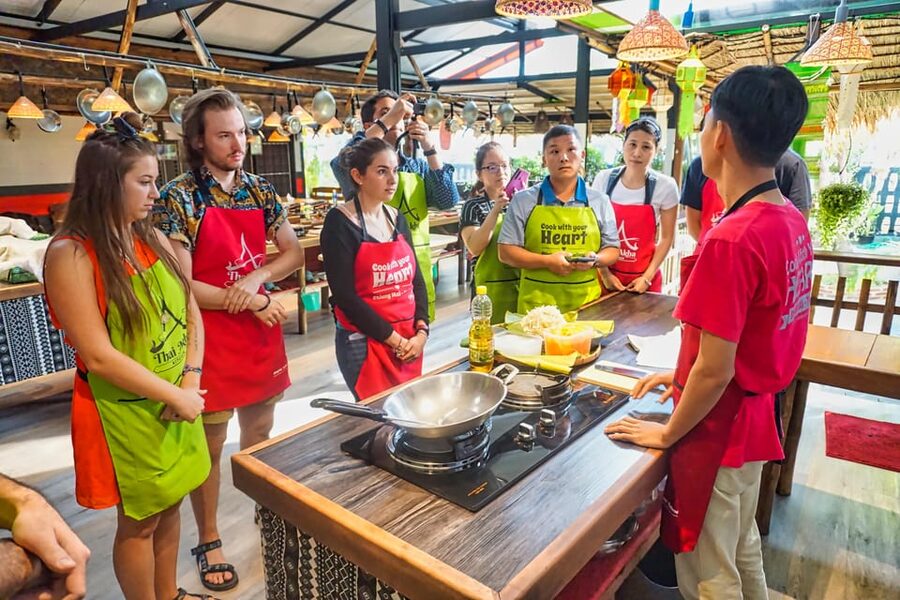
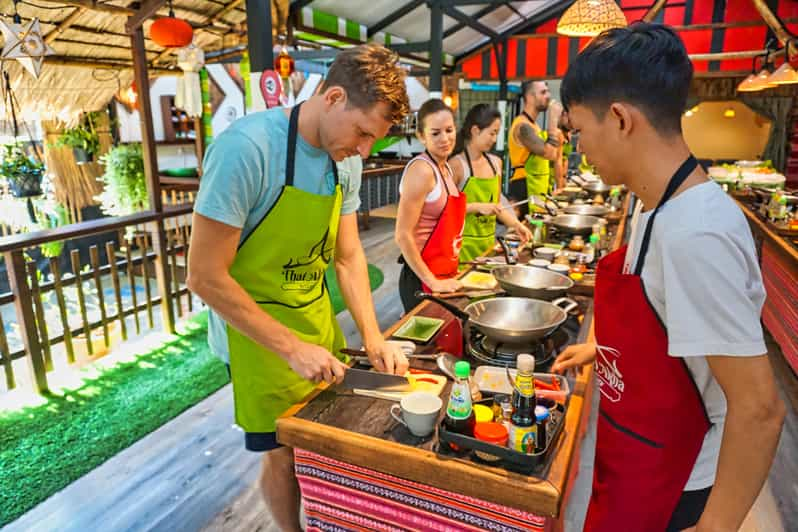
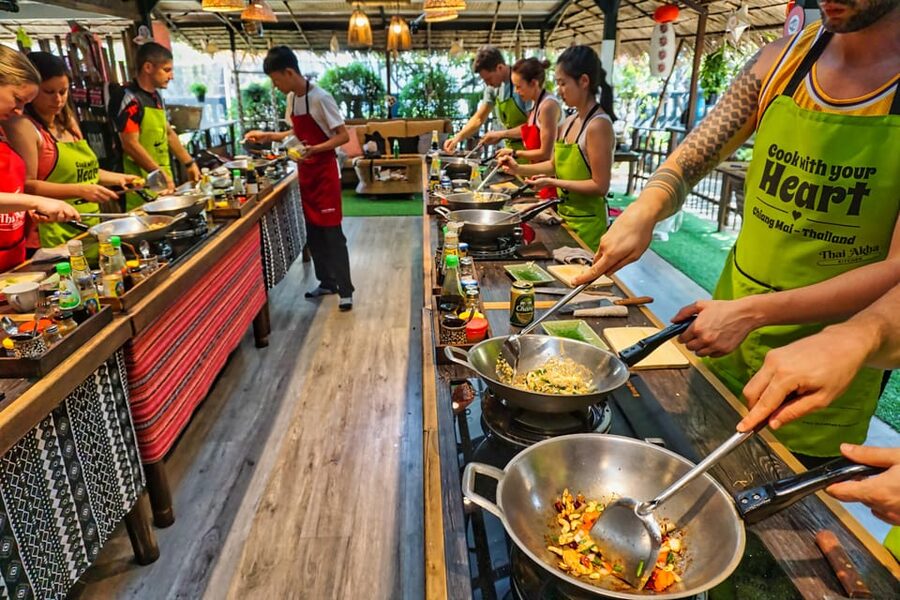
The cooking portion is hands-on. You work with organic ingredients, follow the recipes, and prepare the dishes step by step. The session can last around three hours, giving you time to cook a broad range of food rather than rush through one recipe.
The order matters. After the market, you already have some context for the ingredients. At the kitchen, you learn how those ingredients are cut, mixed, fried, simmered, or combined into sauces.
The class seems designed for participation rather than watching from the side. You should be ready to handle several recipes and keep track of what is happening. That can be part of the fun, but it also means the experience may feel busy if you prefer a slow, quiet lesson.
The payoff is the final meal. You get to taste the results of your work, including the Akha dishes and the Thai selections you made. Since the menu can be large, you should expect to leave well fed. One evening class was described as both varied and filling, which is worth remembering if you have dinner plans afterward.
Desserts bring the meal to a proper finish
The dessert choices are familiar but useful to learn.
Mango with sticky rice is one of Thailand’s best-known sweets. The combination of fruit, sticky rice, and coconut flavors gives you a recipe you can easily associate with your time in Thailand.
Pumpkin in coconut milk is less obvious to many first-time visitors. It shows how Thai desserts can use vegetables, coconut, and sweetness in a simple preparation.
Having two dessert choices adds variety to the class, but it also contributes to the large amount of food. If you are planning this after a heavy breakfast or before a special dinner, keep the portion size in mind.
Is $41 good value?

At $41 per person, this is a strong value if you want a full cooking experience. The price includes hotel pickup from a Chiang Mai hotel, a local market tour, organic ingredients, the cooking session, recipes, and a cookbook.
The cookbook matters because a cooking class has limited value if everything stays in Chiang Mai. The recipes give you a way to repeat at least part of the experience at home. Spices are also provided as a gift in one account, although the listed inclusions specifically confirm the cookbook and recipes, not a guaranteed spice gift for every booking.
The price also covers the time involved. A five to six-hour activity can occupy most of a morning or afternoon, with the cooking section lasting roughly three hours. Compare that with the cost of a meal, a market visit, and separate transport, and the package makes practical sense.
The value is lower if you dislike group cooking, already know Thai cuisine well, or want a short lesson focused on one dish. It is best for people who enjoy trying many flavors and want the cultural setting as much as the food.
Pickup, timing, and planning your day
Hotel pickup from Chiang Mai is included, which removes one common travel nuisance. You do not need to arrange separate transport to begin the class, though you should confirm the pickup details after booking.
The activity lasts five to six hours, and starting times depend on availability. There are morning and evening class formats, based on the available accounts. A morning option works well if you want the rest of the day free, while an evening session can fit around sightseeing.
Because the exact start time is not fixed in the supplied details, check availability before building your day around it. Allow room for the full five to six hours, not just the advertised cooking time.
Cancellation is flexible: you can cancel up to 24 hours ahead for a full refund. You can also reserve and pay later, which helps if your Chiang Mai plans are still changing.
Who should book this class?
I would recommend it most strongly to:
- First-time visitors who want a practical introduction to Thai food
- People curious about northern Thai and Akha traditions
- Couples, families, and friends who enjoy cooking together
- Anyone who wants market shopping and food preparation in one activity
- Home cooks who value recipes they can use after the trip
- Diners who want plenty of food and several dishes rather than one signature recipe
It may be less suitable if you want a quiet cultural tour with little participation. It is also not ideal for anyone with an allergy who does not communicate it before the class, since the menu includes common ingredients such as peanuts, coconut, seafood, chicken, and other potentially important allergens.
The language options are English and Thai. That should suit most international visitors, but if you need instruction in another language, this class does not list that option.
Should you book the Thai-Akha cooking class?
Yes, if you want an active, food-heavy introduction to Chiang Mai. The market visit gives the day a local starting point, the Akha dishes add cultural depth, and the menu offers much more than the usual curry-and-noodles lesson.
I like the combination of practical cooking, fresh ingredients, hotel pickup, and recipes for $41. The strongest praise goes to the friendly teaching style, especially An, Xuan, and Evelyn, and to the generous number of dishes prepared.
Book it if you can spare five to six hours and enjoy eating what you cook. Skip it if you want a short activity, a single-recipe workshop, or a tour with little kitchen work. For most food-loving visitors, this is one of the more useful ways to spend half a day in Chiang Mai.
FAQ
How long does the Thai-Akha cooking class last?
The activity lasts approximately five to six hours. The cooking portion can take about three hours, with the local market visit forming another major part of the experience.
What dishes can I cook?
The menu includes papaya salad, fried spring rolls, mango with sticky rice, pumpkin in coconut milk, three Akha dishes, one curry, one Thai soup, and one stir-fried dish. Several categories offer a choice of recipes.
Is hotel pickup included?
Yes. Pickup service from a Chiang Mai hotel is included in the experience.
Is the class taught in English?
Yes. The listed teaching languages are English and Thai.
Are recipes and cooking materials included?
Yes. The price includes organic ingredients, recipes, and a cookbook, along with the cooking session and market tour.
What should I do about food allergies?
Tell the provider about any food allergies in advance by email or WhatsApp. This is especially important because the menu can include peanuts, coconut, seafood, chicken, and other ingredients.
Just added around Chiang Mai
- Chiang Mai: Half Day Morning Cooking Class with Market Tour★ 4.9 · 10 reviews
- Chiang Mai: Half Day Cooking Class at Organic Farm★ 4.8 · 96 reviews
- Full Day Thai Cooking Class in Organic Farm and Market★ 5.0 · 3 reviews
- Chiang Mai: Morning Cooking Class with Market Visit★ 4.9 · 81 reviews
- Chiang Mai Light: Tuk Tuk Night Tour with Temples & Markets★ 5.0 · 7 reviews
- Chiang Mai: Half Day Evening Cooking Class with Market Tour★ 4.9 · 19 reviews
- Chiang Mai: Sticky Waterfall by Local Truck with Market Stop★ 4.8 · 26 reviews
- Chiang Mai : Cook in Farm, Market tour & Go by a Local Train★ 4.8 · 6 reviews
Cooking Classes, compared.
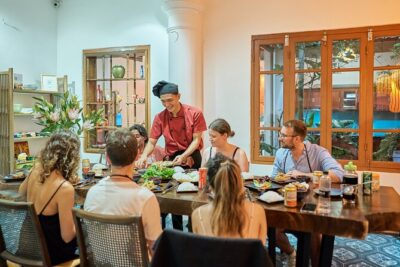
Hanoi Cooking Class: Culture, Local Market & Meaning CSR Impact
Read our review →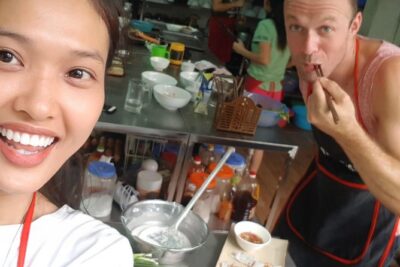
5 Traditional Dishes Hanoi Cooking Class with Market Trip
Read our review →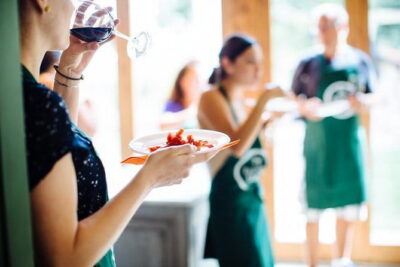
Cooking Class and Lunch at a Tuscan Farmhouse with Local Market Tour from Florence
Read our review →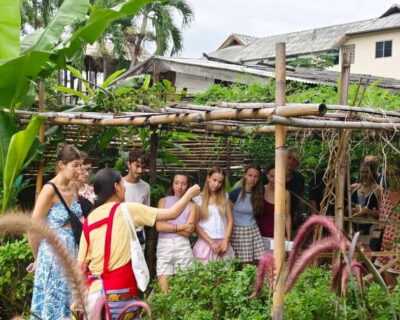
Cooking Class, Market & Thai Herbs Garden Tour
Read our review →
Authentic Cooking Class with Market & Farm Visit
Read our review →
Paella Cooking Experience & Boqueria Market Tour
Read our review →
Cooking Class Hoi An:Local Market, Basket Boat, Fishing & Cooking
Read our review →
Hoi An Cooking Class(Market,BasketBoat Crabfishing&Cooking Class)
Read our review →Browse the lists this tour appears in