Review · THAILAND
Chiang Mai: Evening Cooking Class and Local Market Visit
Thai food starts at the market. This five-hour Chiang Mai class lets you see the ingredients first, then turn them into dinner with an English-speaking teacher. I like the personal menu choices, and I like the visit to an organic garden, which gives the cooking a useful local context. The main drawback is the timing: pickup can be slow in evening traffic, and four full dishes make this a very filling night.
For $28 per person, the value is strong. You get transport, market and garden visits, all ingredients, equipment, instruction, drinks, and recipes for cooking at home. Teachers such as New, Aoy, and Oi have earned praise for being patient, funny, and attentive, with New especially good at helping students adjust dishes for allergies and dietary needs.
Key points at a glance
- Four dishes, chosen by you: Pick one stir-fry, one soup, one appetizer, and one curry or curry-paste dish.
- A useful market introduction: See fresh Thai herbs, vegetables, and other ingredients before cooking with them.
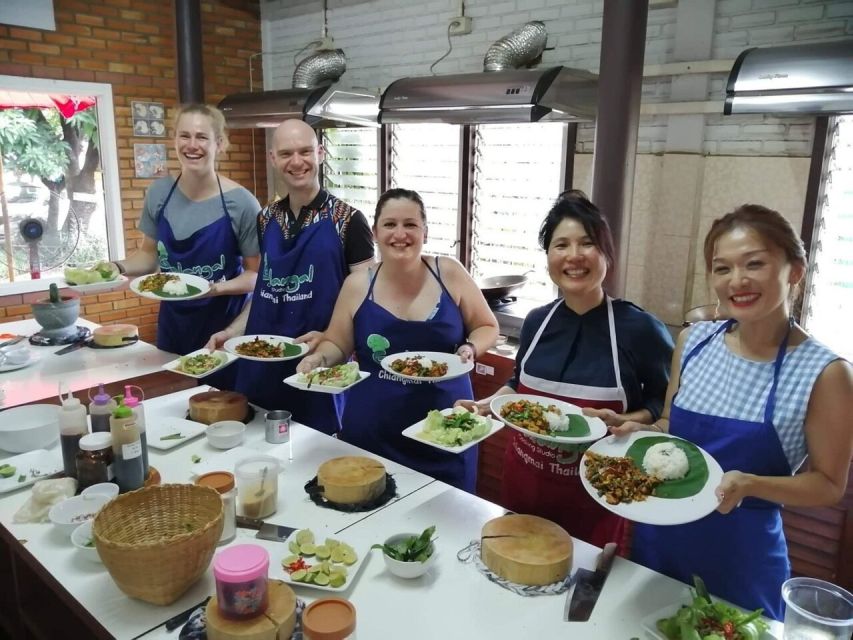
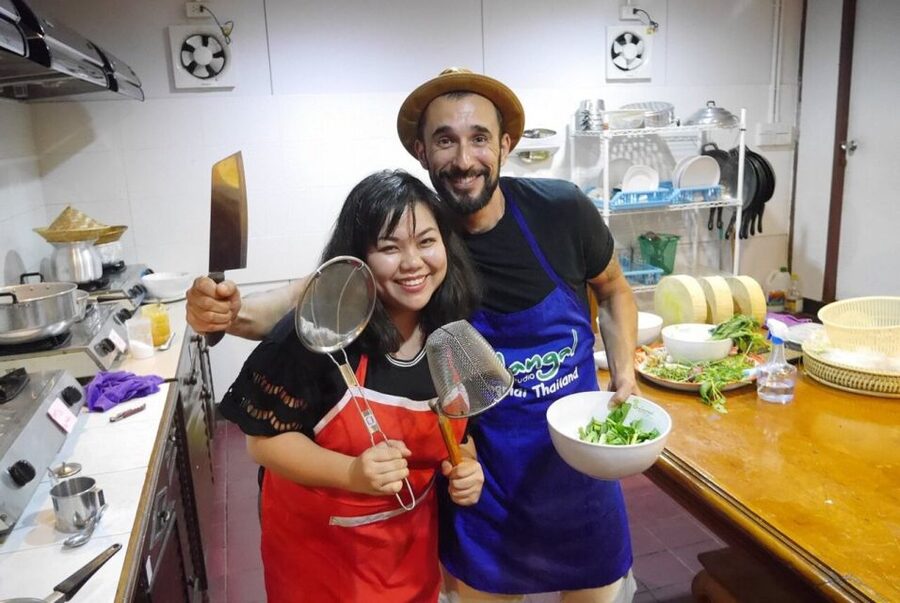
- A real hands-on class: You chop, mix, pound, stir, and cook rather than simply watch a demonstration.
- Good value at $28: Transport, food, drinks, instruction, equipment, and a recipe PDF are included.
- A full dinner, not a snack: Arrive hungry, because you will cook and eat a substantial amount of food.
- Flexible for food restrictions: Vegetarian, vegan, Halal, gluten-free, and allergy-friendly options are available.
A five-hour evening built around dinner
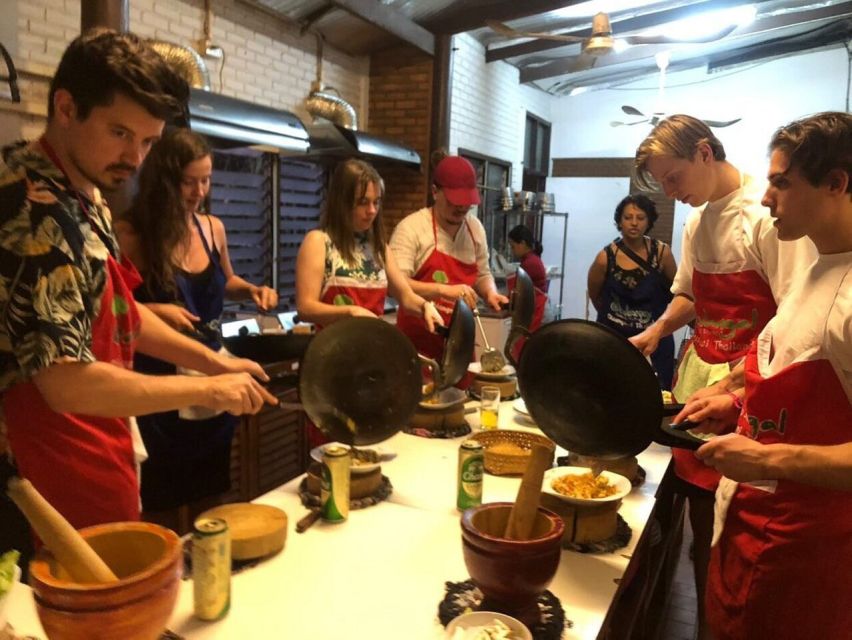
The class is designed as a late-afternoon and evening activity. Hotel pickup begins between 3:15 and 3:45 PM, with the precise time depending on your address and the number of stops. The cooking session may run from about 4 PM to 8:30 PM for larger groups, while smaller classes can finish earlier.
That schedule works well in Chiang Mai. You avoid using a valuable morning for a cooking lesson, and dinner comes at the end when you are ready for it. The tradeoff is that evening traffic can affect the pickup and return. You are asked to wait in your hotel lobby 5 to 10 minutes before the arranged time, and the driver will wait no longer than five minutes after pickup time.
The class generally serves groups of around 10 to 12 people or more, though smaller groups may be formed. A small group can feel more personal, while a larger one gives you more chances to meet people from different countries. The teaching team keeps the group moving, so the experience does not turn into a long wait between dishes.
More Cooking Classes in Chiang Mai
- Chiang Mai: Cooking Class, Market & Thai Herbs Garden Tour
★ 4.9 · 4,824 reviews - Chiang Mai: Authentic Cooking Class with Market & Farm Visit
★ 4.9 · 4,546 reviews - Chiang Mai: Cooking Class with Market and Pickup
★ 4.9 · 1,365 reviews
Getting picked up around Chiang Mai
Hotel transfer is included from much of central Chiang Mai. Coverage includes the Old City, Santitham, Huay Kaew Road from Kad Suan Kaew toward Maya Shopping Mall, and some addresses on Nimmanhaemin Road, Sirimongkrajan Road, Wat Ket Road, Chang Phueak, Chang Klan, and Chang Moi.
This is useful if you are staying in a central hotel and do not want to arrange a songthaew or taxi at the end of a food-heavy evening. Pickup vehicles can include the familiar red local trucks used around Chiang Mai. Still, do not assume every address in those districts qualifies. Some roads and hotels are too far from the service area.
Check your accommodation address before you count on the transfer. If it is outside the coverage zone, you may need to make your own way to the school or market. Public transportation is available near the school, and infant seats can be provided for the pickup service.
Seeing the ingredients at a local market
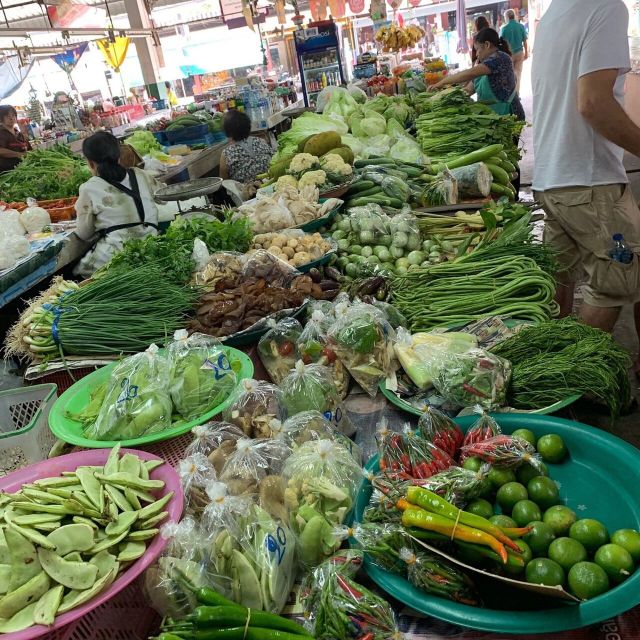
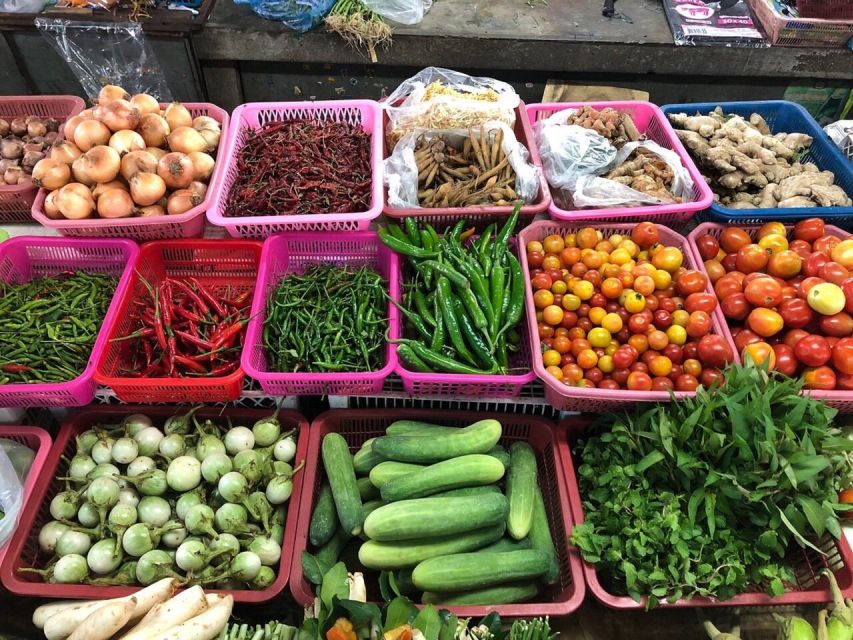
The market visit is brief, but it adds an important layer to the class. Instead of meeting Thai food only as a finished plate, you see the vegetables, herbs, noodles, curry ingredients, and other products in their everyday setting.
Your teacher points out the ingredients used in the evening menu. You may also have a little time to walk around the market independently, depending on the pace of the group. This is not a long market tour with a full lesson on every stall, so set your expectations sensibly. Its value is in helping you recognize the raw materials before you begin cooking.
This is particularly useful for ingredients that can look unfamiliar in a market but become familiar once you prepare them. A teacher can explain what goes into a curry paste or how herbs are used in soup, then show you how those ingredients behave in the kitchen.
The market stop also gives you a quick look at how locals shop for dinner. It feels more connected to daily life than arriving at a school with every ingredient already measured and hidden from view.
A short walk through the organic garden
After the market, you visit an organic garden and take a stroll among the herbs and vegetables. This part is not just a change of scenery. It helps explain where some of the flavors in Thai cooking begin.
The garden visit is fairly short, so do not expect a farm tour or a large agricultural attraction. Its strength is practical: you can see how herbs and vegetables are cultivated, then use related ingredients in the class soon afterward.
For first-time cooks, this makes the menu easier to understand. Thai food often depends on fresh aromatics, herbs, chilies, and vegetables rather than a long list of complicated techniques. Seeing those ingredients growing gives the cooking a stronger sense of place.
More Cooking Classes in Thailand
- Evening Cooking Class in Organic Farm with Local Market Tour
★ 5.0 · 394 reviews - Cooking Morning Class Chiang Mai Visit Organic Garden and Market
★ 5.0 · 211 reviews - Cooking Evening Class Chiang Mai Visit Organic Garden and Market
★ 5.0 · 187 reviews - Half-Day Cooking Class with Market Tour
★ 5.0 · 163 reviews
Choosing your four dishes
You choose one dish from each of four categories. That choice is one of the best features of the experience, since you are more likely to pay attention when you are cooking food you already want to eat.
Stir-fried dishes
Your options include:
- Pad Thai
- Pad See Ew with chicken and fresh noodles
- Chicken with cashew nuts
- Minced chicken with holy basil
Pad Thai is the familiar choice, but Pad See Ew offers a different noodle style and a deeper, more savory profile. The chicken and cashew dish gives you a useful introduction to stir-frying meat with nuts and vegetables, while holy basil shows how a simple herb can shape an entire plate.
Soups
You can choose from:
- Tom Yum Kung with prawns
- Tom Kha Kai with chicken and coconut milk
- Vegetarian or vegan Tom Kha
- Tom Zap Kai with chicken
These choices cover several classic Thai flavors. Tom Yum is hot and sour, while Tom Kha brings coconut milk into the mix. The vegetarian and vegan Tom Kha option is especially helpful because it does not treat a meat-free meal as an afterthought.
Appetizers
The appetizer choices are:
- Som Tam, or green papaya salad
- Fried spring rolls
- Larb Kai, a chicken salad
- Glass noodle salad
This category adds variety to the meal. Som Tam introduces the sharp, fresh combination of papaya, lime, chili, and other seasonings. Spring rolls are a more familiar hands-on option, while the salads show how Thai cooking can build a full dish without relying on heavy sauces.
Curry and curry paste
Curry choices include:
- Massaman curry
- Green curry
- Panang curry
- Chiang Mai-style Khao Soi
- Red curry
- Yellow curry
- Dry red curry
The curry-paste work is a highlight. You do not simply spoon a prepared paste into a pan. You learn how the paste is made, and one participant described making green curry paste from scratch as a memorable part of the evening.
Khao Soi is the most regionally specific choice. Since it is closely associated with Chiang Mai, it gives the menu a local connection that a standard Thai restaurant meal may not provide.
The available choice is not unlimited, and the school may organize the menu around the group. Even so, the range is generous for a class at this price. The most important question is not how many recipes you can select, but whether you will actually remember how to make them later. Four dishes is a useful amount: enough variety to feel like a full class, but not so much that every recipe becomes a blur.
Cooking in an air-conditioned kitchen
The cooking takes place indoors in an air-conditioned kitchen, followed by dining in an air-conditioned room. That matters in Chiang Mai, particularly after a warm market walk or during the hotter months.
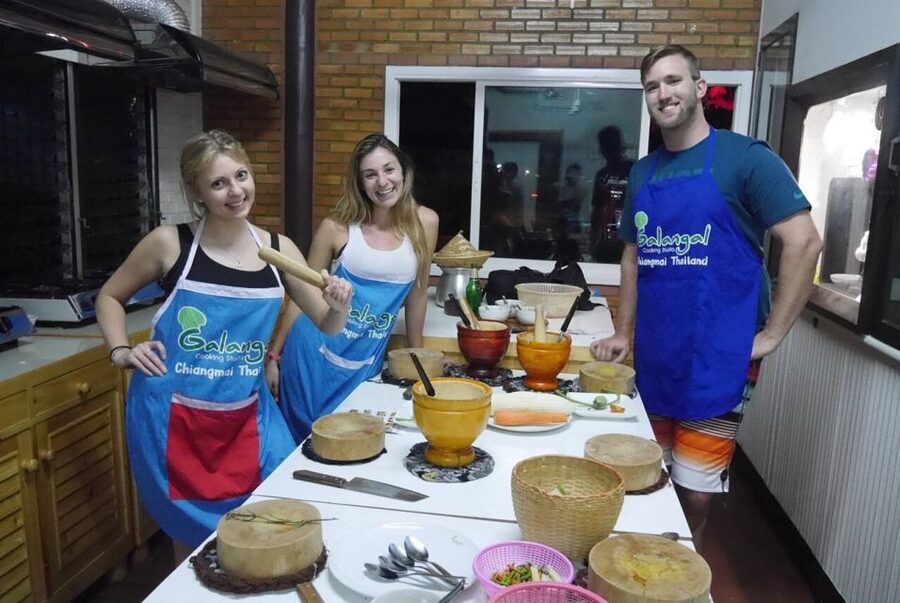
You receive the ingredients and equipment you need, along with step-by-step instructions. The work is approachable for beginners. You will be involved in preparing and cooking the dishes, but the techniques are not presented as a test of professional kitchen skill.
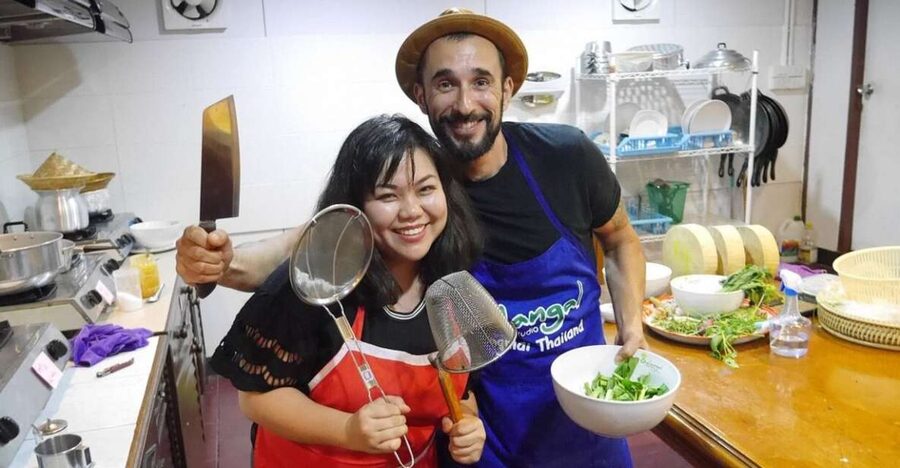
The teachers keep the atmosphere relaxed while still explaining what each ingredient does. New is particularly good at remembering students by name and giving help without making beginners feel awkward. Aoy has also been praised for clear teaching and a light sense of humor. If you have never taken a cooking class, this is the sort of guidance that makes the evening enjoyable rather than stressful.
The class is not designed for someone seeking advanced culinary training. You will learn practical Thai recipes and methods, not restaurant-level knife work or a detailed study of regional food theory. For most people, that is a fair trade. You can finish the class with dishes you can reasonably attempt at home.
Eating what you make
At the end, you sit down and eat the dishes together. The food is not a token tasting. Since each person prepares several dishes, you should arrive with an empty stomach.
The meal can be large enough that leftovers are sometimes packed to take away. That is a useful touch, especially if you are traveling with children or if you prefer to taste each dish slowly rather than force down a full dinner at once.
Water, tea, and coffee are included. Alcohol is not part of the experience, and smoking is not allowed indoors. The dining room keeps the evening comfortable and orderly, though the class can feel food-heavy if you have eaten a late lunch.
A good strategy is to make a small lunch, avoid a large snack before pickup, and drink water during the afternoon. Thai food can also be spicy, so tell the teacher your preference before cooking rather than waiting until the plate is finished.
Dietary needs and menu changes
This class makes a serious effort to accommodate different diets. Vegetarian, vegan, Halal, gluten-free, and allergy-sensitive participants can take part, and ingredients can be adjusted where needed.
If you have an allergy, explain it clearly at the start of the class and repeat it when the menu is chosen. The teachers have shown flexibility by replacing seafood and changing ingredients for vegetarian students. That does not mean every substitution is possible in every dish, but the menu offers enough range to make adjustments practical.
This flexibility is one reason the class works well for mixed groups. One person can cook chicken, another can choose a vegetarian dish, and both can still take part in the same basic process.
Bring any personal medication you need. The activity information specifically advises this, which is sensible for anyone managing a food allergy or other medical need.
What you take home
The recipe material is supplied as a PDF, sent by email or provided for later use. It gives you a way to recreate the dishes after the holiday, which adds real value to the class.
Thai recipes can be difficult to reproduce from memory because the balance of sour, salty, sweet, spicy, and aromatic flavors matters so much. Written instructions help, especially for curry paste and dishes such as Khao Soi that may not be part of your normal home cooking.
You also leave with practical confidence. The class shows you how the ingredients look, how they are combined, and how the finished dish should taste. That is more useful than simply photographing a recipe card.
Price, group size, and overall value
At $28 per person, this is an unusually full half-day experience. You are paying for about five hours, transport in central Chiang Mai, a market visit, a garden stop, four cooked dishes, ingredients, equipment, drinks, instruction, and recipes.
Some cooking classes charge more for fewer dishes or do not include hotel transfer. Here, the food alone accounts for much of the price, especially since you are eating a substantial dinner rather than sampling a few spoonfuls.
The main value is not luxury. This is a practical, friendly class aimed at giving you a good evening and recipes you can use later. If you want a private chef, a quiet one-to-one lesson, or a detailed farm-to-table course, you may find the group format too basic. If you want to learn several recognizable Thai dishes without spending a large part of your holiday budget, it is a strong choice.
Observer fees are separate. An observing adult pays 500 THB, and an observing child aged 6 to 12 pays 350 THB. That matters if someone in your party wants to watch without cooking.
Who should book this Chiang Mai class?
I would recommend it most strongly to first-time visitors who want more than a restaurant meal, beginner cooks who like clear instruction, couples who want a social evening, and families with older children or teenagers.
It also suits people who already know Thai food but want to learn regional dishes such as Khao Soi or make curry paste from scratch. The menu choices let you avoid repeating dishes you have already tried.
The class may be less suitable if you dislike group activities, do not enjoy eating a large dinner, or need a very exact pickup time. Evening traffic can delay the vehicle, and the schedule may finish earlier for a small group or later for a larger one.
The activity is wheelchair and stroller accessible, and the school is near public transportation. People with altitude sickness should not book, according to the activity guidance, though altitude sickness is not normally a concern in central Chiang Mai.
Should you book it?
Yes, if you want a good-value cooking class with real food, simple instruction, and a useful look at local ingredients. I especially like the combination of market, garden, cooking, and dinner. It gives the evening a clear shape, and the recipe PDF means the experience does not end when you leave Chiang Mai.
Book it if you can arrive at pickup with patience and an appetite. Confirm that your hotel lies within the transfer area, tell the teacher about allergies early, and choose your dishes before hunger turns every option into an urgent decision. For $28, this is one of the easier ways to turn a standard Chiang Mai evening into something you can continue at home.
FAQ
How long does the cooking class last?
The activity lasts about five hours. Larger groups may run from around 4 PM to 8:30 PM, while smaller groups may finish earlier.
What time is hotel pickup?
Pickup takes place between 3:15 and 3:45 PM. You should wait in your hotel lobby 5 to 10 minutes before the scheduled time because evening traffic can affect the route.
Which hotels receive pickup service?
Pickup is offered from hotels in the Old City, Santitham, Huay Kaew Road between Kad Suan Keaw and Maya Shopping Mall, and some locations on Nimmanhaemin Road, Sirimongkrajan Road, Wat Ket Road, Chang Phueak, Chang Klan, and Chang Moi.
What happens if my accommodation is outside the pickup area?
You will be informed if your address is not covered. You can arrange transportation to the cooking school or market yourself, and the school will provide the arrival details and address.
How many dishes will I cook?
You choose one dish from each of four categories: stir-fry, soup, appetizer, and curry or curry paste. This gives you four dishes in total, with curry-paste preparation included in the curry section.
Can vegetarians and vegans join?
Yes. Vegetarian and vegan options are available, including vegetarian or vegan Tom Kha.
Are food allergies and gluten-free diets accommodated?
The class accepts participants with gluten-free requirements and food allergies. Tell the instructor about your needs so ingredients can be adjusted where possible.
Is hotel transfer included in the price?
Yes. Hotel pickup and drop-off are included for eligible hotels in central Chiang Mai. Water, tea, coffee, ingredients, equipment, cooking instructions, and a PDF recipe book are also included.
More Farmers Market Tours in Chiang Mai
- Hanoi Cooking Class: Culture, Local Market & Meaning CSR Impact
★ 5.0 · 5,147 reviews - Cooking Class and Lunch at a Tuscan Farmhouse with Local Market Tour from Florence
★ 5.0 · 4,831 reviews - Chef Guided Food Tour of Pike Place Market
★ 5.0 · 3,733 reviews - Cooking Class Hoi An:Local Market, Basket Boat, Fishing & Cooking
★ 5.0 · 3,660 reviews
More Farmers Market Tours in Thailand
- Morning Cooking Class in Organic Farm with Local Market Tour
★ 5.0 · 157 reviews - Fresh Local Market Tour – Food tour in Chiang Mai
★ 5.0 · 113 reviews - Phuket: Half Day Easy Thai Cooking Class & Local Market Tour
★ 4.9 · 725 reviews - Bangkok: Ayutthaya & Local Market Tour In Spanish or English
★ 4.8 · 160 reviews
Just added around Chiang Mai
- Chiang Mai: Half Day Morning Cooking Class with Market Tour★ 4.9 · 10 reviews
- Chiang Mai: Half Day Cooking Class at Organic Farm★ 4.8 · 96 reviews
- Full Day Thai Cooking Class in Organic Farm and Market★ 5.0 · 3 reviews
- Chiang Mai: Traditional Thai-Akha Cooking Class& Market Tour★ 5.0 · 25 reviews
- Chiang Mai: Morning Cooking Class with Market Visit★ 4.9 · 81 reviews
- Chiang Mai Light: Tuk Tuk Night Tour with Temples & Markets★ 5.0 · 7 reviews
- Chiang Mai: Half Day Evening Cooking Class with Market Tour★ 4.9 · 19 reviews
- Chiang Mai: Sticky Waterfall by Local Truck with Market Stop★ 4.8 · 26 reviews
Local & Farmers Market Tours, compared.
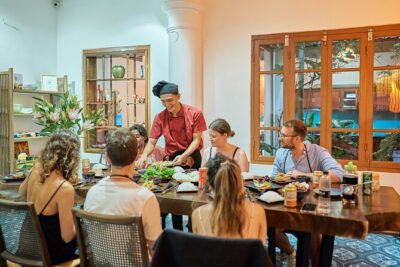
Hanoi Cooking Class: Culture, Local Market & Meaning CSR Impact
Read our review →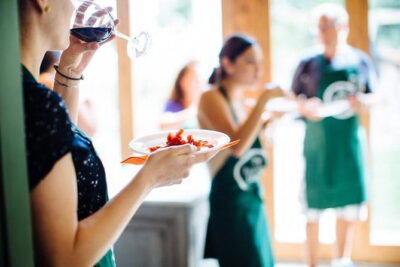
Cooking Class and Lunch at a Tuscan Farmhouse with Local Market Tour from Florence
Read our review →
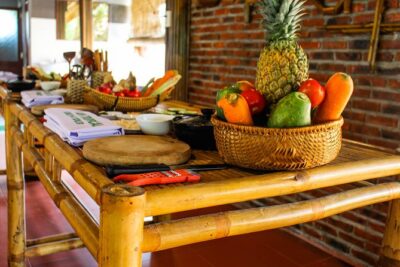
Cooking Class Hoi An:Local Market, Basket Boat, Fishing & Cooking
Read our review →
London Bridge & Borough Market Food Tour with 7 Authentic Dishes
Read our review →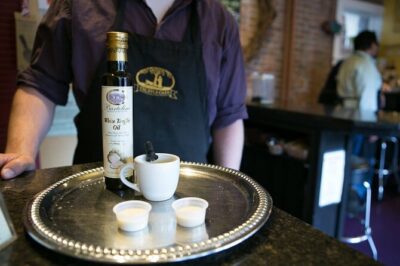
Hoi An Cooking Class(Local market,Basket Boat,Fishing & Cooking)
Read our review →