
Review · KENYA
Traditional Kenyan Cooking Class & Local Market Tour
Come hungry, leave with a better sense of Nairobi. This three-and-a-half-hour experience links a farmers market, a local matatu ride, and a home cooking class with Nimoh, a food guide and Kenyan writer. I like the market visit because you see the produce before it reaches the cooking pot, and I like the relaxed meal at Nimoh’s home, where food comes with stories about family, customs, and daily life. The possible drawback is that public transport and market shopping may feel hectic if you prefer polished sightseeing.
You can skip the market if you are not feeling up to it and go straight to the cooking portion. Still, I think the market and matatu are the heart of the experience. They turn a standard cooking lesson into a small window on ordinary Nairobi life, though you should be ready to walk, interact, and get your hands messy.
Key points to know before booking
- You shop for the meal at a local farmers market: Nimoh explains the produce, helps you choose ingredients, and gives you a close look at everyday Kenyan food.
- You ride a matatu: The public minibus adds a real local transport experience, often with music and plenty of character.
- You cook in Nimoh’s home: The meal includes a main dish, a side dish, and vegetables, with recipes connected to Nimoh’s tribe.
- You can take part or simply watch: This works for keen home cooks and for people who would rather enjoy the food and conversation.
- The group is limited to 15 people: That is small enough for a social setting, though the cooking time may feel less hands-on with a full group.
- The price is $50 per person: Grocery shopping is included, and the value is strongest if you take part in all three parts of the experience.
Starting at Westlands Square in Nairobi

The meeting point is Westlands Square on Ring Road in Parklands. From there, Nimoh leads you into the day’s activities. The exact route and full schedule are shared after booking, so you should not expect a detailed public itinerary before reserving.
That flexible approach makes sense for a local experience. Market conditions, transport, and the chosen dishes may shape the timing. The total duration is about three to three and a half hours, giving enough room for shopping, transport, cooking, eating, and conversation without turning the day into a marathon.
The tour is recommended by 98 percent of customers and holds a 4.9 rating from 129 ratings. Those numbers suggest strong consistency, but the main reason to book is the format. You are not simply shown a prepared meal. You help choose what goes into it, then see how the ingredients become lunch.
Nimoh is also easy to reach through the booking platform and WhatsApp, according to the experience details. That is useful in Nairobi, where a clear meeting plan can save time and stress.
More Farmers Market Tours in Kenya:
- Local Market Tour and Traditional Meal Cooking Class
★ 5.0 · 4 reviews - Nairobi Traditional Cooking Classes and Local Market Visit
★ 5.0 · 2 reviews - Hanoi Cooking Class: Culture, Local Market & Meaning CSR Impact
★ 5.0 · 5,147 reviews
Reading Nairobi through a local market
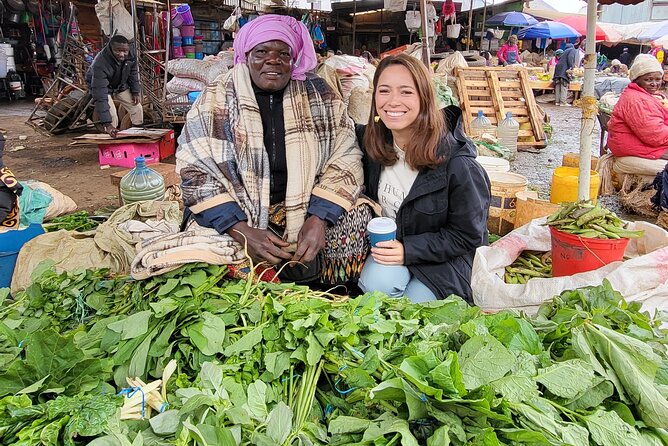
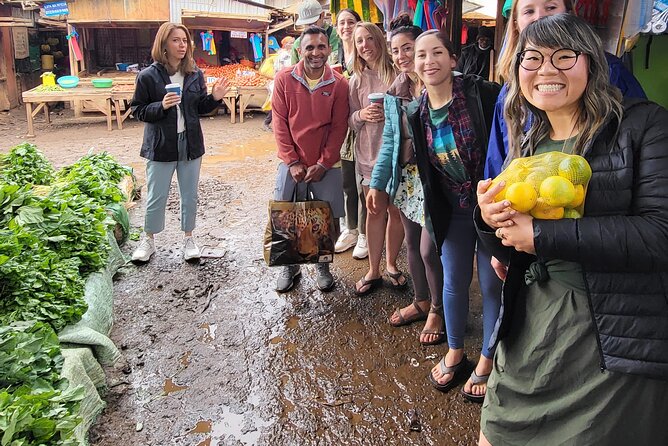
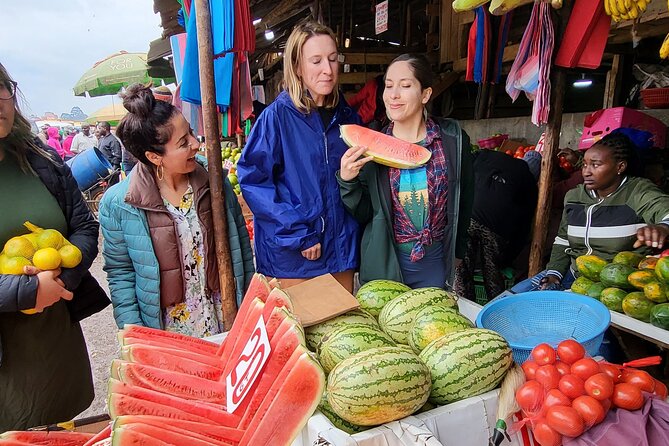
The market visit gives the cooking class a proper beginning. Instead of arriving at a kitchen with ingredients already measured, you see the food in its everyday setting. Fresh vegetables and other local produce are bought for the dish, and Nimoh explains what to look for when choosing good ingredients.
This is where the experience feels most useful for your wider trip. You learn not only the name of a vegetable or spice, but also how local shoppers judge quality and what foods are common in Kenyan homes. The market also gives you a chance to see the sights, sounds, and smells of a working neighborhood rather than a tourist display.
Nimoh’s food background matters here. She has worked as a food guide for six years and writes about Kenyan food, so the market visit is more than a quick grocery stop. You can ask about ingredients, street food, cooking habits, and the connection between food and family life.
The market is not likely to feel neat and staged. That is the point, but it also means you should bring patience. If you want a quiet cooking demonstration in a calm studio, this is not the best match. If you want to see how a meal begins, including the shopping and decision-making, it is a much better choice.
The shopping cost is included in the $50 price. That makes the fee easier to judge because you are paying for the guide, transport experience, instruction, food, and meal rather than adding grocery money afterward.
The matatu ride adds a jolt of real Nairobi
The matatu portion is one of the most unusual features. Matatus are local public minibuses, and the ride gives you a direct look at how many people move around Nairobi. Several descriptions of the experience point to music, colorful decoration, and a strong sense of local energy.
For many visitors, this may be their first matatu ride. I would treat it as an adventure rather than a luxury transfer. You may find the ride lively and fun, but it will not offer the quiet, predictable comfort of a private car. Nimoh’s presence is important because she guides you through the process and helps you feel at ease.
This part also gives the afternoon a better rhythm. The market is about ingredients and shopping. The matatu is about movement and city life. The home meal then slows things down again. Those three pieces feel connected, not like separate activities placed next to each other.
You should be comfortable with public transport before booking the full version. The market can be skipped, but the description presents the matatu as one of the three central experiences. If you prefer private transportation at every stage, ask about the exact plan before booking.
Cooking a Kenyan meal from scratch
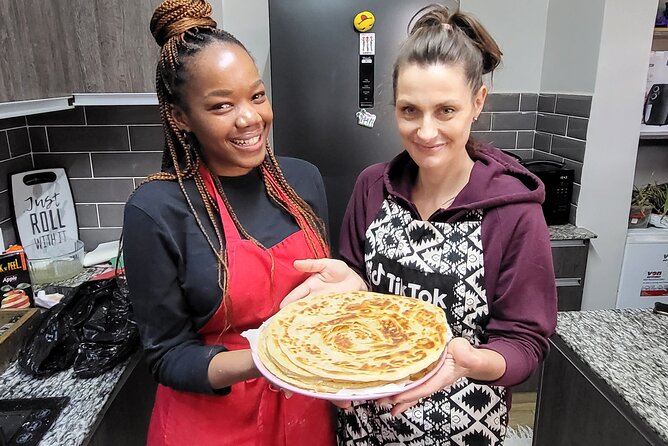
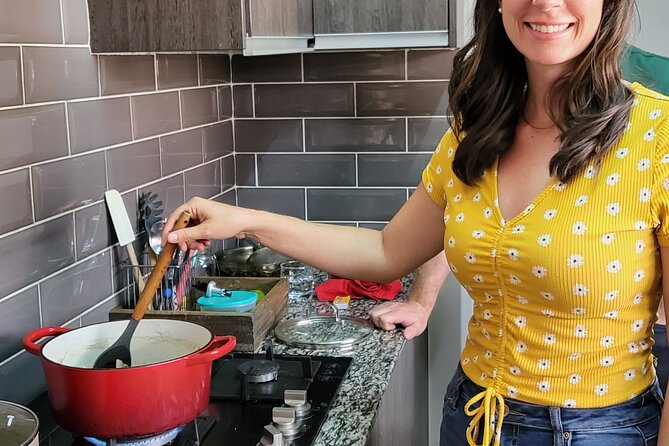
At Nimoh’s home, you prepare a complete Kenyan meal. The class includes a main dish, a side dish, and vegetables. The recipes come from Nimoh’s tribe, giving the lesson a personal link rather than presenting Kenyan food as one single national style.
The exact dishes can vary, but one account describes making chapati, stewed goat, and side dishes. That gives you a useful idea of the type of meal that may appear, though you should not assume that same menu for every booking.
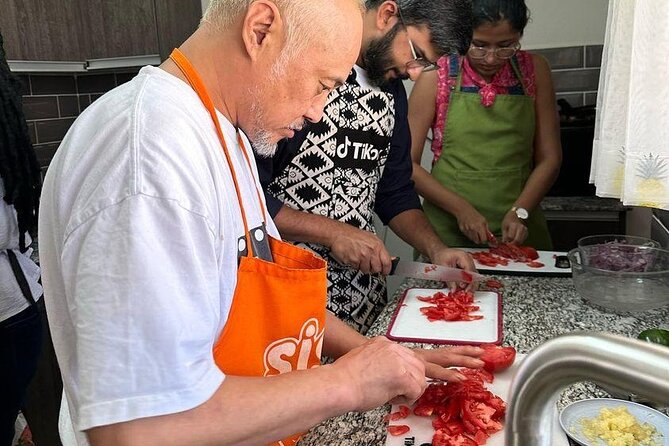
The hands-on approach is central. You may help prepare ingredients, cook, and shape or handle the food. Nimoh also shares practical cooking tips that can be used at home. If you are new to Kenyan cuisine, this is a good way to understand how separate ingredients become a meal people actually eat together.
I like that the class does not force everyone to participate in the same way. You can get involved, or you can watch and focus on the conversation. That matters in a group setting, since some people want a serious lesson while others are more interested in tasting and asking questions.
The home setting also changes the mood. You are not sitting in a formal cooking school. You are welcomed into a private home, where the meal is tied to stories about family, customs, and everyday life. That creates a warmer experience, but it also means you should show the same courtesy you would in any host’s home.
The cooking session lasts about three to three and a half hours when the full activity is included. The pace depends on the group and the dishes. With up to 15 people, not every person can have constant access to the same pan or cutting board. Still, the social side is part of the appeal, and Nimoh’s role is to keep the group involved.
More Cooking Classes in Kenya:
- Authentic Kenyan Cooking Class & Market Tour in Nairobi
★ 5.0 · 12 reviews - Market Tour and Traditional Kenyan Cooking Class in Nairobi
★ 4.8 · 6 reviews - 5 Traditional Dishes Hanoi Cooking Class with Market Trip
★ 5.0 · 4,890 reviews - Cooking Class and Lunch at a Tuscan Farmhouse with Local Market Tour from Florence
★ 5.0 · 4,831 reviews
The meal is part of the lesson
After cooking, you sit down to eat what you made. This is not just a reward at the end. It is the moment when the market, the matatu ride, and the cooking lesson come together.
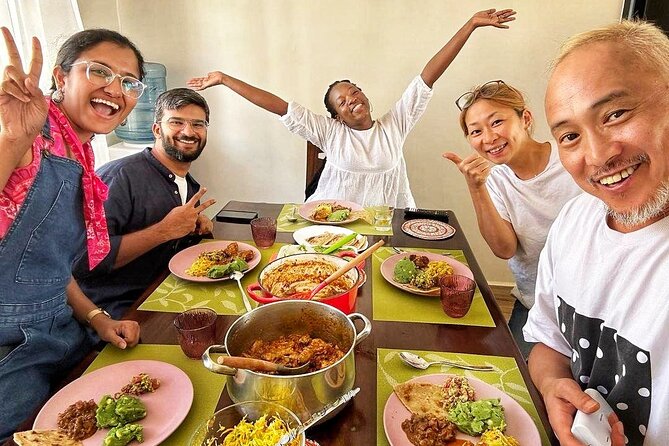
The meal gives you time to talk with Nimoh and the other people in the group. She shares information about Kenyan culture and local customs, and the conversation can continue beyond food. Several people have described the atmosphere as similar to eating with a friend, which is a useful way to think about the tone.
The food itself receives some of the strongest praise. Chapati, stewed goat, vegetables, and other traditional dishes may appear, depending on the menu. The benefit is freshness and context. You know where the ingredients came from, helped prepare them, and can ask why the dish matters.
You may also carry the food prepared after the experience. That is especially handy if you are not able to eat a full meal on the spot or want to save some for later. The details of how much food you take away are not specified, so I would treat this as a pleasant extra rather than the main reason to book.
Is $50 a fair price?
At $50 per person, this is good value if you take part in the market, matatu ride, cooking, and meal. A simple cooking lesson alone might cost less, but it would not offer the same combination of shopping, public transport, cultural explanation, and home hospitality.
The included grocery shopping improves the value. You are not paying $50 and then covering the cost of the ingredients separately. You also get a guide with a strong food background, instruction, a prepared meal, and the chance to ask questions throughout the afternoon.
The value is less clear if you skip the market and do not want to use public transport. The cooking and meal may still make the price worthwhile, but you would be using only part of the full experience. If that is your plan, contact the provider before booking so you understand what the shortened version includes.
The maximum group size is 15. That keeps the price within reach for many visitors, but it is not an intimate private class. Couples and small groups may prefer the social setting, while serious cooks who want constant one-on-one instruction should ask about the group size on their date.
Who will enjoy this most?
I would recommend this for first-time visitors to Nairobi who want more than major attractions. It is also a strong pick for people who plan trips around food, enjoy meeting local hosts, or want an approachable introduction to Kenyan customs.
It suits curious cooks, but you do not need advanced kitchen skills. You can participate as much or as little as you like. The experience also works well for couples and small groups who want a shared activity rather than a formal lecture.
You should think twice if you dislike markets, public transport, unplanned conversation, or working in a group kitchen. This is not designed as a polished restaurant meal with a demonstration from behind a counter. It is active, social, and deliberately local.
Vegetarian, pescatarian, and gluten-free options are available if requested at booking. Make that request early and clearly. The cooking location has lifts and is wheelchair accessible, and service animals are allowed. The activity is near public transport, though the matatu segment itself may not suit every mobility need, so confirm the exact arrangements before booking.
Timing, weather, and cancellation details
Confirmation arrives at booking. The activity depends on good weather, and poor conditions may lead to another date or a full refund. It also requires a minimum number of participants, so a cancellation for that reason comes with the option of a different date or experience, or a full refund.
You can cancel for a full refund up to 24 hours before the start time. Inside that 24-hour window, refunds are not provided and changes are not accepted. Cutoff times use Nairobi local time, so check the time carefully if you are booking from another country.
Because the full schedule is shared after booking, keep your meeting time free. Allow some flexibility rather than scheduling a tight airport transfer or another fixed appointment immediately afterward.
Should you book the Kenyan cooking class?
Book it if you want food to lead you into local life. The strongest part is not a single recipe. It is the chain of experiences: choosing produce at a market, riding a matatu, cooking in Nimoh’s home, and eating together.
I especially like this for a first or second day in Nairobi, when you are still finding your bearings. Nimoh can help you understand food, neighborhoods, customs, and public transport while also giving you practical ideas for the rest of your visit.
Skip it if you want a quiet, highly structured culinary workshop or private transport throughout. For everyone else, $50 buys a generous half-day of food and conversation, with enough local texture to make the experience feel personal rather than packaged.
FAQ
Where does the experience begin?
It begins at Westlands Square, Ring Road, Parklands, Nairobi, Kenya.
Where does the experience end?
It ends back at the meeting point.
How long does the activity last?
The experience lasts approximately three to three and a half hours.
What activities are included?
The experience includes a local farmers market visit, a matatu public transport ride, and a Kenyan cooking class at Nimoh’s home.
Is grocery shopping included in the price?
Yes. The $50 price per person includes the grocery shopping for the meal.
Can I skip the market visit?
Yes. You can skip the market if you are not feeling up to it and attend the home cooking portion instead.
Are dietary options available?
Yes. Vegetarian, pescatarian, and gluten-free options are available when requested at booking.
Is the cooking location wheelchair accessible?
Yes. The building has lifts and is described as accessible for wheelchair users.
What is the cancellation policy?
You receive a full refund if you cancel at least 24 hours before the start time. Cancellations or changes made within 24 hours are not accepted and are not refunded.
Just added around Kenya
- Nairobi Traditional Cooking Classes and Local Market Visit★ 5.0 · 2 reviews
- Nairobi: Maasai Market and Nairobi City Tour★ 5.0 · 4 reviews
- Nairobi: Hop on Hop off and Maasai market Collections Visit★ 3.5 · 10 reviews
- Nairobi: Explore Maasai Market for Unique Souvenirs★ 5.0 · 5 reviews
- Market Tour and Traditional Kenyan Cooking Class in Nairobi★ 4.8 · 6 reviews
- Maasai Market Souvenir Shopping★ 5.0 · 2 reviews
- Local Market Tour and Traditional Meal Cooking Class★ 5.0 · 4 reviews
- Diani: Market and Street Food Walking Tour★ 4.2 · 6 reviews
Local & Farmers Market Tours, compared.
Hanoi Cooking Class: Culture, Local Market & Meaning CSR Impact
Read our review →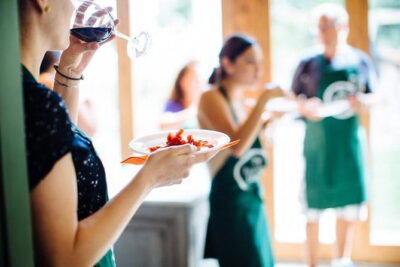
Cooking Class and Lunch at a Tuscan Farmhouse with Local Market Tour from Florence
Read our review →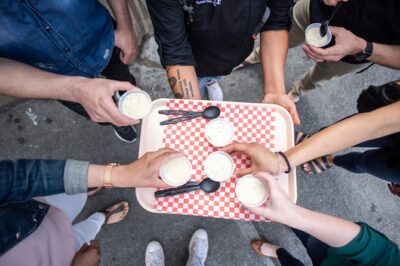
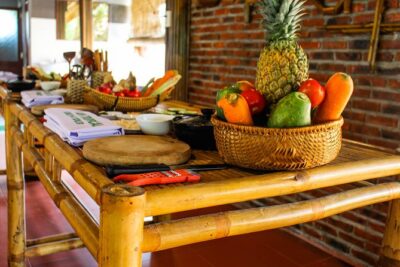
Cooking Class Hoi An:Local Market, Basket Boat, Fishing & Cooking
Read our review →
London Bridge & Borough Market Food Tour with 7 Authentic Dishes
Read our review →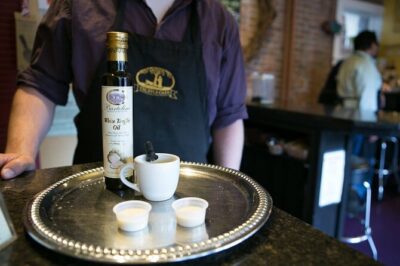
Hoi An Cooking Class(Local market,Basket Boat,Fishing & Cooking)
Read our review →
Browse the lists this tour appears in