
Review · CHINA
Hong Kong Market Walking Tour & Chinese Cooking Class
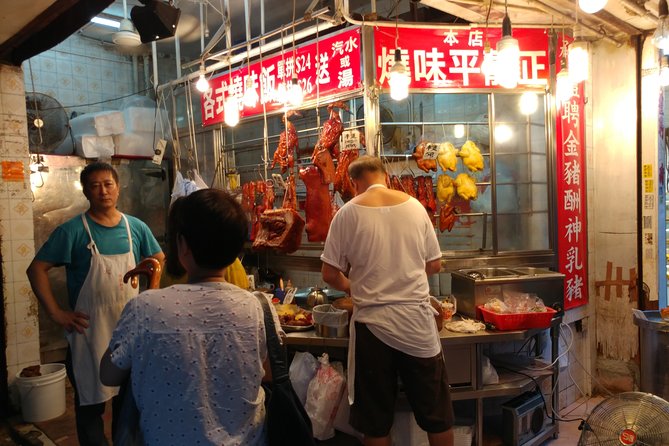
Food tells Hong Kong’s story. This four-and-a-half-hour experience pairs a guided walk through Ngau Tau Kok’s local wet market with hands-on instruction in a professional cooking studio. I especially like the market visit, where you see seafood, meats, vegetables, fruit, Chinese barbecue, and noodle shops in the setting locals use every day. I also like that Bill Chan adds recent Hong Kong history and neighborhood context instead of treating the food as a stand-alone show.
The main consideration is the price: $131.25 per person is a serious spend for a half-day activity. You are paying for a private experience, fresh ingredients, a three-course meal, drinks, instruction, and recipes you can use later, but this is not the choice for someone who only wants a quick market snack or a cheap cooking lesson.
This works best if you want to understand what you are eating. You walk, shop, cook in pairs, sit down to eat, and leave with practical techniques. The cooking studio is described as an immaculate, well-equipped professional kitchen, and Bill’s relaxed teaching style gives beginners room to ask questions and experiment.
Key points worth knowing before you book
- Ngau Tau Kok market visit: See the everyday food trade through seafood, meats, produce, Chinese barbecue, noodles, and imported fruit.
- Bill Chan leads the experience: He combines food instruction with a look at Hong Kong’s recent history, local culture, and neighborhood life.
- Three-course cooking lesson: You prepare a full Chinese meal in pairs, then eat what you made for lunch or dinner.
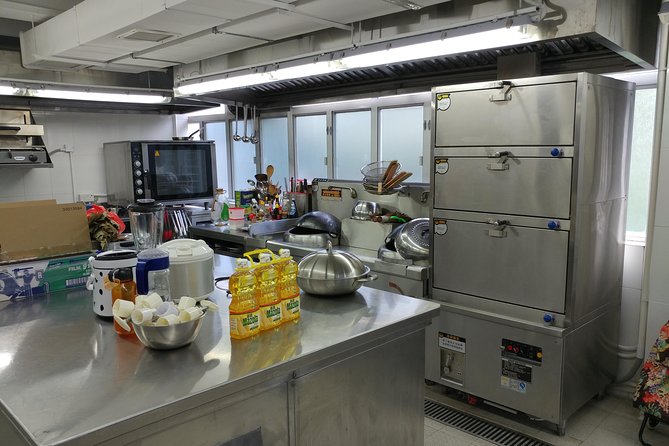
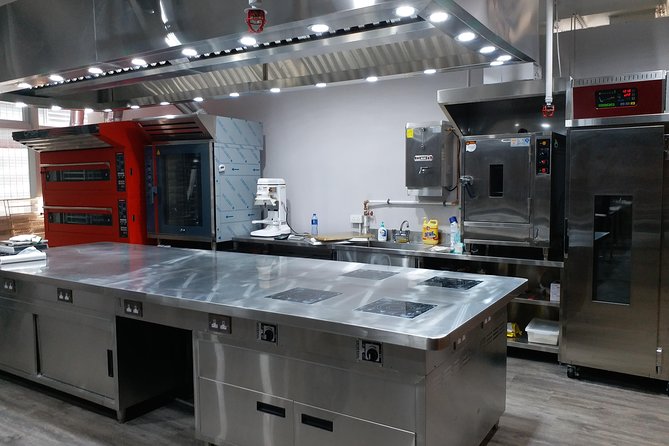
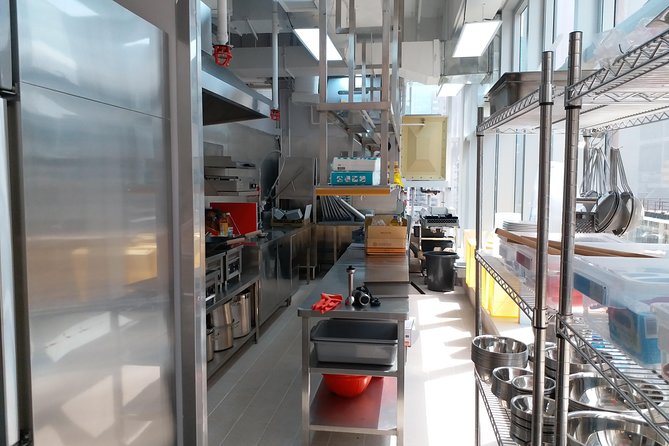
- Professional cooking studio: The kitchen is well-equipped and clean, which makes the practical part feel serious without becoming stiff.
- Morning or afternoon timing: Choose the session that fits your sightseeing plans, with the meal served at the end of the class.
- Private booking: Only your own group participates, giving you more direct attention than a large public class.
Starting in Ngau Tau Kok, away from the postcard Hong Kong
The meeting point is in Ngau Tau Kok, and the activity ends there too. That simple arrangement matters in Hong Kong, where crossing the city can eat up more time than expected. You do not need to finish in one district and then work out how to get back to your starting point.
The neighborhood setting also gives this experience a different feel from a food class built around the most photographed parts of the city. Ngau Tau Kok is a working Hong Kong district, and the tour uses its streets and shops as a classroom. As you walk, Bill explains how the area has changed over roughly the last 20 years, including the way streets serve residential and commercial purposes.
I like this kind of introduction because it gives the market a setting. You are not simply shown a tray of unfamiliar ingredients and told to admire it. You get some idea of how the surrounding district functions, then see how food fits into daily life.
You should wear comfortable walking shoes. The walk is part of the experience, not just a transfer to the kitchen, and a wet market can have damp floors or crowded passages.
More Cooking Classes in China
- Half-Day Chengdu Cooking Class with a Local Market Visit
★ 5.0 · 465 reviews - Lijiang Naxi Cuisine Cooking Class & Market Visit
★ 5.0 · 48 reviews - Half-Day Xi’an Biang Biang Noodles Cooking with a Market Visit
★ 5.0 · 48 reviews
Inside the local wet market
The market is the first major stop, and it is where the tour earns much of its cultural value. You can expect displays of fresh seafood, meat, vegetables, and fruit from Hong Kong and elsewhere. The market also includes traditional shops selling Chinese barbecue, noodles, and other familiar foods.
This is useful for two reasons. First, you see ingredients before they are chopped, seasoned, and presented on a plate. Second, Bill can explain how those products connect to Hong Kong cooking. That makes the later class easier to follow because you have already encountered some of the raw materials.
The market is not described as a staged tasting route, so do not expect a parade of free samples or a long list of restaurant stops. Its purpose is to show you how local food shopping works and to help gather ingredients for the class. That is a better fit for curious cooks than for anyone seeking a snack-heavy food crawl.
The walk also gives you a chance to ask questions. The private format means the pace can feel more personal, and the cooking class is designed for your group rather than a large room full of strangers. One small caution: the exact ingredients and shops may vary, so you should not book this expecting a fixed checklist of particular seafood or market stalls.
Shopping for ingredients with a purpose
After exploring the market, you use fresh ingredients for the cooking session. This link between market and kitchen is one of the strongest features of the experience. You see the food in its local setting, then work with it soon afterward.
The class is built around a three-course Chinese meal. You work in pairs, which gives you a practical role instead of leaving you to watch an instructor perform every step. Recipes and methods are set up so you can repeat them at home, a useful detail for anyone who wants a lasting souvenir beyond photographs.
The pace should suit beginners. The class is hands-on, but the instruction is not presented as an advanced chef examination. One person can ask about technique while the other prepares an ingredient, then you can switch jobs. That arrangement also makes the experience social without requiring you to cook alone at your station.
Dietary needs can be discussed with Bill. The dishes have been adapted for dietary requirements, and Bill has offered advice on flavor combinations in past classes. You should still raise any restrictions when booking or before the session begins, rather than assuming every recipe can be changed at the last minute.
Cooking in a professional studio
The cooking studio is a major part of the appeal. It is described as a master-chef-style kitchen with professional equipment, yet the atmosphere remains relaxed. That combination is important: a poorly equipped room can turn a cooking lesson into a scramble for tools, while an overly formal kitchen can make beginners nervous.
Bill’s teaching approach appears to favor questions and experimentation. You are encouraged to take part, not simply copy movements without understanding them. He also shares information about Chinese and regional food culture as you cook, which ties the recipes back to the market walk.
Expect to prepare three dishes, though the specific dishes are not listed in the available information. That is worth noting. You can count on a three-course Chinese meal and recipes to take home, but you should not book with the expectation of one particular dish unless the provider confirms it in advance.
The class also seems suitable for mixed experience levels. Beginners can follow clear, simple methods, while confident home cooks can ask about flavor balance or technique. One participant wanted more complicated dishes next time, so serious cooks may find the lesson more introductory than demanding. That is not a flaw, but it helps set the right expectation.
More Market Walking Tours in China
- Organic Chinese Dumpling Class with Market Walk
★ 5.0 · 88 reviews - Organic Xiao Long Bao Soup Dumpling Class & Market Walk
★ 5.0 · 62 reviews - Xi’an Muslim Quarter Night Market Foodie Walking Tour
★ 4.2 · 22 reviews
Sitting down to eat what you made
The class finishes with lunch or dinner made during the session. Water, tea, and coffee are included, along with dessert according to the experience details. Alcohol is not included, but you can purchase it separately.
The meal is more than a final reward. Eating your own work lets you judge the texture, seasoning, and balance while the instructions are still fresh. If a dumpling folds unevenly or a sauce needs more seasoning, you can ask about it right away. That kind of immediate feedback is more useful than simply receiving a printed recipe.
You should arrive hungry. The portions are described as generous, and some participants have had enough food to take leftovers home. The meal is served as part of the experience, so the afternoon or evening class can replace a regular lunch or dinner.
The exact menu can vary, and the available details do not promise specific dishes. That flexibility may be helpful for dietary adjustments, but it also means you should not choose the tour solely because you hope to learn one named Hong Kong specialty.
What makes Bill Chan a strong guide
Bill Chan is the central personality in this experience. His role covers several jobs: market guide, food teacher, cooking partner, and local storyteller. The strongest praise focuses on his ability to explain Hong Kong culture and recent history while keeping the class easygoing.
That matters because food tours can go wrong in two opposite ways. Some give you facts without helping you understand the place. Others offer a pleasant meal but little context. Bill’s role connects the two. He can explain the commercial and residential character of the neighborhood, then show you how local ingredients become a meal.
His style also appears flexible. He lets people ask questions, try things, and adjust flavors. That is especially helpful in a private class, where you can spend more time on a technique that puzzles you instead of waiting for a large group to catch up.
The experience is private, but the class may still involve working in pairs within your own booking. If you are traveling with family or friends, that should make the session comfortable. Children must be accompanied by an adult.
Is $131.25 a fair price?
At $131.25 per person, this is not a budget food activity. I would judge the value by what you want from the day.
The price includes a guided market walk, fresh ingredients, a hands-on three-course class, the meal you prepare, water, tea, coffee, dessert, and personal instruction. You also receive recipes and techniques that you can use at home. Since the booking is private, you are paying for attention and control over the pace, not merely admission to a group demonstration.
For a pair or small family that would otherwise pay for a market tour and a good meal separately, the price can make sense. It is also a practical choice if you value learning a skill over collecting several restaurant stops.
The value is weaker if you are mainly looking for a cheap lunch, a famous market, or an advanced chef lesson. You may find the recipes straightforward, and the specific menu is not guaranteed in the information provided. The activity earns its price through the full combination of local context, ingredients, instruction, and food, not through luxury dining.
Morning or afternoon: choosing the better session
You can select a morning or afternoon departure. A morning start leads naturally into lunch, while an afternoon start leads toward dinner. Choose the option that leaves enough room for the market walk, cooking, and meal without making you rush to another fixed booking.
If you want to treat the class as your main meal, arrive with little or no breakfast before the morning session, or keep lunch light before the afternoon class. The meal can be substantial, and leftovers may be available.
The tour lasts about four and a half hours. That is long enough for the market and cooking to feel connected, but it also means you should not place it beside a tightly scheduled attraction across the city. Since the activity returns to Ngau Tau Kok, allow time for transport afterward.
Confirmation is sent within 48 hours, subject to availability. The experience requires good weather, and poor conditions can lead to a different date or a full refund. You can cancel for a full refund up to 24 hours before the start time, but changes or cancellations inside that window are not accepted.
Who will enjoy this most?
I would recommend this experience to you if you:
- Want a hands-on introduction to Chinese or Hong Kong cooking
- Prefer a local neighborhood to a highly packaged sightseeing route
- Like asking questions and learning through practice
- Want a full meal as part of the activity
- Are traveling with family, friends, or a small private group
- Hope to recreate the dishes at home
It is also a good choice for visitors who have already seen the main sights and want a slower, more grounded way to spend half a day. The market walk gives you a look at everyday food shopping, while the studio provides comfort and structure.
I would be less likely to recommend it if you want an advanced culinary course, a long restaurant crawl, or a menu built around one famous dish. The class is practical and welcoming, but the available details point to accessible cooking rather than specialist training.
Should you book the Hong Kong Market Walking Tour and Chinese Cooking Class?
Book it if food is one of your main ways into a place. The best part is the chain of experiences: neighborhood streets, market ingredients, guided preparation, and a meal you make yourself. Bill Chan adds useful context about Hong Kong culture and recent change, while the professional studio keeps the cooking side comfortable and organized.
At $131.25, it is a deliberate purchase, not an impulse add-on. I think it is good value for a private, ingredient-led half-day with food, drinks, instruction, and recipes included. Just wear walking shoes, leave room in your schedule, arrive hungry, and confirm any dietary needs before you begin.
FAQ
Where does the cooking experience start and finish?
It starts in Ngau Tau Kok, Hong Kong, and ends back at the meeting point.
How long does the experience last?
The experience lasts approximately four hours and 30 minutes.
Can I choose a morning or afternoon departure?
Yes. You can choose between morning and afternoon departure times.
What is included in the price?
The price includes a guided wet market walk, fresh cooking ingredients, a hands-on three-course class, the meal prepared during class, water, tea, and coffee. Dessert is also provided according to the experience details.
Is alcohol included?
No. Alcoholic drinks are not included, though they are available to purchase.
Can children join the activity?
Yes, but children must be accompanied by an adult.
Just added around China
- Half-day Dandan Noodles Cooking Class with a Local Market Visit★ 5.0 · 8 reviews
- Three-Hour Private Chengdu Tea Wholesale Market Tour★ 5.0 · 4 reviews
- 3-Hour Herbal Wholesale TCM Market and a Local Wet Market Tour★ 5.0 · 4 reviews
- Small Group Beijing Temple of heaven and Summer Palace with Pearl market★ 5.0 · 3 reviews
- Full-Day Private Tour Panjiayuan Antique Market and Beijing Capital Museum★ 5.0 · 3 reviews
- Private Distinctive Market Tour with Shaomai Lunch and Full Massage in Beijing★ 5.0 · 2 reviews
- Private Tour to Pearl Market Acrobatic Show & Peking Duck Dinner★ 5.0 · 5 reviews
- Lama Temple, Hutong and Silk & Pearl Market Private Day Tour★ 5.0 · 5 reviews
Cooking Classes, compared.
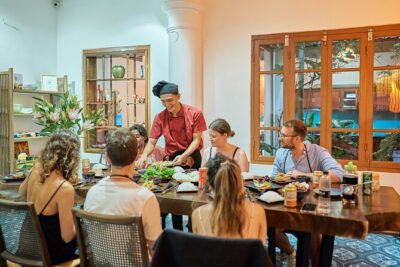
Hanoi Cooking Class: Culture, Local Market & Meaning CSR Impact
Read our review →
5 Traditional Dishes Hanoi Cooking Class with Market Trip
Read our review →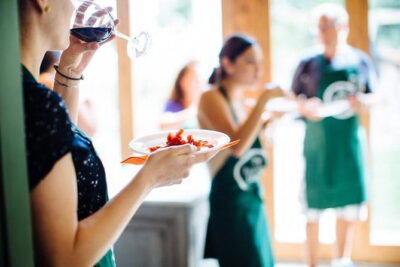
Cooking Class and Lunch at a Tuscan Farmhouse with Local Market Tour from Florence
Read our review →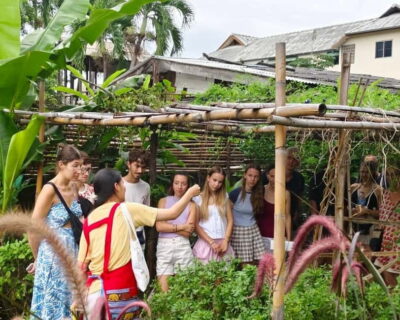
Cooking Class, Market & Thai Herbs Garden Tour
Read our review →
Authentic Cooking Class with Market & Farm Visit
Read our review →
Paella Cooking Experience & Boqueria Market Tour
Read our review →
Cooking Class Hoi An:Local Market, Basket Boat, Fishing & Cooking
Read our review →
Hoi An Cooking Class(Market,BasketBoat Crabfishing&Cooking Class)
Read our review →Browse the lists this tour appears in