
Review · GREECE
Athens: Classic Cooking Class with Market Visit and Wine
Cook Athens, then eat what you made. This four-hour experience combines a short visit to Athens Central Market with a hands-on lesson in Greek home cooking. I like the practical menu, especially dolmades, spanakopita, tzatziki, stuffed eggplant, and orange cake, and I like that you receive recipes to try at home. The main catch is pace: with up to 16 people and several dishes to prepare, parts of the class can feel hurried.
The best part is the friendly, social mood. Hosts such as Vasia, Thanos, Thanassius, Adoniya, and Antonia are praised for mixing clear instruction with jokes, stories, and plenty of encouragement. You should also know that this is a group meal, not a private lesson, and the cooking room is reached by two short flights of stairs.
Key points to know before booking
- Athens Central Market comes first: You spend about 30 minutes walking through the market area before returning to cook.
- The menu is a full Greek spread: Prepare tzatziki, spanakopita, dolmades, imam baidi, and portokalopita.
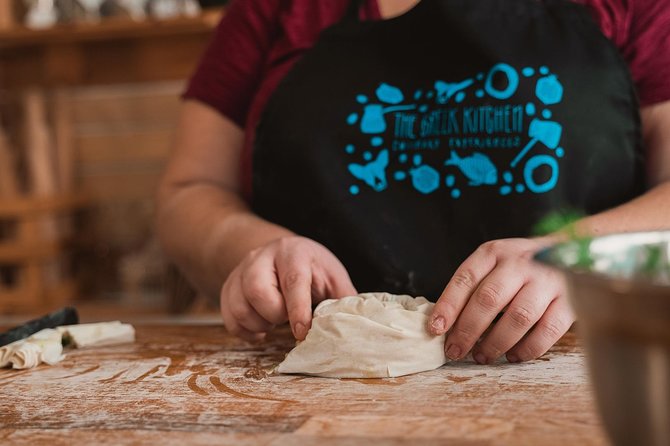
- You do real preparation: You roll vine leaves, layer pastry, mix sauces, fill eggplant, and work alongside other people.
- The meal is served family-style: Everyone sits down together to eat what the group has made.
- Wine and snacks are included: Expect bread, olives, seasonal market snacks, water, and 250 milliliters of local red or white wine.
- The class suits social cooks: The group can include as many as 16 people, so it works best if you enjoy meeting people while you cook.
Why this Athens cooking class works so well
Greek food makes a good introduction to the country because it is generous, practical, and tied to everyday life. You are not simply watching a chef prepare a plate behind a counter. You are handling the ingredients, listening to stories about Greek food traditions, and then eating the result with the people beside you.
The Greek Kitchen has welcomed visitors since 2017, and the format is clearly built around participation. You may work in small groups on different jobs, then see the separate dishes come together for one shared meal. That setup gives you a better sense of how Greek home cooking works than a short demonstration would.
The class is offered in English and lasts about four hours. That is enough time for a market visit, preparation, cooking, conversation, and a proper meal, but it is not a slow, private culinary workshop. You will get the most from it if you arrive ready to take instructions, share counter space, and keep moving.
More Cooking Classes in Greece
- Athens: Food Market Visit and Cooking Class with Wine
★ 4.9 · 1,087 reviews - Athens Market Tour and Cooking Class in a Beautiful Garden
★ 5.0 · 122 reviews - Cooking Class in Athens with Shopping in Central Market & Lunch
★ 5.0 · 55 reviews
Starting at Athinas 36 near the central market
You meet at Athinas 36, Athens 105 51. The address is near public transportation, which makes it practical to reach from other parts of central Athens. There is no hotel pickup or drop-off, so plan your route before class and allow a little extra time to find the entrance.
The cooking school is up two short flights of stairs. This is a small but important detail for anyone carrying luggage, managing a knee problem, or looking for step-free access. The activity ends back at the same meeting point, so you do not need to arrange a separate ride after the meal.
The class can hold up to 16 people. That is not a tiny kitchen-table lesson, but the format is designed so everyone can take part. Past class setups have included groups of about 12, and the teaching style is structured enough to keep people involved even when the room is full.
Seeing Athens Central Market before cooking
The market visit gives the class a useful sense of place. You spend around 30 minutes walking around Athens Central Market, looking at the food culture that supplies ordinary Greek kitchens. It is not just a quick photo stop before the cooking begins.
You might see the market as a working part of the city rather than a polished food attraction. The experience includes seasonal snacks, and the host explains customs and the role the market plays for local shoppers. One useful point to understand is that you are not sent there to buy the ingredients for your own dish. The walk is for orientation, context, and a closer look at daily food life.
Wear comfortable shoes. The market portion involves walking, and Athens sun can be strong, so bring protection for your head and skin. If you hope to learn useful Greek phrases for shopping or bargaining, ask your host if there is time, but do not count on a full language lesson. The market portion is short and the cooking schedule is busy.
Preparing tzatziki, the easy first win
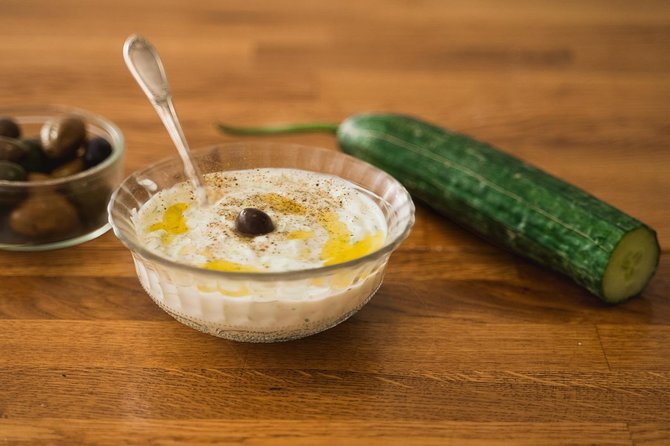
Tzatziki is a natural starting point. You work with thick Greek yogurt, cucumber, garlic, and seasoning to make the cool sauce that appears on tables across Greece.
This dish is simple enough for beginners, but it teaches an important Greek habit: good ingredients do much of the work. The garlic level is adjustable, at least in spirit, so you can decide how bold you want the final mixture to be.
Tzatziki is also one of the easiest recipes to recreate at home. You do not need special equipment or advanced technique, and it works with bread, vegetables, grilled foods, or as part of a larger meal. If you want one recipe from the class that is likely to become part of your regular cooking, this is a strong candidate.
More Cooking Classes in Athens:
- Athens: Cooking Class, Market Visit & Lunch at Local Tavern
★ 4.9 · 27 reviews - Athens Market Tour and Cooking Class in a Beautiful Garden
★ 5.0 · 8 reviews - Athens Central Market Tour and Greek Cooking Class with Penelope
★ 5.0 · 4 reviews - Hanoi Cooking Class: Culture, Local Market & Meaning CSR Impact
★ 5.0 · 5,147 reviews
Rolling dolmades and learning kitchen technique
Dolmades bring the most hands-on work. You fill vine leaves with a fragrant mixture of rice and beef, then roll them carefully so the filling stays inside during cooking.
The rolling takes concentration, especially the first time. The class gives you a chance to practice a traditional technique that is more memorable than simply stirring a bowl. You also learn why neat, firm rolls matter, since loose parcels can open as they cook.
Vegetarians should raise dietary needs when booking or before the class begins. A past class adjusted the dishes for a vegetarian participant, but you should not assume every dietary change is automatic. The menu itself includes beef in the dolmades, so advance communication is the sensible move.
Making spanakopita with spinach, feta, and phyllo
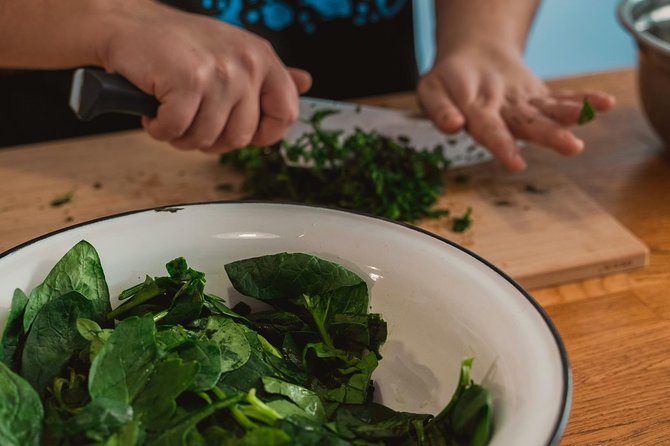
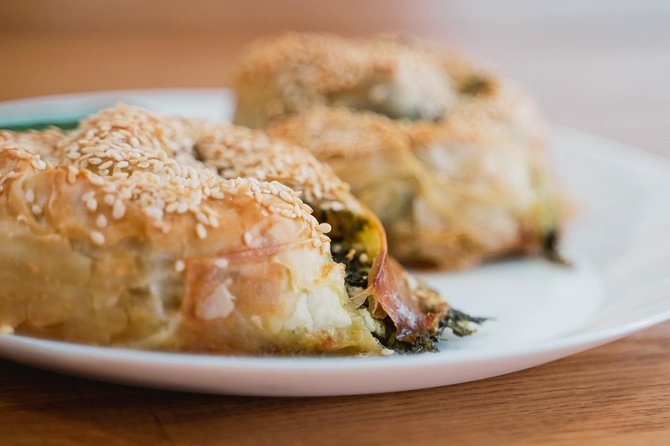
Spanakopita is one of the most enjoyable dishes in the class because it brings together spinach, feta, herbs, and phyllo pastry. The pastry is arranged into coils, giving the finished pie a distinctive shape and plenty of crisp edges.
Working with phyllo can feel fiddly. It is thin, delicate, and easy to tear, so the group format helps. You can watch the instructor demonstrate the method, then try it yourself without having to solve every problem alone.
This is also a good dish to make at home after the trip. The filling is familiar, the ingredients are widely available, and the method is easier to understand once you have handled the pastry. Take notes if you want to reproduce the recipe, since the class moves quickly once several dishes are underway.
Topping imam baidi with eggplant and feta
Imam baidi is the most unusual name on the menu for many people. The dish uses roasted eggplant topped with sauce and feta, and the host explains how it arrived in Greece in the early 20th century.
The class presents food with cultural context rather than treating each dish as a random recipe. You hear the story behind the dish while preparing it, which makes the meal easier to remember later. The eggplant also adds a soft, savory centerpiece to a menu otherwise filled with pastry, yogurt, rice, and dessert.
The cooking itself is shared. You may prepare part of the dish without controlling every stage from start to finish, since some cooking happens in another room. That distinction matters if you are expecting a chef-training course. This is guided group preparation, with the kitchen team handling some of the cooking and timing.
Finishing with portokalopita
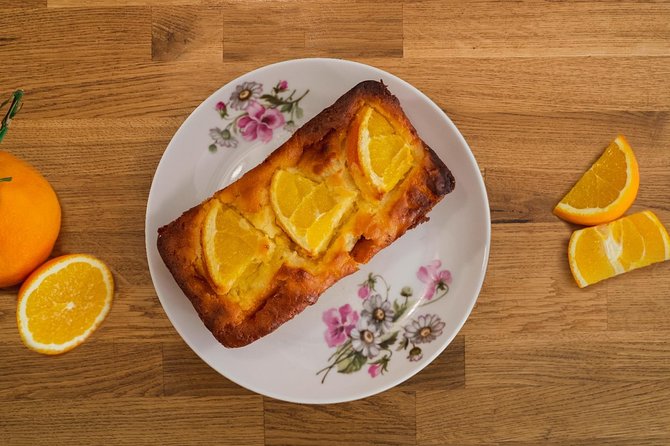
Dessert is portokalopita, a Greek orange and cinnamon dessert made with shredded phyllo soaked in syrup. It is often described as a pie, though its texture is closer to a moist cake.
The orange and cinnamon give the meal a bright finish after the rich savory dishes. It also shows how Greek cooks use phyllo in more than one way. Earlier, you work with it for spanakopita; here, it becomes part of a syrupy dessert.
This is another recipe worth saving. You may not make it every week, but it is distinctive, easy to associate with Greece, and a pleasant way to end a long cooking session.
Bread, olives, wine, and the shared meal
Bread and olives are available while you cook, along with seasonal snacks from the market. These small additions matter because the class takes several hours, and you are not left waiting for the final meal on an empty stomach.
At the end, you sit down to eat the food prepared by the group. The meal is served family-style, so dishes are shared rather than plated as individual portions. That encourages conversation and makes the class feel more like a communal Greek meal than a formal lesson.
You receive 250 milliliters of locally produced red or white wine, plus drinking water. The wine is a modest inclusion rather than a tasting session, but it fits the meal well. If you do not drink alcohol, the information provided confirms water but does not describe another wine substitute, so ask the host on arrival.
The social side is one of the strongest reasons to book. Solo visitors can easily meet people, and couples or friends get a relaxed activity that is different from another museum or monument. The classes bring together people from several countries, and cooking gives everyone an easy subject to talk about.
The teaching style and the pace
The hosts are central to the experience. Vasia is praised for precise instructions, dry humor, and a relaxed manner. Thanos and Thanassius are described as lively teachers who add stories and energy, while Adoniya and Antonia are also noted for friendly, well-organized instruction.
The exact host can vary, so do not book expecting one particular person. The consistent theme is an instructor who keeps the mood light while making sure each person has a job. Dancing, jokes, introductions, and conversation may be part of the atmosphere, but the main focus remains food preparation.
The pace deserves an honest warning. You prepare five dishes, sometimes six depending on the class flow, in roughly four hours. One person may find the class rushed at moments, especially when the group changes from one recipe to another.
That pace is also why the class can cover so much food in one afternoon. You get variety instead of spending four hours on one complicated dish. If you want a calm, technical lesson with lots of time for questions, seek a smaller private class. If you want a lively introduction to Greek cooking, the quick rhythm is usually a fair trade.
What the $83.44 price delivers
At $83.44 per person, the price is reasonable when you consider the full package. You receive a market visit, a four-hour hosted activity, hands-on preparation, snacks, water, wine, a substantial shared meal, and recipes for the dishes you make.
The meal alone is not the whole value. You are also paying for an English-speaking instructor, kitchen support, ingredients, cultural background, and an organized way to meet other people. Since the food is plentiful, leftovers may be available to take with you, depending on the class and how much remains.
The strongest value comes if you will actually use the recipes at home. Tzatziki and spanakopita are especially approachable, while dolmades and portokalopita require more patience. If you only want to eat Greek food, a restaurant will be simpler. If you want skills, stories, and a shared activity, the class earns its price.
Who should book this experience
I would choose this for a first or second visit to Athens when I wanted a break from sightseeing. It gives you a practical look at Greek food culture and leaves you with recipes rather than only photographs.
It is particularly well suited to:
- Solo visitors who want an easy social activity
- Couples and friends looking for a shared afternoon
- Families comfortable with a group cooking format
- Beginner cooks who prefer clear guidance
- People who enjoy traditional food more than formal fine dining
- Anyone who wants to recreate part of the trip at home
You should think twice if you dislike group activities, cannot manage two short flights of stairs, or need a strictly timed private lesson. You should also communicate dietary restrictions in advance, since the menu includes beef and dairy.
Book at least several weeks ahead if your Athens dates are fixed. The experience is often reserved about 32 days in advance, and the strong demand makes last-minute availability less certain. You can cancel for a full refund up to 24 hours before the start time. Cancellations or changes inside that window are not accepted for a refund.
My recommendation for this Greek cooking afternoon
Yes, I would recommend it, with the right expectations. The strongest parts are the market context, the generous menu, the chance to prepare real Greek dishes, and the warm teaching style associated with hosts such as Vasia and Thanos.
Do not expect a private chef or a slow master class. Expect a lively group, shared jobs, a few quick transitions, and a meal that tastes better because you helped make it. If that sounds like your kind of afternoon, The Greek Kitchen offers one of the better ways to connect Athens with the food on your plate.
FAQ
Where does the cooking class begin?
It begins at Athinas 36, Athina 105 51, Greece. The activity also ends back at this meeting point.
How long does the experience last?
The experience lasts approximately four hours, including the market visit, cooking, and shared meal.
Is the market visit included?
Yes. The experience includes a walk to Athens Central Market and about 30 minutes looking around the market area.
What dishes will I prepare?
The menu includes tzatziki, spanakopita, dolmades, imam baidi, and portokalopita. The dishes may be prepared and cooked as a group.
Is wine included?
Yes. Each person receives 250 milliliters of locally produced red or white wine. Drinking water is also included.
Is hotel pickup provided?
No. Hotel pickup and drop-off are not included. You make your own way to the meeting point.
Can I cancel for a refund?
Yes. You can cancel at least 24 hours before the start time for a full refund. Cancellations or changes made less than 24 hours before the experience are not accepted for a refund.
More Wine Tours in Athens
- Bologna Food & Market Tour with 6 Tastings, Pasta, Wines & More
★ 5.0 · 1,328 reviews - Paella Cooking Class, Wine Tasting & Central Market in Valencia
★ 5.0 · 1,150 reviews - Tbilisi: Mtskheta Jvari Bazaar, Chronicles of Georgia & Wine
★ 5.0 · 1,088 reviews - Paris Cooking Class and Lunch with Wine plus Market Visit Option
★ 5.0 · 1,024 reviews
Just added around Athens
- Athens Street Food Markets and Hidden Gems Experience★ 5.0 · 18 reviews
- Cooking Class in Athens with Shopping in Central Market & Lunch★ 5.0 · 55 reviews
- Classic Athens Food Tour with Local Drink & Market Visit★ 5.0 · 34 reviews
- Athens Central Market Tour and Greek Cooking Class with Penelope★ 5.0 · 4 reviews
- Street food tasting in the locals favorite hidden places★ 5.0 · 15 reviews
- Traditional breakfast in markets with olive oil and honey tasting★ 5.0 · 6 reviews
- Athens Markets Exploration Tour: From Ancient to Modern Times★ 5.0 · 2 reviews
- Private Athens Walk: Ruins, Markets & Local Stories★ 5.0 · 41 reviews
Cooking Classes, compared.
Hanoi Cooking Class: Culture, Local Market & Meaning CSR Impact
Read our review →
5 Traditional Dishes Hanoi Cooking Class with Market Trip
Read our review →
Cooking Class and Lunch at a Tuscan Farmhouse with Local Market Tour from Florence
Read our review →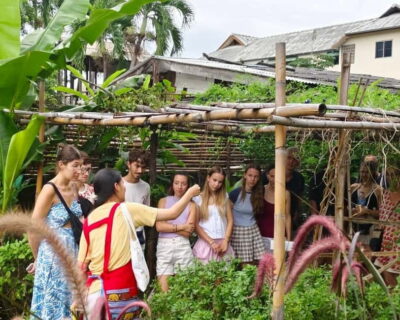
Cooking Class, Market & Thai Herbs Garden Tour
Read our review →
Authentic Cooking Class with Market & Farm Visit
Read our review →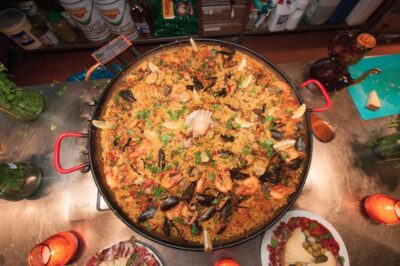
Paella Cooking Experience & Boqueria Market Tour
Read our review →
Cooking Class Hoi An:Local Market, Basket Boat, Fishing & Cooking
Read our review →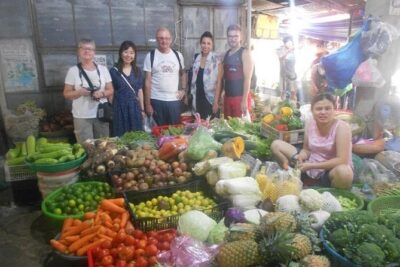
Hoi An Cooking Class(Market,BasketBoat Crabfishing&Cooking Class)
Read our review →Browse the lists this tour appears in