
Review · SPAIN
Seville: 3.5-Hour Spanish Cooking Class & Triana Market Tour
A market makes Seville taste better. This 3.5-hour experience pairs a guided walk through Triana Market with a hands-on lesson in salmorejo, spinach with chickpeas, paella, and dessert. I like the setting inside one of Seville’s oldest food markets, and I like that you eat the meal you help prepare. The main consideration is that the exact second and third dishes can change, and the market tour is available only in the morning.
The English-speaking chefs keep the lesson friendly rather than formal. Names such as Dom, Leo, Maria, Pedro, Sabrina, Ana, and Carmen appear across the teaching team, and the strongest praise goes to their humor, patience, and clear instructions. You get sangria while cooking and two more drinks with lunch, but this is still a group cooking lesson, not a private chef session tailored entirely to your pace.
Key points at a glance
- Triana Market sets the scene: You begin among local food stalls before cooking in the school at stalls 75 to 77, Plaza del Altozano.
- The food is practical and Andalusian: Salmorejo, spinach with chickpeas, paella, and a small dessert form the usual menu.
- Paella is the star dish: The standard version uses chicken and seasonal vegetables, with a separate vegetable paella prepared for vegetarians.
- You do more than watch: The class includes chopping, stirring, and other kitchen jobs, with instruction on useful skills such as preparing artichokes and deboning chicken.
- Drinks are part of the value: Sangria is made during class, and two drinks such as beer, wine, or soda accompany the meal.
- The format suits curious eaters: It works well for couples, families, solo visitors, and anyone who wants recipes and cooking ideas to take home.
Starting at Triana Market in Seville
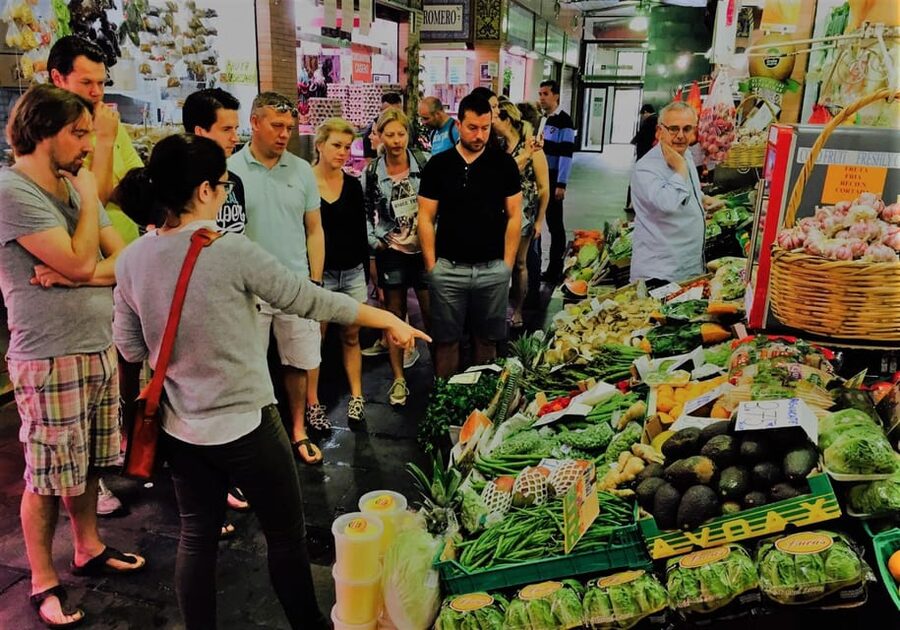
Your meeting point is Triana Market, at Plaza del Altozano, stalls 75 to 77. The cooking school is inside the market, which matters more than it may sound. You are not being shown a staged food hall built only for tourists. You begin in a working market where ingredients, sellers, and everyday shopping provide the backdrop.
The market visit is short and guided. Your guide explains the products used in class and gives a little background on the market and local food traditions. Guides such as Ana, Sabrina, Clara, Carmen, and Kai have been praised for making this part clear and useful without getting in the way of people doing their normal shopping.
I particularly like this introduction because it gives meaning to the ingredients before you meet them in the kitchen. A jar of paprika, a cut of meat, a pile of vegetables, or a type of cheese is easier to remember when you have seen it in its natural setting. You also get a better sense of how Spanish cooking begins with shopping, not with a recipe card.
Keep in mind that the market portion takes place in the morning. If you choose a later cooking session, confirm exactly what is included and when the market walk happens. The food market is part of the appeal, so timing can affect the feel of the experience.
More Cooking Classes in Spain
- Barcelona: Paella Cooking Experience & Boqueria Market Tour
★ 4.8 · 3,661 reviews - Barcelona Paella Cooking Class with Market Visit, Tapas & Sangria
★ 5.0 · 2,531 reviews - Paella Cooking Class, Wine Tasting & Central Market in Valencia
★ 5.0 · 1,150 reviews
What you learn while walking the stalls
This is not a full market tour with a long stop at every counter. It is an introduction designed to prepare you for the cooking class. You hear about local products and the ingredients that will appear in your meal.
That short format is useful for a half-day activity. You get context without spending the whole morning standing in one place. A few people have wished for a written sheet covering all the meat and cheese information, so bring a phone or small notebook if you want to record names and cooking tips.
If you arrive early for a morning class, allow yourself a little time to look around the market before meeting the guide. One useful suggestion is to buy breakfast there first. That gives you a chance to see more stalls at your own pace and leaves the formal tour free for the explanations.
The market can also make the class feel less polished and more connected to Seville. You are not simply told that ingredients are local. You see where a cook in the city might buy them.
Inside the cooking school at stalls 75 to 77
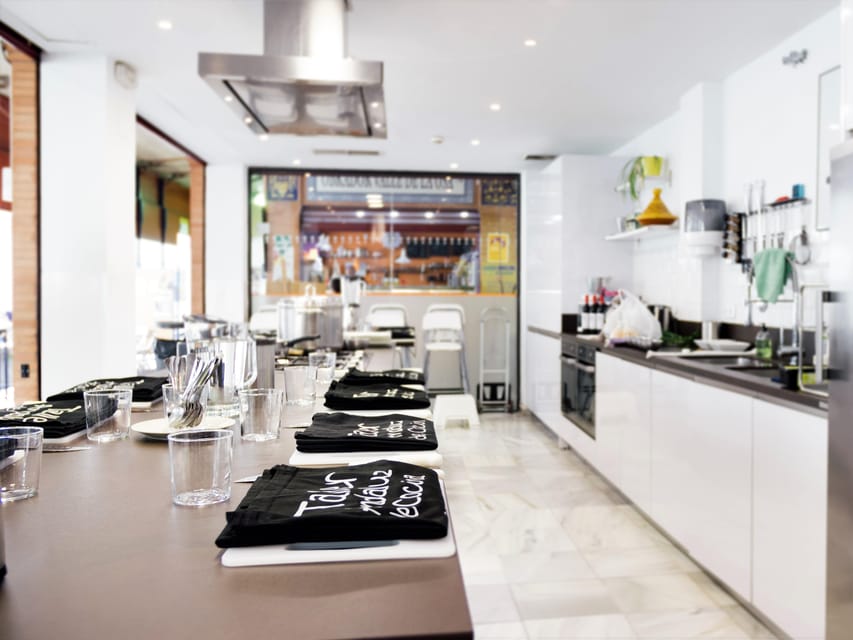
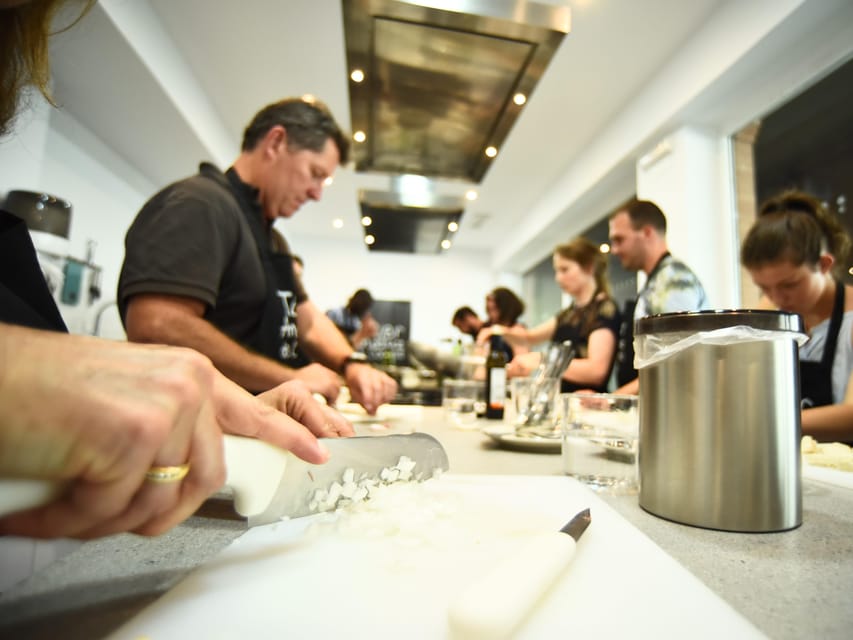
After the market walk, you move into the cooking area at the same market location. The kitchen has been described as clean, spacious, and well arranged, with seating that allows everyone to follow the demonstrations. An apron is provided, and all ingredients are included.
The class is in English and is led by a professional chef. The teaching style is a mix of demonstration and participation. You are shown how a dish works, then given a chance to chop, stir, season, or help with preparation.
That balance is one of the activity’s best features. You are not left to guess what to do, but you also do not spend three hours watching someone else cook. The strongest classes appear to give people enough direction to succeed while allowing them to handle the food themselves.
The chefs also explain why certain steps matter. You might learn how to chop garlic finely, prepare an artichoke, or debone a chicken. Those are small skills, but they are the sort you can use again at home. One participant even described learning to debone chicken as a highlight.
The tone is deliberately light. Dom, Leo, Pedro, Maria, and the other chefs are often praised for humor and easy conversation. That helps nervous cooks relax, especially if you normally avoid lessons because you think you are not skilled enough.
The first course: salmorejo or gazpacho
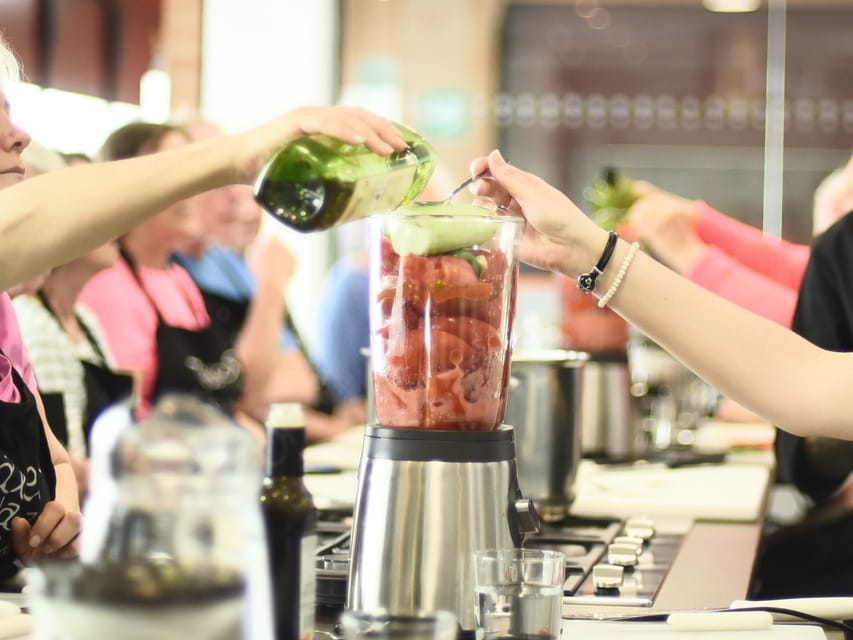
The first dish is usually salmorejo, a thick chilled tomato soup associated with Andalusia. On some dates, the class prepares gazpacho instead.
Both dishes offer a useful lesson in Spanish cooking. They rely on a short list of ingredients, careful blending, and good seasoning rather than a complicated method. You also see why the quality of the tomatoes and olive oil matters so much.
Salmorejo is fuller and creamier than gazpacho, so it can feel more like a proper starter. Gazpacho is lighter and more refreshing, particularly in Seville’s hot months. Since the choice can vary, do not book the class expecting one specific soup on every date.
This is a good part of the lesson for less experienced cooks. The method is approachable, and the final dish gives you a recipe that is realistic to repeat at home. Several participants have said they planned to make the dishes again after returning home, which is a good sign that the recipes are not just demonstrations for the day.
Same place, a different set of stalls:
- Valencian paella cooking class, tapas and visit to Ruzafa market.
★ 5.0 · 828 reviews - Spanish Cooking Class & Triana Market Tour in Sevilla
★ 5.0 · 760 reviews - Valencia: Paella Cooking Class with Central Market Tour
★ 5.0 · 721 reviews - Barcelona: Paella Cooking Class with Market Visit and More
★ 4.9 · 711 reviews
Spinach with chickpeas and changing seasonal dishes
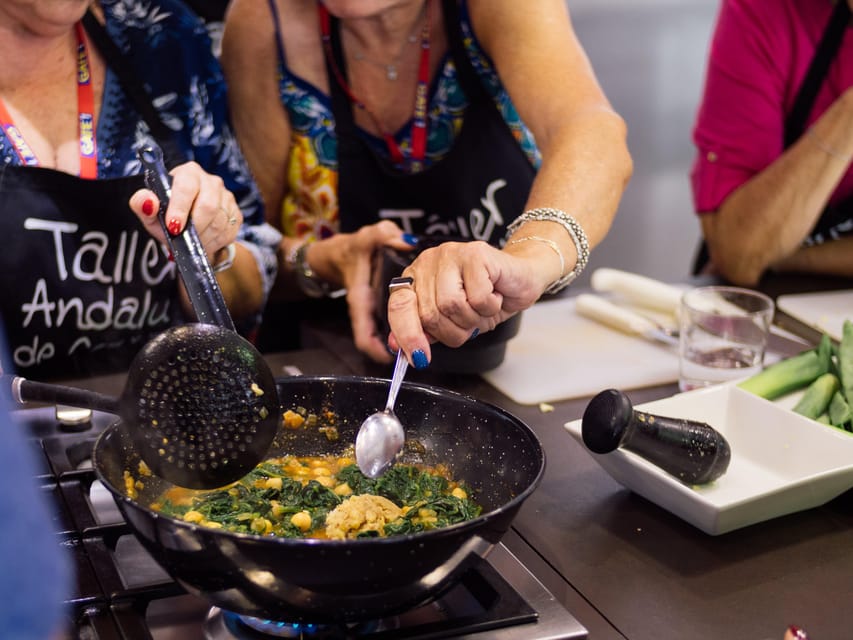
The second savory dish is generally spinach with chickpeas, a simple combination with a lot of flavor. Depending on the session, it may be replaced by flamenco eggs, cod fritters, or garlic prawns.
The spinach and chickpeas dish shows how Spanish food can turn basic pantry ingredients into something satisfying. It is also a useful option for vegetarians, though you should still tell the operator about allergies, intolerances, or dietary restrictions before attending.
The alternative dishes make the class less predictable, but they also keep it flexible. Flamenco eggs introduce a different style of comfort food. Cod fritters add a lesson in handling and frying a mixture. Garlic prawns bring a fast, strongly seasoned seafood preparation.
If you have your heart set on prawns, cod, or eggs, ask in advance what the class is preparing. The menu is not fixed in every detail. That is a small drawback, but it is better than assuming you will receive a particular dish and finding something different on arrival.
Paella with chicken, vegetables, or a separate vegetarian version
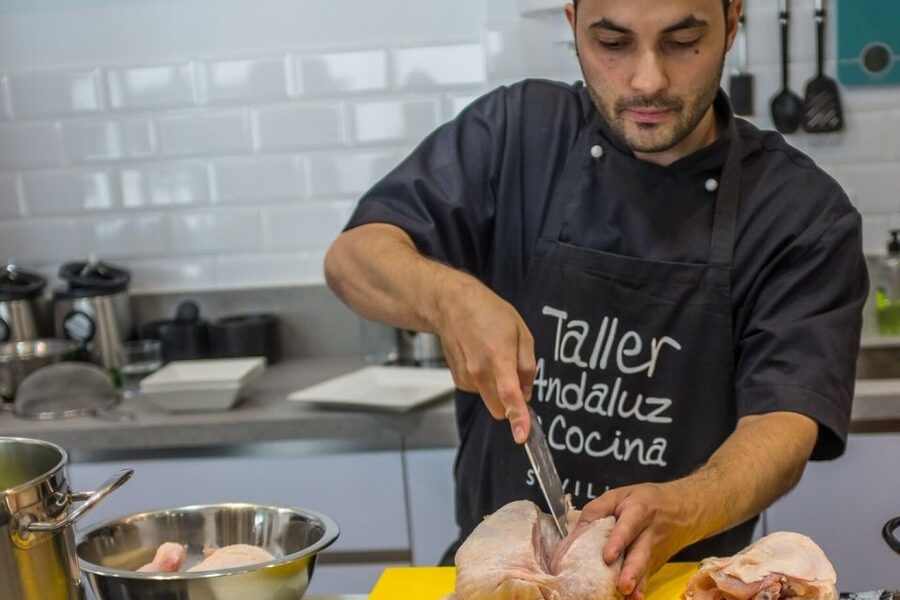
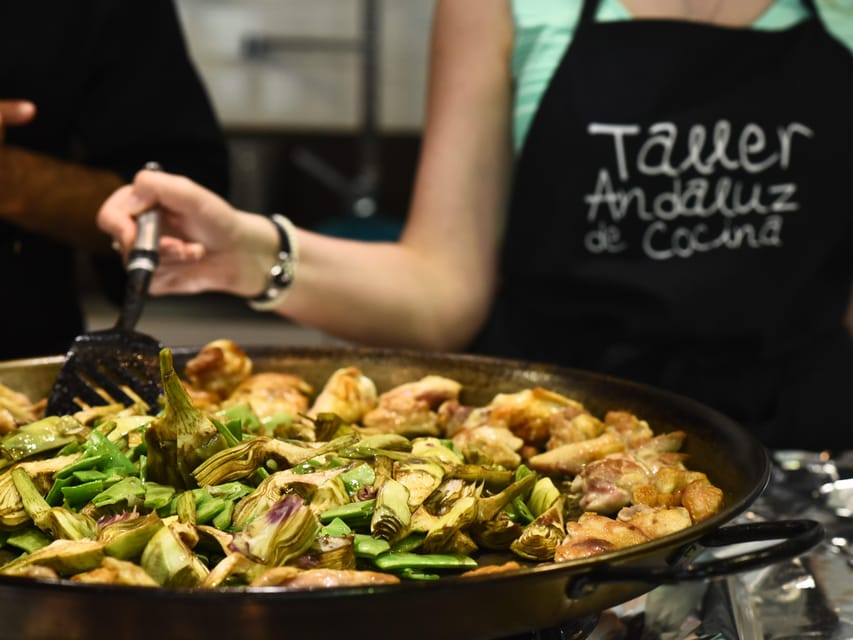
Paella is usually the main event. The standard version is Valencian style, made with chicken and seasonal vegetables. It is not presented as a seafood-only dish, which is worth knowing if you are expecting the version commonly served on tourist menus.
You take part in the steps that build the final pan of rice. The chef explains the order of cooking and how the ingredients come together. The class format gives you a closer look at the work behind paella instead of treating it as a finished dish that simply appears at the table.
Many participants have singled out the paella as the best food of the day. That praise makes sense because it combines technique, timing, and teamwork. You see how the dish develops, then get to eat it while the process is still fresh in your mind.
Vegetarians are not pushed to the side. A separate vegetable paella is prepared when someone in the group needs it, and vegetarian participants have described feeling included rather than treated as an afterthought. Still, mention your requirements ahead of time. Do not rely on explaining them only once class has started.
If you are uncomfortable handling chicken, ask for guidance. The class may include preparation such as cutting or deboning chicken, and the chef can explain the steps. This hands-on element is useful, but it may not suit someone who wants a strictly observational lesson.
Sangria, dessert, and the meal you helped make
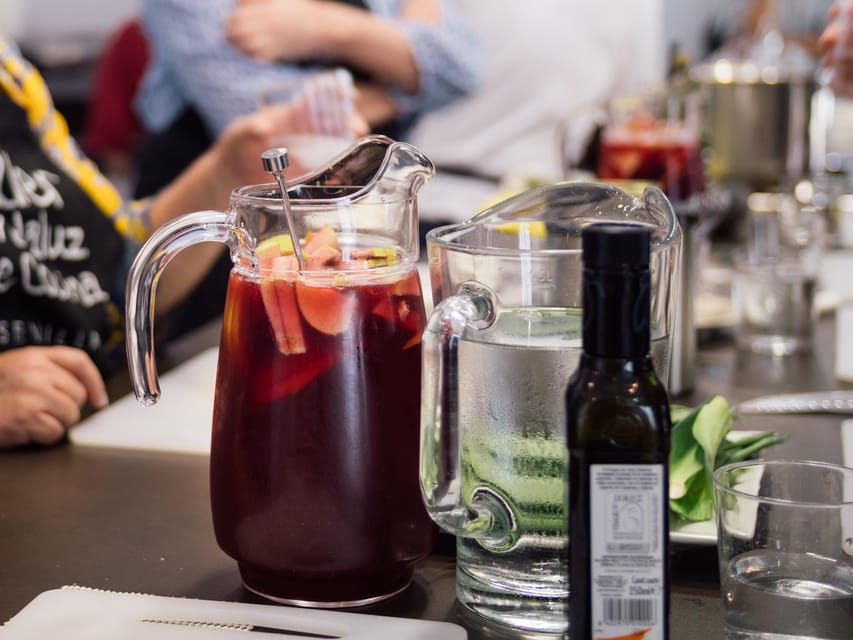
Sangria is prepared and served while the dishes cook. It adds a social side to the class, and the drinks help turn the lesson into a shared meal rather than a technical workshop.
The meal includes up to two additional drinks per person. You can choose local beer, white wine, red wine, or soda. This is a helpful inclusion because non-drinkers are not left with nothing but water, and wine or beer drinkers do not need to pay extra for a drink with lunch.
Dessert is light, often lemon sorbet with cava or a similar lemon-based finish. The exact dessert may vary, but it is designed to end a fairly substantial meal without adding another heavy course.
The food you eat is the food you prepared. That gives the final sitting more satisfaction than a standard restaurant lunch. You know the work behind the soup, the chickpeas, and the paella, and you can compare how each person handled the same tasks.
The amount of food is generous enough to feel like lunch rather than a tasting. If you are planning another major meal soon afterward, leave room in your schedule instead of treating this as a small snack.
The teaching style and group atmosphere
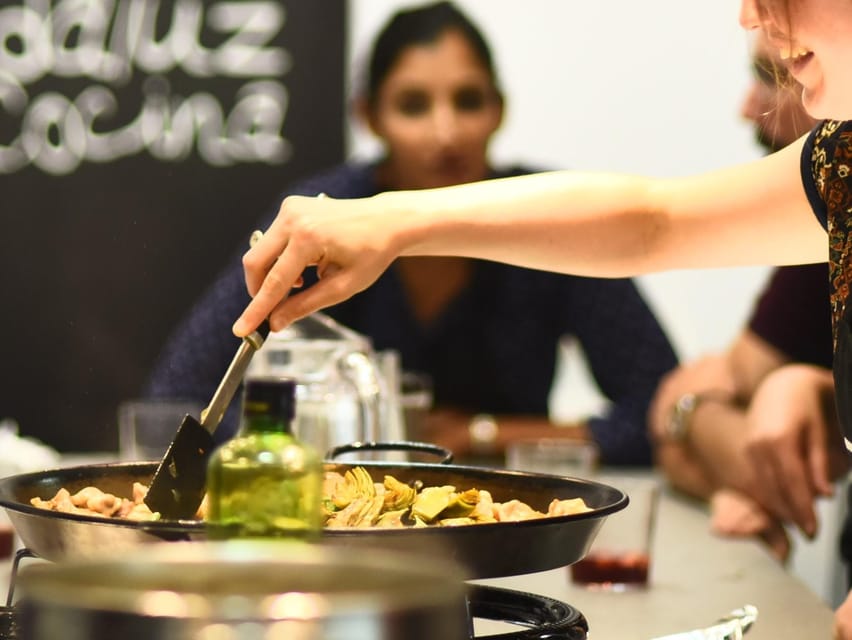
The activity’s strongest quality is the human side. Chefs are repeatedly praised for being funny, patient, and willing to answer questions. Guides help connect the cooking to Andalusian food and keep the market visit moving.
You will probably get the most from the class if you join in. Ask why a step is done in a certain order. Volunteer for a task. Watch the chef’s knife work closely. The more you participate, the more useful the lesson becomes.
The class can also be a good way to meet people. Cooking gives a mixed group something easy to talk about, and the shared meal keeps the mood relaxed. One small group of three found the experience especially personal, but group size is not specified, so you should not book expecting a private lesson.
The organized format helps. The cooking stations are arranged so people can take part, and the chefs keep an eye on the work. Still, if you prefer a quiet, one-to-one lesson, this may feel social and active rather than calm and private.
Is $88 a fair price?
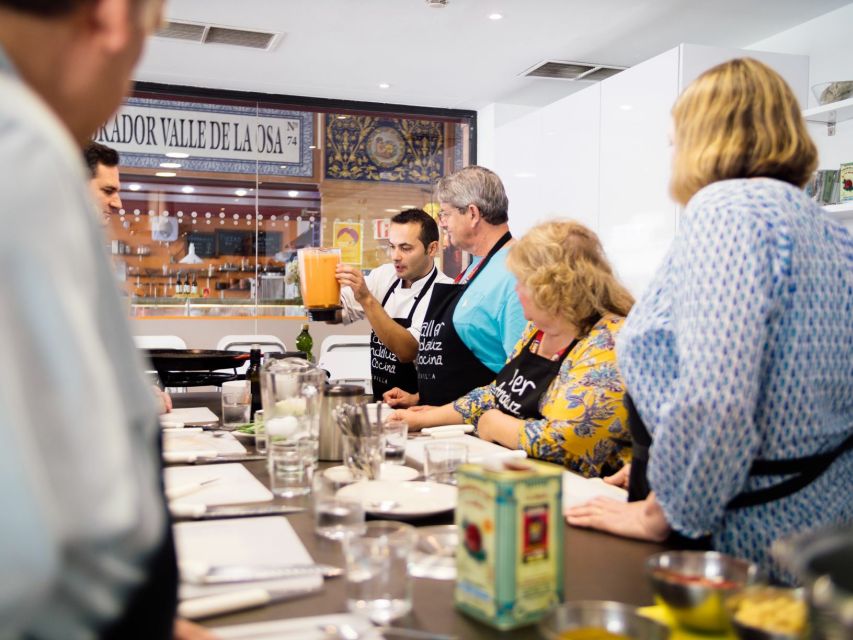
At $88 per person, I consider this a solid value for Seville if you want more than a meal. The price includes the market tour, instruction from a professional chef, ingredients, an apron, the dishes you prepare, sangria during cooking, and two drinks with the meal.
You are also paying for a full 3.5-hour block in a central cultural setting. A restaurant meal would give you food, but not the market context or the chance to learn the methods. A short market walk alone would be cheaper, but it would not include lunch and a practical lesson.
The value is strongest for people who will use the recipes afterward. If you enjoy cooking at home, the techniques are part of your souvenir. You may leave with ideas for salmorejo, chickpeas, paella, garlic, artichokes, or chicken preparation that cost little to repeat.
The price is less compelling if you dislike group activities, do not drink, or only want to see Triana Market. The two extra drinks help, but the main reason to book is the combination of food, instruction, and setting.
Who should book this Seville cooking class?
I would recommend it to couples, families with older children, solo visitors who enjoy meeting people, and anyone planning to spend several days in Seville. It is especially useful early in your stay because the market guide may point you toward local foods and places to try later.
It suits beginners very well. You do not need to arrive as a confident cook. The chefs explain basic tasks, and the class gives you plenty of chances to learn by doing.
Vegetarians can also enjoy it, provided they give advance notice. A separate vegetable paella is prepared when needed, and the other dishes can be discussed with the operator. People with allergies or intolerances should contact the operator before booking.
It may not suit you if you need a completely fixed menu. Salmorejo may become gazpacho, and the spinach and chickpea dish may be replaced by another Spanish recipe. That flexibility is part of the appeal for some people, but it is worth knowing before you pay.
Cancellation is free up to 24 hours before the activity, and you can reserve now and pay later. The meeting point is Triana Market, Plaza del Altozano, stalls 75 to 77. Check the available start time carefully, especially if you want the market walk.
Should you book it?
Book this class if you want Seville on a plate and in your hands. The market setting, practical cooking, generous meal, and warm teaching style make it more useful than a simple food tasting.
I would book it early in a Seville visit, choose a morning slot if the market matters most, and tell the operator about dietary needs before arrival. If you want a fixed recipe list or a private lesson, ask about the day’s menu first. For most visitors who enjoy food and conversation, $88 buys a memorable half-day and several recipes worth carrying home.
FAQ
How long does the Seville cooking class and market tour last?
The experience lasts 3.5 hours.
Where does the activity meet?
It meets at Triana Market, Plaza del Altozano, stalls 75 to 77, Seville 41010.
Is the cooking class taught in English?
Yes. The live guide and cooking class are in English.
Is the market tour available all day?
No. The market tour is available only in the morning. Check the available start times when booking.
What dishes are normally prepared?
The usual menu includes salmorejo, spinach with chickpeas, Valencian paella with chicken and seasonal vegetables, and a light dessert.
Can the soup be different?
Yes. On some occasions, the class prepares gazpacho instead of salmorejo.
Can the second savory dish be different?
Yes. Spinach with chickpeas may sometimes be replaced by flamenco eggs, cod fritters, or garlic prawns.
Is there a vegetarian option?
Yes. A separate vegetable paella is prepared if someone in the group is vegetarian. You should inform the operator about dietary restrictions in advance.
Are drinks included?
Yes. Sangria is served during the cooking time, and up to two additional drinks per person are offered with the meal. Options include local beer, white wine, red wine, or soda.
Are ingredients and an apron included?
Yes. The price includes all ingredients for the class and use of an apron.
Can I cancel for a full refund?
Yes. You can cancel up to 24 hours in advance for a full refund.
Can I reserve without paying immediately?
Yes. The reserve-now, pay-later option lets you book while keeping your plans flexible.
Just added around Spain
- Explore Bilbao’s Flavors Mercado de la Ribera and Old Town★ 4.5 · 3 reviews
- CERTAL Exclusive Tour: LA RIBERA Market + GASTROBARS Bilbao (3h)★ 4.5 · 12 reviews
- Barcelona La Boqueria & Sant Antoni Private Food Experience★ 5.0 · 7 reviews
- Taste of Barcelona: Boqueria Market, Tapas & History Tour★ 4.5 · 22 reviews
- Barcelona Tapas Cooking & Cocktail Class with Veronique & Mattias★ 5.0 · 3 reviews
- Spanish Oysters, Cava and Ibérico Ham at Barcelona’s La Boqueria Market★ 5.0 · 8 reviews
- Private Barcelona Market Tour & Paella Cooking Class with Josh★ 5.0 · 4 reviews
- Cook Paella & Tapas + Market Tour in Barcelona (4-Course Meal)★ 5.0 · 2 reviews
Cooking Classes, compared.
Hanoi Cooking Class: Culture, Local Market & Meaning CSR Impact
Read our review →
5 Traditional Dishes Hanoi Cooking Class with Market Trip
Read our review →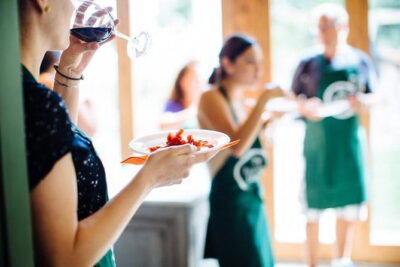
Cooking Class and Lunch at a Tuscan Farmhouse with Local Market Tour from Florence
Read our review →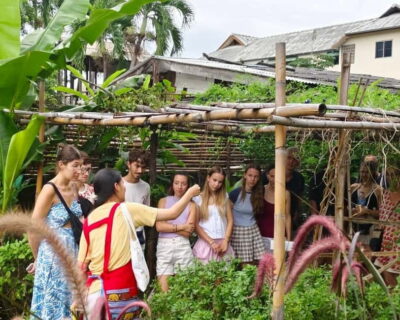
Cooking Class, Market & Thai Herbs Garden Tour
Read our review →
Authentic Cooking Class with Market & Farm Visit
Read our review →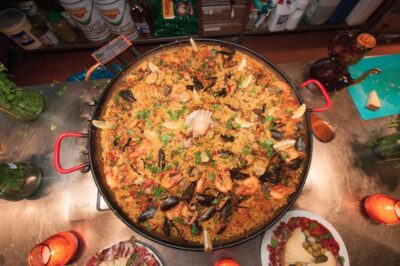
Paella Cooking Experience & Boqueria Market Tour
Read our review →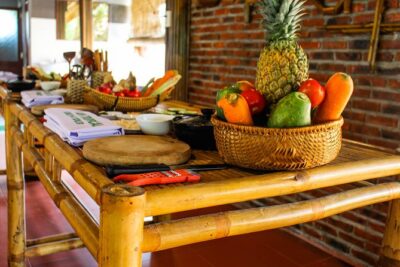
Cooking Class Hoi An:Local Market, Basket Boat, Fishing & Cooking
Read our review →
Hoi An Cooking Class(Market,BasketBoat Crabfishing&Cooking Class)
Read our review →Browse the lists this tour appears in