
Review · SOUTH KOREA
Seoul: Bukchon Village, Gyeongbokgung, Gwangjang Market
Seoul’s old heart fits into one smart morning. This guided outing links Bukchon Hanok Village with Gyeongbokgung Palace, a royal guard ceremony, and Gwangjang Market, giving you a useful first look at the city’s past and present. I like the mix of quiet lanes and lively food stalls, and I like that guides such as Alice, Eva, Judy, Lina, and Alex have been praised for clear explanations and thoughtful help. The main drawback is the tight schedule, especially if you want plenty of time in Bukchon or a relaxed meal at the market.
At $30 per person for 210 minutes, this is a good-value orientation tour, particularly for a first visit or a long Seoul layover. The Tuesday replacement plan is also well judged, with Changdeokgung Palace and Insadong taking the place of Gyeongbokgung and the guard ceremony. Just remember that the ginseng stop takes about 30 minutes and includes shopping time, so some people may prefer more minutes at the historic sites.
Key points to know before booking
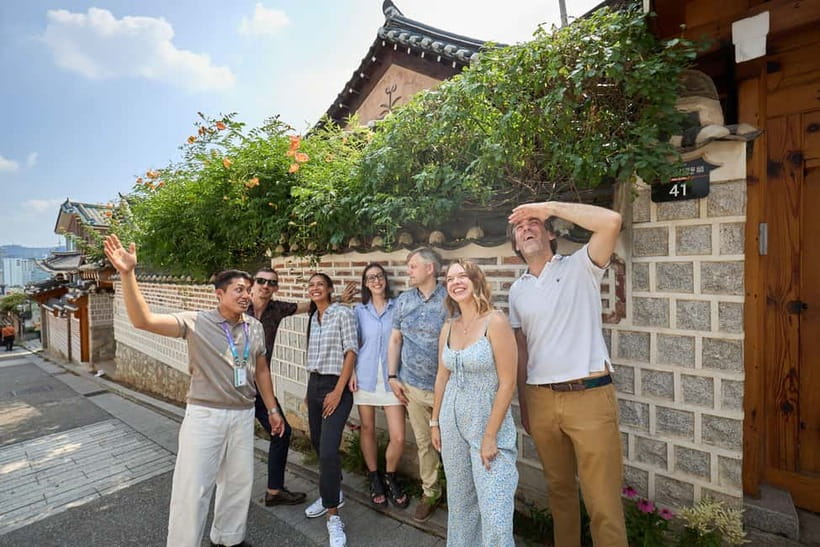
- Bukchon is a photo stop with real residential streets: Keep your voice low and expect walking on sloping lanes.
- The royal guard ceremony adds color and movement: It is one of the tour’s most memorable scheduled moments.
- Gyeongbokgung gets roughly one hour: Enough for an introduction, not a full palace exploration.
- The ginseng center is informative but sales-oriented: You can browse or buy, but there is no obligation to purchase.
- Gwangjang Market is your best chance to eat: Bring cash and budget separately for Korean street food.
- Tuesday follows a different route: Changdeokgung and Insadong replace Gyeongbokgung and its ceremony.
Why this half-day Seoul tour works
I see this experience as a city sampler rather than a slow cultural study. In three and a half hours, you move from old homes to a royal compound, pass the former presidential residence, learn about Korean ginseng, and finish among food vendors at one of Seoul’s best-known markets.
That range is the main strength. You do not spend the whole morning inside one palace, and you do not have to work out subway connections between several central sights. A guide can supply the Joseon-era background as you move along, which helps the buildings and ceremonies make more sense.
The pace will suit you if you want an efficient introduction. It may feel hurried if you prefer to stop for detailed photographs, browse every shop, or eat slowly. One hour in Bukchon and one hour at Gyeongbokgung can pass quickly, particularly when the group is walking, listening, and stopping for pictures.
The price also makes sense for a first-day plan. At $30, you are paying for a guide, transport between stops, and a carefully connected route, while palace visits and the market provide much of the cultural substance. Food and personal purchases are not included, so the advertised price is not your total spending for the morning.
A few more market tours around Seoul worth a look
- Seoul Street Food Market Tour
★ 5.0 · 1,226 reviews - Local Home Korean Cooking Class & Market Adventure in Seoul
★ 5.0 · 1,024 reviews - Seoul: Night Market Food Tour with Local Guide
★ 4.9 · 943 reviews
Starting at Myeongdong and finding your group
The listed meeting point is Myeongdong Subway Station Exit 8. Pickup information also gives Myeongdong Station Exit 9 at 8:50, along with Itaewon Station Exit 1 at 8:20 and City Hall Station Exit 6 at 9:00.
That difference between Exit 8 and Exit 9 is worth checking carefully when you book. Subway exits can be several minutes apart, and a busy Seoul street is not the place to guess. The tour ends at Myeongdong Station for everyone.
If you are coming directly from Incheon Airport, allow plenty of time. One participant on a short layover needed at least two and a half hours for the airport train and subway connection before reaching the meeting area. For groups of five or more, hotel pickup within Seoul can be requested, but you need to leave a message at booking.
The tour is conducted in English. Guides are assigned by the operator, but recent departures have included Alice, Kelly, Eva, Claire, Judy, Lina, and Alex. The strongest comments focus on guides who explain history clearly, coordinate the group well, wait patiently at meeting points, and take photos when asked.
Bukchon Hanok Village: old Seoul on narrow lanes
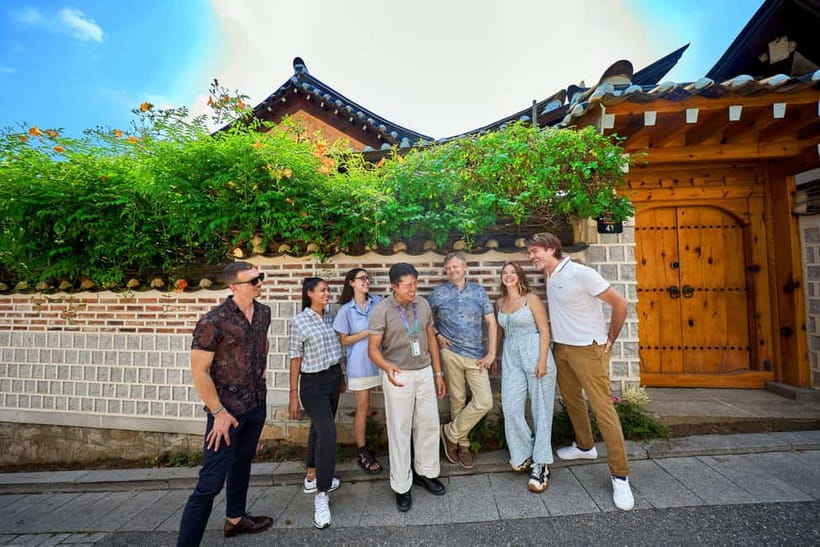
Bukchon Hanok Village gives you the visual shift this tour needs. Traditional Korean houses line narrow alleys between the city’s major palace areas, with tiled roofs, timber details, and glimpses of the modern skyline beyond.
Your guide leads a walk and photo stop lasting about an hour. That is enough to understand Bukchon’s character and see several attractive viewpoints, but it is not enough to examine every lane. You will want comfortable shoes because the streets include slopes and uneven walking surfaces.
Bukchon is not an open-air museum in the usual sense. It is a residential neighborhood, so the best visit includes basic courtesy. Keep noise down, avoid blocking doorways, and follow the guide’s instructions about where to stop for photographs. The quiet atmosphere is part of what makes the area appealing.
I especially like this first stop because it places Seoul’s older architecture beside the present-day city. You can photograph hanok roofs and distant high-rises in the same frame. If you are hoping to spend an hour in a tea house or browse small shops, the schedule may disappoint. One person specifically wished for more time in Bukchon and a chance to enjoy tea.
Gyeongbokgung and the royal guard ceremony
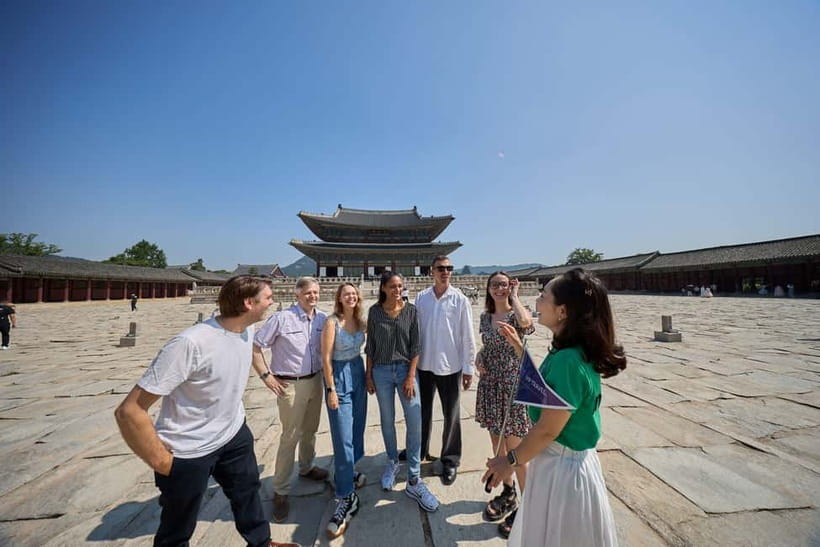
The next major stop is Gyeongbokgung Palace, the largest of Seoul’s five grand palaces. Built in 1395 during the Joseon Dynasty, it introduces you to formal gates, courtyards, palace buildings, and calm garden areas.
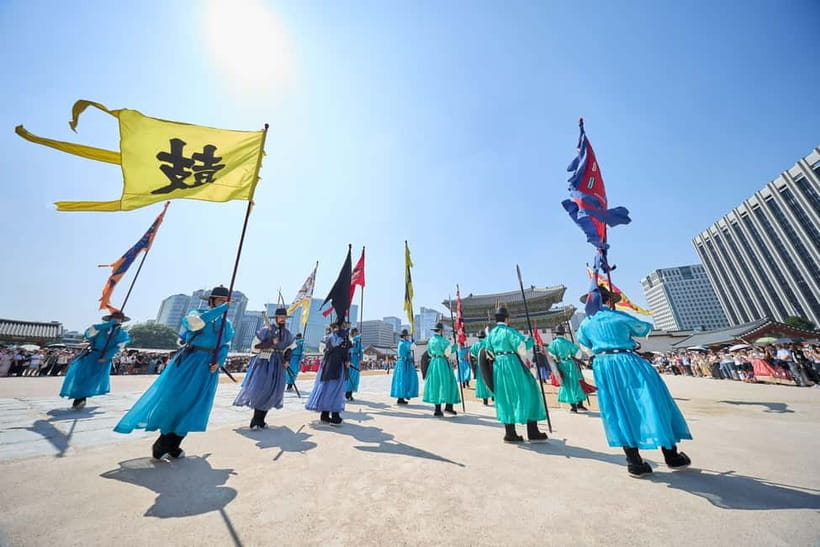
The Royal Guard Changing Ceremony is the visual centerpiece. Traditional uniforms, ceremonial instruments, and carefully ordered movements turn a historical ritual into a lively public performance. It is a good reason to keep your camera ready, and guides can explain what you are seeing instead of leaving you to watch without context.
The palace portion lasts about an hour, including sightseeing and walking. That gives you a useful introduction to the grounds, but not an exhaustive visit. You should not expect to explore every building or spend long periods at the gardens. The advantage is that the tour keeps moving and still leaves room for the market later.
Timing matters here. Gyeongbokgung and the guard ceremony are closed on Tuesdays. On that day, the route changes to Changdeokgung Palace and Insadong. This is not a minor adjustment, since the ceremony is one of the most distinctive parts of the usual route.
Same place, a different set of stalls:
- Seoul: Palace, Temple and Market Guided Foodie Tour at Night
★ 4.9 · 750 reviews - Seoul: Korean Cooking Class at a Local Home and Market Tour
★ 5.0 · 348 reviews - Seoul: Guided Food & Market Tour with 8+ Tastings
★ 4.9 · 342 reviews - Seoul Night Palace & Market Food Tour with Vehicle
★ 5.0 · 275 reviews
The Blue House and a short look at modern Korea
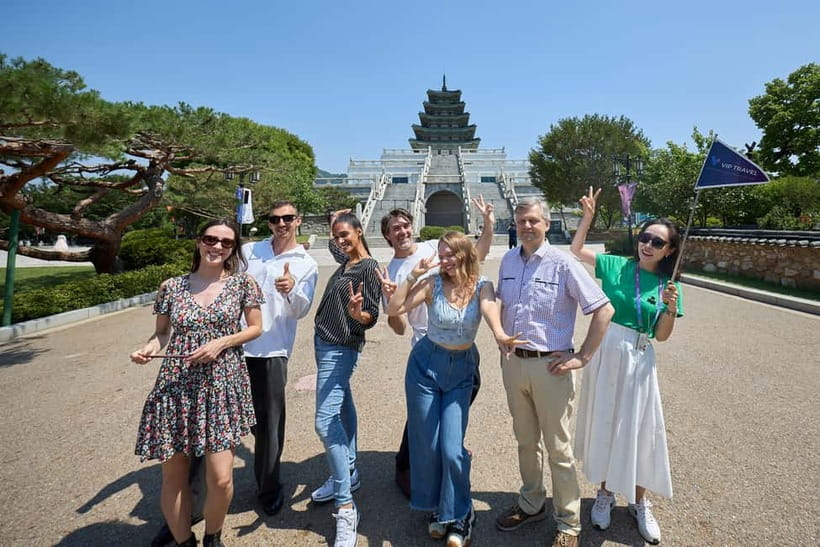
After the palace, the vehicle passes Cheongwadae, commonly called the Blue House. It was the former presidential residence and executive office of South Korea.
This is a five-minute drive-by, not an interior visit. Think of it as a brief bridge between royal Seoul and the country’s modern political story. Your guide provides sightseeing commentary from the vehicle, while the short stop keeps the overall route moving.
If you want a detailed visit to the Blue House, this tour will not provide it. Still, the pass-by is useful because it adds another layer to the morning without requiring a separate attraction ticket or a long detour.
The ginseng center: useful context with a shopping pause
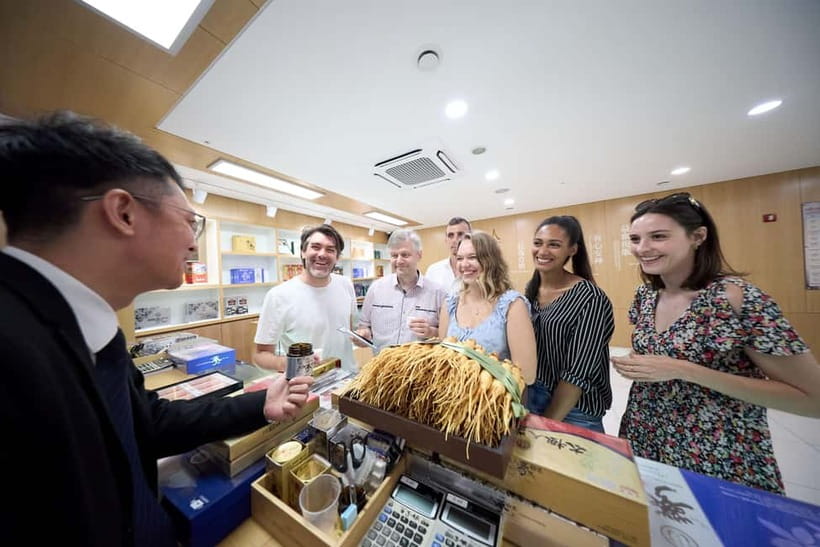
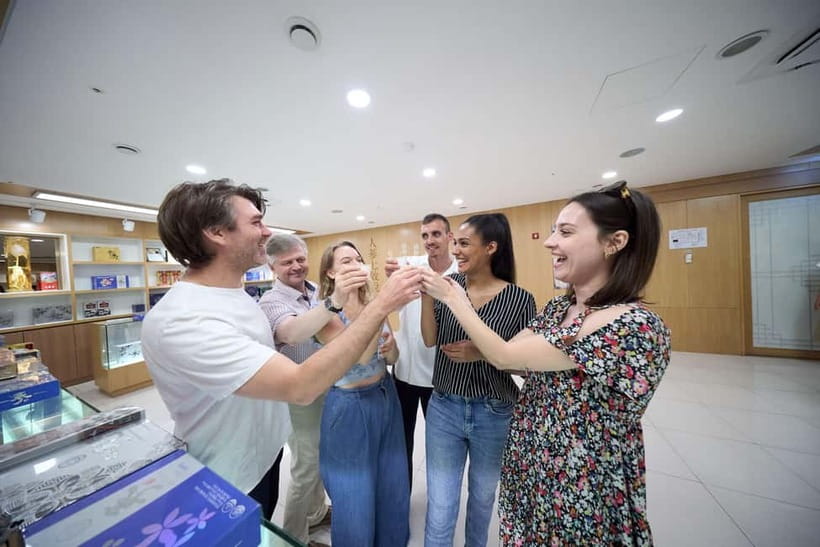
The Cheongha Korean Ginseng Museum takes about 30 minutes. You receive a cup of traditional Korean herbal tea and hear about ginseng’s place in Korean wellness traditions, its history, and its reported health uses.
This stop divides opinion in a practical way. Some people find the explanation and tasting interesting, especially if Korean food and health traditions are new to them. Others may see it as a commercial pause that takes time away from the palace or market.
You can browse or purchase ginseng products, but there is no obligation to buy. That point matters. Treat the stop as a short cultural presentation with a shopping option, not as a required sales appointment. If you are curious about Korean ginseng, it gives you a starting point. If you are not, enjoy the tea and listen for the historical background before rejoining the route.
One guide, Eva, was praised for making everyday Korean life and cultural practices understandable, while another participant found the ginseng history more interesting than expected. That is a good way to approach this portion: remain open, but keep your budget in your pocket unless you genuinely want a product.
Gwangjang Market: finish with food and local noise
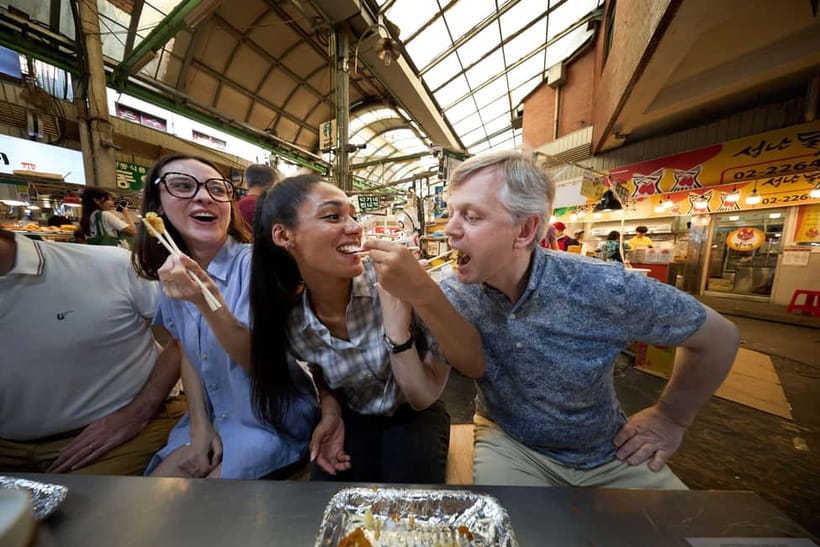
The final stop is Gwangjang Market, one of Seoul’s oldest traditional markets and the tour’s most casual ending. You have about an hour for walking, photographs, shopping, and food tasting.
This is where you can try Korean market classics such as bindaetteok, a savory mung bean pancake; mayak gimbap, small rice rolls; and tteokbokki, chewy rice cakes in a spicy sauce. Meals are not specified as included, so bring cash and expect to pay for anything you eat.
The market is not a quiet museum visit. Stalls, shoppers, food smells, and narrow walkways create a lively finish. If you are new to Korean street food, the guide can help explain what you are seeing and point out familiar choices. If you already know what you like, you may prefer to use the free time to choose your own snack and explore at your own pace.
An hour is a reasonable introduction, though it can feel short if you want a full meal. Keep your group’s meeting instructions in mind, and do not wander so far that you miss the departure. The tour returns to Myeongdong Station, so you can continue shopping, sightseeing, or eating in the area afterward.
Tuesdays bring a different palace and neighborhood
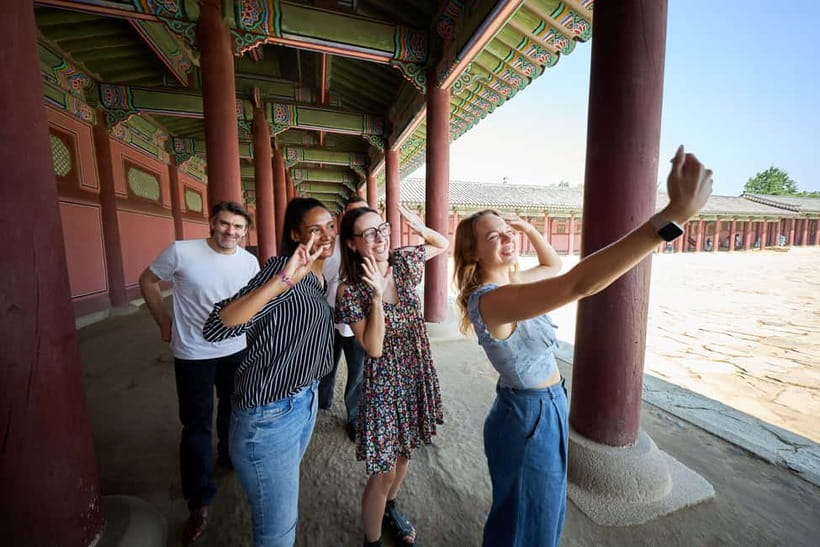
Tuesday is not a bad day for this tour, but it is a different experience. Since Gyeongbokgung and the guard ceremony close, you visit Changdeokgung Palace instead.
Changdeokgung is a UNESCO World Heritage site known for architecture that fits naturally with its gardens and setting. Its mood is quieter and more restrained than the grand ceremonial feel associated with Gyeongbokgung. If you prefer graceful buildings and garden spaces to a formal guard performance, you may actually enjoy the Tuesday route more.
Insadong is also added on Tuesdays. This cultural district is known for tea houses, antique shops, art galleries, craft stores, and souvenir shopping. It gives you more time around traditional arts and local products, with chances to browse rather than simply take photographs.
The Tuesday plan also includes Gwangjang Market and the ginseng center. You still receive a broad look at Seoul, but you should book with the correct expectations. This version is about palace architecture, crafts, and shopping, not the changing ceremony.
Value, pace, and the right type of visitor
The $30 price is strongest when you value structure. You get a live English-speaking guide, transport between central stops, several guided visits, and a route that would take more planning on your own. The tour is especially useful for a first day, a short stay, or a 23-hour layover.
It also works well for people who want historical context without spending an entire day in museums. Guides have been praised for explaining the Joseon Dynasty, coordinating groups, finding shade in hot weather, and taking photographs at scenic places. Those small acts can make a fast morning feel much easier.
The main tradeoff is depth. You will not have long free periods at Bukchon, Gyeongbokgung, Changdeokgung, or Gwangjang Market. You also need to pay for your own food and personal purchases. Anyone who wants to linger over tea, shop slowly, or study palace architecture should plan a return visit.
The tour has a 4.9 rating from 11 verified ratings, with praise concentrated on the route planning and the guides’ personal care. That is encouraging, though the sample is small. I would book it for a well-organized introduction, not as a replacement for exploring Seoul independently.
What to bring and how to prepare
Wear comfortable shoes. The route includes walking in Bukchon, palace grounds, market lanes, and subway areas. Bring a camera, since the rooftops, palace costumes, and food stalls provide plenty of photo opportunities.
Carry cash for Gwangjang Market and small personal purchases. Food is not specified as included, and cash is still useful at traditional market stalls. Dress for the weather, since parts of the morning take place outdoors.
The tour offers free cancellation up to 24 hours before departure, and you can reserve now and pay later. Those terms are helpful if your Seoul schedule may change, but the practical details still matter most: confirm the meeting exit, check the Tuesday route, and allow extra time if arriving from the airport.
Should you book this Seoul tour?
Book it if you want a friendly, efficient introduction to Seoul’s old neighborhoods, royal buildings, food culture, and modern civic history. It is a particularly good choice for first-time visitors, short stays, and anyone who would rather follow a clear route than manage several central sights alone.
Skip it if your priority is slow photography, a long palace visit, or an unhurried market meal. In that case, use the tour as an orientation, then return independently to the places that caught your attention. At $30, the experience offers solid value, provided you accept the brisk pace and the 30-minute ginseng stop.
FAQ
Where does the tour start?
The main meeting point is Myeongdong Subway Station Exit 8. Pickup information also lists Itaewon Station Exit 1 at 08:20, Myeongdong Station Exit 9 at 08:50, and City Hall Station Exit 6 at 09:00, so confirm your exact meeting point when booking.
Where does the tour end?
The tour ends at Myeongdong Station for all participants.
What happens if I take the tour on Tuesday?
Gyeongbokgung Palace and the Royal Guard Changing Ceremony are closed on Tuesdays. The tour visits Changdeokgung Palace and Insadong instead.
Is food included at Gwangjang Market?
Meals are not specified as included. You can buy Korean street food at the market, including bindaetteok, mayak gimbap, and tteokbokki, but you should pay for your own purchases.
Is shopping at the ginseng center required?
No. You can listen to the presentation, enjoy the herbal tea, browse the products, and choose whether to buy anything.
What language is the tour conducted in?
The live tour guide speaks English.
Just added around Seoul
- Seoul: The Biggest Sea-food Noryangjin Market Tour★ 4.3 · 30 reviews
- Seoul: Sokcho beach, market, hot spring and Seorak Cable Car★ 4.8 · 5 reviews
- Seoul Gwangjang Market Foody Walking Tour★ 4.1 · 7 reviews
- Seoul: Namdaemun Market Food Tour★ 4.9 · 34 reviews
- Seoul: Gyeongbokgung Palace Tour & Lunch at Authentic Market★ 4.5 · 2 reviews
- Seoul: Gwangjang Market Vegan & Vegetarian Food Tour★ 5.0 · 16 reviews
- Seoul: Fearless Foodie Gwangjang Market Food Adventure★ 5.0 · 10 reviews
- Seoul: Guided Street Food Tour at Namdaemun Market★ 5.0 · 10 reviews
Market Tours, compared.
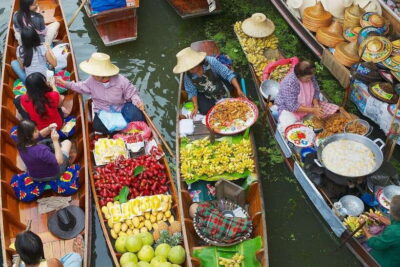
Damnoen Saduak Market and Maeklong Railway Market
Read our review →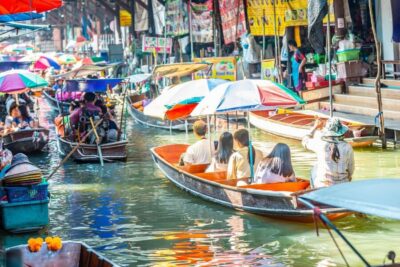
The Old Siam: Damnoen Saduak and Maeklong Railway Market
Read our review →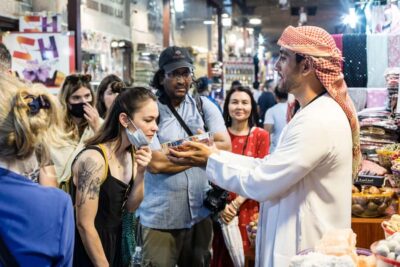
Old Town, Creek, Museums, Souks, & Street Food Tour
Read our review →Train Market & Floating Market with Boat Ride
Read our review →
Old Town, Souks, Street Food, Guided Tour & Abra Ride
Read our review →
Ayutthaya & Ayothaya Floating Market Day Trip
Read our review →
Frame Tickets, Creek, Souks & Blue Mosque Guided Tour
Read our review →
Hanoi Cooking Class: Culture, Local Market & Meaning CSR Impact
Read our review →Browse the lists this tour appears in